Filters

1492 filtered results

Clear all filters
Favorites
With answer key
Interactive

1492 filtered results

Difficulty Level

Grade


Subject

    Check out this FREE Trial Lesson on Addition & Subtraction for age 5-7!

    Writing Number Sentences for Addition Story Problems

    Favorites
    With answer key
    Interactive
    • 5-7
    • Addition & Subtraction
    Adding up to 50 with Regrouping: Page 20
    Adding up to 50 with Regrouping: Page 20
    Adding up to 50 with Regrouping: Page 20
    Worksheet
    Addition at the Zoo Worksheet
    Addition at the Zoo Worksheet
    Addition at the Zoo Worksheet
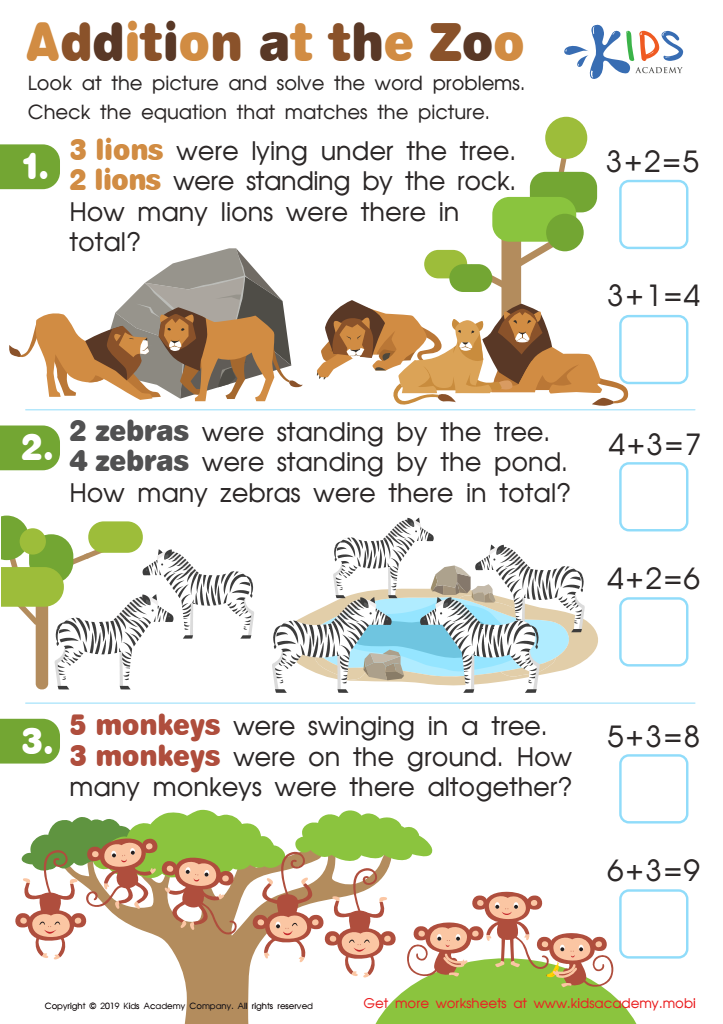
    Visit the zoo with your kids and point out all the different animals. Ask them to name their favorites and identify animals on a worksheet. Challenge them to solve word problems related to the pictures. Ask them for the equation that fits the picture and check the answer.
    Addition at the Zoo Worksheet
    Worksheet
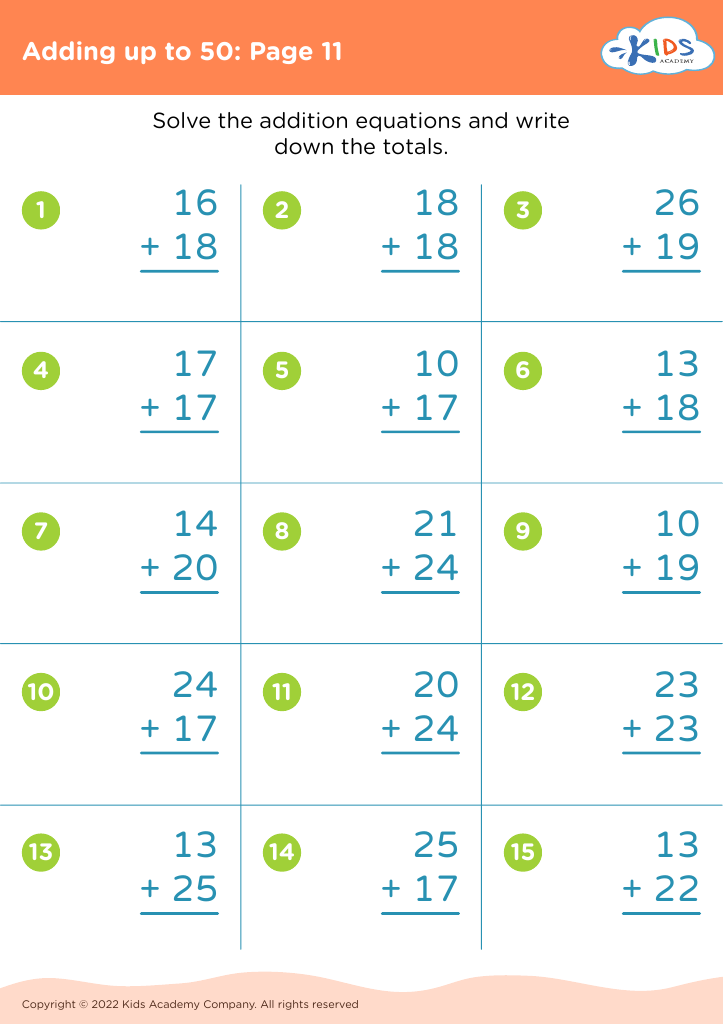
    Adding up to 50: Page 11
    Adding up to 50: Page 11

    Adding up to 50: Page 11

    Adding up to 50: Page 11
    Worksheet
    Adding up to 1000 with Regrouping: Page 28
    Adding up to 1000 with Regrouping: Page 28
    Adding up to 1000 with Regrouping: Page 28
    Worksheet
    What Makes 12? Worksheet
    What Makes 12? Worksheet

    What Makes 12? Worksheet

    Teach kids maths and help them practice using this fun worksheet. Colorful images and simple equations make it easy and enjoyable. Look at each equation with your kids and show them how to add up the numbers. Then draw a line between the numbers that make 12.
    What Makes 12? Worksheet
    Worksheet
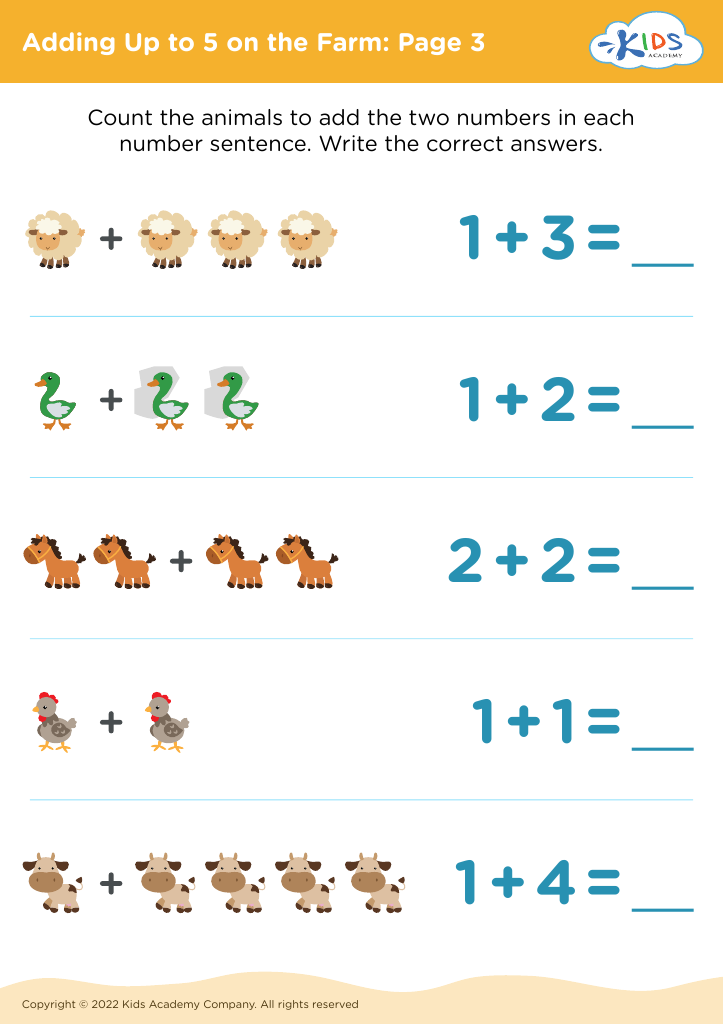
    Adding Up to 5 on the Farm: Page 3
    Adding Up to 5 on the Farm: Page 3
    Adding Up to 5 on the Farm: Page 3
    Worksheet
    Adding 2-digit Numbers: Page 64
    Adding 2-digit Numbers: Page 64

    Adding 2-digit Numbers: Page 64

    Adding 2-digit Numbers: Page 64
    Worksheet
    Adding up to 1000 with Regrouping: Page 65
    Adding up to 1000 with Regrouping: Page 65
    Adding up to 1000 with Regrouping: Page 65
    Worksheet
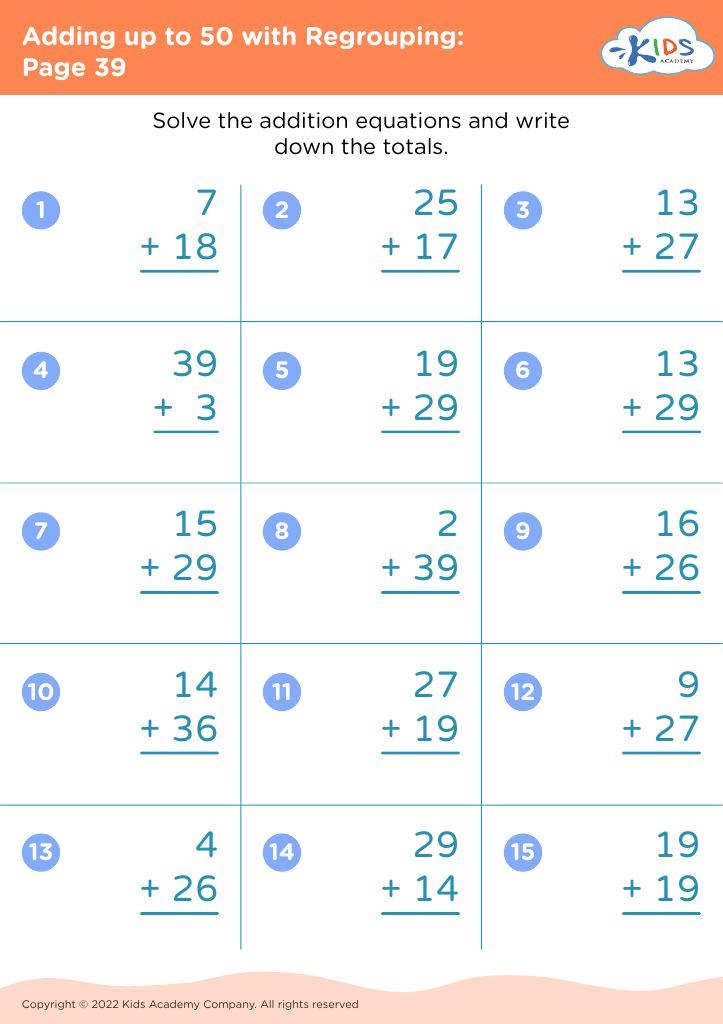
    Adding up to 50 with Regrouping: Page 39
    Adding up to 50 with Regrouping: Page 39
    Adding up to 50 with Regrouping: Page 39
    Worksheet
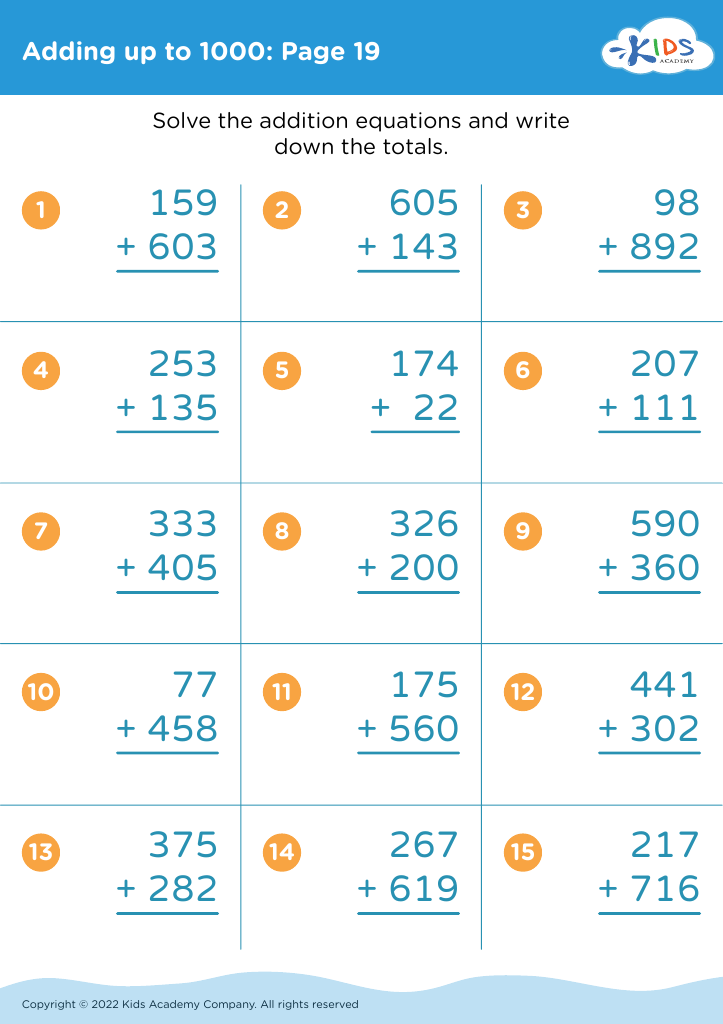
    Adding up to 1000: Page 19
    Adding up to 1000: Page 19

    Adding up to 1000: Page 19

    Adding up to 1000: Page 19
    Worksheet
    Adding up to 1000 Without Regrouping: Page 13
    Adding up to 1000 Without Regrouping: Page 13
    Adding up to 1000 Without Regrouping: Page 13
    Worksheet
    Adding up to 100: Page 21
    Adding up to 100: Page 21

    Adding up to 100: Page 21

    Adding up to 100: Page 21
    Worksheet
    Adding 2-digit Numbers: Page 65
    Adding 2-digit Numbers: Page 65

    Adding 2-digit Numbers: Page 65

    Adding 2-digit Numbers: Page 65
    Worksheet
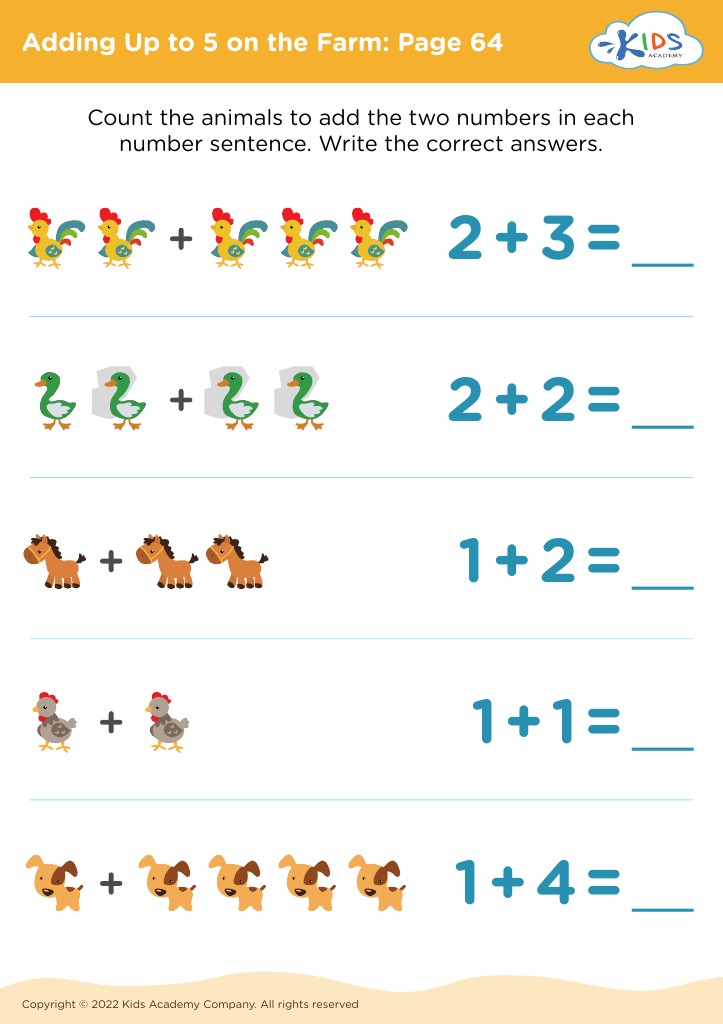
    Adding Up to 5 on the Farm: Page 64
    Adding Up to 5 on the Farm: Page 64
    Adding Up to 5 on the Farm: Page 64
    Worksheet
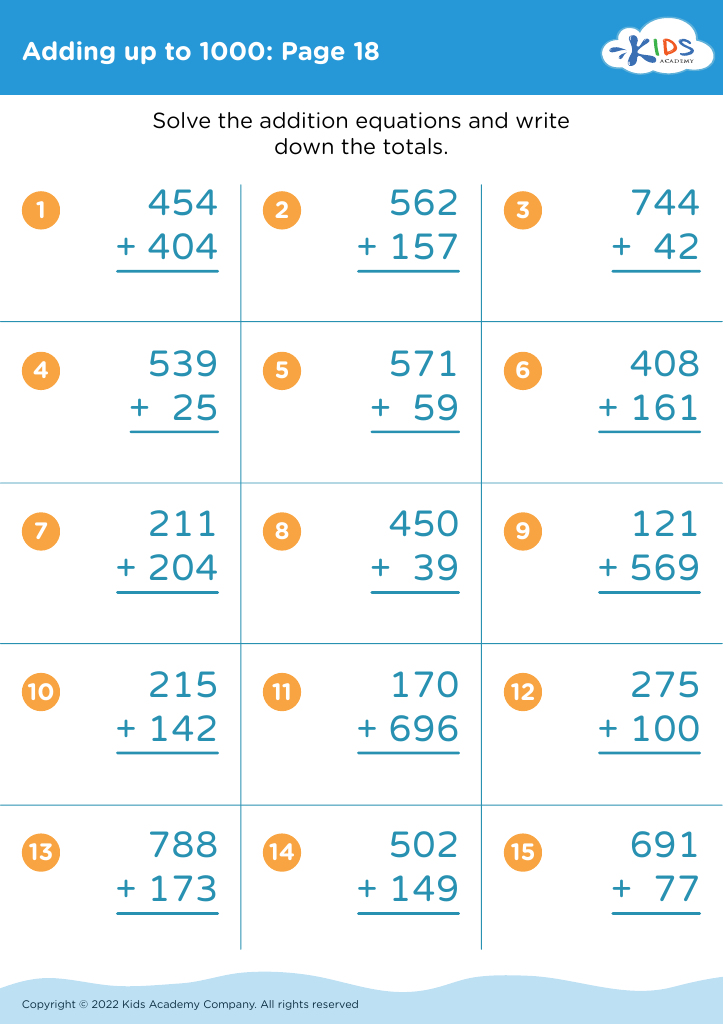
    Adding up to 1000: Page 18
    Adding up to 1000: Page 18

    Adding up to 1000: Page 18

    Adding up to 1000: Page 18
    Worksheet
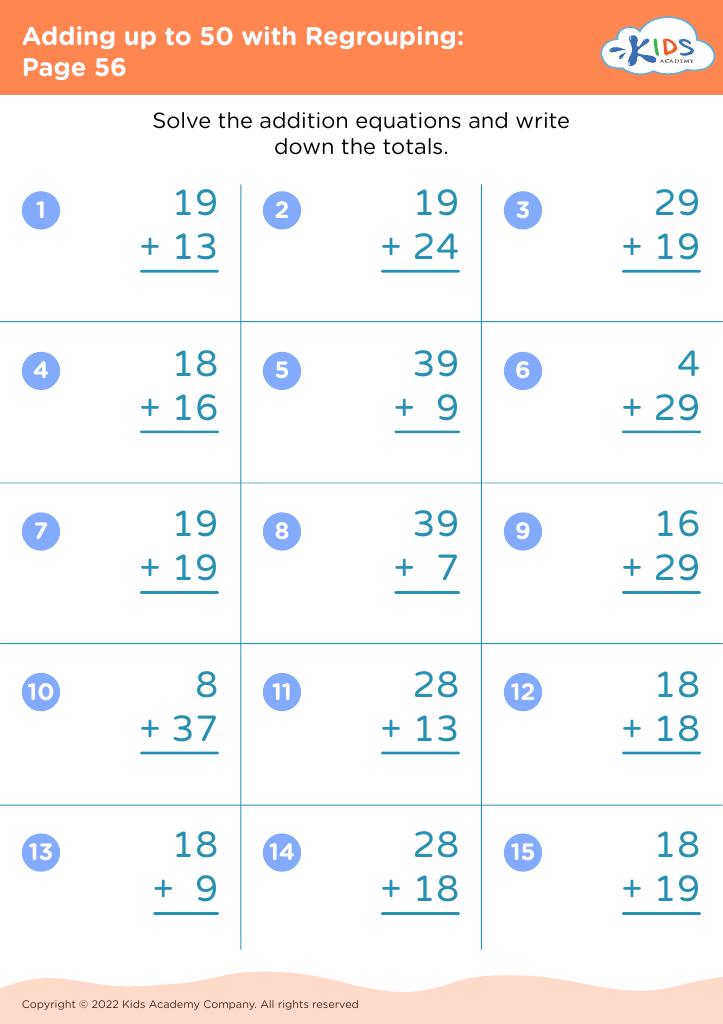
    Adding up to 50 with Regrouping: Page 56
    Adding up to 50 with Regrouping: Page 56
    Adding up to 50 with Regrouping: Page 56
    Worksheet
    Planting Seeds for 11 Worksheet
    Planting Seeds for 11 Worksheet
    Planting Seeds for 11 Worksheet

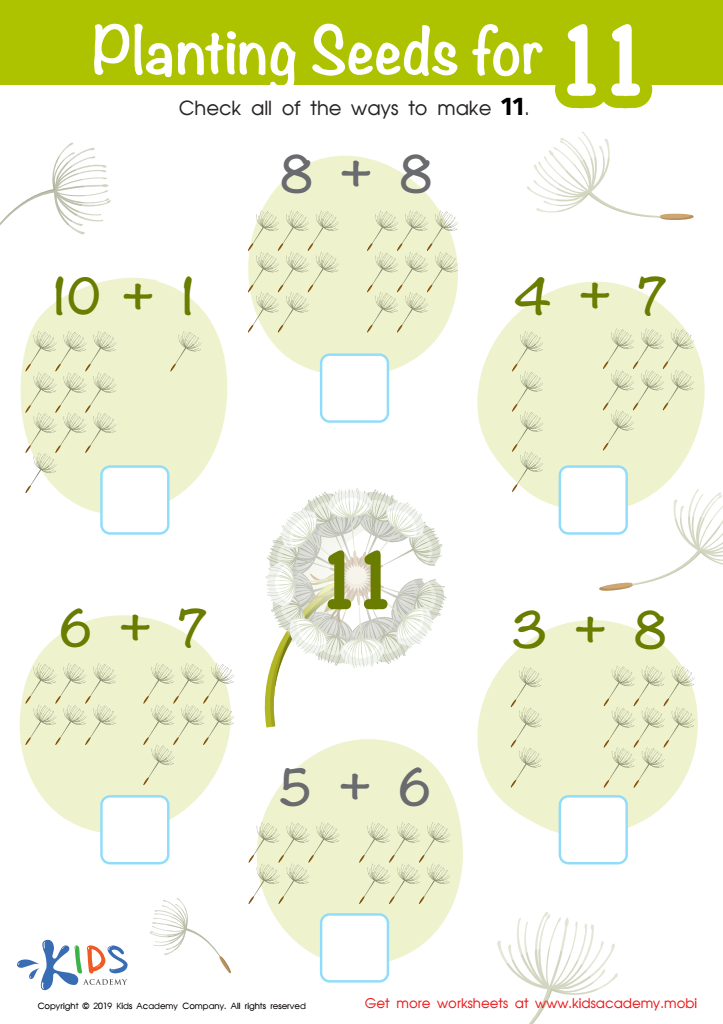
    Before starting, ask your students to count as high as they can. Explain that different numbers can add up to the same total. Give examples like 2+2 =4 and 3+1 =4. Ask if they can think of other examples. Then have them work through the equations in the printout and circle all that add up to 11.
    Planting Seeds for 11 Worksheet
    Worksheet
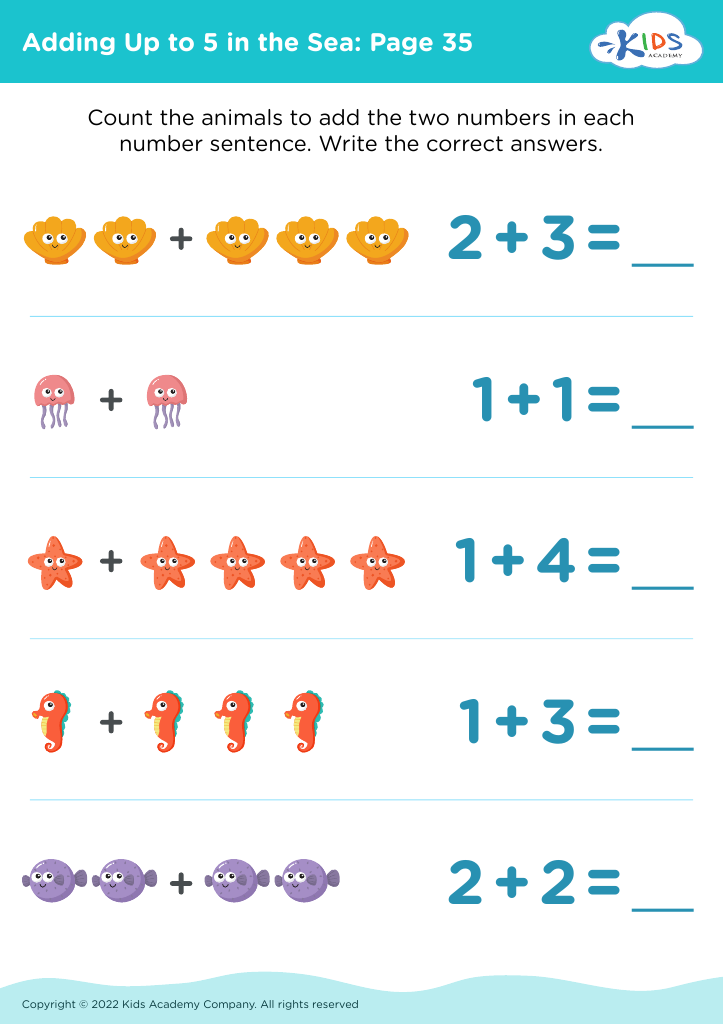
    Adding Up to 5 in the Sea: Page 35
    Adding Up to 5 in the Sea: Page 35
    Adding Up to 5 in the Sea: Page 35
    Worksheet
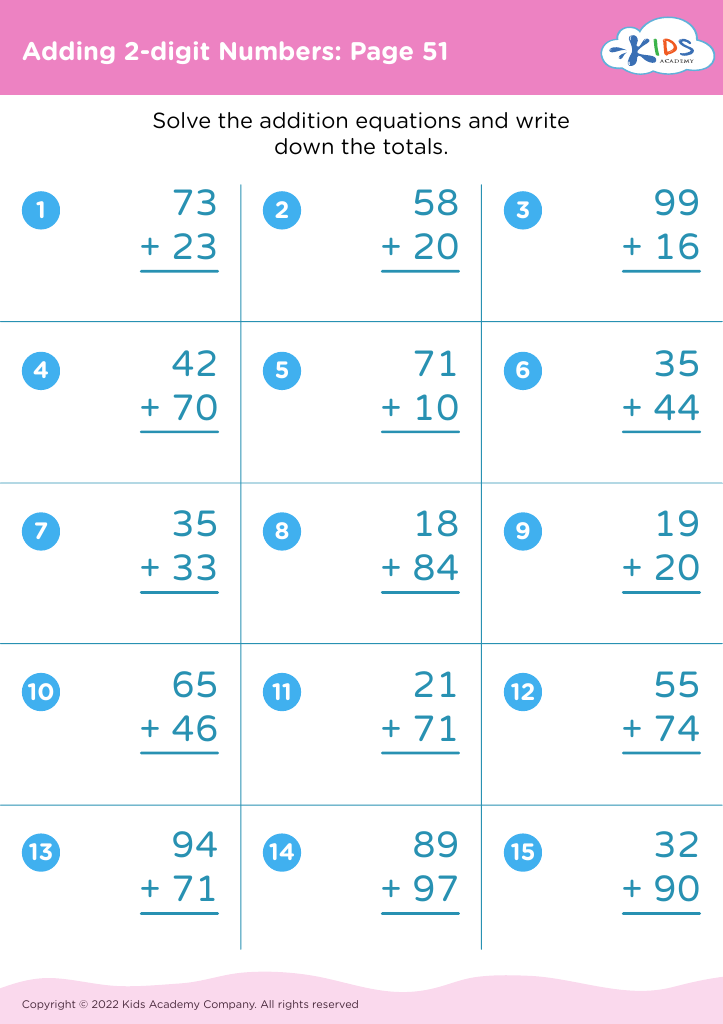
    Adding 2-digit Numbers: Page 51
    Adding 2-digit Numbers: Page 51

    Adding 2-digit Numbers: Page 51

    Adding 2-digit Numbers: Page 51
    Worksheet
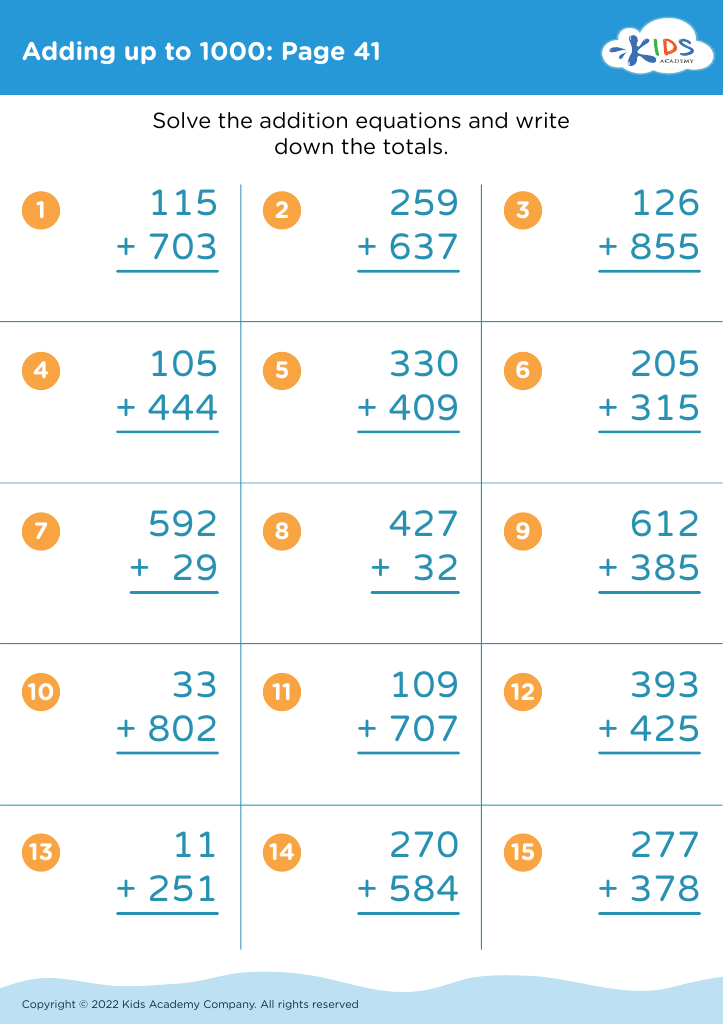
    Adding up to 1000: Page 41
    Adding up to 1000: Page 41

    Adding up to 1000: Page 41

    Adding up to 1000: Page 41
    Worksheet
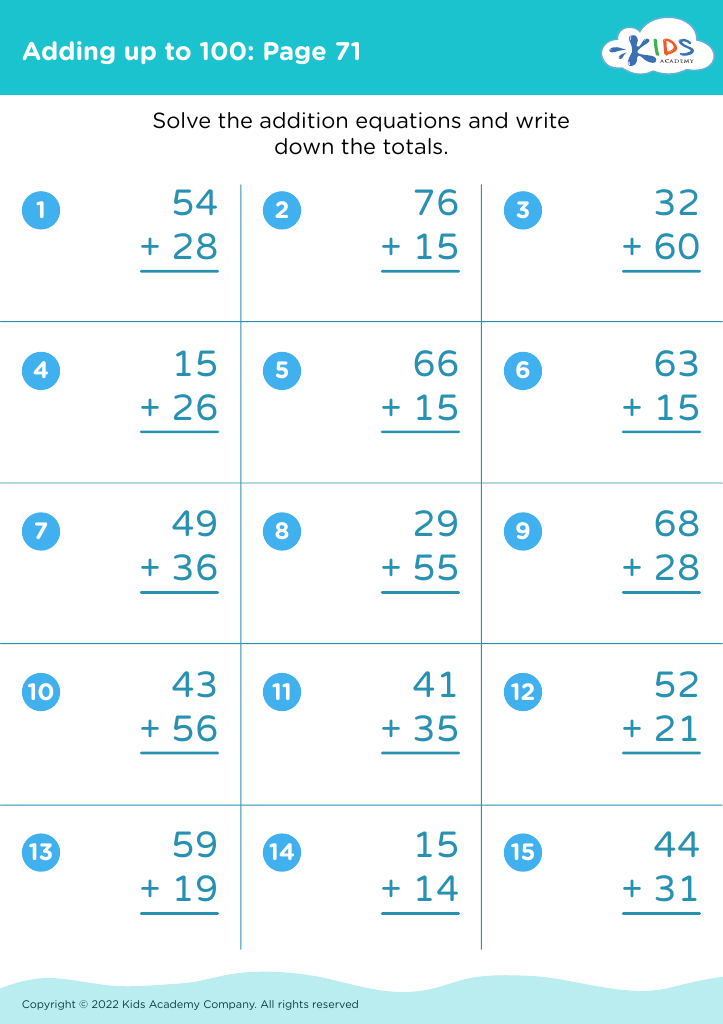
    Adding up to 100: Page 71
    Adding up to 100: Page 71

    Adding up to 100: Page 71

    Adding up to 100: Page 71
    Worksheet
    Addition Robot Sorter Worksheet
    Addition Robot Sorter Worksheet

    Addition Robot Sorter Worksheet

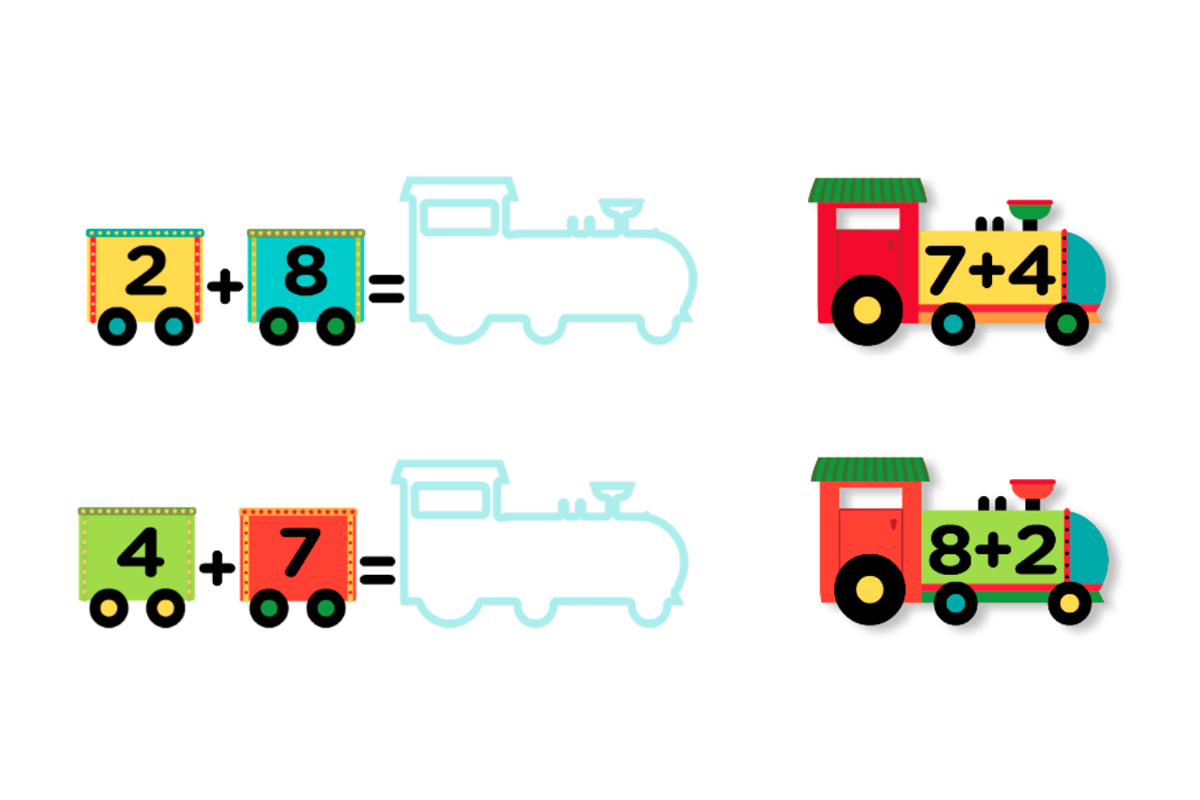
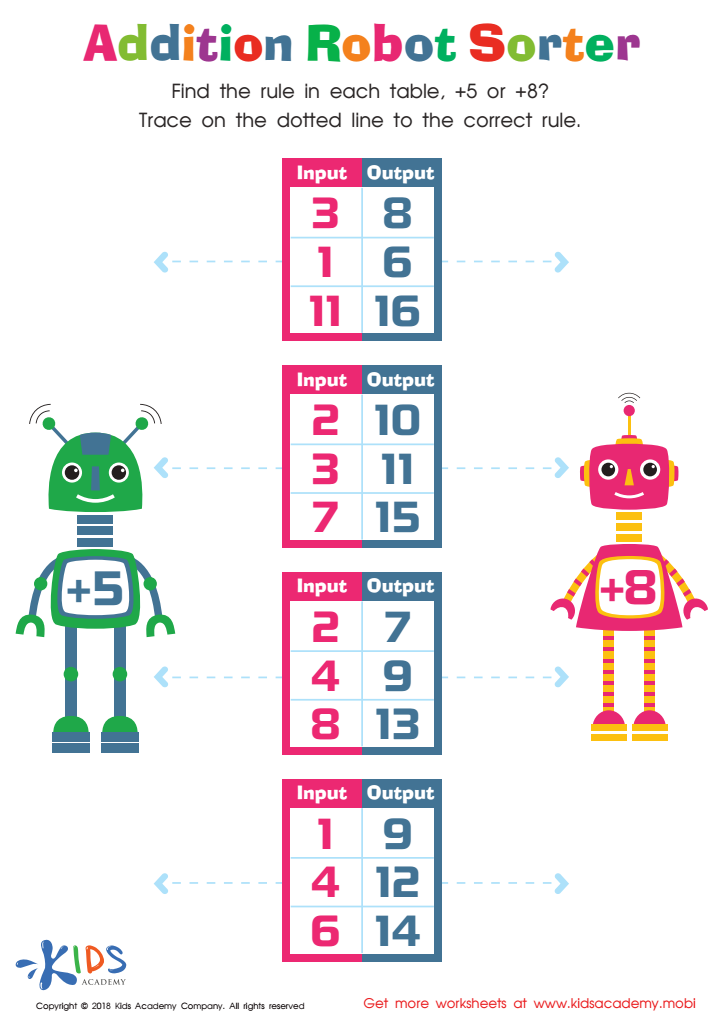
    This worksheet helps your child understand addition. Have them trace the dotted lines to the correct equations: +8 and +5. It's a great way to aid their mathematical comprehension and get them comfortable with adding equations.
    Addition Robot Sorter Worksheet

    Worksheet
    Adding Up to 5 on the Farm: Page 58
    Adding Up to 5 on the Farm: Page 58
    Adding Up to 5 on the Farm: Page 58
    Worksheet
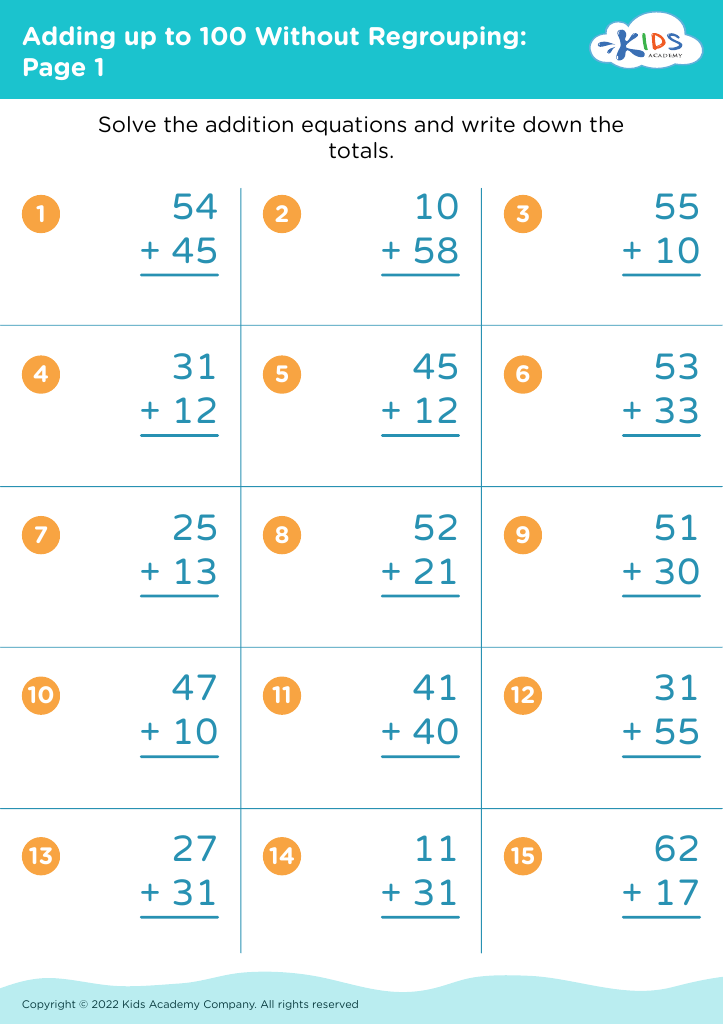
    Adding up to 100 Without Regrouping: Page 1
    Adding up to 100 Without Regrouping: Page 1
    Adding up to 100 Without Regrouping: Page 1
    Worksheet


    Addition and subtraction are foundational mathematical skills that play a crucial role in the cognitive development of children aged 5-7. At this early stage, young learners are transitioning from concrete to more abstract thinking, making it vital for parents and teachers to focus on these basic operations. Mastering addition and subtraction is not only essential for academic success in mathematics but also enhances problem-solving abilities, logical reasoning, and critical thinking.

    Proficiency in these areas serves as the groundwork for more complex mathematical concepts encountered in later grades, such as multiplication, division, and fractions. A solid grasp of early arithmetic skills helps children build confidence and fosters a positive attitude towards math, reducing the likelihood of math anxiety in later years.

    Additionally, early exposure to these concepts lays the groundwork for everyday life skills. Whether it’s counting money, measuring ingredients in a recipe, or dividing time effectively, addition and subtraction are integral to daily tasks.

    Parents and teachers have the opportunity to make learning these skills fun and engaging through hands-on activities, games, and real-life examples. By showing enthusiasm and providing support, they can help children see the relevance and joy in learning math, setting the stage for a lifetime of curiosity and competence in mathematics.