Time Worksheets for Ages 5-7 - Page 2
25 filtered results
-
From - To
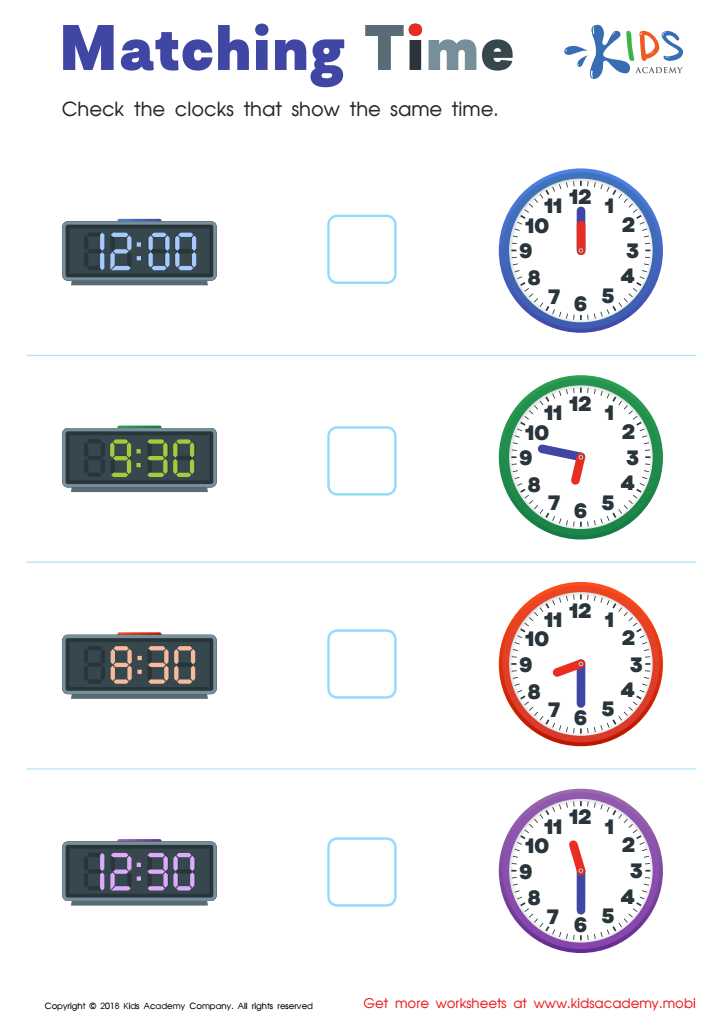
Matching Time Worksheet
 Assign to My Students








Understanding time is a critical foundational skill for children aged 5 to 7. At this stage, children begin to grasp the concept of time, which shapes their daily routines and helps them navigate their world. Parents and teachers should care about teaching this concept because it contributes to children's cognitive development and fosters independence.
Being able to tell time empowers children to understand schedules, anticipate events, and manage their activities. It lays the groundwork for responsibilities like homework, bedtime routines, and even social engagements. Moreover, learning about time improves children's problem-solving skills and logic, enabling them to sequence events and understand cause-and-effect relationships.
Beyond practical aspects, understanding time nurtures emotional regulation. Children who comprehend the passage of time can better manage excitement and anxiety about upcoming events, be it waiting for a birthday or avoiding feelings of being rushed.
Additionally, teaching time engages both mathematical understanding and language skills, as children learn to communicate about minutes, hours, and days. Overall, prioritizing this vital concept not only enriches children's educational experiences but also equips them with essential life skills that they will carry into adulthood.








