Community Worksheets for Ages 5-7 - Page 6
121 filtered results
-
From - To
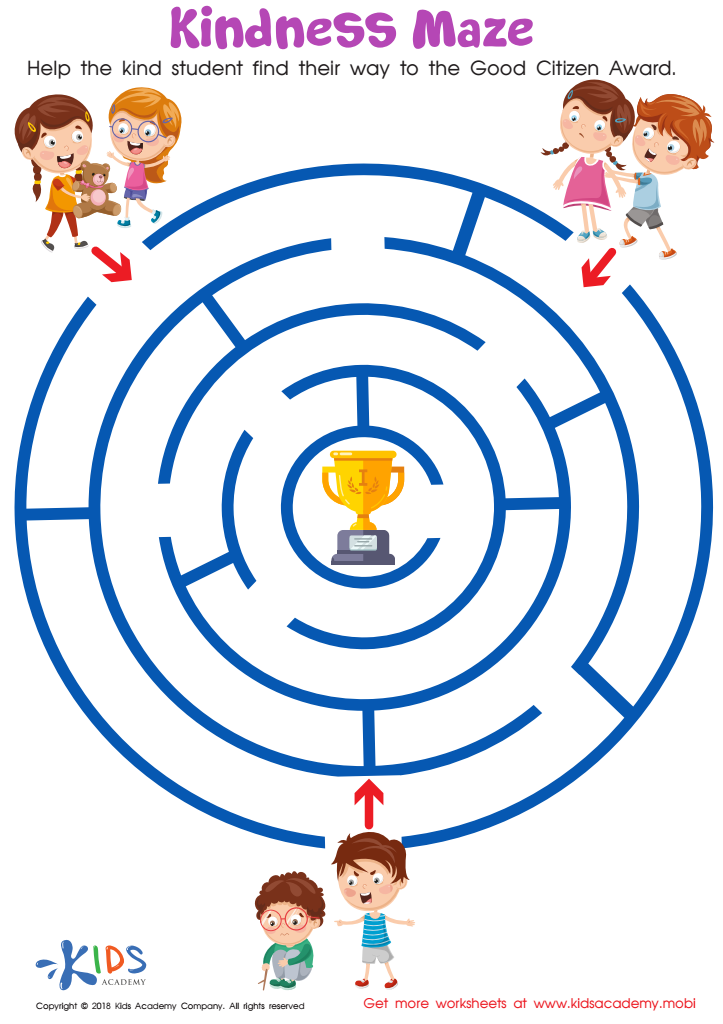
Kindness Maze Worksheet
 Assign to My Students








Parents and teachers should care about community for children aged 5-7 because it plays a crucial role in their social, emotional, and cognitive development. At this age, children are beginning to understand their place in the world, making it essential that they feel a sense of belonging. A supportive community fosters relationships, allowing children to learn kindness, empathy, and cooperation through interactions with peers and adults.
Additionally, being part of a community exposes children to diverse perspectives and experiences, promoting cultural awareness and acceptance. It helps them develop social skills necessary for navigating friendships and teamwork. A strong community also provides safety and stability, which are vital for young children's wellbeing.
Moreover, when parents and teachers come together to form a community, they create a supportive network that benefits the entire family. Resources for academic and extracurricular activities become more accessible, enriching the children's educational experience. Investing in community means investing in the children’s future; it nurtures well-rounded individuals who grow to value and contribute positively to society. In essence, a thriving community supports children's healthy growth and development, helping them build the foundations for lifelong success.