Filters

31 filtered results

Clear all filters
Favorites
With answer key
Interactive

31 filtered results

Difficulty Level

Grade


Subject

    Check out this FREE Trial Lesson on Letter Sounds for age 5-8!

    Distinguish between Long I and Short I

    Favorites
    With answer key
    Interactive
    • 5-8
    • Letter Sounds
    Finding the Sounds Worksheet
    Finding the Sounds Worksheet

    Finding the Sounds Worksheet

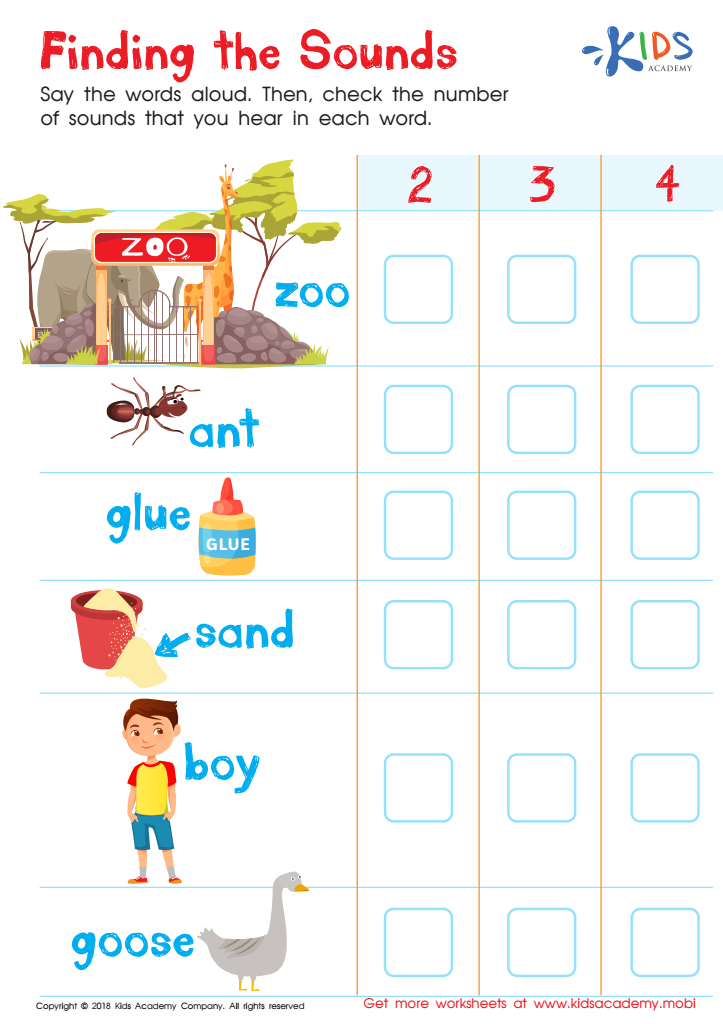
    This free colorful worksheet assists children in learning words and breaking them down into sounds. It boosts auditory discrimination, phonological awareness and fine motor skills. Picture clues help them read confidently, and they can check the appropriate boxes to practice their reading skills.
    Finding the Sounds Worksheet
    Worksheet
    More than 1 word Worksheet
    More than 1 word Worksheet

    More than 1 word Worksheet

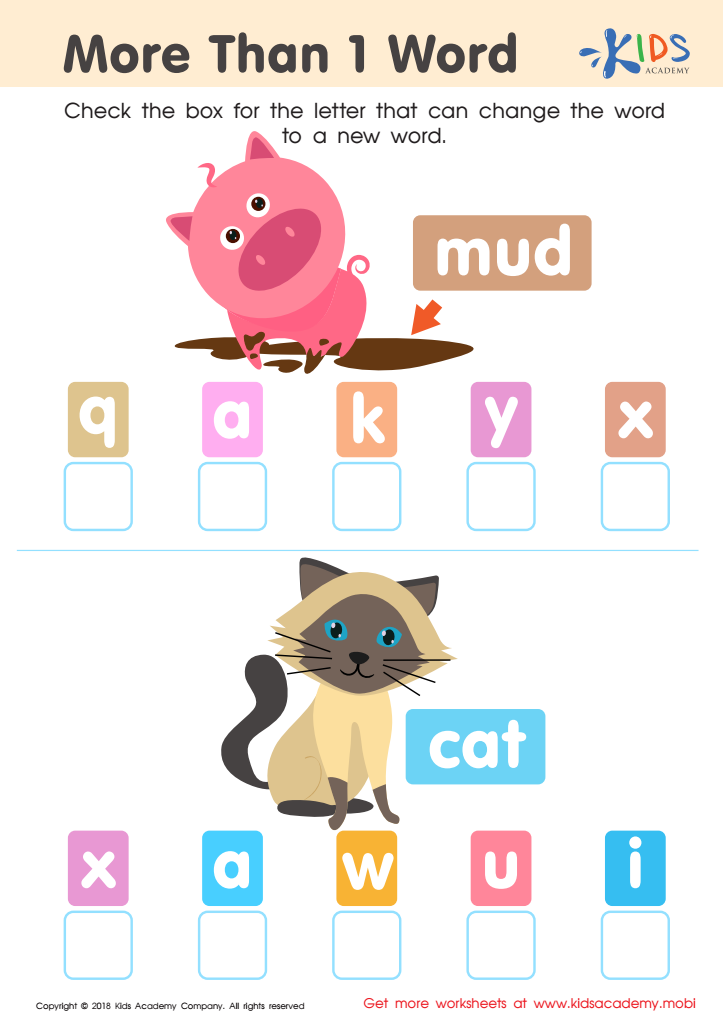
    Test your child's reading skills with this fun worksheet! Point out the word in each picture, then switch the middle letter of each word with one from the list and check the box when you find a new word. It's a great way to develop your child's reading skills!
    More than 1 word Worksheet
    Worksheet
    Let's Check for «i» Sounds Worksheet
    Let's Check for «i» Sounds Worksheet

    Let's Check for «i» Sounds Worksheet

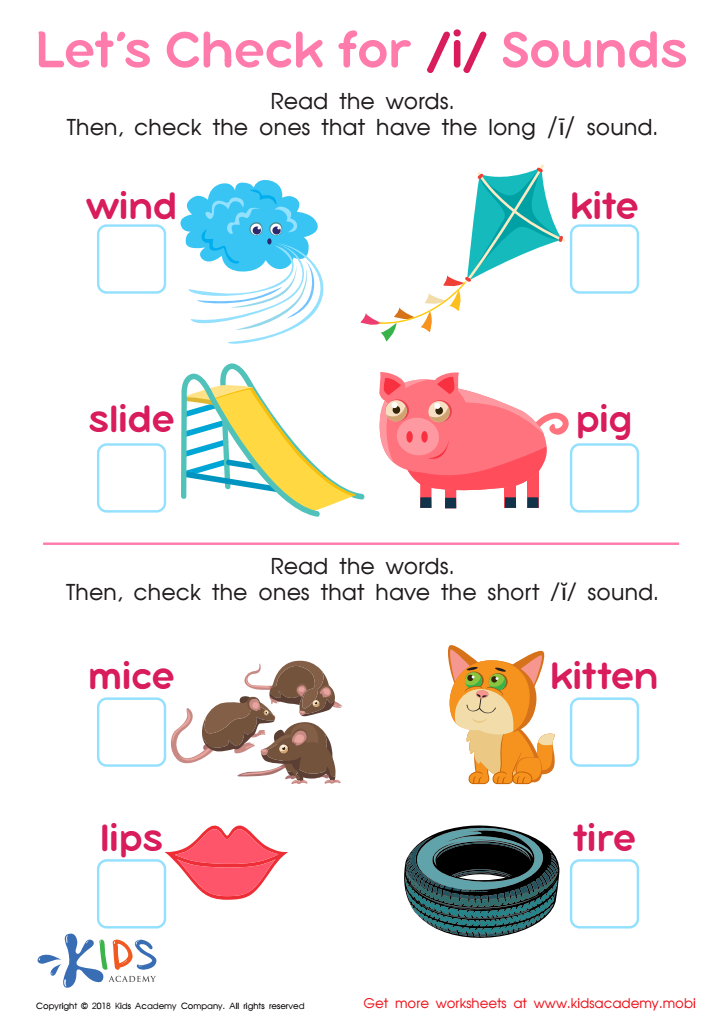
    This fun worksheet with pictures boosts phonics skills - differentiating between long «ī» and short «i» sounds in 1- and 2-syllable words. Kids use picture clues to read words, then check off the correct ones. It's a great way for new readers to practice early reading skills and find success on their own.
    Let's Check for «i» Sounds Worksheet
    Worksheet
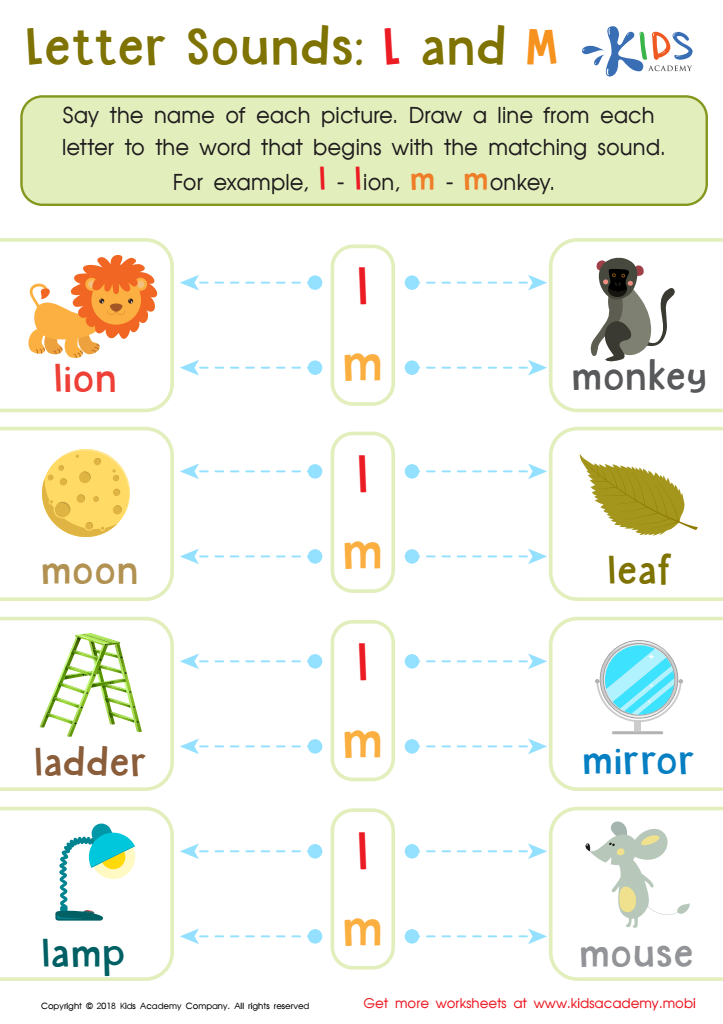
    Letter l and M Sounds Worksheet
    Letter l and M Sounds Worksheet

    Letter l and M Sounds Worksheet

    Our Kids Academy phonics practice pages give clear instructions and captivating pictures to pique children's interest. This fun worksheet helps kids identify a picture, then match its beginning sound. Listen and say each word - does it start with "L" or "M"? Trace the dotted line from the letter to the correct match and listen closely to the sound it makes.
    Letter l and M Sounds Worksheet
    Worksheet
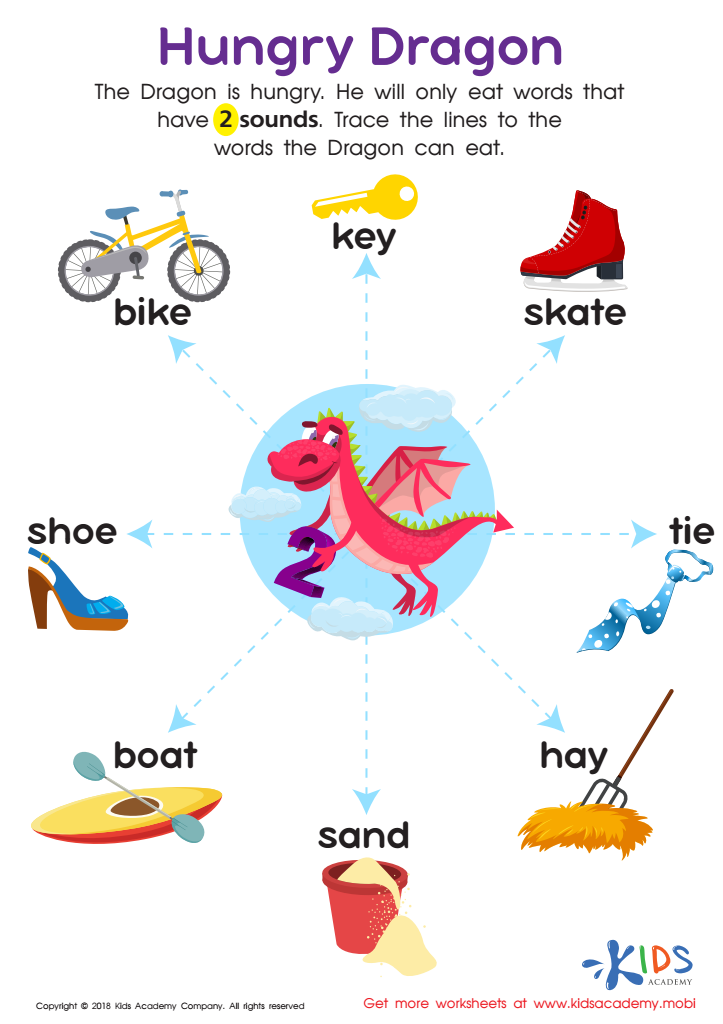
    Hungry Dragon Worksheet
    Hungry Dragon Worksheet

    Hungry Dragon Worksheet

    Feed the dragon words and watch your child strengthen their phonological awareness and auditory discrimination skills! Download this free PDF for tracing exercises that build their fine motor skills too. Kids will love spending time with the cute dragon while they unwittingly learn reading skills!
    Hungry Dragon Worksheet
    Worksheet
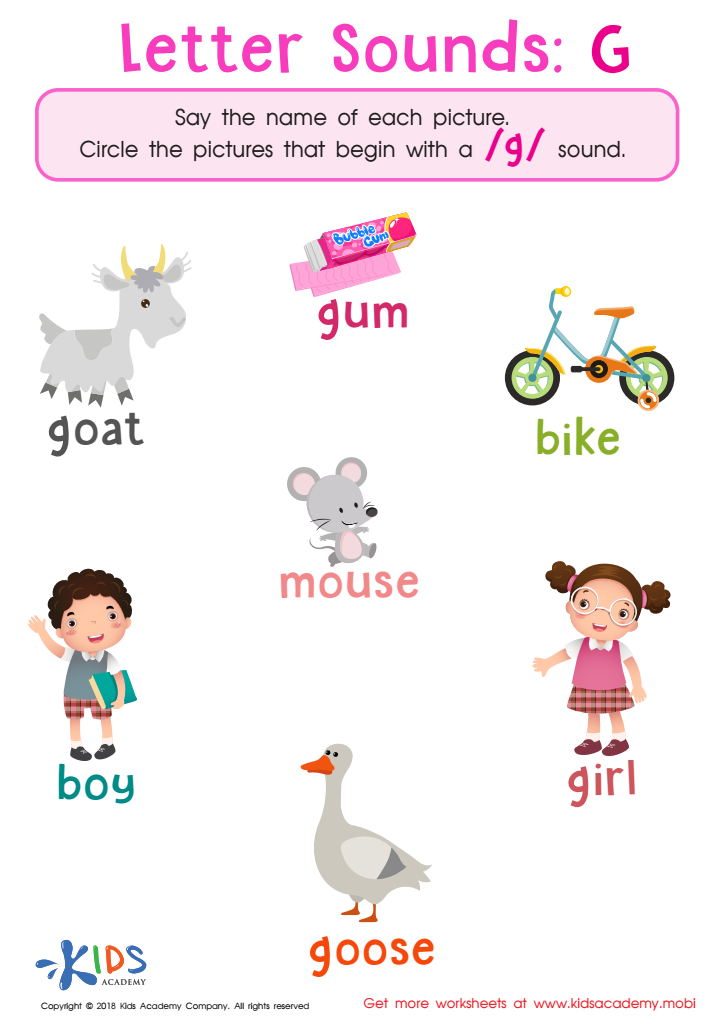
    Letter G Sounds Worksheet
    Letter G Sounds Worksheet

    Letter G Sounds Worksheet

    Help emerging readers build confidence by giving them practice identifying hard "G" with this free PDF worksheet. They'll use picture clues to name the words, and practice fine-motor skills tracing circles around the corresponding pics. It's a great way to introduce or reinforce hard "G" words.
    Letter G Sounds Worksheet
    Worksheet
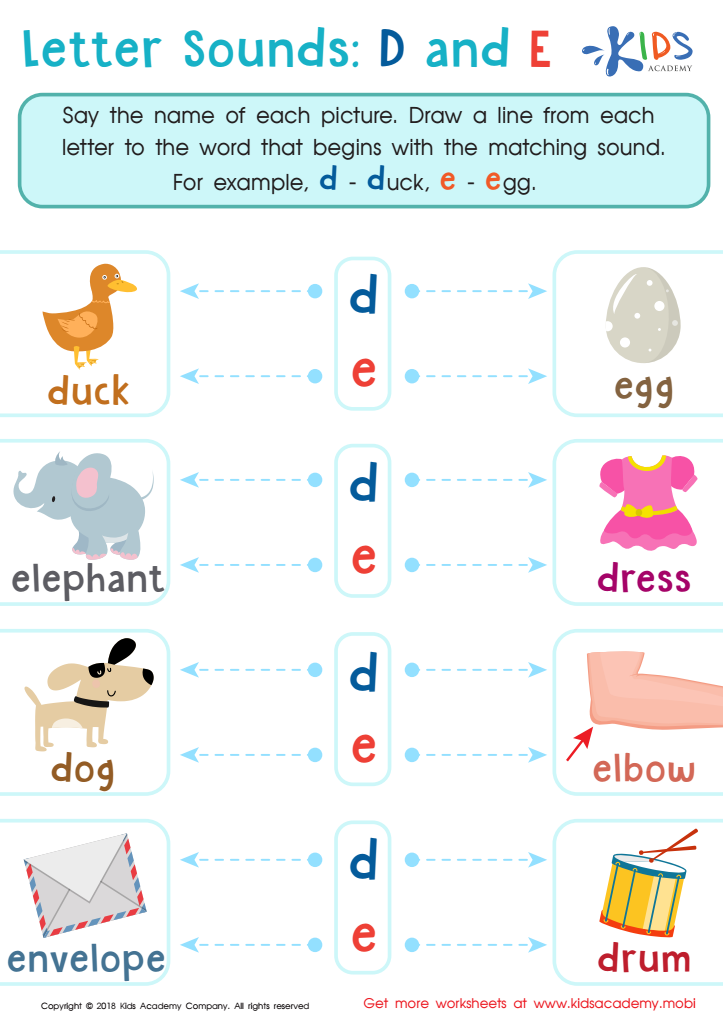
    Letter D and E Sounds Worksheet

    Letter D and E Sounds Worksheet

    Letter D and E Sounds Worksheet

    Kids can use picture clues and visual discrimination to name cheerful pics and isolate the beginning sound. This free PDF worksheet will help them develop phonological awareness, differentiate between "D" and "E", and hone fine-motor skills. It'll also boost their confidence as they become readers.
    Letter D and E Sounds Worksheet

    Worksheet


    Letter sounds form the bedrock of reading and early literacy skills for children aged 5-8. Understanding letter sounds, or phonemic awareness, allows children to decode words, transforming groups of letters into meaningful language. This skill is essential for reading fluency, accuracy, and comprehension—components that critically influence overall academic success.

    When parents and teachers emphasize learning letter sounds, children can better recognize patterns within words, aiding both their reading and spelling abilities. For children at this developmental stage, engaging with letter sounds nurtures phonological awareness, advancing their ability to blend sounds seamlessly. This foundational knowledge makes reading feel more intuitive and less frustrating, fostering a positive attitude towards learning.

    Moreover, proficient early readers often exhibit enhanced confidence and curiosity, exploring new topics and expanding their vocabulary. Poor reading skills, on the other hand, may hinder academic performance and shortsighted intellectual encouragement. For children struggling from the asymmetrical memorization of words, auditory discrimination laid by letter sounds makes a significant and meaningful transition to reading plausible.

    In sum, paramouns understanding of letter sounds not only supports lifelong literacy but also ignites a cycle of self-reinforcing learning and intellectual expansion. By investing in this crucial stage, parents and teachers lay down an indelible path leading toward future academic and cognitive development.