Subtraction Worksheets for Ages 5-8 - Page 5
97 filtered results
-
From - To
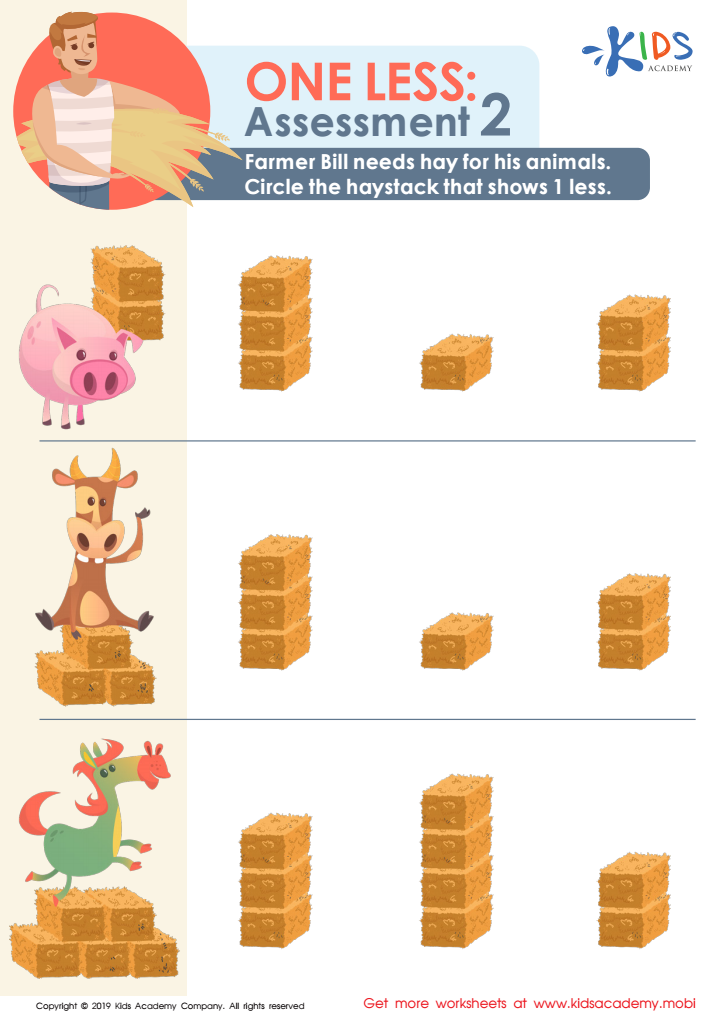
One Less: Assessment 2 Worksheet
 Assign to My Students







Subtraction is a foundational skill in mathematics that children aged 5-8 need to understand for several important reasons. First, it fosters critical thinking and problem-solving abilities. When children grasp subtraction, they're not just learning to take away numbers; they are developing the ability to think analytically about relationships between quantities.
Second, subtraction is integral to daily life activities. Whether it's subtracting expenses from a budget, measuring ingredients for cooking, or even time management, a solid understanding of subtraction enables children to navigate daily tasks with confidence.
Furthermore, mastering subtraction at a young age builds a strong mathematical foundation for more advanced concepts, such as addition, multiplication, and division. If students are struggling with subtraction, it may hinder their progress in future math learning.
Lastly, gaining fluency in subtraction can help reduce math anxiety. Familiarity with basic subtraction increases children's confidence when approaching math problems, collaborating with peers, and participating actively in class.
By prioritizing subtraction in early education, parents and teachers help equip children with vital skills that extend beyond the classroom, preparing them for future academic success and everyday life challenges.








