
Number Sequencing Worksheets for Ages 5-9
44 filtered results
Difficulty Level
Grade
Age
-
From - To
Subject
Activity
Standards
Unlock your child’s potential with our Number Sequencing Worksheets designed for ages 5-9! These engaging, age-appropriate activities help young learners build essential math skills and confidence in number order and pattern recognition. Featuring fun themes and colorful illustrations, each worksheet is crafted to make learning enjoyable. Perfect for both classroom and home use, our worksheets cater to various skill levels and enhance problem-solving abilities. Boost your child’s early math proficiency today with Kids Academy’s expertly designed sequencing resources. Download now and transform learning into a delightful journey!
Favorites
With answer key
Interactive
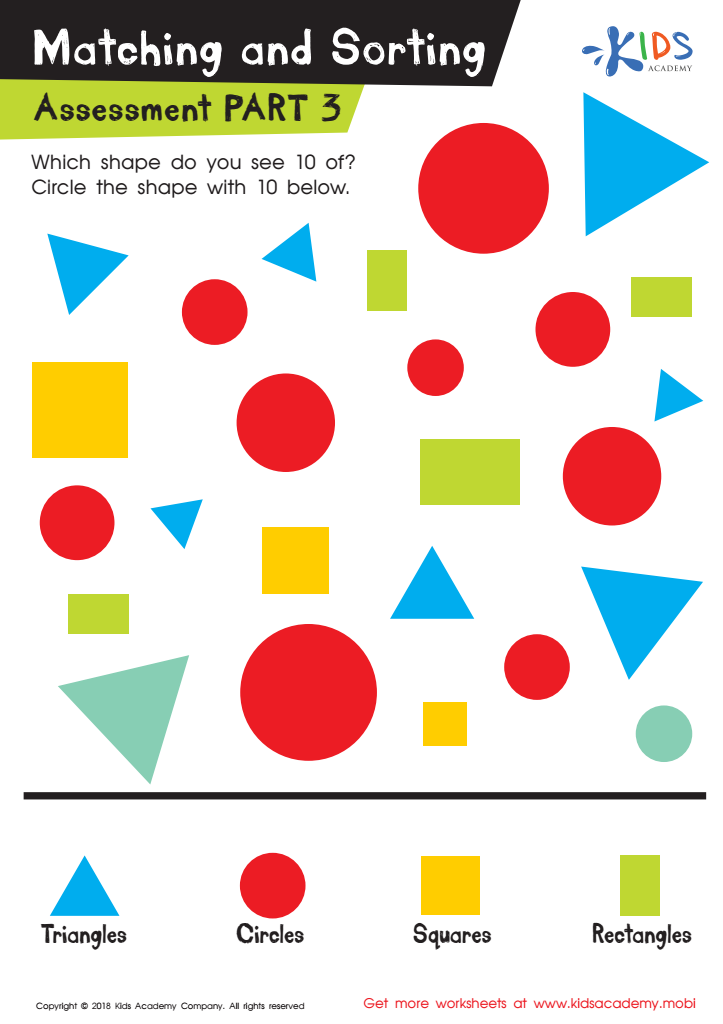
Matching and Sorting for Kindergarten: Assessment 3 Worksheet
Assess your child's basic geometry skills and properties with a colorful worksheet! Utilize visual discrimination and number sense to identify groups of ten and sort objects by bold colors. Challenge them to differentiate shapes and sizes.
 Assign to My Students
Matching and Sorting for Kindergarten: Assessment 3 Worksheet
Worksheet
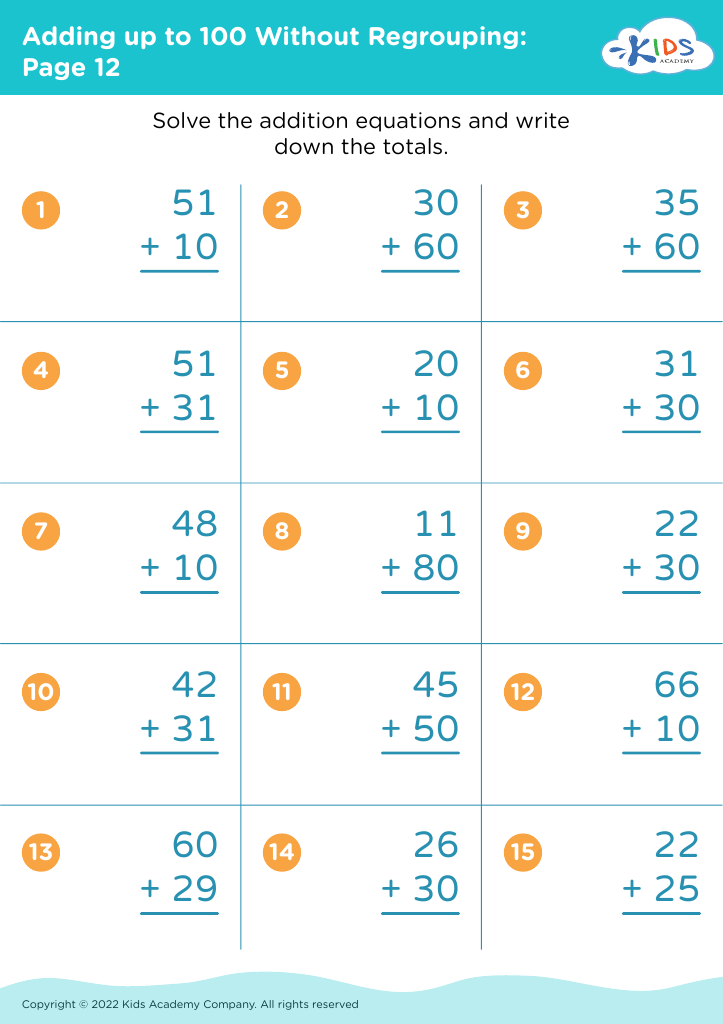
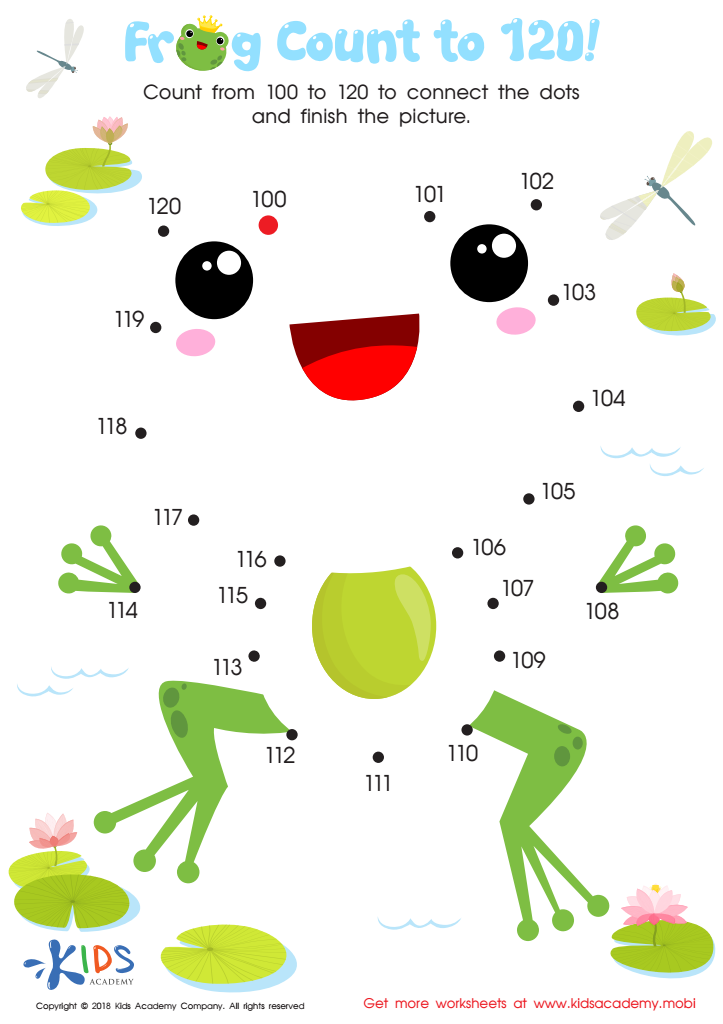
Frog Count to 120 Worksheet
Count from 100 to 120 with your child to help them finish the worksheet! Pet owners will be especially excited to help the cute frog complete its picture. With proper counting, your child will be able to easily connect the dots and finish the picture of the green frog.
Frog Count to 120 Worksheet
Worksheet
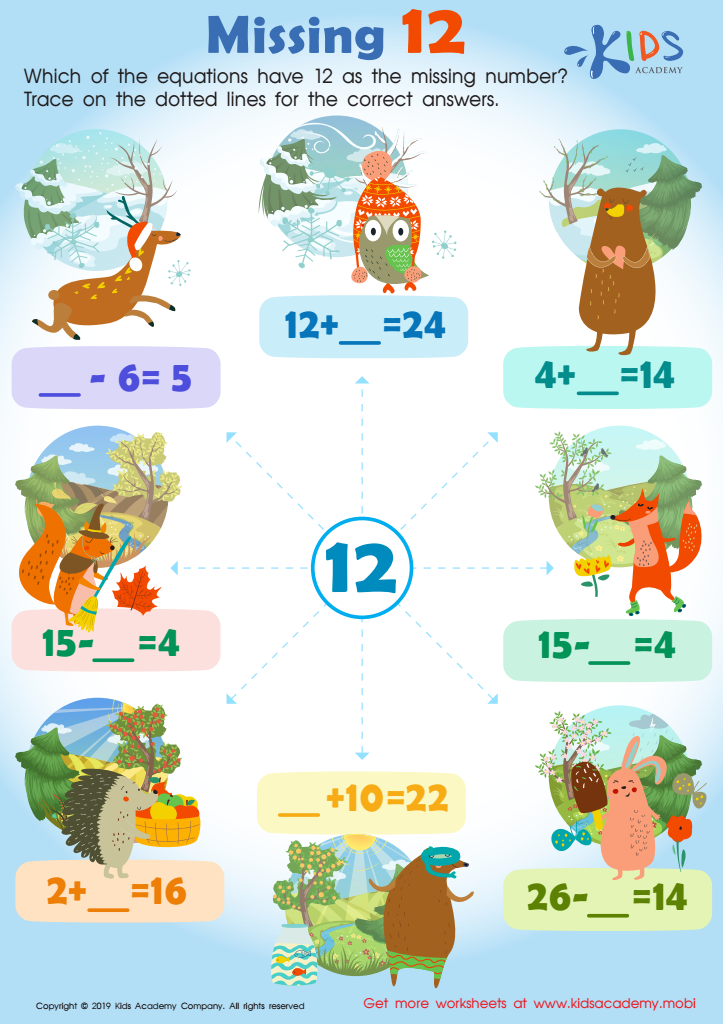
Missing 12 Worksheet
Help your kids find the missing number in this fun nature worksheet. Engage them with this educational exercise - combining teaching and fun. Encourage them to practice addition and subtraction skills. Look at the picture with them. Which equations have 12 as the missing number? Guide them to trace the dotted lines for the correct answers.
Missing 12 Worksheet
Worksheet
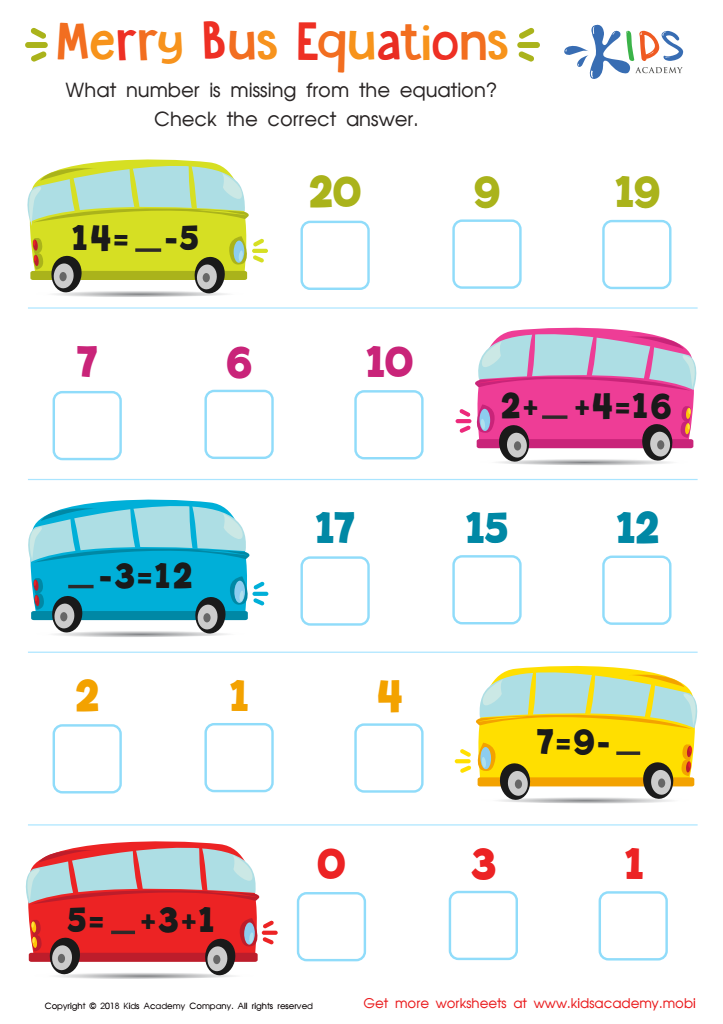
Merry Bus Equations Worksheet
Help your child master elementary math with this fun worksheet! Featuring colorful buses and a variety of addition and subtraction equations, some with 3-digit numbers, it encourages kids to find the missing number and choose the correct answer. Give them the practice they need for success!
Merry Bus Equations Worksheet
Worksheet
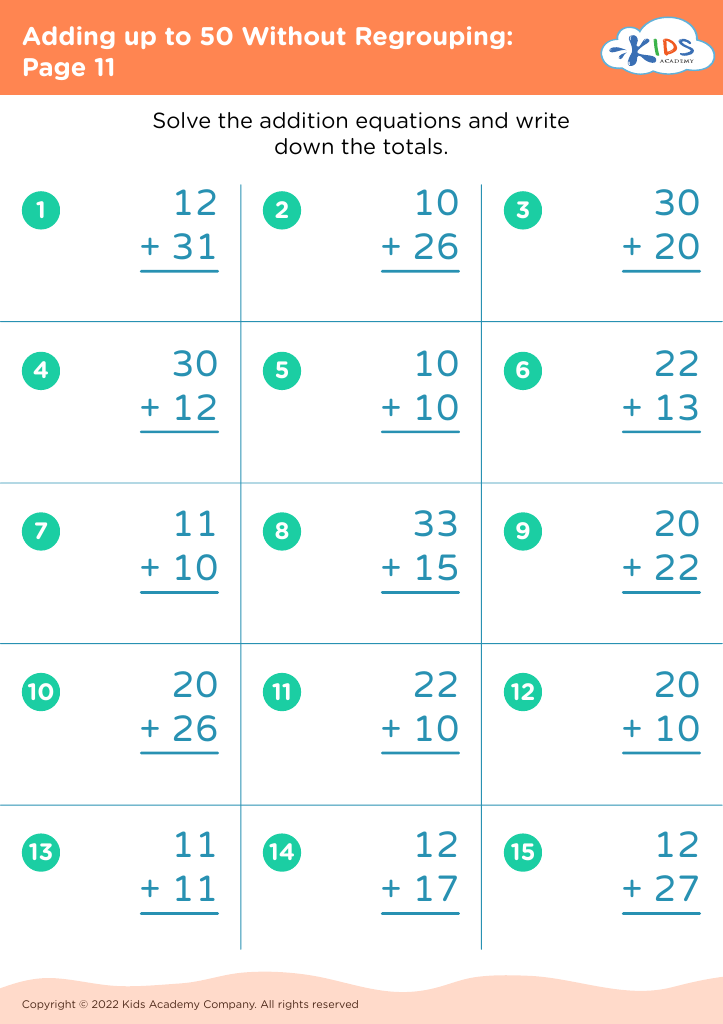
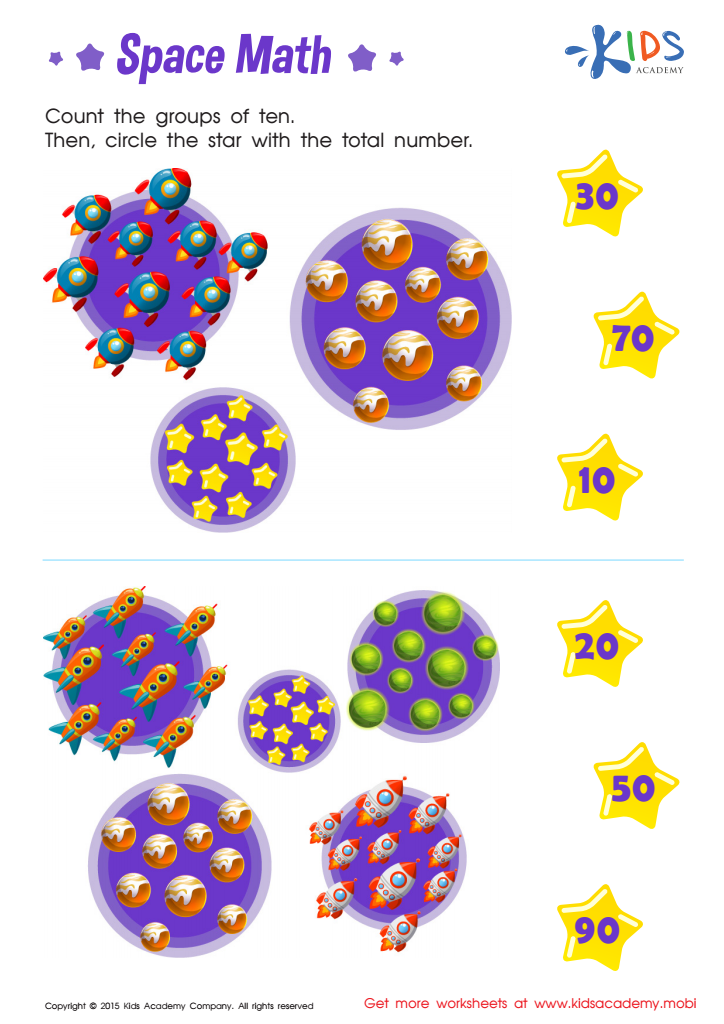
Learn dozens: Space math Worksheet
This worksheet uses Singapore Math's approach to help your child visually understand basic counting and math problems.
Learn dozens: Space math Worksheet
Worksheet
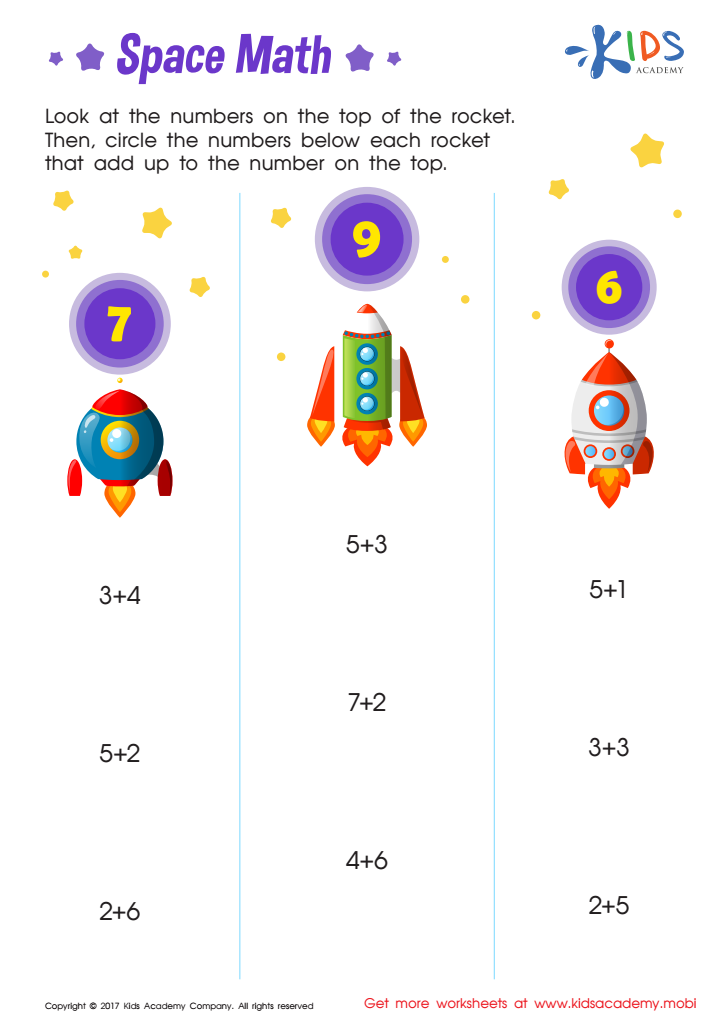
Addition: Space Math Worksheet
Fun and engaging space-themed practice with vivid pictures and matching numbers will make learning more meaningful. Take their math skills out of this galaxy today with Kids Academy!
Addition: Space Math Worksheet
Worksheet
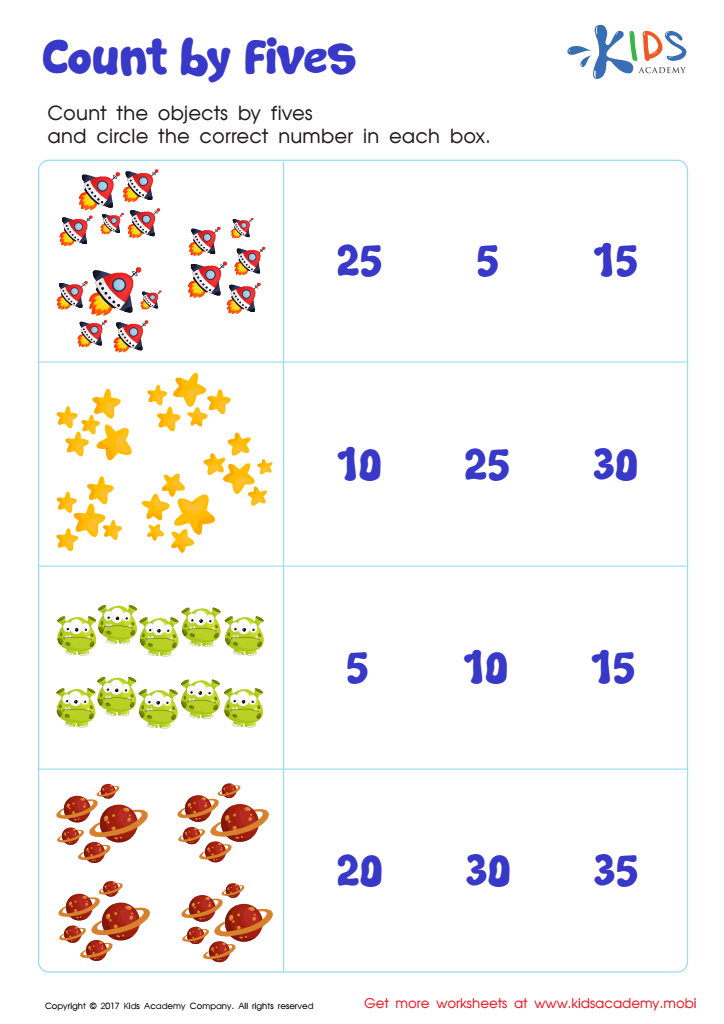
Skip Counting by 5s: Space Math Printable
This worksheet will provide your child with fun and practice counting by 5's. It'll help them visually count numbers, use problem solving skills and make connections between individual and groups of numbers. Counting money and various math concepts will become easier with this invaluable skill. Blast off with this fun and educational worksheet featuring space graphics.
Skip Counting by 5s: Space Math Printable
Worksheet
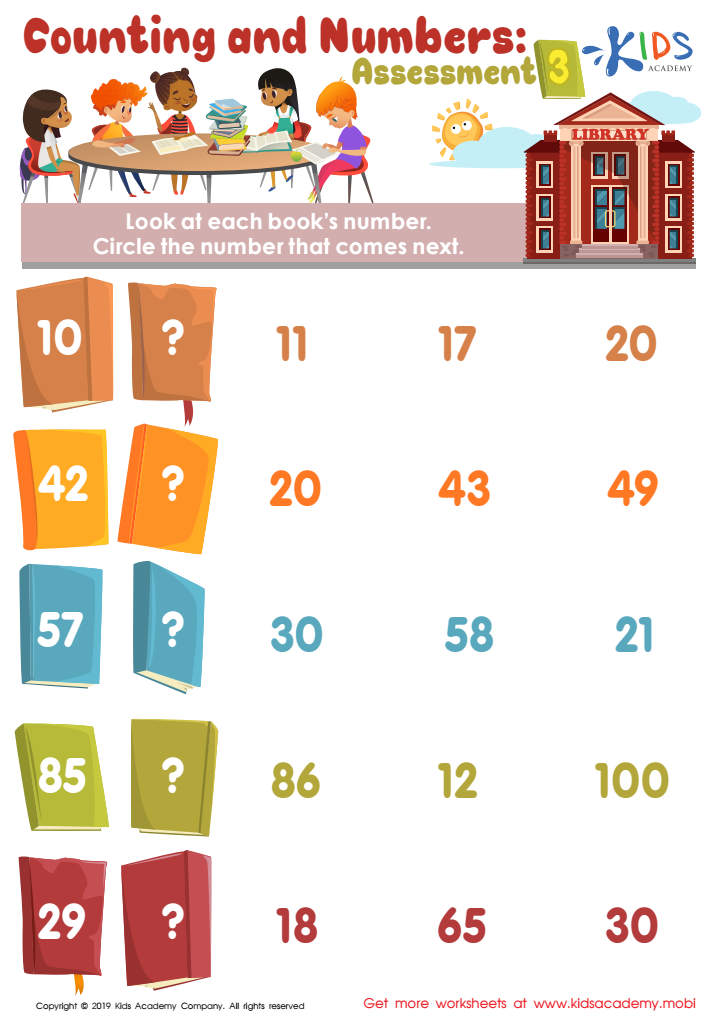
Counting and Numbers: Assessment Worksheet
Number line thinking is an essential math skill. Kids using this skill can compute math problems accurately and quickly. Our free assessment tests number line recognition; have your child pick the right number from the given options to follow the current number on the line. This assessment will give you an idea of their counting skills.
Counting and Numbers: Assessment Worksheet
Worksheet
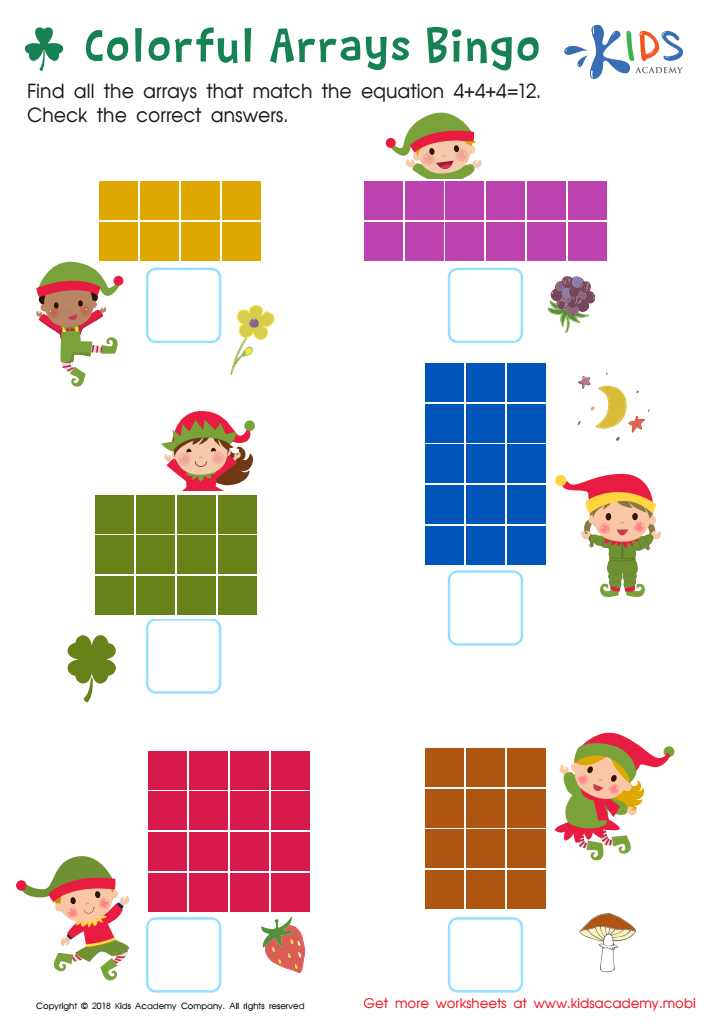
Colorful Arrays Bingo Worksheet
This worksheet stimulates thinking about arrays and how to represent them. Instruct students to count the 6 arrays and find which ones sum up to 12. Ask them to check the answers for accuracy.
Colorful Arrays Bingo Worksheet
Worksheet
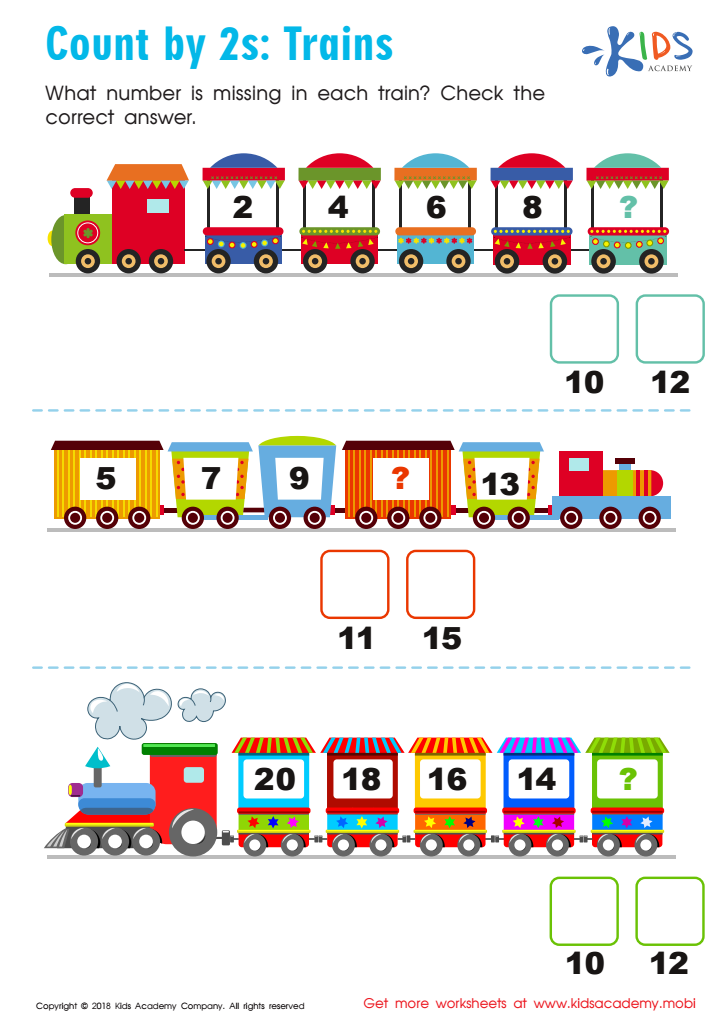
Count by 2's: Trains Worksheet
Teaching your kids quick computations? Get them skip-counting by 2s! They'll love filling in the colors of the train while counting, and it will help with 'counting up' or backward on paper or in their heads - essential for quick computations later.
Count by 2's: Trains Worksheet
Worksheet
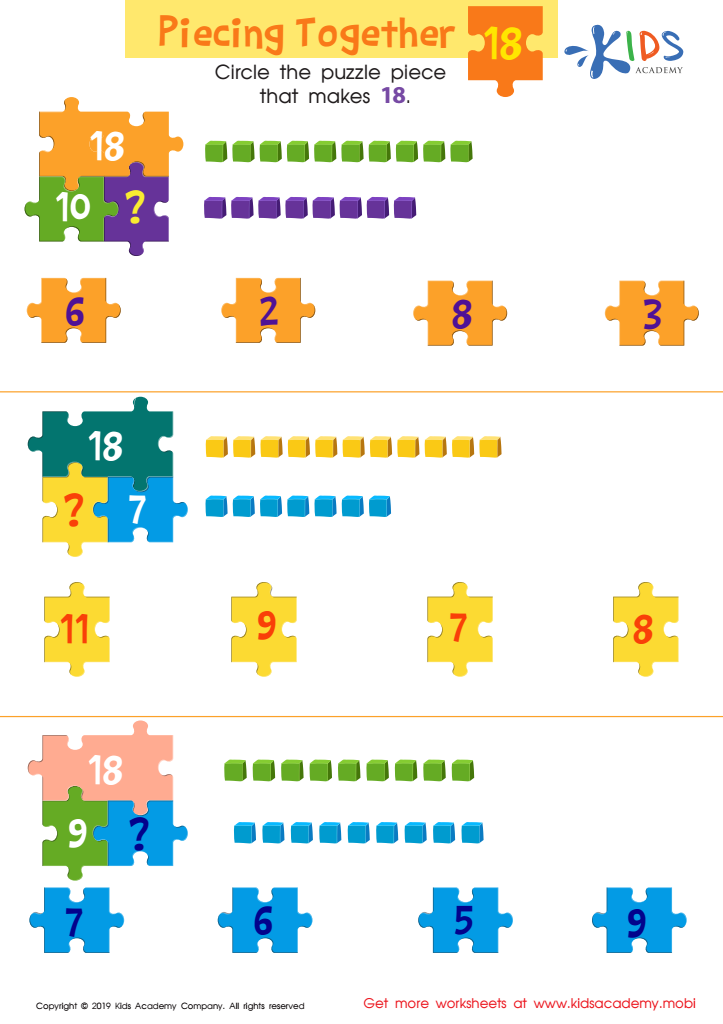
Piecing Together 18 Worksheet
Let your preschoolers learn and have fun with this colorful worksheet. Look at the picture with them and ask what they see. Help them solve the equations missing on each puzzle piece and then circle the one that will make the bottom puzzle piece numbers equal 16. Puzzles and bright colors make learning easy and enjoyable!
Piecing Together 18 Worksheet
Worksheet
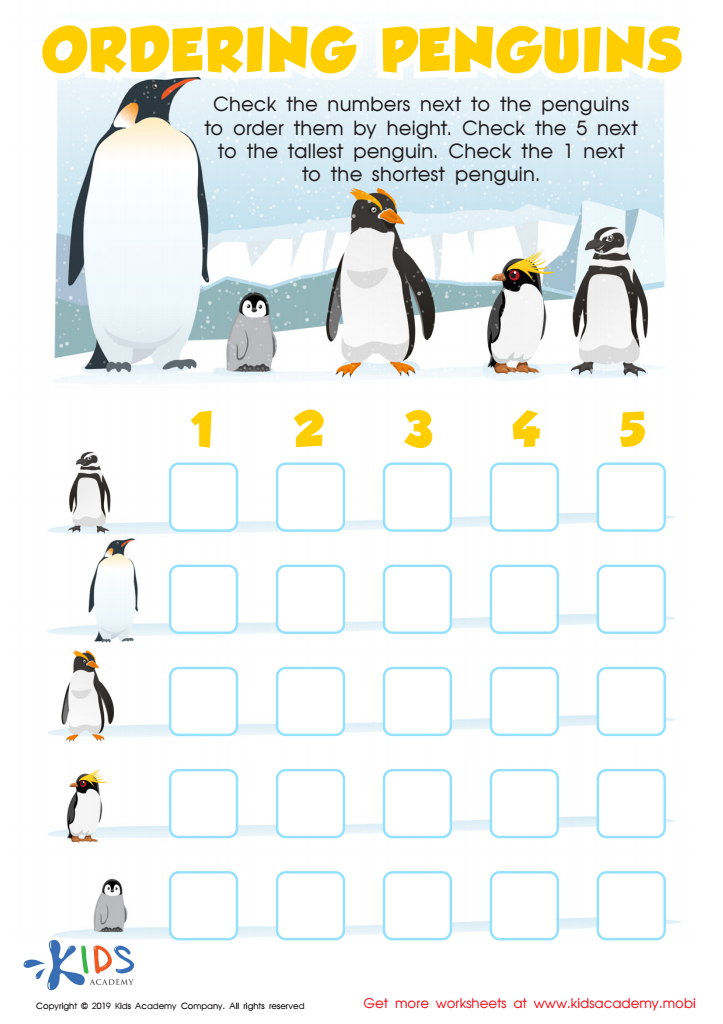
Ordering Penguins Worksheet
Check photos of penguins with your kids, then help them order by height. Tallest gets a 5, shortest gets a 1. Learn cool facts while having fun!
Ordering Penguins Worksheet
Worksheet
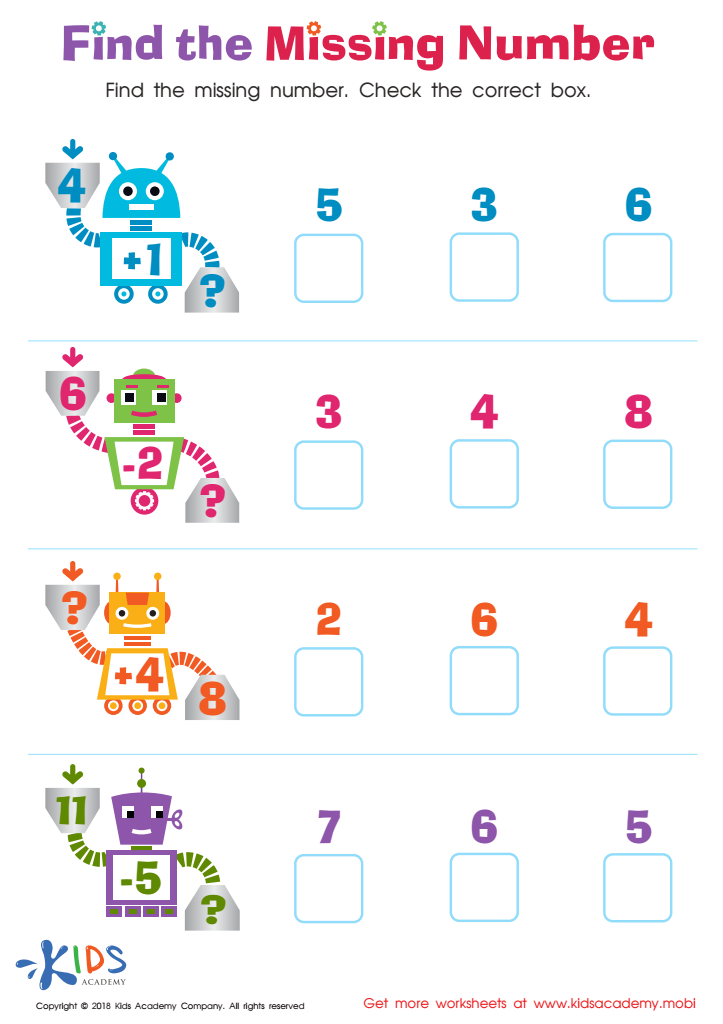
Find the Missing Number Worksheet
Repetition and practice are key to success in elementary math. Kids Academy's printable worksheet featuring delightful robots with addition and subtraction problems is a great way to reinforce this. Your child must find the missing number, check the box and complete the sheet. Here's a fun way to foster learning!
Find the Missing Number Worksheet
Worksheet
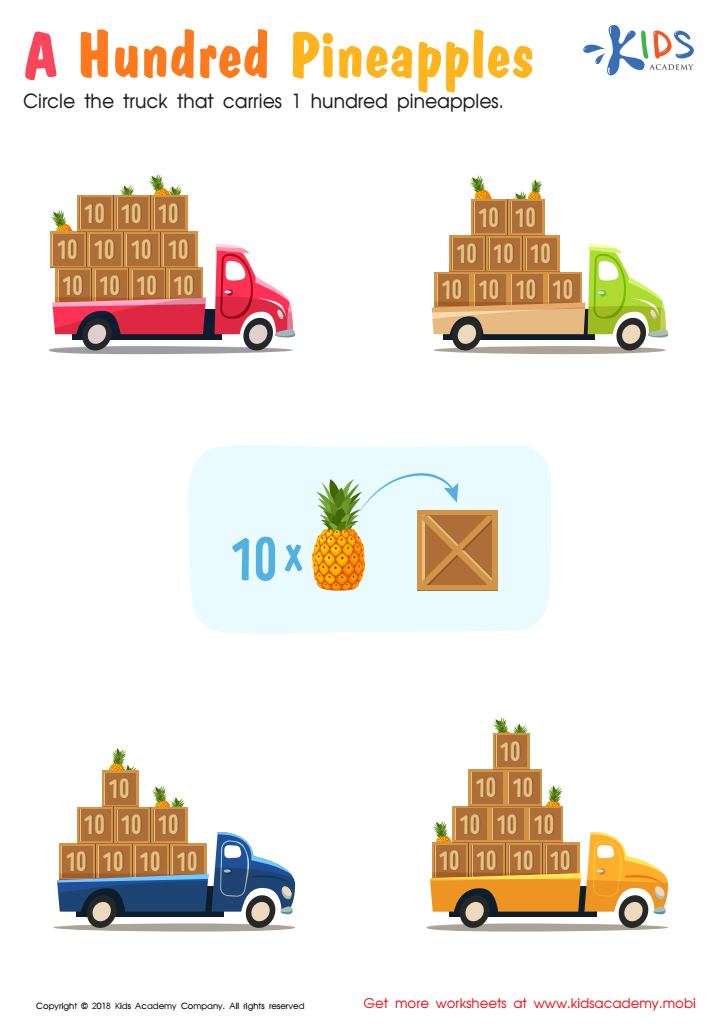
A Hundred Pineapples Worksheet
Can your child count in tens? Show them how to count 100 boxes in stacks of tens. A worksheet can help them understand the concept. Ask them to count boxes of pineapples in stacks of tens and circle the truck with 100 pineapples.
A Hundred Pineapples Worksheet
Worksheet
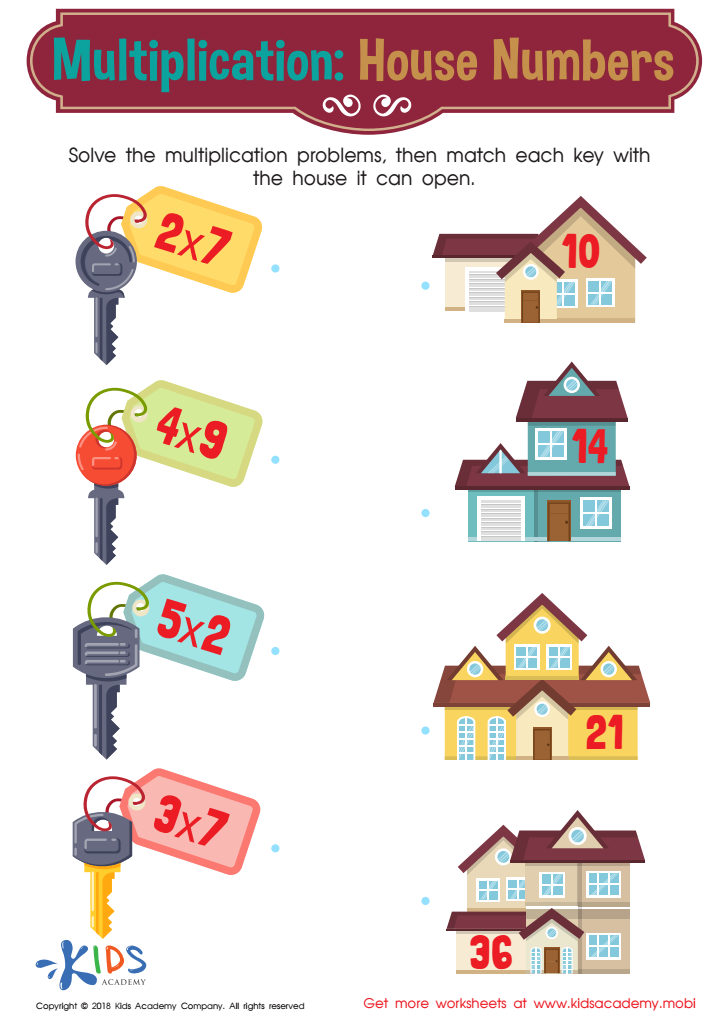
House Numbers Worksheet
This multiplication worksheet is perfect for grade 3 students to sharpen their math skills! Each problem unlocks the door to a house on the page - can they figure out which key fits which door? By solving each problem, they'll boost their multiplication skills and have fun along the way.
House Numbers Worksheet
Worksheet
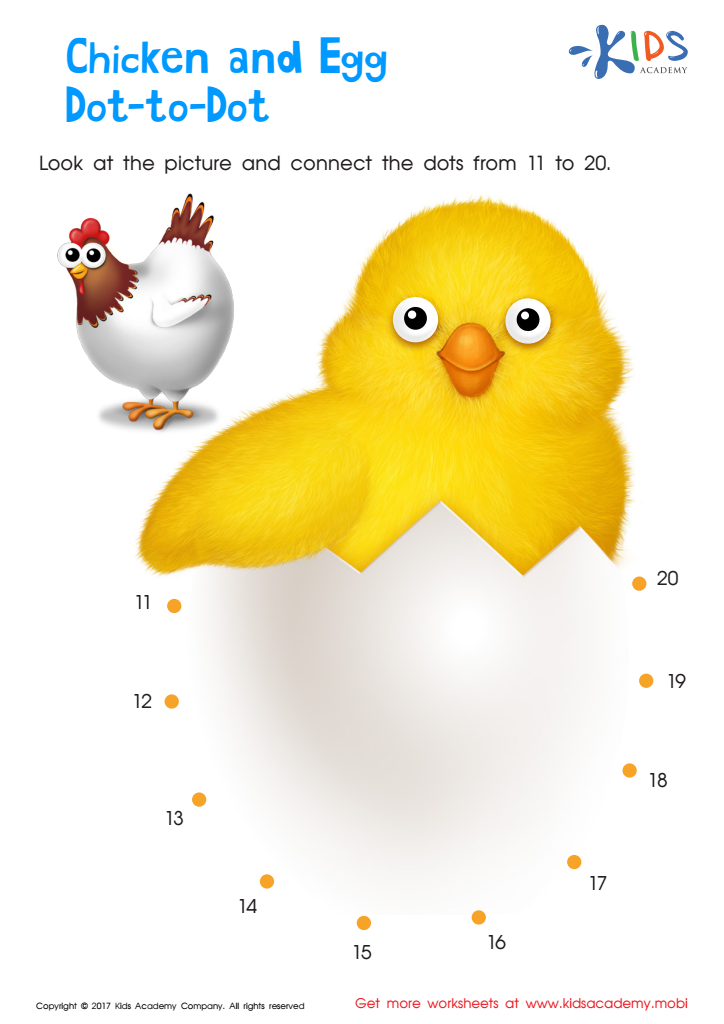
Ordering 11–20: Chicken & Egg Dot–to–dot Worksheet
Help your child hatch the chick and practice their counting skills with this dot to dot worksheet – the chicken came first! Connect the dots 11-20 to have fun and learn at the same time. Experience meaningful practice and gain confidence while drawing great pictures.
Ordering 11–20: Chicken & Egg Dot–to–dot Worksheet
Worksheet
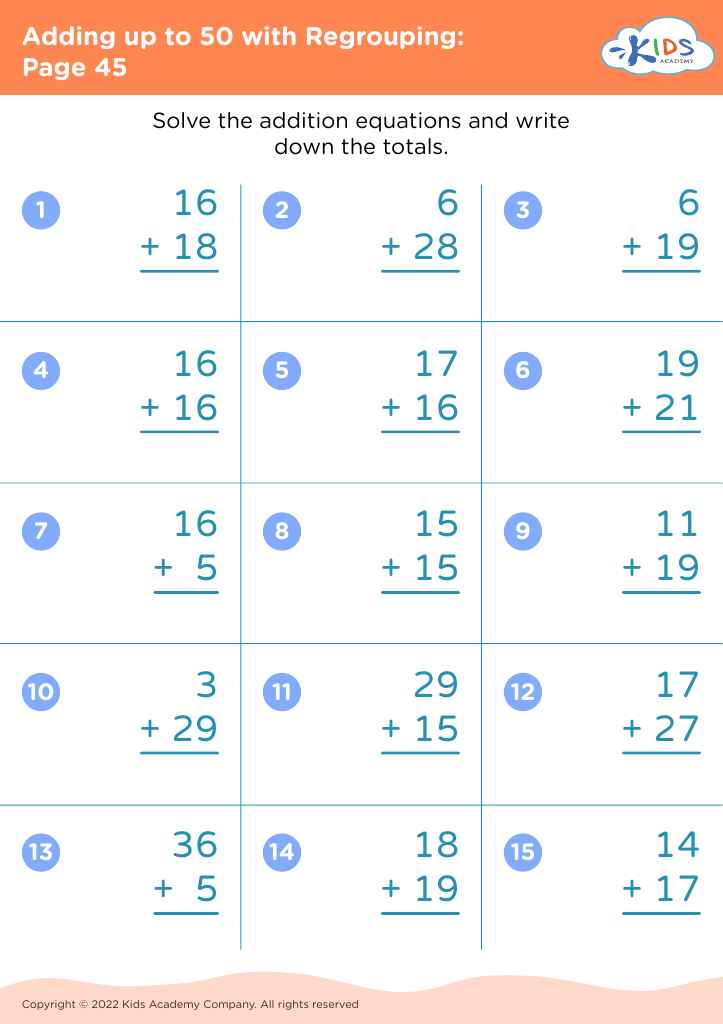
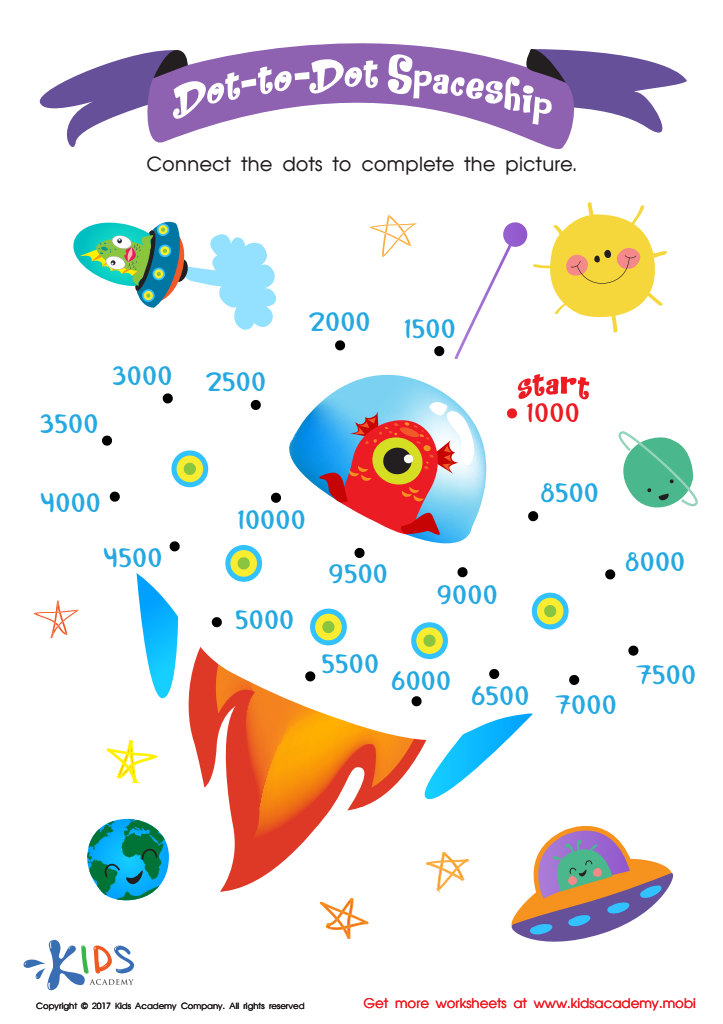
Dot to Dot Worksheet for 3rd Grade
Let your 3rd grader develop better number skills with this dot-to-dot worksheet! They can have fun outlining a spaceship as they skip count by 500 up to 10,000. It's a great way to boost their number sense and make learning more exciting.
Dot to Dot Worksheet for 3rd Grade
Worksheet
Join Kids Academy for Free
Who is primarily going to use this learning content?







Number sequencing is a critical foundational skill for children ages 5-9 that plays a significant role in their academic and cognitive development. Understanding number sequences helps young learners grasp the concept of order and patterns, key components of mathematical thinking.
First, it enhances their numerical literacy by teaching them how numbers progress, paving the way for more complex arithmetic operations like addition, subtraction, and multiplication. Recognizing patterns within these sequences supports problem-solving skills, enabling children to predict and project outcomes.
Secondly, number sequencing is deeply intertwined with everyday activities. It builds a fundamental framework for other essential life skills such as telling time, counting money, and even understanding measurements. The ability to sequence numbers successfully nurtures critical thinking, organizational skills, and attention to detail.
For teachers, incorporating number sequencing in lessons can solidify classroom learning and make abstract concepts tangible. For parents, reinforcing these skills at home through games and simple activities not only supports academic progress but also fosters a love for learning and encourages parental engagement in their child’s education.
Therefore, both teachers and parents should prioritize number sequencing, recognizing it as a foundational building block that supports broader academic skills and real-world applications. Investing time and resources in this area can significantly influence a child’s long-term academic journey and quantitative reasoning abilities.








