Place Value Worksheets for Ages 5-9 - Page 2
74 filtered results
-
From - To
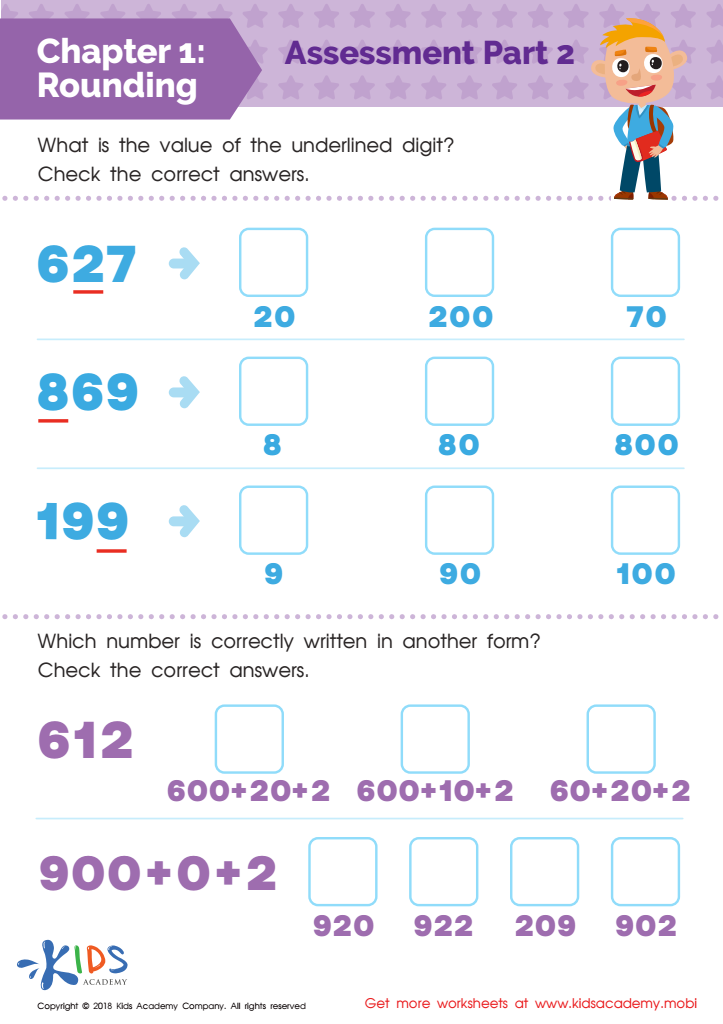
Rounding 3 Digit Numbers Worksheet
 Assign to My Students
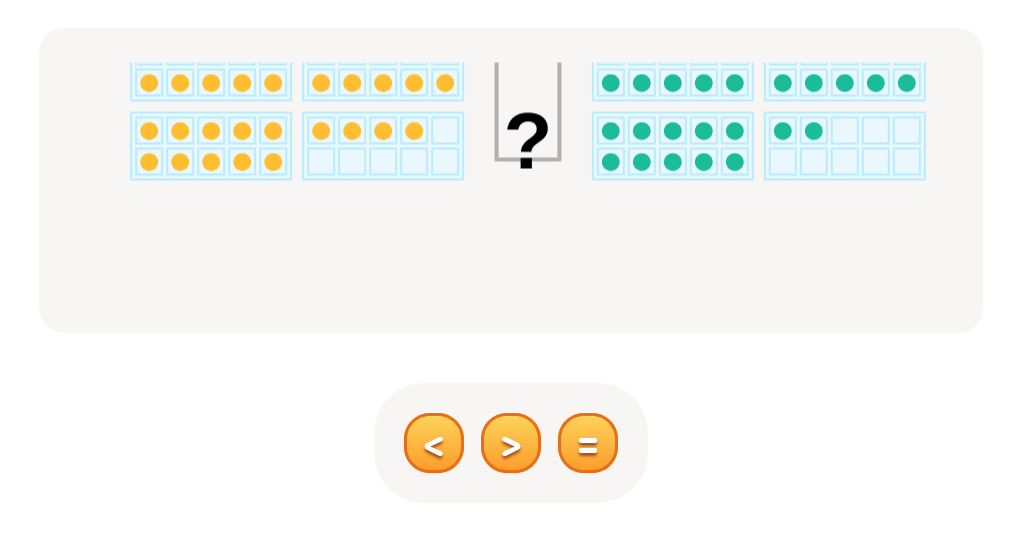

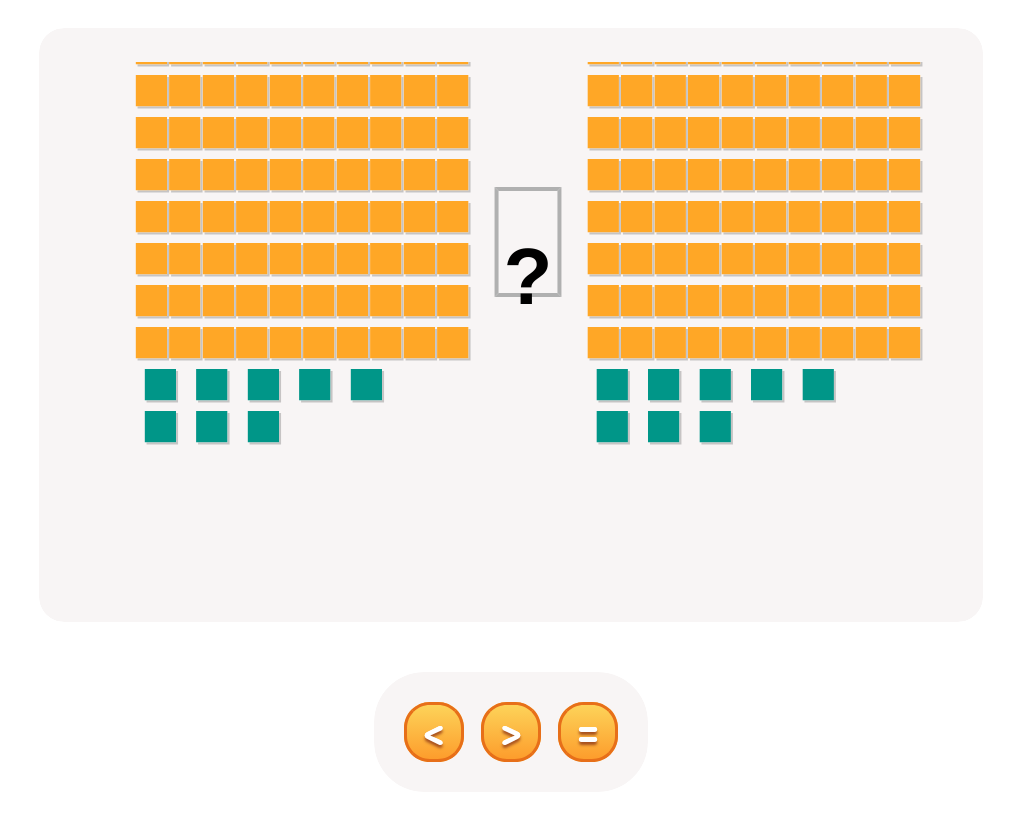
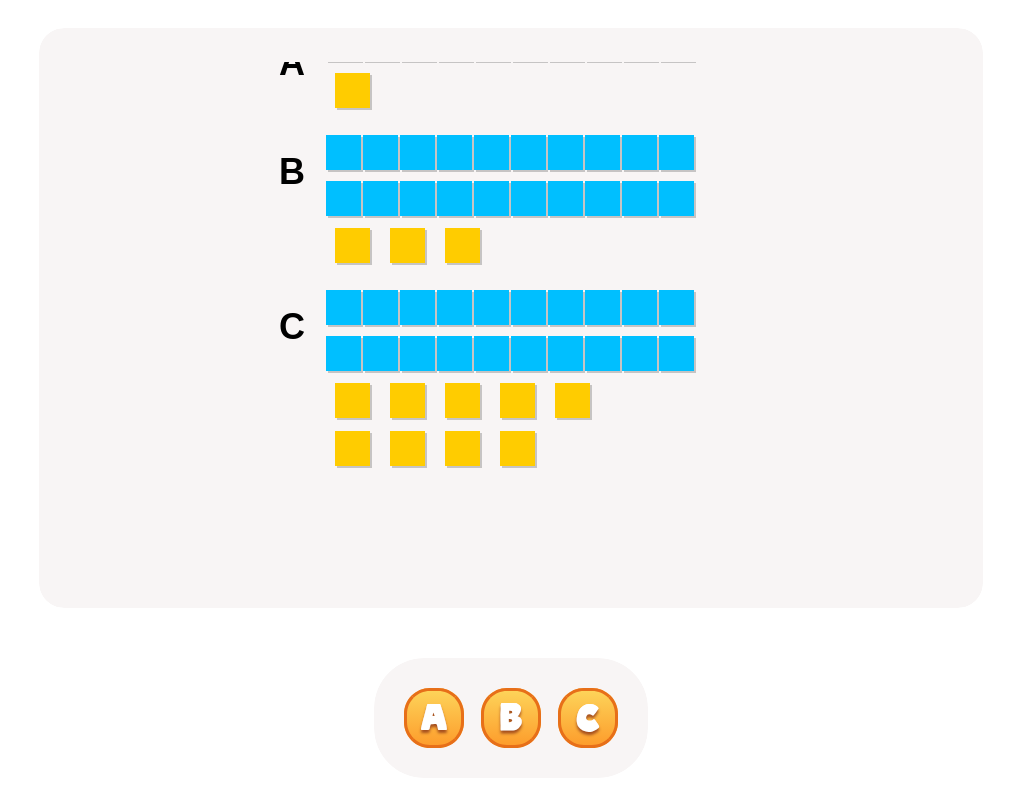
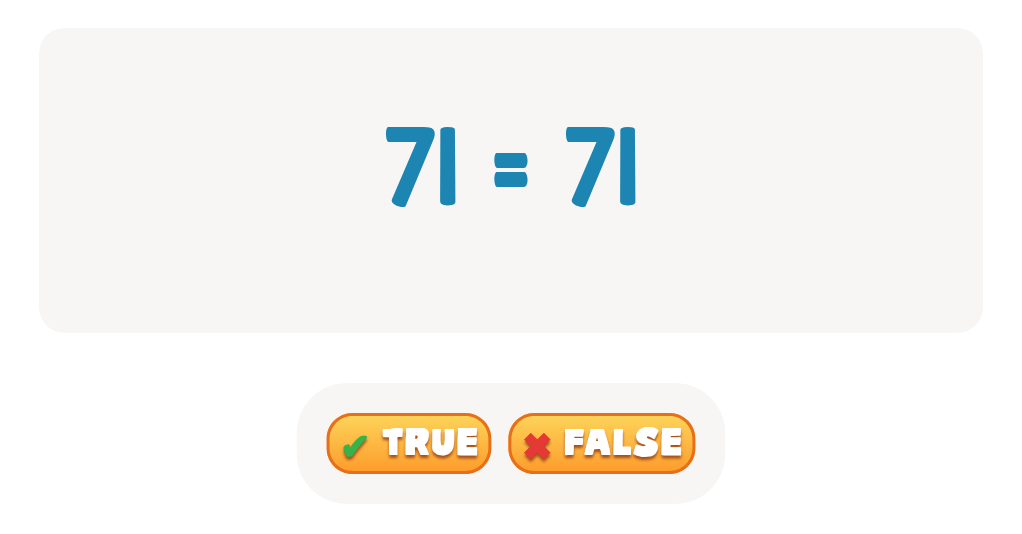
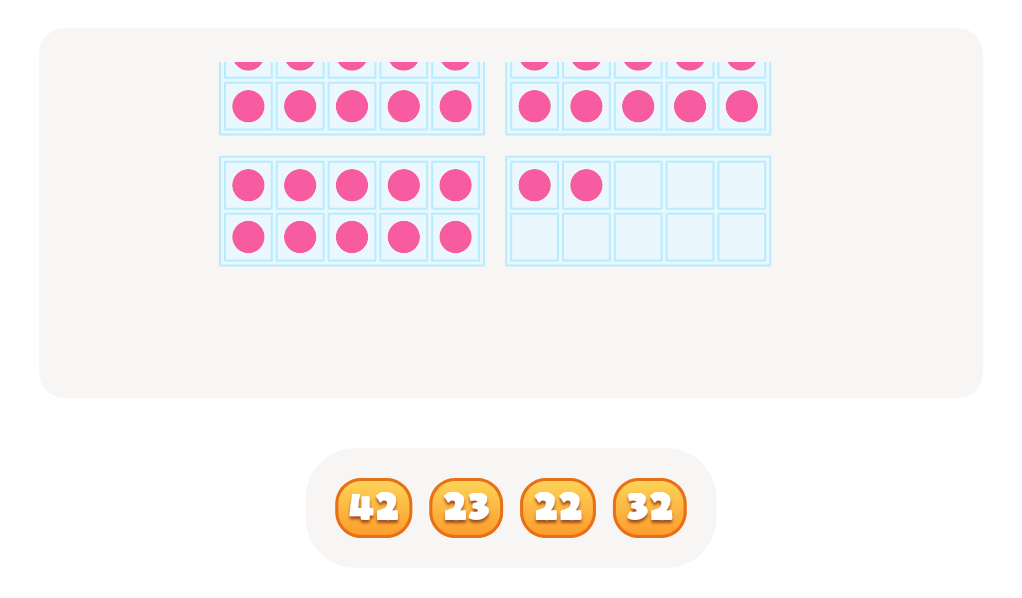
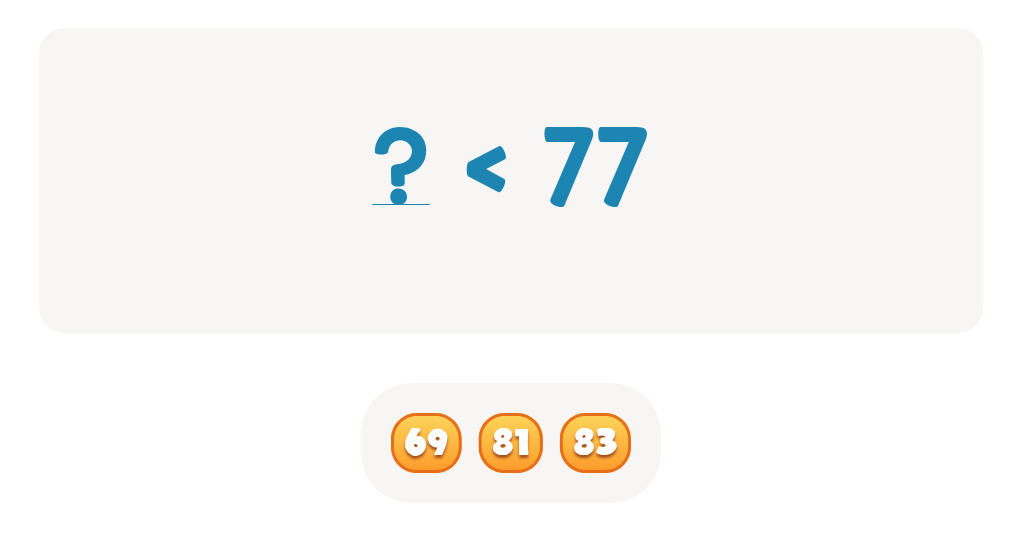
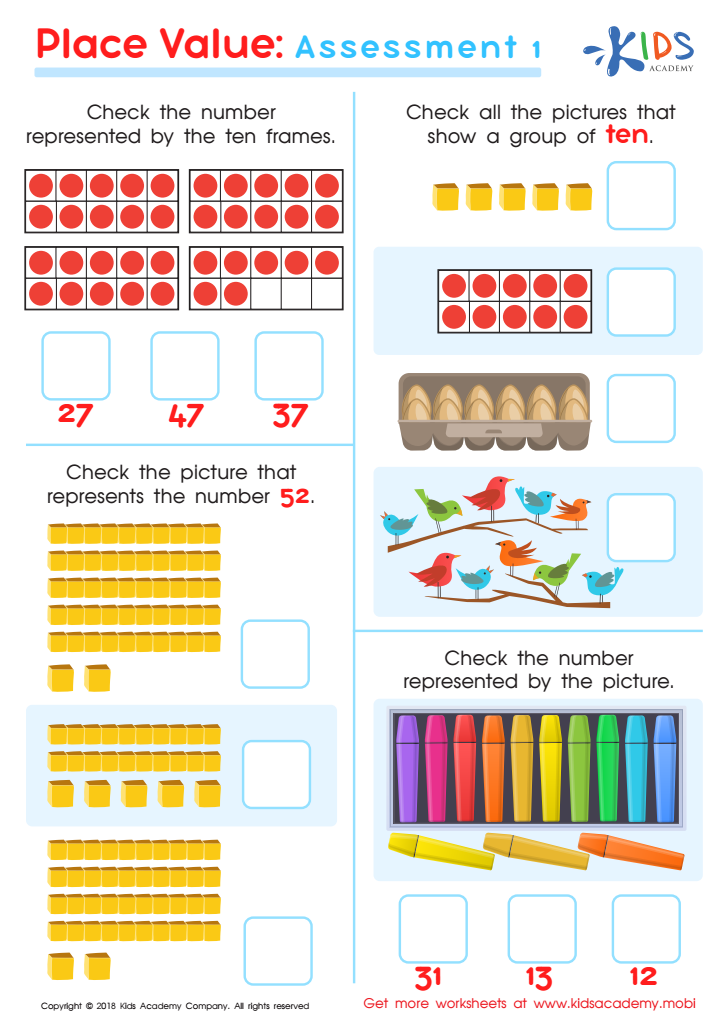
Place Value: Assessment 1 Worksheet
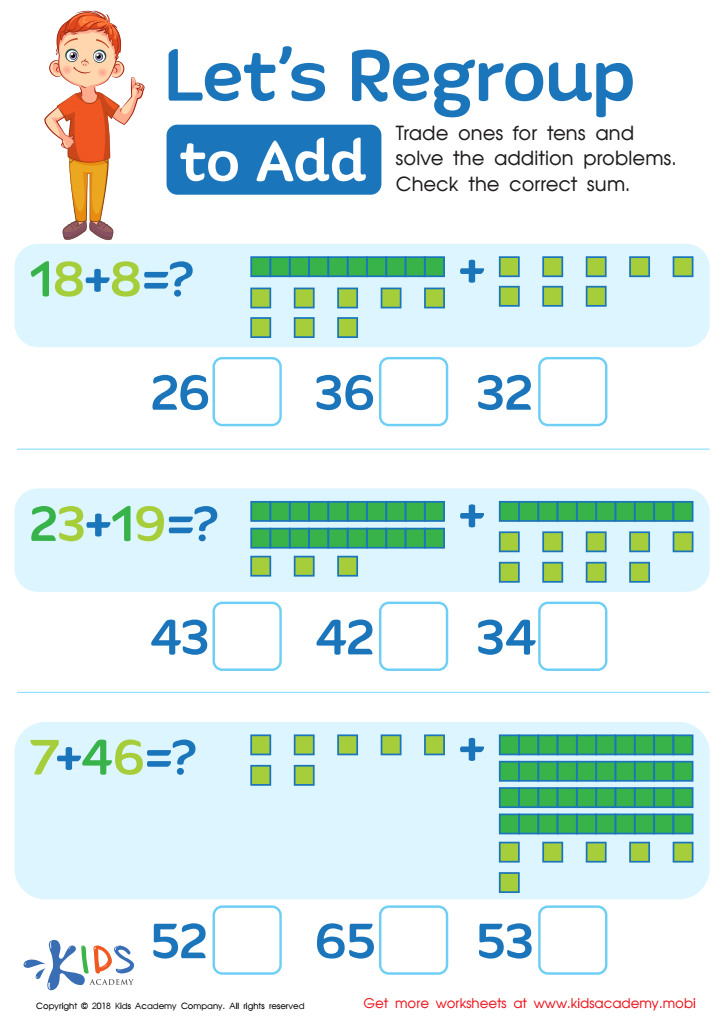
Let's Regroup to Add Worksheet
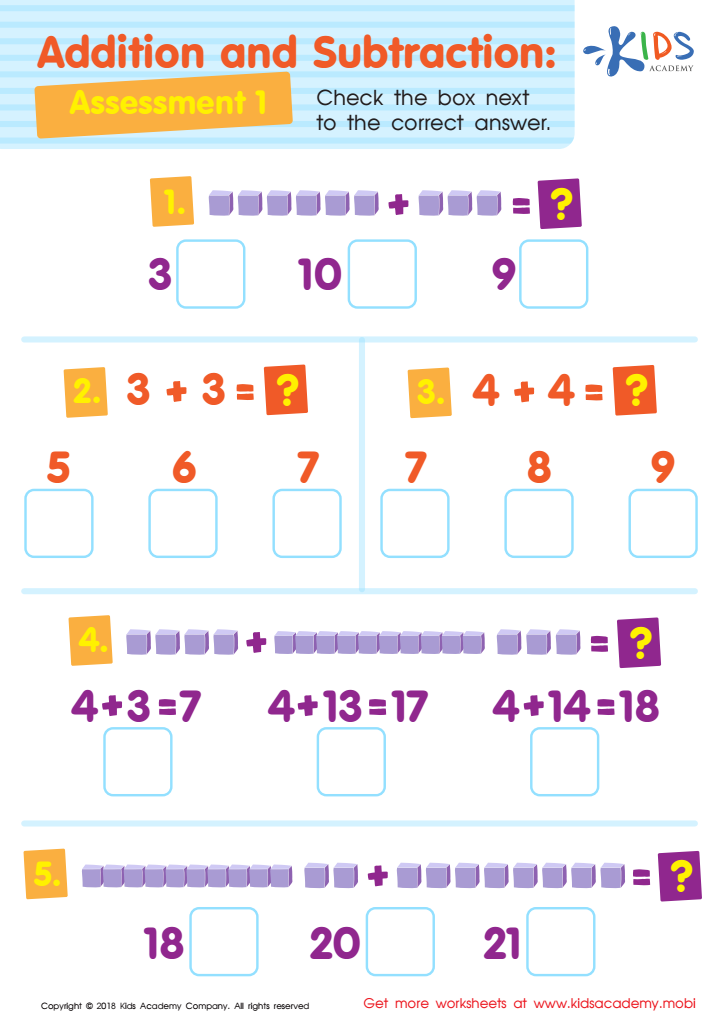
Addition and Subtraction Assessment 1 Worksheet
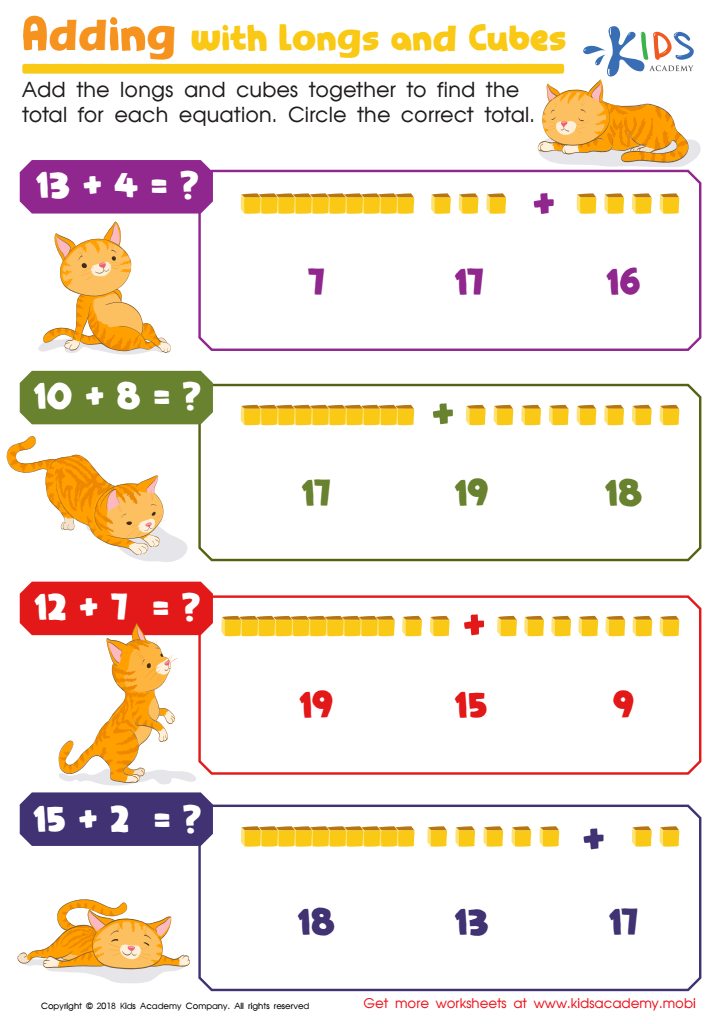
Adding With Longs and Cubes Worksheet
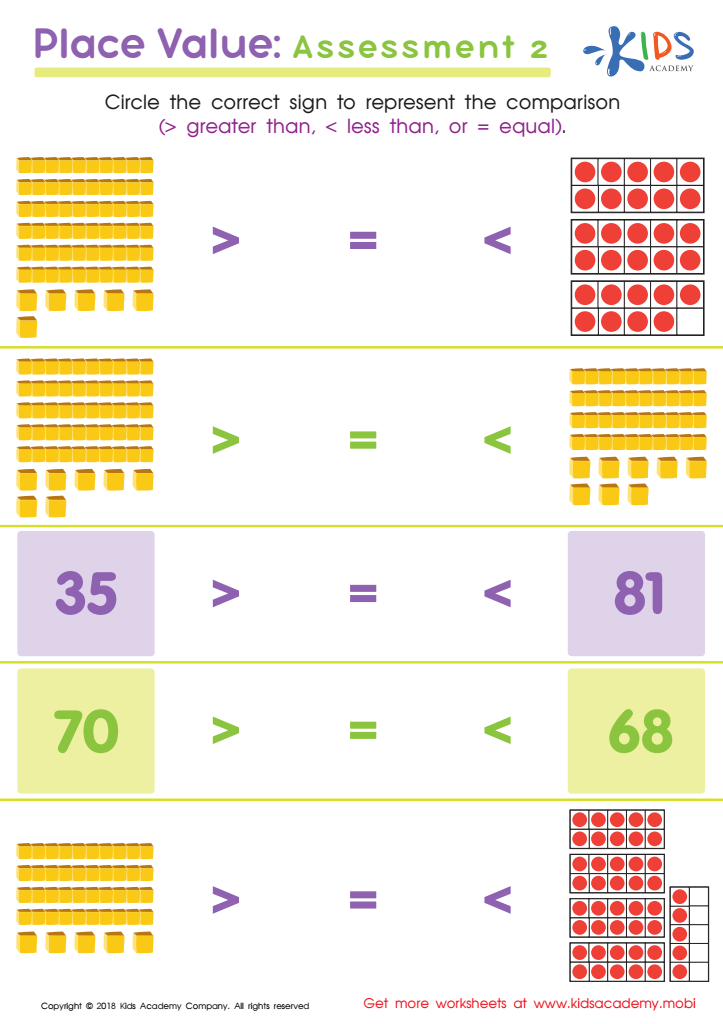
Place Value: Assessment 2 Worksheet
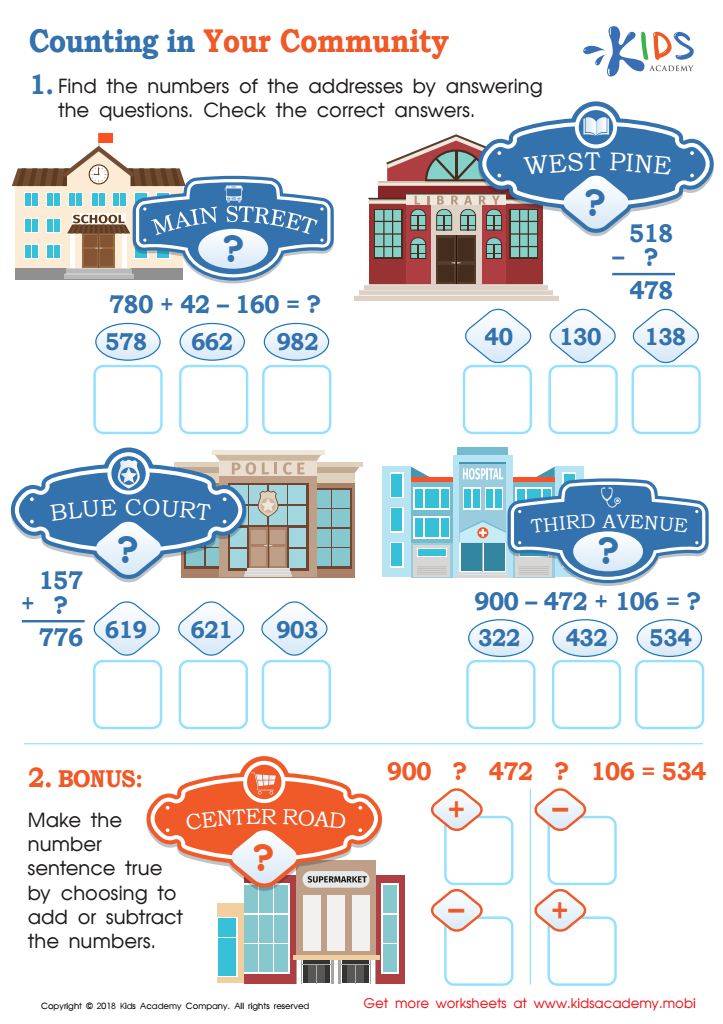
Counting in Your Community Worksheet
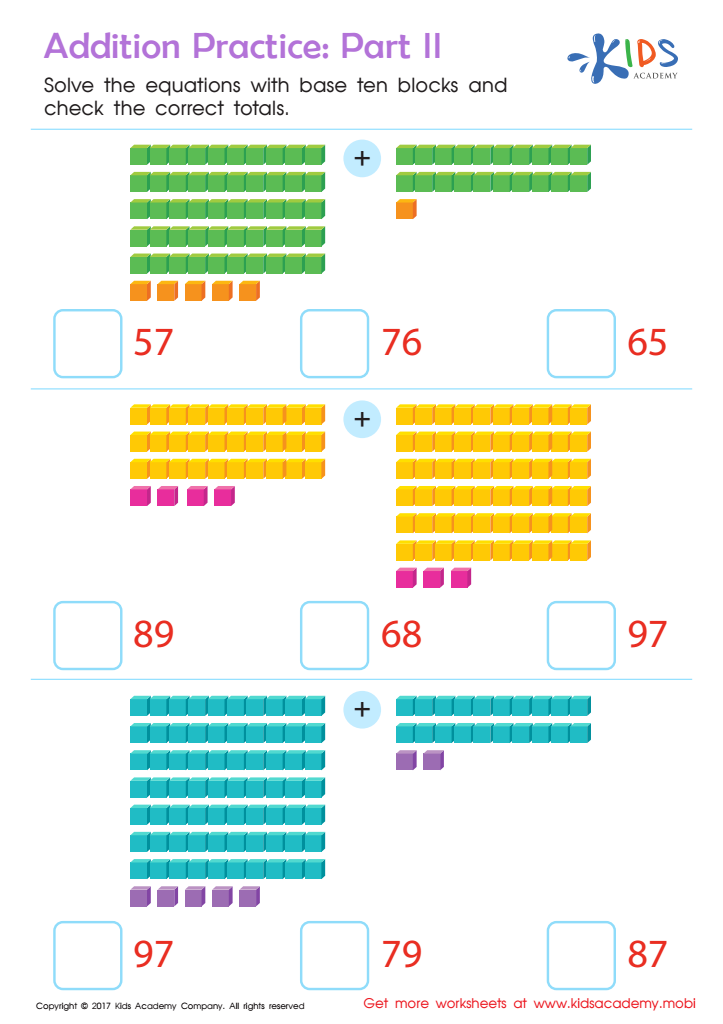
Addition Practice Sheet: Part 2
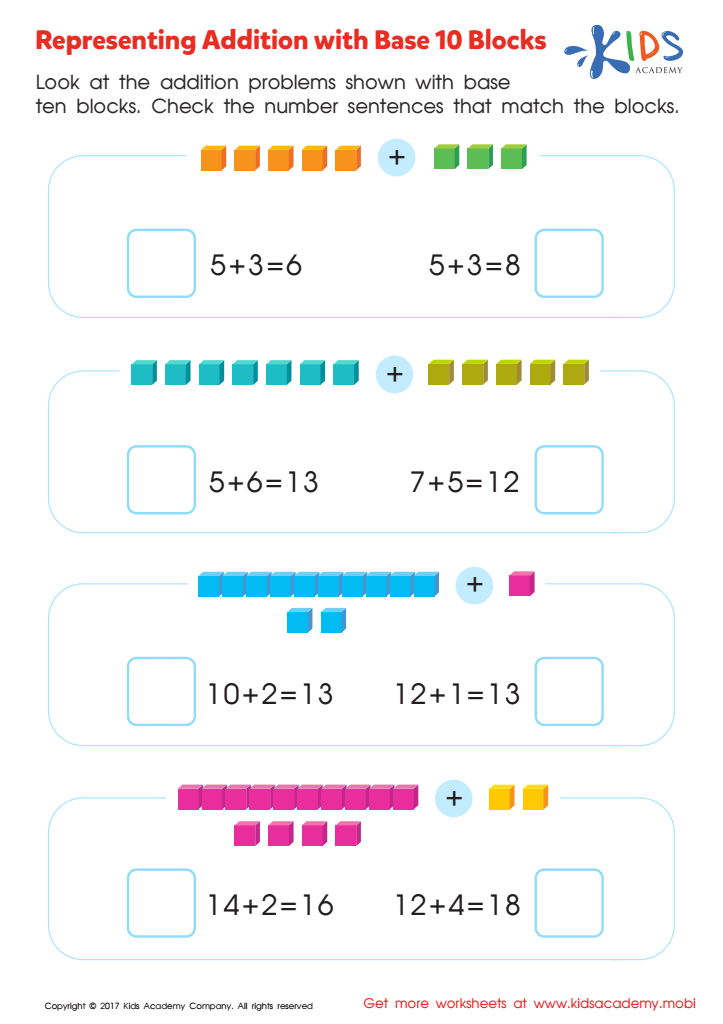
Representing Addition with Base 10 Blocks Worksheet
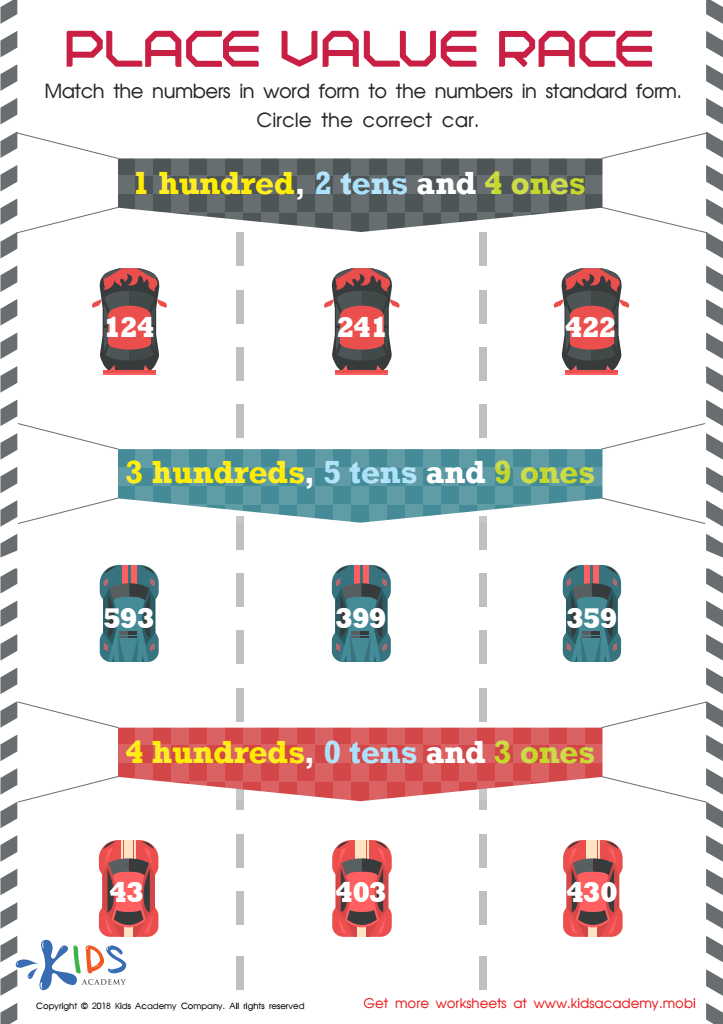
Place Value Race Worksheet
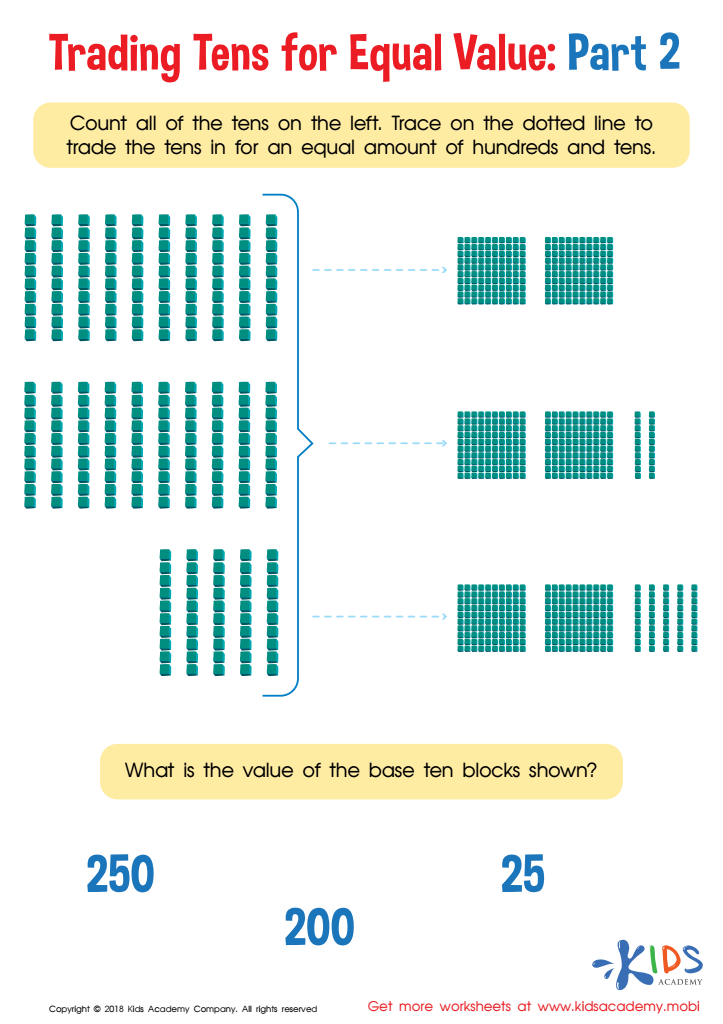
Trading Tens for Equal Value Worksheet: Part 2
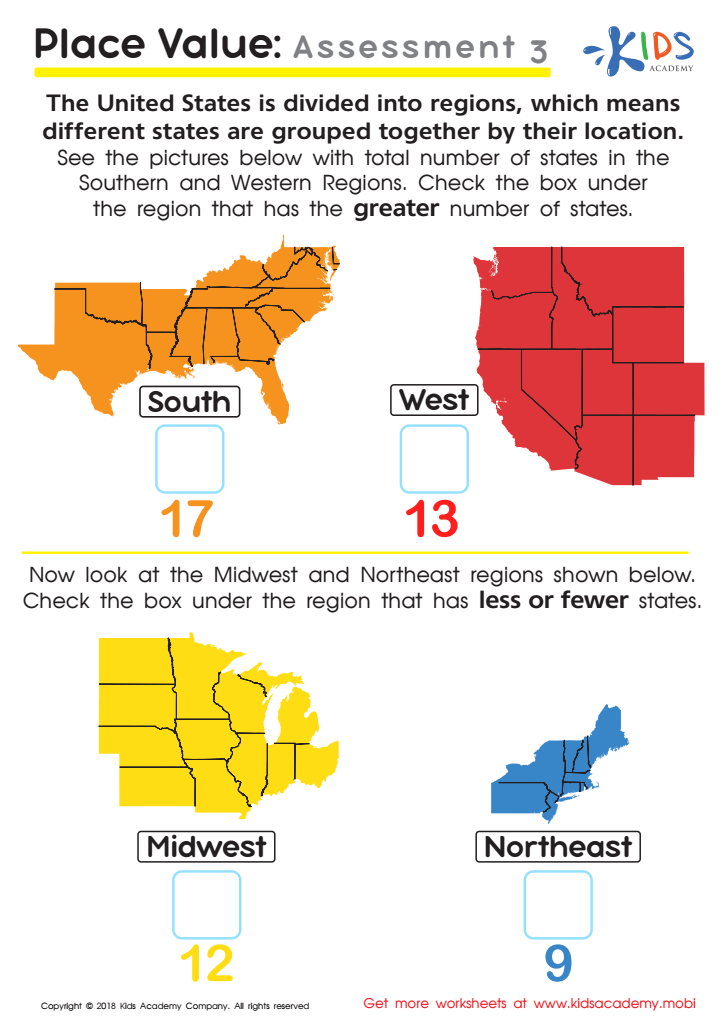
Place Value: Assessment 3 Worksheet
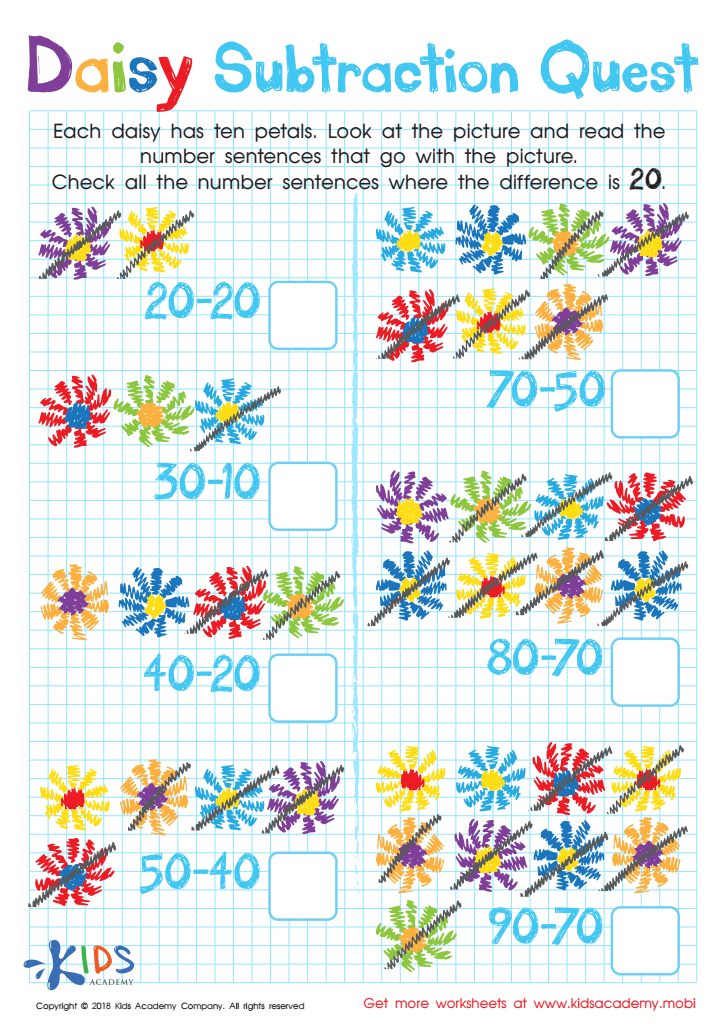
Daisy Subtraction Quest Worksheet
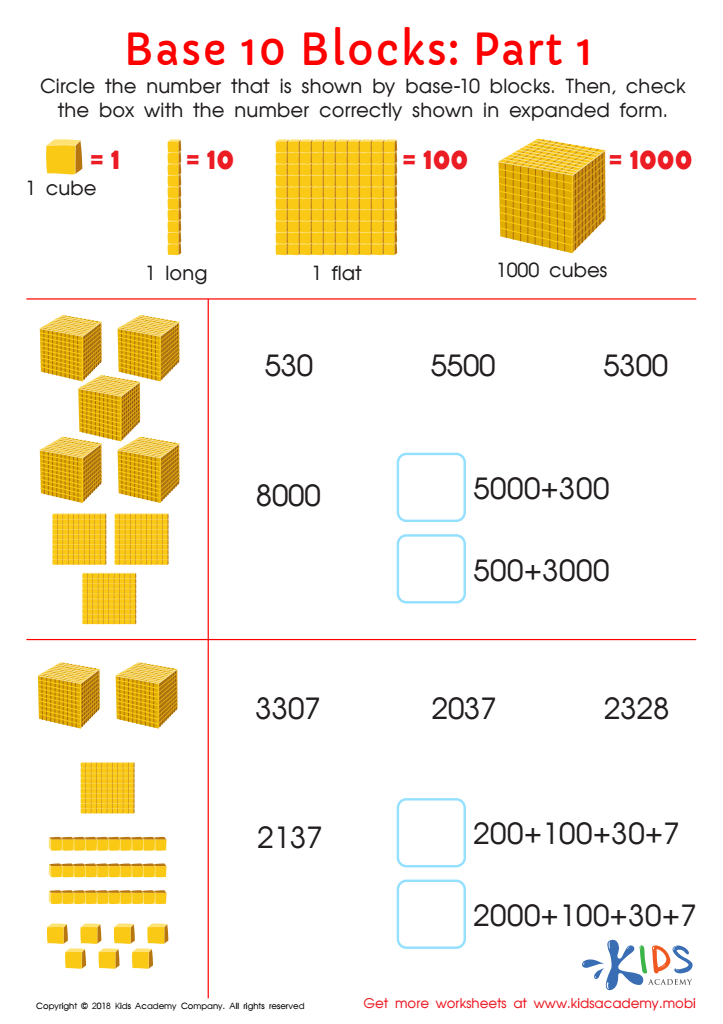
Base 10 Blocks Worksheet: Part 1
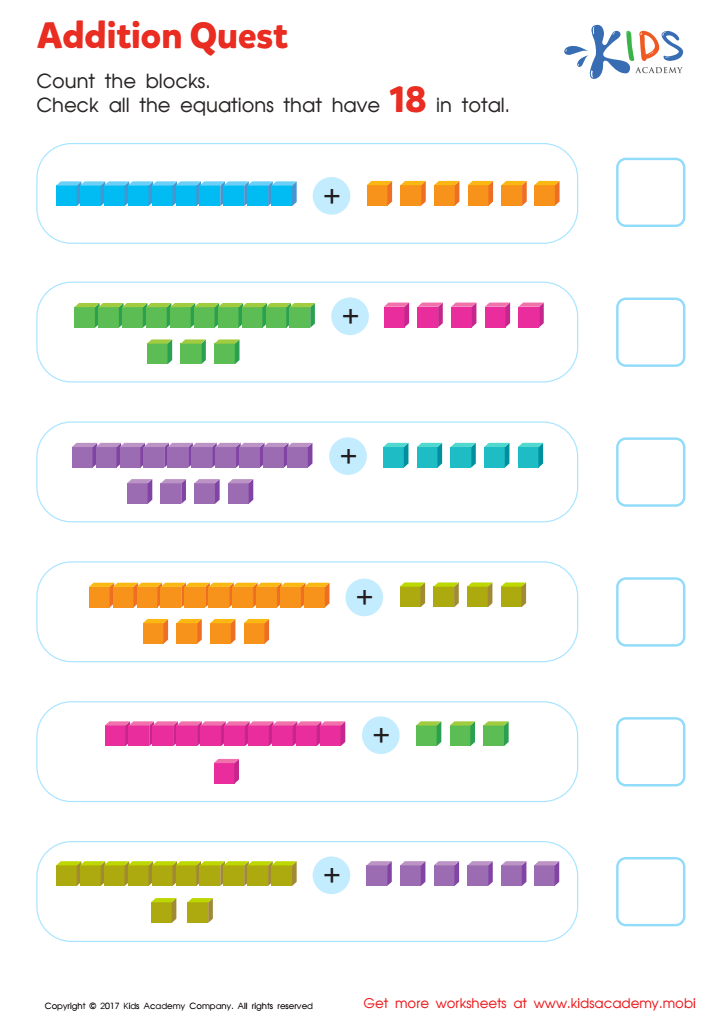
Addition Quest Worksheet: Part 2
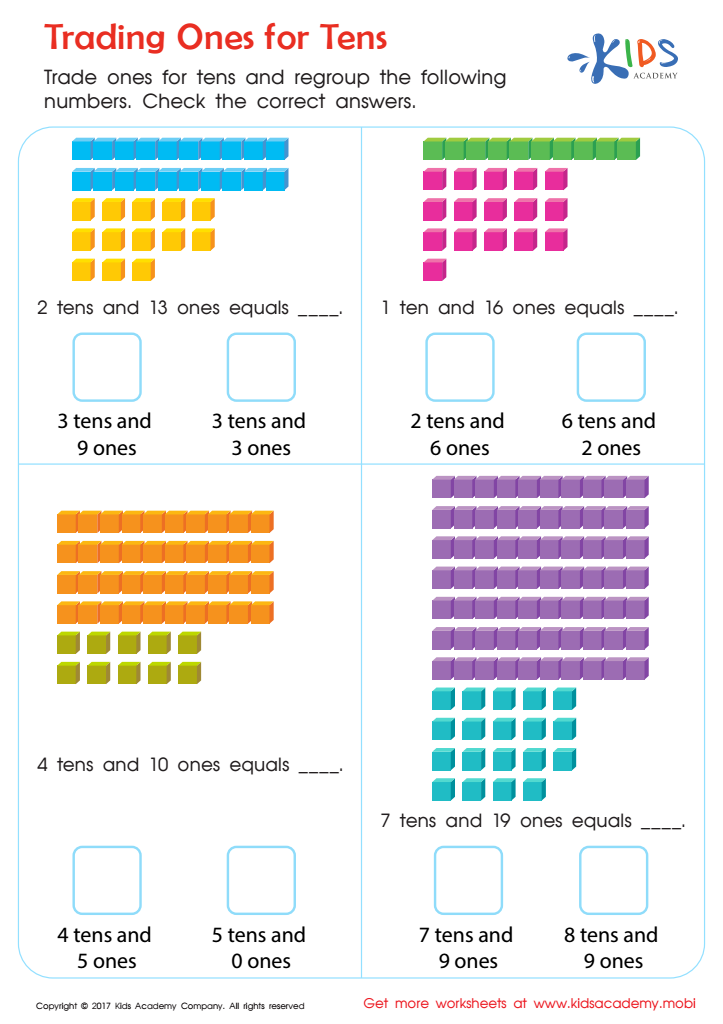
Trading Ones for Tens Worksheet
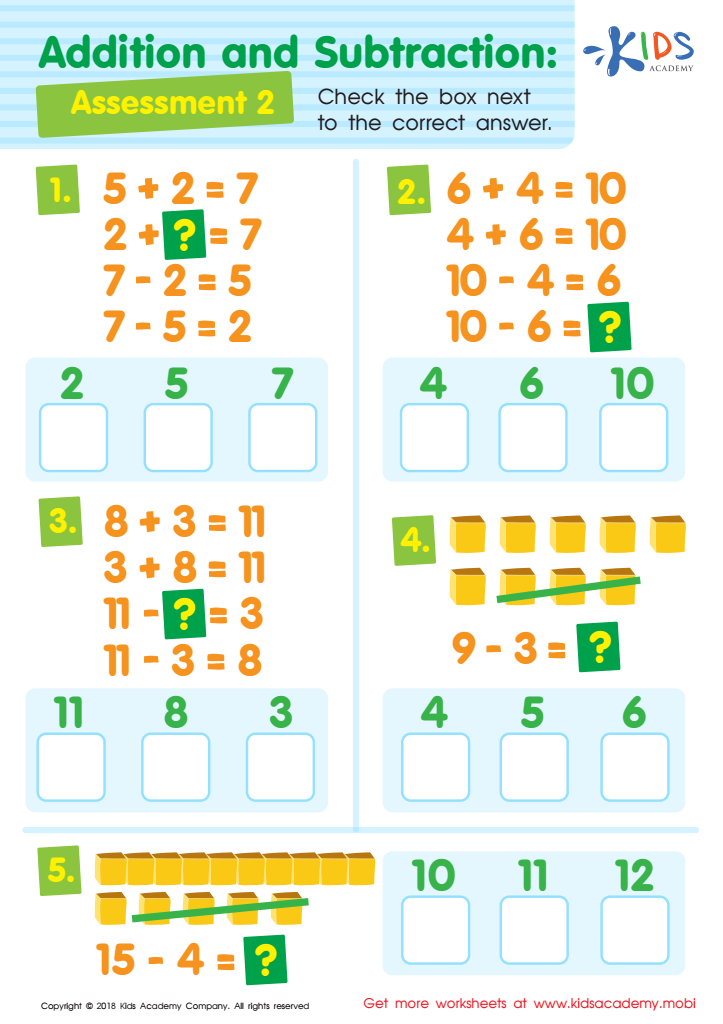
Addition and Subtraction Assessment 2 Worksheet
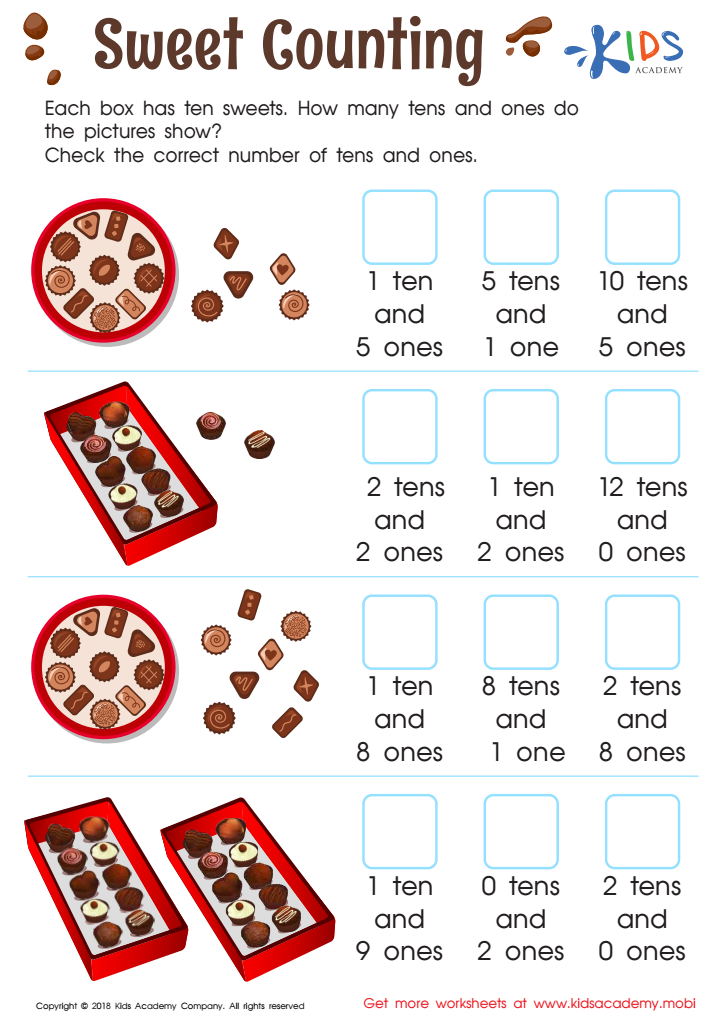
Sweet Counting - Part 2 Worksheet
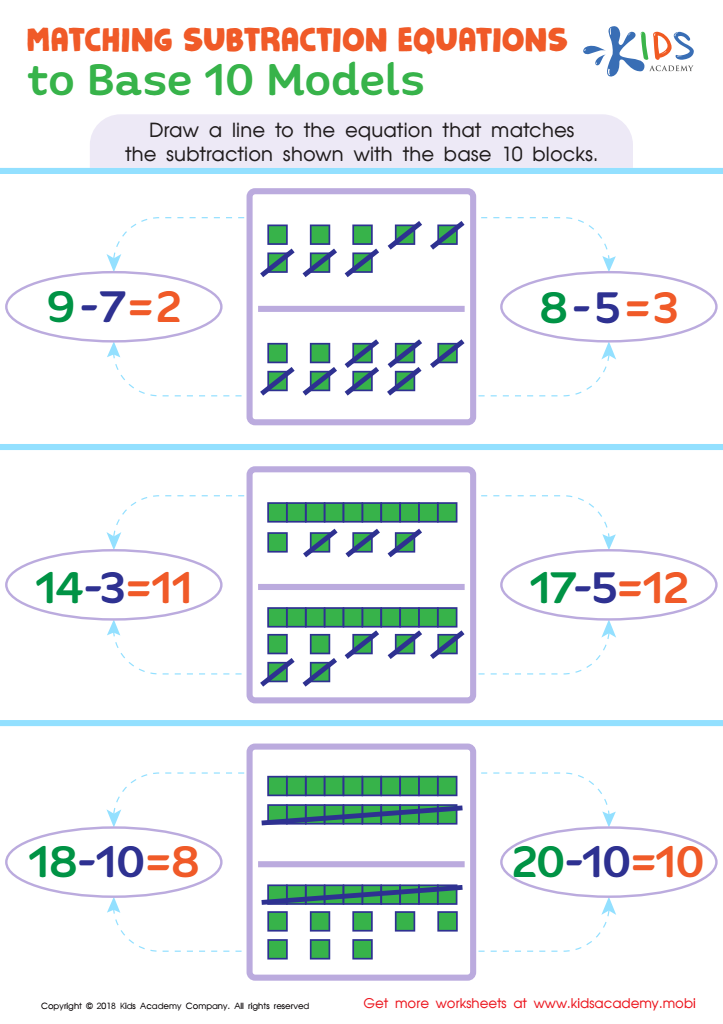
Matching Subtraction Equations To Base 10 Models Worksheet
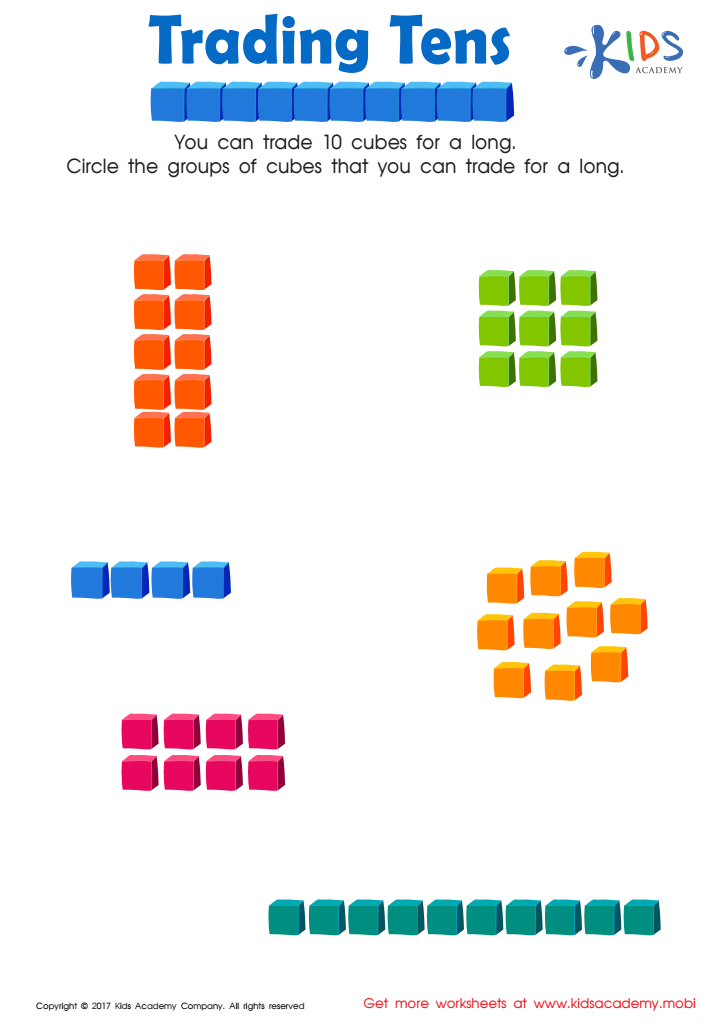
Trading Tens Worksheet
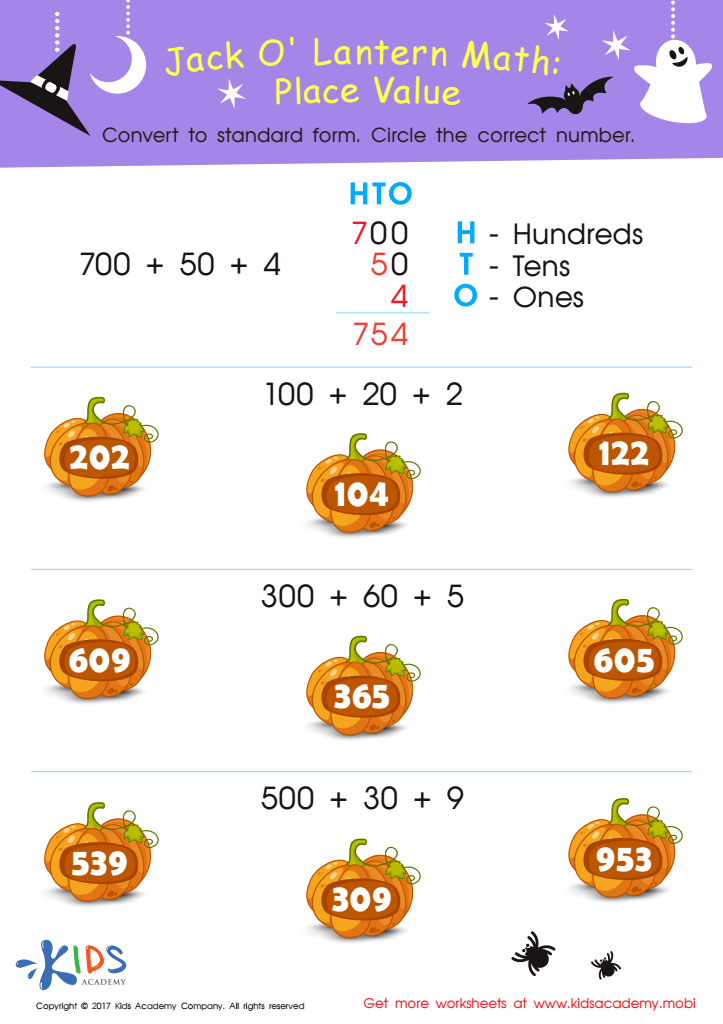
Free Place Value Worksheet
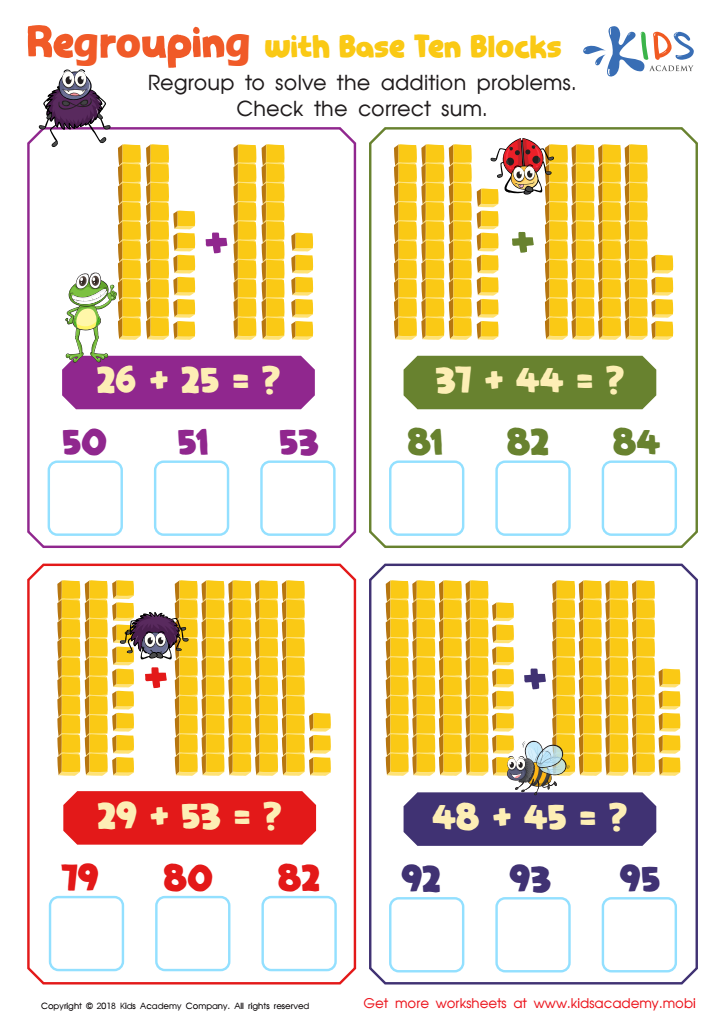
Regrouping With Base Ten Blocks Worksheet
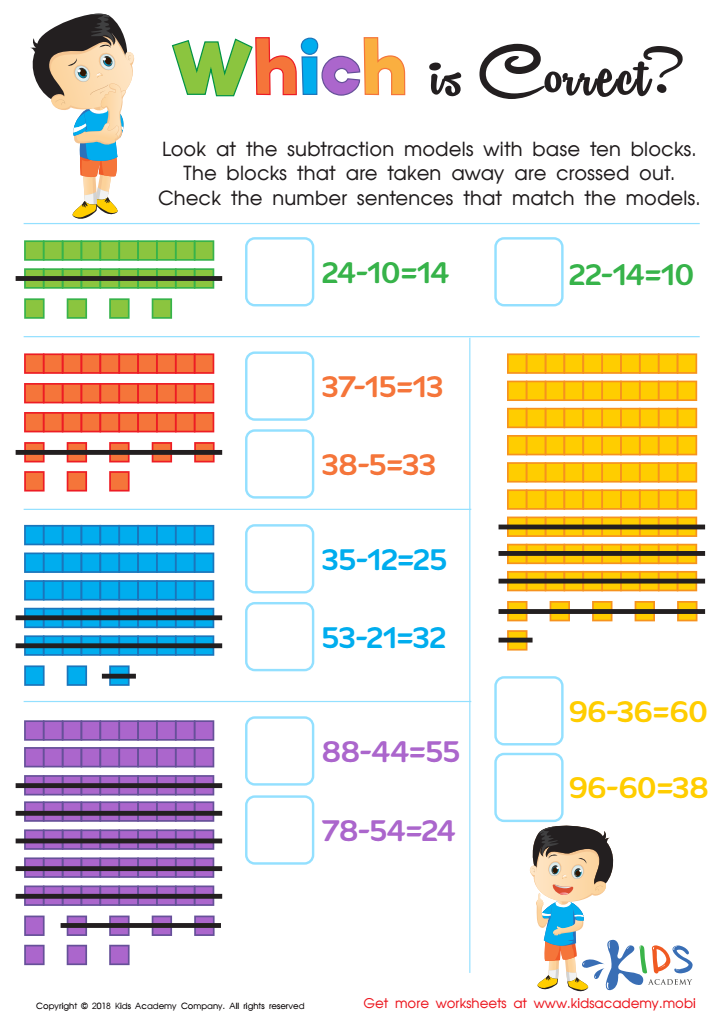
Which Is Correct? Math Worksheet
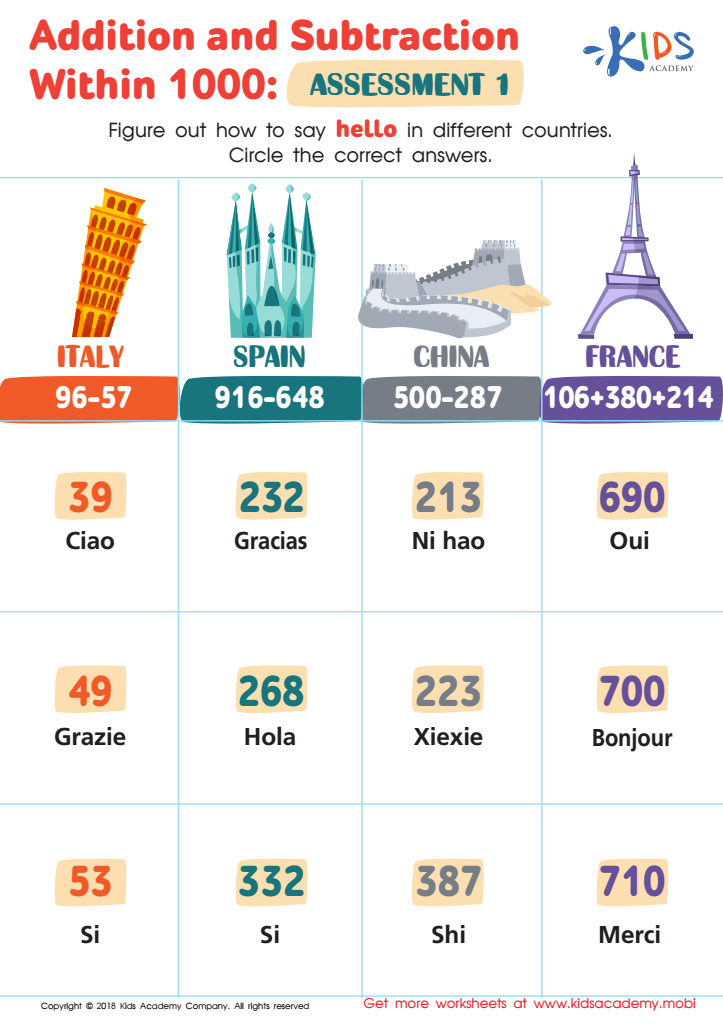
Addition and Subtraction Within 1000: Assessment 1 Worksheet







Place value is fundamental for developing a strong mathematical foundation in children aged 5 to 9. Understanding place value helps children comprehend how numbers work, making it easier for them to perform operations such as addition, subtraction, multiplication, and division. When children grasp that the value of a digit changes depending on its position (e.g., in the number 23, the 2 represents 20, while the 3 represents 3), they begin to understand the concept of tens and ones, progressing to hundreds and beyond.
Moreover, mastering place value allows students to compare and order numbers effectively, developing critical skills for problem-solving and logical reasoning. This understanding will support them not only in their early education but also in advanced math concepts later on.
Parents and teachers play a key role in reinforcing these concepts through everyday activities and hands-on learning opportunities. Engaging children in games, manipulatives, and real-world applications, such as counting objects, enhances their enthusiasm for math and empowers them to see its relevance. Ultimately, a strong grasp of place value equips children with essential skills for lifelong learning and success in mathematics, fostering confidence and proficiency as they progress through their education.