Shape Recognition Tracing Shapes Worksheets for Ages 5-9
13 filtered results
-
From - To
Enhance your child's geometric skills with our Shape Recognition Tracing Shapes Worksheets, designed for ages 5-9. These engaging and educational worksheets from Kids Academy help children recognize and name different shapes while developing fine motor skills through tracing activities. Ideal for preschool and early elementary students, our worksheets feature a variety of shapes, from simple to complex, ensuring comprehensive learning. Perfect for classroom and home use, they foster critical thinking and improve hand-eye coordination. Download these handy resources to make math fun and interactive, setting the foundation for strong math skills in the future.
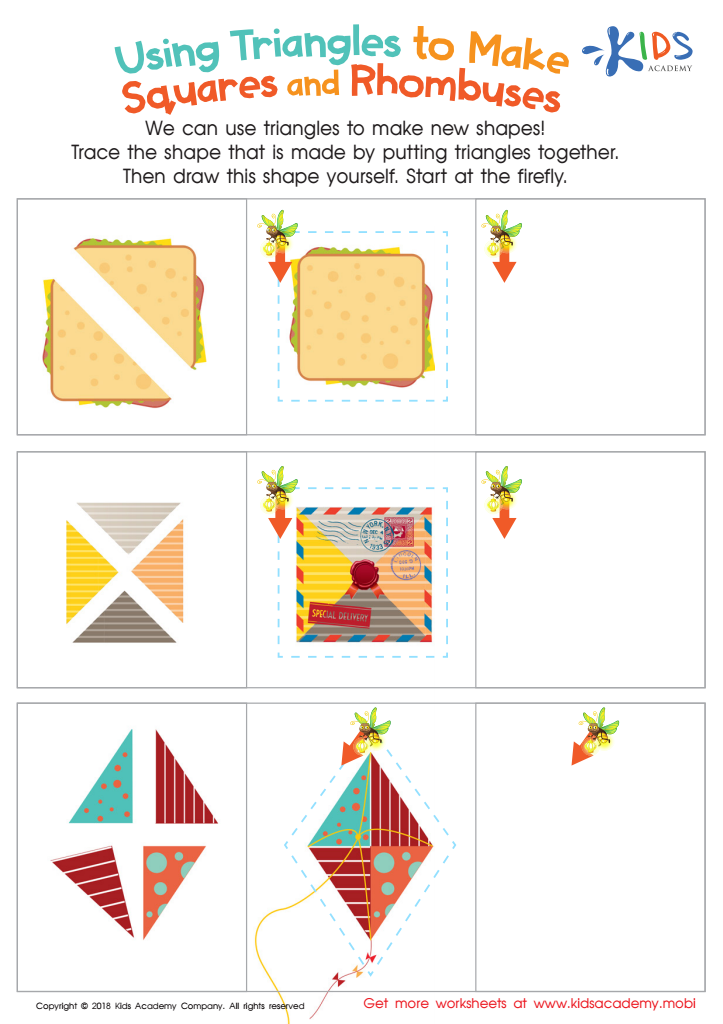
Using Triangles to Make Squares and Rhombuses Worksheet
 Assign to My Students
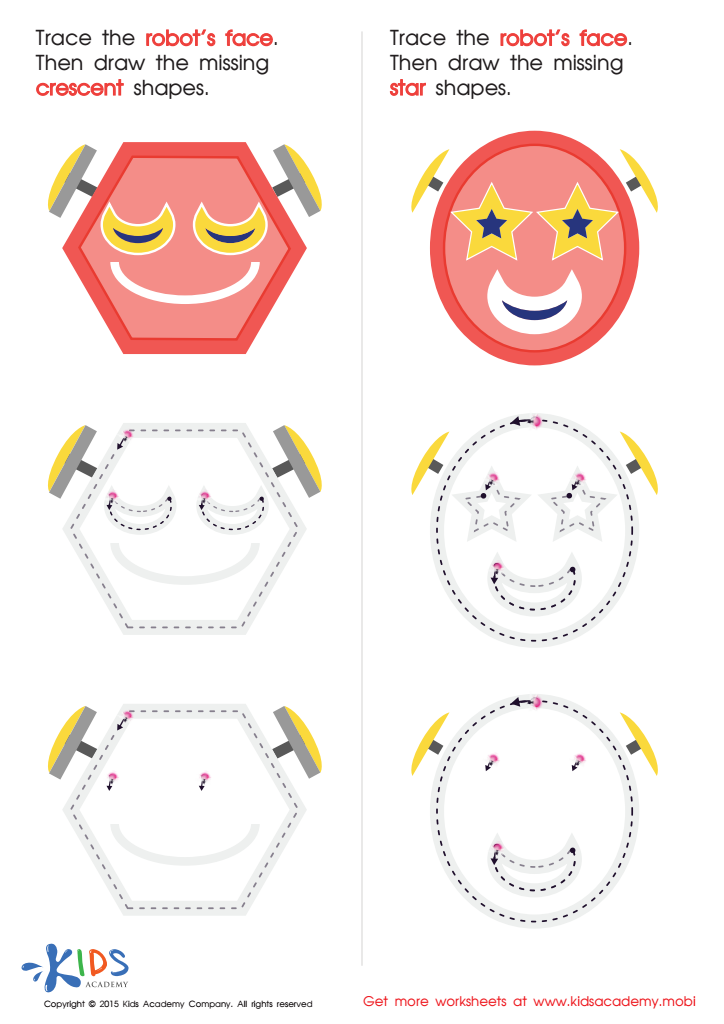
Composing a Robot's Face of Crescents And Stars Worksheet
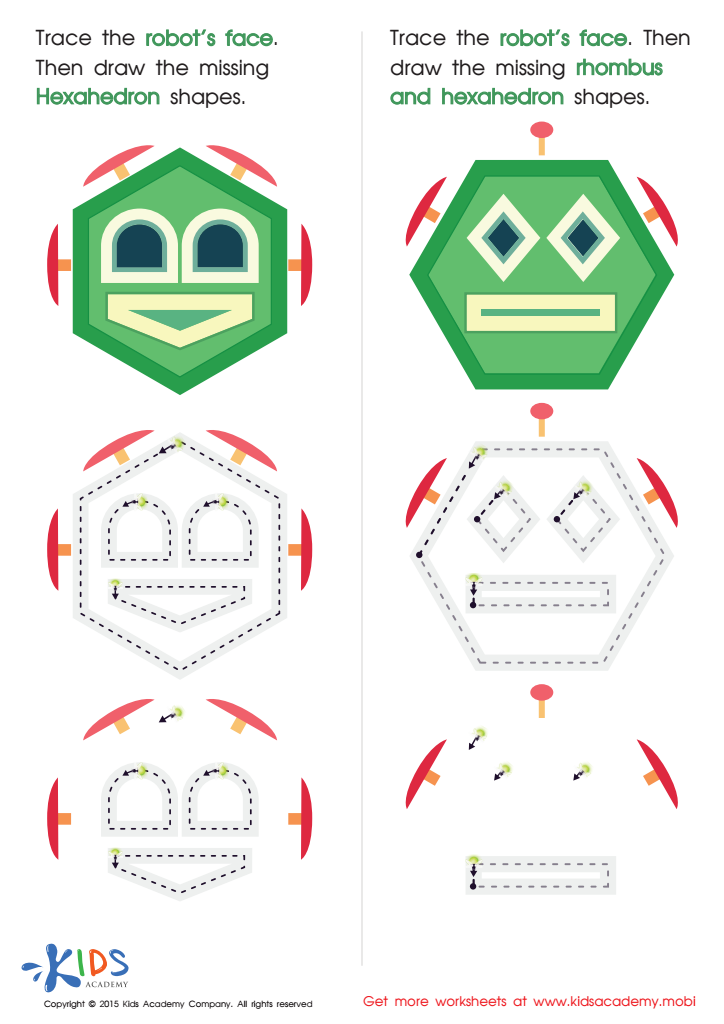
Practice Drawing Hexahedrons And a Rhombus Worksheet
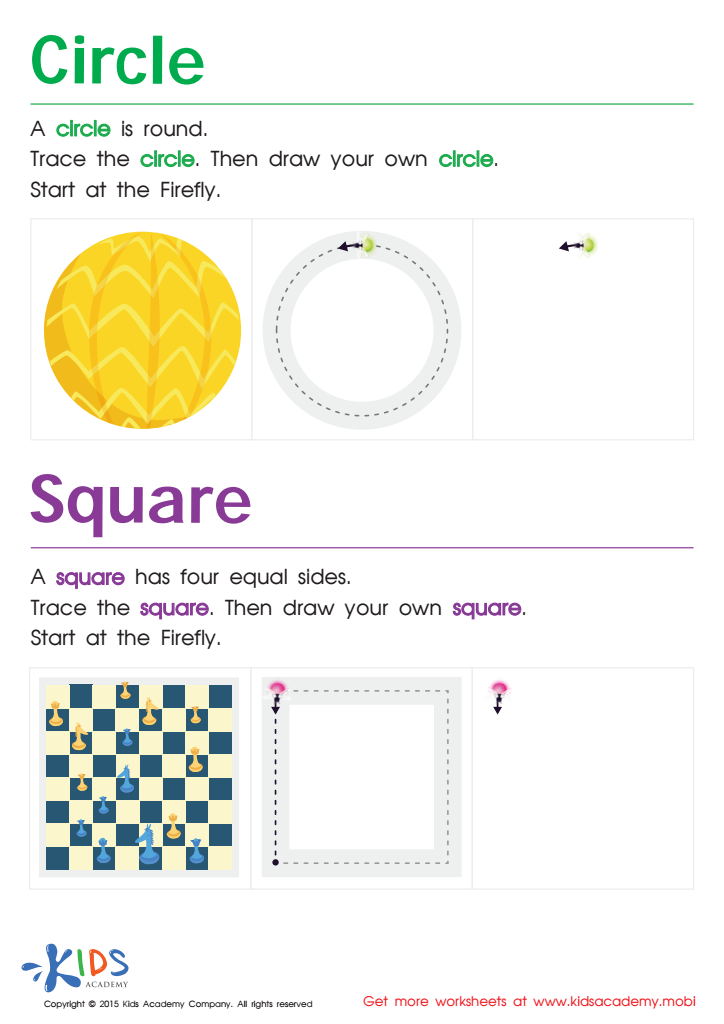
Trace And Draw a Circle And a Square Worksheet
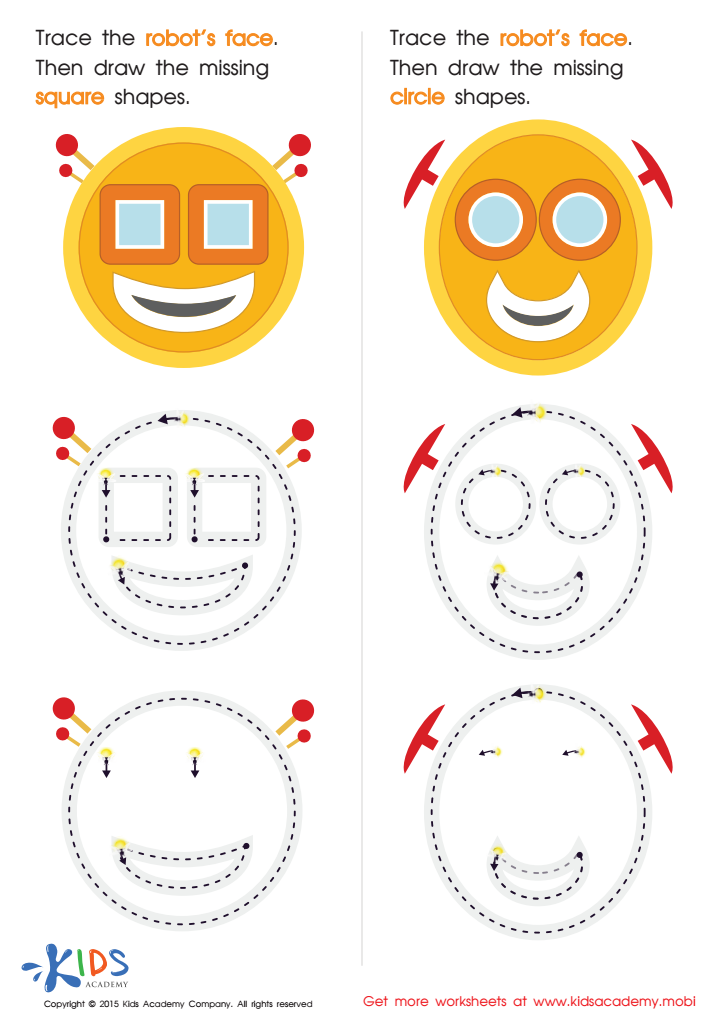
Practicing to Draw Circles And Squares Printable
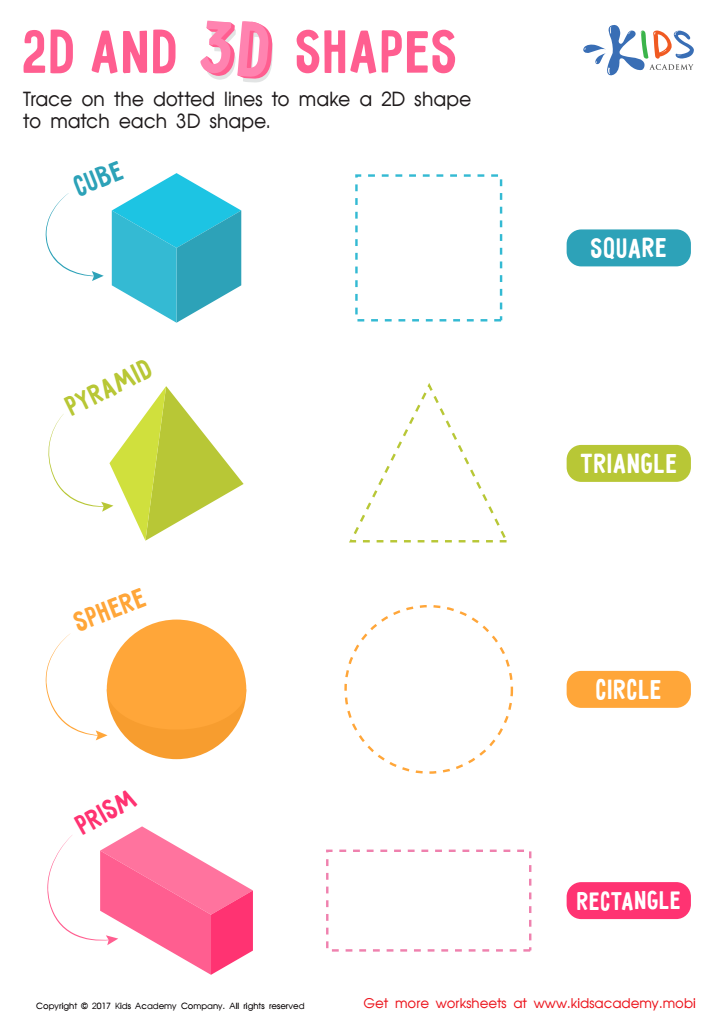
2D and 3D Shapes Worksheet
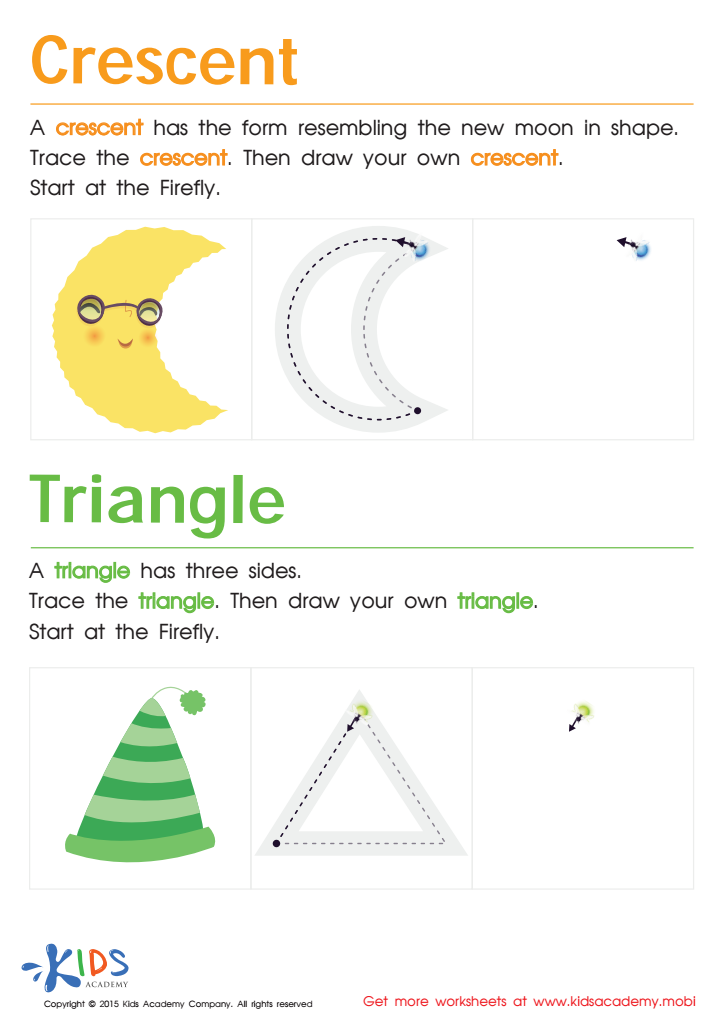
Learning to Draw Crescents And Triangles Worksheet
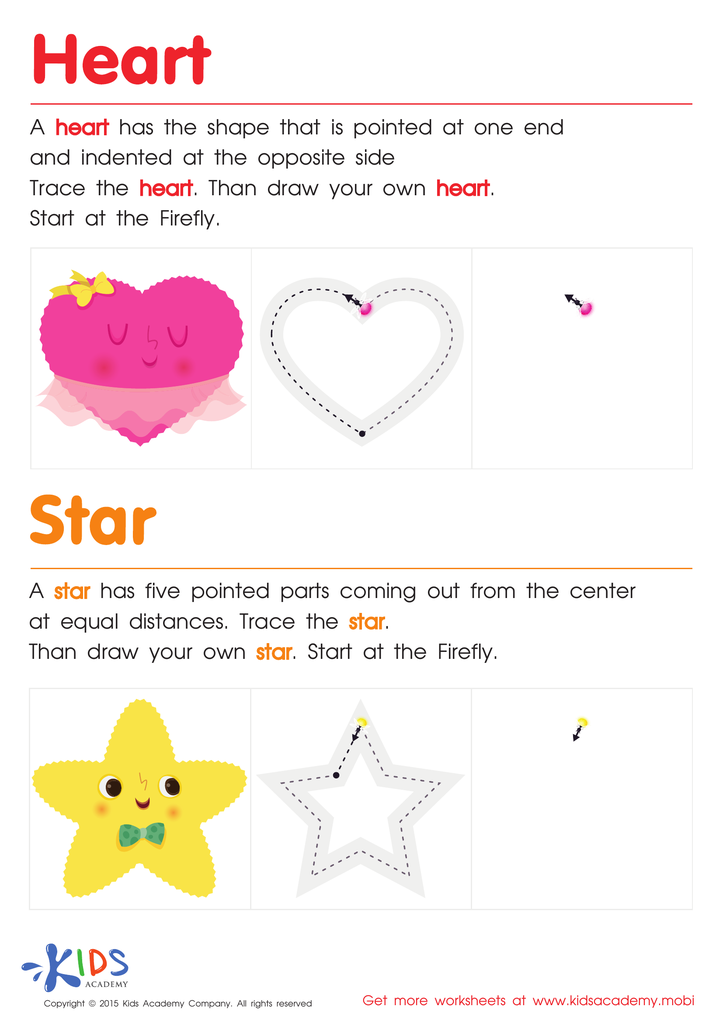
Let's Learn to Draw Hearts And Stars Printable
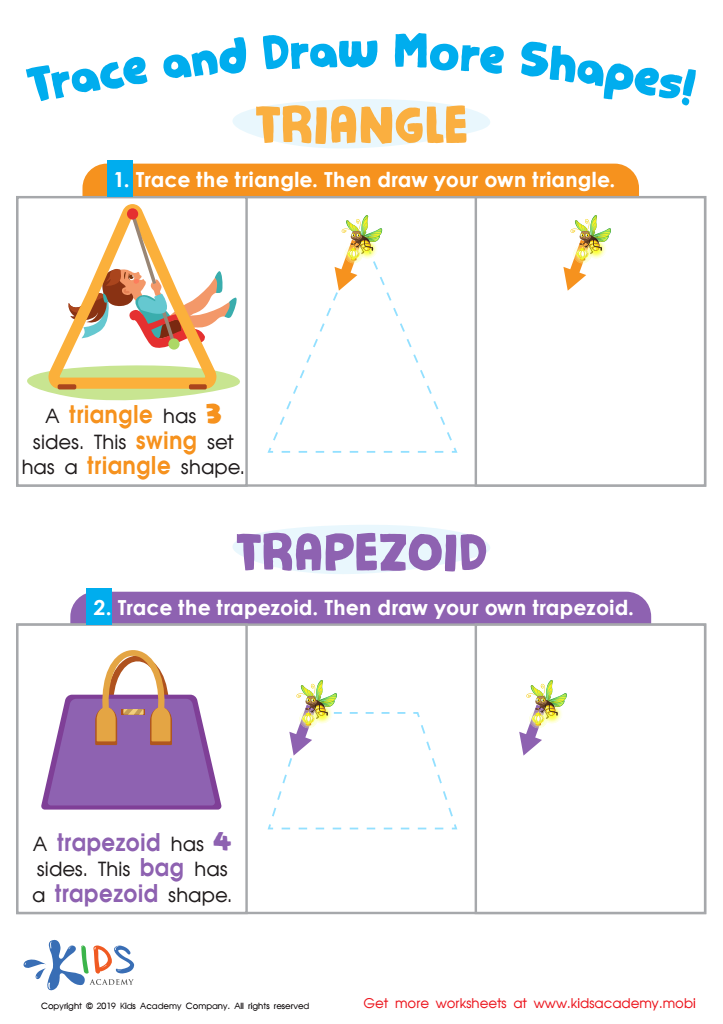
Trace and Draw More Shapes Worksheet
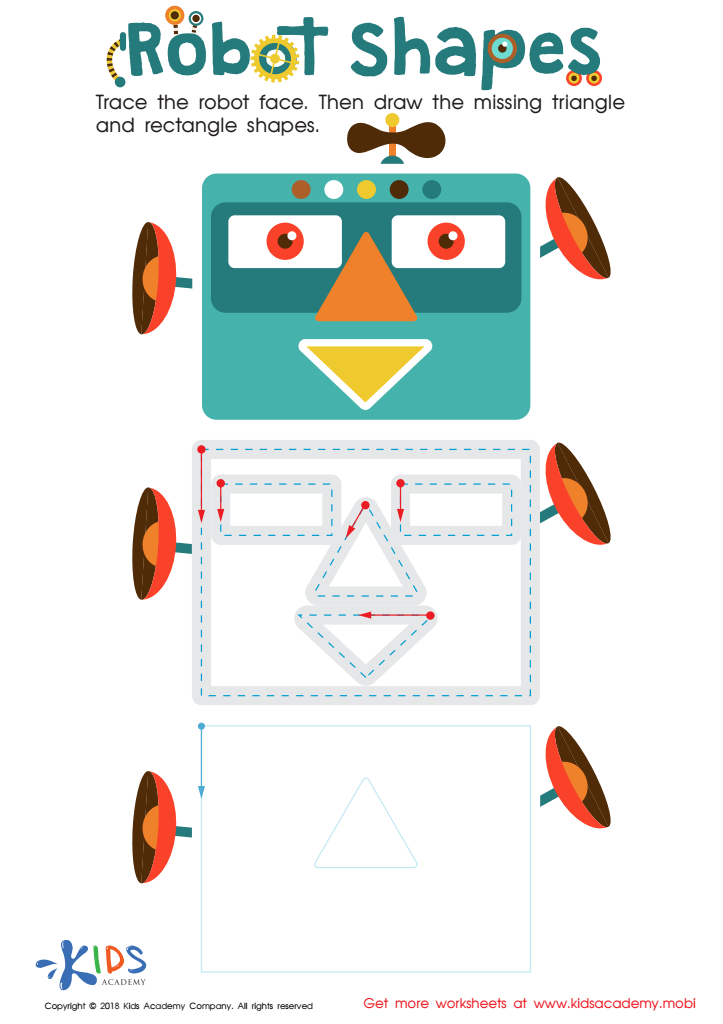
Robot Shapes Worksheet
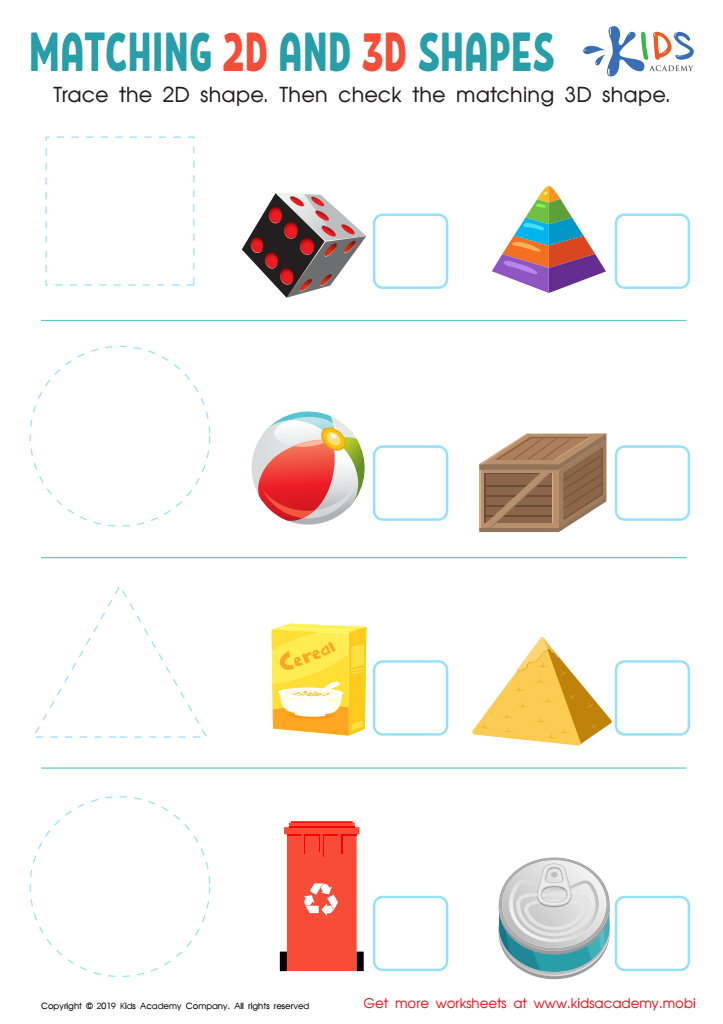
Matching 2D and 3D Shapes Worksheet
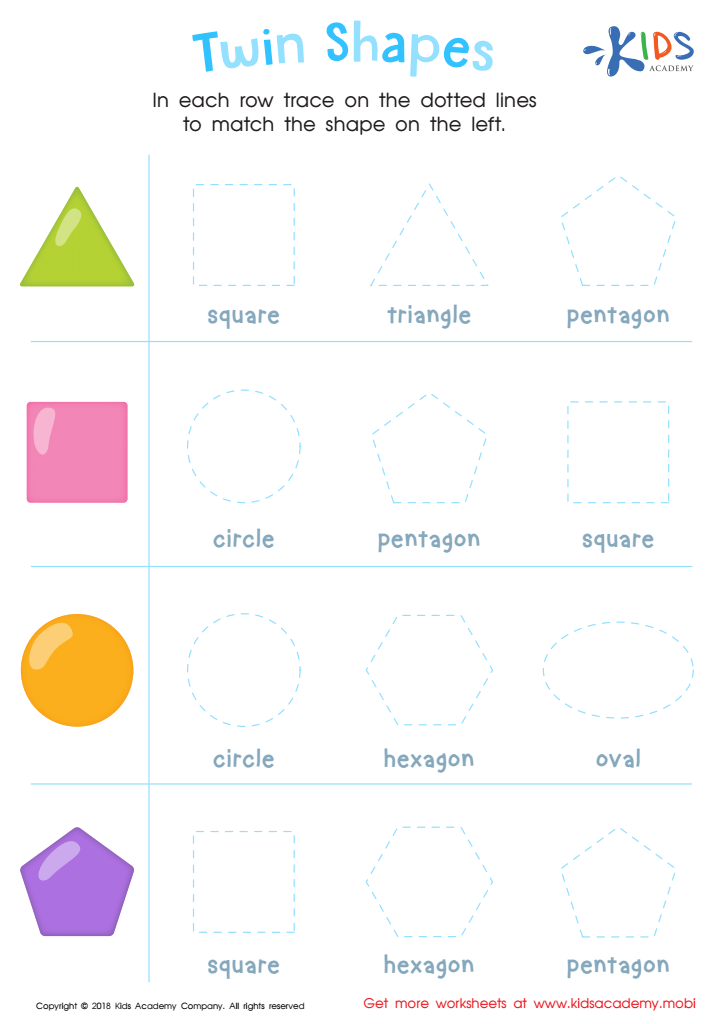
Twin Shapes Dot-to-Dot Worksheet
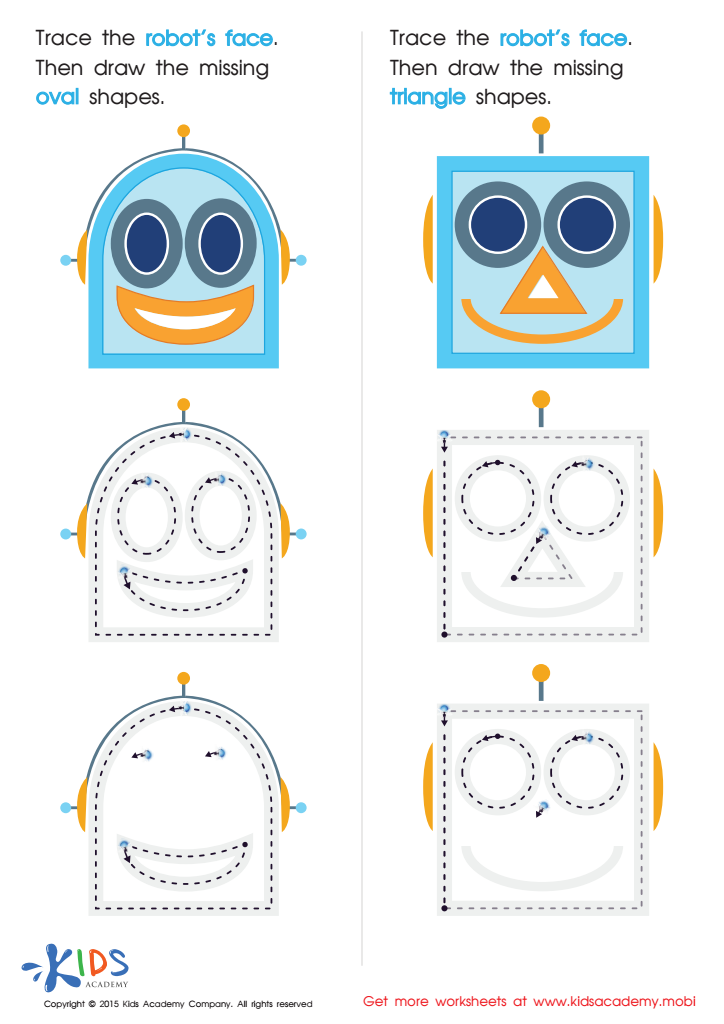
Drawing Ovals And Triangles with Fun Printable








Shape recognition and tracing shapes are foundational skills for children aged 5-9 for several reasons. First, these activities enhance cognitive development by helping children understand and categorize the world around them. Shapes are basic building blocks of more complex forms and patterns; recognizing and tracing them hones children’s spatial awareness and geometry skills.
Second, tracing shapes improves fine motor skills. Activities like holding a pencil and tracing along lines strengthen hand-eye coordination, control, and dexterity, which are essential for writing and other daily tasks.
Moreover, shape recognition supports early math skills. Learning to identify different shapes and their properties lays the groundwork for geometry, pattern recognition, and problem-solving skills important in later math education.
Language development is also enhanced as children learn descriptive terms associated with shapes, contributing to a broader vocabulary. Such exercises often involve following instructions and verbalizing their actions, which promotes communication skills and comprehension.
Finally, the activities foster creativity and artistic expression. By experimenting with shapes, children can create pictures and develop their artistic abilities, which enhances their confidence and self-expression.
Overall, shape recognition and tracing merge academic with developmental gains, providing a strong foundation for future learning and skill development.