Problem-Solving Skills Chess Worksheets for Ages 6-7
22 filtered results
-
From - To
Enhance your child's critical thinking and problem-solving abilities with our engaging "Problem-Solving Skills Chess Worksheets" designed specifically for ages 6-7. These worksheets seamlessly integrate the strategic elements of chess to develop essential cognitive skills in young learners. Packed with fun activities and challenges, your child will practice analyzing situations, making decisions, and learning from outcomes in a playful environment. Perfect for both beginners and budding chess enthusiasts, these resources promote patience, focus, and perseverance. Start building a strong foundation for future learning by discovering the joy and benefits of problem-solving through chess today! Download our worksheets now and ignite your child's imagination!
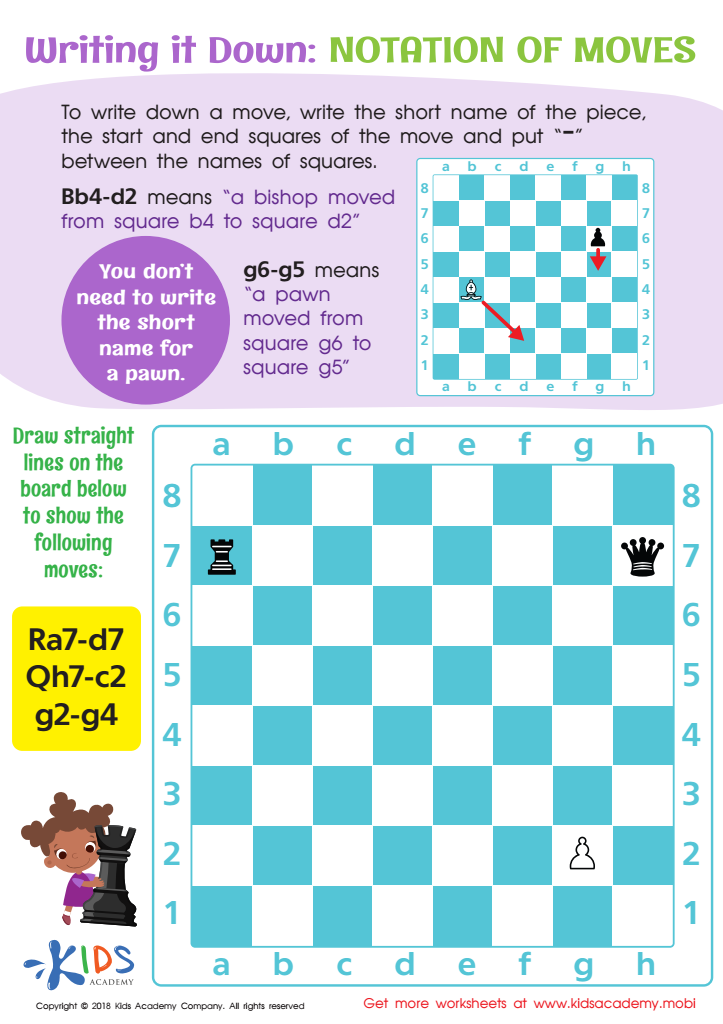
Notation of Moves Writing it Down Worksheet
 Assign to My Students
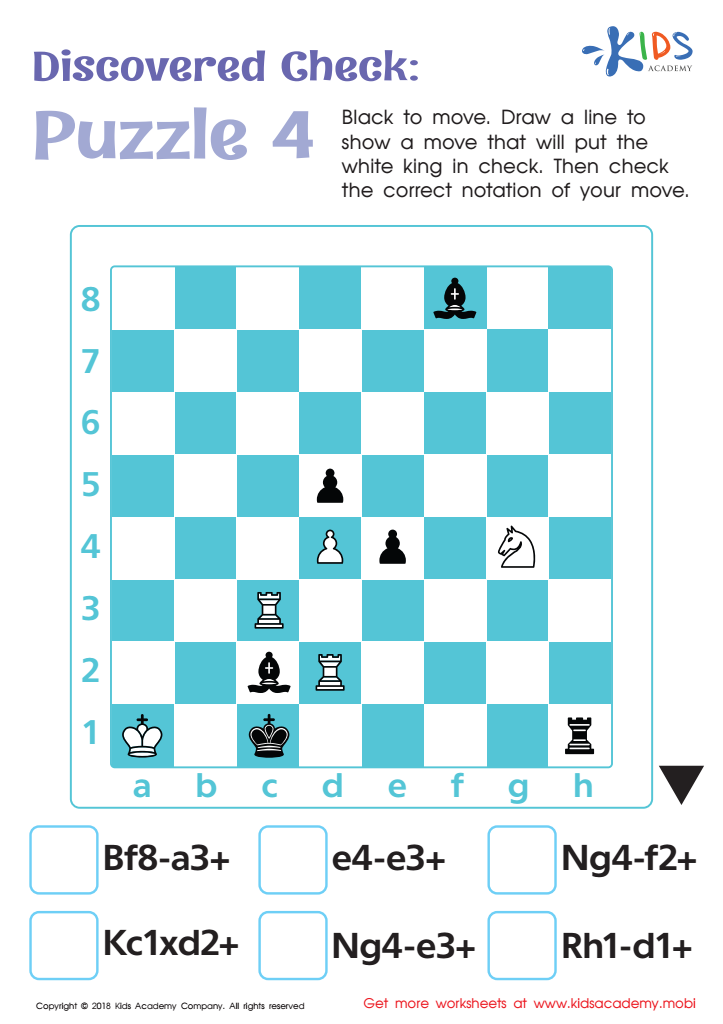
Discovered Check: Puzzle 4 Worksheet
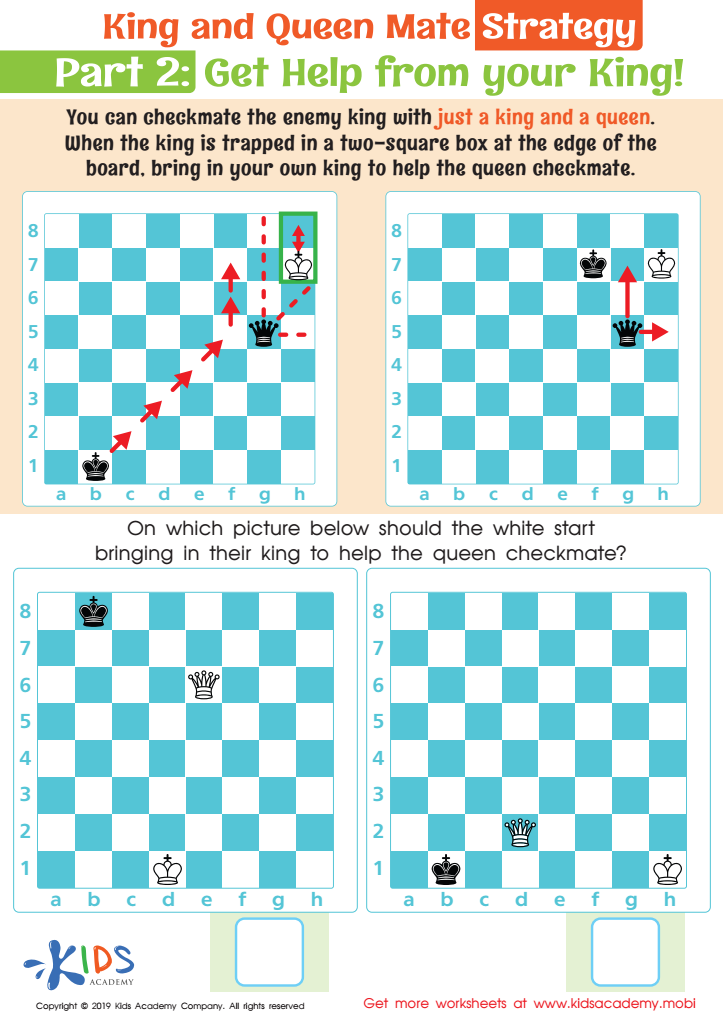
King and Queen Mate Strategy: Part 2 Worksheet
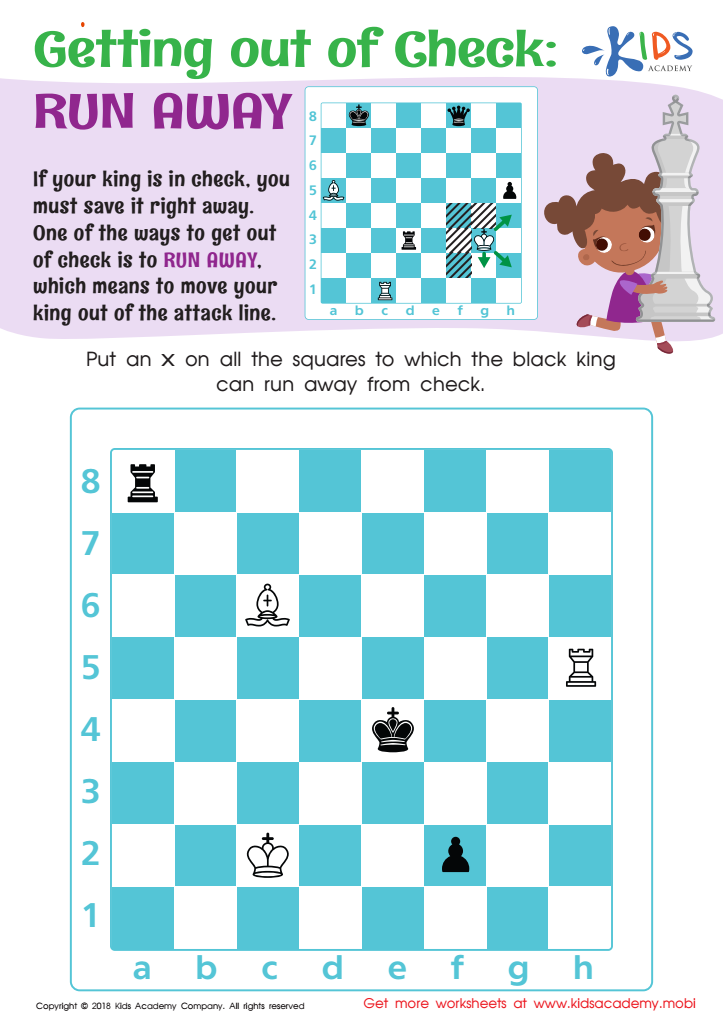
Getting out of Check: Run Away Worksheet
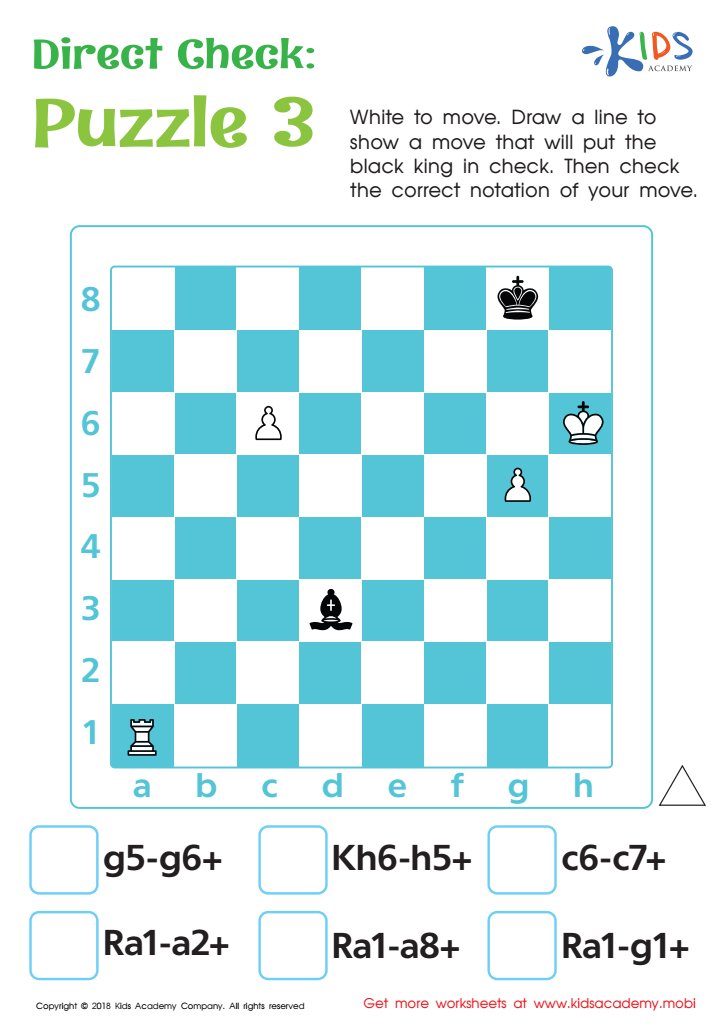
Direct Check: Puzzle 3 Worksheet
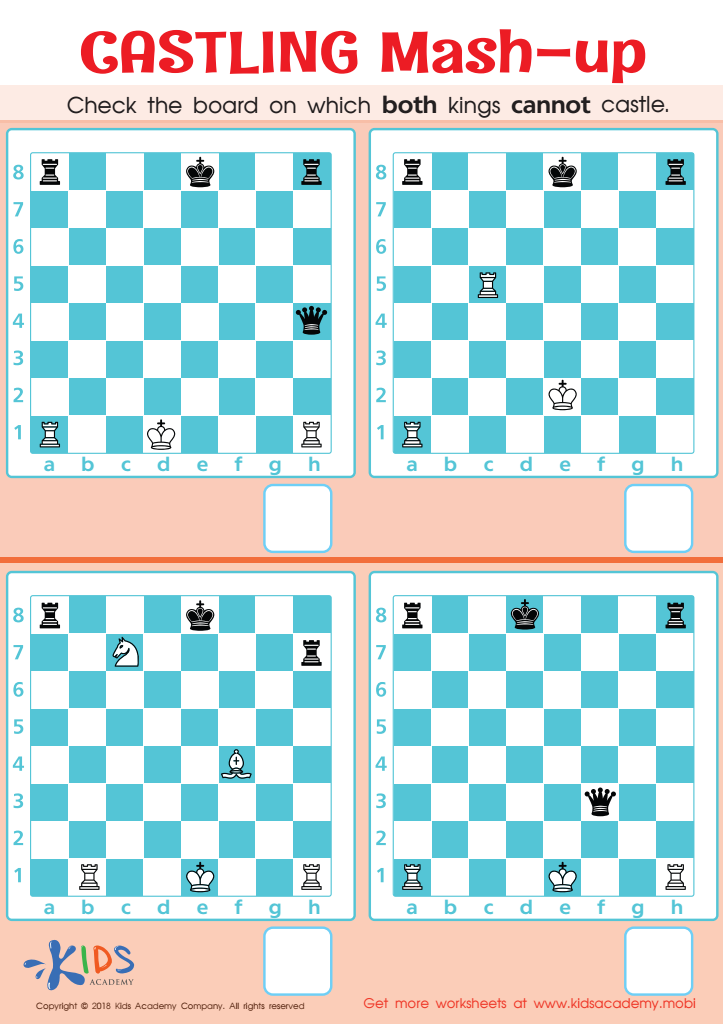
Castling Mash–up Worksheet
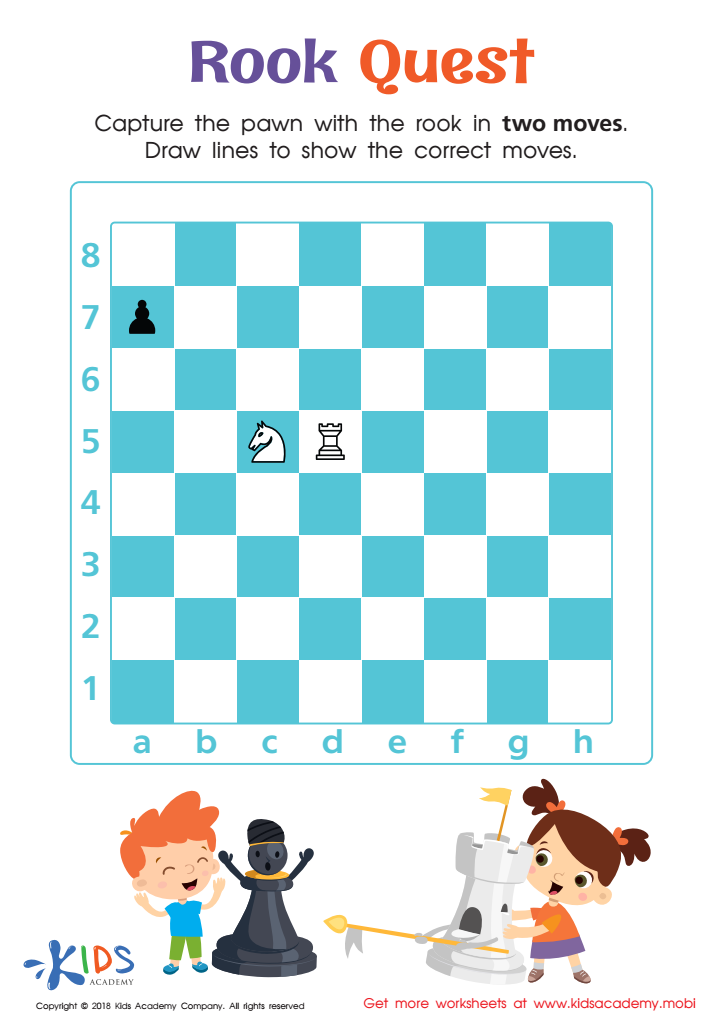
Rook Quest Worksheet
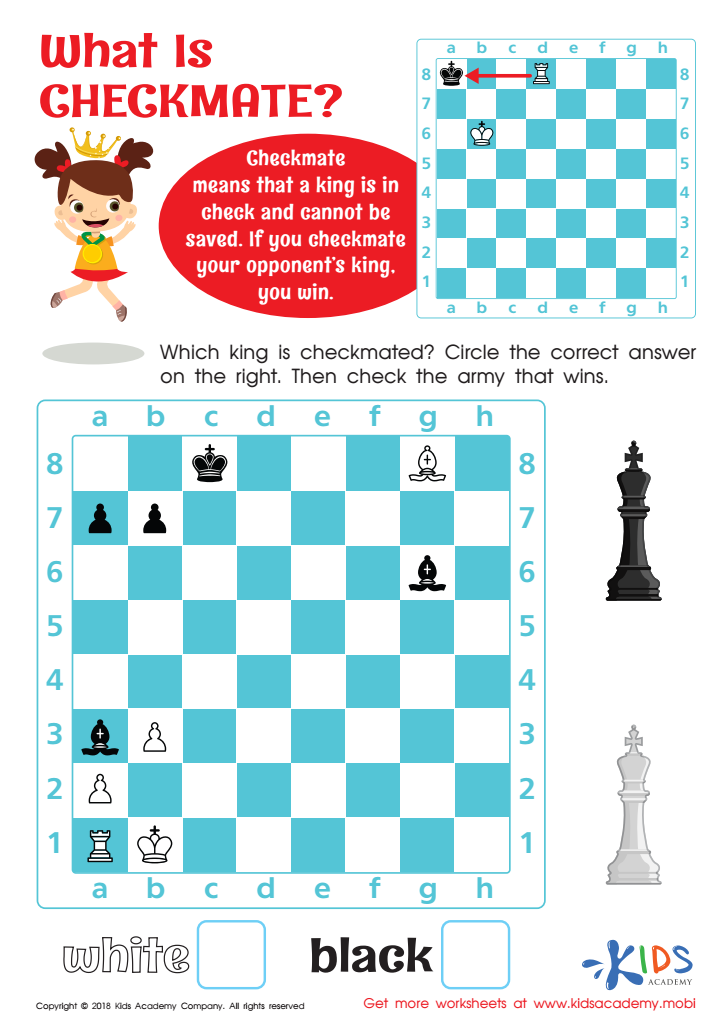
What is Checkmate? Worksheet
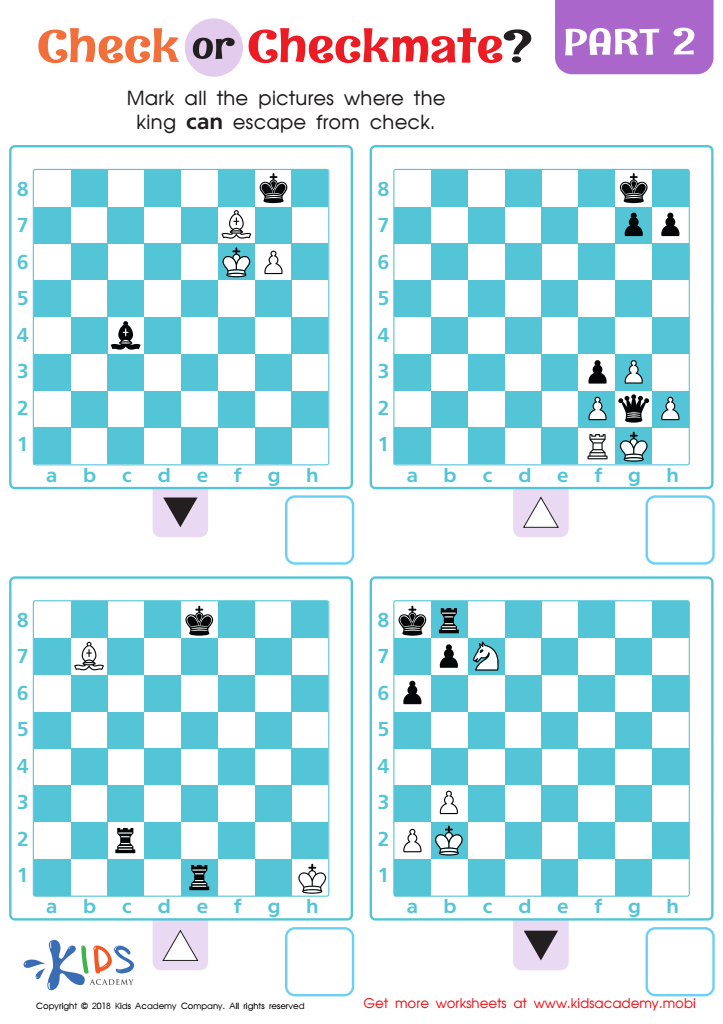
Check or Checkmate: Part 2 Worksheet
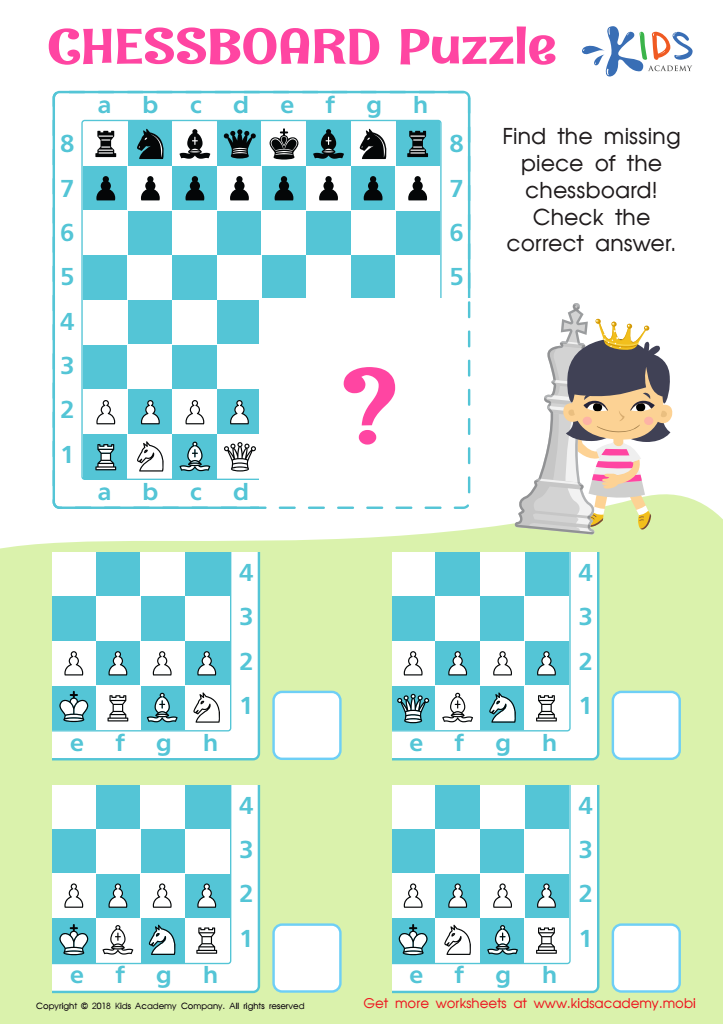
Chessboard Puzzle Worksheet
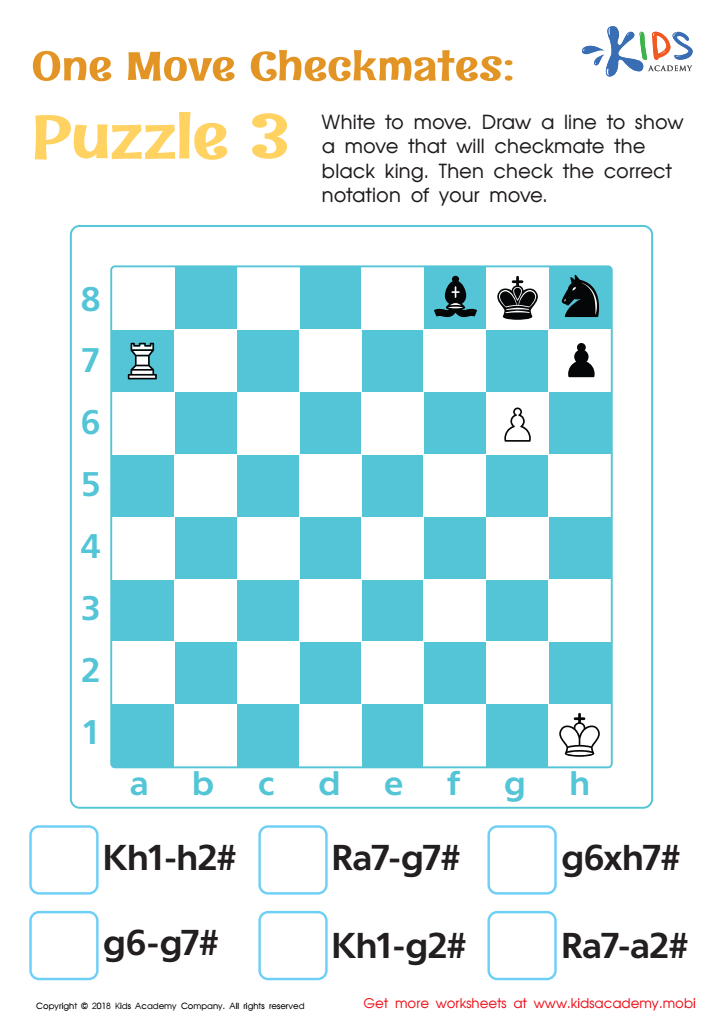
One Move Checkmates: Puzzle 3 Worksheet

Discovered Check: Puzzle 2 Worksheet
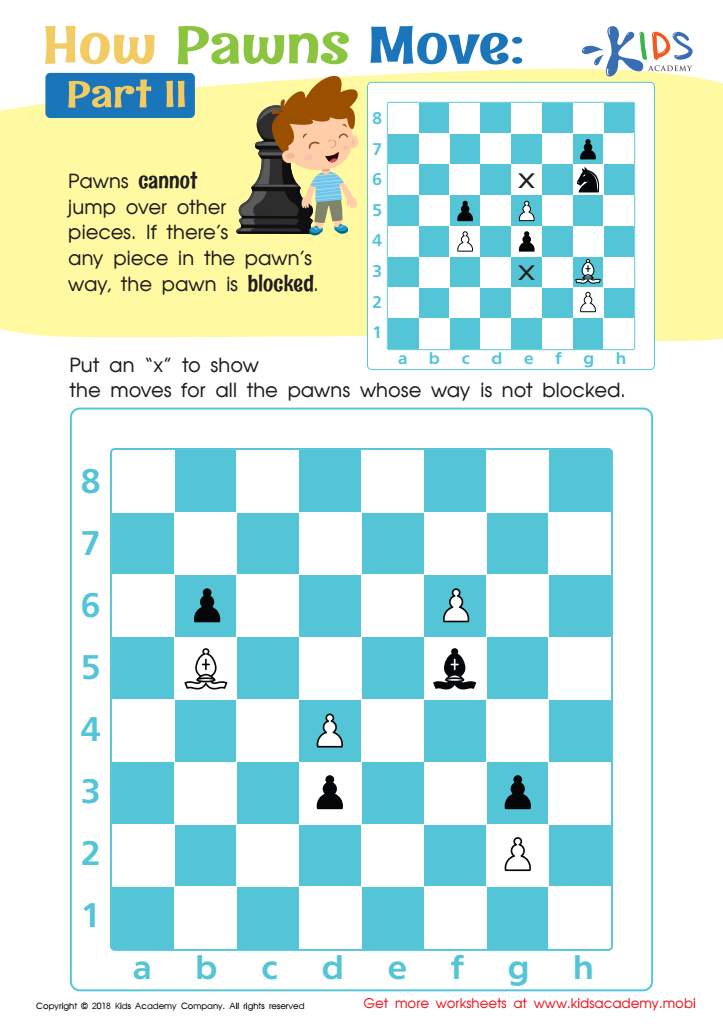
How Pawns Move: Part II Worksheet
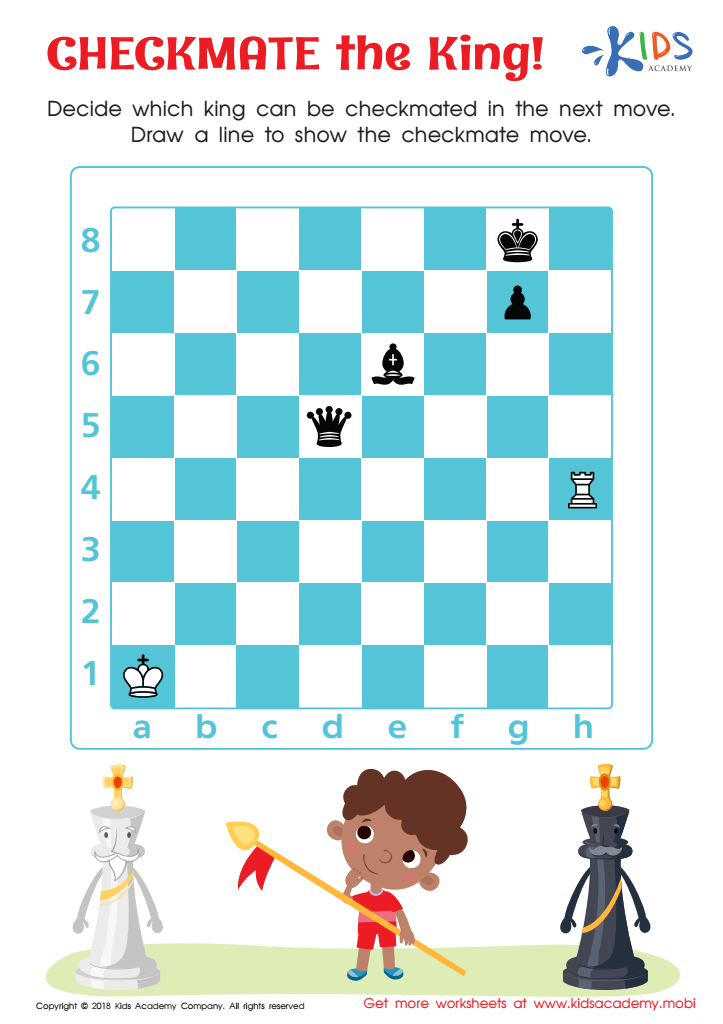
Checkmate the King Worksheet
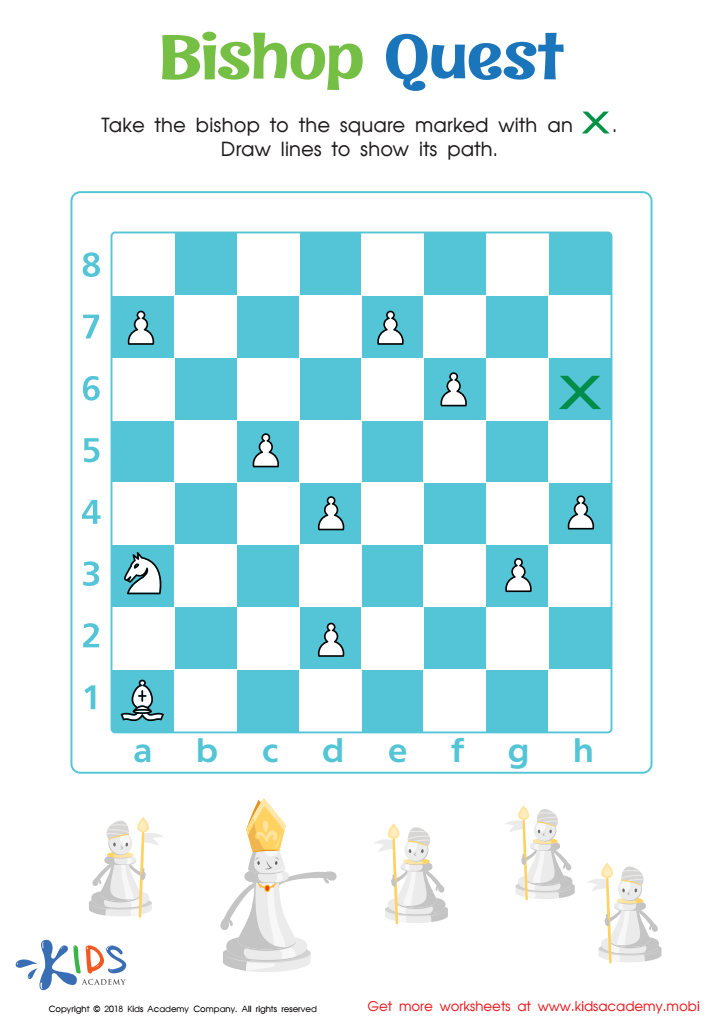
Bishop Quest Worksheet
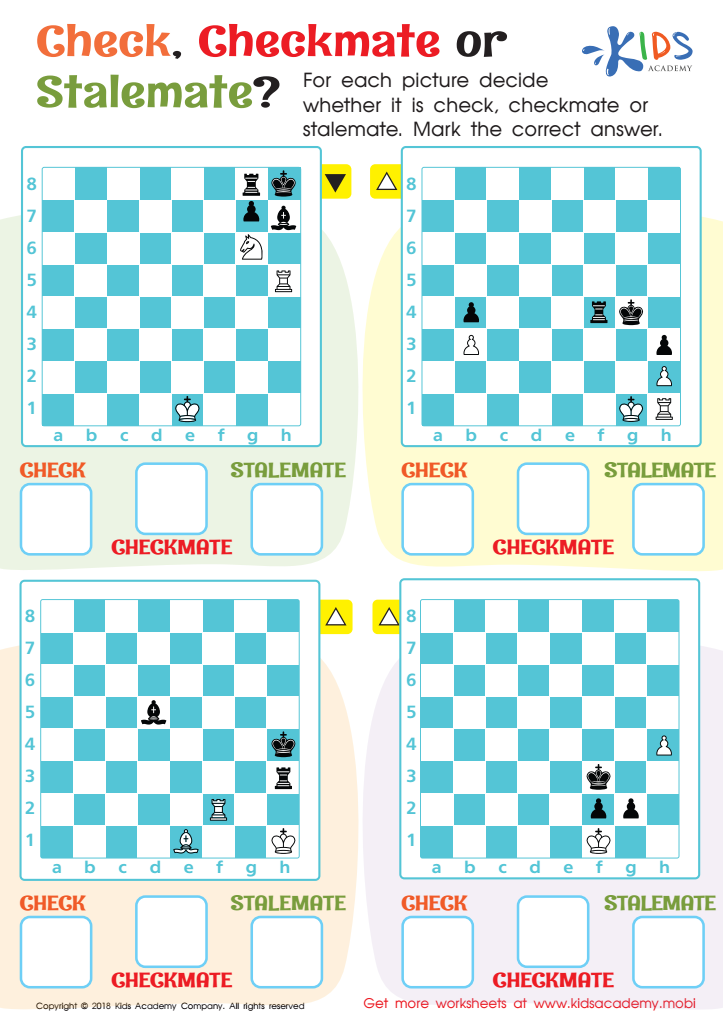
Check. Checkmate or Stalemate? Worksheet
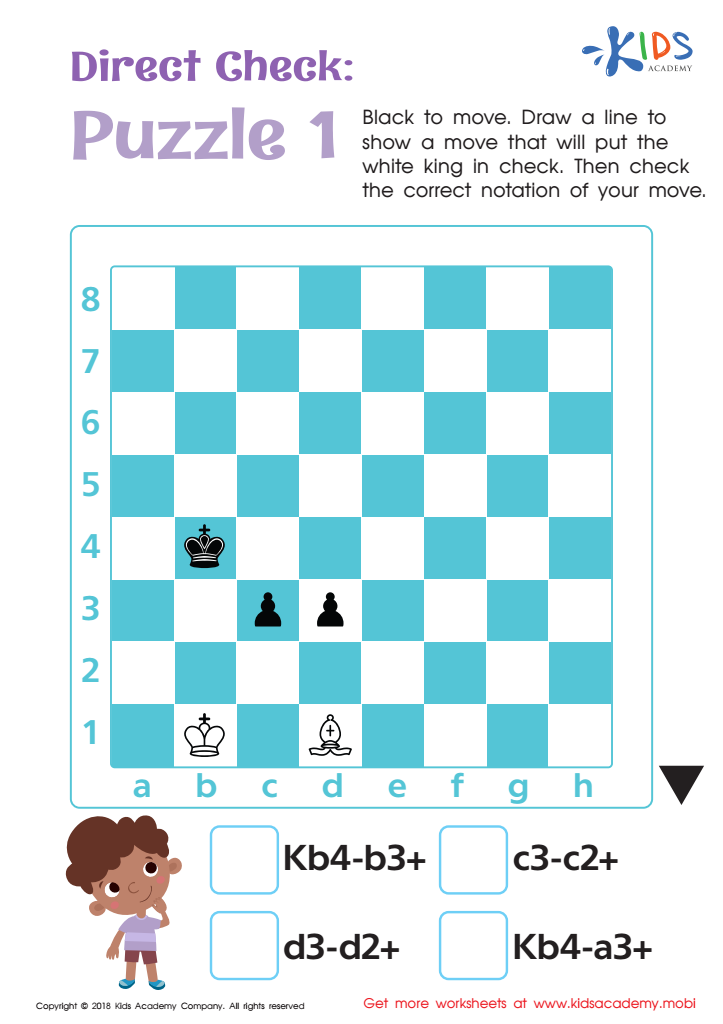
Direct Check: Puzzle 1 Worksheet
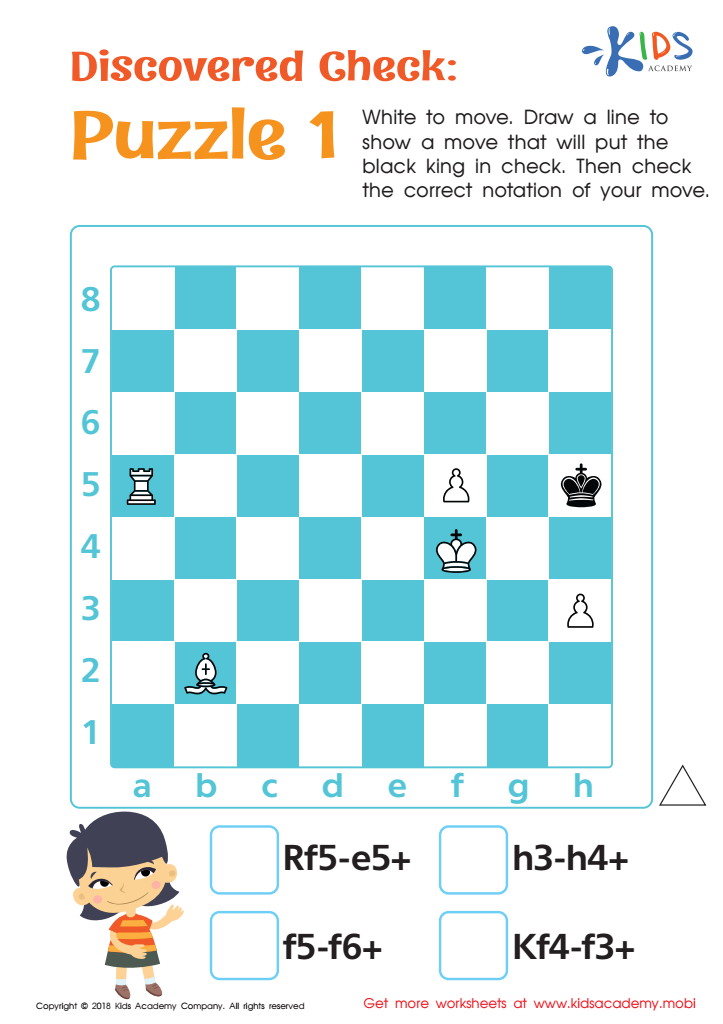
Discovered Check: Puzzle 1 Worksheet
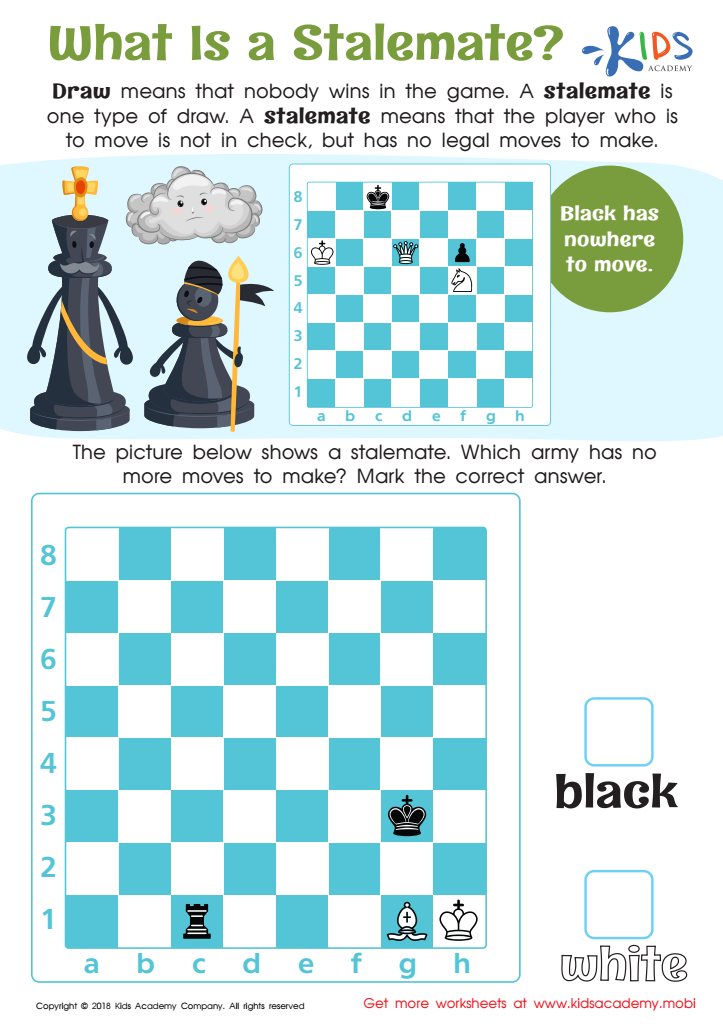
What Is a Stalemate? Worksheet
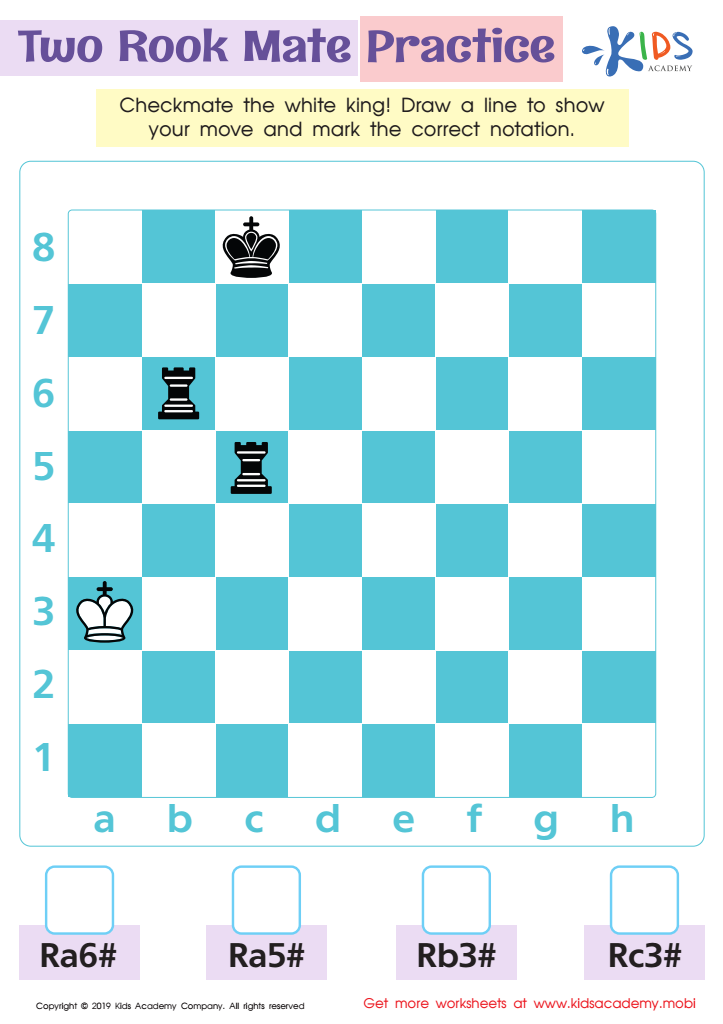
Two Rook Mate Practice Worksheet
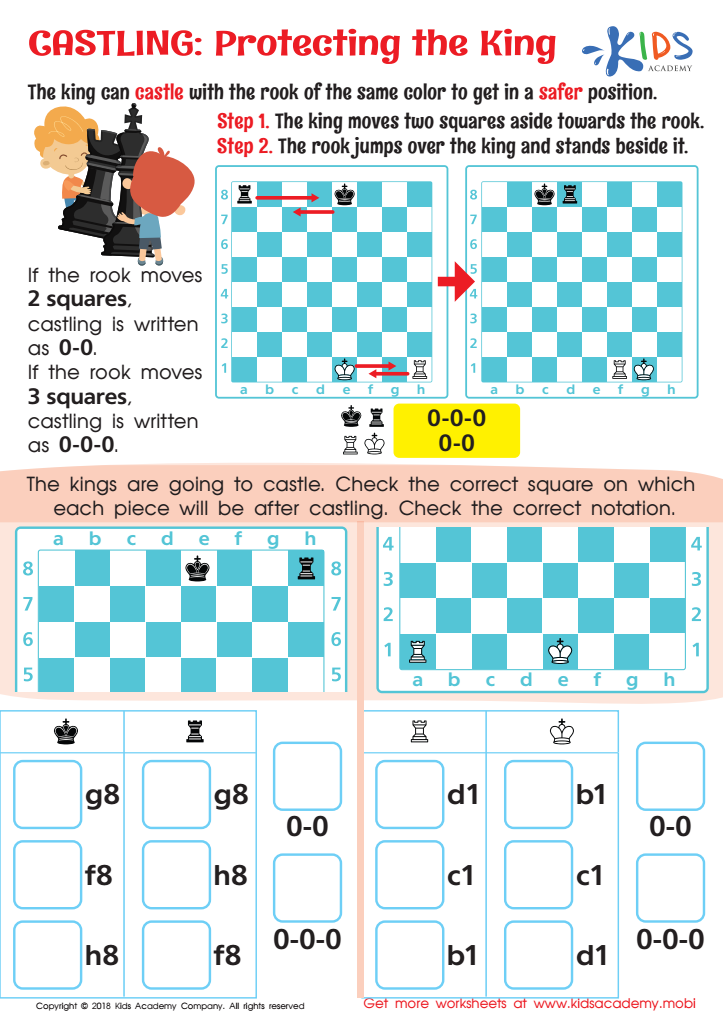
Castling: Protecting the King Worksheet
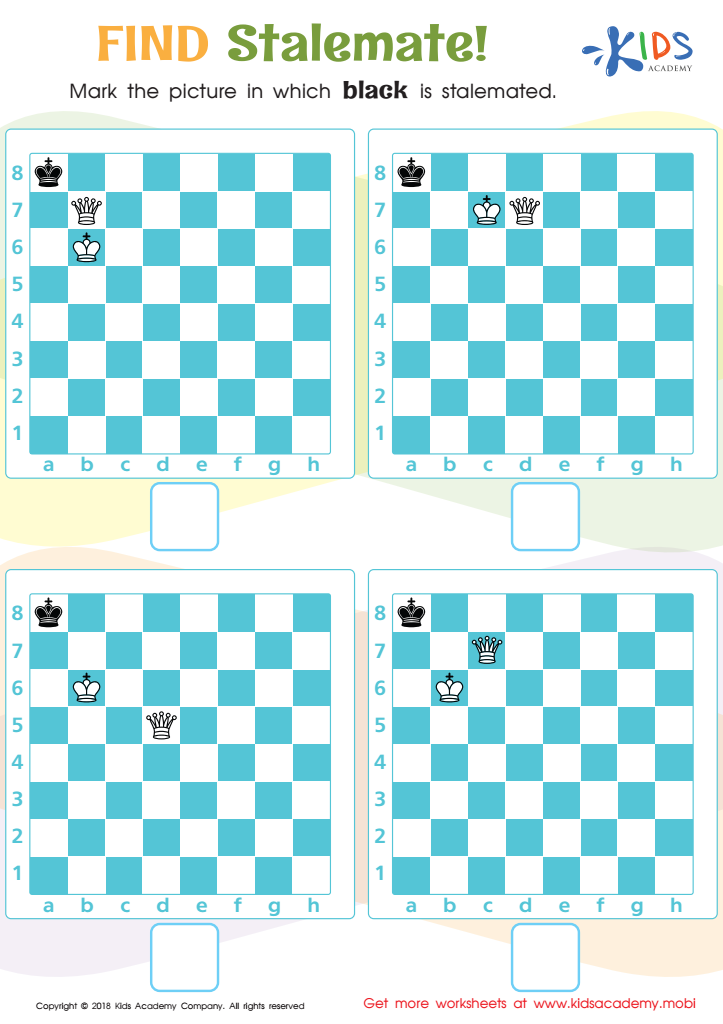
Find Stalemate! Worksheet




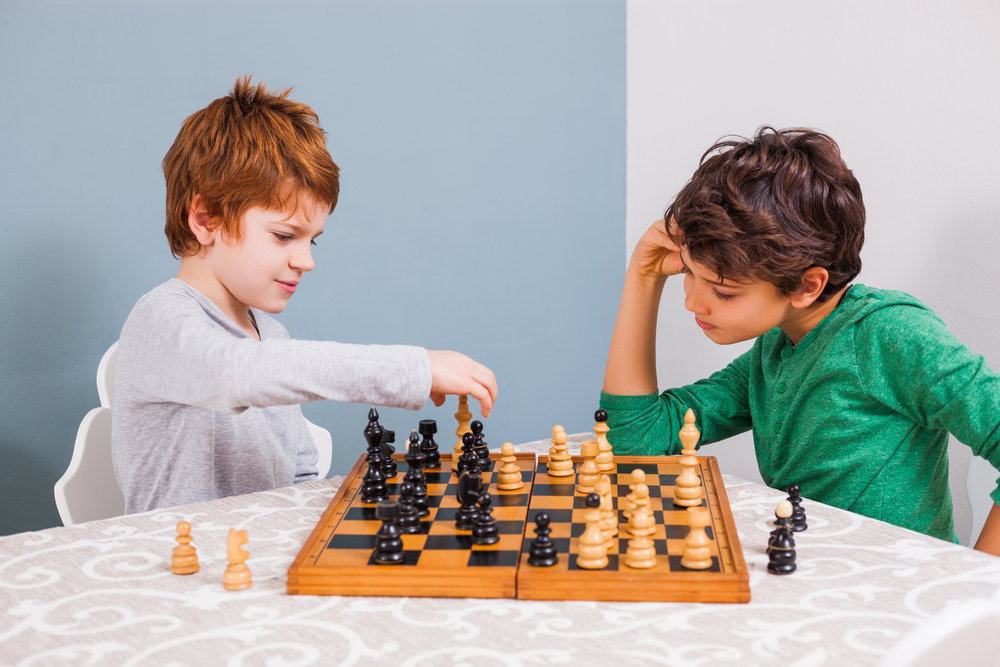
Parents and teachers should prioritize problem-solving skills through chess for children aged 6-7 because it fosters critical cognitive development at an early age. Chess encourages strategic thinking and improves decision-making abilities. As young learners engage with the game, they learn to assess situations, evaluate options, and anticipate consequences—a practice that translates seamlessly into other academic and life challenges.
Additionally, chess promotes patience and persistence. Children must learn to think several moves ahead, which helps build focus and resilience when faced with complex problems. Through this process, they also cultivate sportsmanship by understanding winning graciously and losing gracefully.
Moreover, chess offers a fun and engaging way to teach mathematics, as players delve into concepts such as patterns, spatial awareness, and logical reasoning. This hands-on approach makes learning enjoyable and increases retention.
Finally, participating in chess nurtures social skills. Children often play with peers, fostering collaboration, communication, and camaraderie. In a world that increasingly rewards adaptability and critical thinking, integrating chess into the educational experience empowers young learners to prepare for future challenges while deeply enjoying the process of learning. By supporting problem-solving skills through chess, parents and teachers equip children with essential tools for success.