Problem-Solving Skills Social Studies Worksheets for Ages 6-7
11 filtered results
Difficulty Level
Grade
Age
-
From - To
Subject
Activity
Standards
Discover our engaging Problem-Solving Skills worksheets tailored for children ages 6-7 in the social studies curriculum! These worksheets are designed to develop critical thinking and decision-making abilities through fun, educational activities. Your child will explore real-world scenarios that encourage them to analyze information, gather facts, and propose solutions. Each worksheet aligns with age-appropriate lessons, ensuring that learning is enjoyable and effective. Foster a growth mindset in your young scholars as they tackle challenges while understanding their community and environment. Perfect for classroom use or at-home learning, these resources will cultivate essential problem-solving skills in your budding thinker!
Favorites
With answer key
Interactive
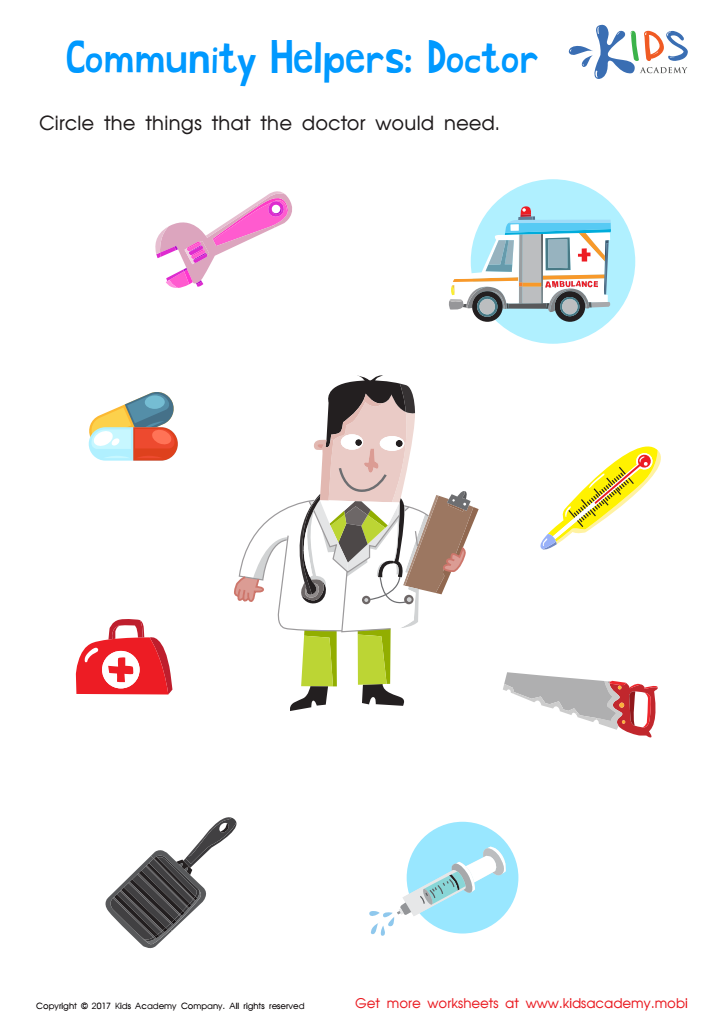
Community Doctors: Maze Printable
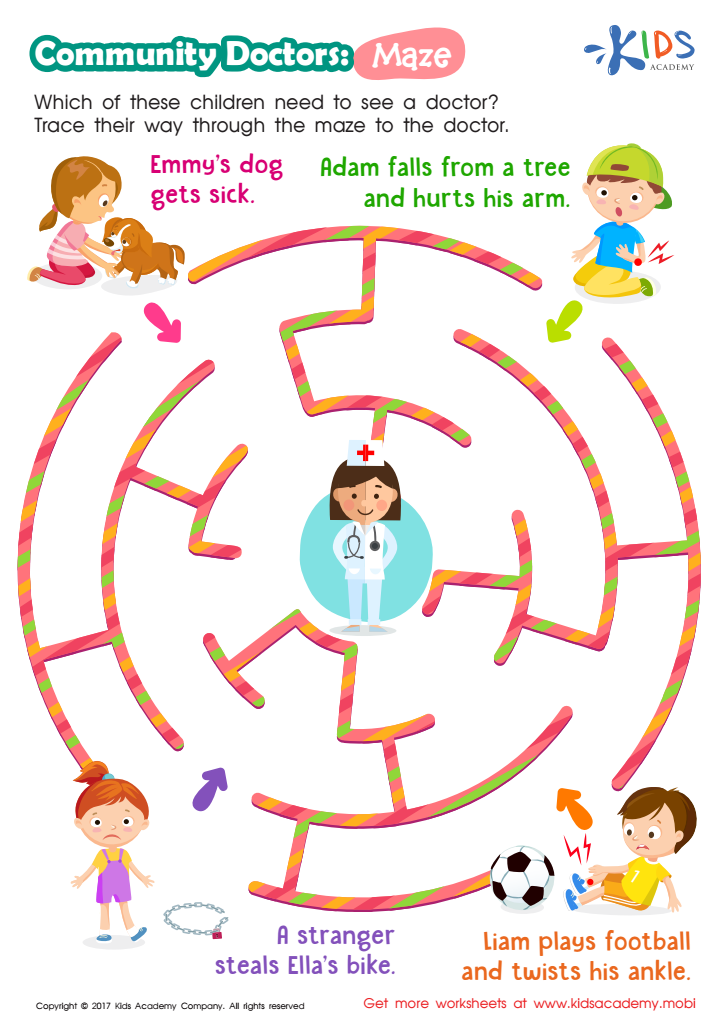
It will help your child demonstrate prior knowledge of doctors, consider their role in the community, and connect learning to a fun activity.
Kids already know what it's like to visit the doctor, but this worksheet will help them see doctors as community leaders too. It's a quick and fun way to teach your child about doctors and their roles, with a maze to complete after each scenario. Learning made enjoyable!
 Assign to My Students
Community Doctors: Maze Printable
Worksheet
Thinking Past Printable
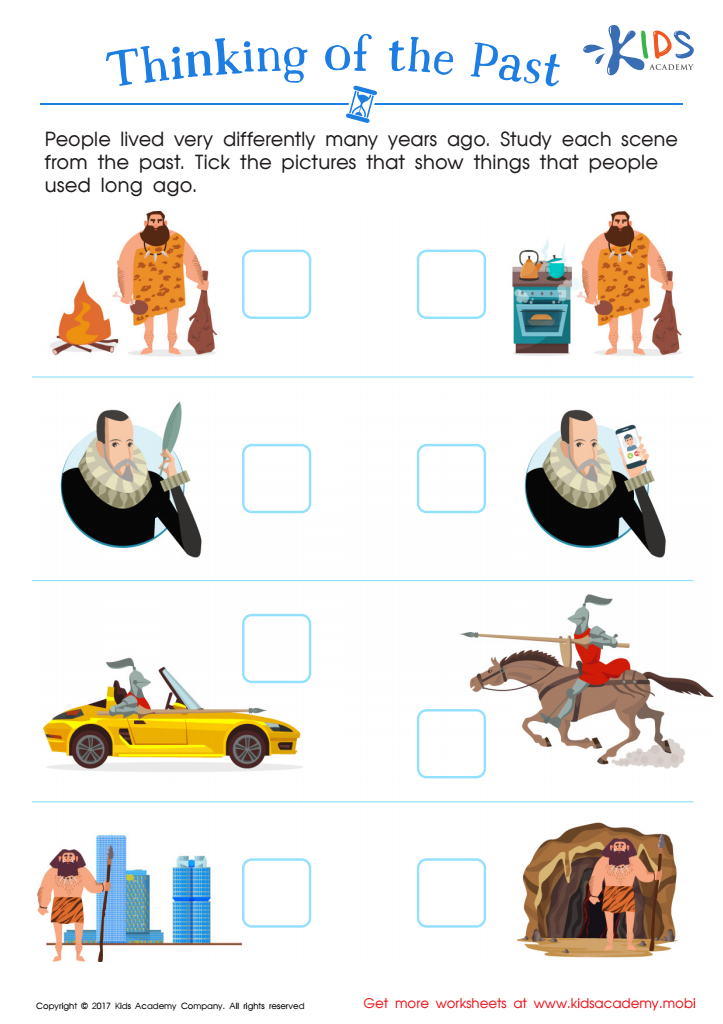
Bring the past to life for your kid with this fun worksheet! They'll use logic to choose the right answer, learning about different eras and how people lived in them. With a colorful caveman and modern skyscraper side by side, they won't even realize they're building historical knowledge.
Thinking Past Printable
Worksheet
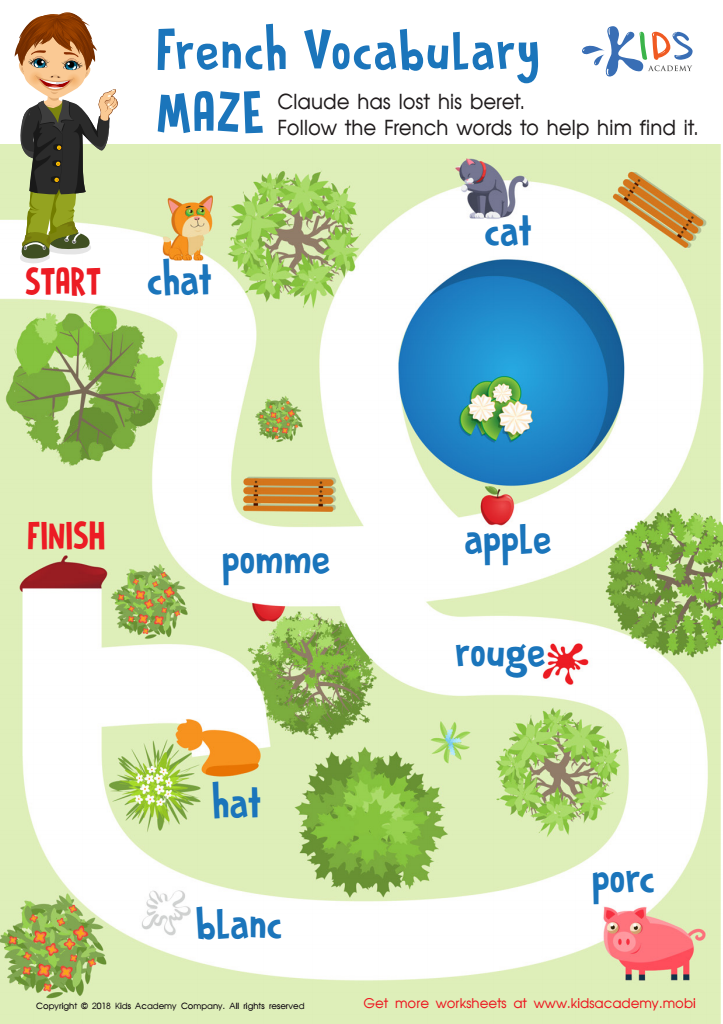
French Vocabulary Maze Worksheet
Kids can learn they're part of a global community with this fun maze worksheet. Claude needs help finding his beret, and by using the pictures children will develop their fine-motor skills. They don't even know they're learning new language words, they're just helping a friend!
French Vocabulary Maze Worksheet
Worksheet
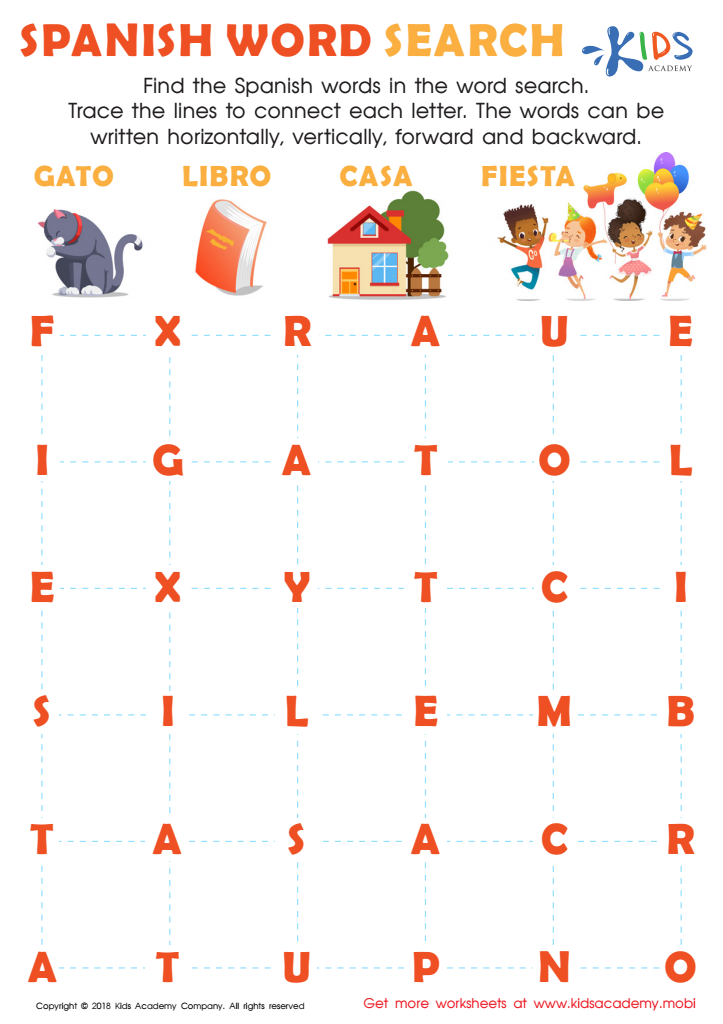
Spanish Word Search Worksheet
This free worksheet encourages students to learn Spanish words while developing visual, fine motor, and hand-eye coordination skills. Through colorful pictures and traceable lines, the task of finding words such as gato, libro, casa, and fiesta is disguised as a fun and engaging way to explore new cultures.
Spanish Word Search Worksheet
Worksheet
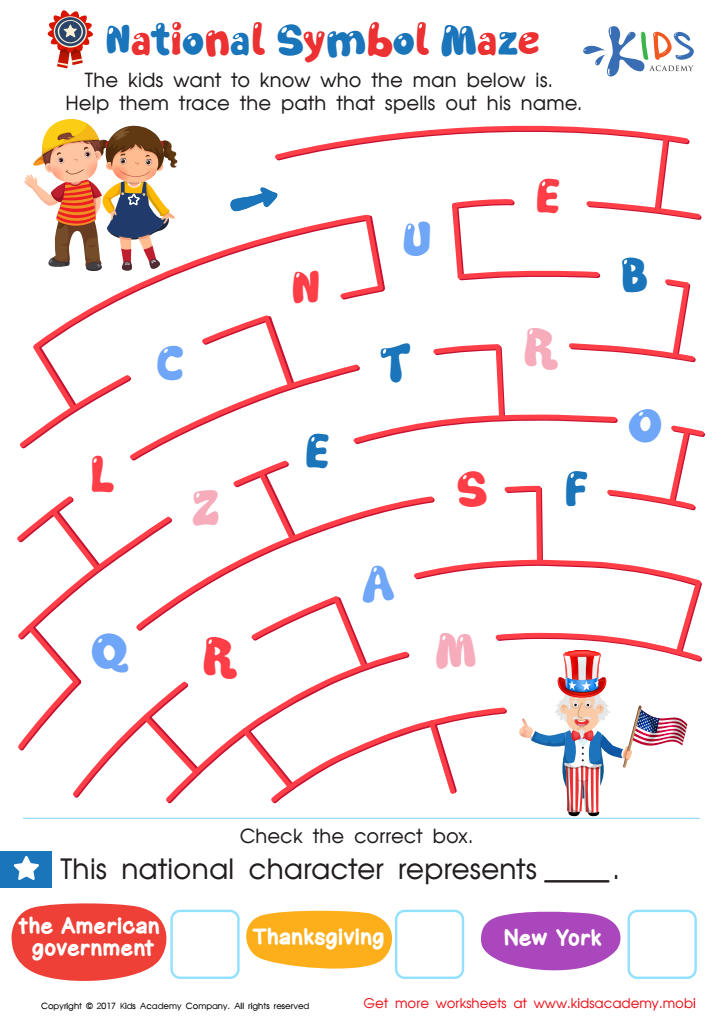
National Symbol Maze Worksheet
Introduce your child to Uncle Sam, a symbol of US history. The national symbols of the USA worksheet will help them learn about our rich culture and history.
National Symbol Maze Worksheet
Worksheet
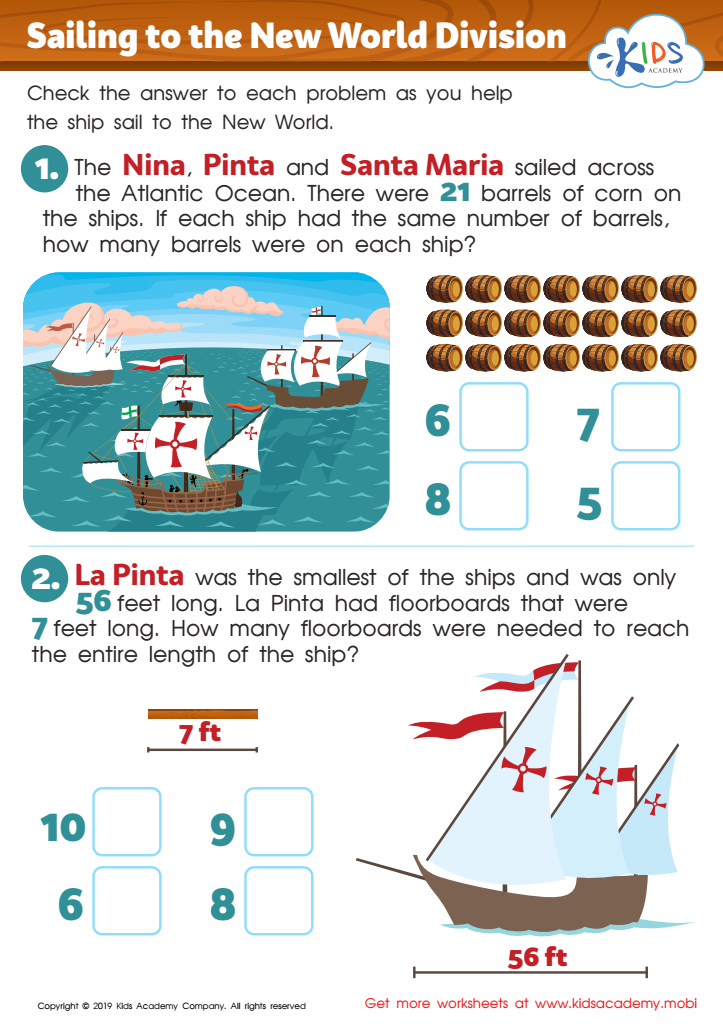
Sailing to the New World Division Worksheet
This worksheet combines history and math, helping kids make sense of problem-solving. Christopher Columbus sailing the ocean blue is combined with picture representations of division word problems in bold colors and highlighted numbers. Kids can learn while having fun figuring out the problems, regardless of whether it's math or history.
Sailing to the New World Division Worksheet
Worksheet
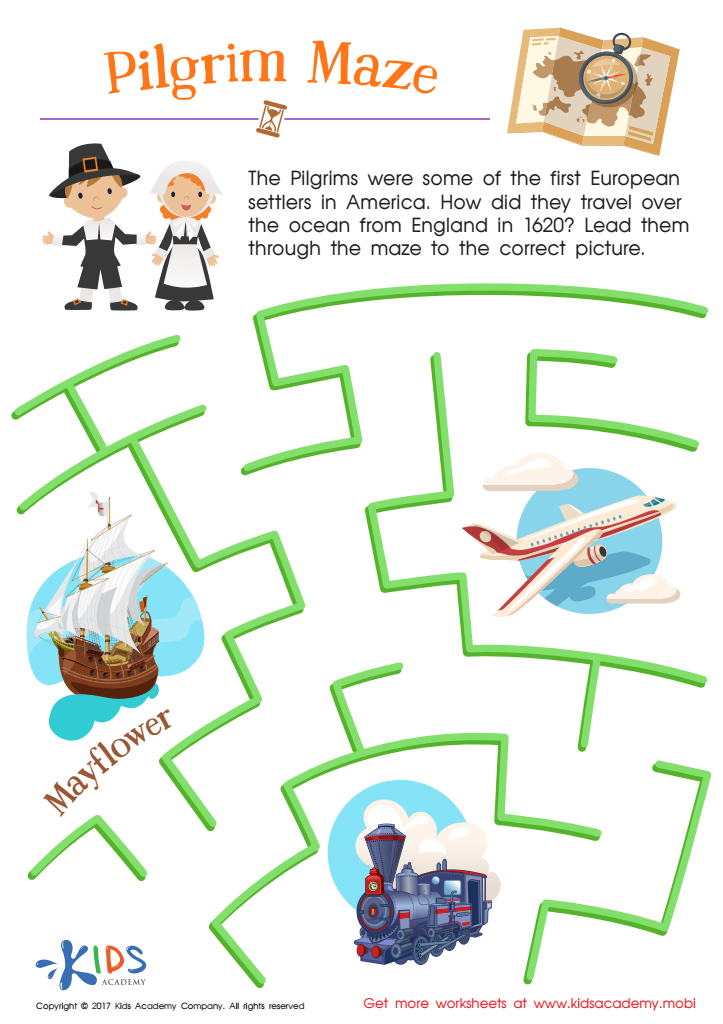
Pilgrim Maze Worksheet
This worksheet is perfect for teaching kids about an important moment in American History! Your child will have a blast solving the maze to recall that the Mayflower brought the pilgrims to the New World in 1620. It reinforces American history facts and develops visual motor and problem solving skills. It also uses modern pictures to make kids think about the right answer. Get this challenging pilgrim printable maze or a full collection of history worksheets for your little learner!
Pilgrim Maze Worksheet
Worksheet
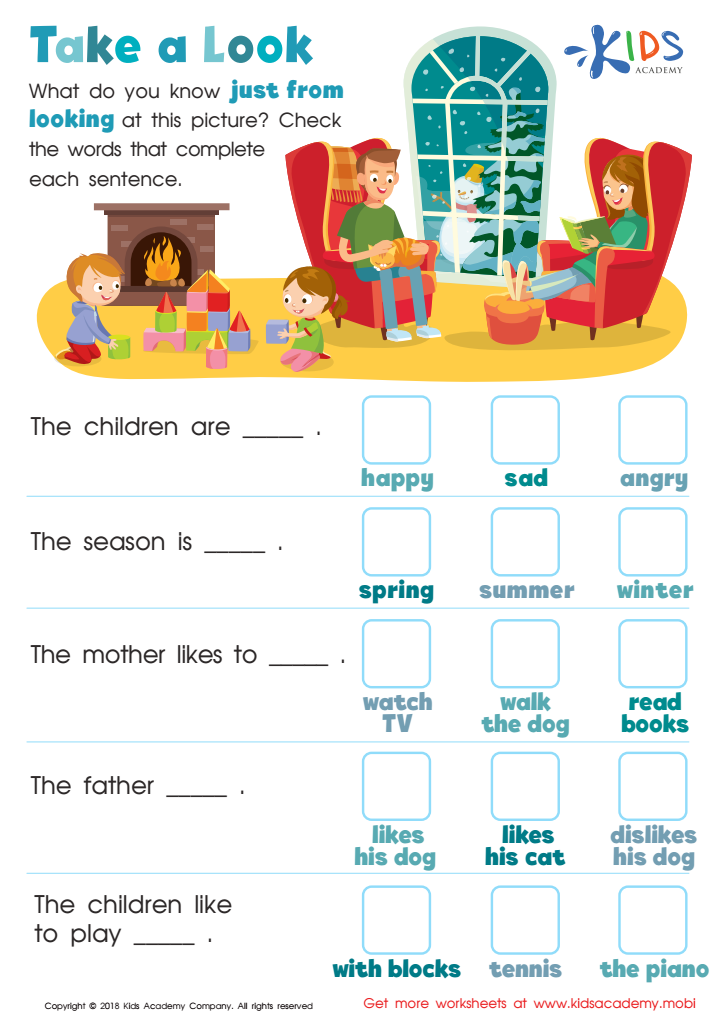
Take a Look - Part 1 Worksheet
Young learners gain understanding when using picture clues when reading. Looking at illustrations can help students learn the meaning of key vocabulary when reading fiction or informational text. Ask your students to look at the worksheet and observe what they can learn from the picture. It's a great comprehension strategy for early readers.
Take a Look - Part 1 Worksheet
Worksheet
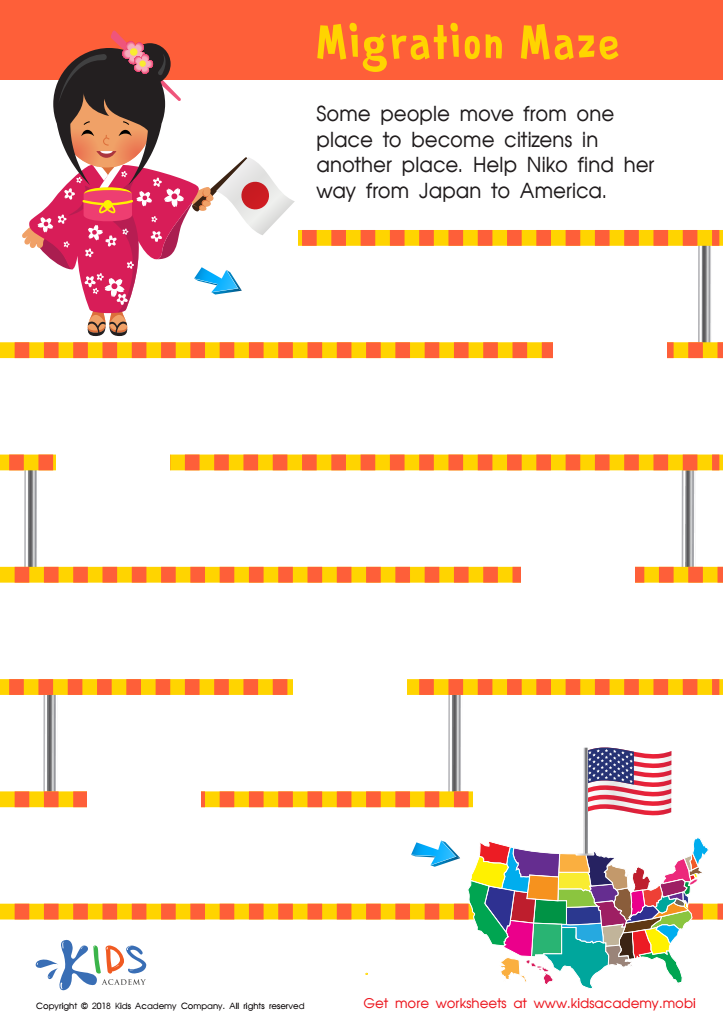
Migration Maze Worksheet
You are a citizen of your school, city and country. Many people migrate to become citizens of another place, like Niko in this worksheet. Ask your students to help her find her way from Japan to America.
Migration Maze Worksheet
Worksheet
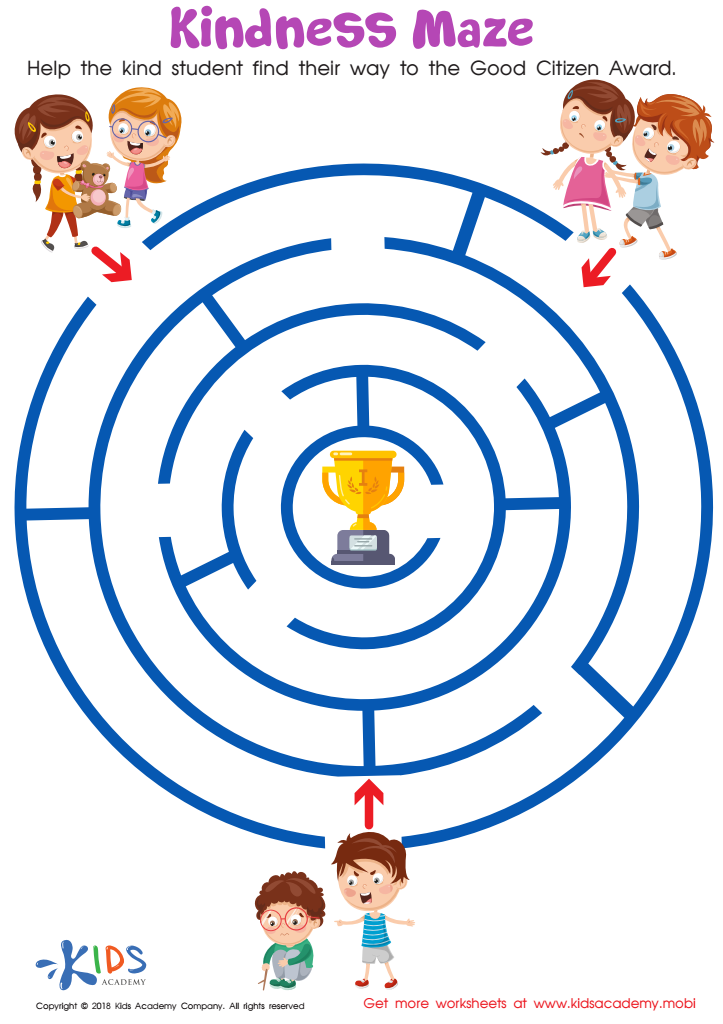
Kindness Maze Worksheet
Rewards come in many forms for kind deeds. When your children do good, you can choose to reward them with a gift or compliment. The students in this worksheet have been awarded the Good Citizen Award for kindness. Let your kids help the students find their way to the award - at the center of the maze. Guide them through to get their prize.
Kindness Maze Worksheet
Worksheet
Join Kids Academy for Free
Who is primarily going to use this learning content?






Problem-solving skills are crucial for children, especially in the context of social studies for ages 6-7. At this age, children are beginning to learn about their community, geography, and the relationships between people. Understanding these concepts goes beyond merely memorizing facts; it fosters critical thinking and the ability to navigate real-world situations.
When parents and teachers encourage problem-solving within social studies, they help children develop essential skills that they will carry into adulthood. For example, exploring scenarios about social issues or conflicts in a classroom setting allows children to think critically about different perspectives and consequences. This cultivates empathy and enhances their ability to collaborate with others, as they learn to weigh options and find solutions together.
Furthermore, integrating problem-solving into social studies equips children with tools to handle challenges they may face as citizens, such as community involvement and respectful dialogue. It prepares them to engage in meaningful discussions and make informed decisions in their daily lives.
Overall, focusing on problem-solving skills in social studies serves not only to enhance academic achievement but also to nurture responsible, thoughtful individuals who can contribute positively to society. This focus ultimately lays the foundation for lifelong learning and active participation in their communities.