Vowel Diphthongs Worksheets for Ages 6-8
27 filtered results
-
From - To
Discover our engaging Vowel Diphthongs Worksheets designed specifically for children ages 6-8! These interactive resources are perfect for helping young learners understand and master vowel diphthongs through fun activities and exercises. Each worksheet encourages phonemic awareness and improves reading skills, making learning enjoyable. From colorful illustrations to creative exercises, our worksheets promote active participation while developing essential language abilities. Ideal for both classroom and at-home learning, these worksheets support early literacy and provide a solid foundation for future reading success. Download your worksheets today and give your child the tools they need to excel in understanding and using vowel diphthongs!
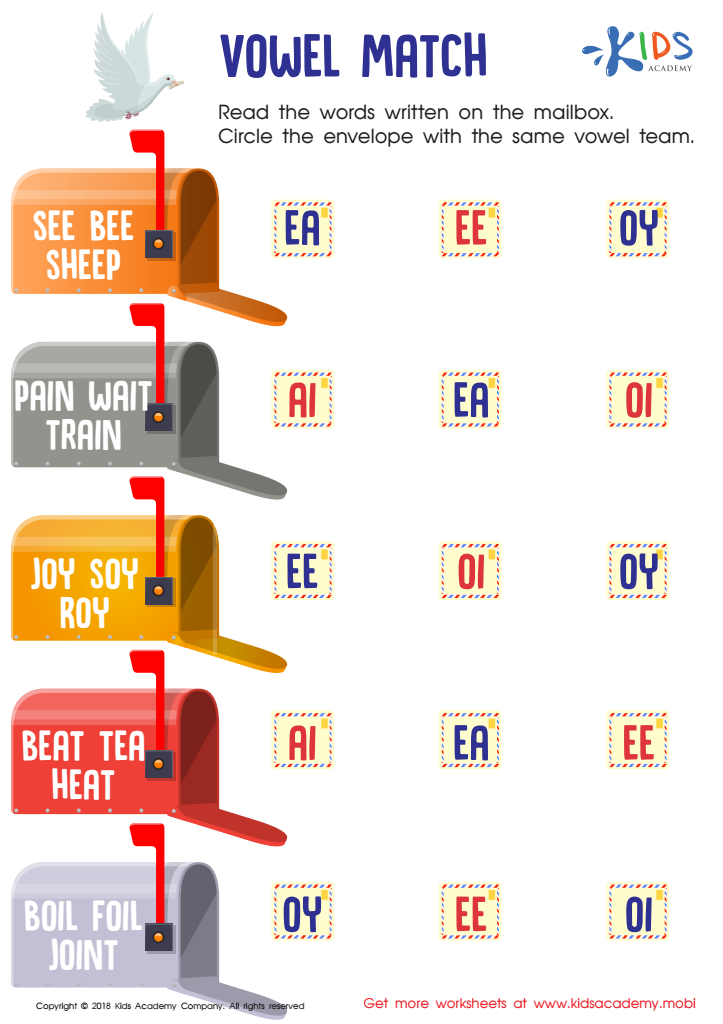
Vowel match Worksheet
 Assign to My Students
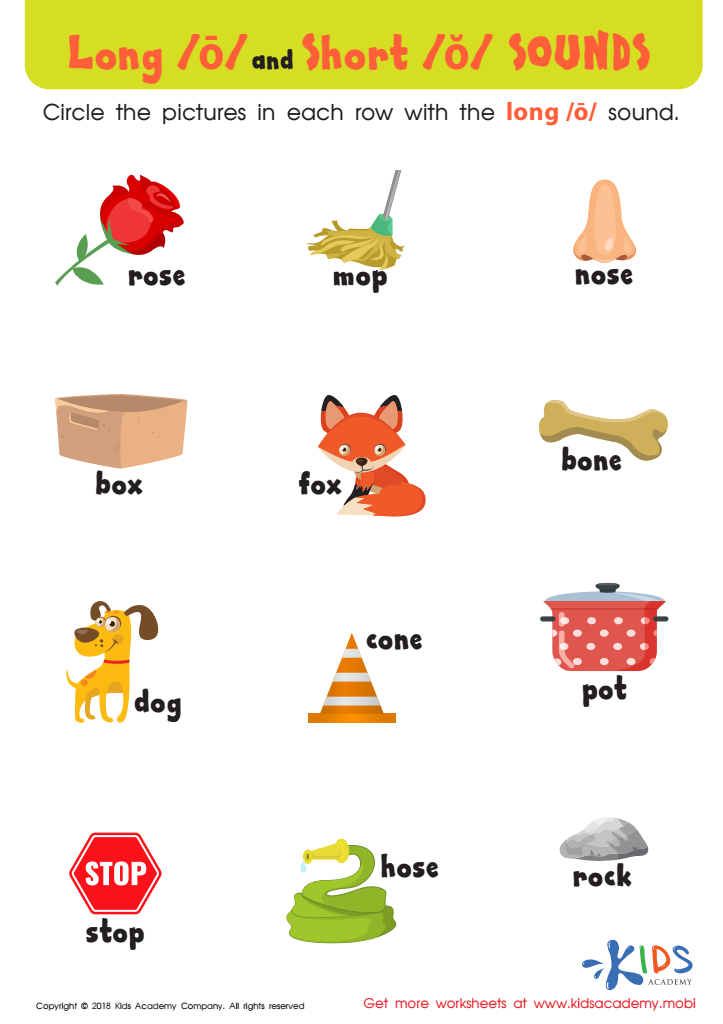
Reading: Long O and Short O Sounds Worksheet
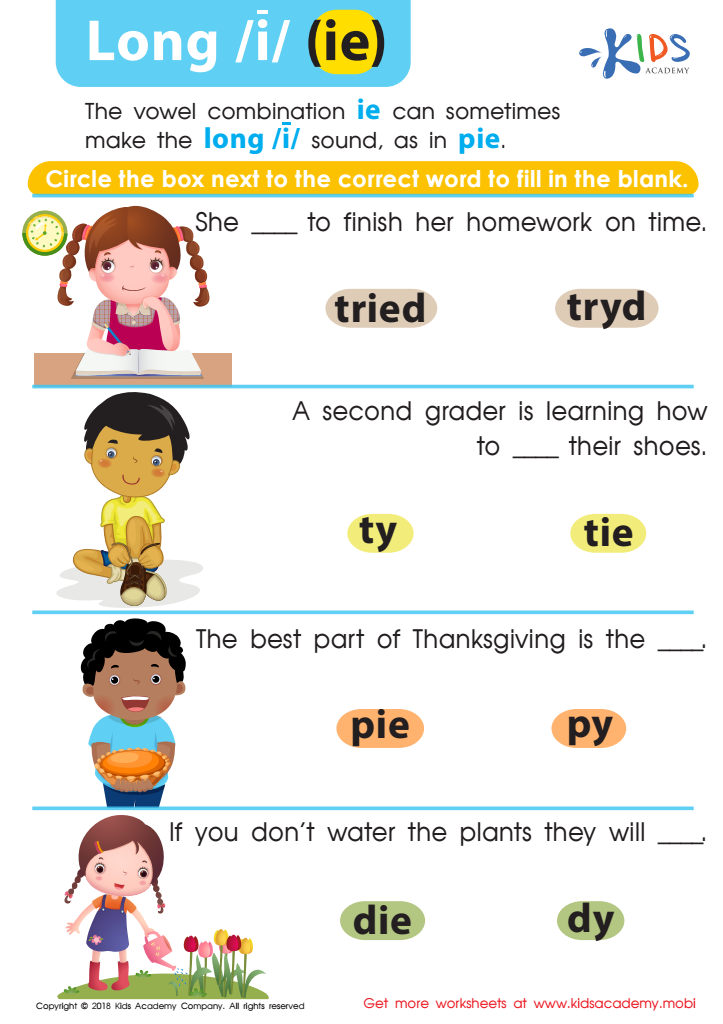
Reading: Long I and IE Worksheet
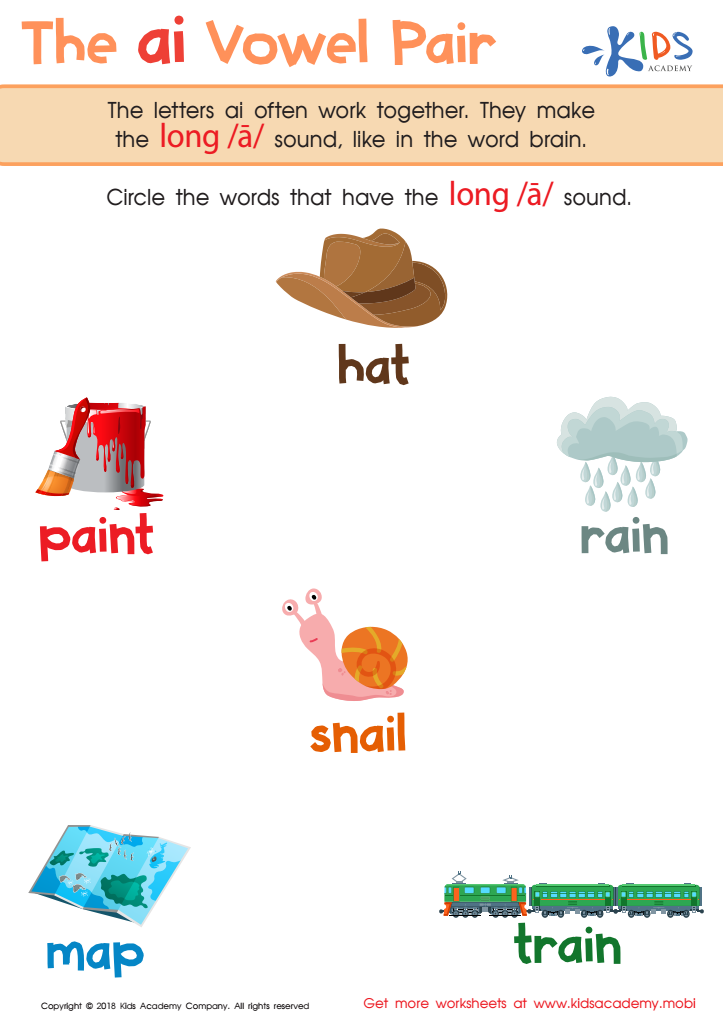
The AI Vowel Pair Worksheet
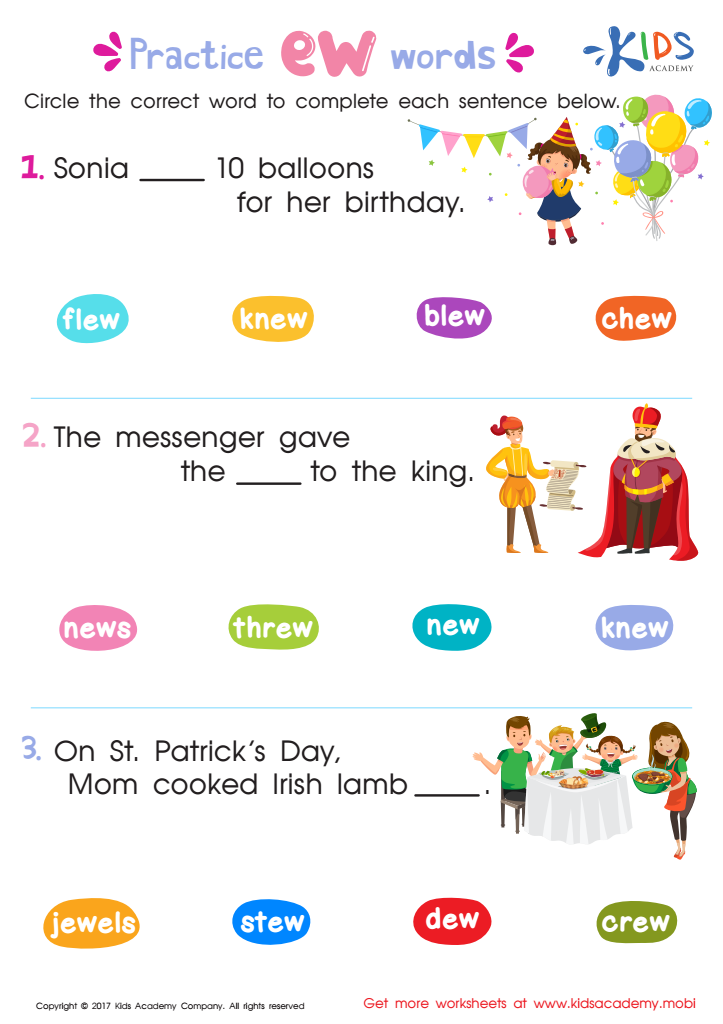
EW Words Worksheet
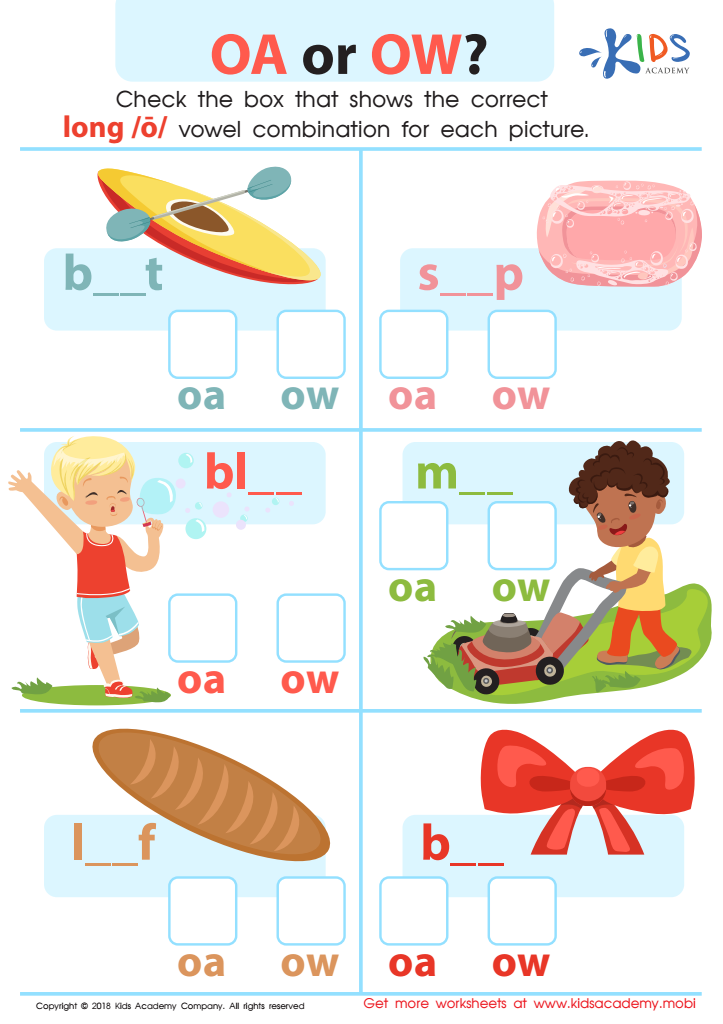
Reading: OA or OW Worksheet
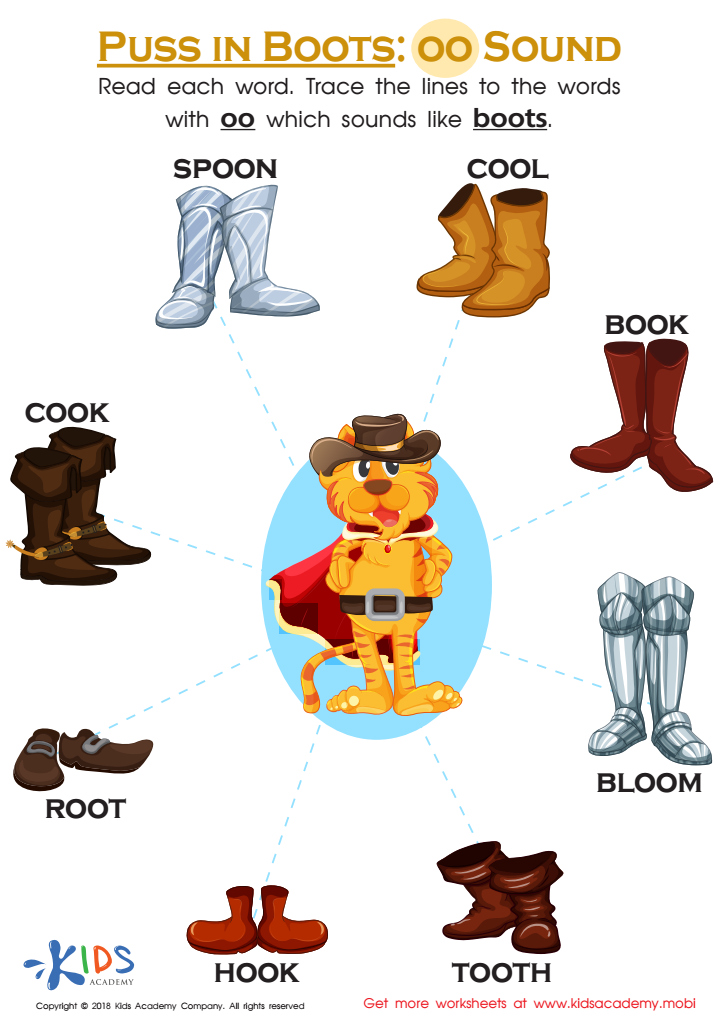
Puss in Boots: OO Sound Worksheet
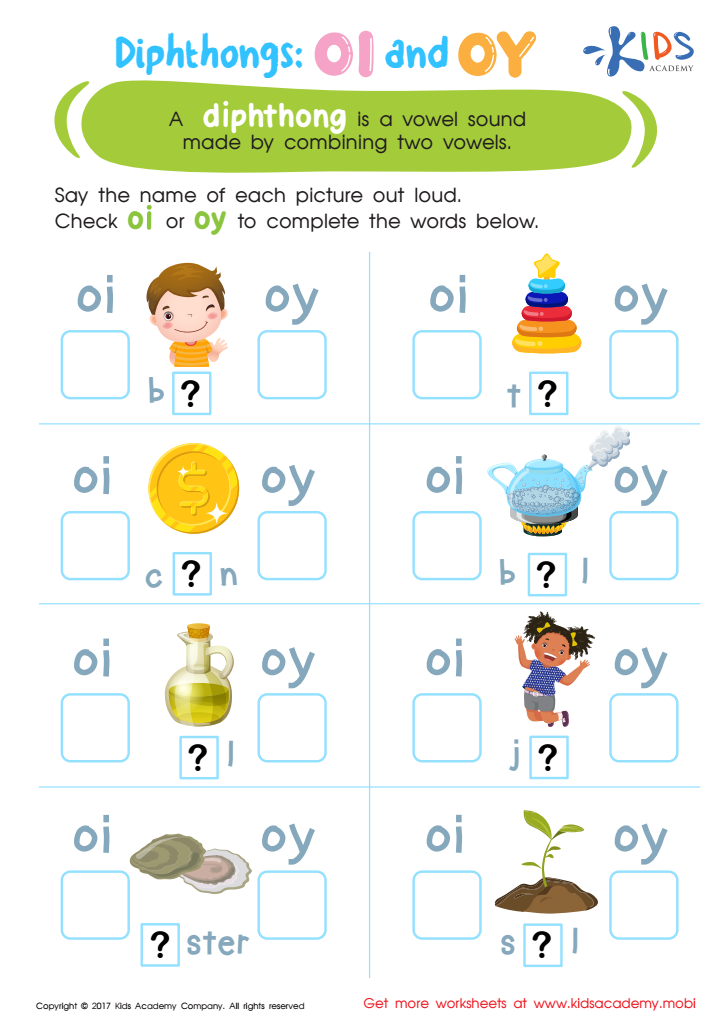
Vowel Diphthongs OI OY Worksheet
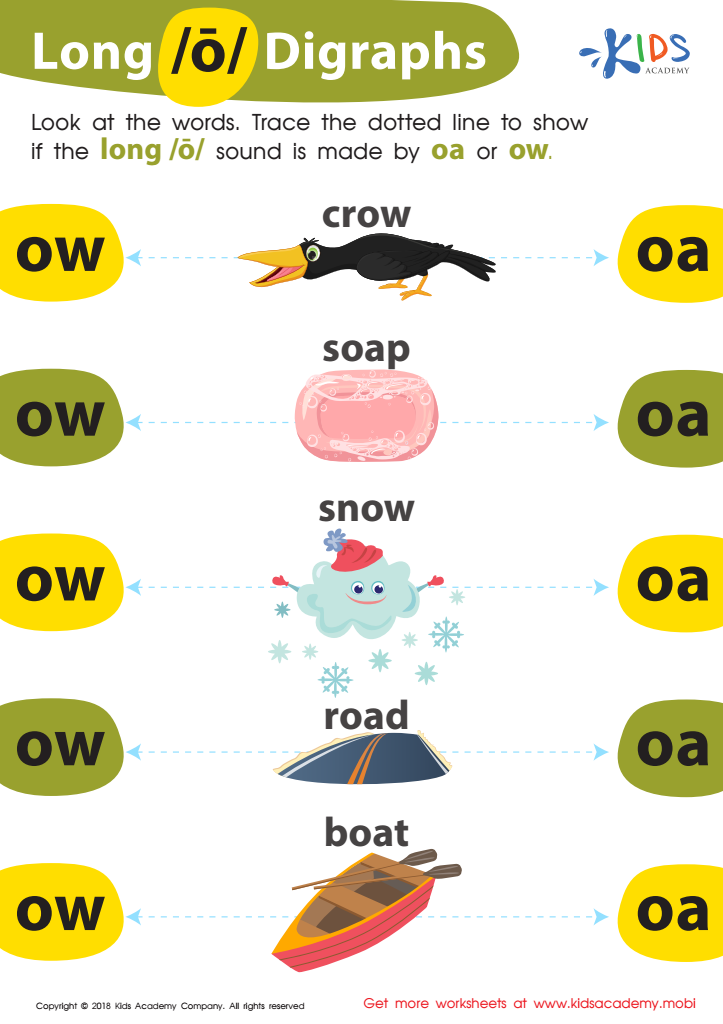
Reading: Long O Digraphs Worksheet
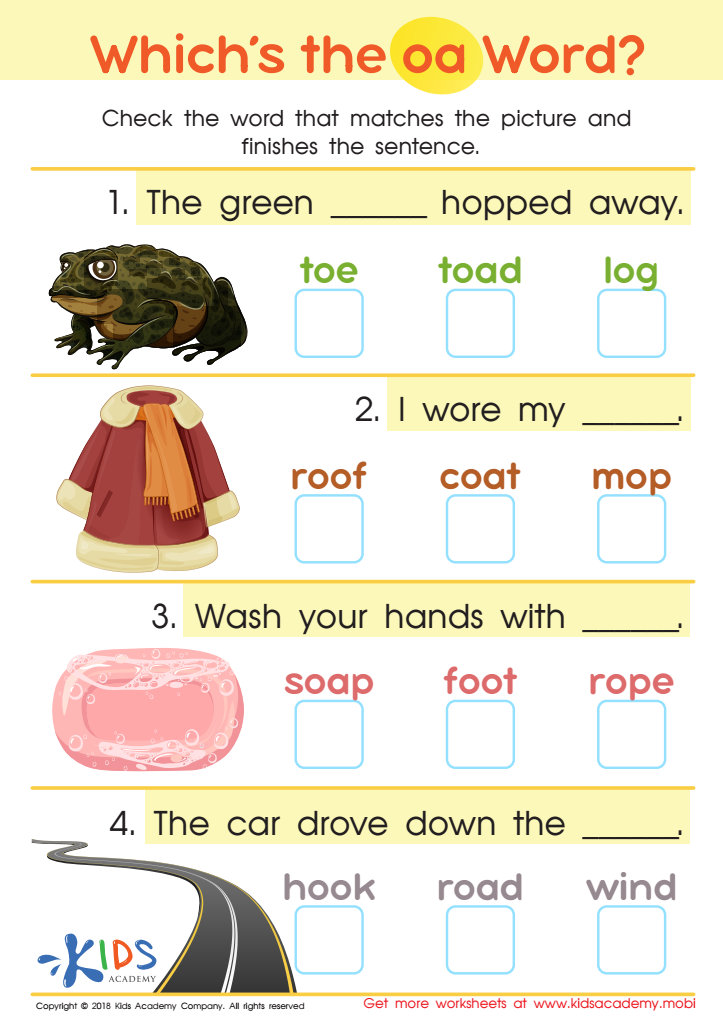
Which's the OA Word? Worksheet
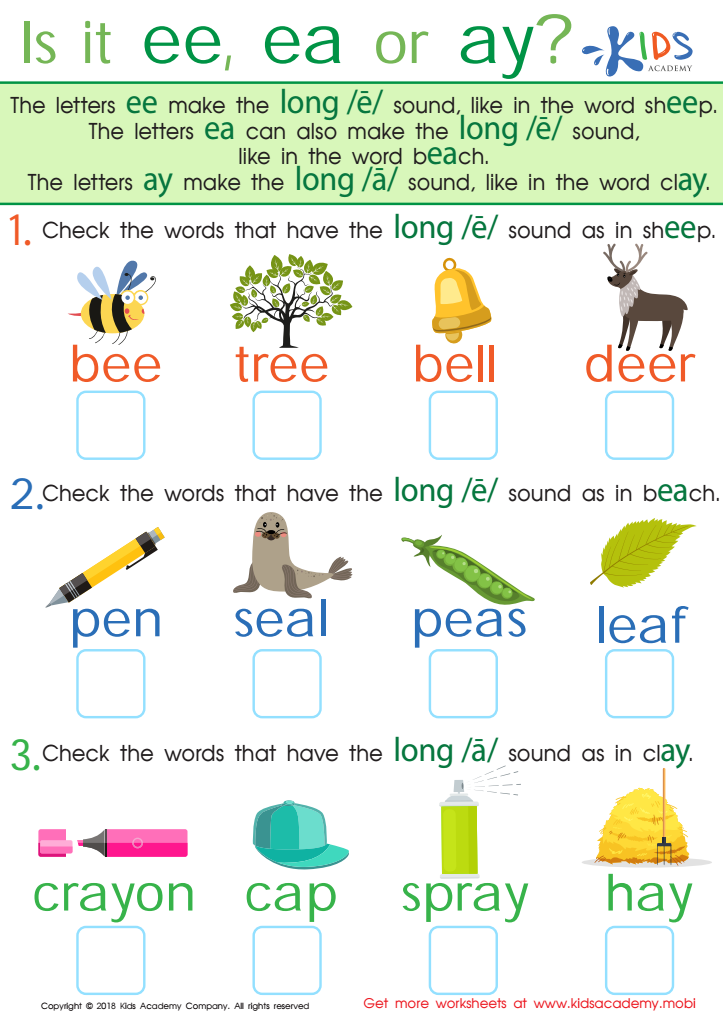
Is It EE, EA, or AY? Worksheet
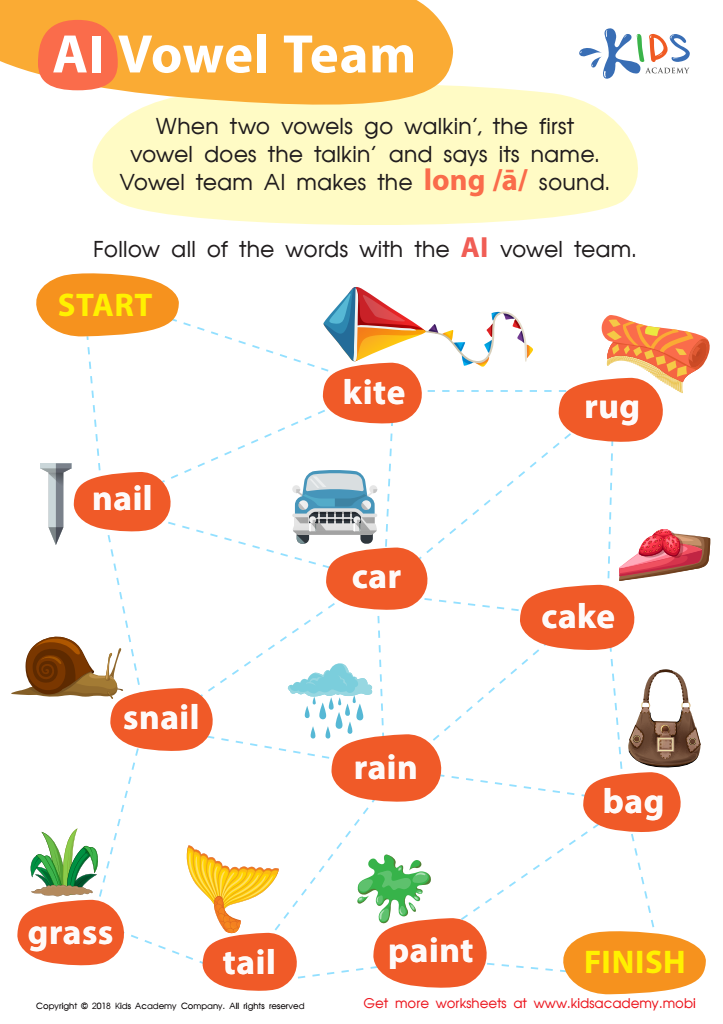
Reading: AI Vowel Team Worksheet
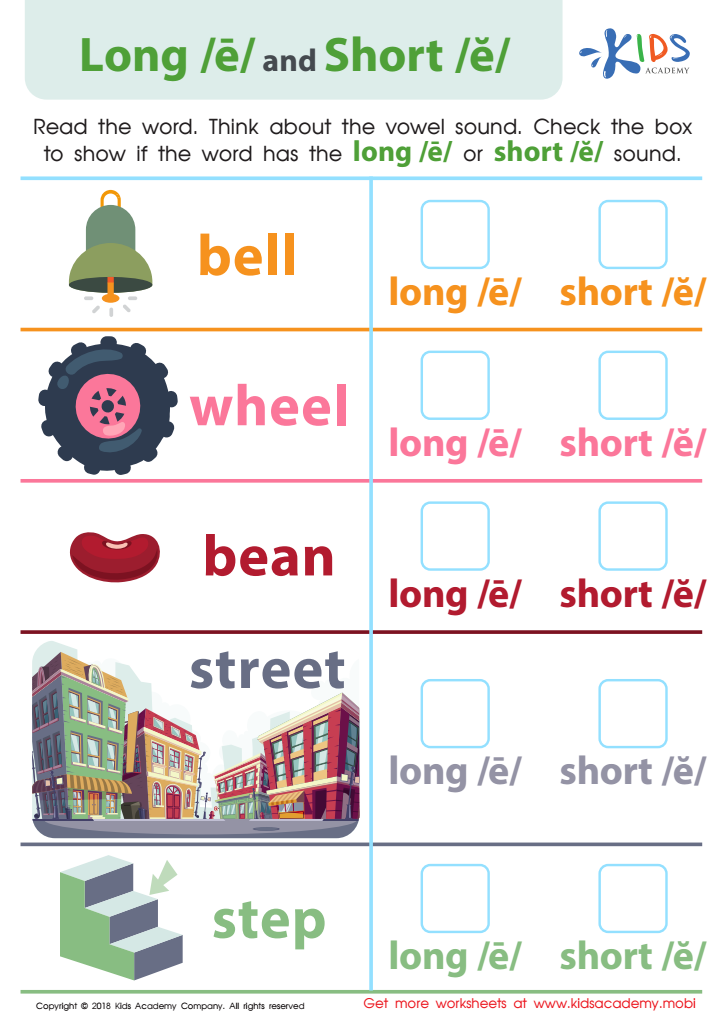
Reading: Long E and Short E Worksheet
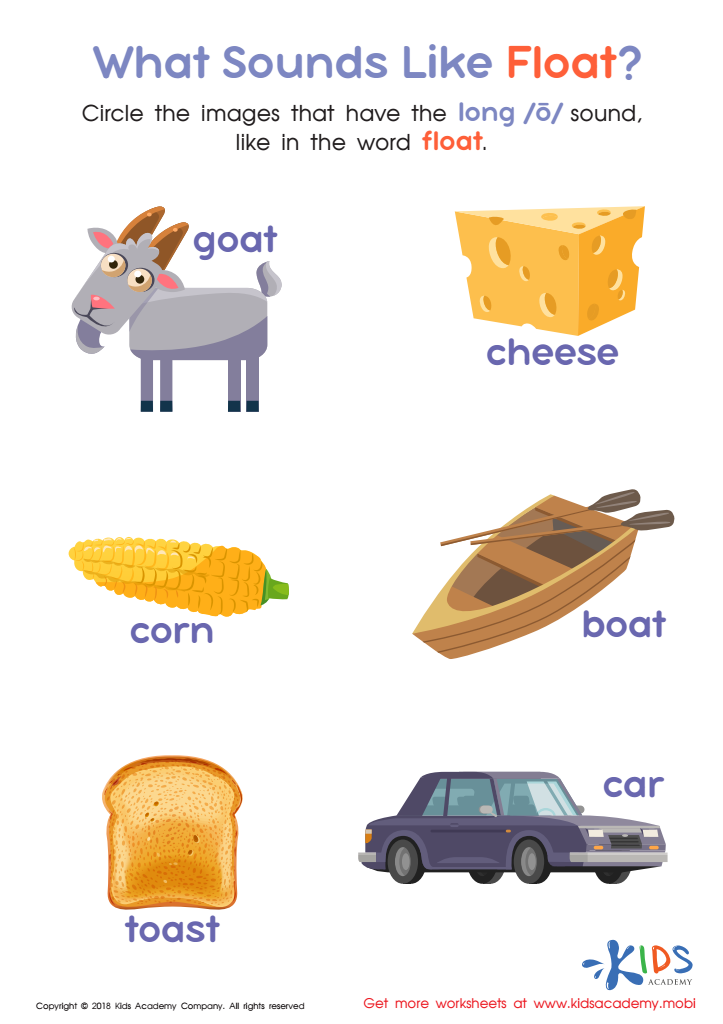
What Sounds Like Float? Worksheet
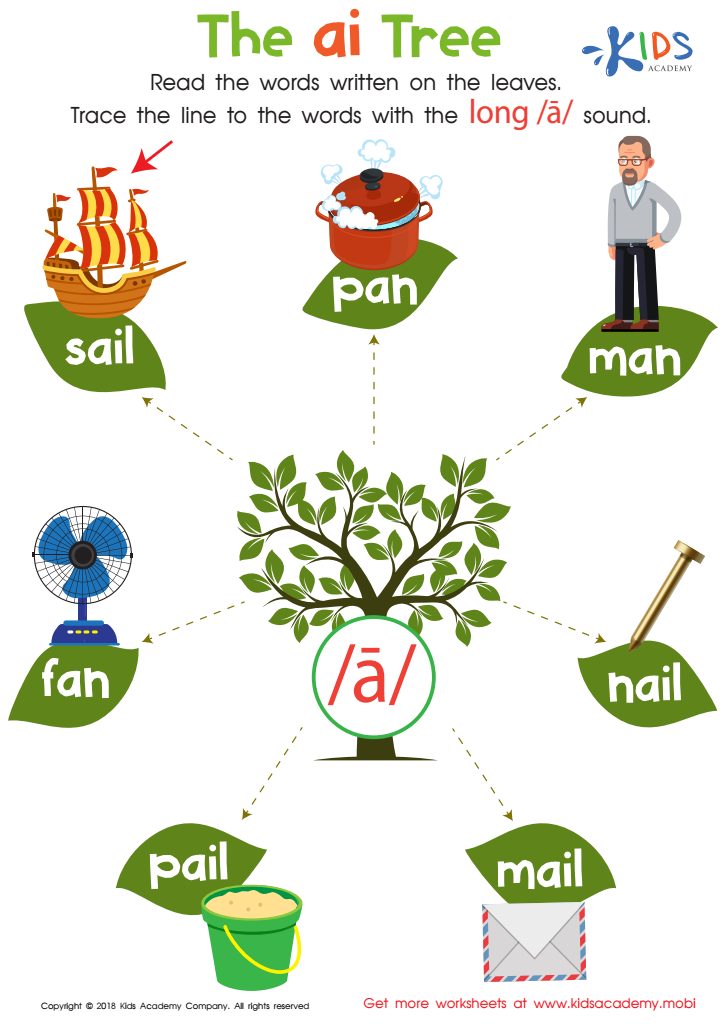
The AI Tree Worksheet
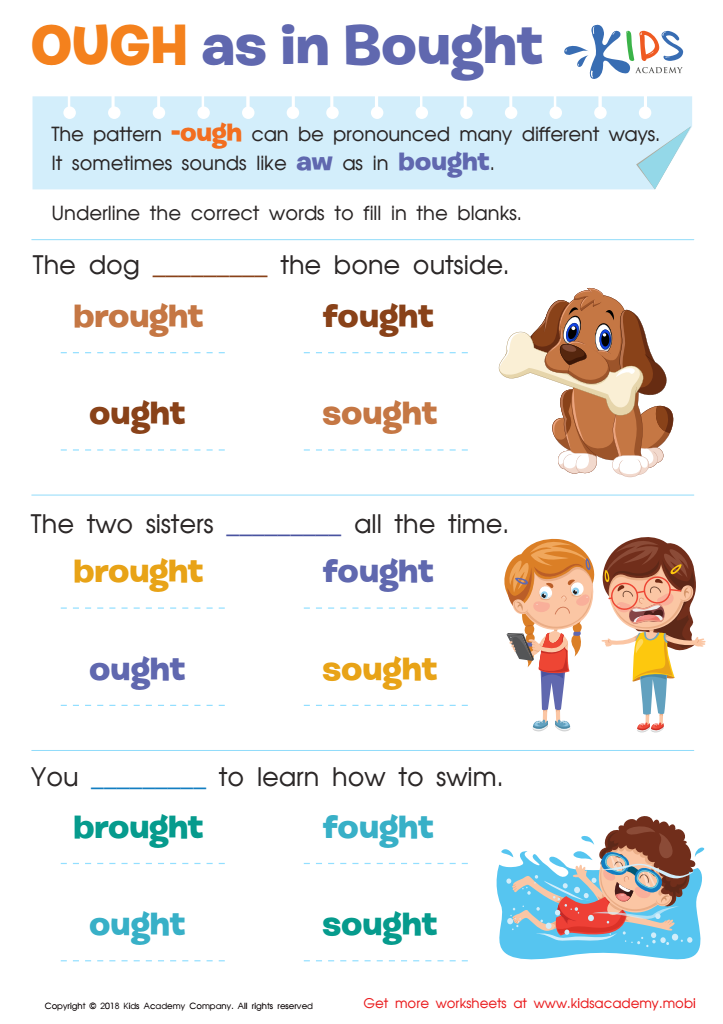
OUGH as in Bought Worksheet
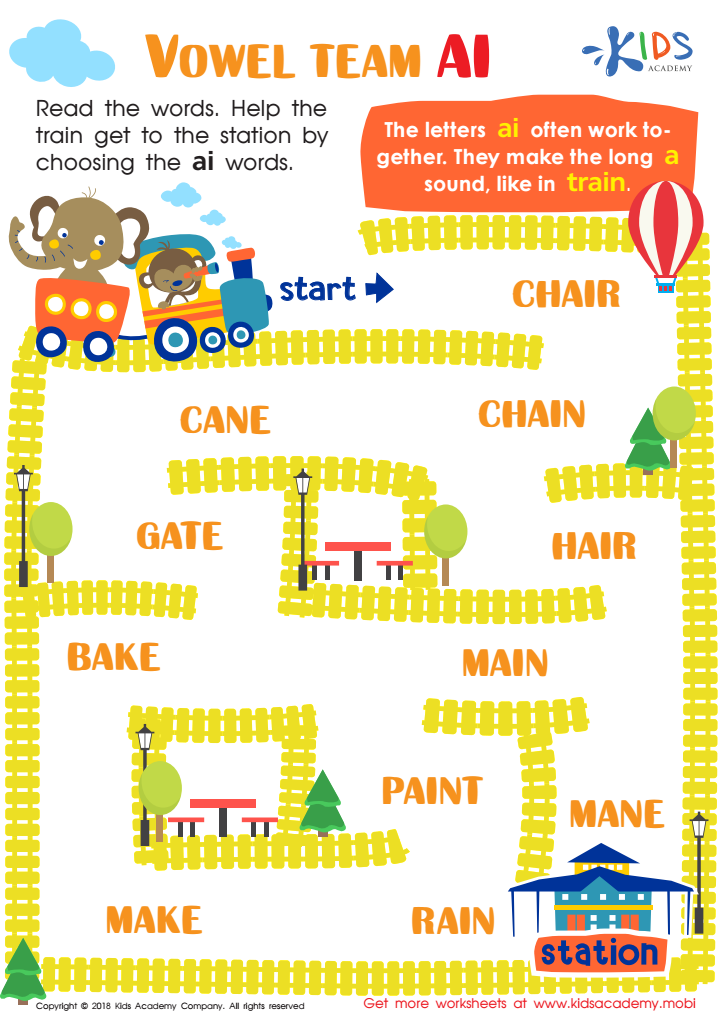
Vowel team ai Worksheet
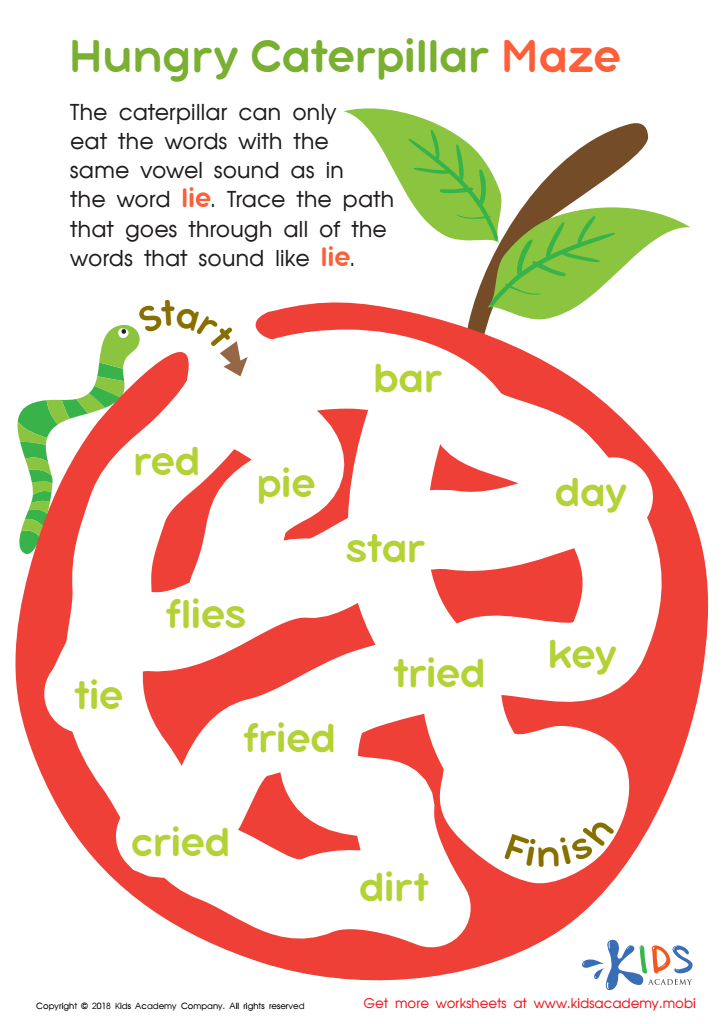
Hungry Caterpillar Maze Worksheet
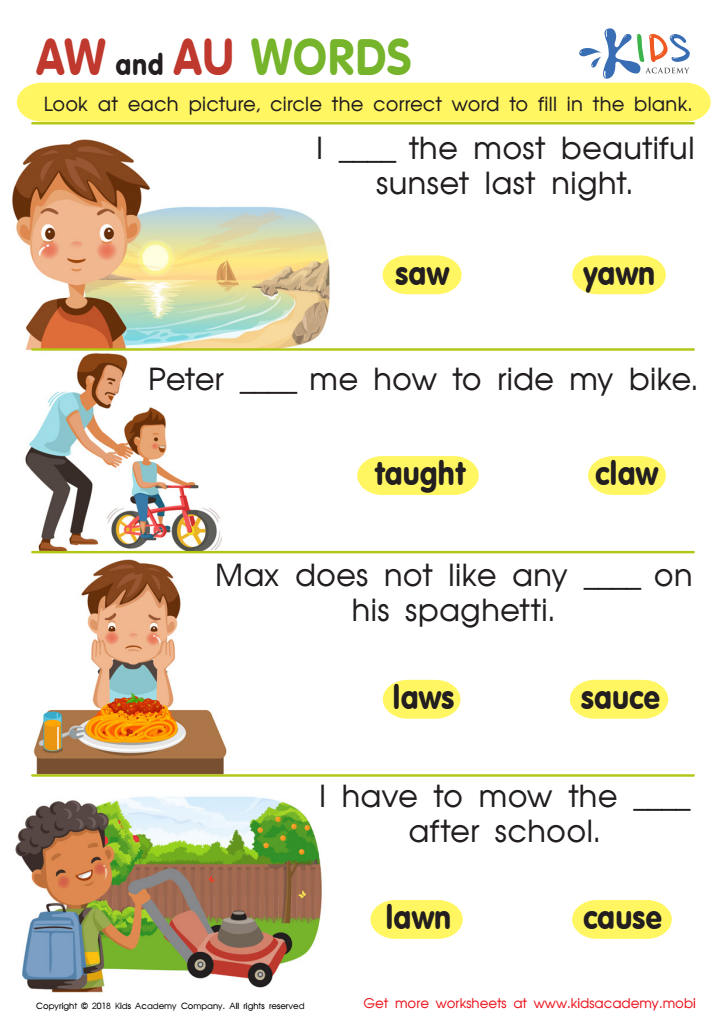
Reading: AW and AU Words Worksheet
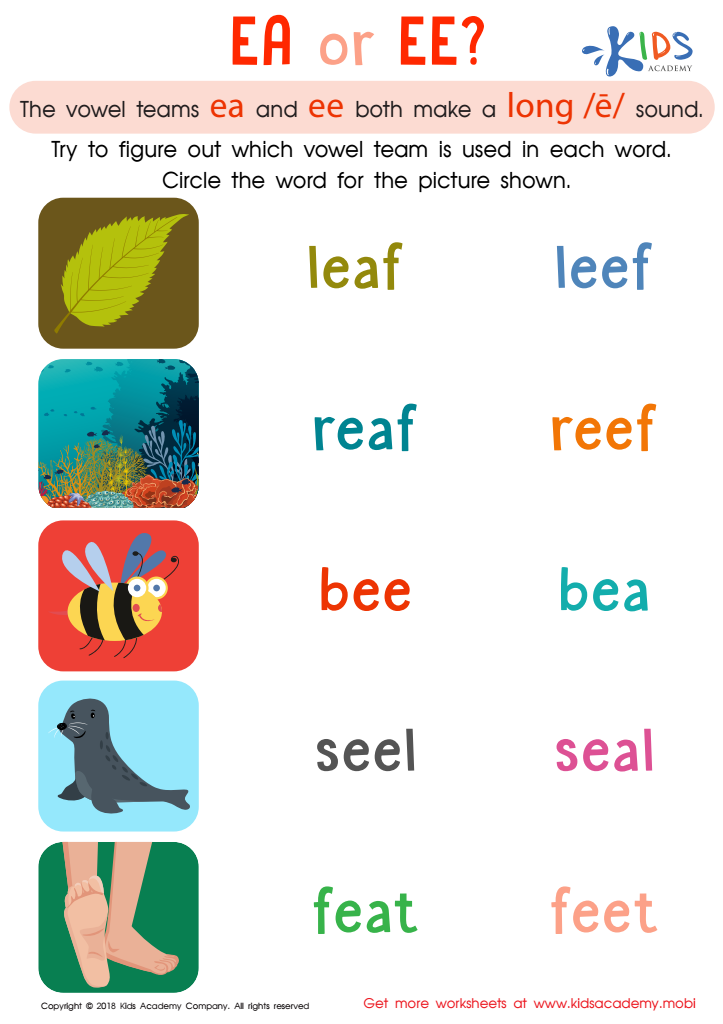
Reading: EA and EE Worksheet
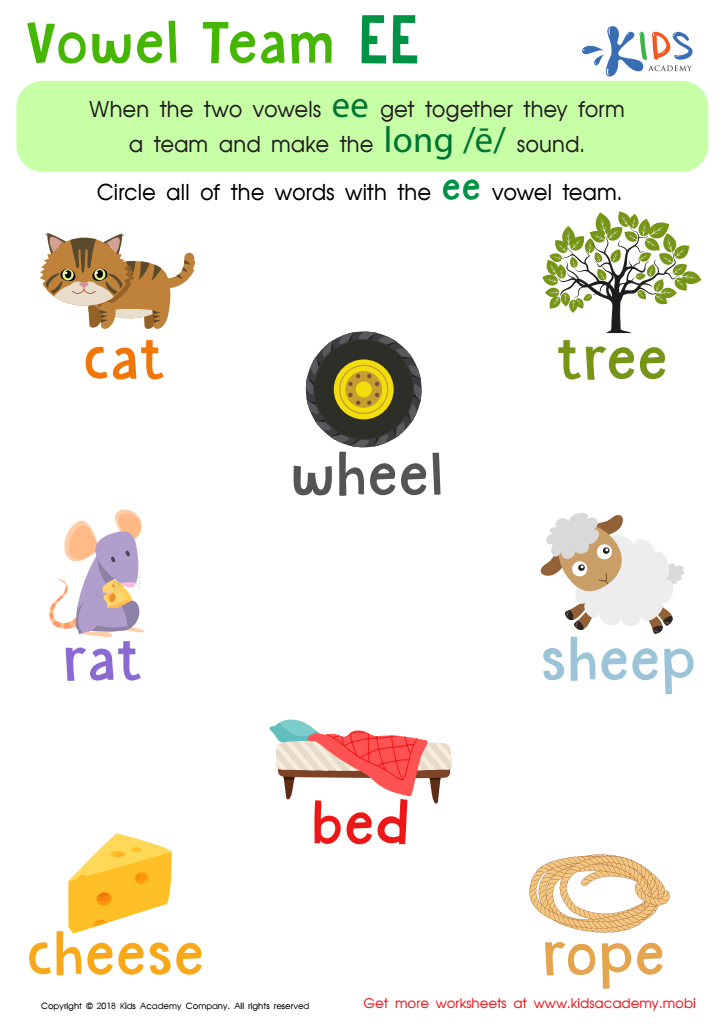
Reading: Vowel Team EE Worksheet
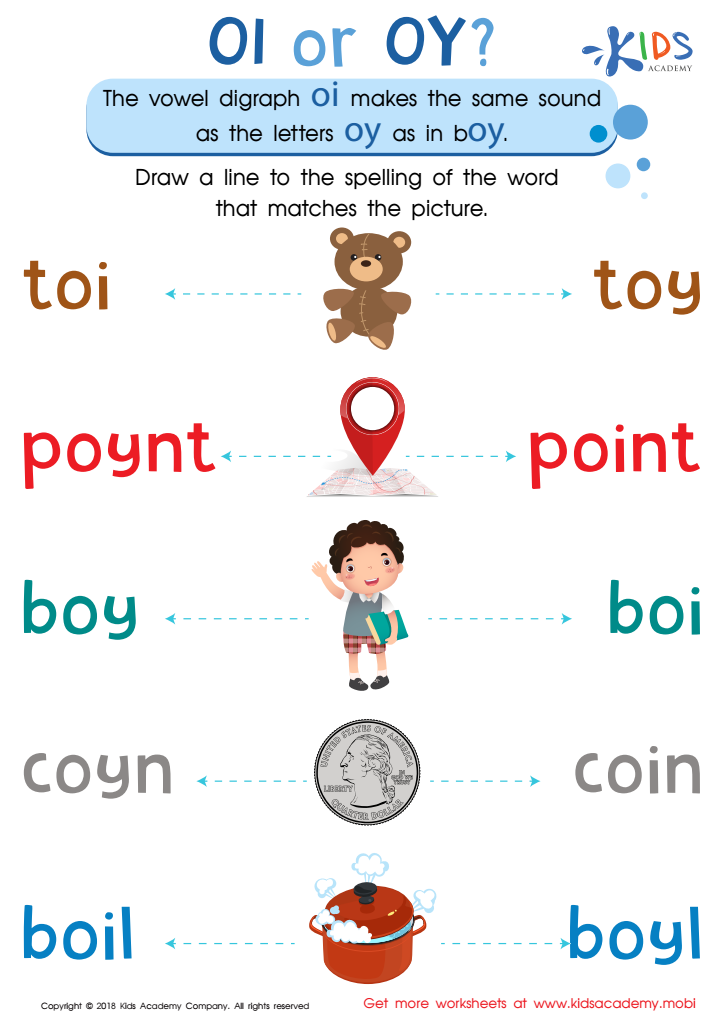
Reading: OI and OY Worksheet
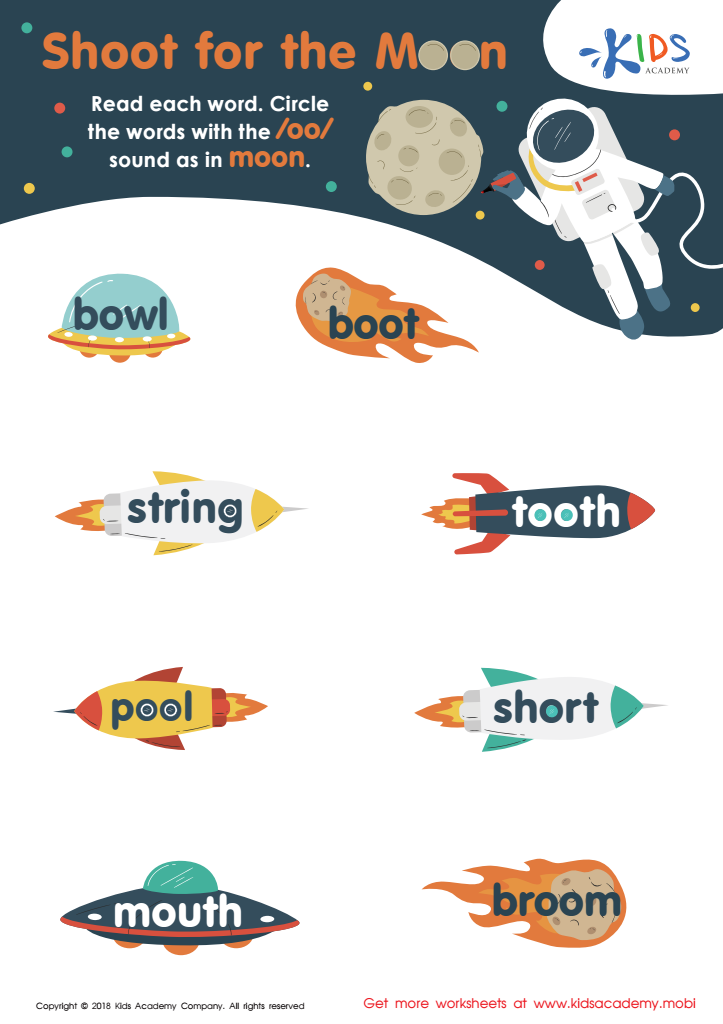
Reading: Shoot for the Moon Worksheet
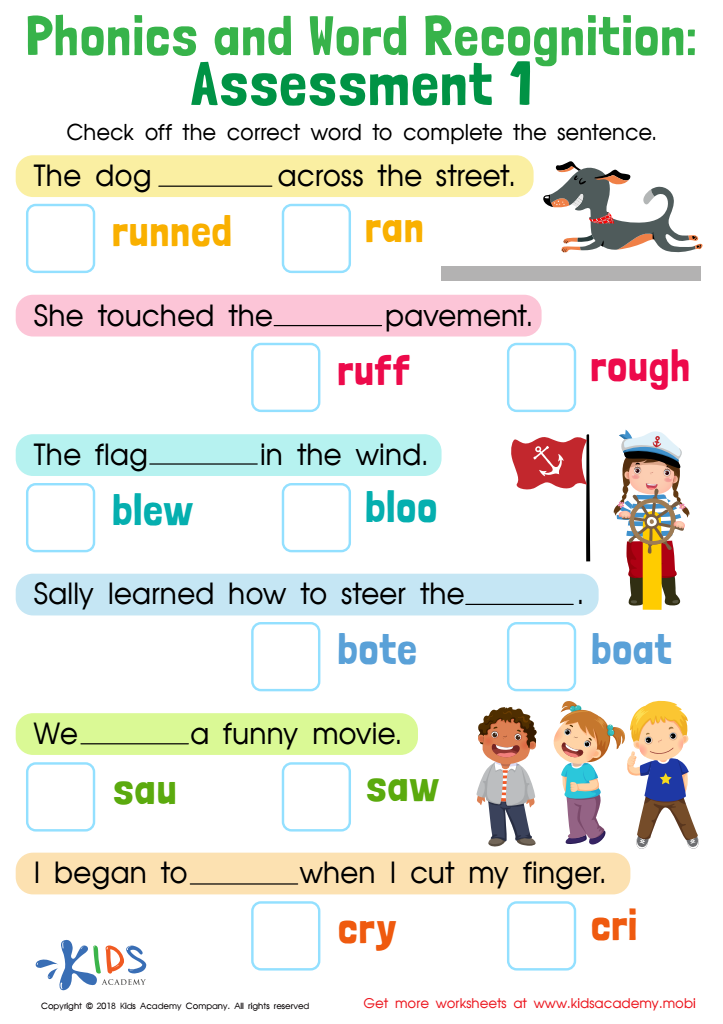
Phonics and Word Recognition: Assessment 1 Worksheet


Vowel diphthongs, the combination of two vowel sounds within the same syllable, play a crucial role in language development for children aged 6-8. Understanding these sound patterns is essential for reading and writing, as they appear frequently in English. By mastering diphthongs, children enhance their phonemic awareness—an essential skill for decoding words and improving spelling.
When children correctly identify and pronounce diphthongs, their reading fluency increases, enabling them to read aloud with confidence and comprehension. Moreover, familiarity with diphthongs enriches their vocabulary, as many common words—including "coin," "loud," and "kite"—feature these sounds.
Parents and teachers should prioritize activities that promote diphthong recognition and practice. Engaging children with fun songs, rhymes, and interactive games not only makes learning enjoyable but also reinforces their understanding of complex sounds. Strong foundational skills in diphthongs also support other linguistic elements, laying the groundwork for more advanced literacy skills in the future.
In summary, recognizing and understanding vowel diphthongs are vital for developing competent readers and writers, making it essential for parents and educators to foster these skills in early education settings.