Problem-Solving Skills Chess Worksheets for Ages 6-8
22 filtered results
-
From - To
Unlock the potential of young minds with our Problem-Solving Skills Chess Worksheets designed for ages 6-8. These engaging worksheets are crafted to enhance strategic thinking and analytical skills through fun, chess-based activities. Children will learn to anticipate opponents’ moves, plan their strategies, and solve complex problems, all while enjoying the classic game of chess. Perfect for both beginners and young chess enthusiasts, these worksheets support cognitive development and foster a love for problem-solving. Dive into the world of chess and watch your child’s critical thinking abilities flourish! Explore our selection today to start your child’s problem-solving journey.
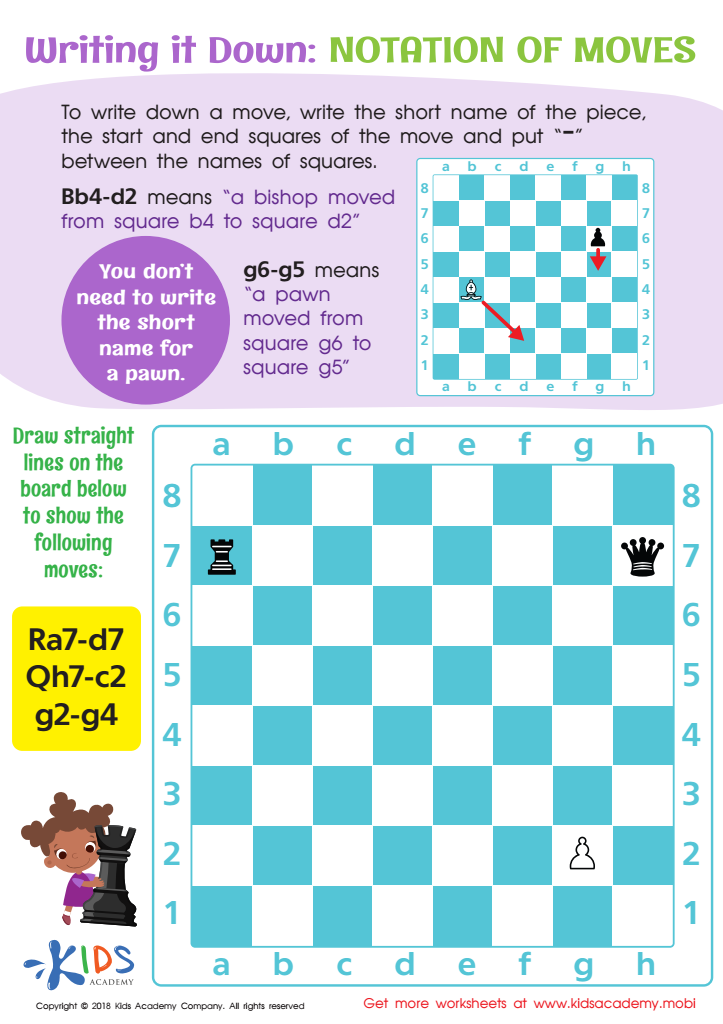
Notation of Moves Writing it Down Worksheet
 Assign to My Students
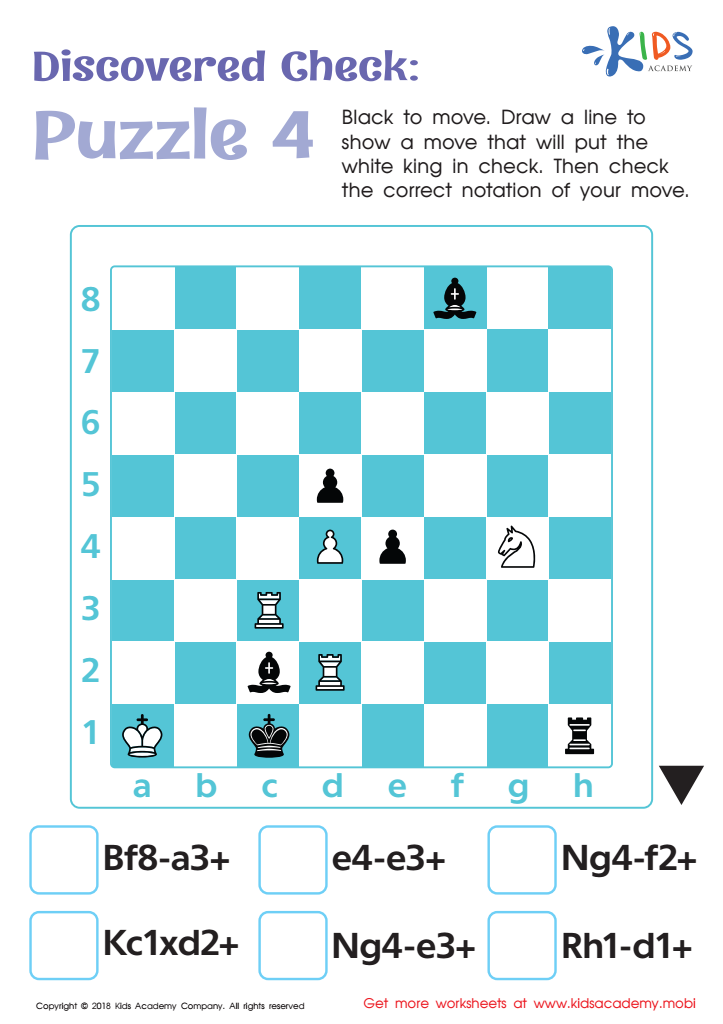
Discovered Check: Puzzle 4 Worksheet
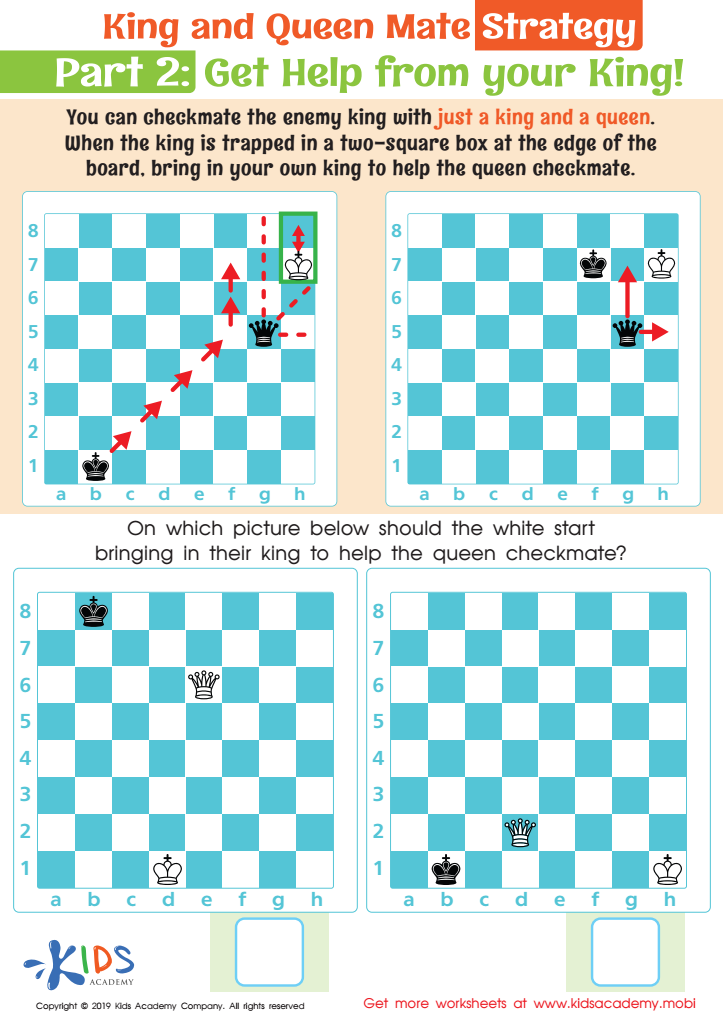
King and Queen Mate Strategy: Part 2 Worksheet
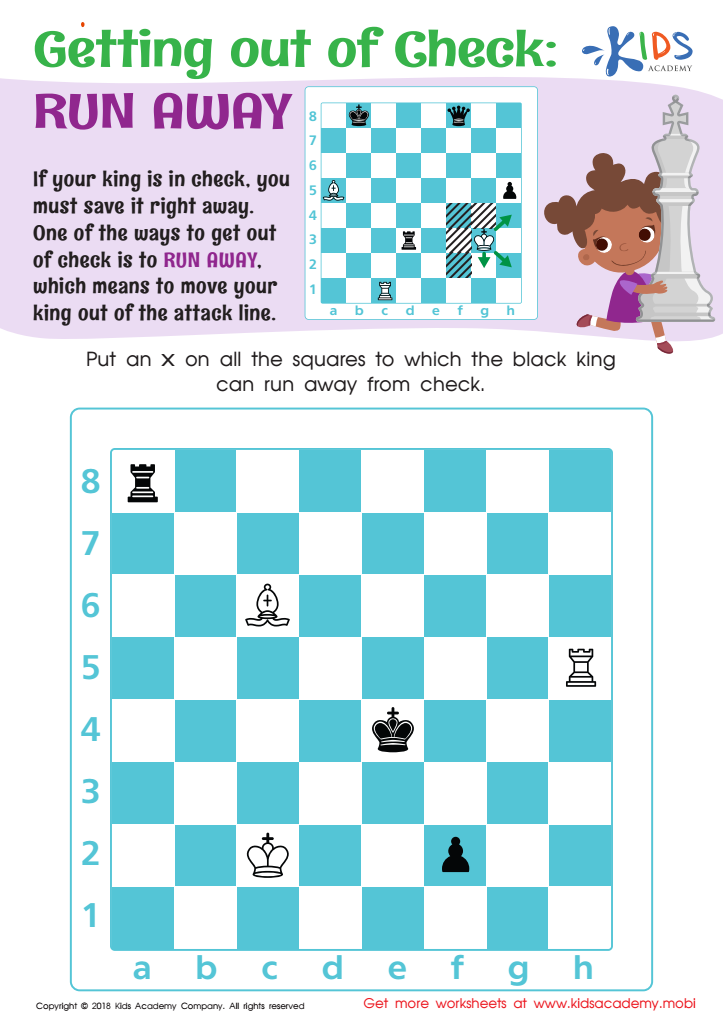
Getting out of Check: Run Away Worksheet
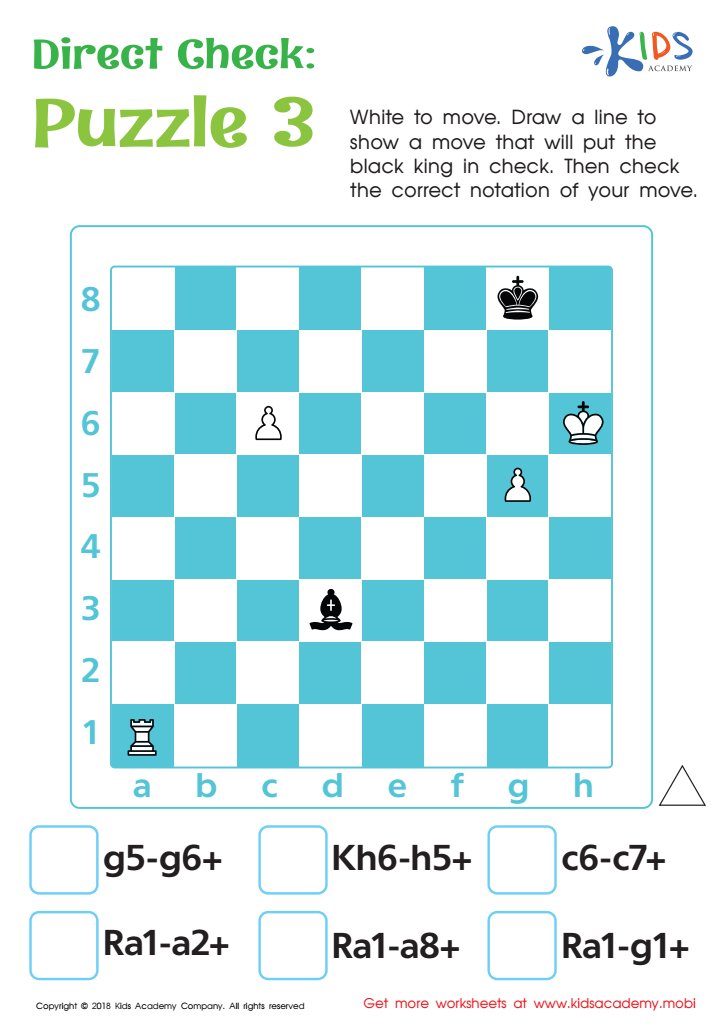
Direct Check: Puzzle 3 Worksheet
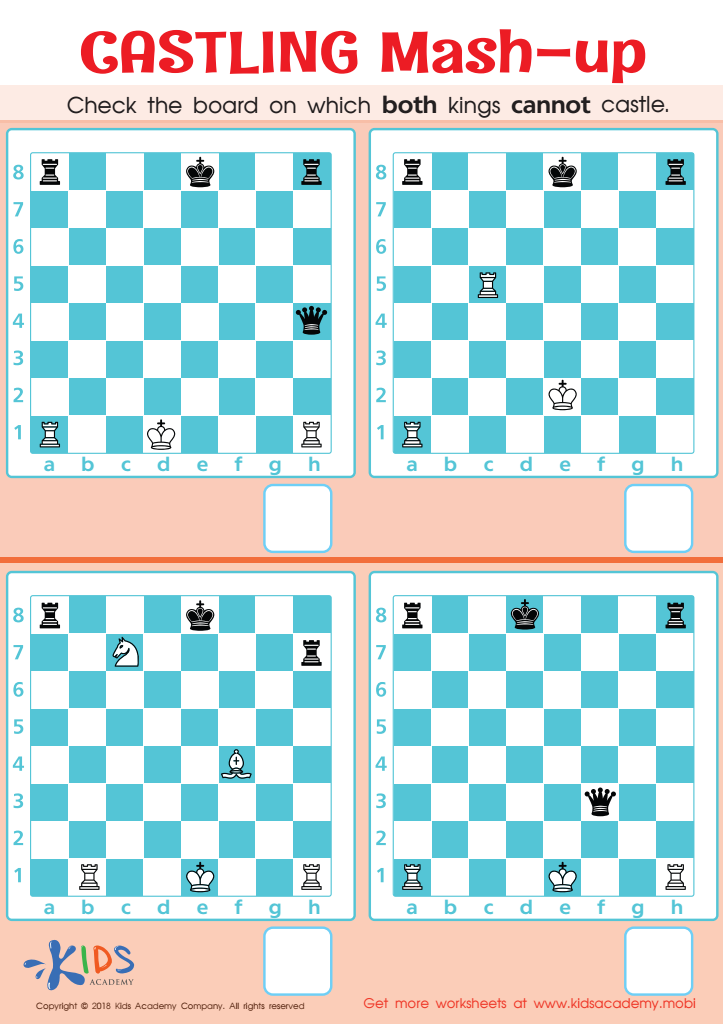
Castling Mash–up Worksheet
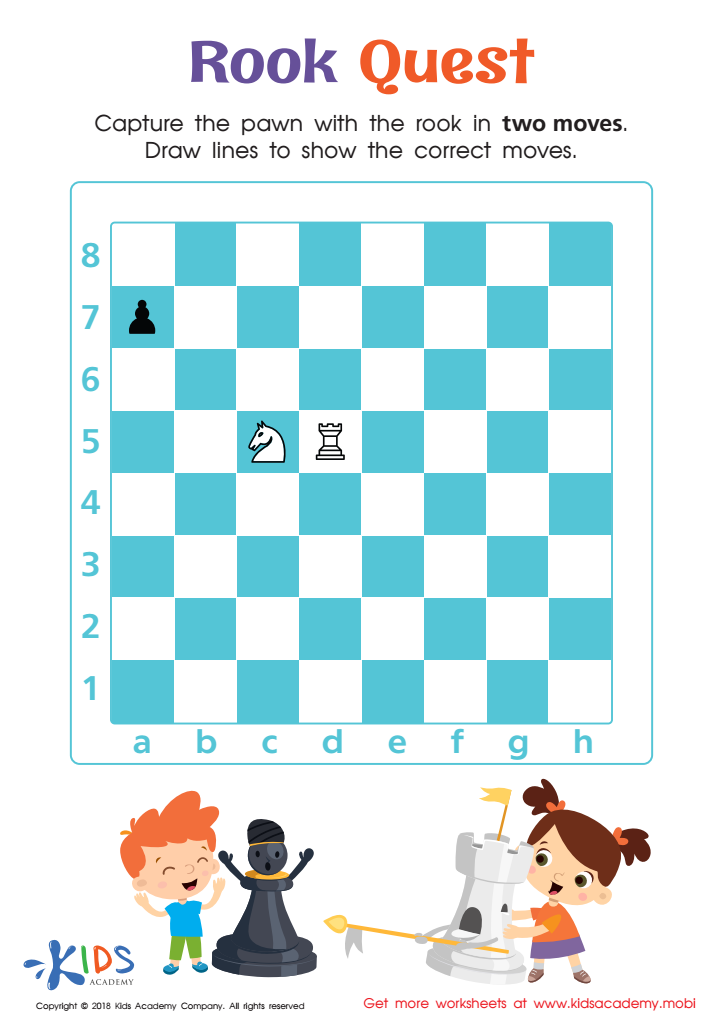
Rook Quest Worksheet
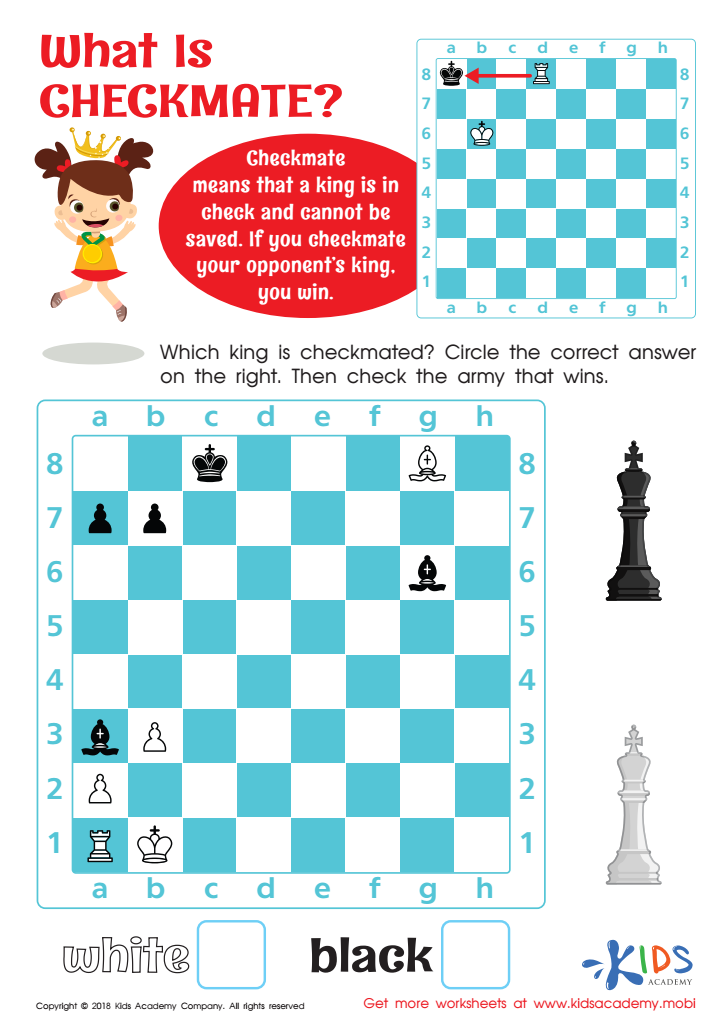
What is Checkmate? Worksheet
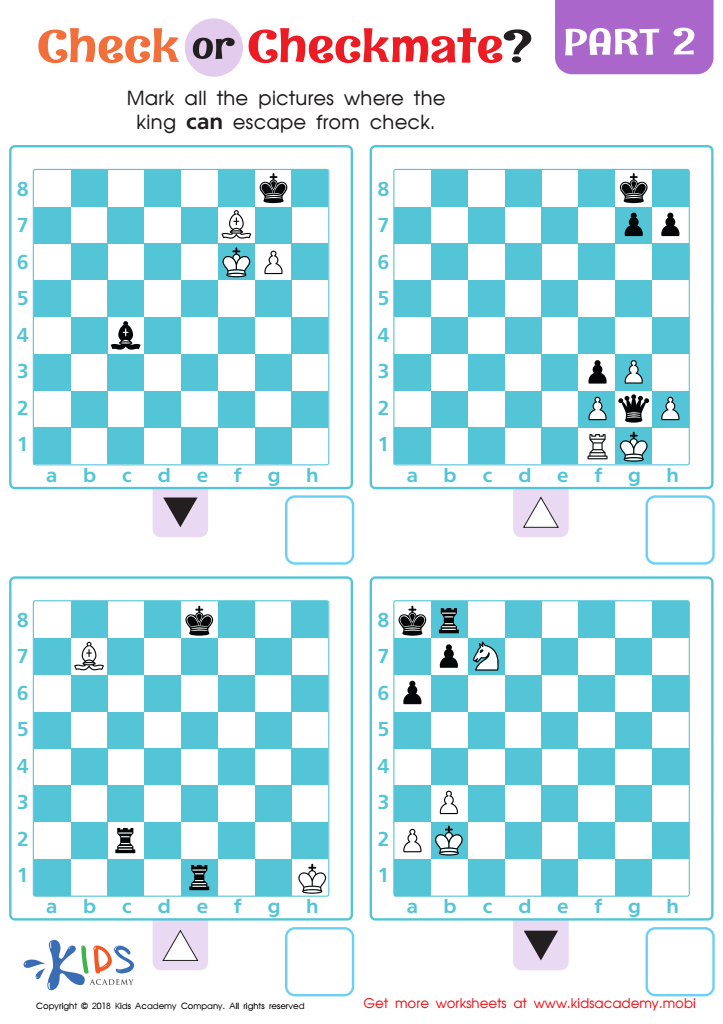
Check or Checkmate: Part 2 Worksheet
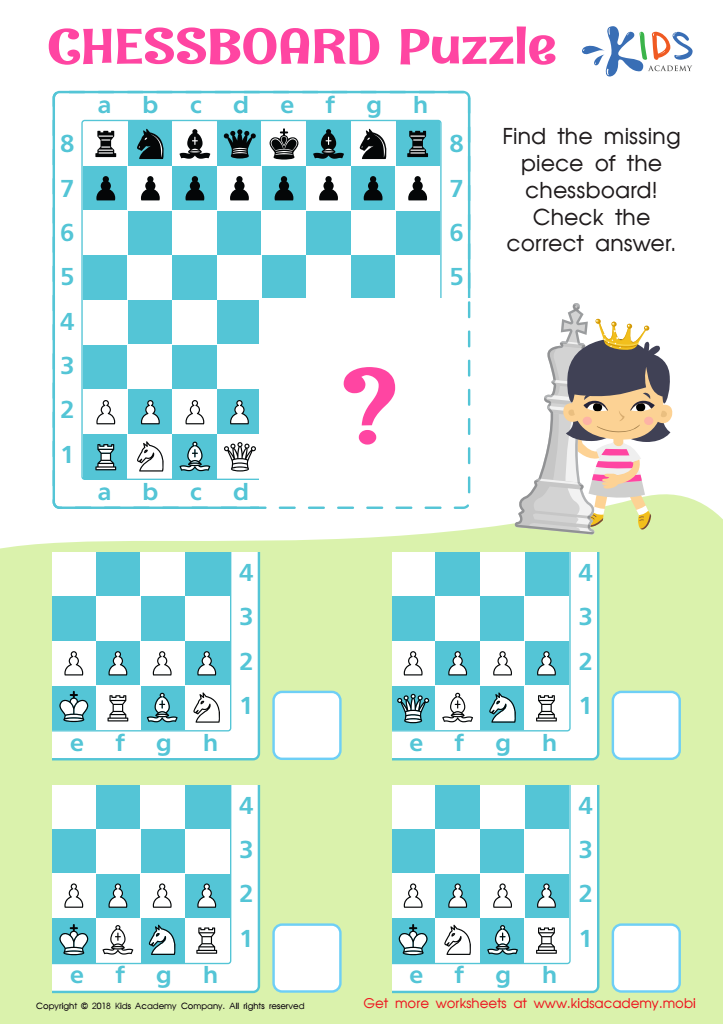
Chessboard Puzzle Worksheet
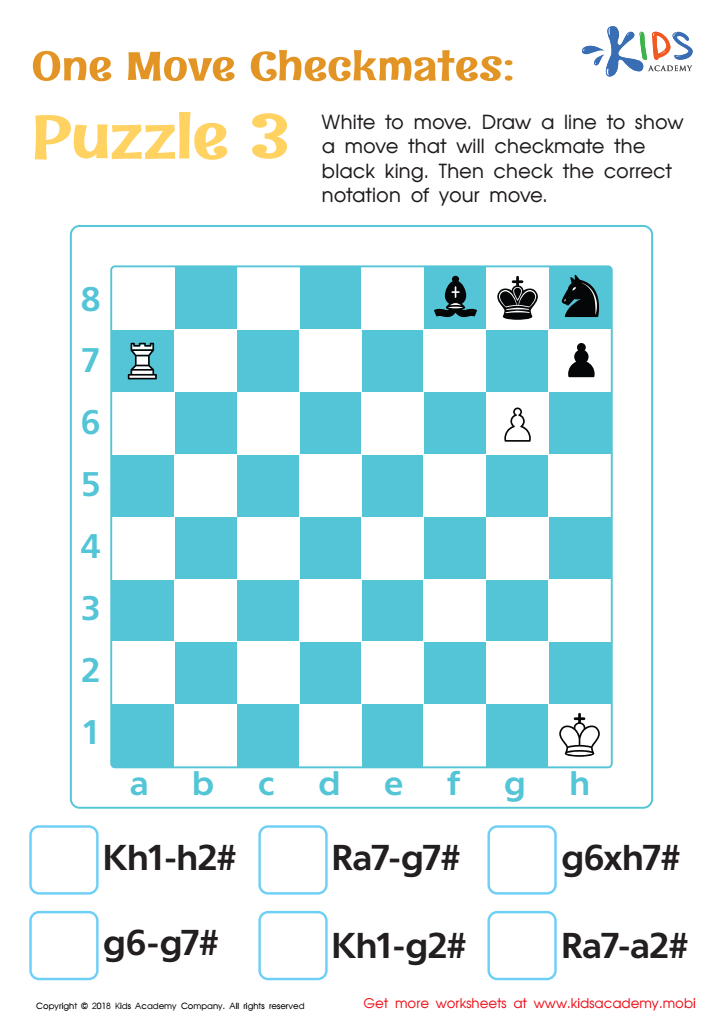
One Move Checkmates: Puzzle 3 Worksheet

Discovered Check: Puzzle 2 Worksheet
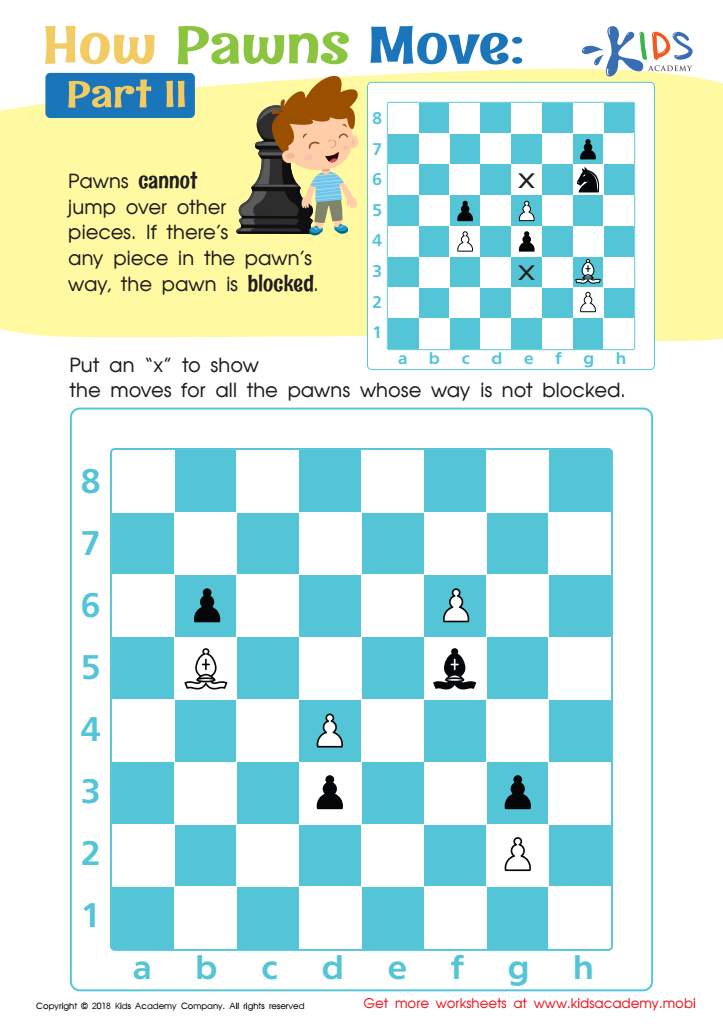
How Pawns Move: Part II Worksheet
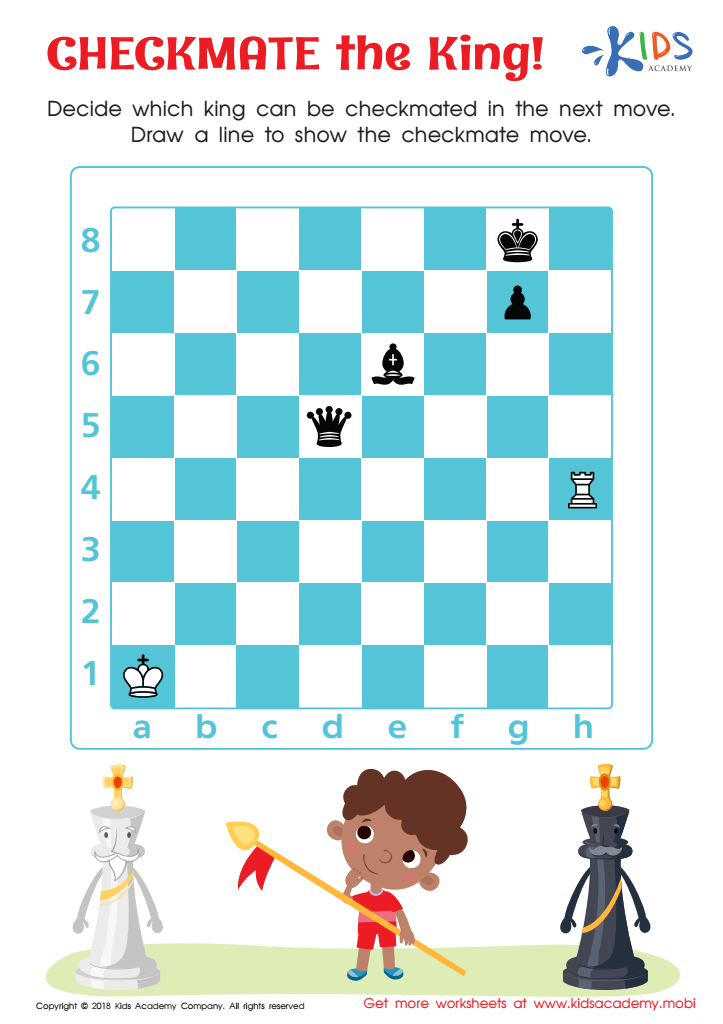
Checkmate the King Worksheet
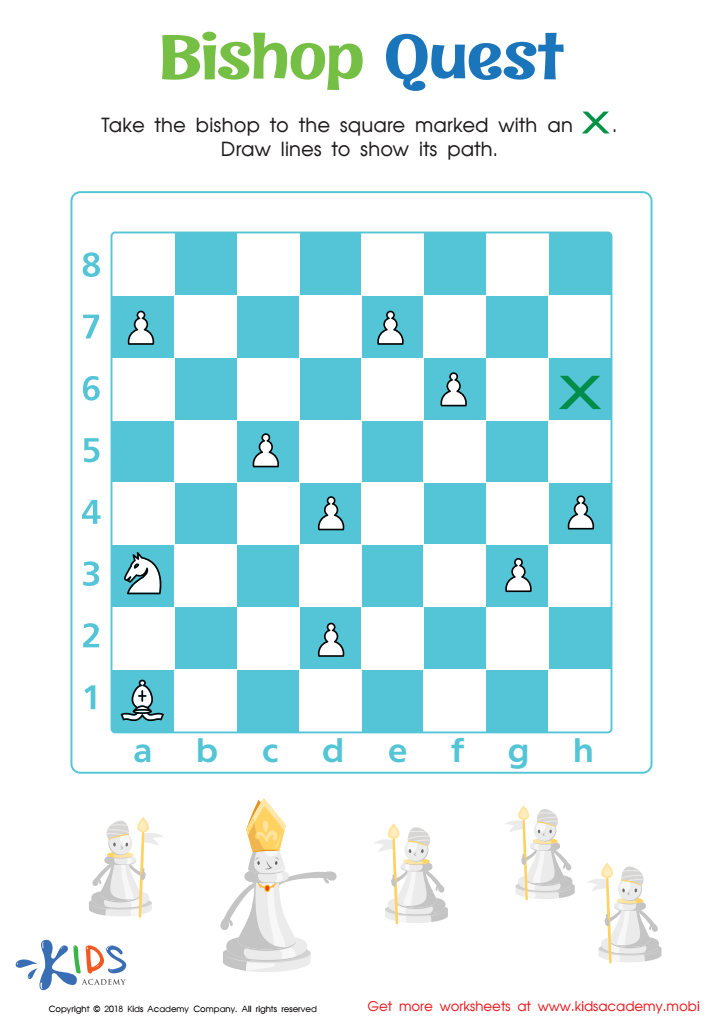
Bishop Quest Worksheet
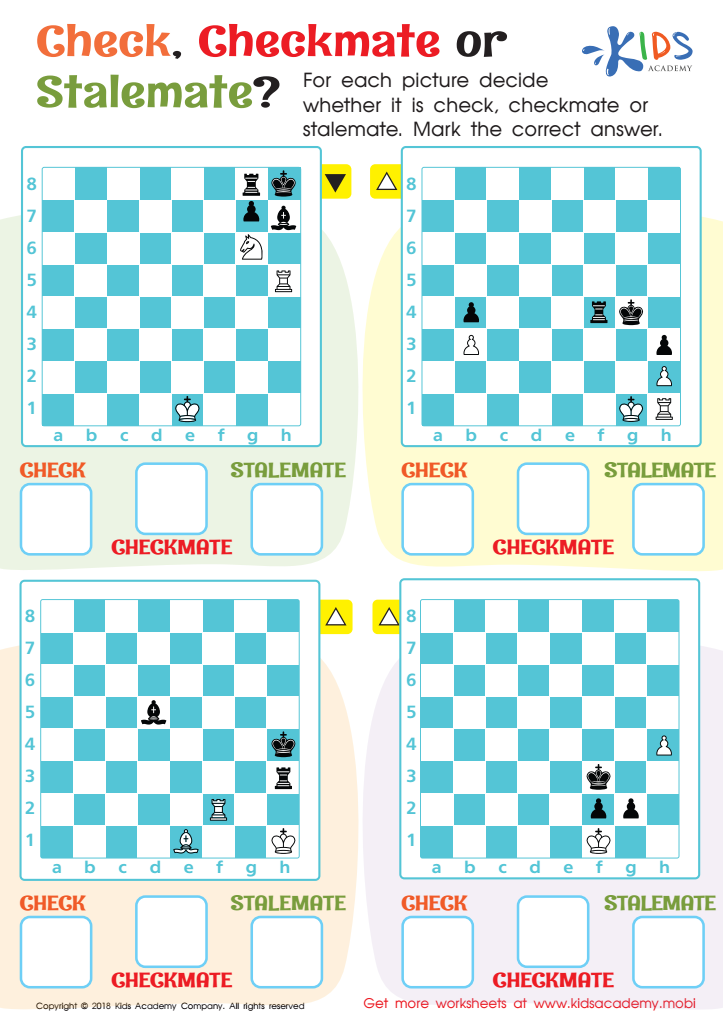
Check. Checkmate or Stalemate? Worksheet
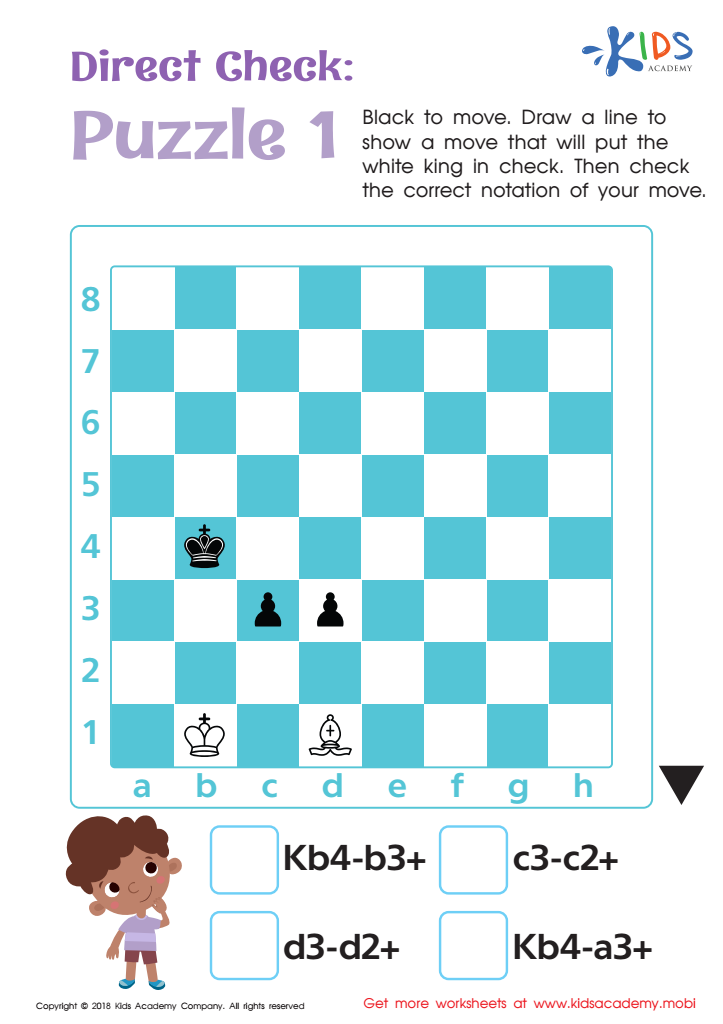
Direct Check: Puzzle 1 Worksheet
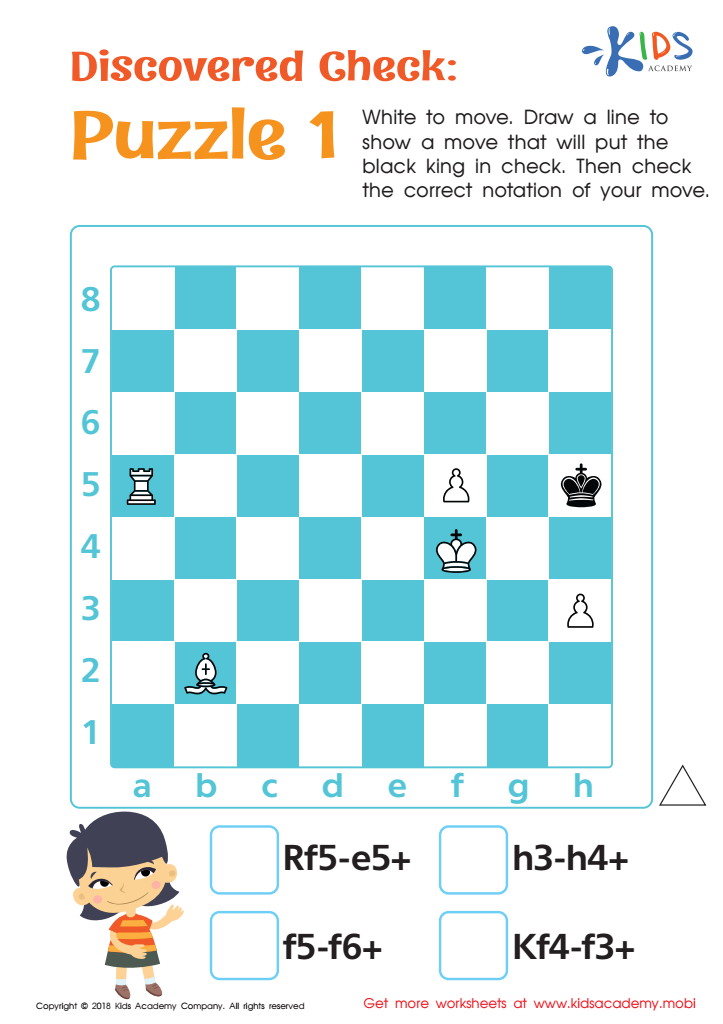
Discovered Check: Puzzle 1 Worksheet
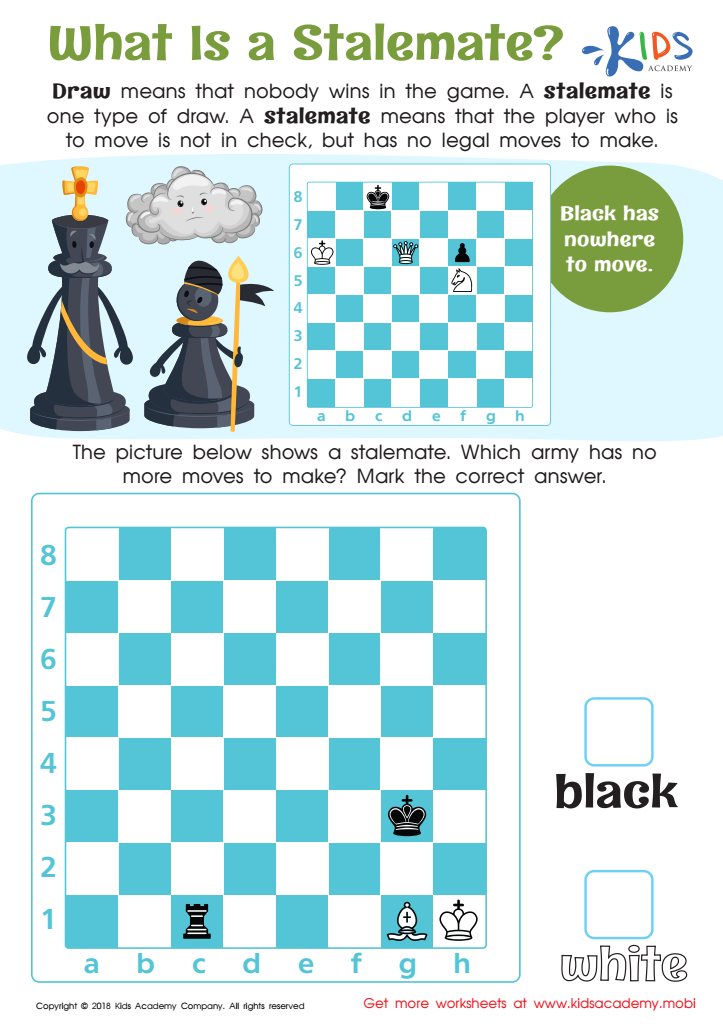
What Is a Stalemate? Worksheet
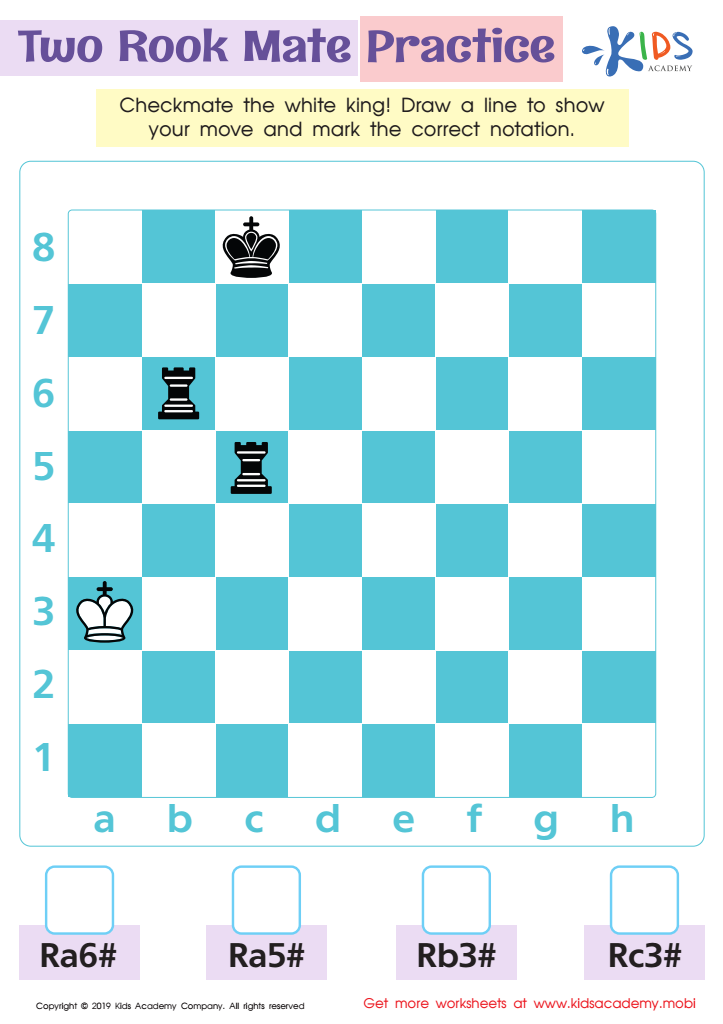
Two Rook Mate Practice Worksheet
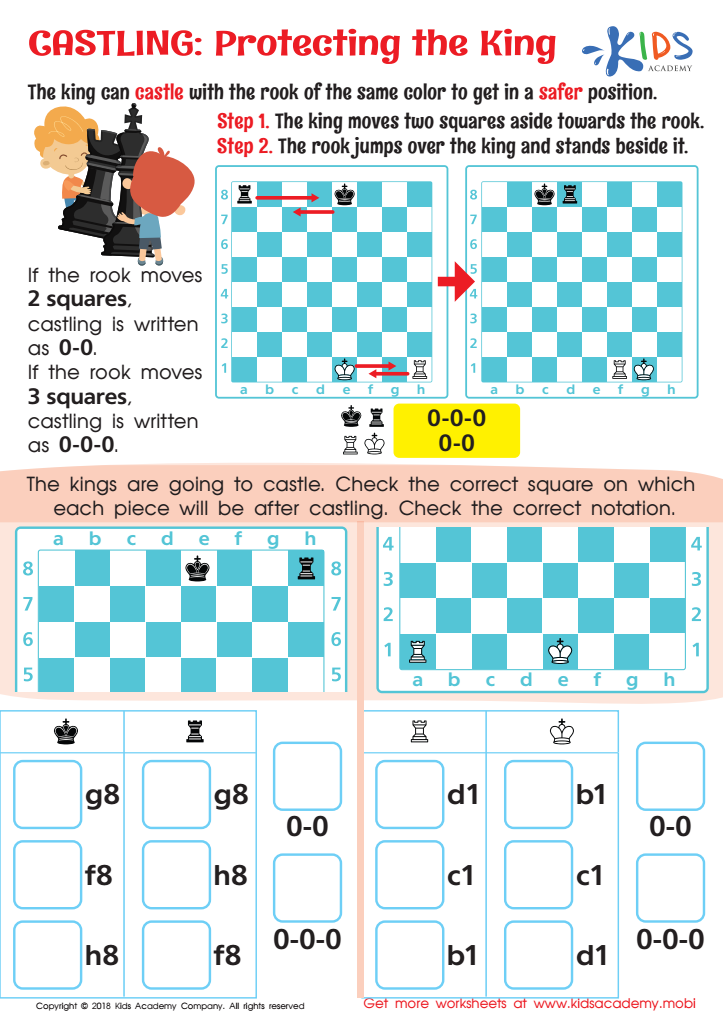
Castling: Protecting the King Worksheet
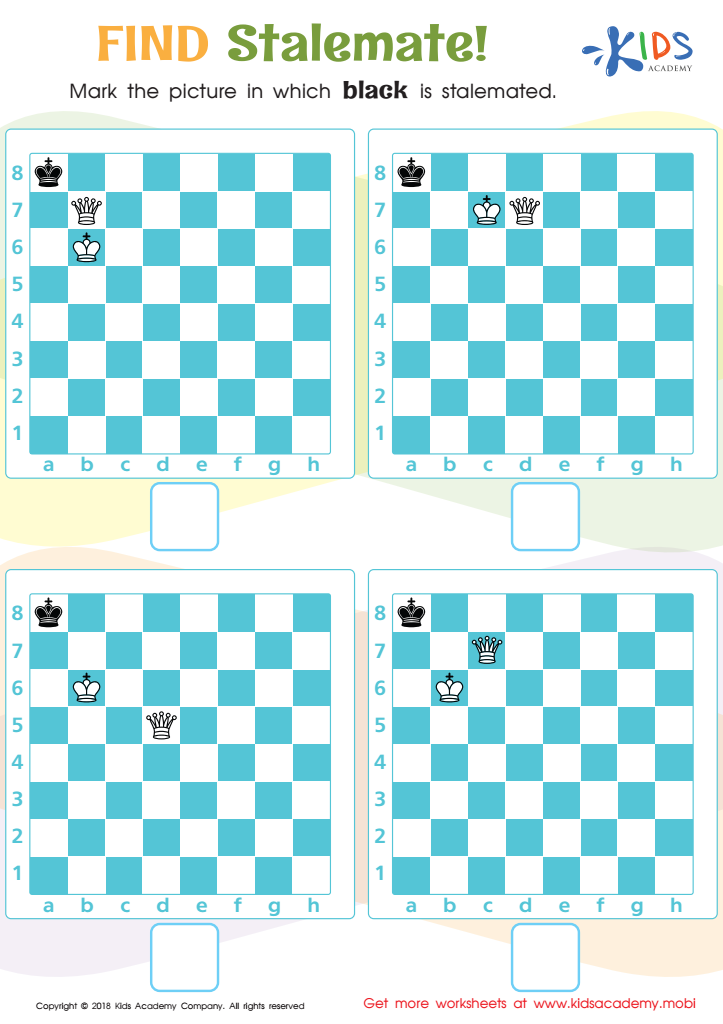
Find Stalemate! Worksheet






Problem-solving skills are crucial for young children, and teaching them through activities like chess can be incredibly beneficial for ages 6-8. Chess is not only a fun and engaging game but also a powerful tool for cognitive development. It enhances critical thinking, planning, and foresight, skills that are foundational for academic success and real-life decision-making.
When children play chess, they learn to anticipate consequences, evaluate alternatives, and make strategic decisions. This process of continuous assessment and adaptation mirrors real-world problem-solving and helps strengthen neural connections in the brain. Moreover, the challenge of thinking ahead and considering multiple factors simultaneously fosters patience and persistence.
Chess also supports the development of emotional intelligence. It teaches children how to manage losses gracefully and celebrate successes modestly, fostering resilience and a growth mindset.
Furthermore, chess can improve concentration and focus. In an age where distractions abound, sustained attention on a task is invaluable. Playing chess requires children to stay focused over longer periods, enhancing their ability to concentrate in school and other activities.
In essence, incorporating chess into the lives of young children equips them with lifelong skills. Parents and teachers should prioritize these opportunities, as they cultivate intelligent, thoughtful, and emotionally balanced individuals.