Understanding fractions Geometry Worksheets for Ages 6-8
36 filtered results
-
From - To
Welcome to our "Understanding Fractions Geometry Worksheets" for kids aged 6-8! Designed to make learning fun and engaging, these worksheets help young learners grasp the concept of fractions through colorful shapes and interactive activities. Children will explore fractions visually, identifying parts of whole shapes and learning how to compare them. Each worksheet is tailored to support essential skills while promoting critical thinking and problem-solving abilities. Perfect for classroom use or family learning time, our resources provide a solid foundation in both geometry and fraction understanding, making math enjoyable for every child. Start your child's fraction journey today with our engaging materials!
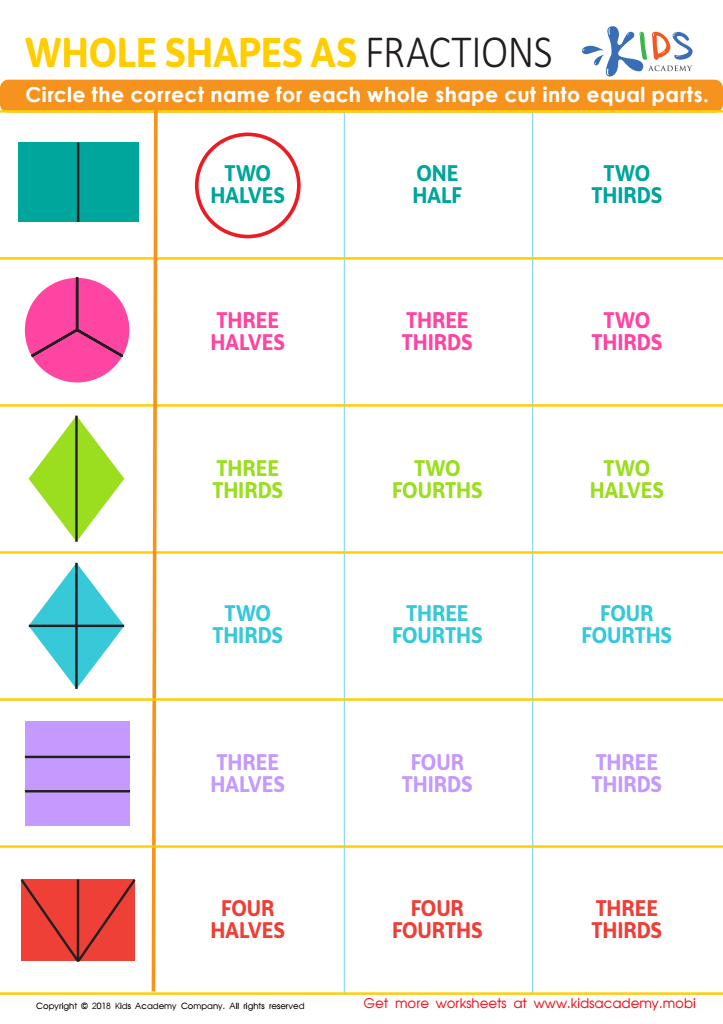
Whole Shapes as Fractions Worksheet
 Assign to My Students











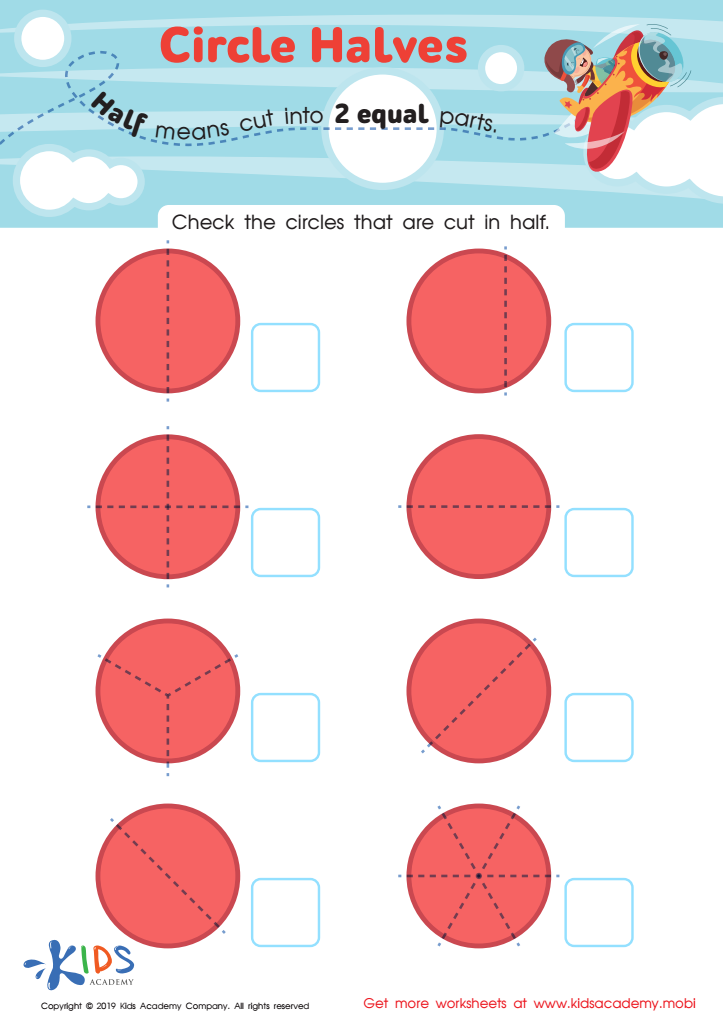
Circle Halves Worksheet
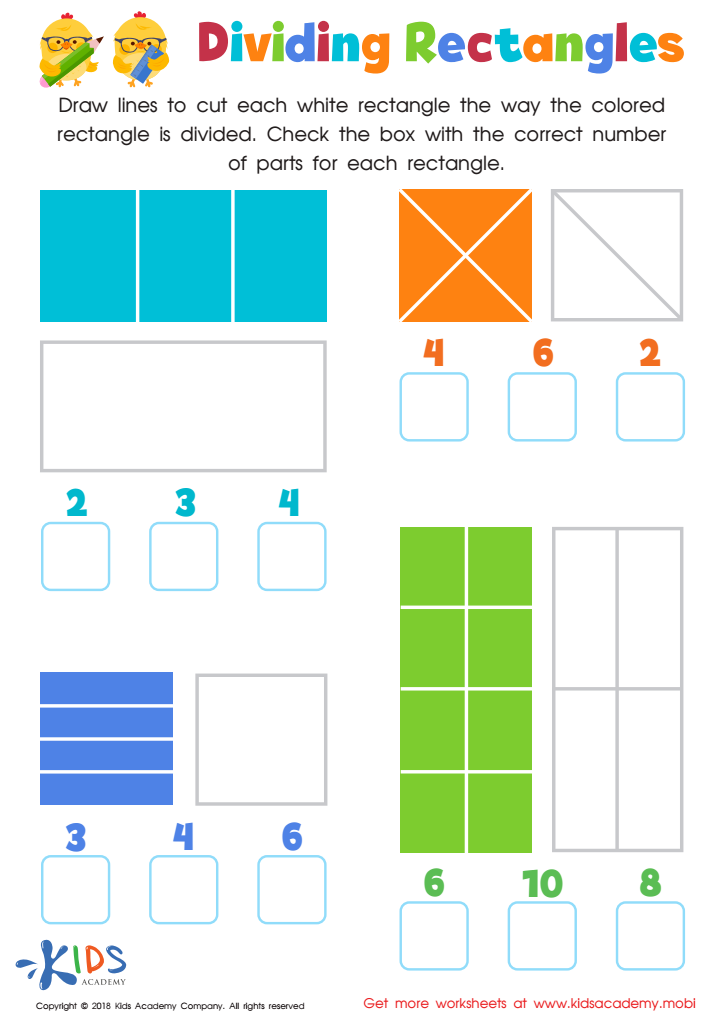
Dividing Rectangles Worksheet
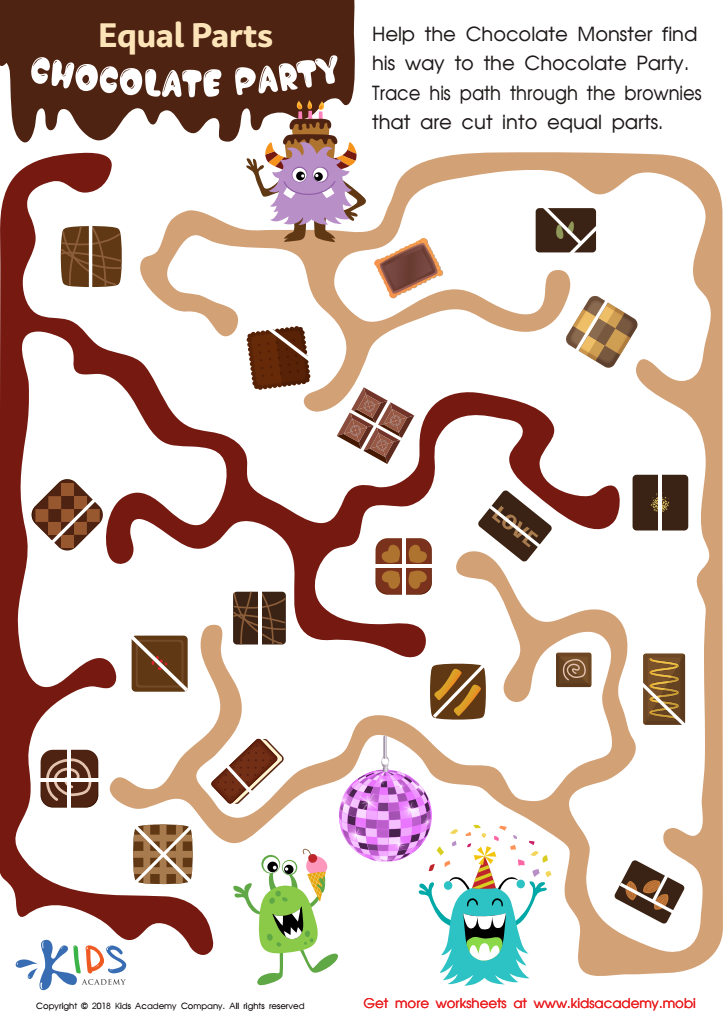
Equal Parts: Chocolate Party Worksheet
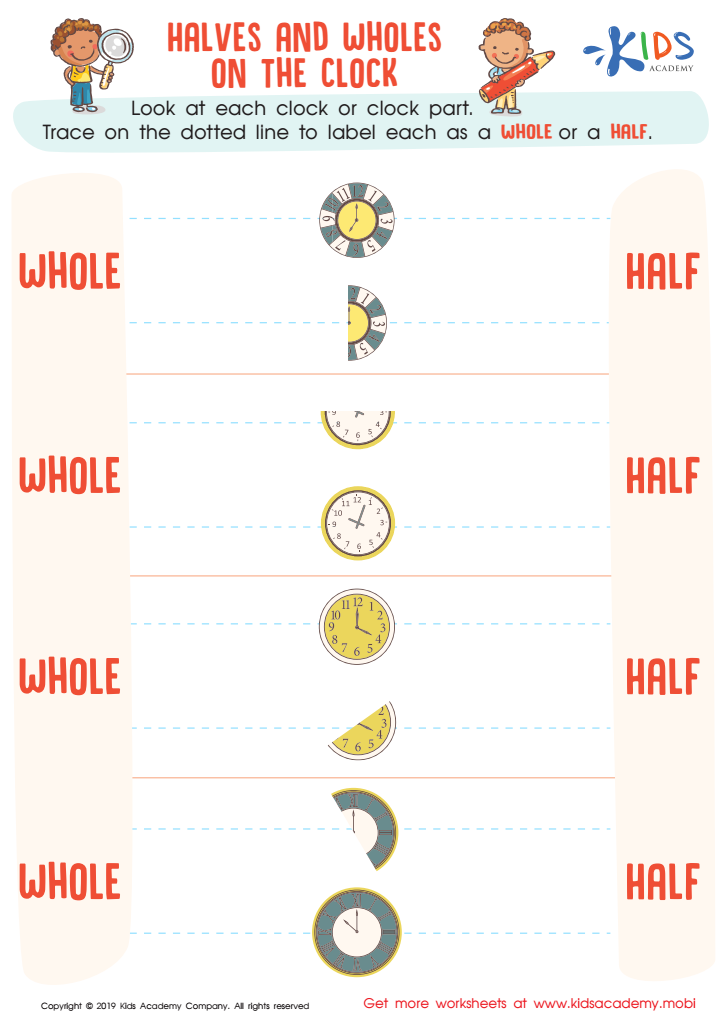
Halves and Wholes on the Clock Worksheet
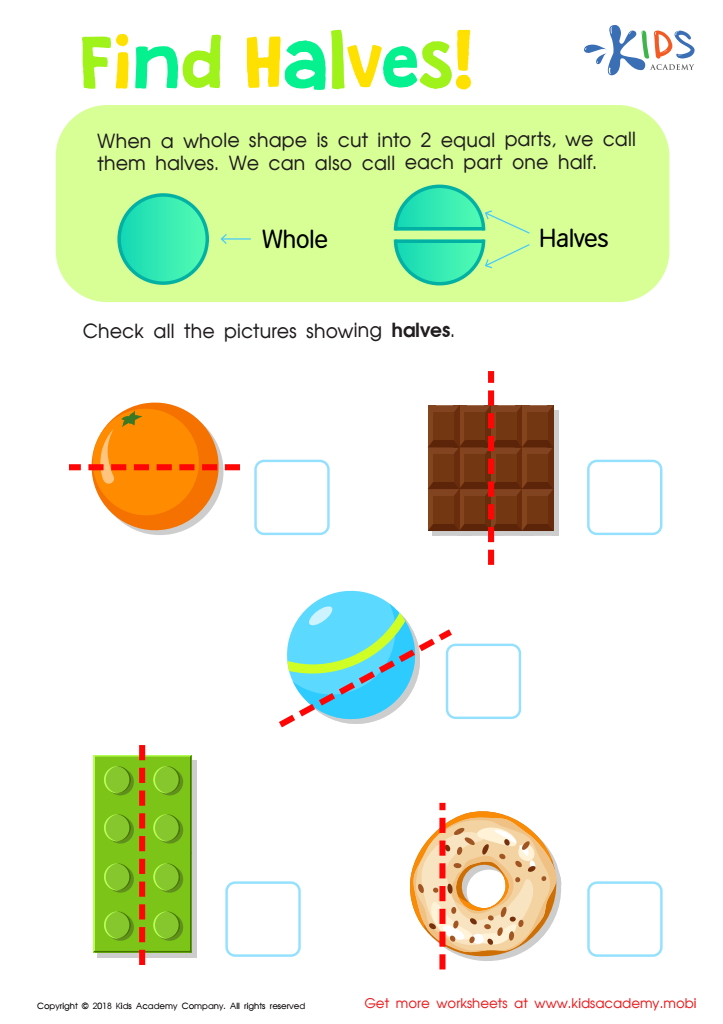
Find Halves Worksheet
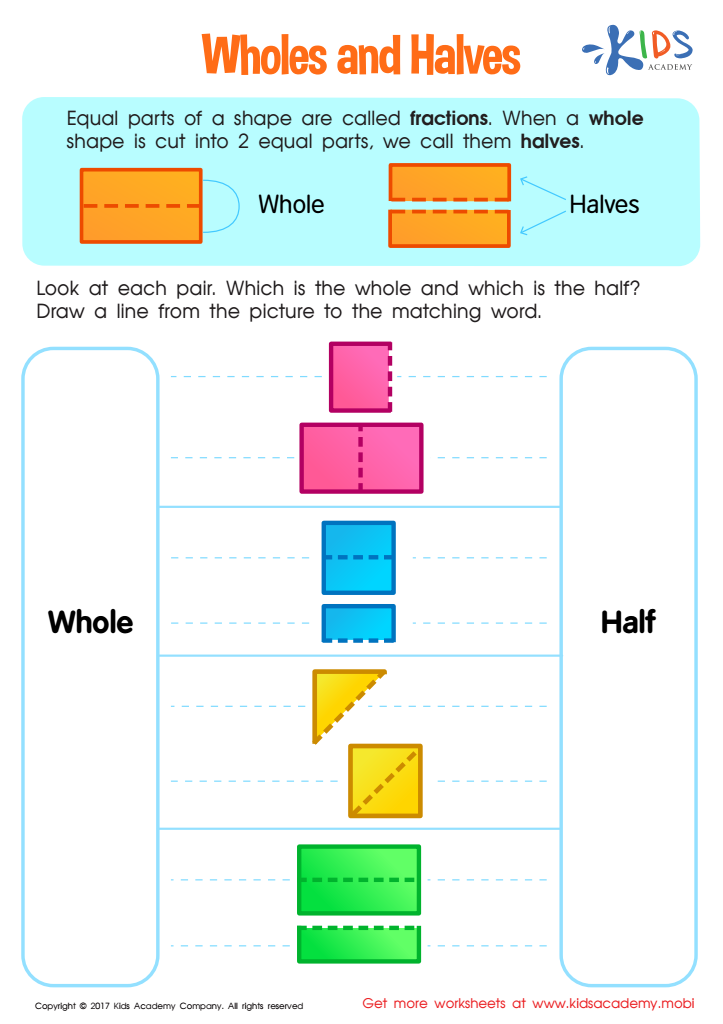
Wholes and Halves Worksheet
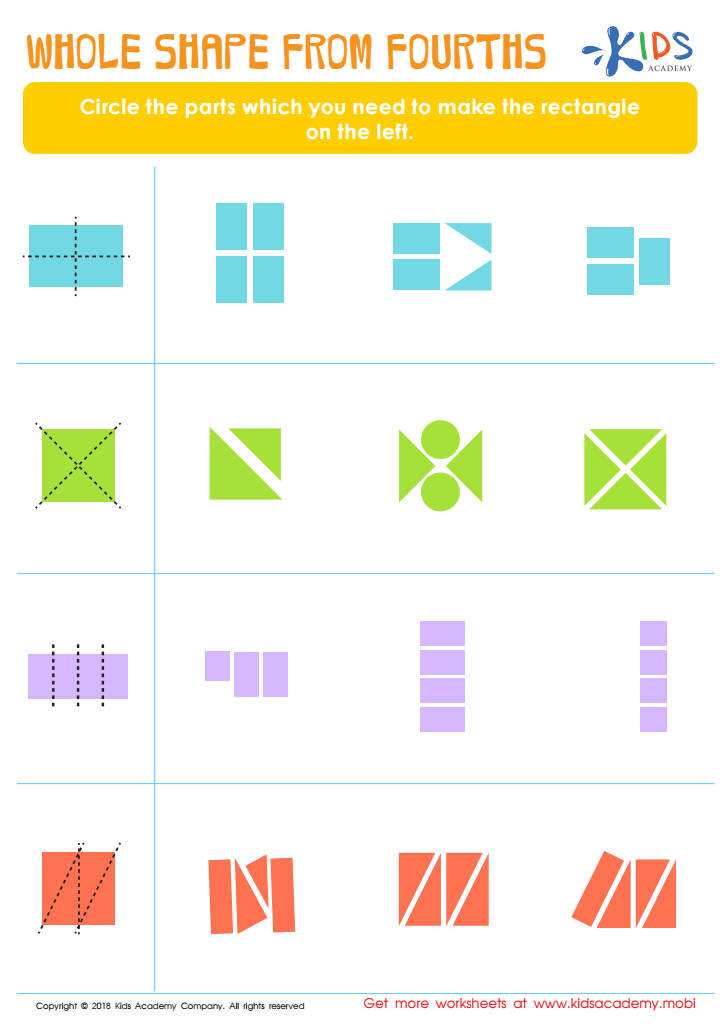
Whole Shape from Fourths Worksheet
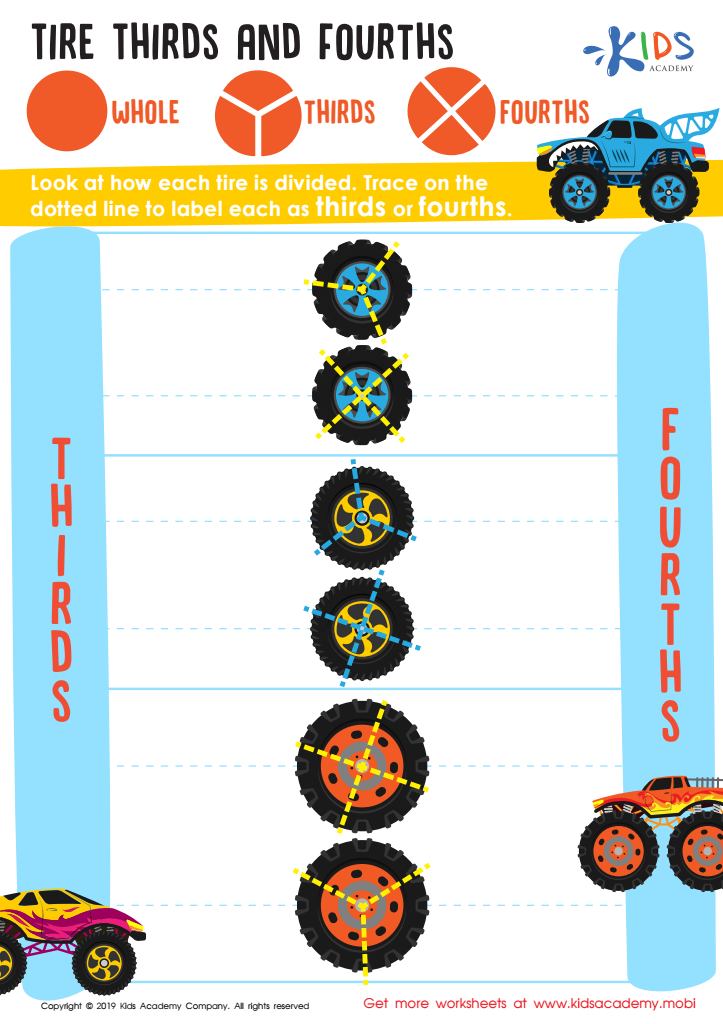
Tire Thirds and Fourths Worksheet
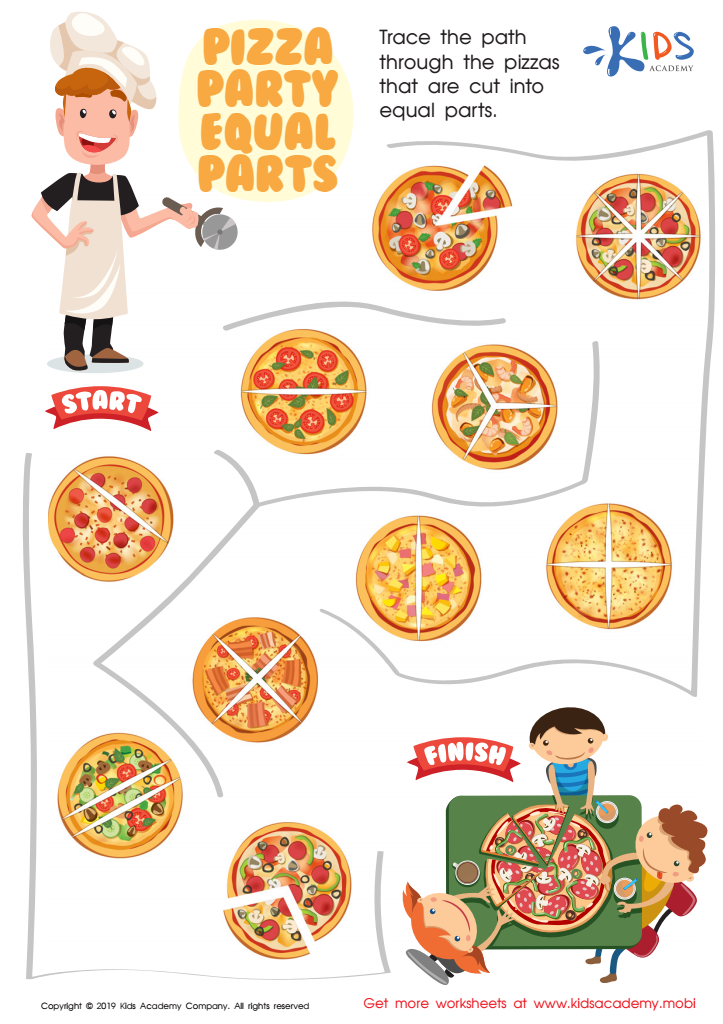
Pizza Party Equal Parts Worksheet
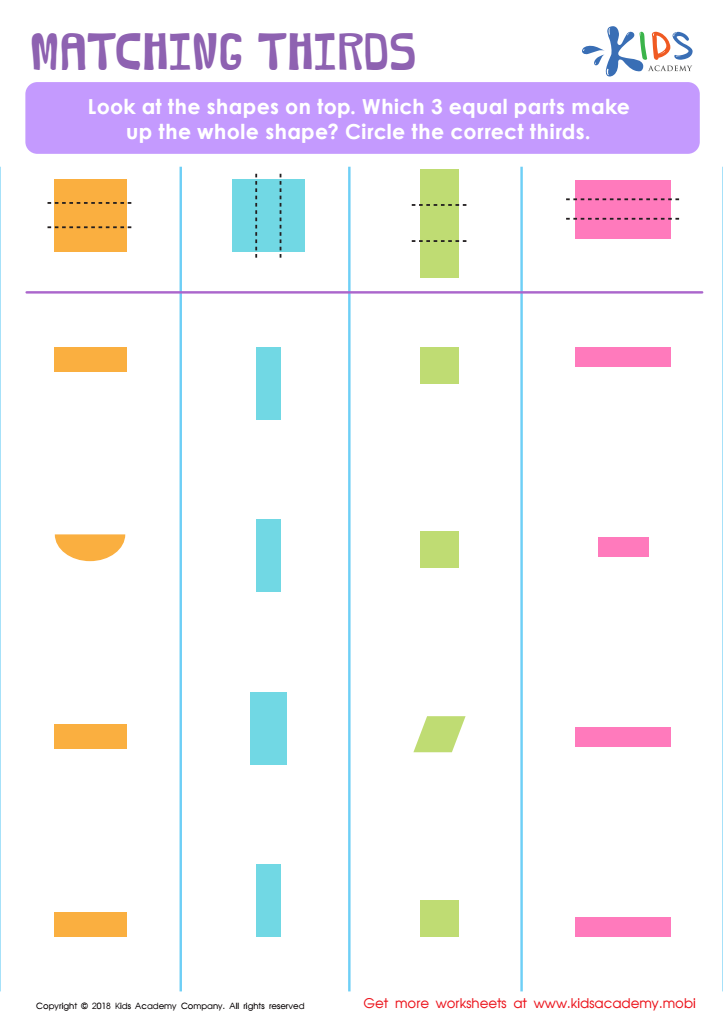
Matching Thirds Worksheet
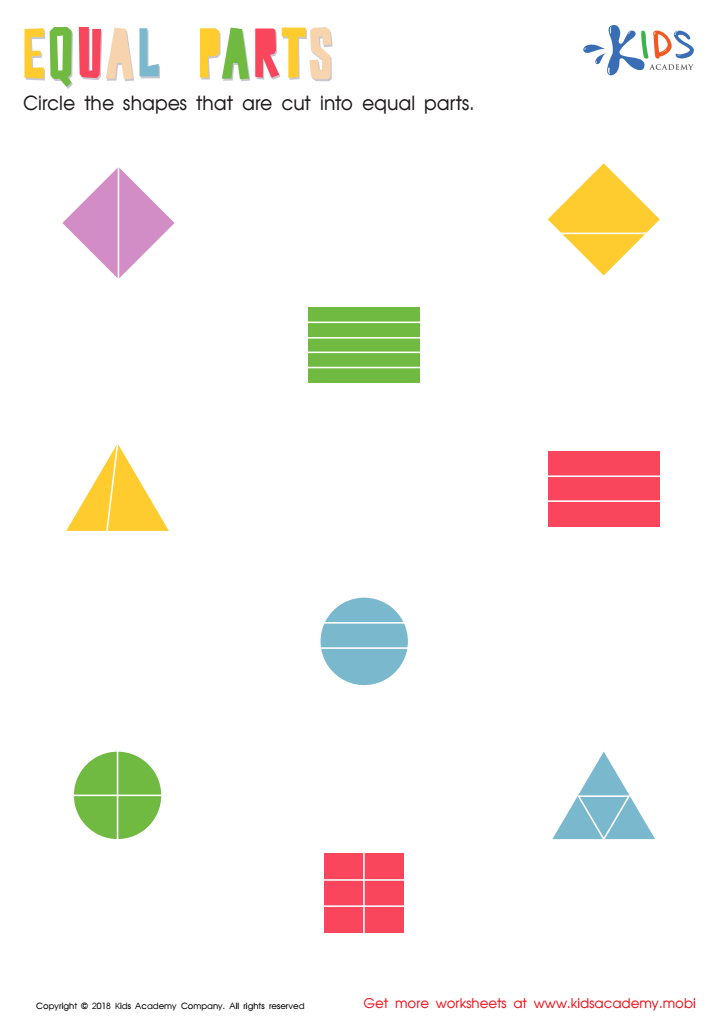
Equal Parts: Shapes Worksheet
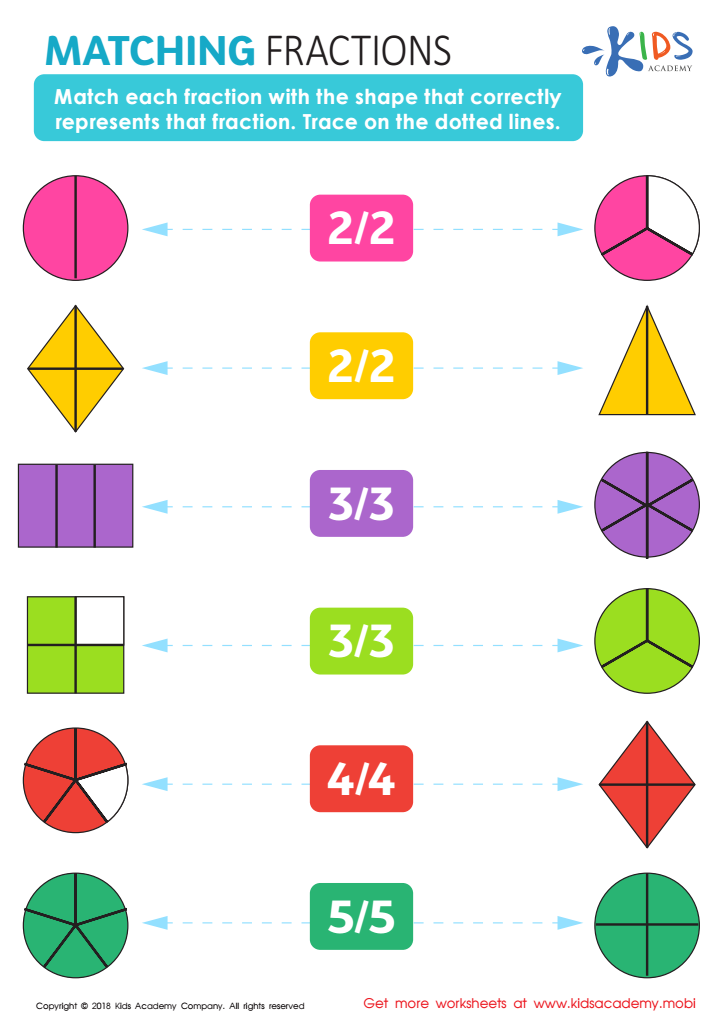
Matching Fractions Worksheet
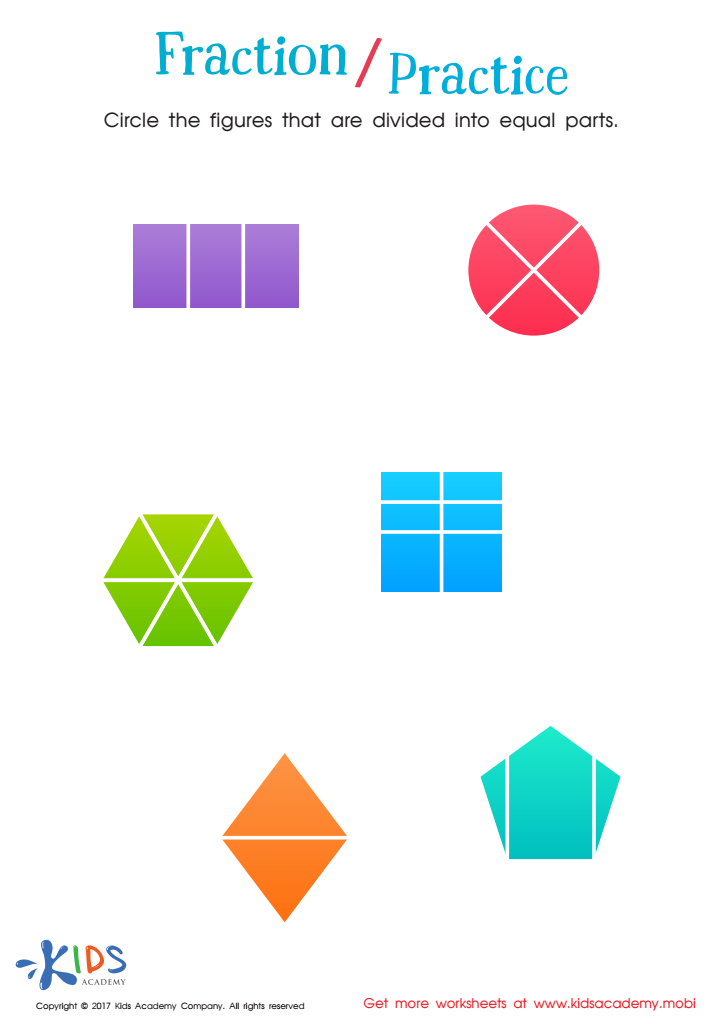
Fractions: Shapes Worksheet
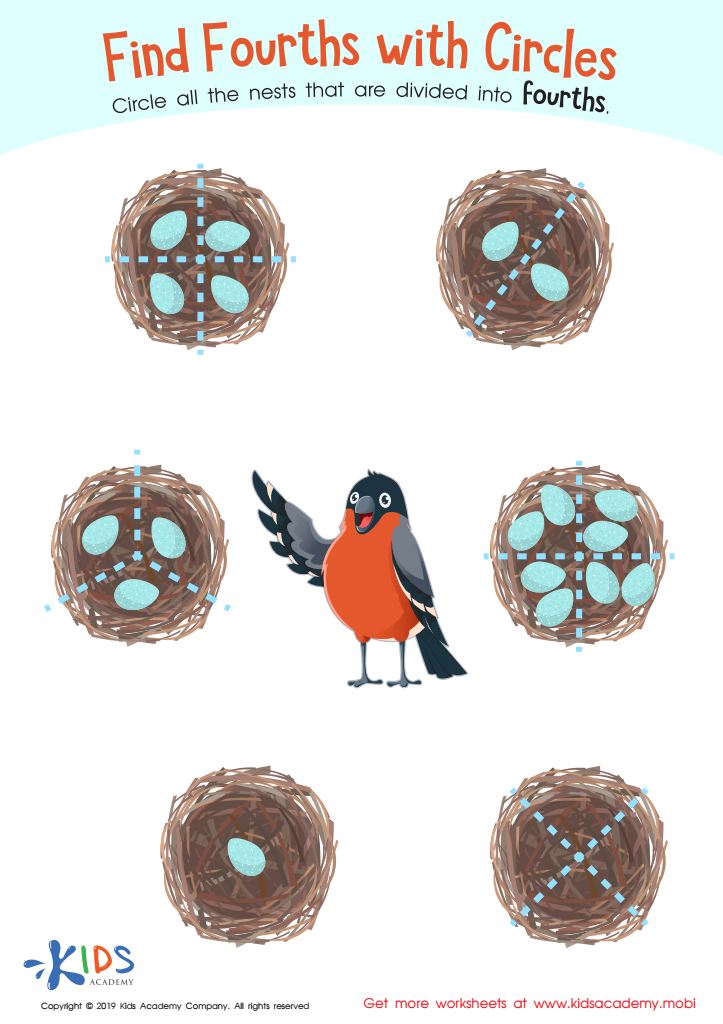
Find Fourths Circles Worksheet
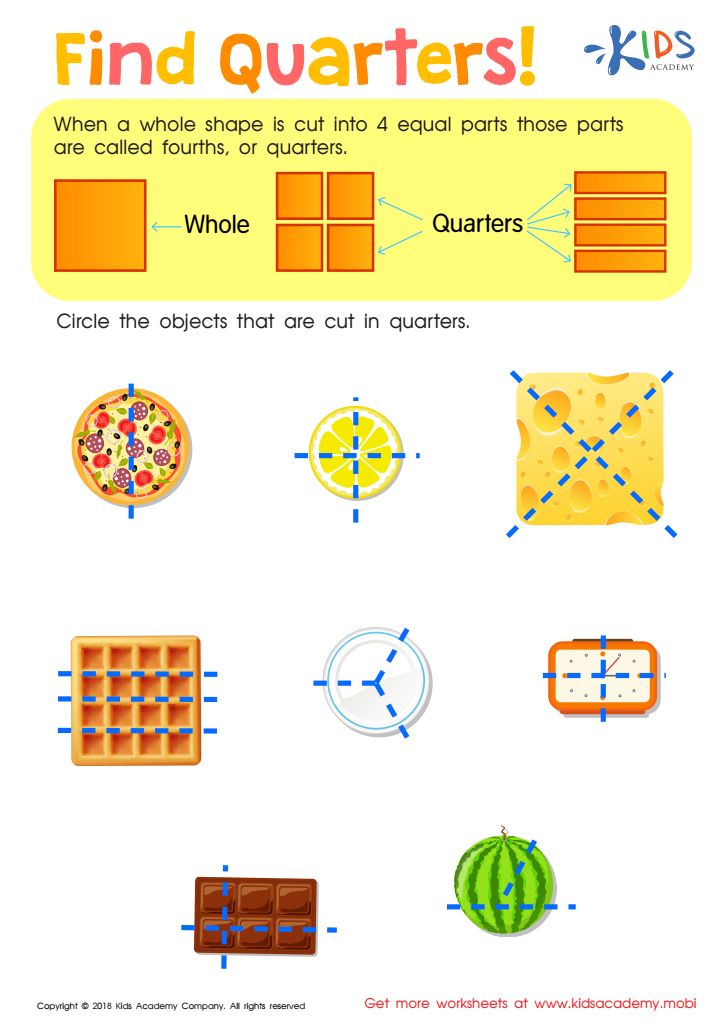
Find Quarters Worksheet
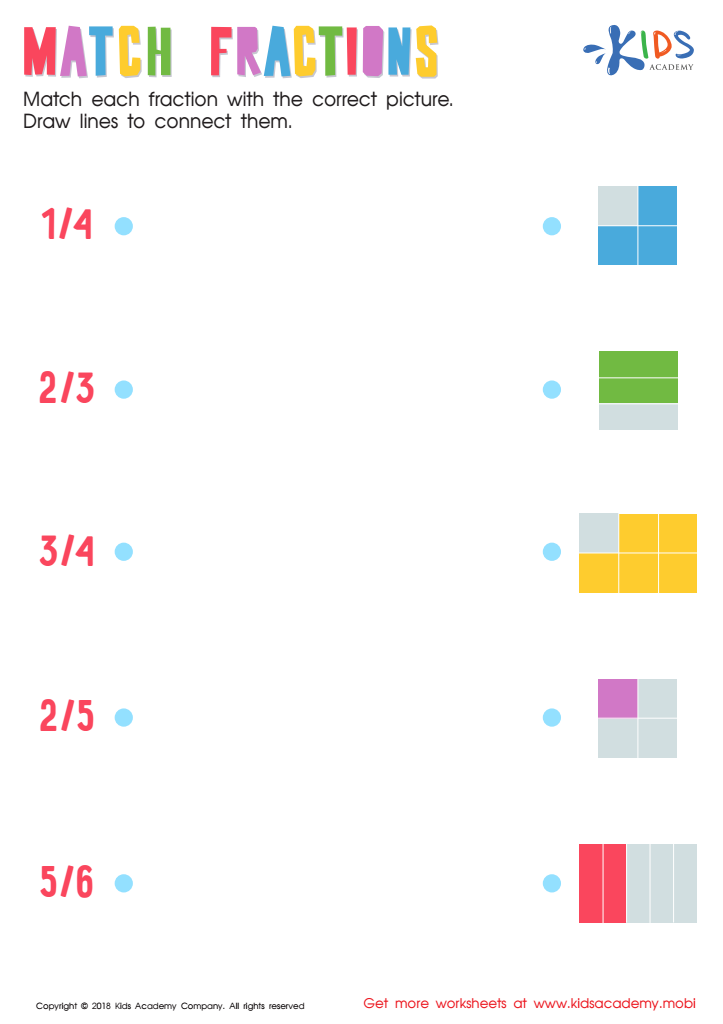
Match Fractions Worksheet
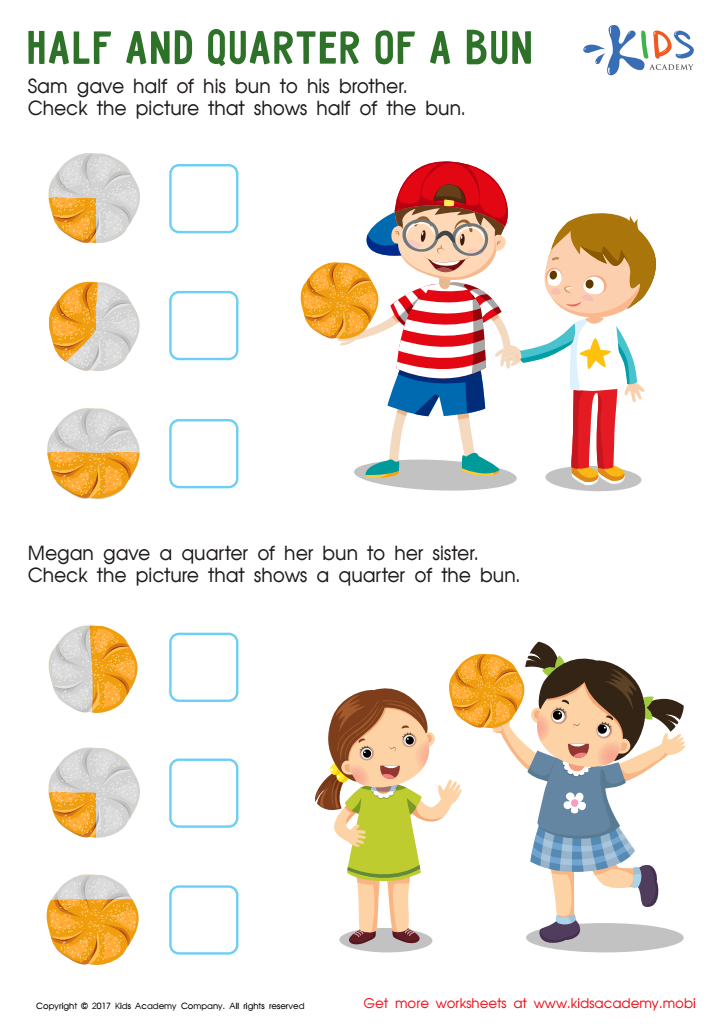
Half and Quarter of a Bun Worksheet
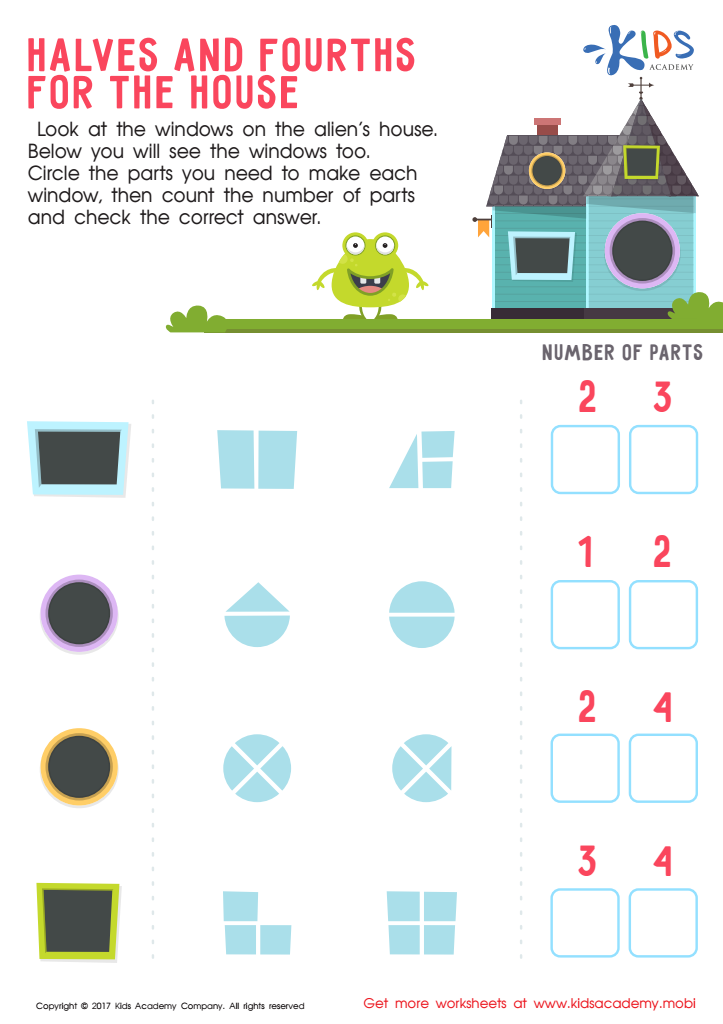
Halves and Fourths for the House Worksheet
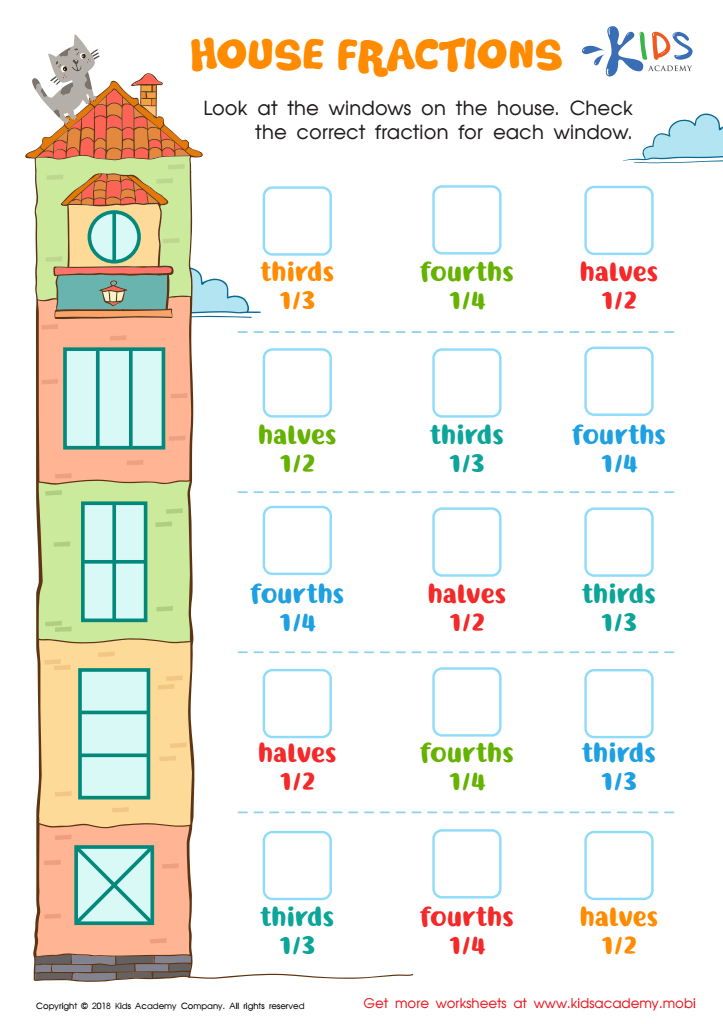
House Fractions Worksheet
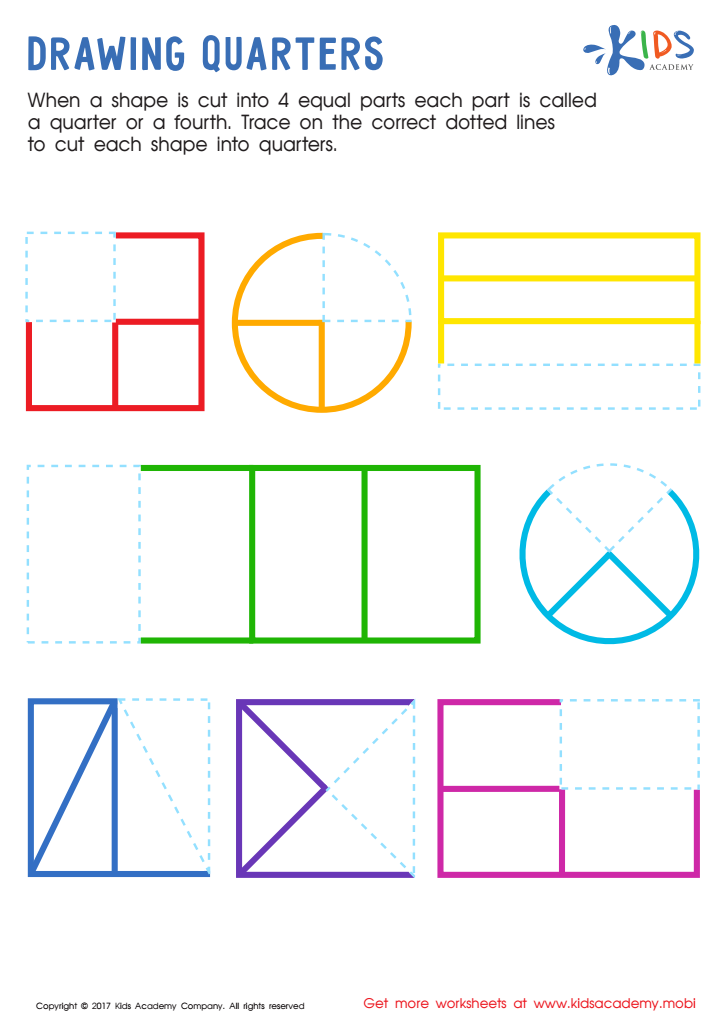
Drawing Quarters Worksheet
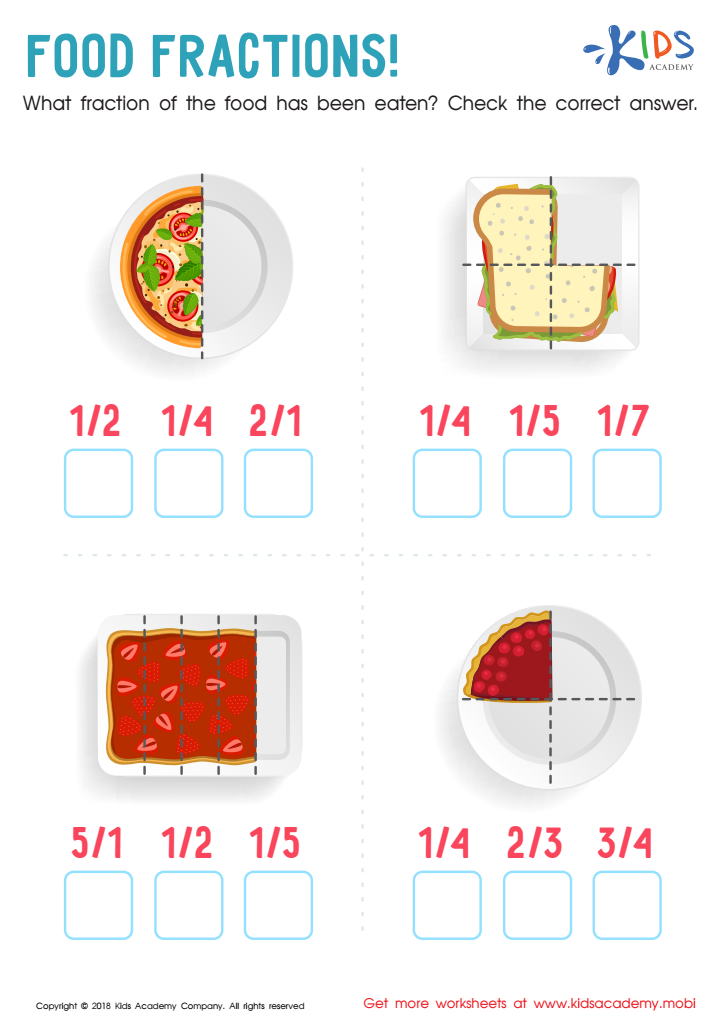
Food Fractions Worksheet
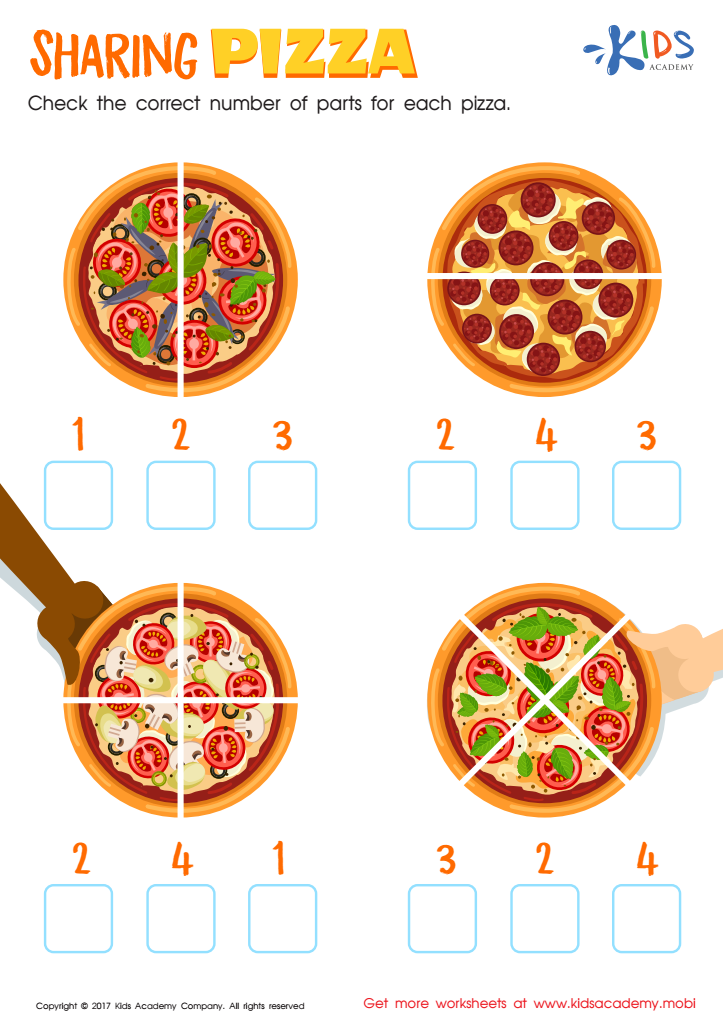
Sharing Pizza Worksheet
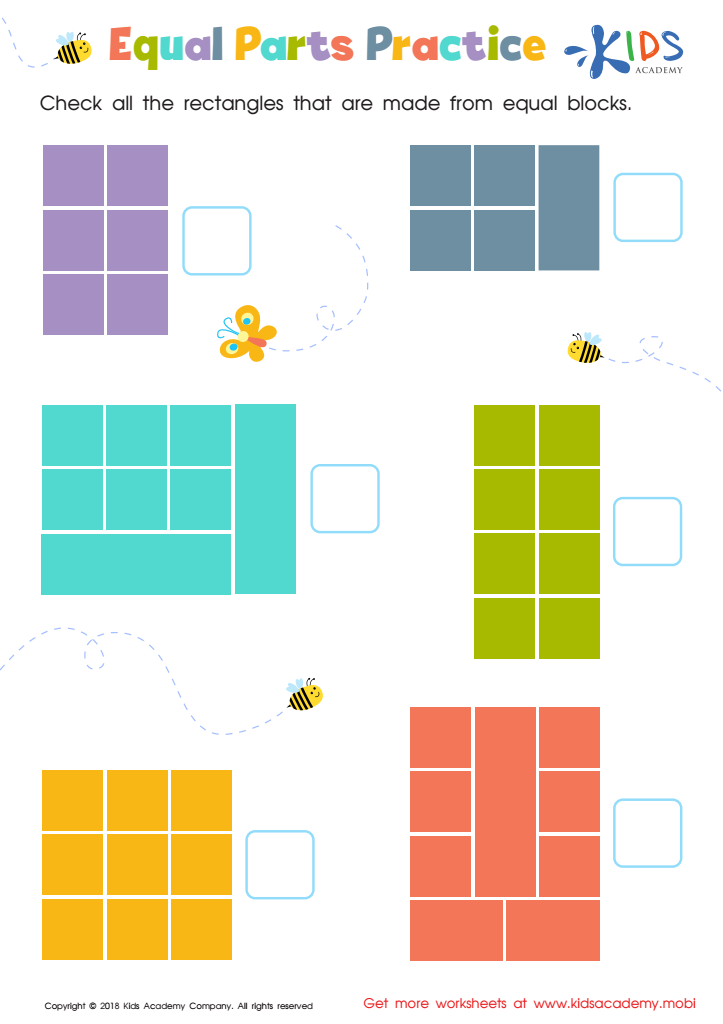
Equal Parts Practice Worksheet








Understanding fractions and geometry is crucial for children aged 6-8, as it lays the foundation for their future math skills and overall cognitive development. At this age, children are naturally curious and eager to explore the world around them. Learning about fractions introduces them to concepts of part-to-whole relationships, which is essential not only in mathematics but also in daily life, such as cooking or sharing. When children grasp the idea of fractions, they develop critical thinking skills and learn to make comparisons, which enhances their analytical abilities.
Geometry, on the other hand, helps children understand shapes, spatial relationships, and measurements. Engaging with geometry cultivates their ability to visualize and manipulate objects, skills that are beneficial in fields such as science, engineering, and art. Additionally, using hands-on activities, like measuring or constructing shapes, makes learning enjoyable and interactive.
For parents and teachers, fostering an early understanding of fractions and geometry means preparing children for more advanced mathematical concepts in later years. This early exposure not only boosts confidence but also helps decrease math anxiety, promoting a positive relationship with mathematics that can last a lifetime. Ultimately, caring about these subjects equips children with essential life skills and prepares them for future academic success.








