Long Vowels Worksheets for Ages 6-9 - Page 2
36 filtered results
-
From - To
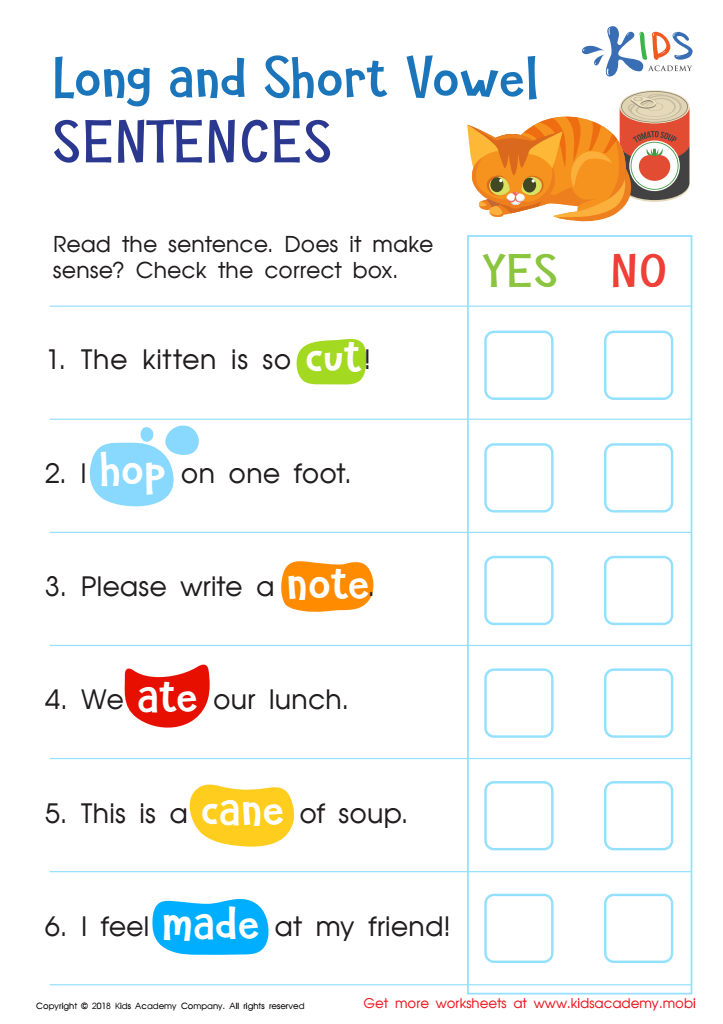
Long and Short Vowel Sentences: Assessment Worksheet
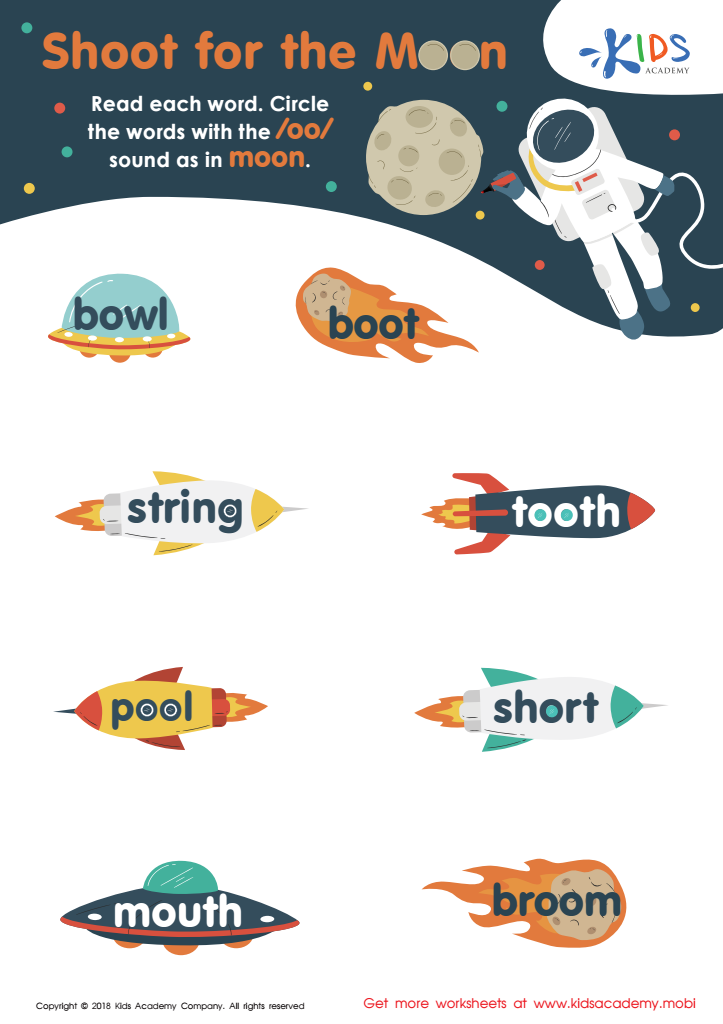
Reading: Shoot for the Moon Worksheet
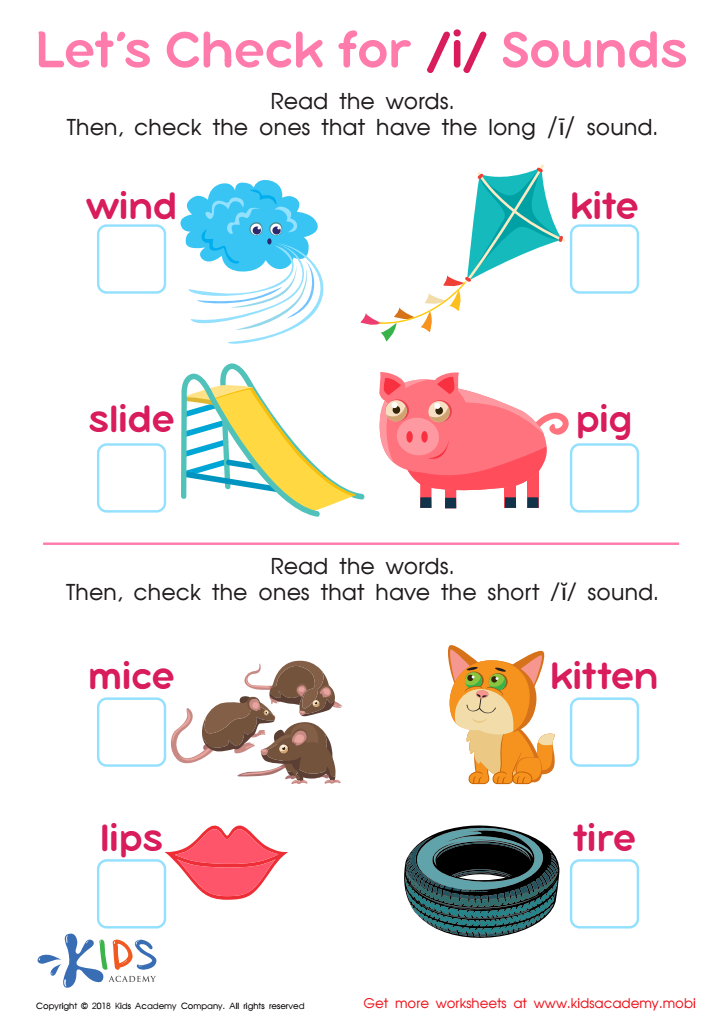
Let's Check for «i» Sounds Worksheet
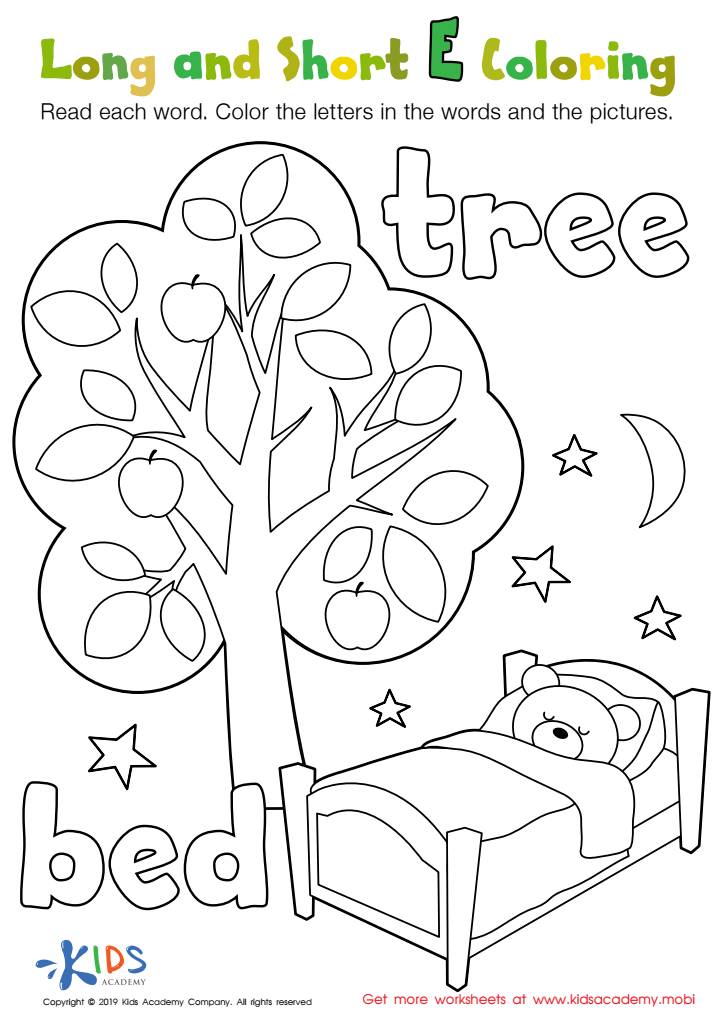
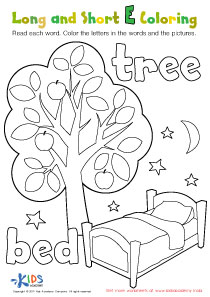
Long and Short E Worksheet
 Assign to My Students
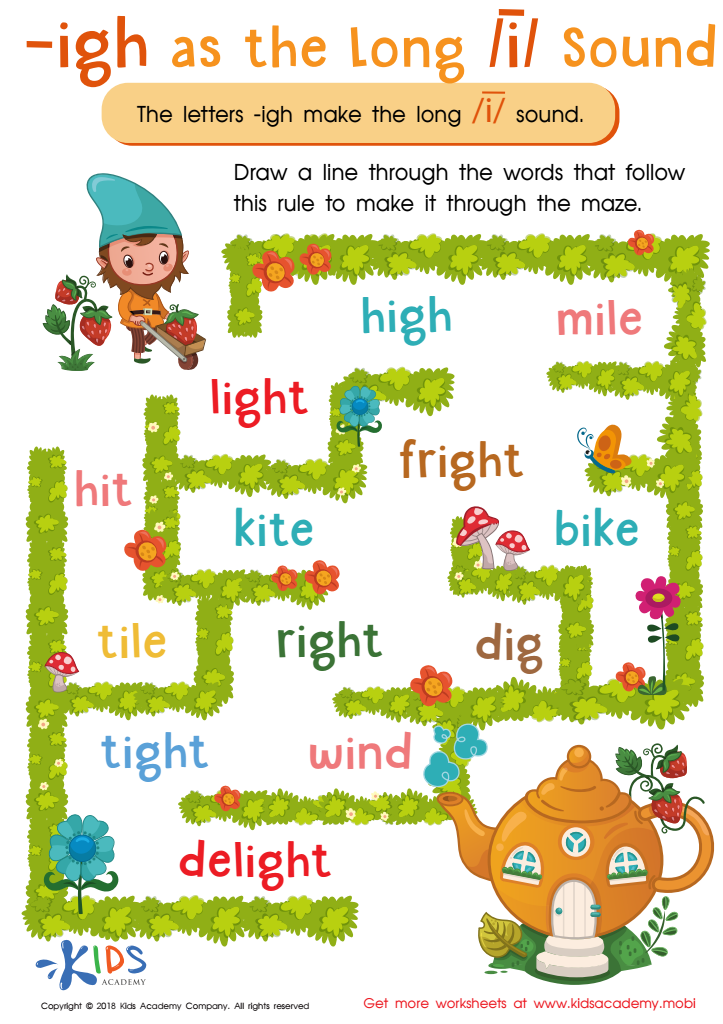
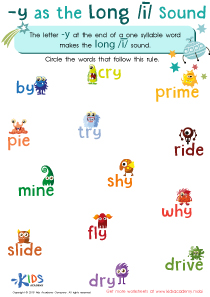
Reading: IGH as Long I Worksheet
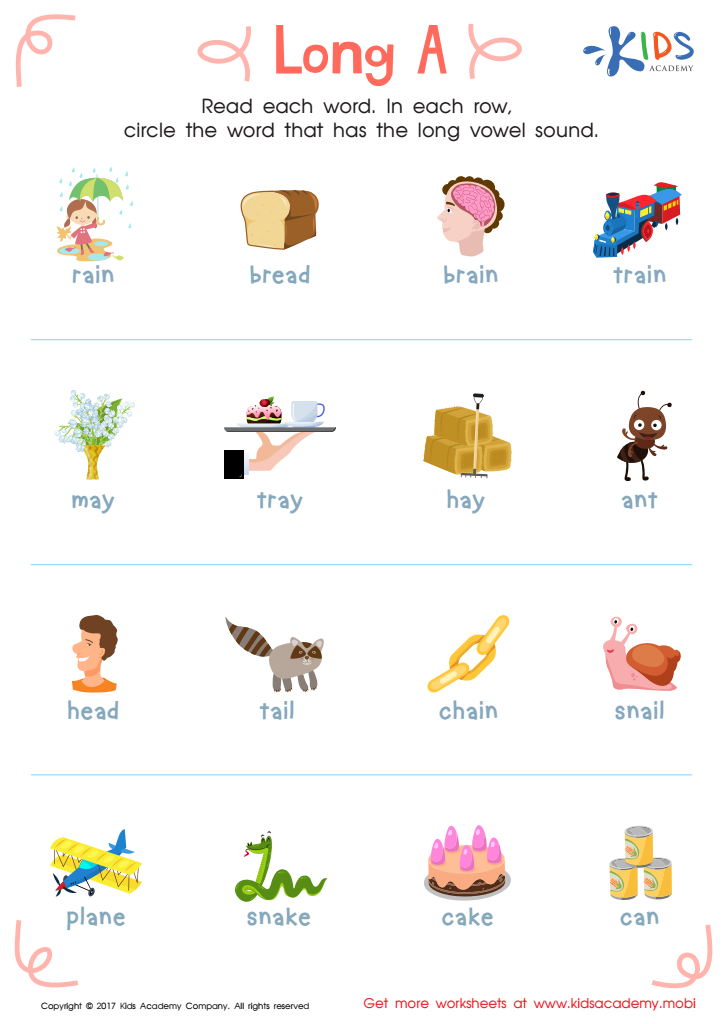
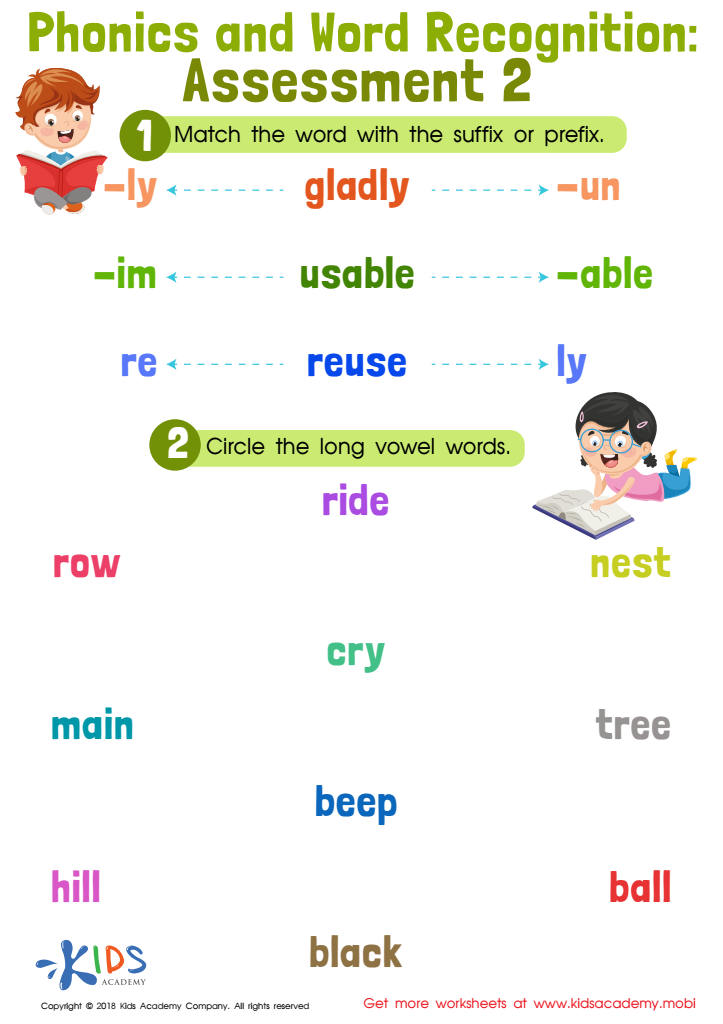
Phonics and Word Recognition: Assessment 2
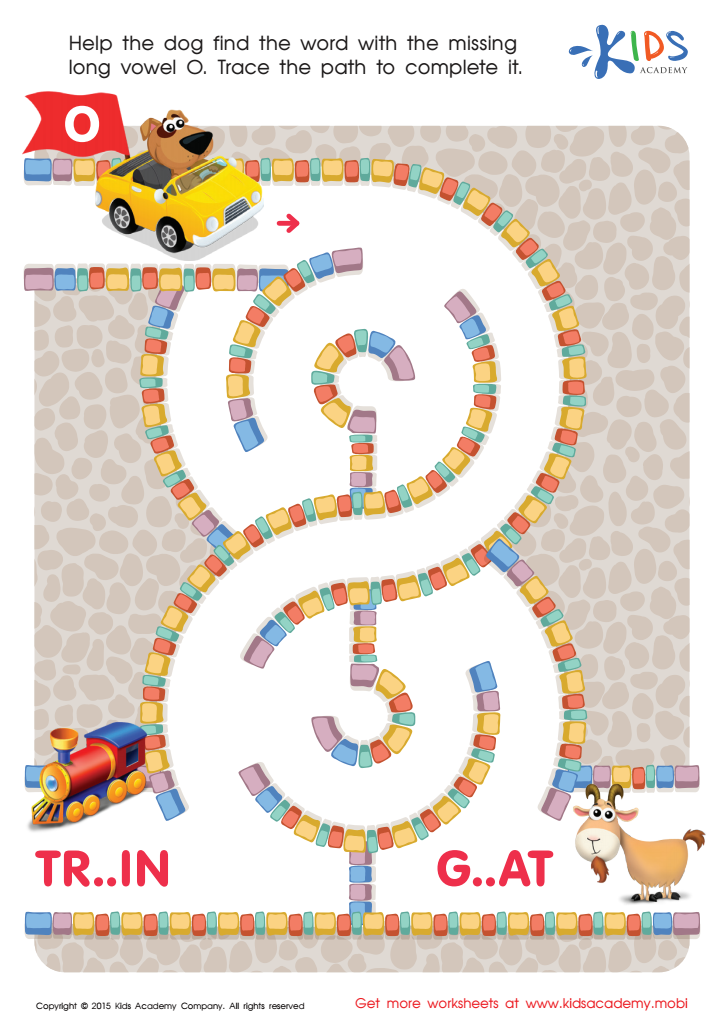
Long Vowel Sound O Worksheet
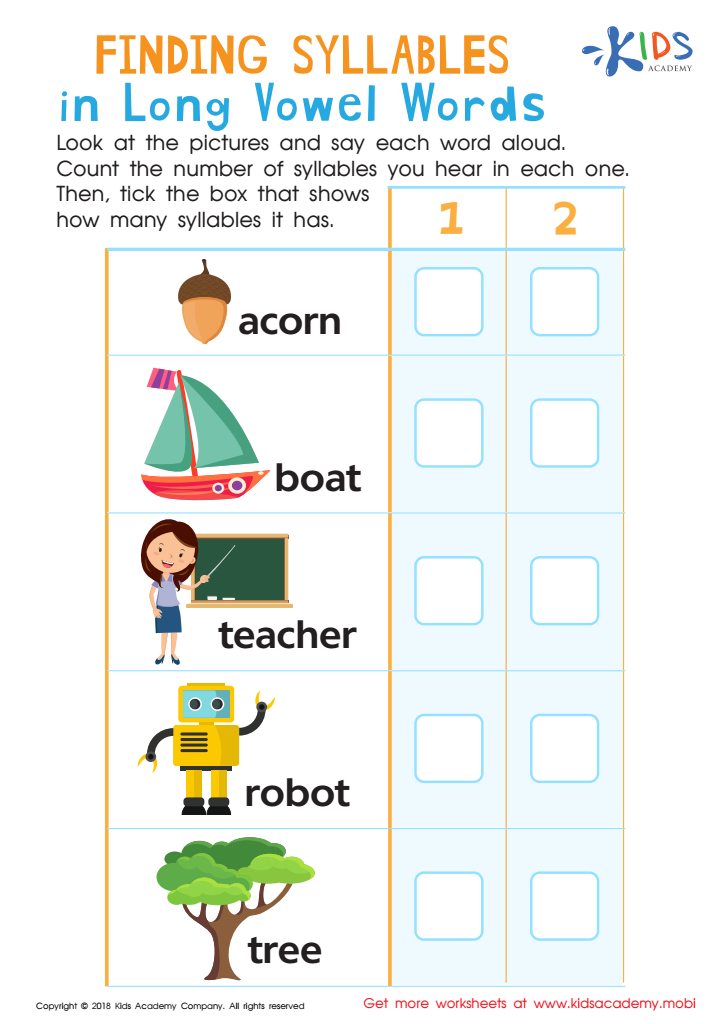
Finding Syllables in Long Vowel Words Worksheet
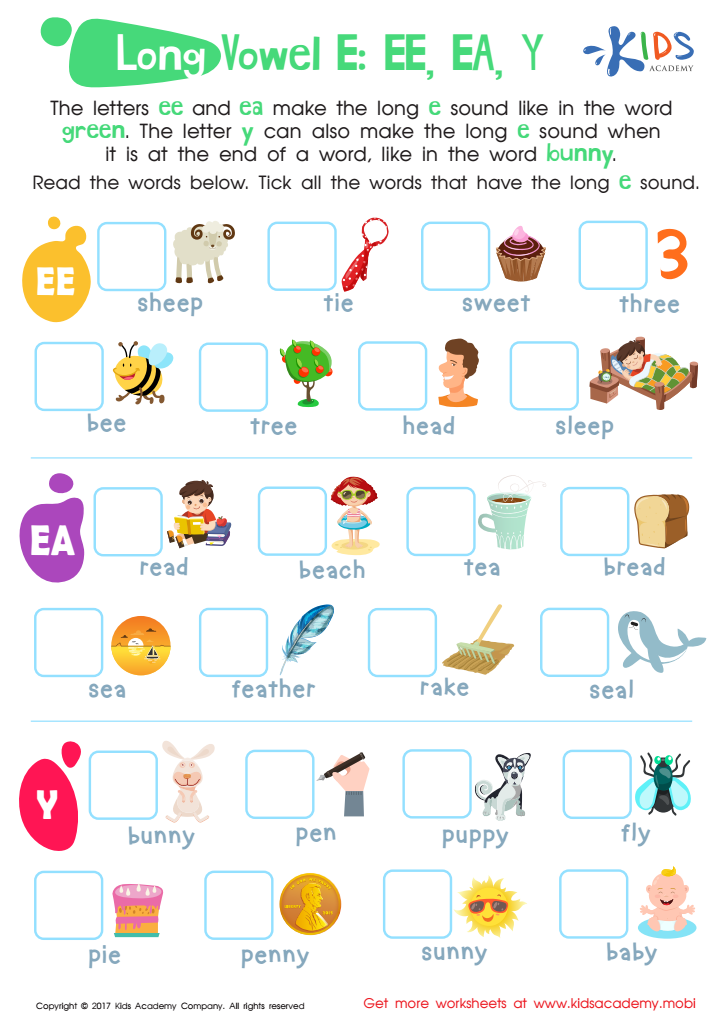
Long Vowel E Printable
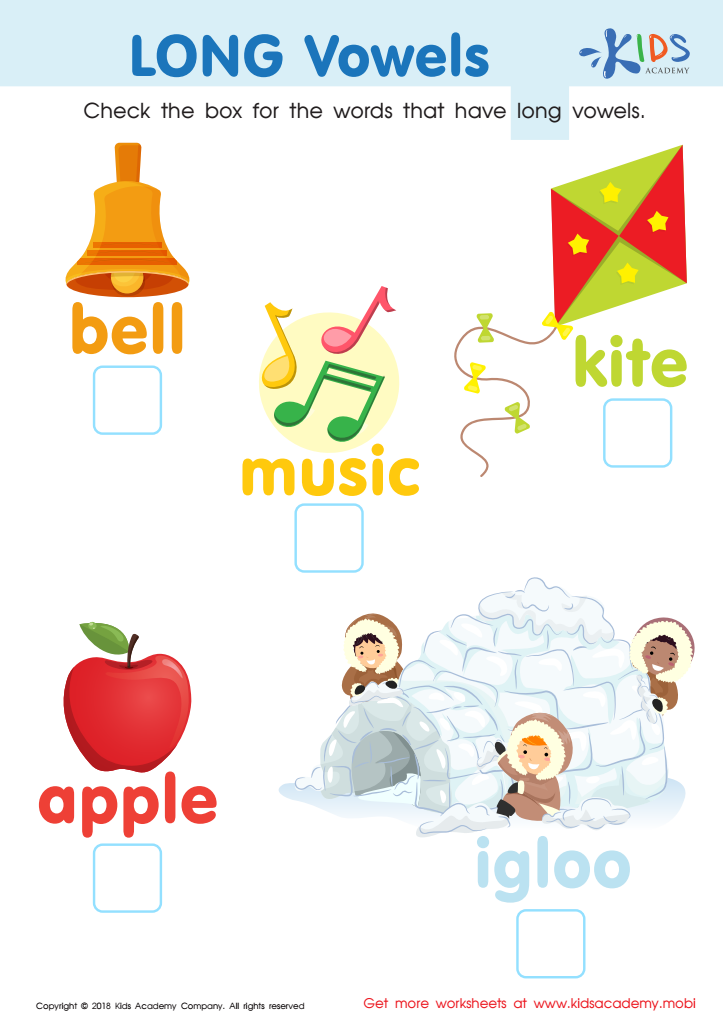
long vowels Worksheet
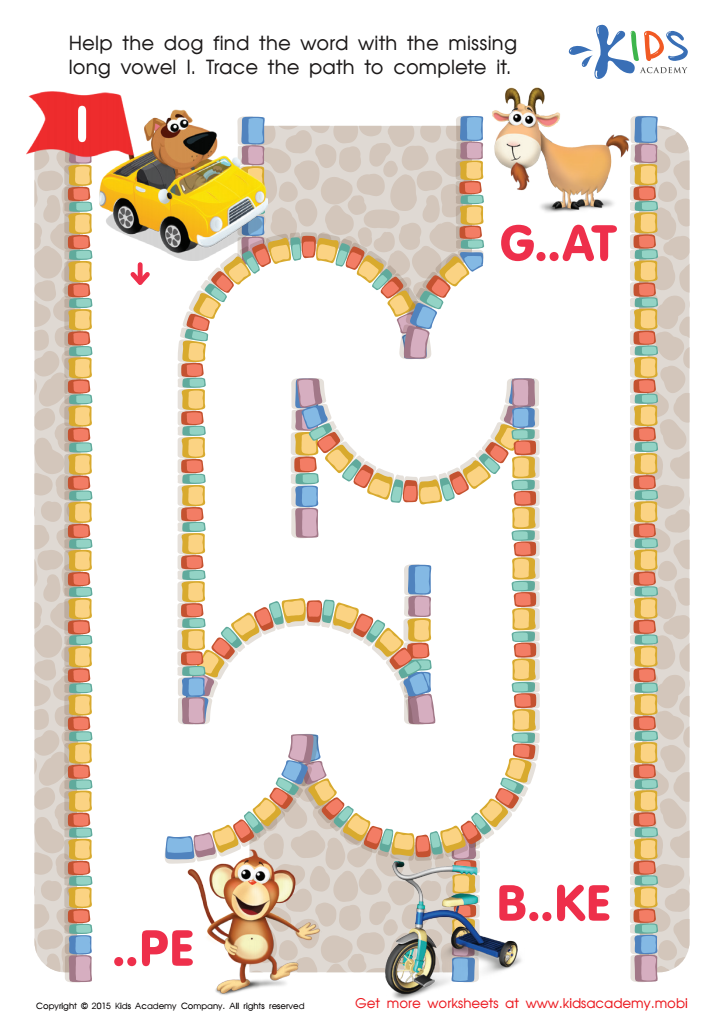
Long Vowel Sound I Worksheet



Understanding long vowels is crucial for early readers aged 6-9 because they form a foundational element of phonics and reading proficiency. Long vowels are often indicated by specific letter combinations, such as “ee” in “tree” or the silent “e” at the end of words like “cake.” Recognizing long vowel sounds helps children decode words, boosting their reading fluency and comprehension skills.
By mastering long vowels, children enhance their decoding abilities, allowing them to tackle more complex texts confidently. This competence is instrumental in fostering a love for reading, as children start to enjoy a broader range of literature without undue frustration.
Furthermore, knowledge of long vowels promotes spelling accuracy. Many spelling patterns hinge on identifying vowel sounds; therefore, understanding long vowels equips children with the tools needed to spell words correctly.
Parents and teachers play a pivotal role in this learning by providing engaging activities, such as phonics games, reading aloud, or creative writing prompts that emphasize long vowel sounds. By nurturing this skill, caregivers not only support literacy development but also encourage critical thinking and a lifelong appreciation for reading. Consequently, investing in teaching long vowels is an essential step in ensuring children succeed academically and develop a strong linguistic foundation.