Filters

865 filtered results

Clear all filters
Favorites
With answer key
Interactive

865 filtered results

Difficulty Level

Grade


Subject

    Check out this FREE Trial Lesson on Addition for age 6-9!

    A

    Favorites
    With answer key
    Interactive
    • 6-9
    • Addition
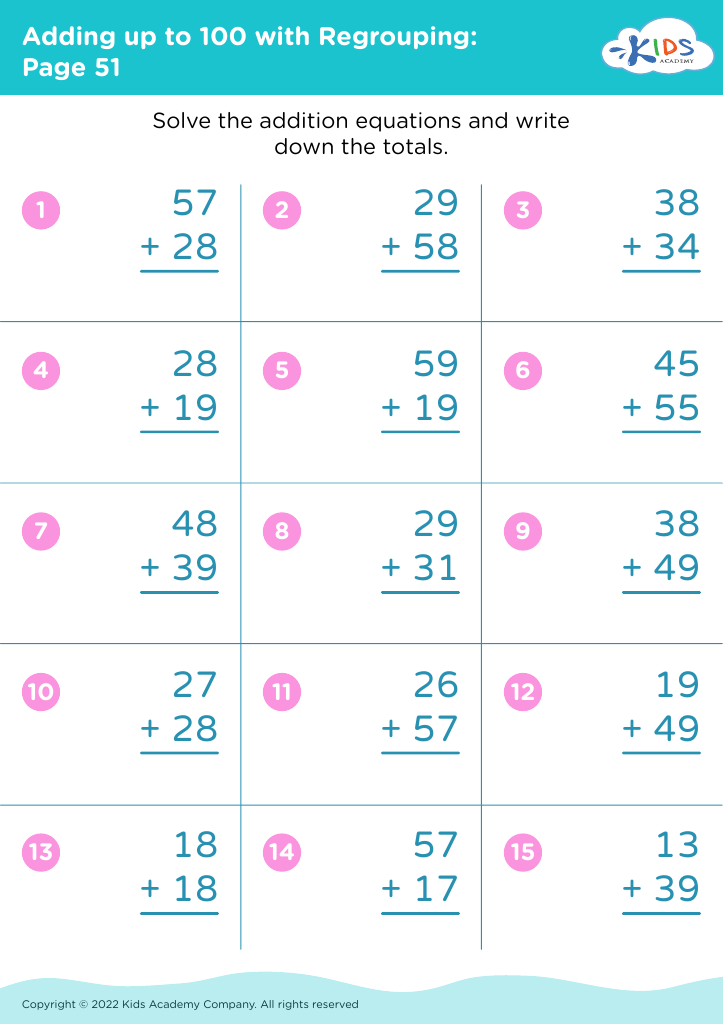
    Adding up to 100 with Regrouping: Page 51
    Adding up to 100 with Regrouping: Page 51
    Adding up to 100 with Regrouping: Page 51
    Worksheet
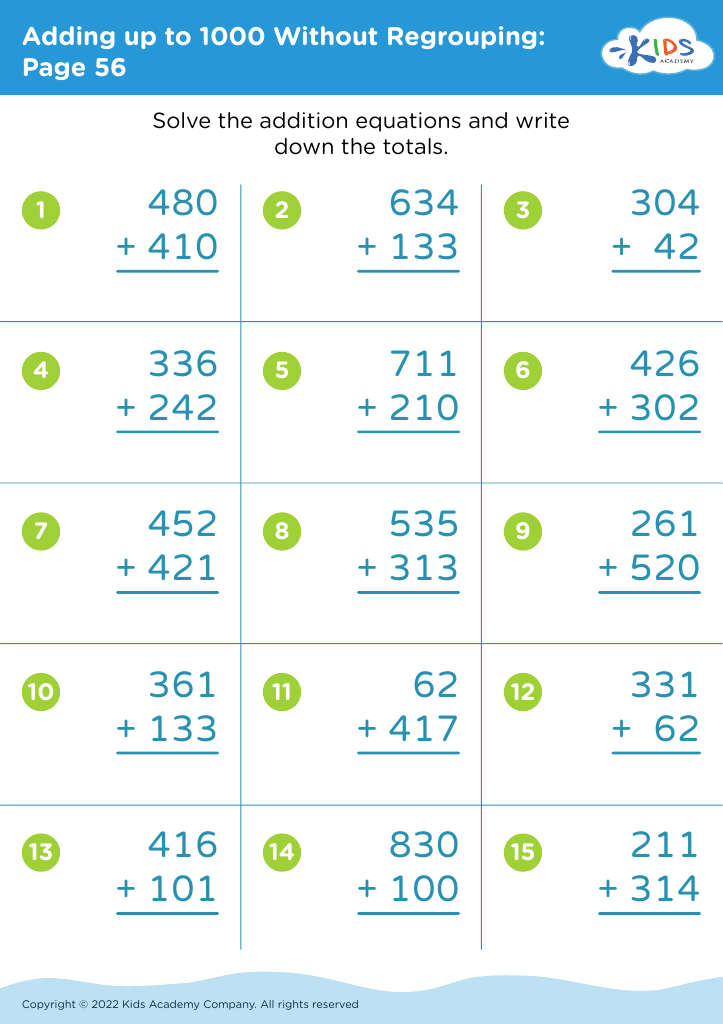
    Adding up to 1000 Without Regrouping: Page 56
    Adding up to 1000 Without Regrouping: Page 56
    Adding up to 1000 Without Regrouping: Page 56
    Worksheet
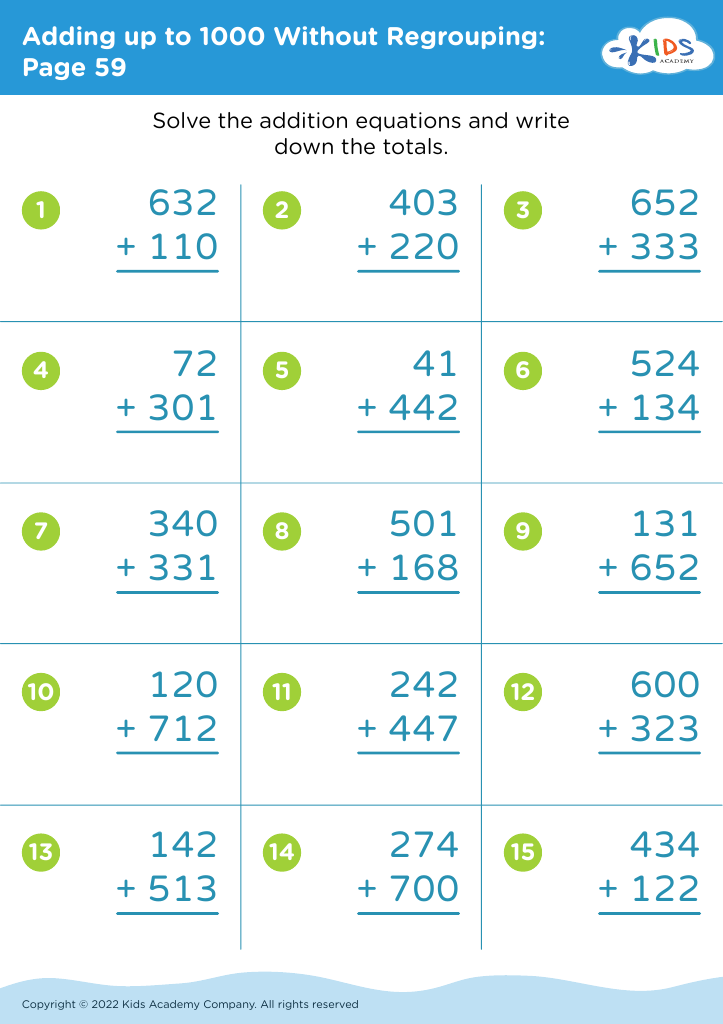
    Adding up to 1000 Without Regrouping: Page 59
    Adding up to 1000 Without Regrouping: Page 59
    Adding up to 1000 Without Regrouping: Page 59
    Worksheet
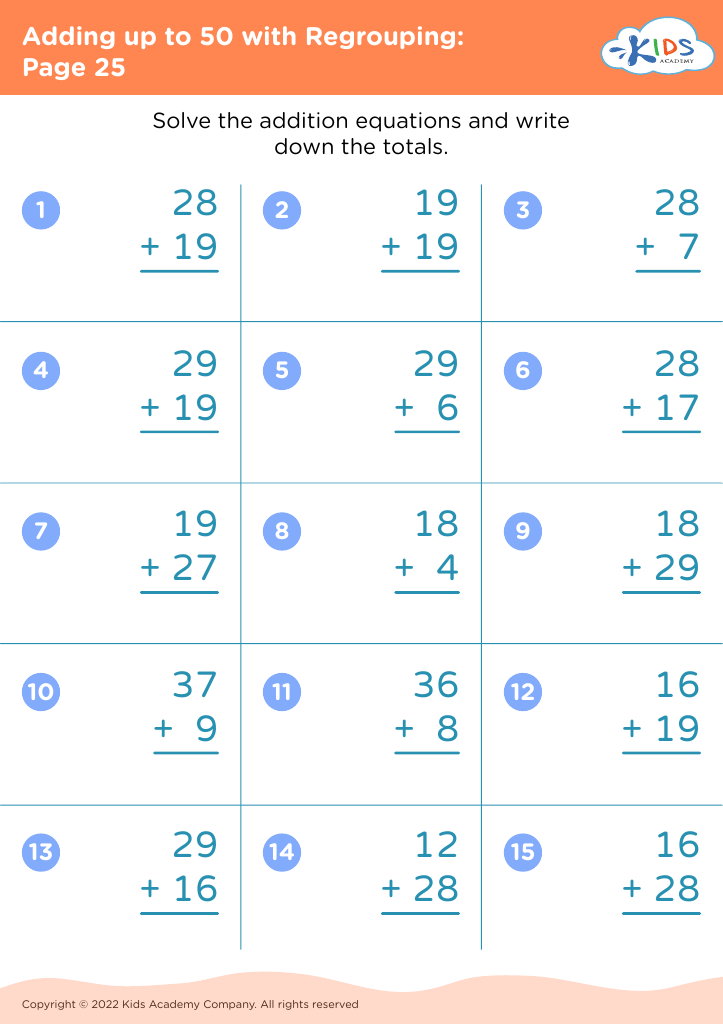
    Adding up to 50 with Regrouping: Page 25
    Adding up to 50 with Regrouping: Page 25
    Adding up to 50 with Regrouping: Page 25
    Worksheet
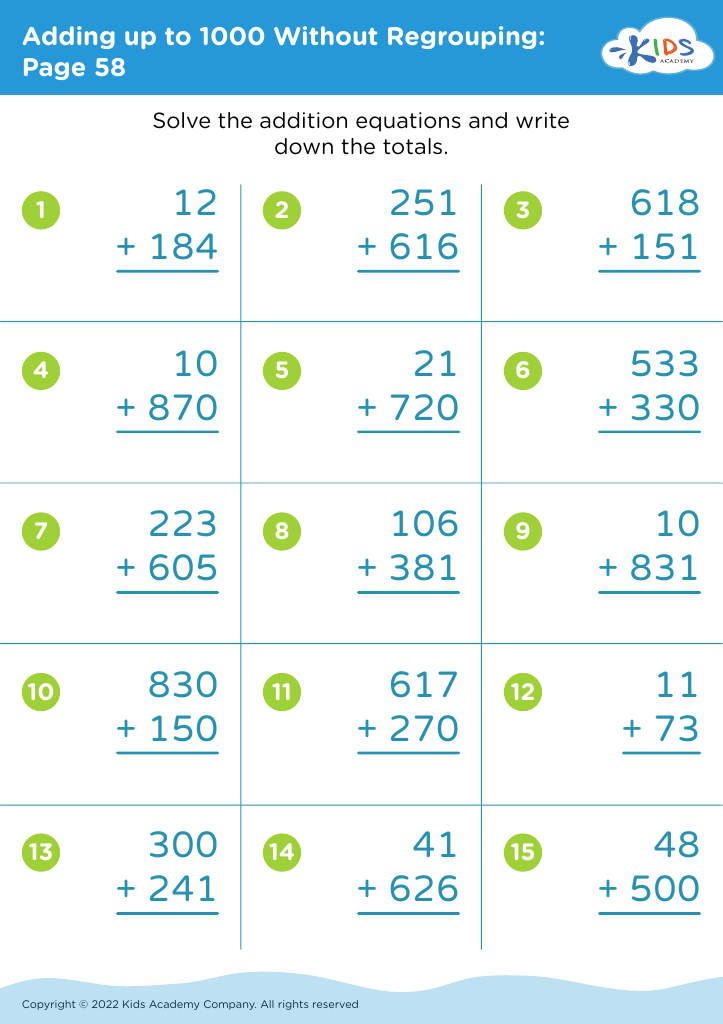
    Adding up to 1000 Without Regrouping: Page 58
    Adding up to 1000 Without Regrouping: Page 58
    Adding up to 1000 Without Regrouping: Page 58
    Worksheet
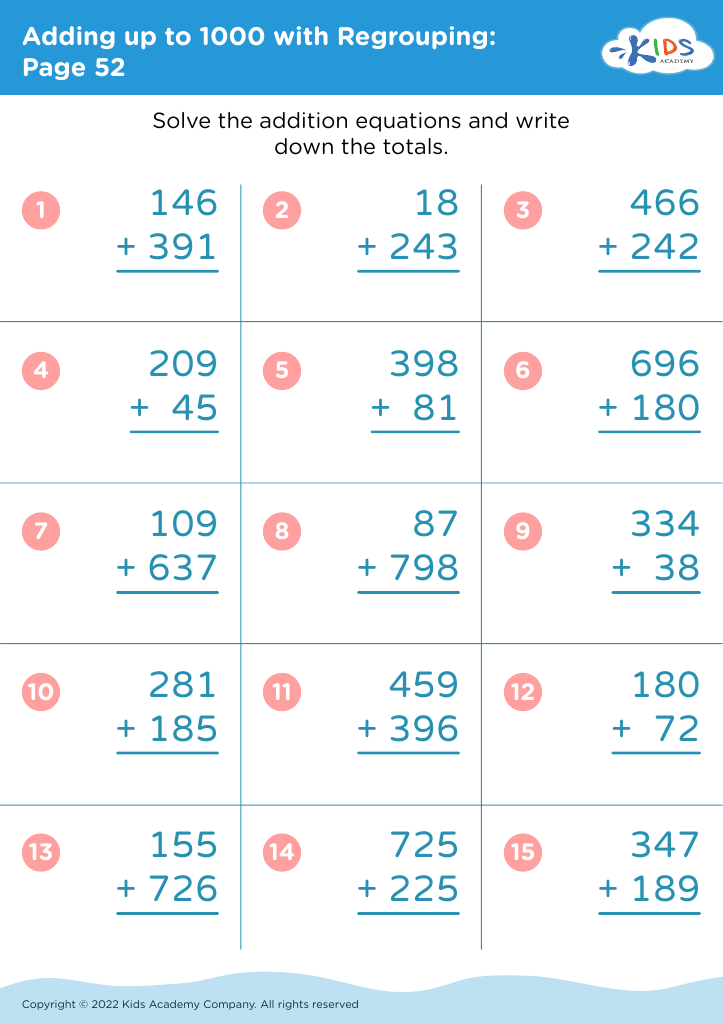
    Adding up to 1000 with Regrouping: Page 52
    Adding up to 1000 with Regrouping: Page 52
    Adding up to 1000 with Regrouping: Page 52
    Worksheet
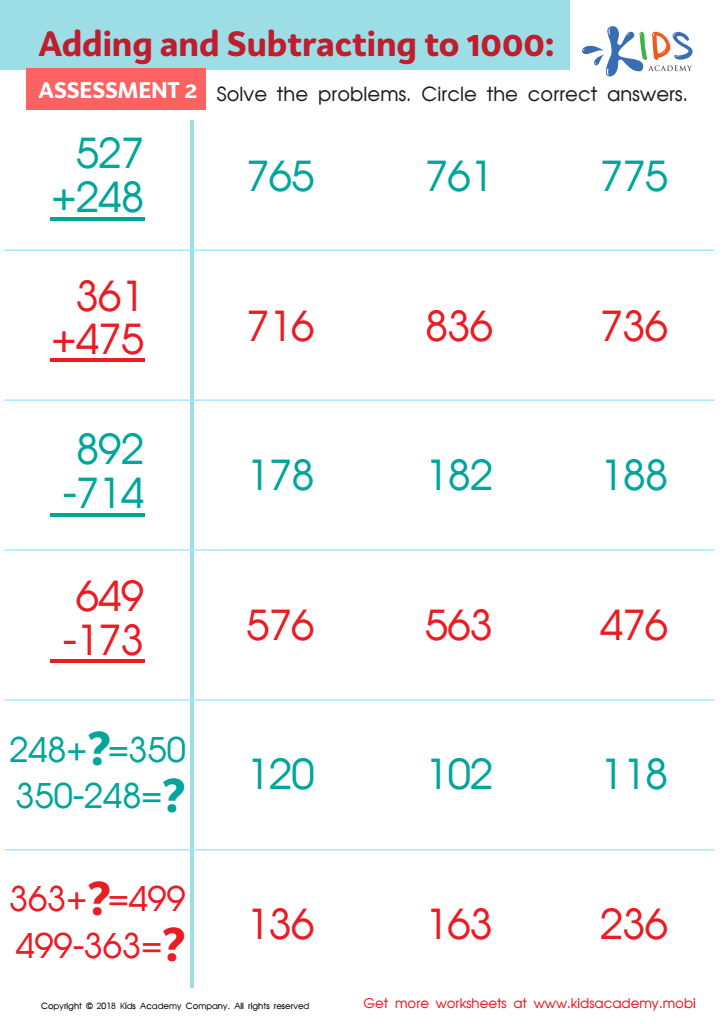
    Adding and Subtracting to 1 Worksheet: Assessment 2
    Adding and Subtracting to 1 Worksheet: Assessment 2

    Adding and Subtracting to 1 Worksheet: Assessment 2

    Test your child's addition and subtraction of 3-digit numbers with this assessment worksheet! They'll practice regrouping and pre-algebra skills to show their expertise. Have them work through the page and circle their answers, then see how many they got right to check their understanding and progress.
    Adding and Subtracting to 1 Worksheet: Assessment 2
    Worksheet
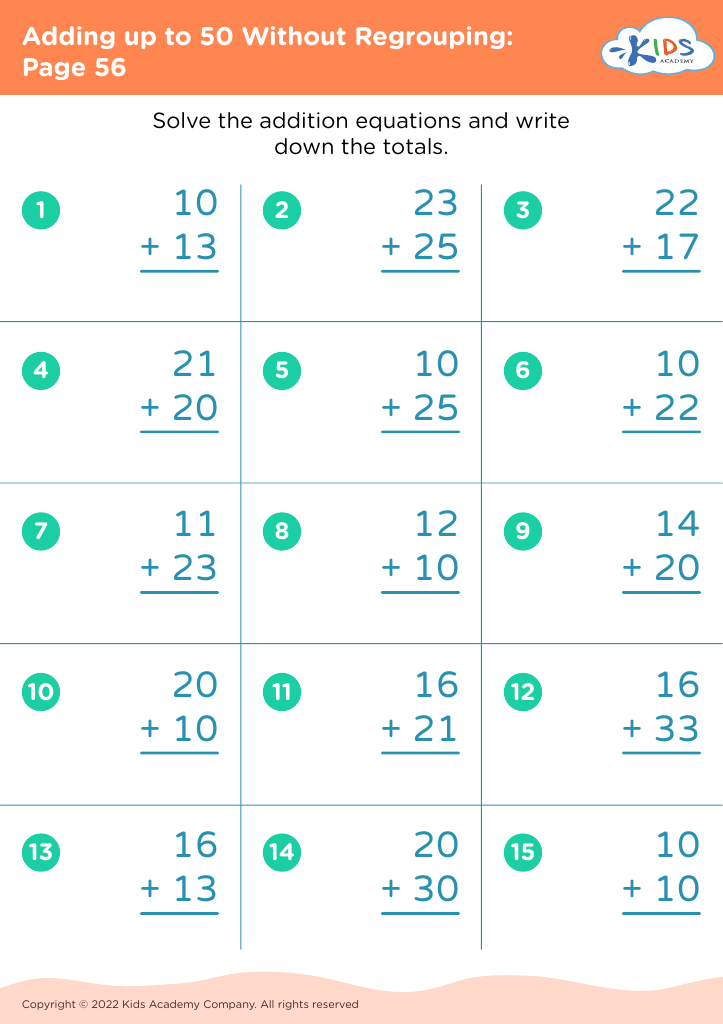
    Adding up to 50 Without Regrouping: Page 56
    Adding up to 50 Without Regrouping: Page 56
    Adding up to 50 Without Regrouping: Page 56
    Worksheet
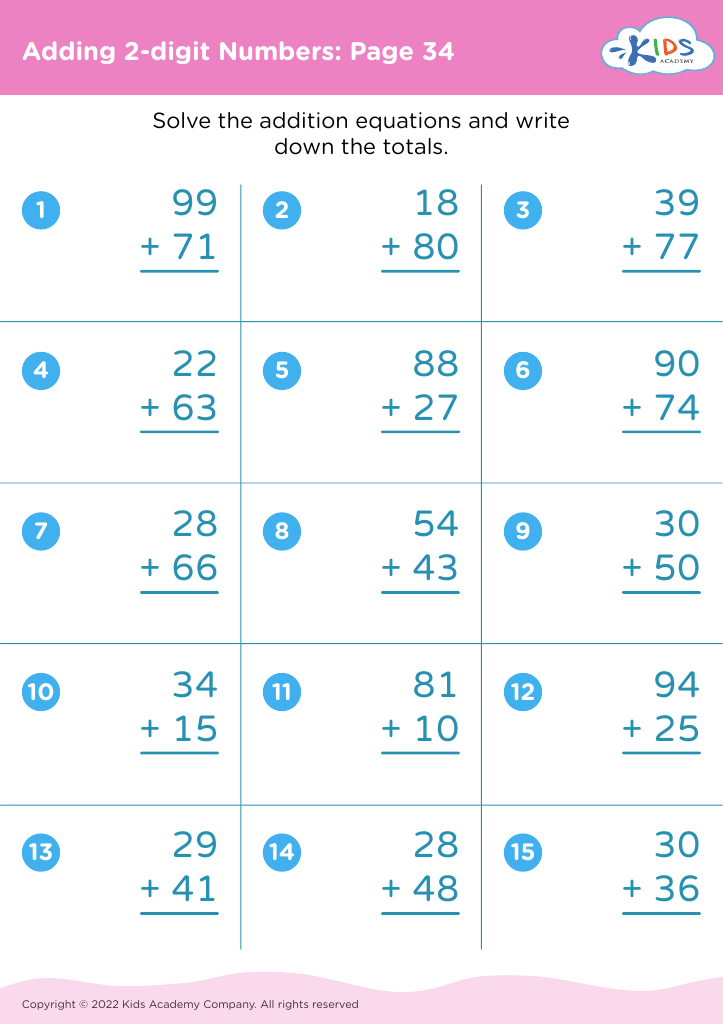
    Adding 2-digit Numbers: Page 34
    Adding 2-digit Numbers: Page 34

    Adding 2-digit Numbers: Page 34

    Adding 2-digit Numbers: Page 34
    Worksheet
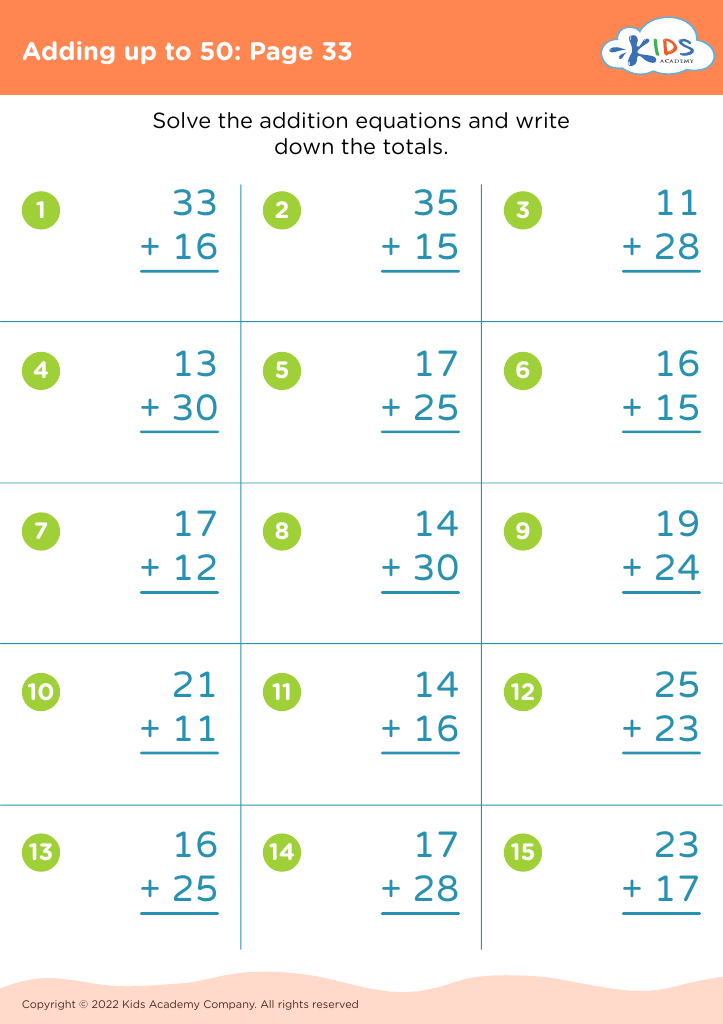
    Adding up to 50: Page 33
    Adding up to 50: Page 33

    Adding up to 50: Page 33

    Adding up to 50: Page 33
    Worksheet
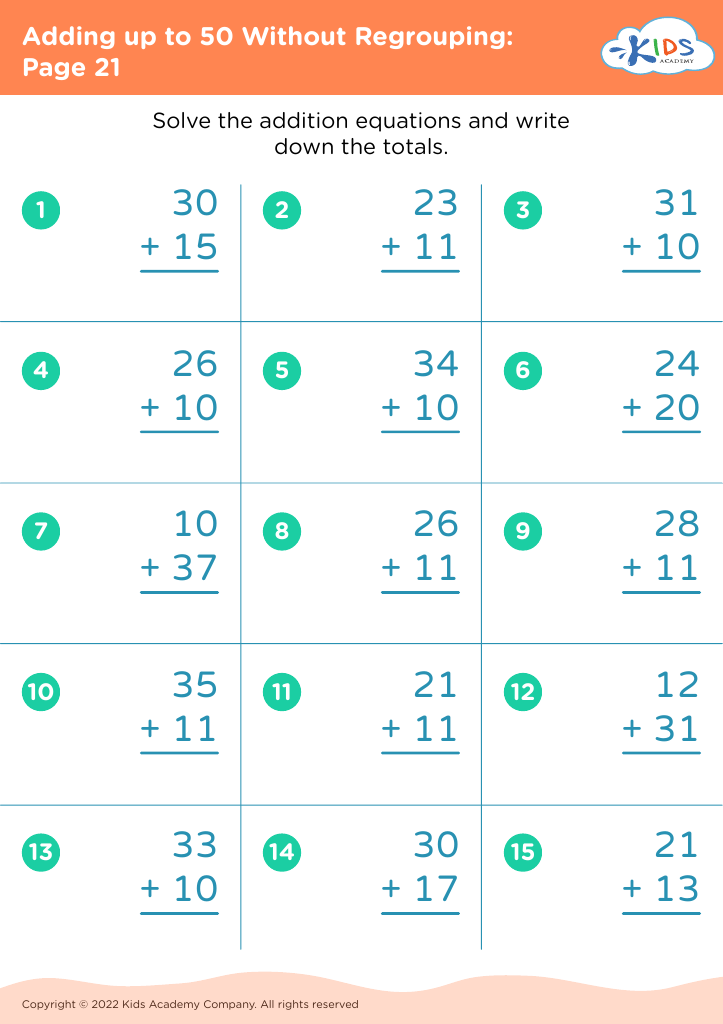
    Adding up to 50 Without Regrouping: Page 21
    Adding up to 50 Without Regrouping: Page 21
    Adding up to 50 Without Regrouping: Page 21
    Worksheet
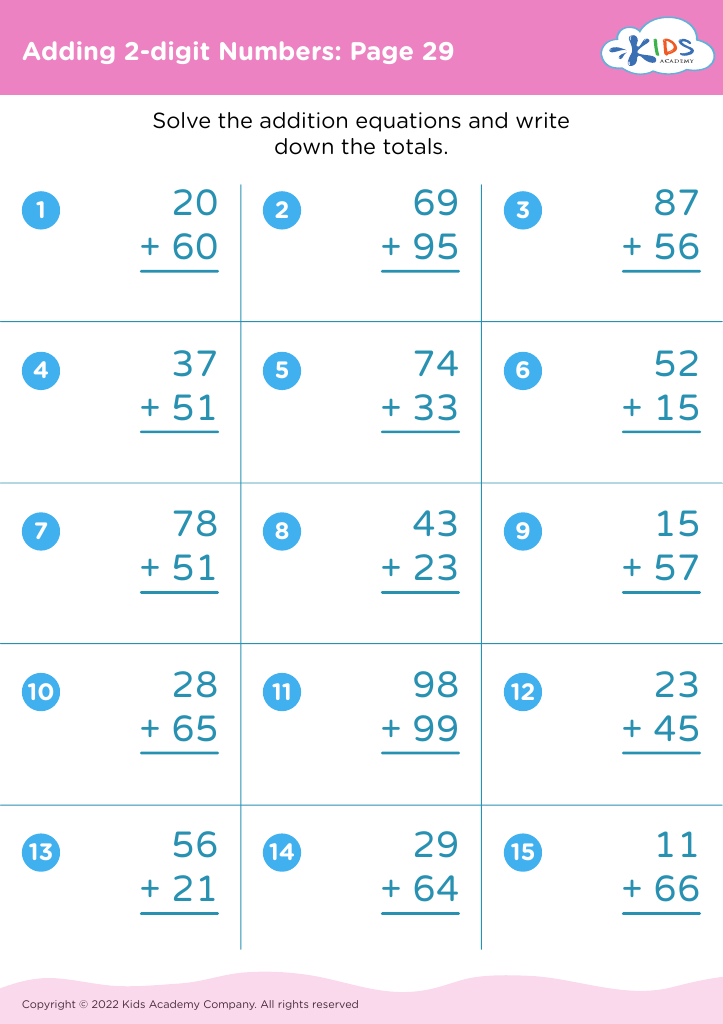
    Adding 2-digit Numbers: Page 29
    Adding 2-digit Numbers: Page 29

    Adding 2-digit Numbers: Page 29

    Adding 2-digit Numbers: Page 29
    Worksheet
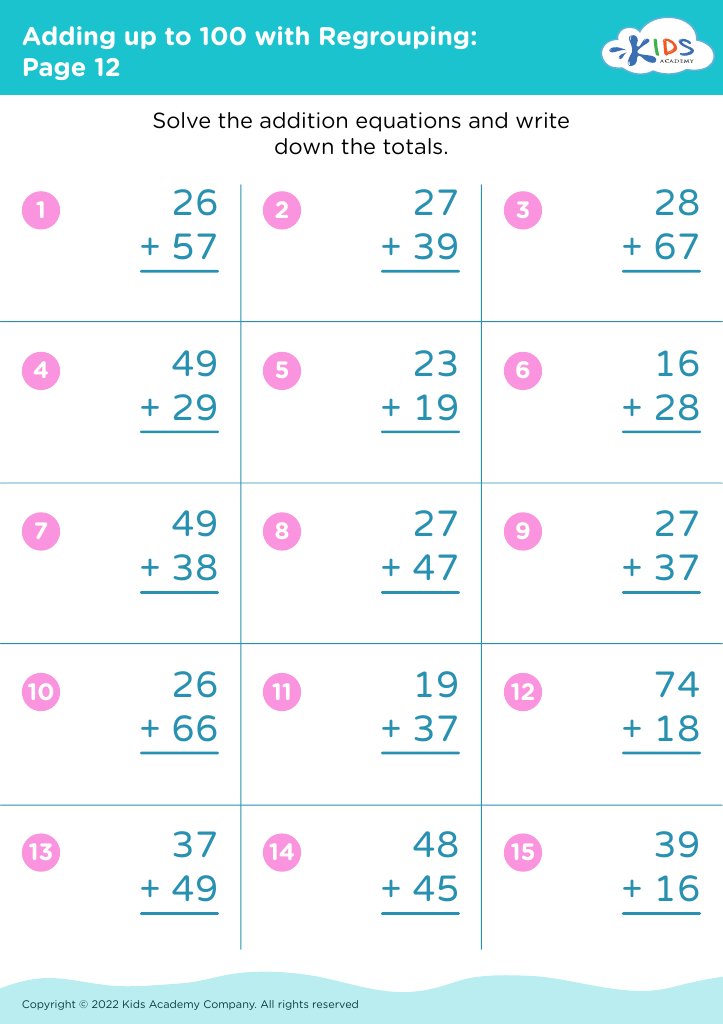
    Adding up to 100 with Regrouping: Page 12
    Adding up to 100 with Regrouping: Page 12
    Adding up to 100 with Regrouping: Page 12
    Worksheet
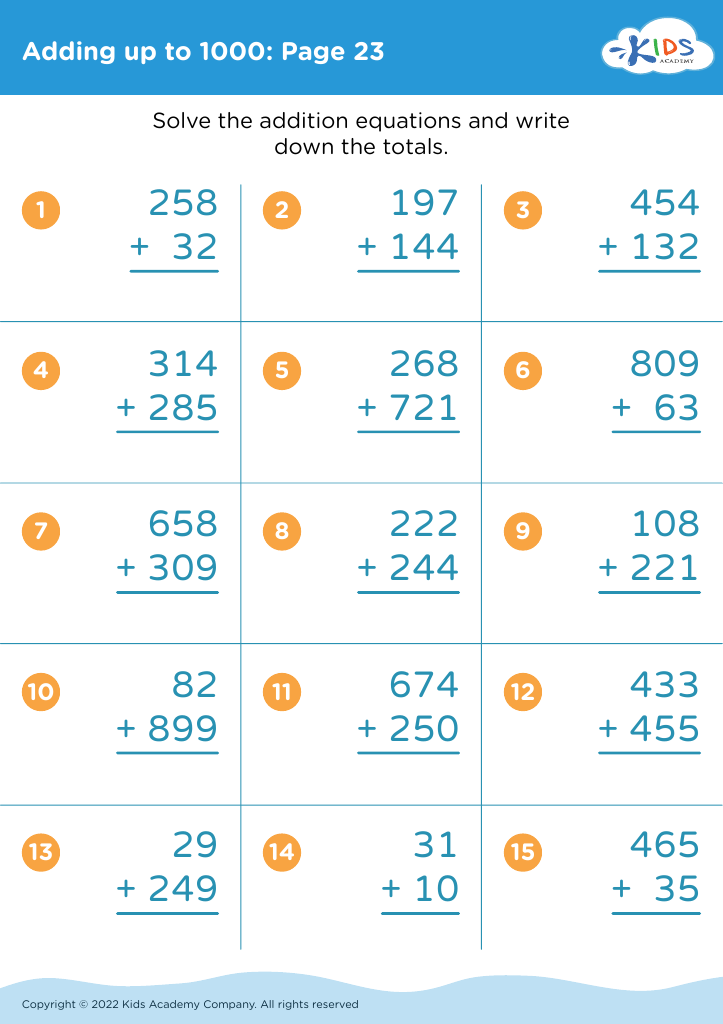
    Adding up to 1000: Page 23
    Adding up to 1000: Page 23

    Adding up to 1000: Page 23

    Adding up to 1000: Page 23
    Worksheet
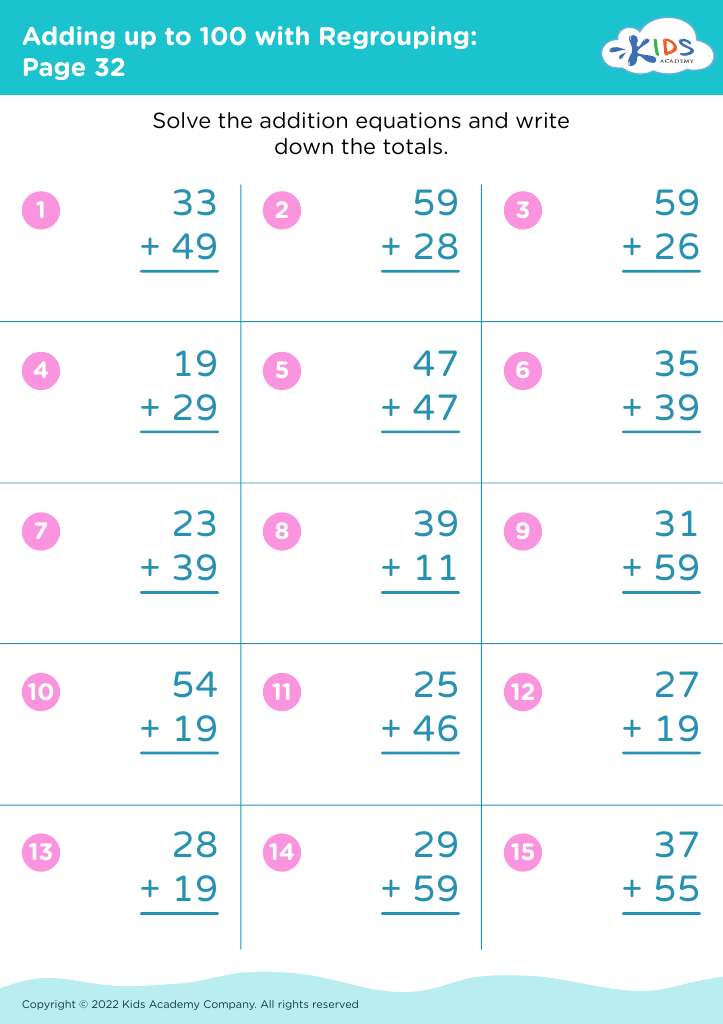
    Adding up to 100 with Regrouping: Page 32
    Adding up to 100 with Regrouping: Page 32
    Adding up to 100 with Regrouping: Page 32
    Worksheet
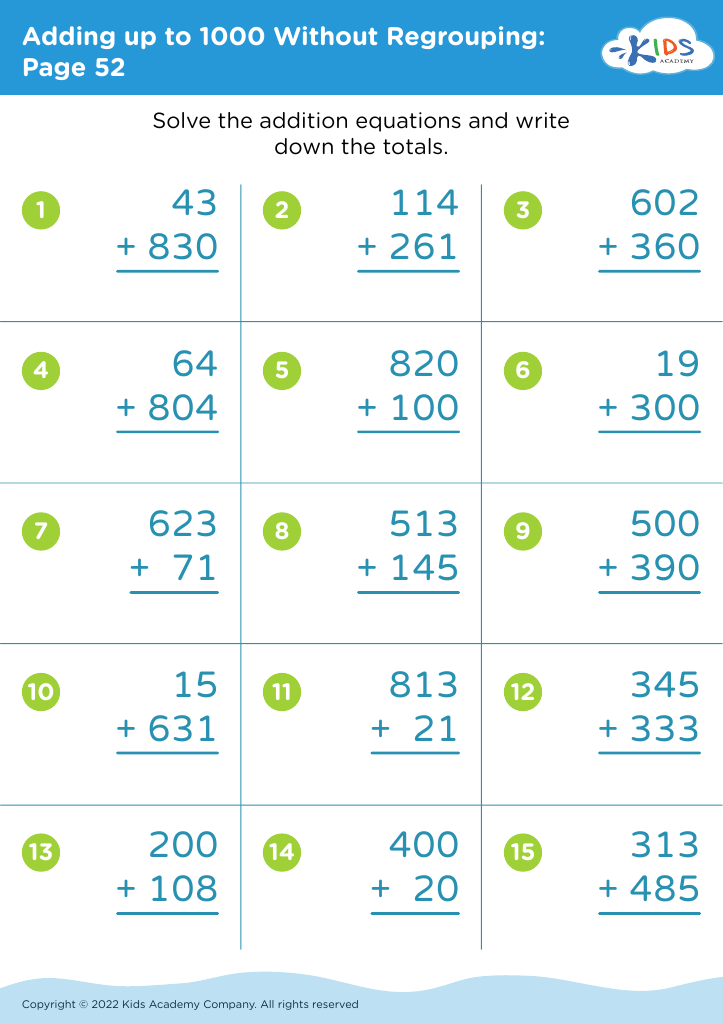
    Adding up to 1000 Without Regrouping: Page 52
    Adding up to 1000 Without Regrouping: Page 52
    Adding up to 1000 Without Regrouping: Page 52
    Worksheet
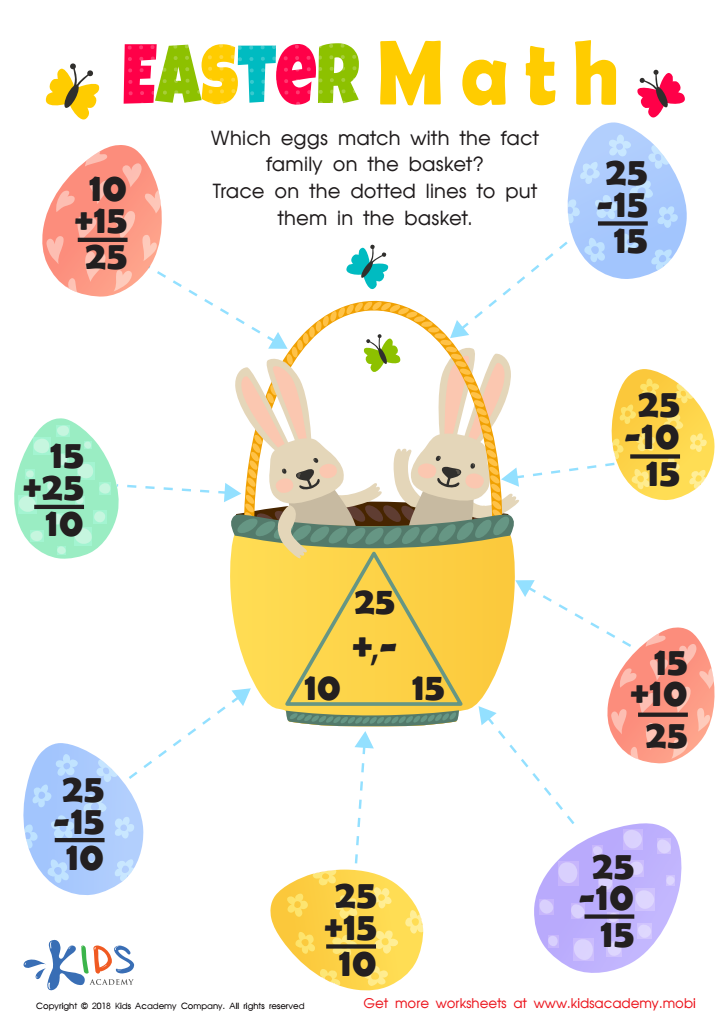
    Fact Families: Easter Math Worksheet
    Fact Families: Easter Math Worksheet

    Fact Families: Easter Math Worksheet

    Kids will love this vibrant PDF packed with Easter math fun! Match facts with the colorful eggs, add and subtract multiples of five to boost automaticity, and have a blast with the bunny friends!
    Fact Families: Easter Math Worksheet
    Worksheet
    Piecing Together 16 Worksheet
    Piecing Together 16 Worksheet
    Piecing Together 16 Worksheet
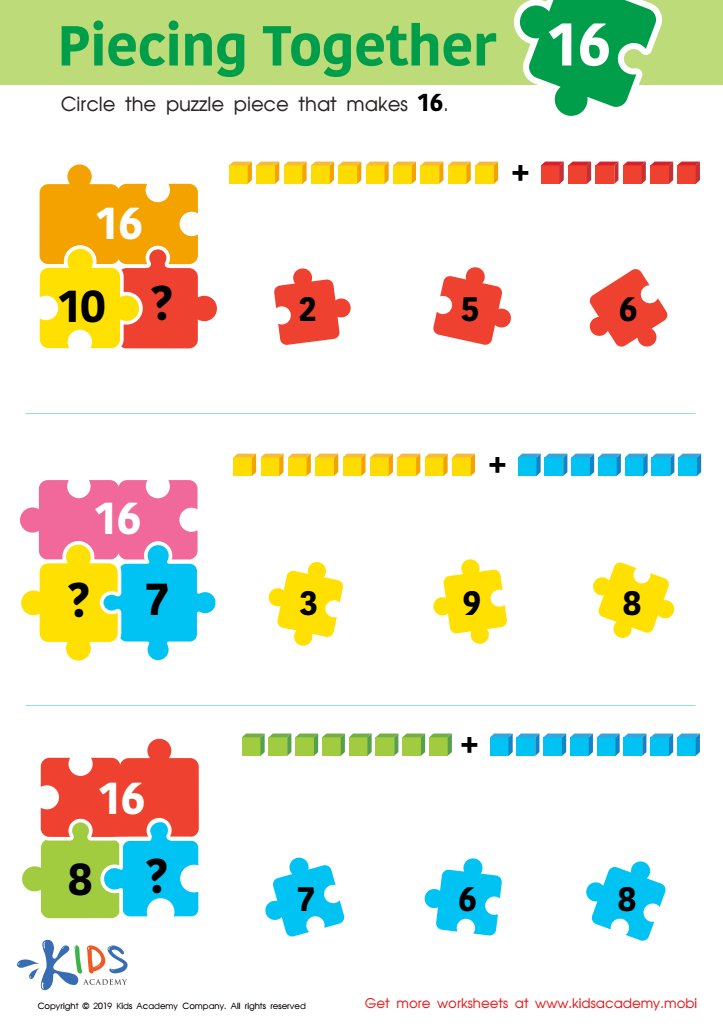
    Combine learning with fun using this colorful worksheet! Ask your preschoolers what they see in the picture, then help them solve the mathematical equations on the puzzle pieces. One equation is missing on each; have them circle the piece that will make the bottom puzzle piece numbers equal 16. Use puzzles and bright colors to teach - it's one of the best ways your kids can learn!
    Piecing Together 16 Worksheet

    Worksheet
    Adding up to 100 Without Regrouping: Page 39
    Adding up to 100 Without Regrouping: Page 39
    Adding up to 100 Without Regrouping: Page 39
    Worksheet
    Adding up to 50: Page 27
    Adding up to 50: Page 27

    Adding up to 50: Page 27

    Adding up to 50: Page 27
    Worksheet
    Adding up to 100: Page 35
    Adding up to 100: Page 35

    Adding up to 100: Page 35

    Adding up to 100: Page 35
    Worksheet
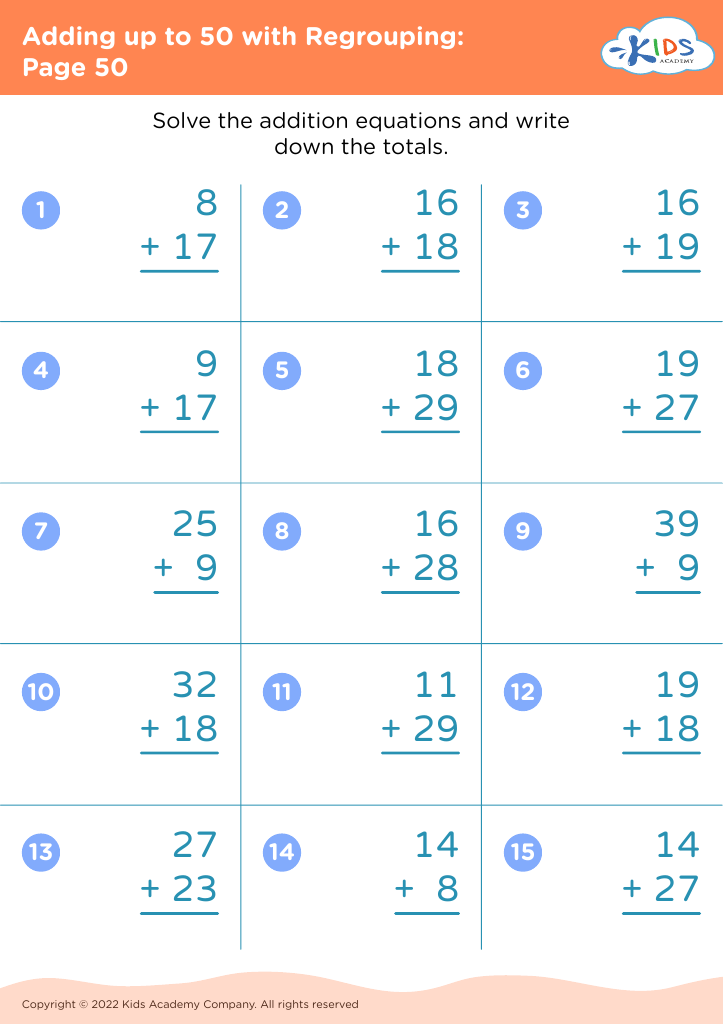
    Adding up to 50 with Regrouping: Page 50
    Adding up to 50 with Regrouping: Page 50
    Adding up to 50 with Regrouping: Page 50
    Worksheet
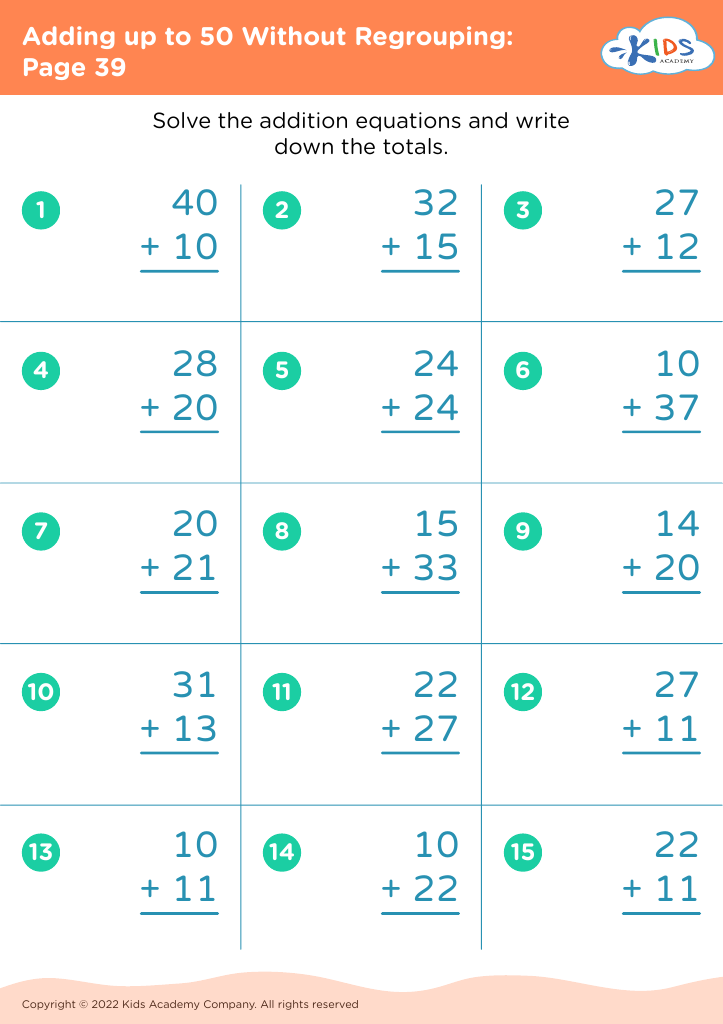
    Adding up to 50 Without Regrouping: Page 39
    Adding up to 50 Without Regrouping: Page 39
    Adding up to 50 Without Regrouping: Page 39
    Worksheet
    Adding up to 100 with Regrouping: Page 14
    Adding up to 100 with Regrouping: Page 14
    Adding up to 100 with Regrouping: Page 14
    Worksheet


    Addition is a foundational math skill that is crucial for children aged 6-9 as it sets the groundwork for more advanced mathematical concepts. During these formative years, children are highly receptive and capable of grasping basic arithmetic, which significantly impacts their later success in mathematics and problem-solving in everyday life.

    First, addition allows children to understand the concept of numbers and how they interact. It improves their numerical fluency, enabling quick and accurate calculations, which are necessary skills both inside and outside the classroom. For example, knowing how to add helps children with practical tasks like counting money, telling time, and measuring ingredients in recipes.

    Second, mastering addition fosters logical thinking and enhances cognitive development. When children practice addition, they engage in pattern recognition and develop mental strategies for solving problems. This escalates their critical thinking abilities and promotes a logical approach to real-life situations.

    Additionally, success in math boosts confidence and academic motivation. A child who is proficient in basic math is more likely to approach more complex subjects with a positive attitude. This increases their overall academic performance, fostering a love for learning and persistence.

    Therefore, parents and teachers should emphasize the importance of addition to equip children with essential cognitive skills and build a strong foundation for future academic and life success.