Vocabulary expansion Reading Worksheets for Ages 7-9 - Page 2
70 filtered results
-
From - To
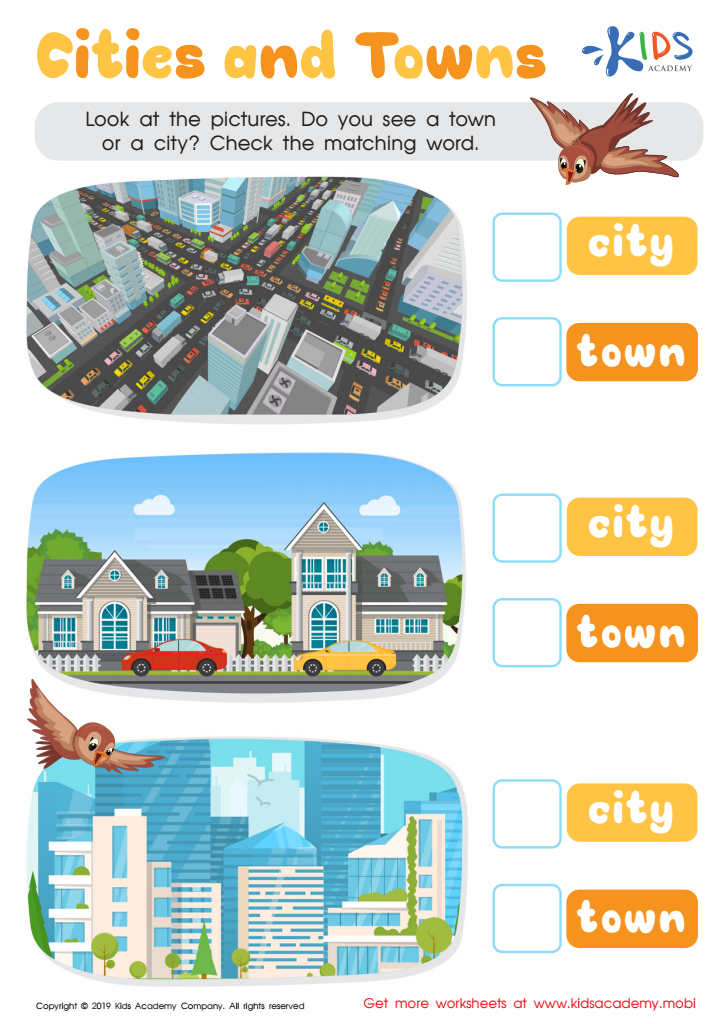
Cities and Towns Worksheet
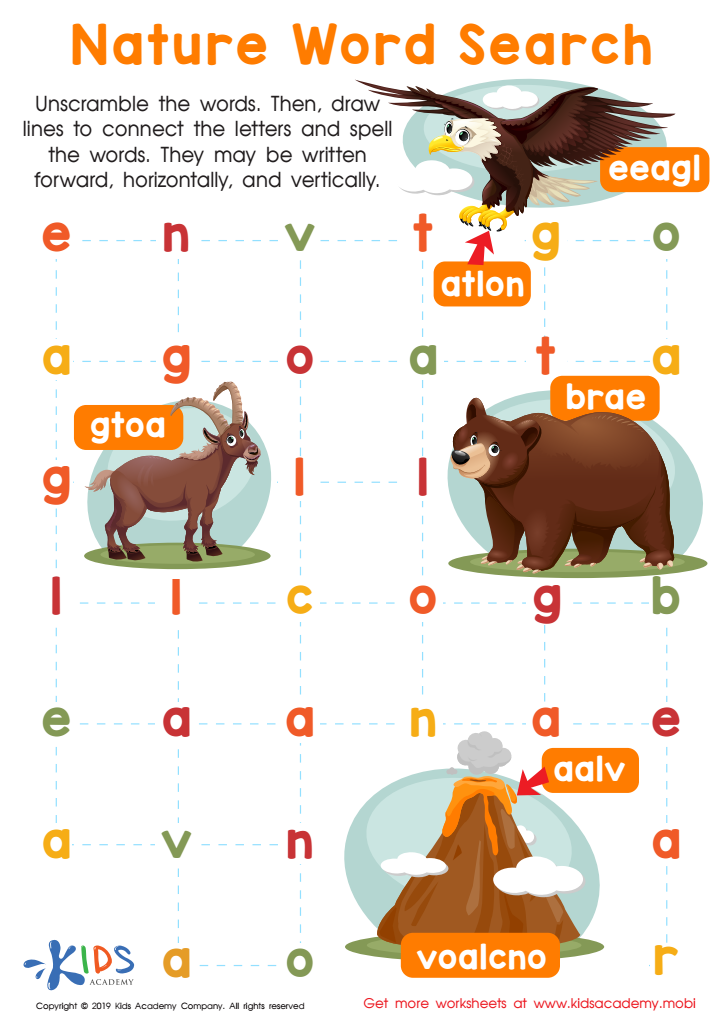
Nature Word Search Worksheet
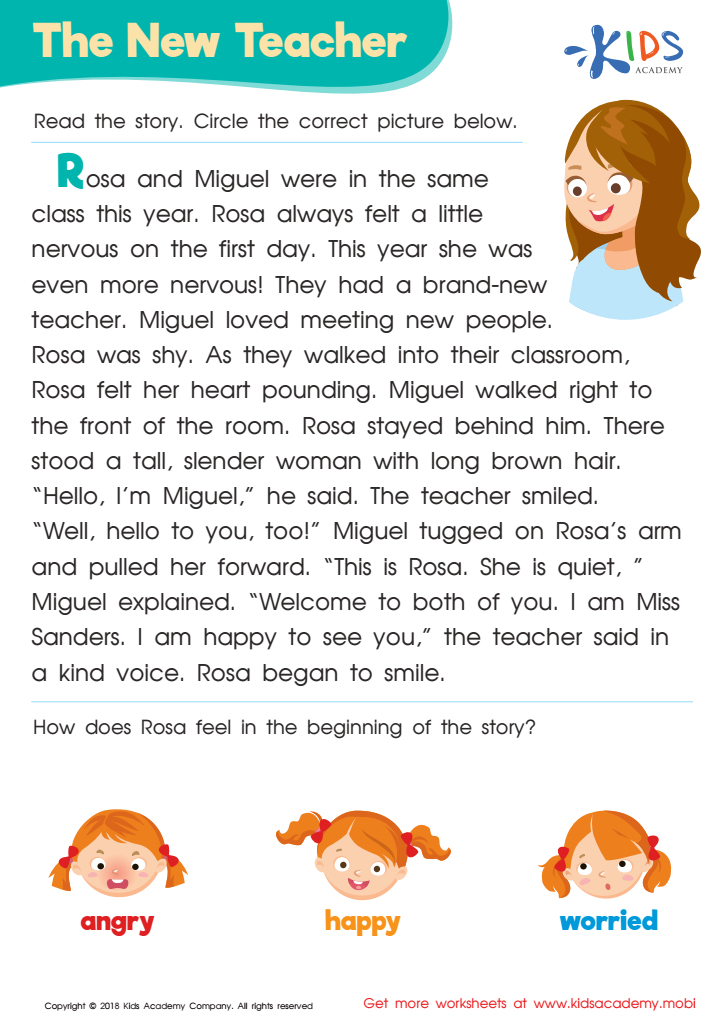
The New Teacher Worksheet
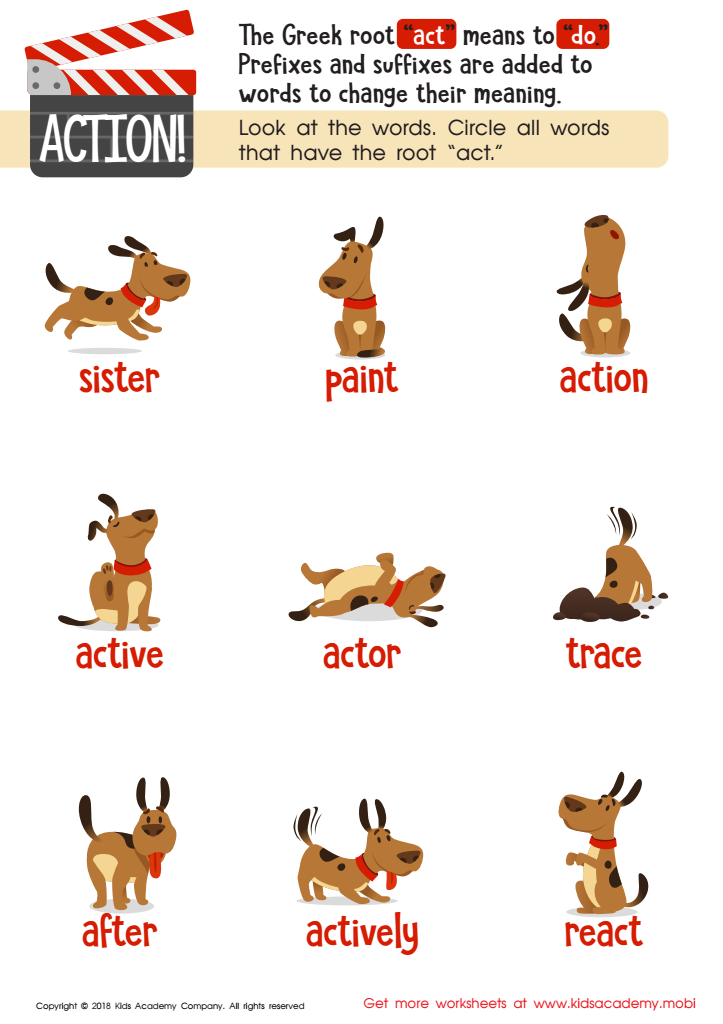
Action! Worksheet
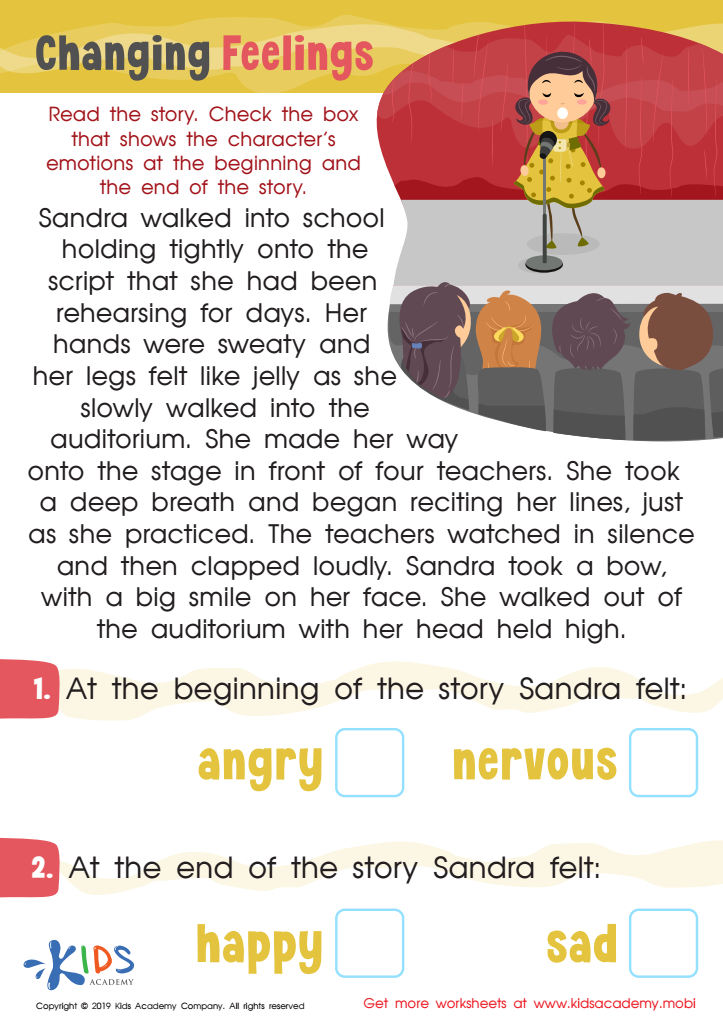
Changing Feelings Worksheet
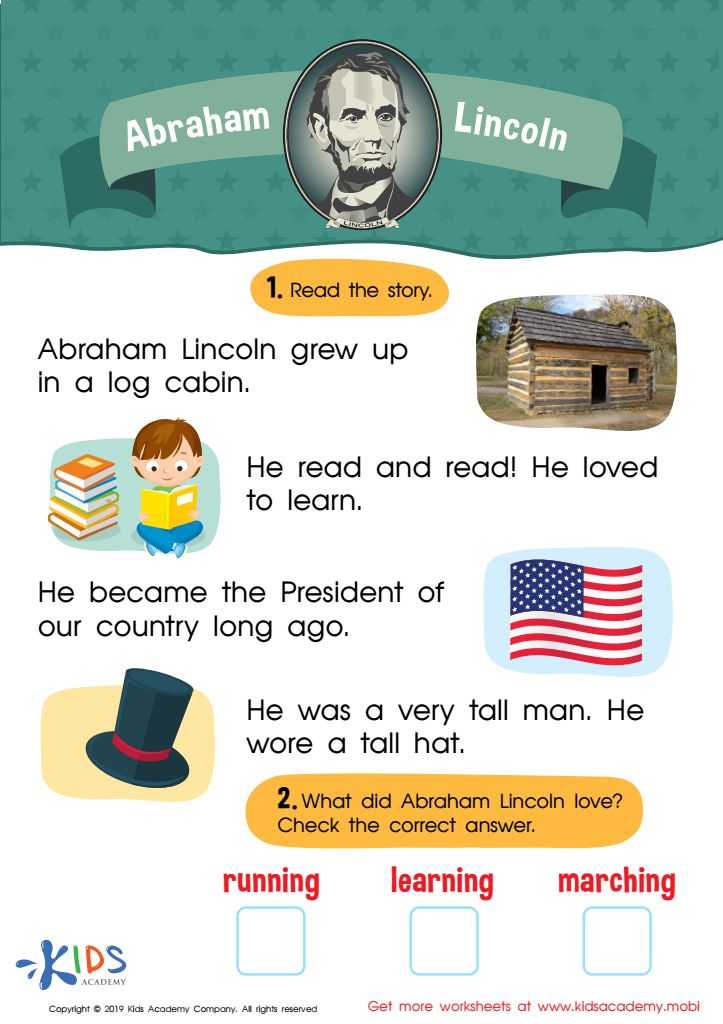
Abraham Lincoln Worksheet
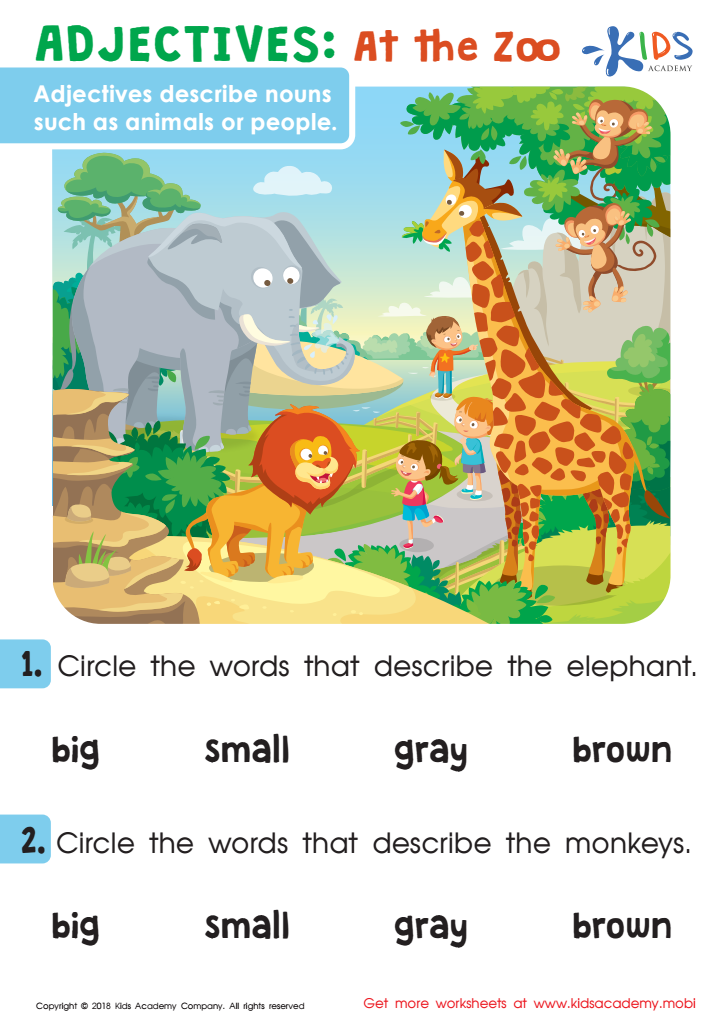
Adjectives: At The Zoo Worksheet
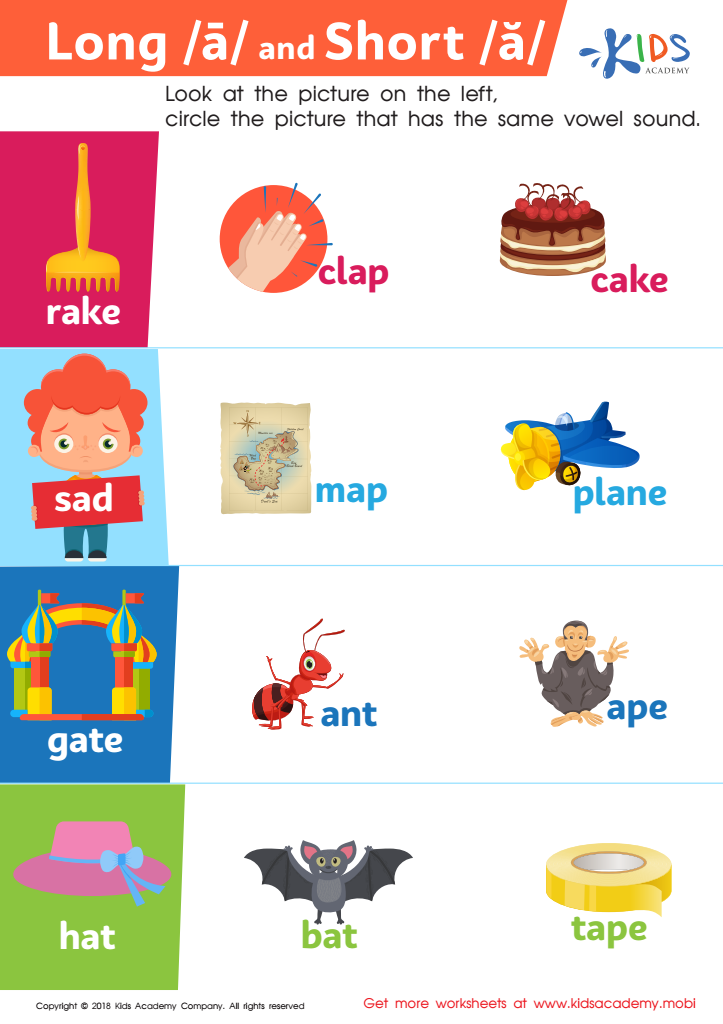
Reading: Long a and Short a Worksheet
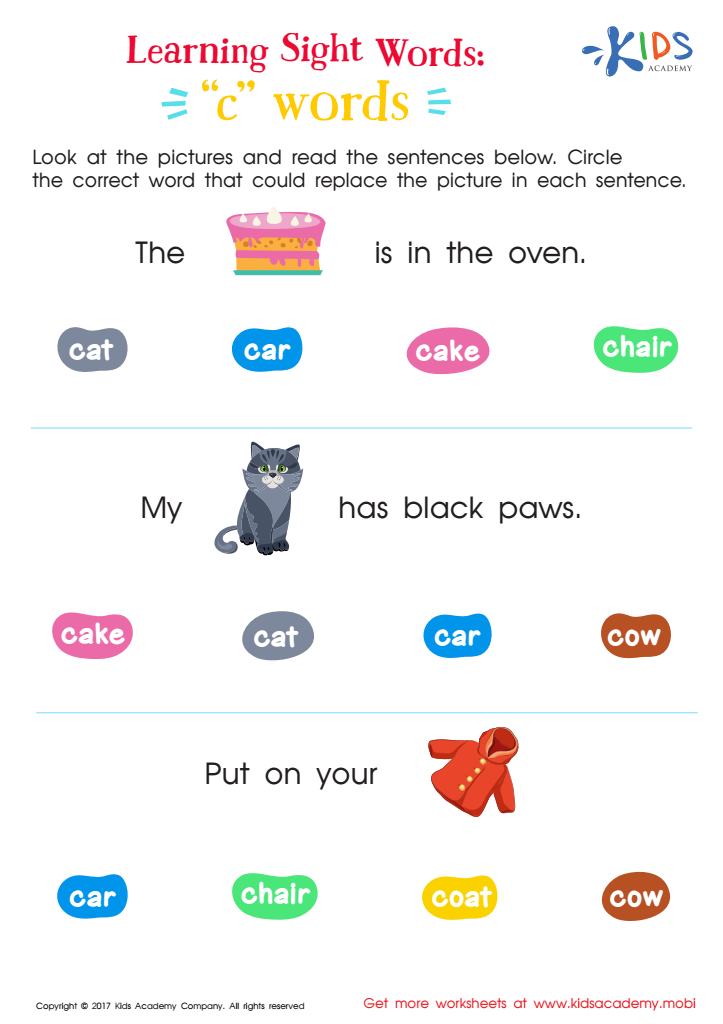
"C" Words Printable Sight Words Worksheet
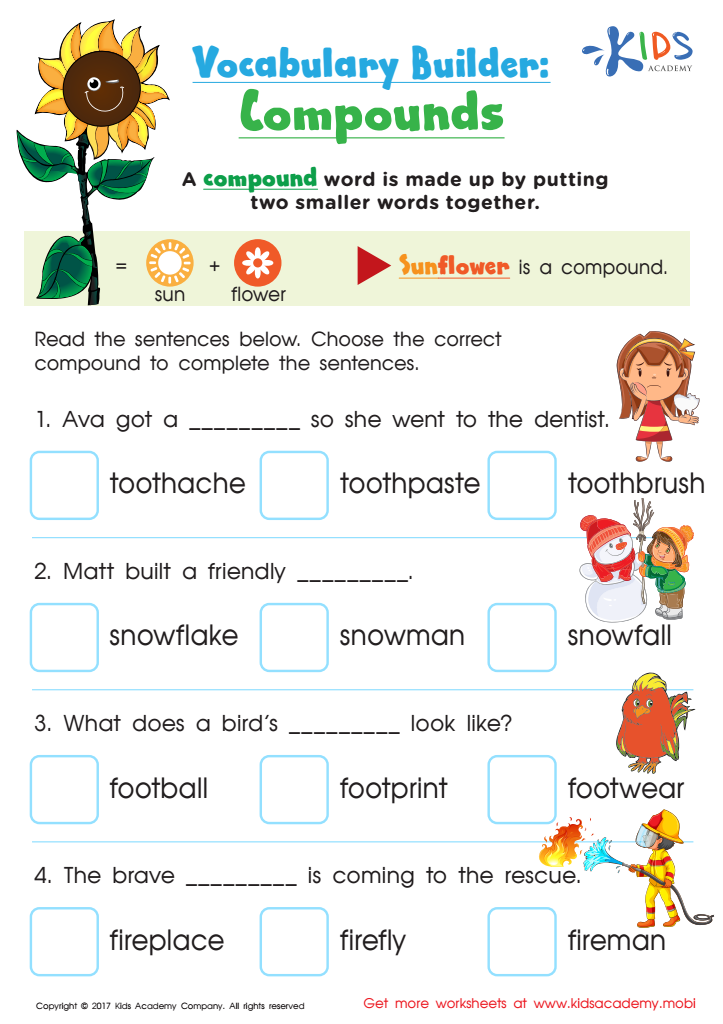
Compound Words Worksheet

Long and Short U Worksheet
 Assign to My Students
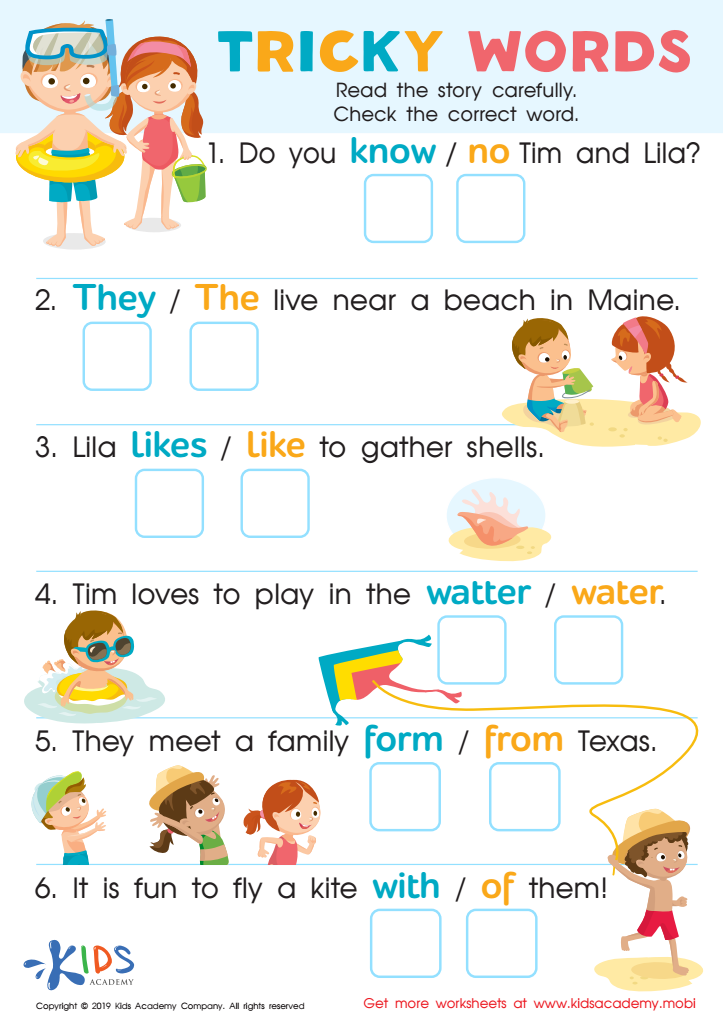
Tricky Words Worksheet
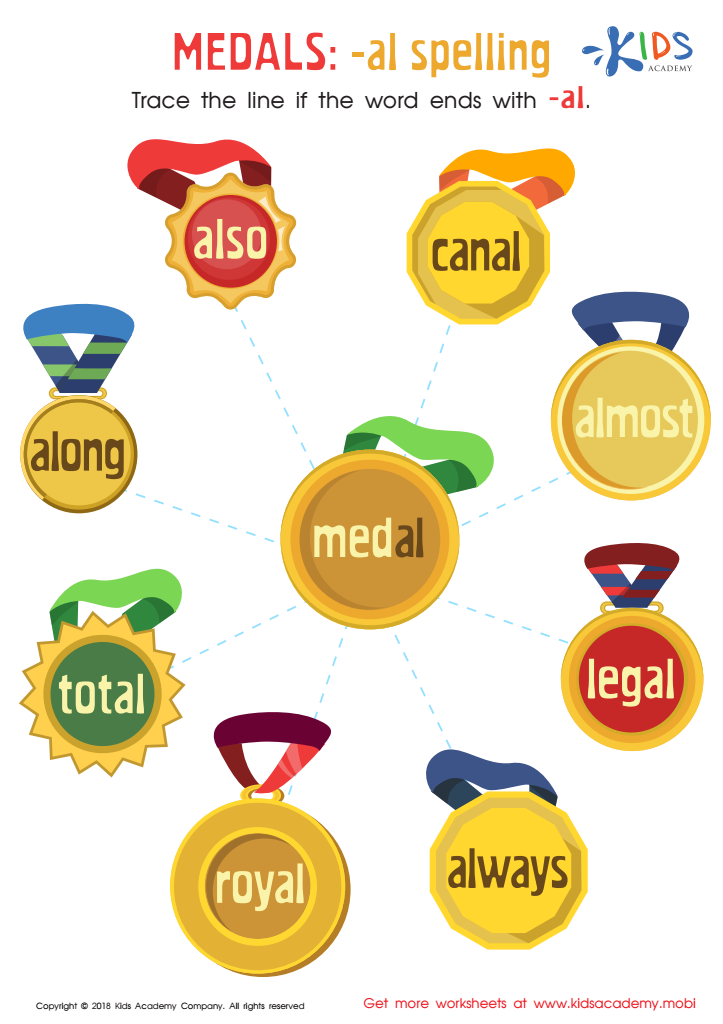
Medals: Al Spelling Worksheet
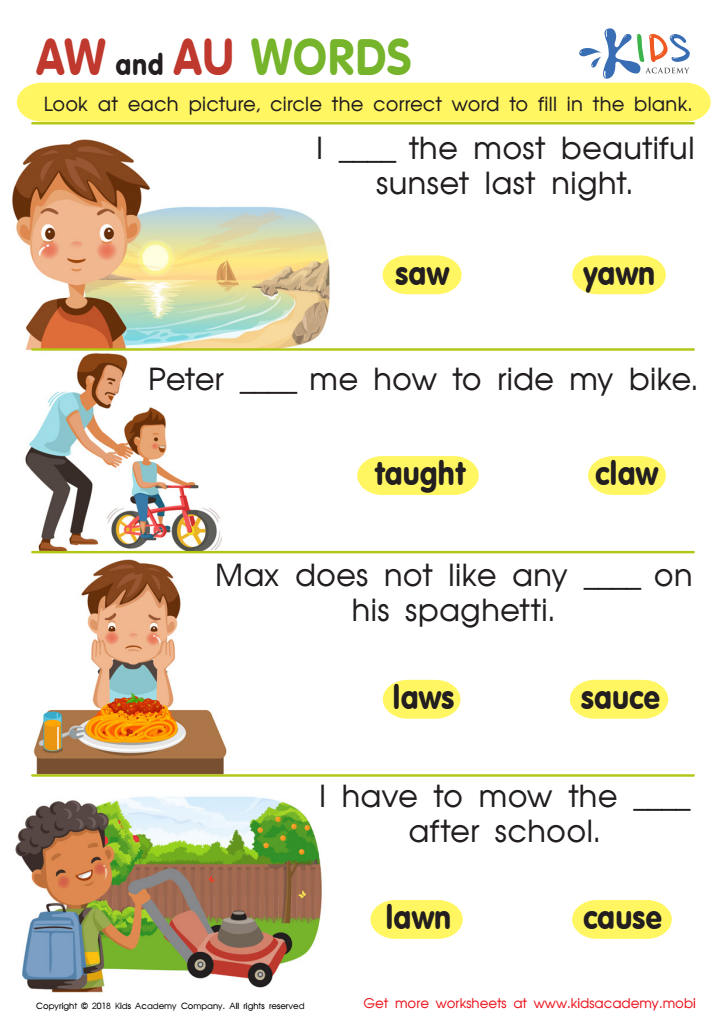
Reading: AW and AU Words Worksheet
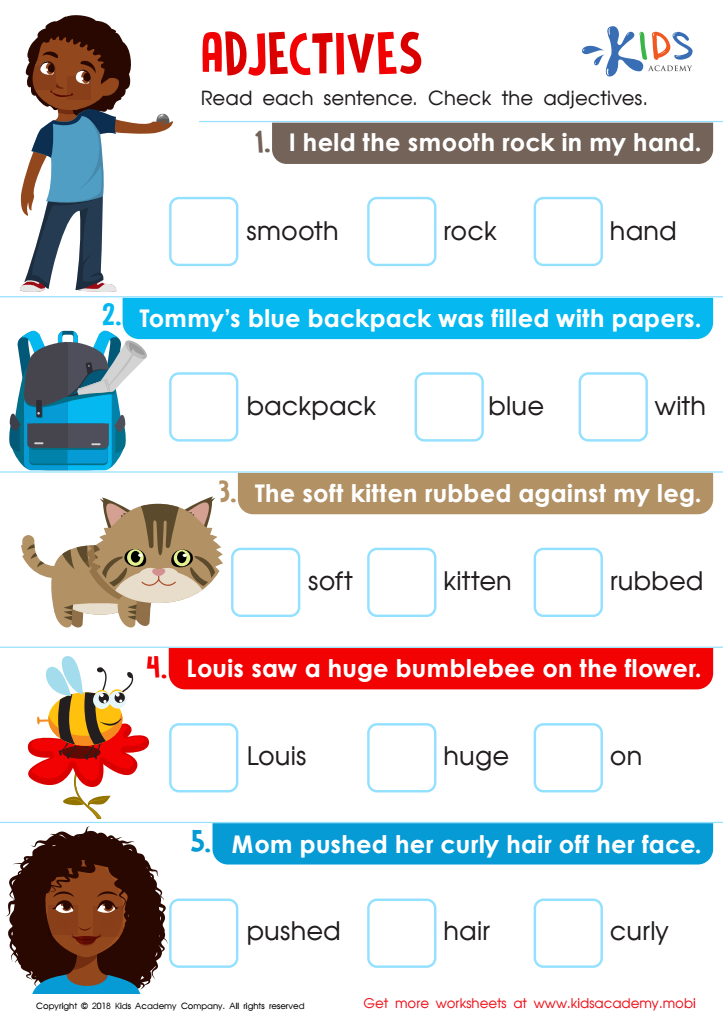
Adjectives Worksheet
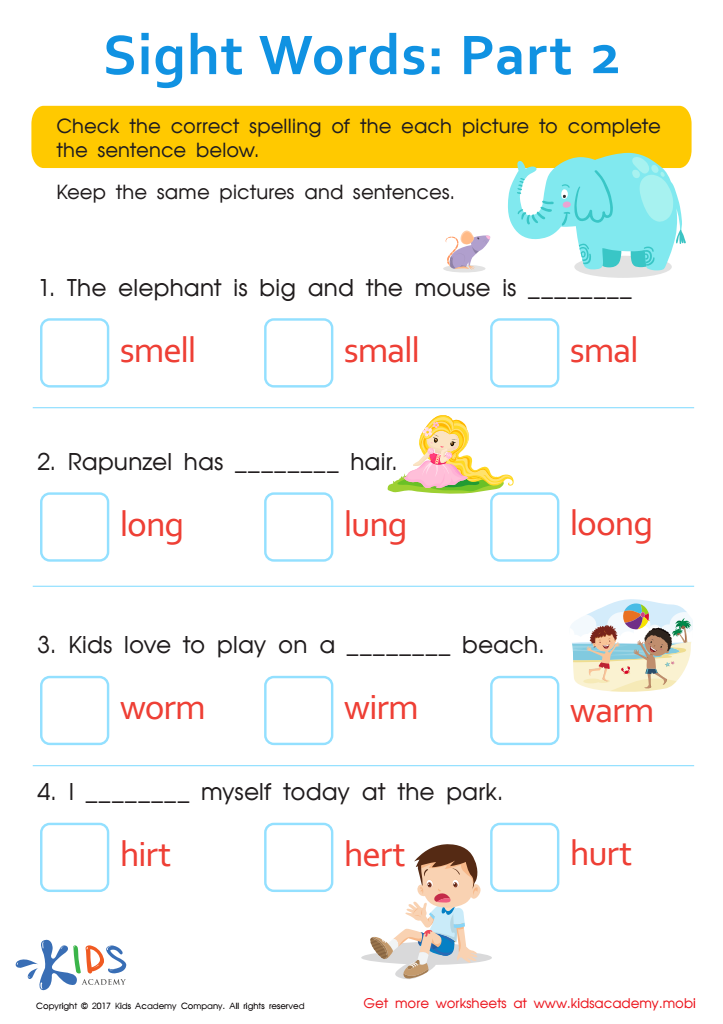
Sight Words Worksheet
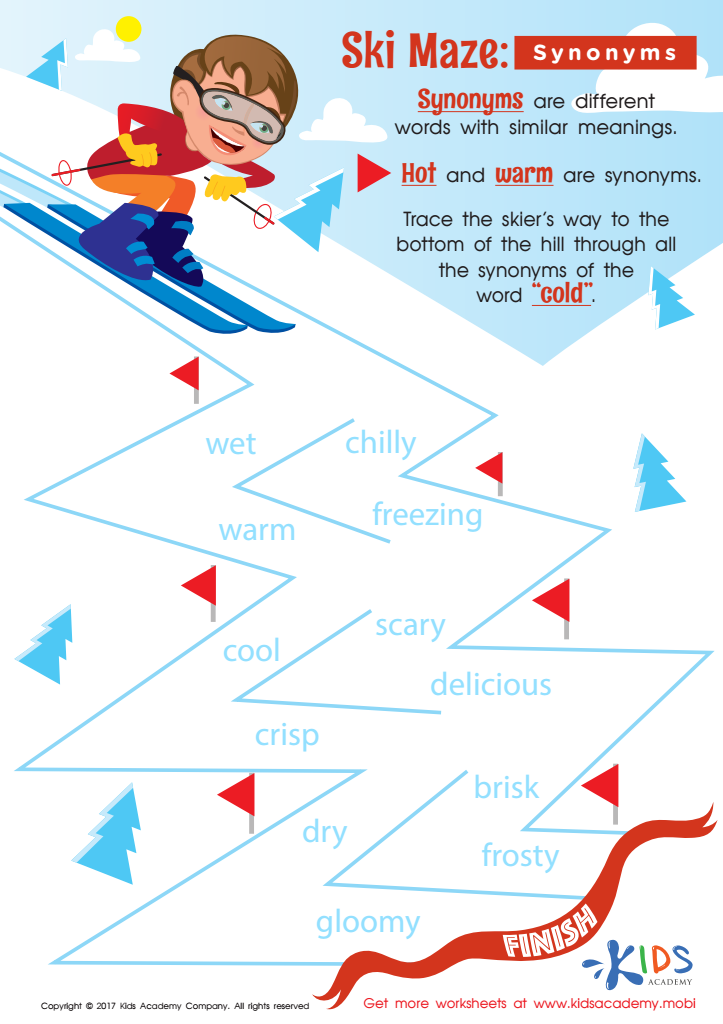
Free Printable Synonym Worksheet
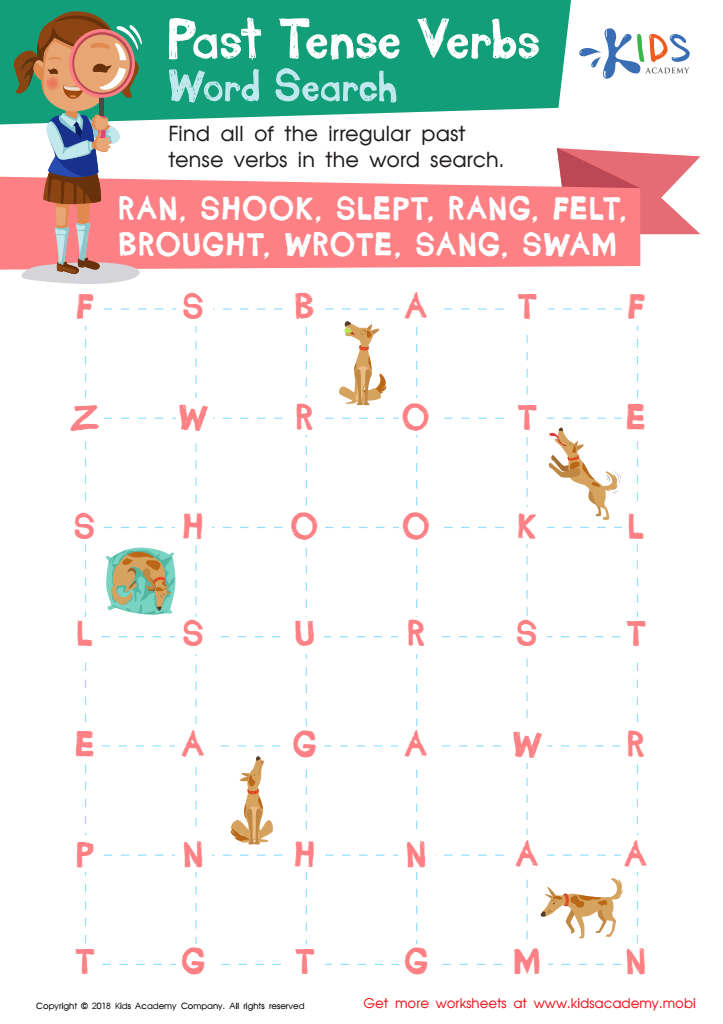
Past Tense Verbs Word Search Worksheet
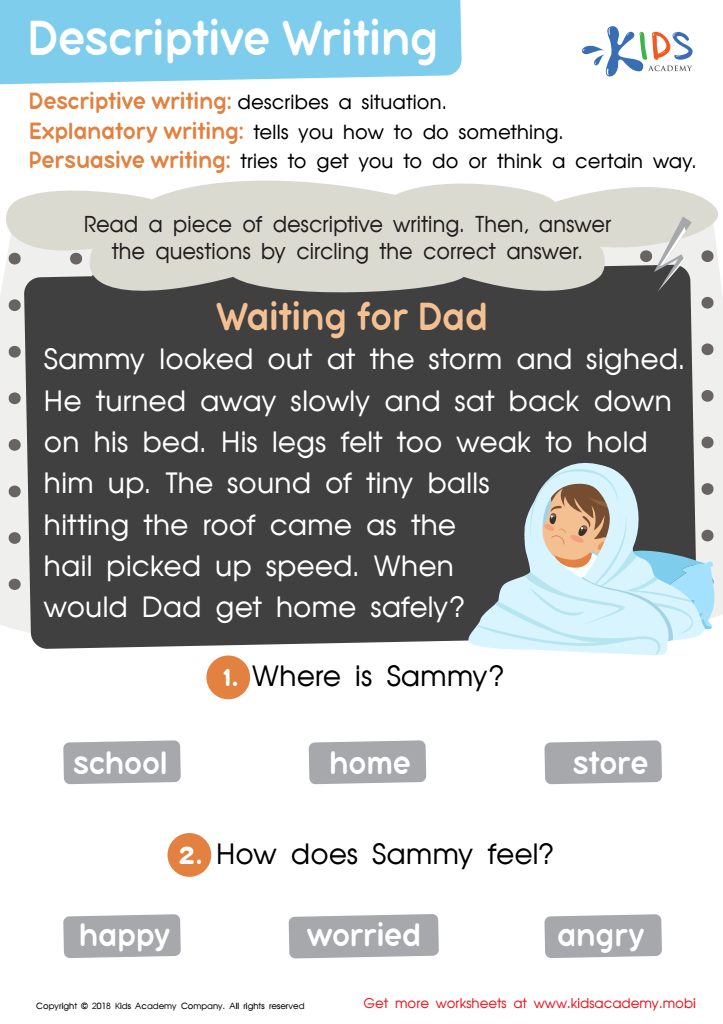
Descriptive Writing Worksheet: Part 2
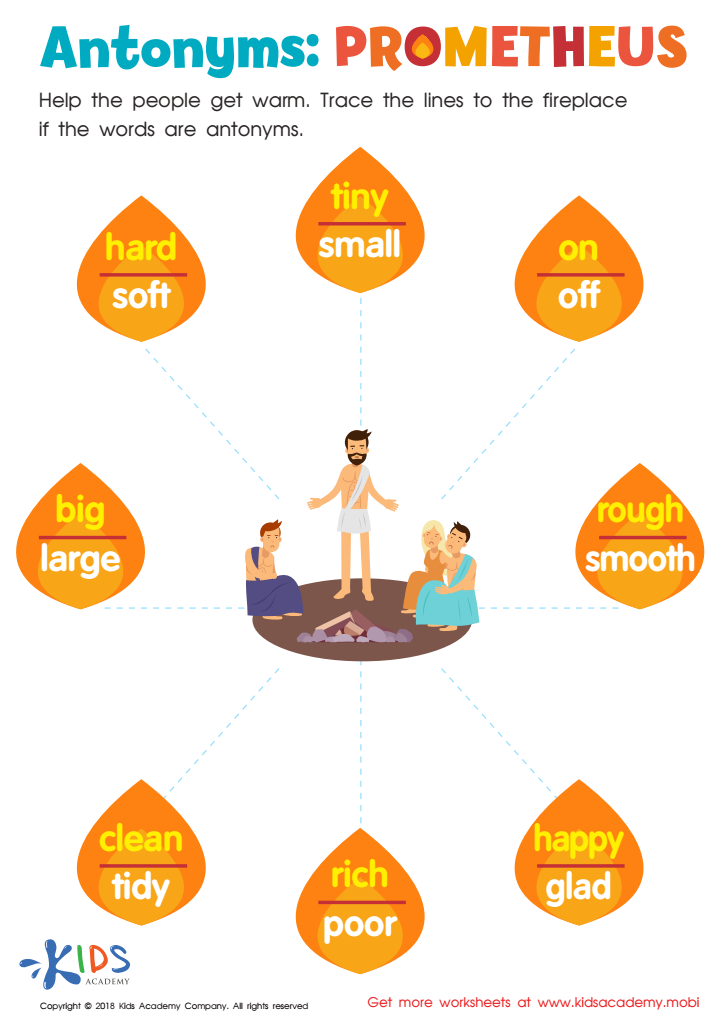
Antonyms: Prometheus Worksheet
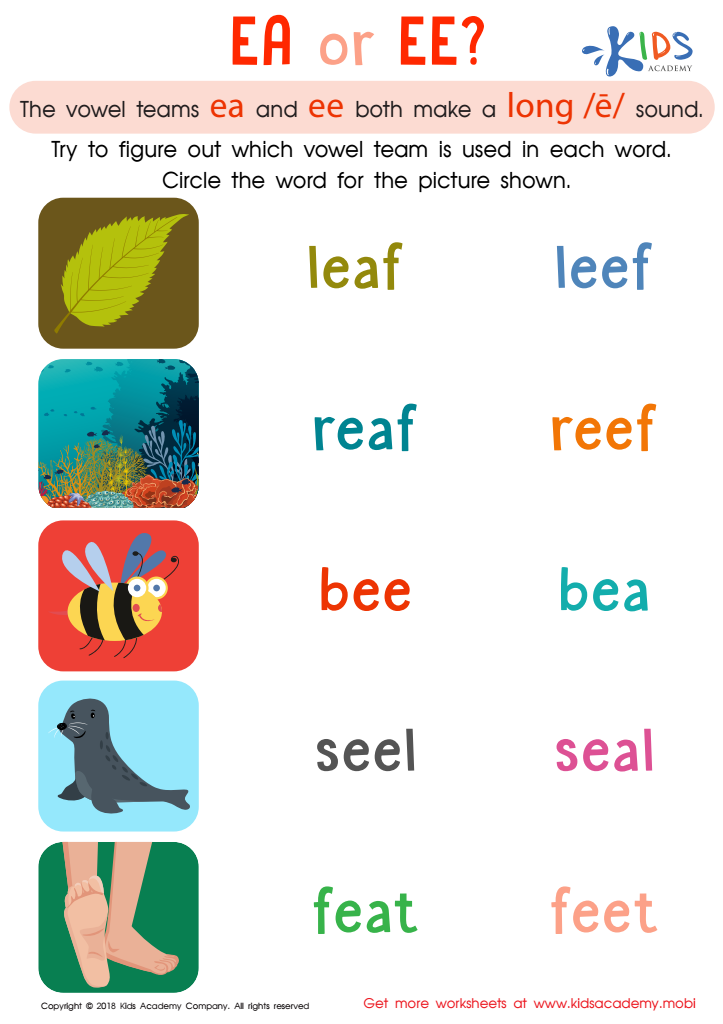
Reading: EA and EE Worksheet
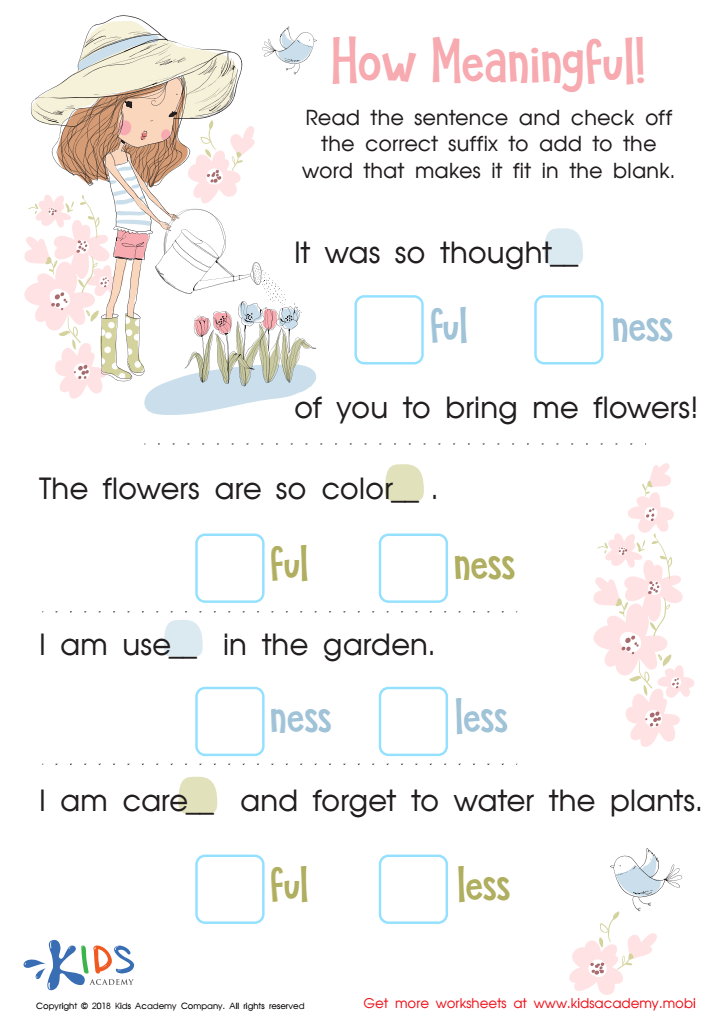
How Meaningful! Worksheet
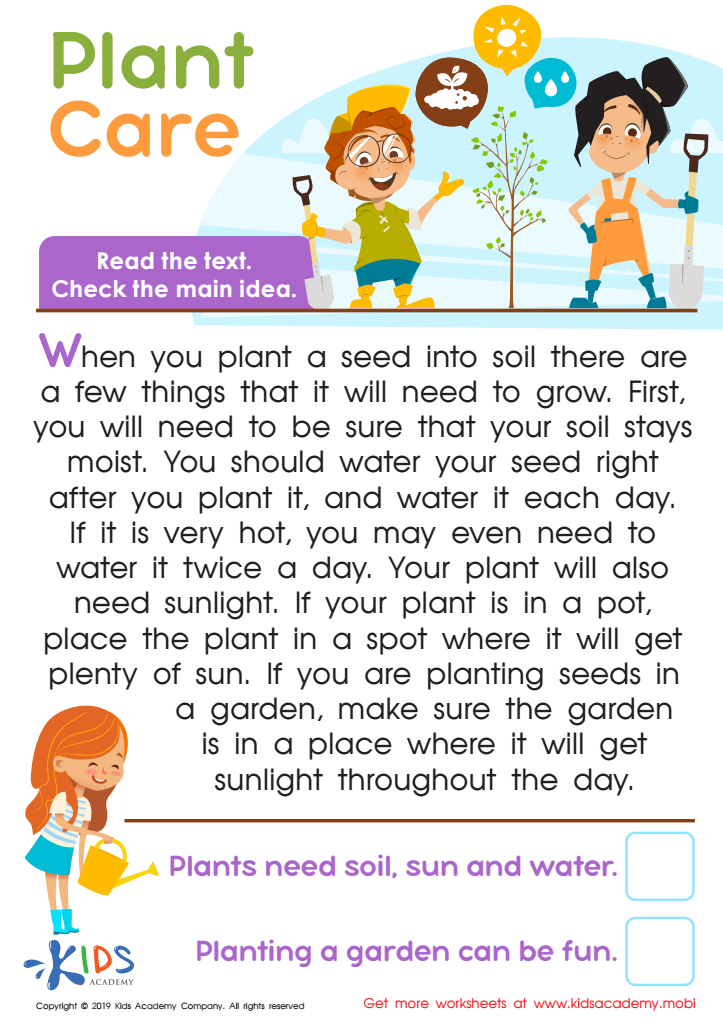
Plant Care Worksheet
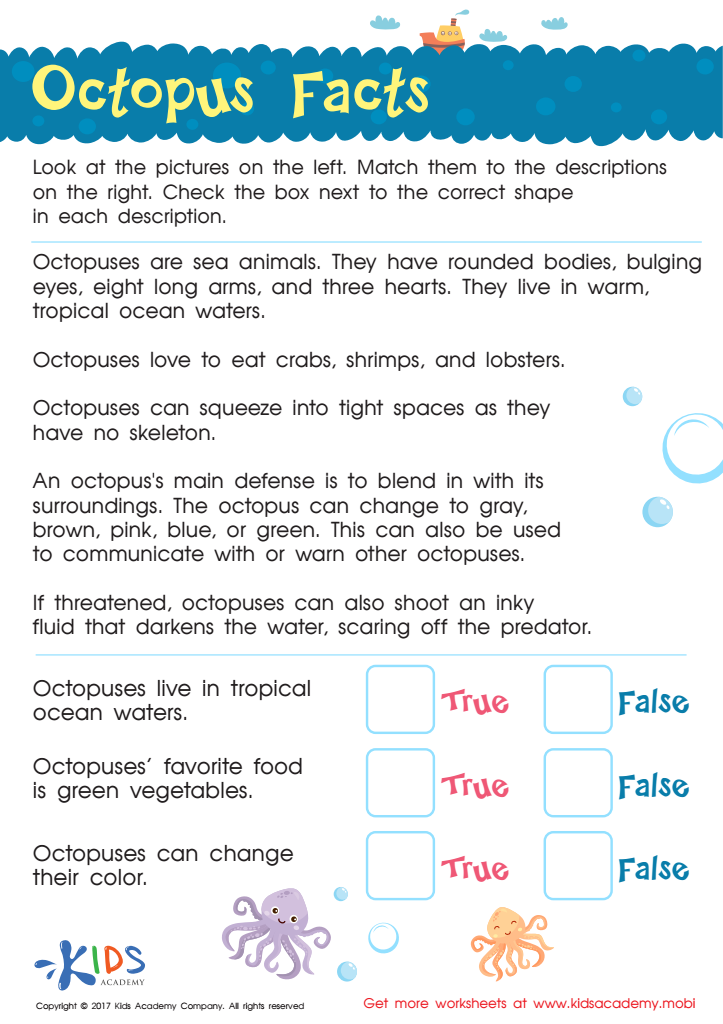
Octopus Facts Worksheet For Kids








Vocabulary expansion is crucial for children aged 7-9 because it forms the foundation for their language and literacy development. During these years, children rapidly absorb new words and phrases, which significantly enhances their ability to read and comprehend more complex texts. A robust vocabulary also improves their capacity to express thoughts clearly and effectively.
Exposure to a broader vocabulary through reading helps children to understand and connect with diverse ideas, cultures, and perspectives. This not only improves their academic performance but also nurtures critical thinking and empathy. When children encounter new words in contexts they enjoy, such as stories or informational texts, they are more likely to retain and use these words in their own speech and writing.
Parents and teachers play a critical role in this process. By encouraging frequent, varied reading and engaging in discussions about what they read, adults can help children to deepen their understanding and retain new vocabulary. Importantly, a strong vocabulary is linked with academic success across subjects, as it aids in comprehension of instructions and content.
In summary, focusing on vocabulary expansion through reading during the 7-9 age range equips children with essential language skills that support lifelong learning and effective communication. This investment lays the groundwork for their future educational endeavors and everyday interactions.








