Shape Recognition Geometry Worksheets for Ages 8-9
24 filtered results
-
From - To
Discover engaging "Shape Recognition Geometry Worksheets for Ages 8-9" that make learning fun! Our expertly crafted worksheets introduce children to diverse shapes, helping them master essential geometry skills. These activities encourage critical thinking and visual-spatial reasoning, laying the groundwork for future math success. Each worksheet is designed to challenge and excite young minds with interactive exercises that include shape identification, sorting, and pattern recognition. Perfect for classroom and at-home learning, our resources are tailored to meet educational standards while fostering a love for math. Boost your child's confidence and skills with our dynamic shape recognition worksheets!
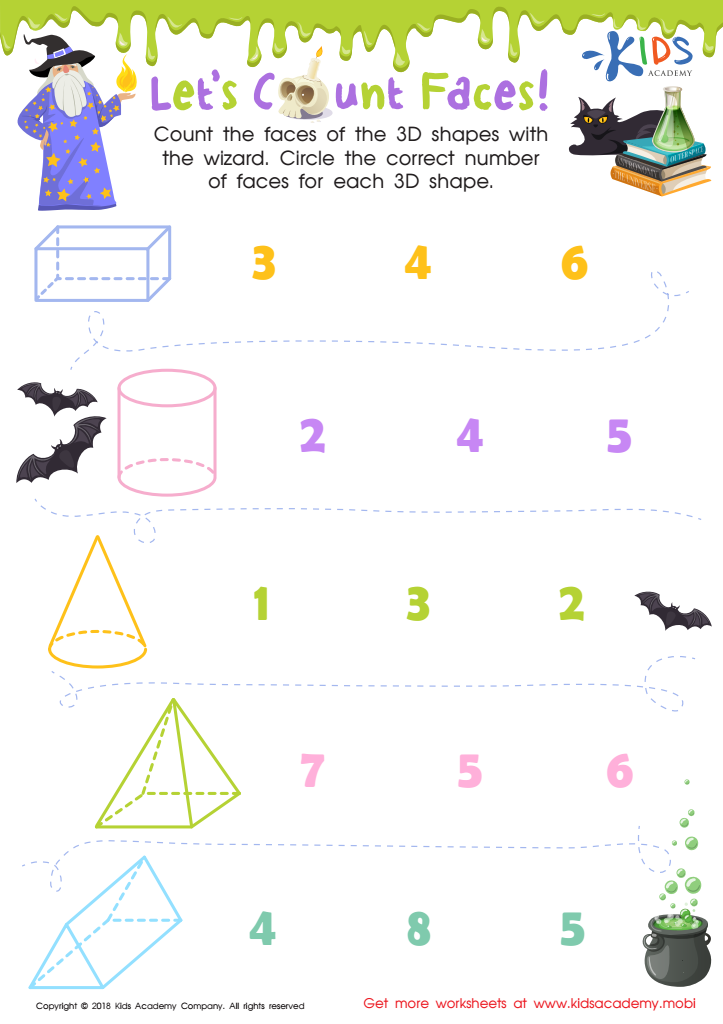
Let's Count Faces! Worksheet











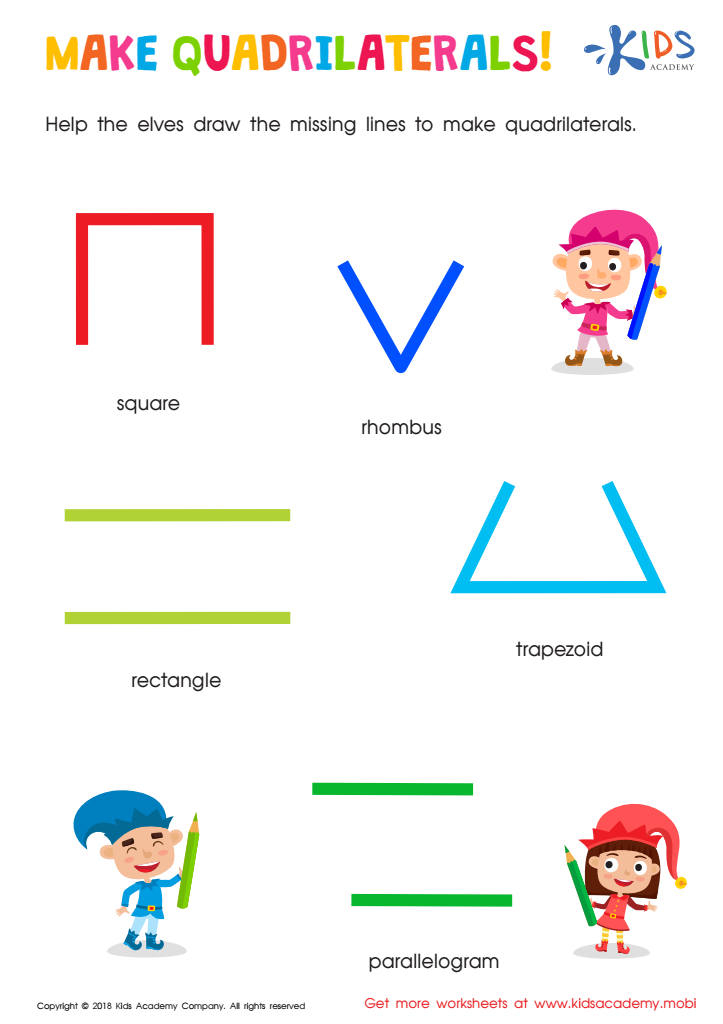
Make Quadrilaterals Worksheet
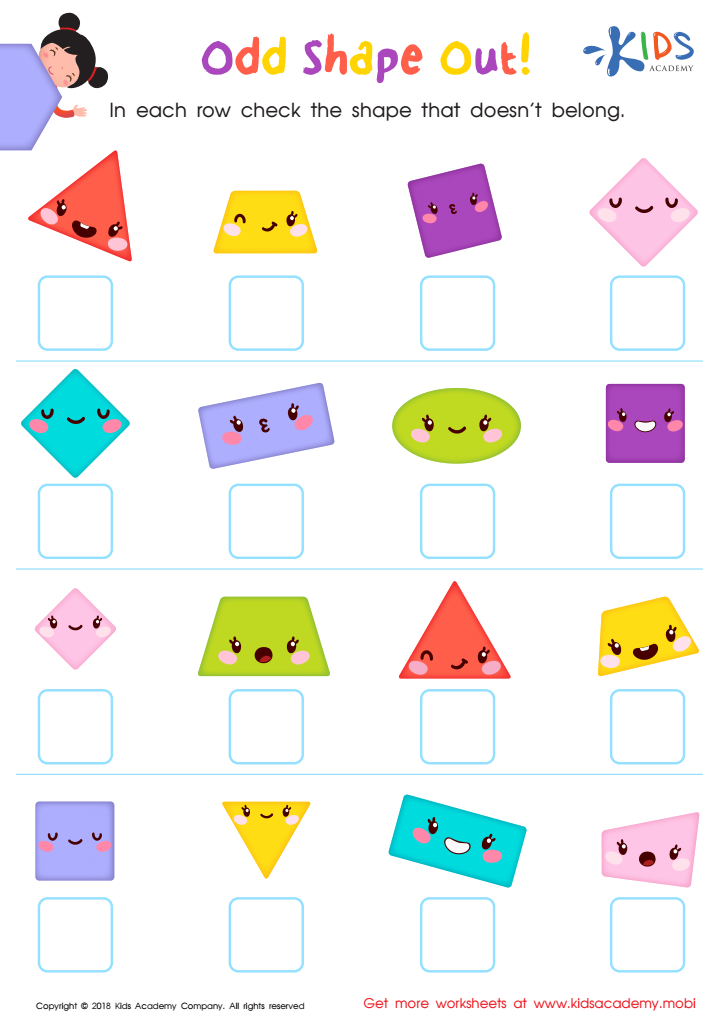
Odd Shape Out Worksheet for Grade 3
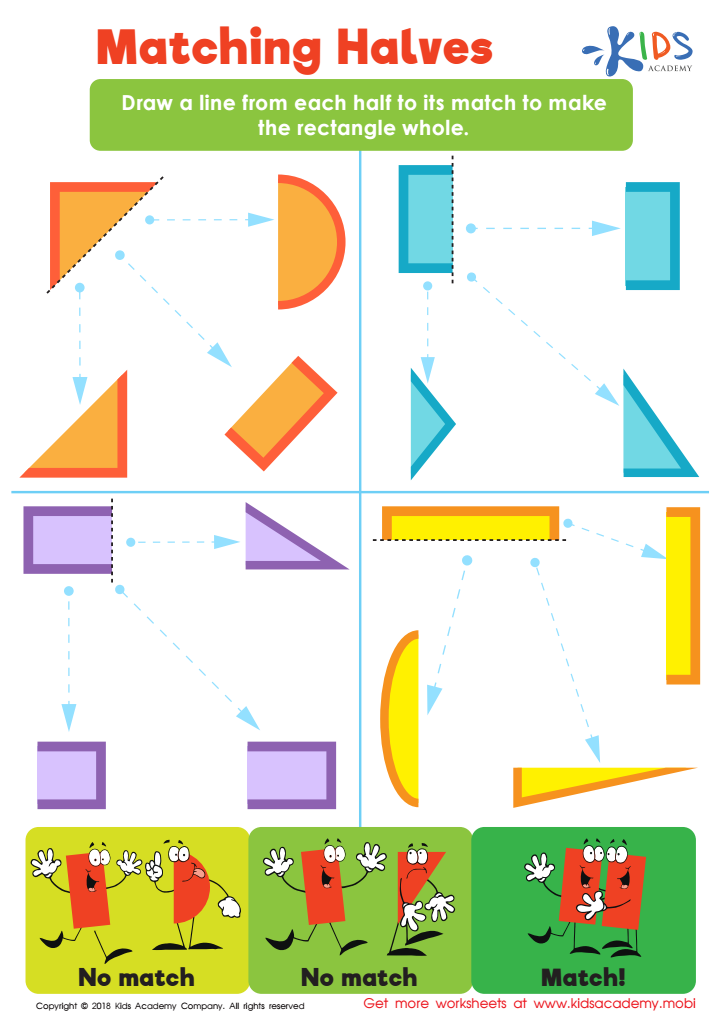
Matching Halves Worksheet
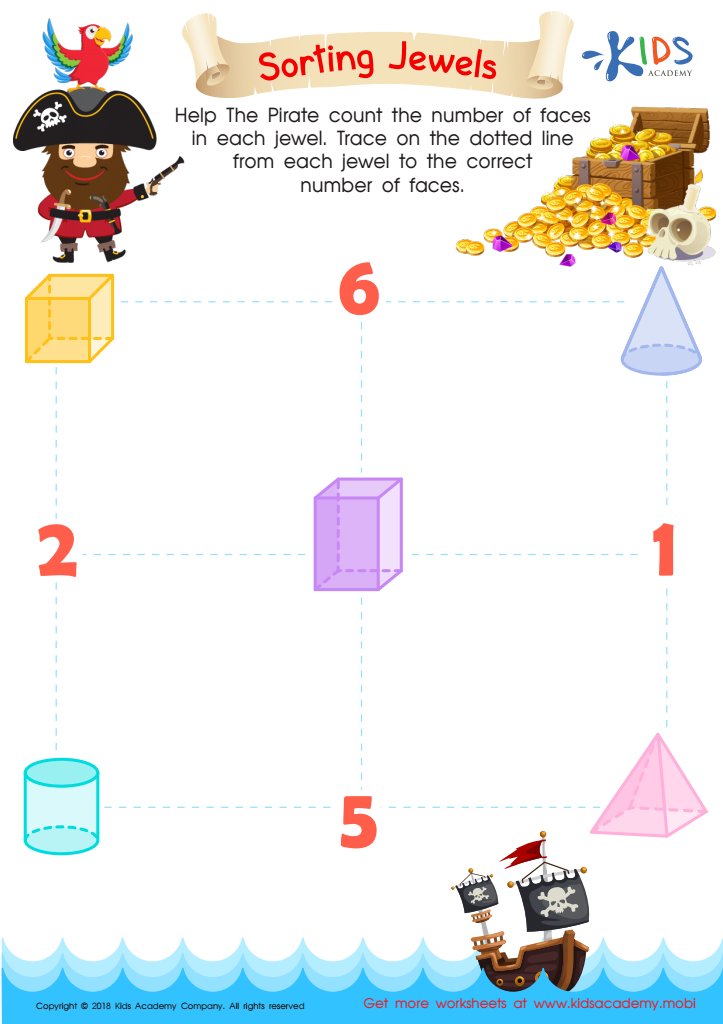
Sorting Jewels Worksheet
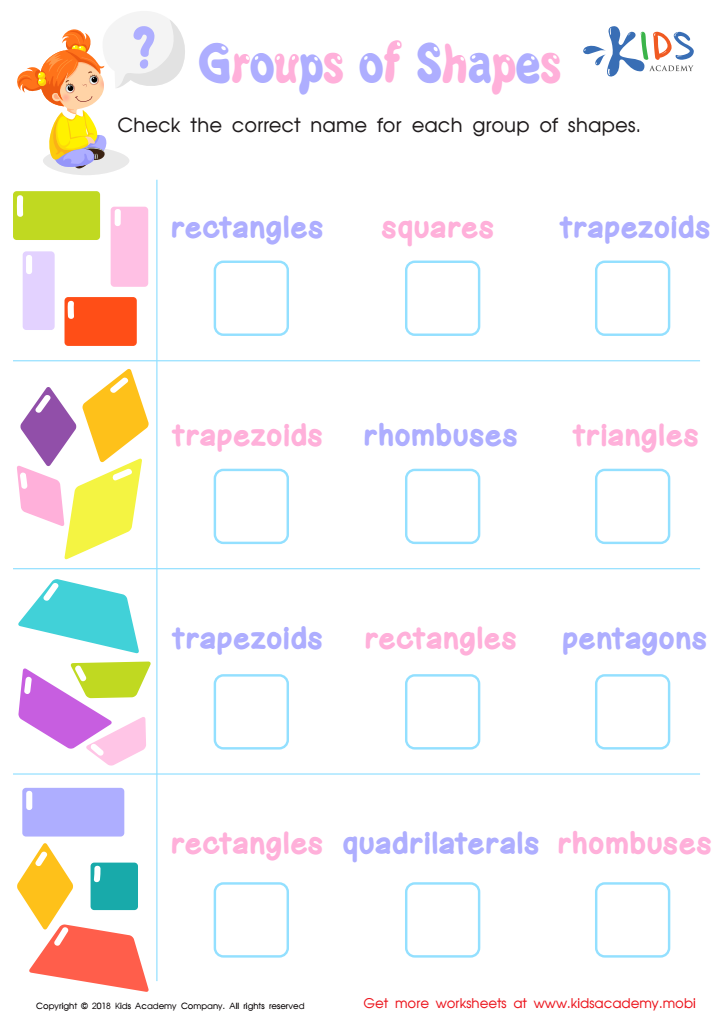
Groups of Shapes Worksheet
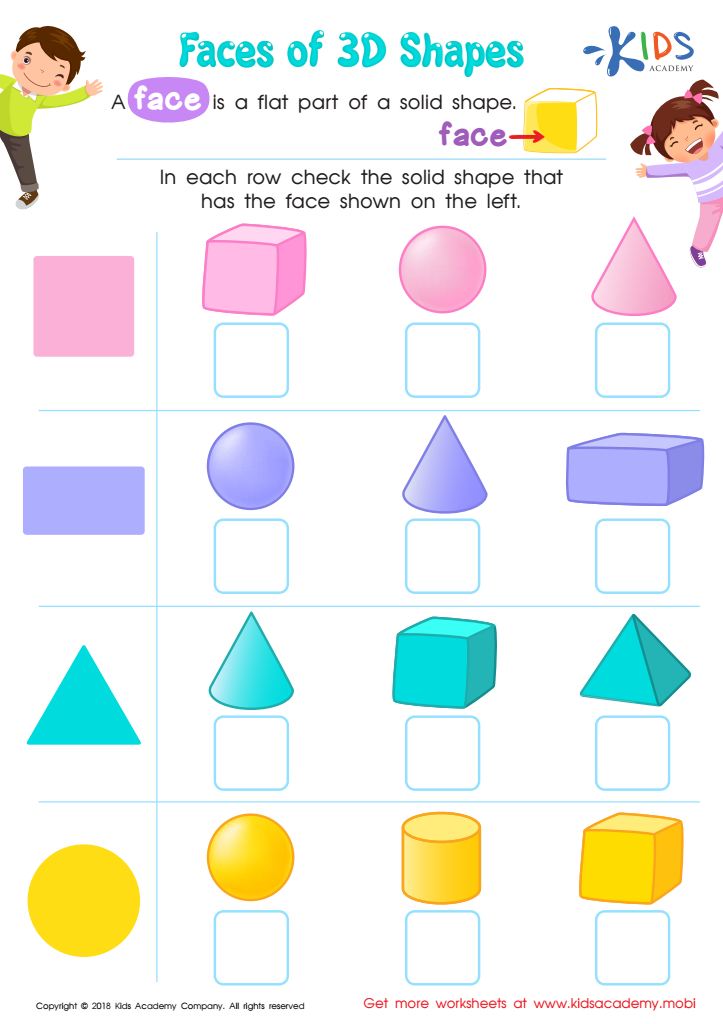
Faces of 3D Shapes Worksheet
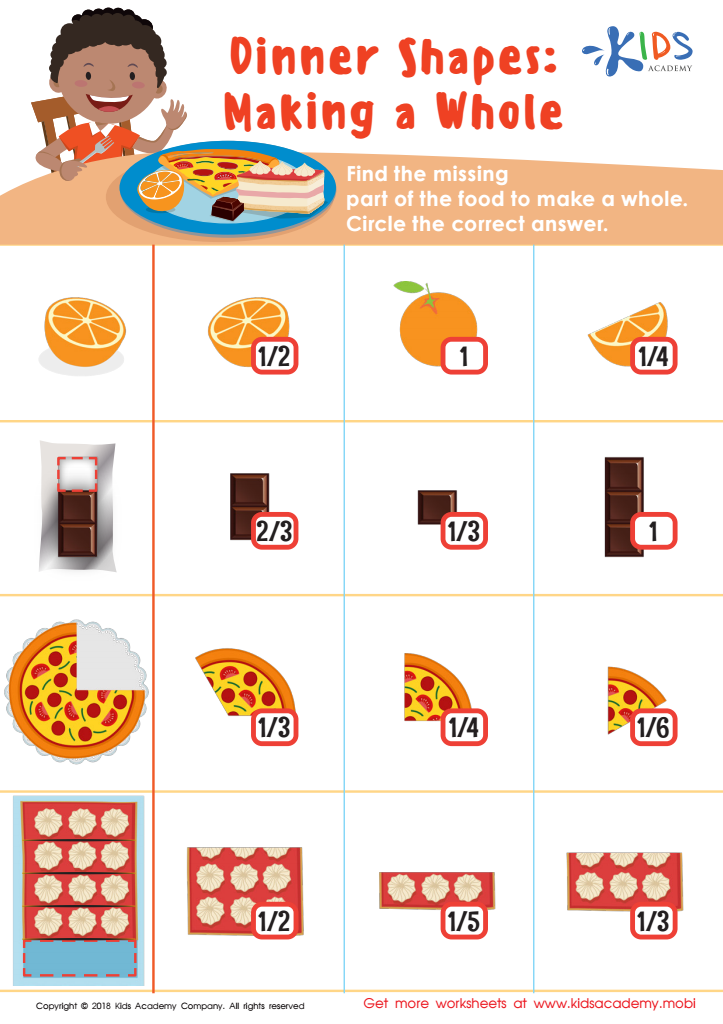
Dinner Shapes: Making a Whole Worksheet
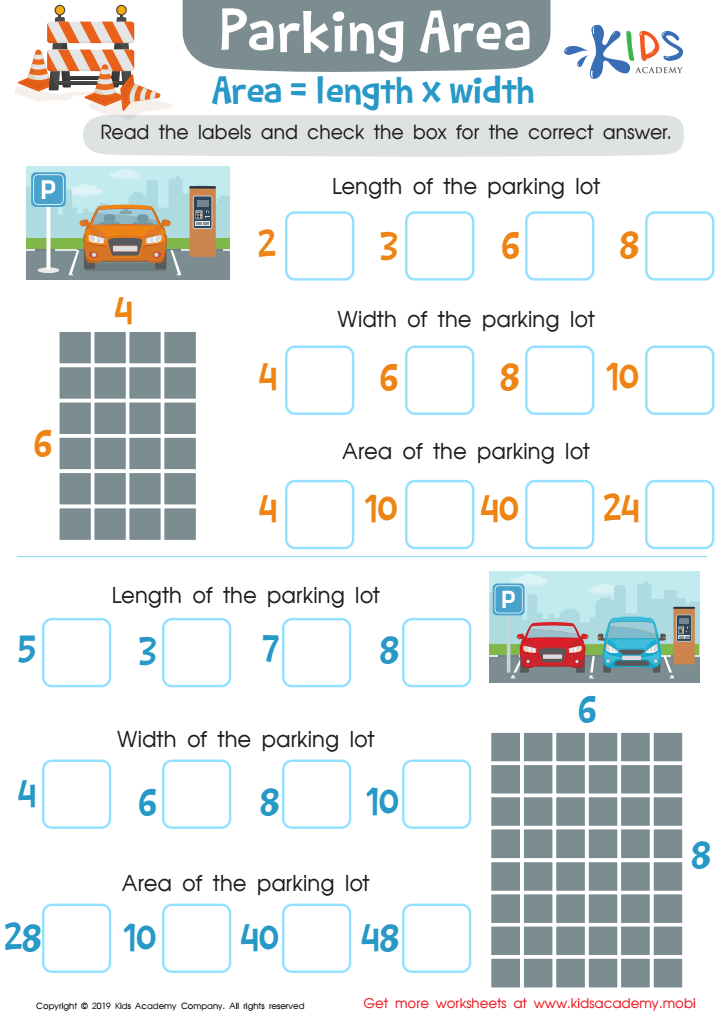
Parking Area Worksheet
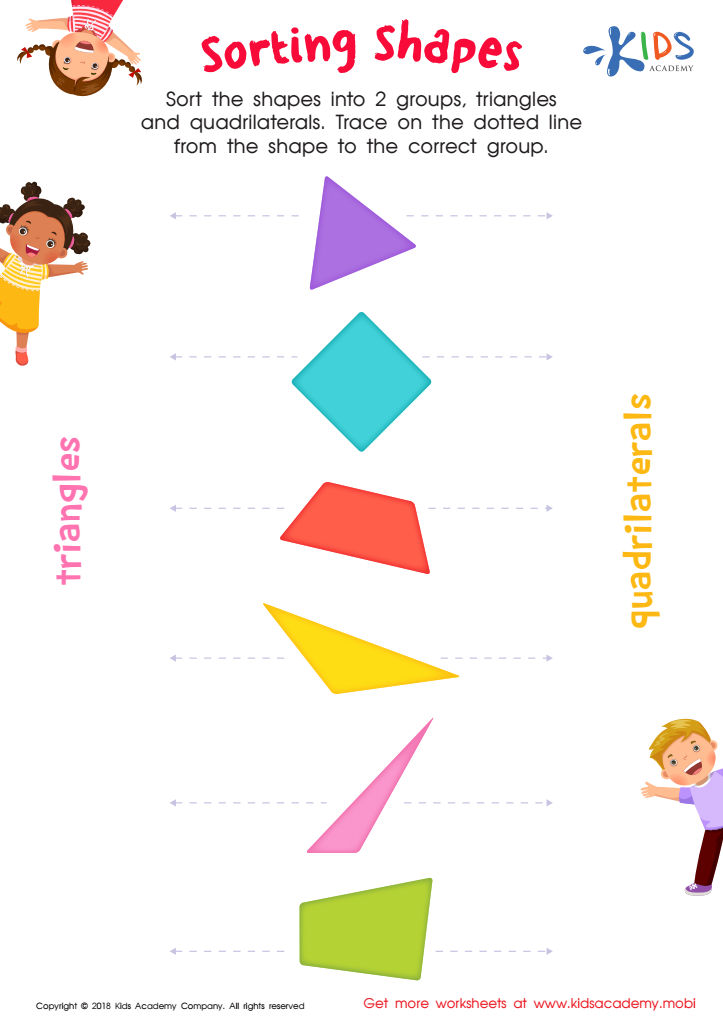
Sorting Shapes Worksheet
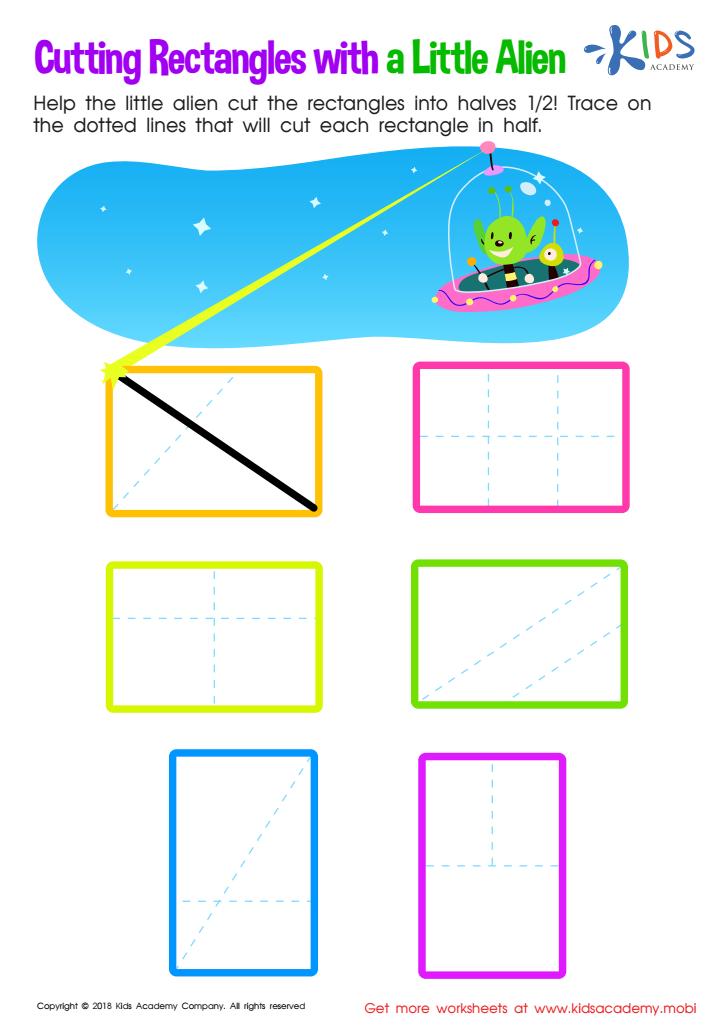
Cutting Rectangles with Alien Worksheet
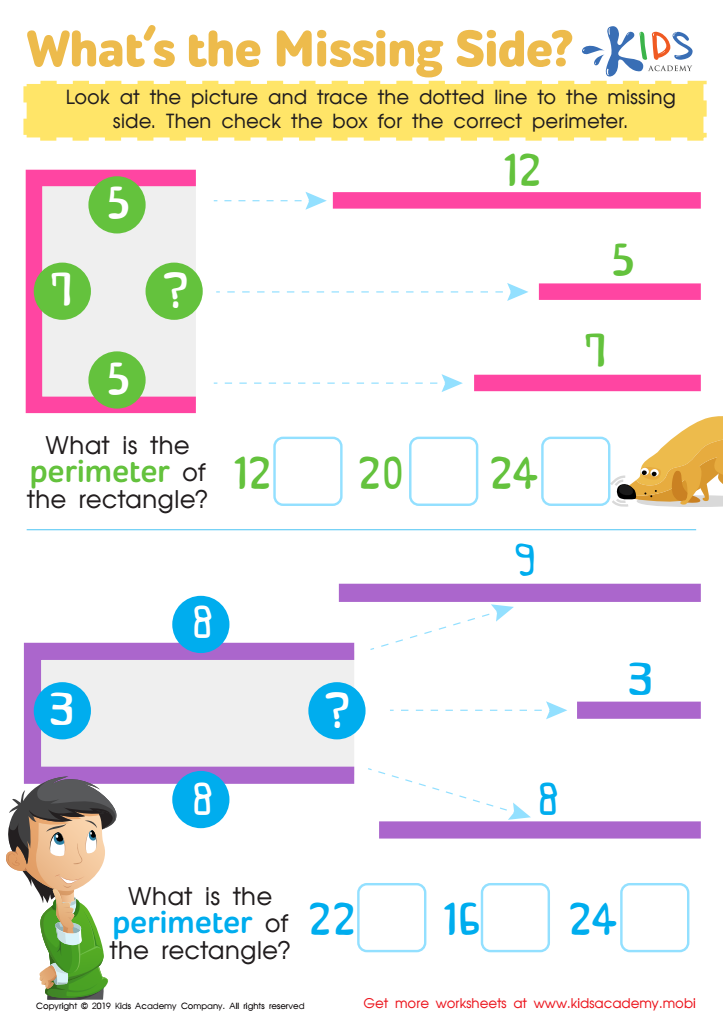
What's the Missing Side Worksheet
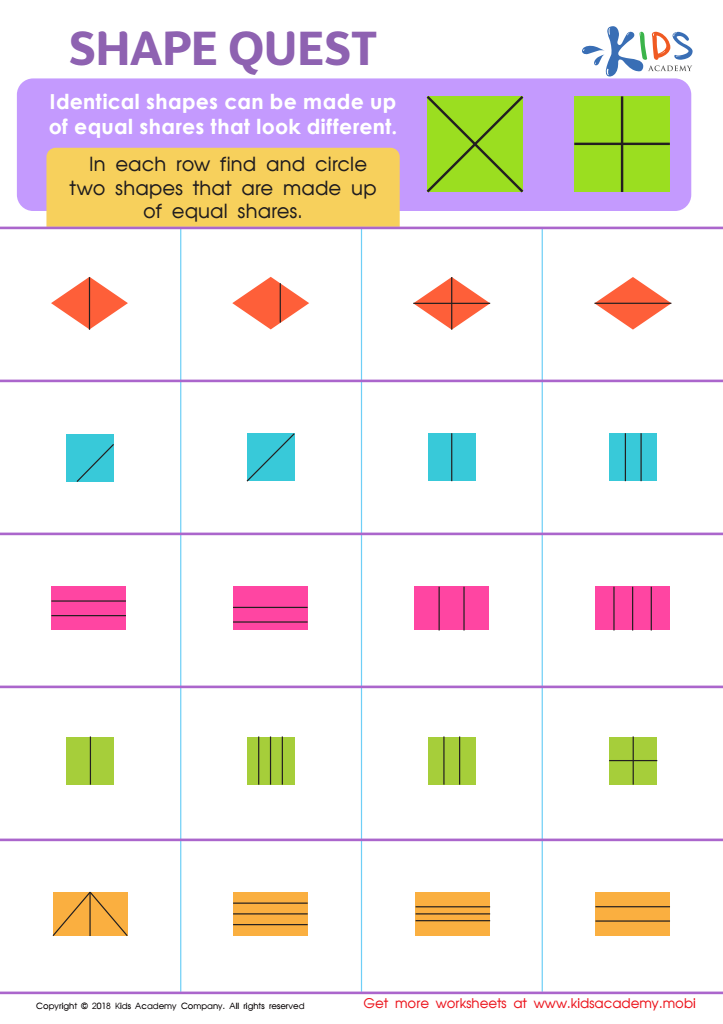
Shape Quest Worksheet
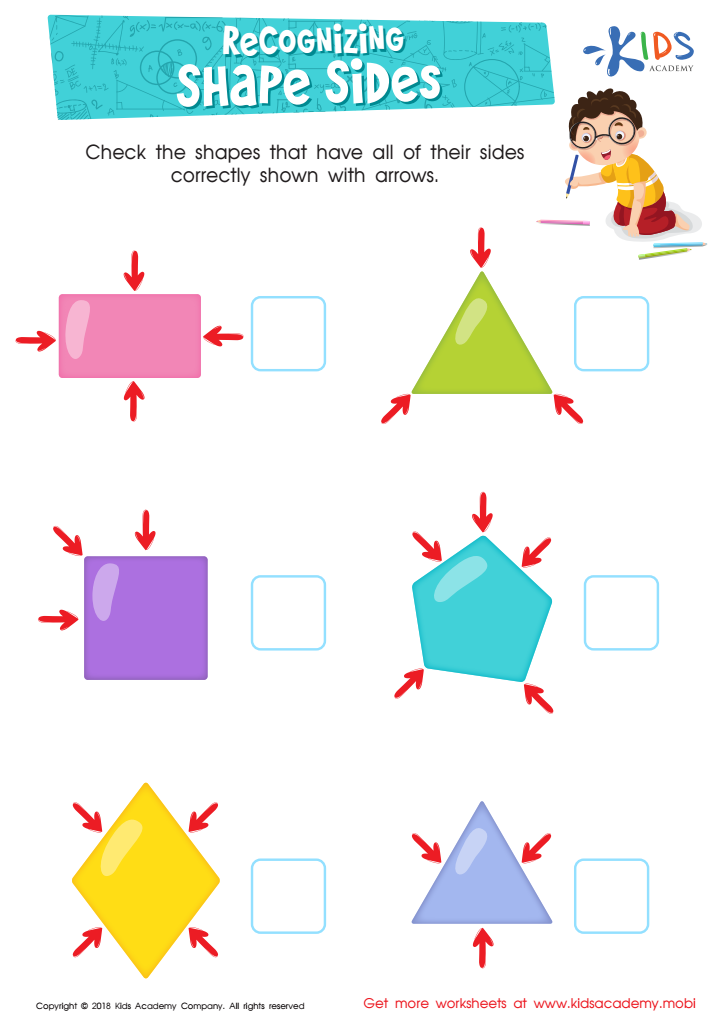
Recognizing Shape Sides Worksheet
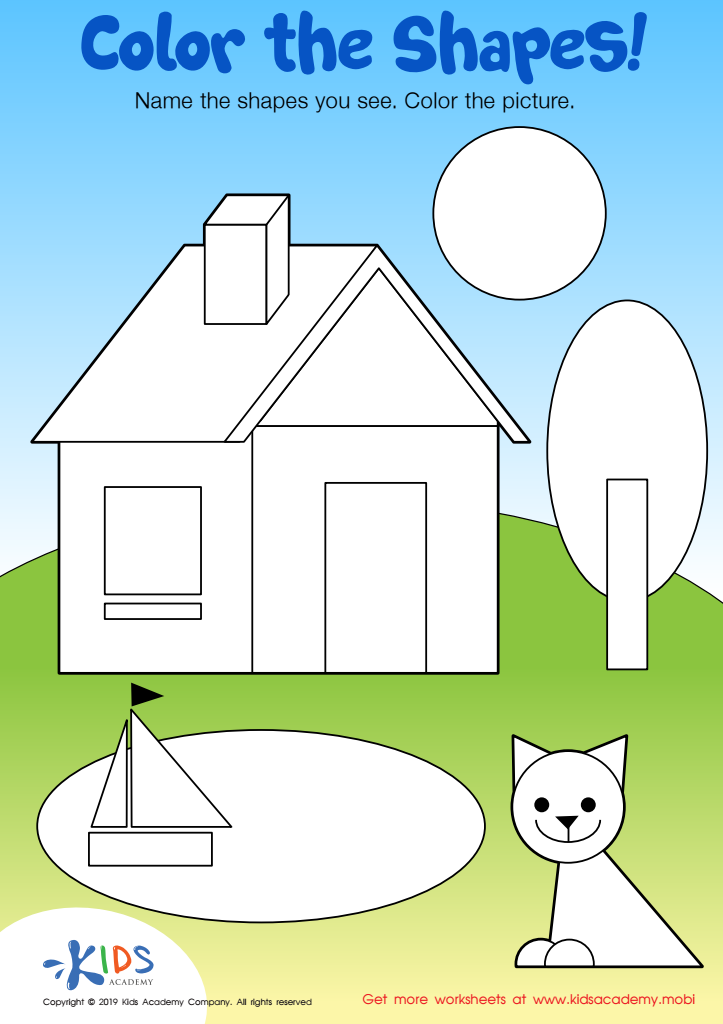
Color the Shapes Worksheet
 Assign to My Students
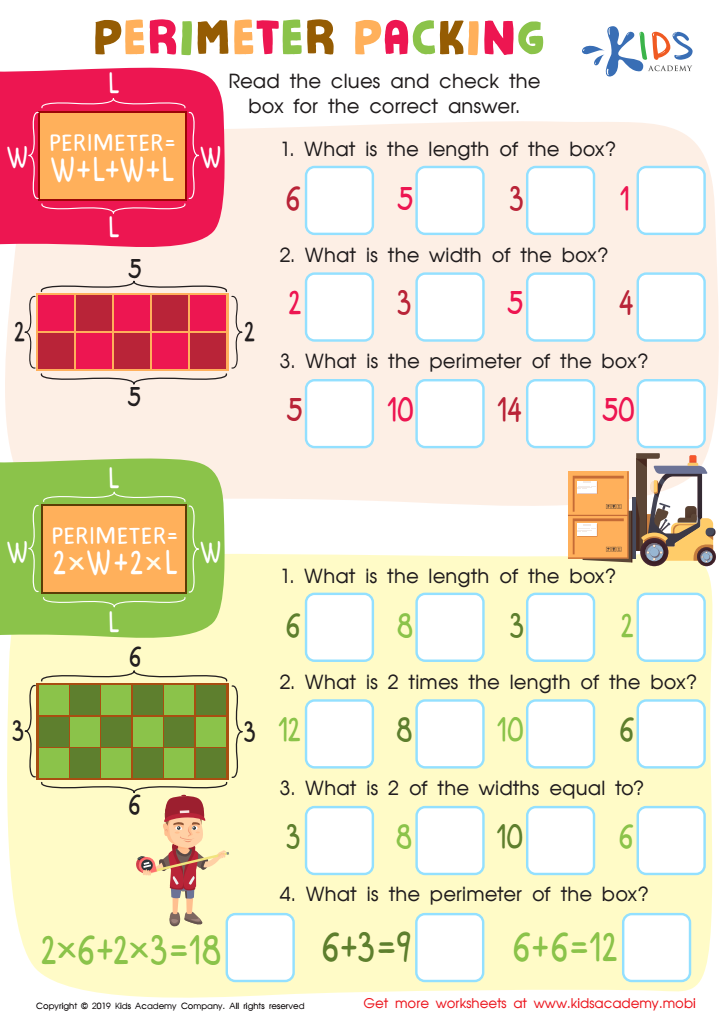
Perimeter Parking Worksheet
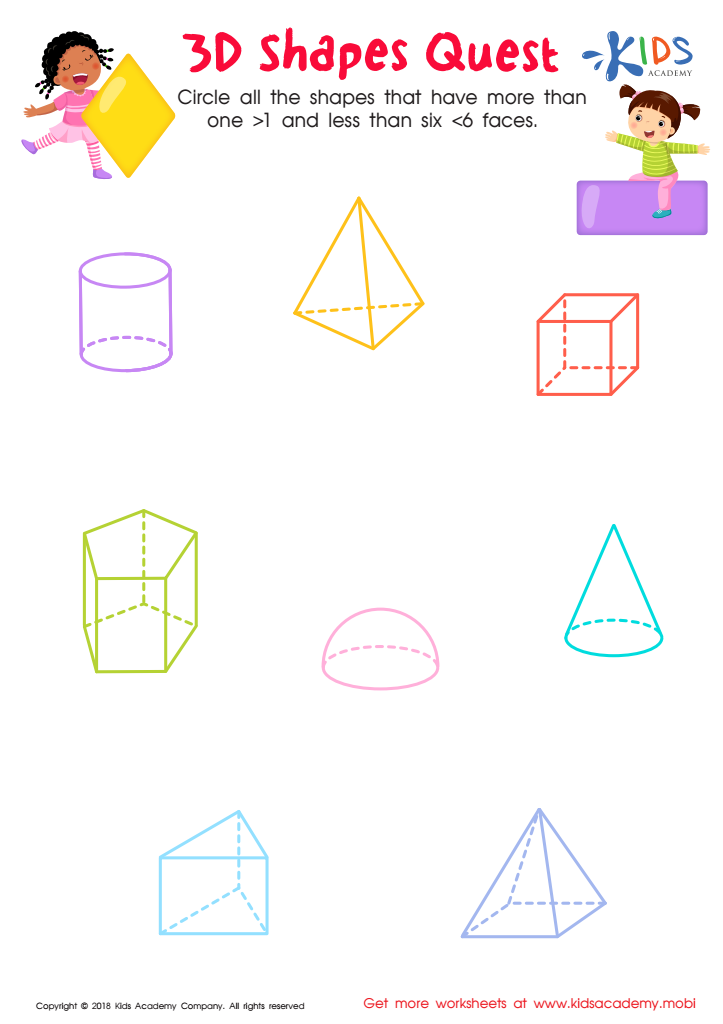
3D Shapes Quest Worksheet
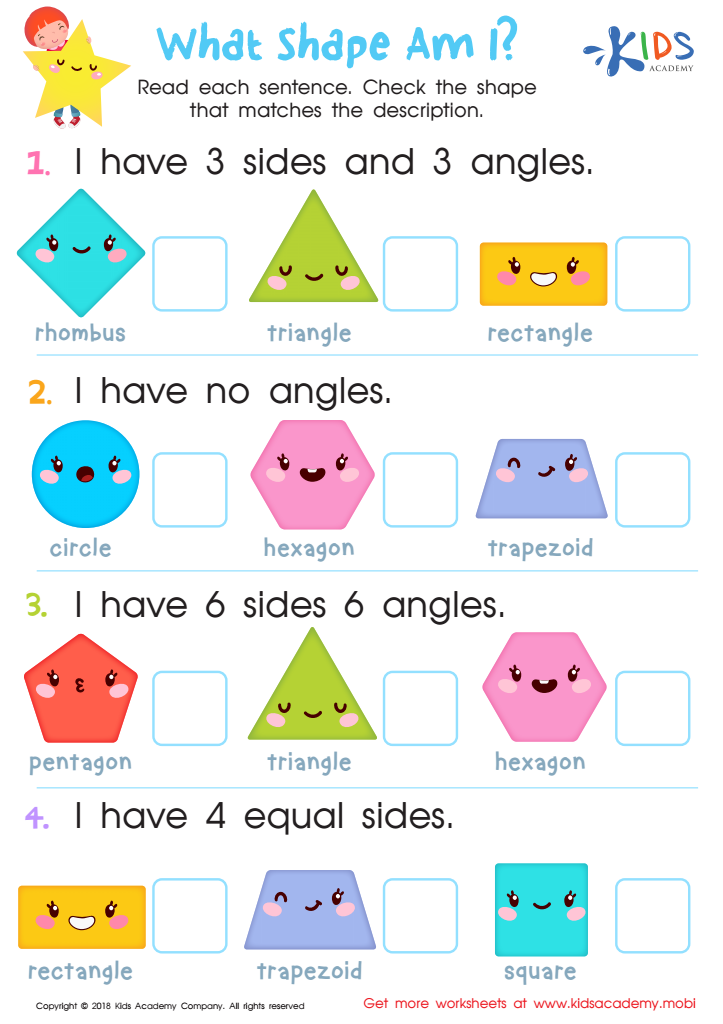
What Shape Am I? Worksheet
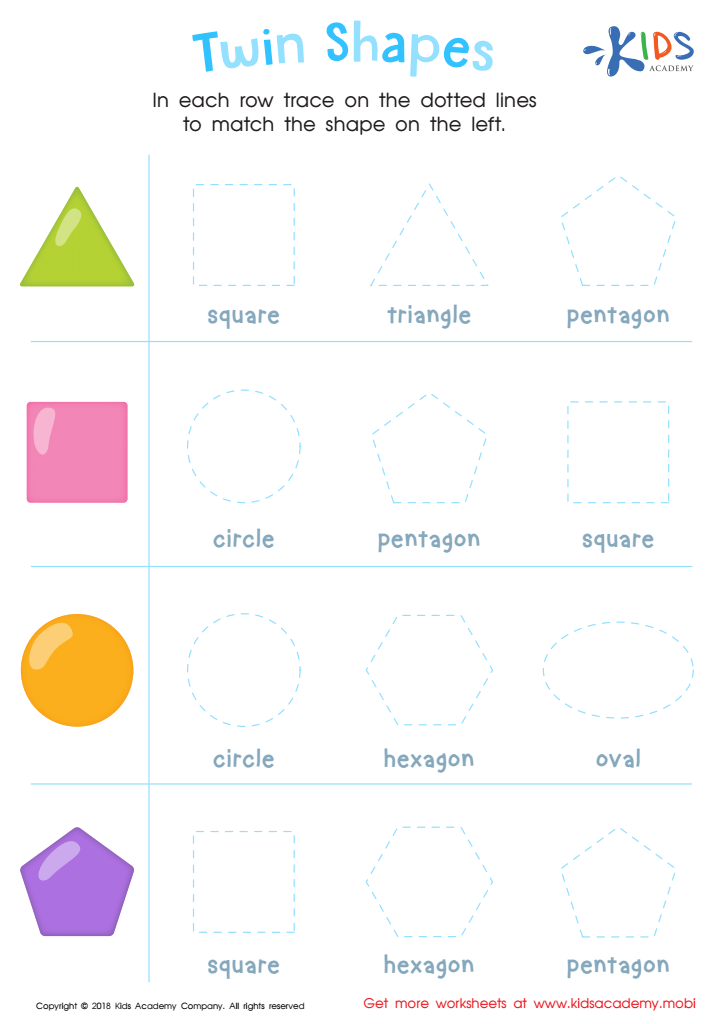
Twin Shapes Dot-to-Dot Worksheet
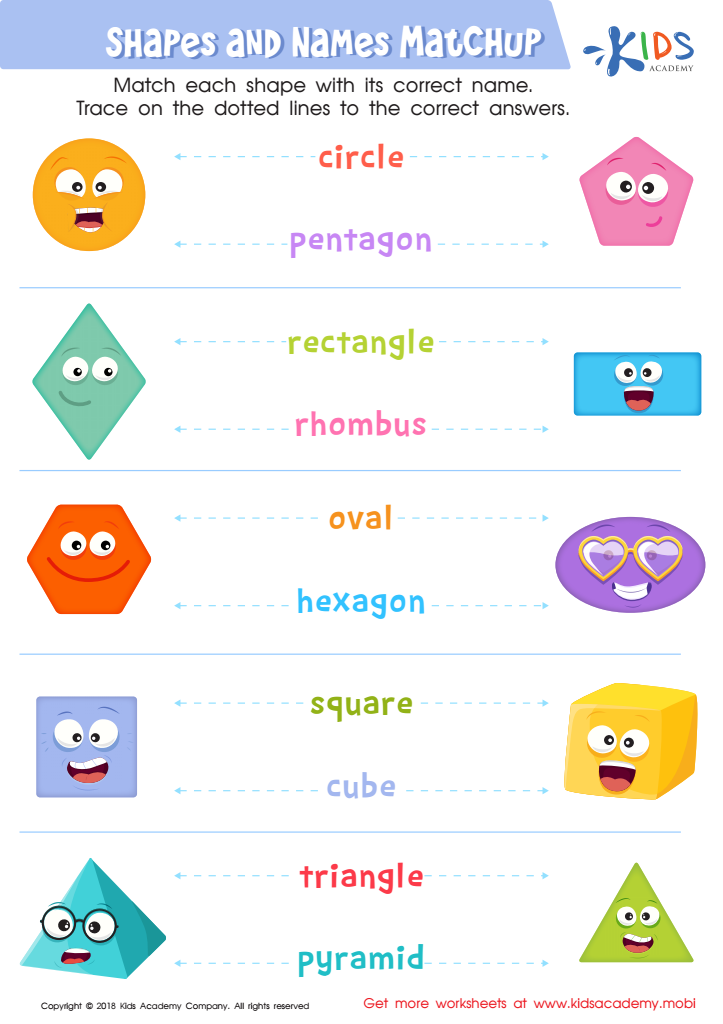
Shapes and Names Matchup Worksheet
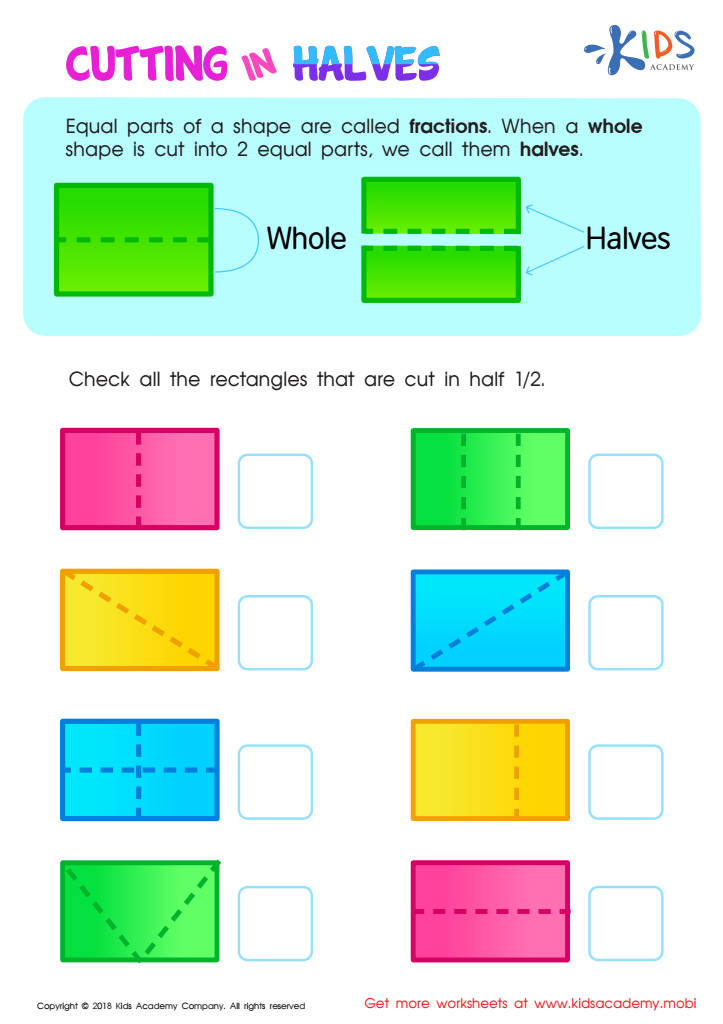
Cutting in Halves Worksheet
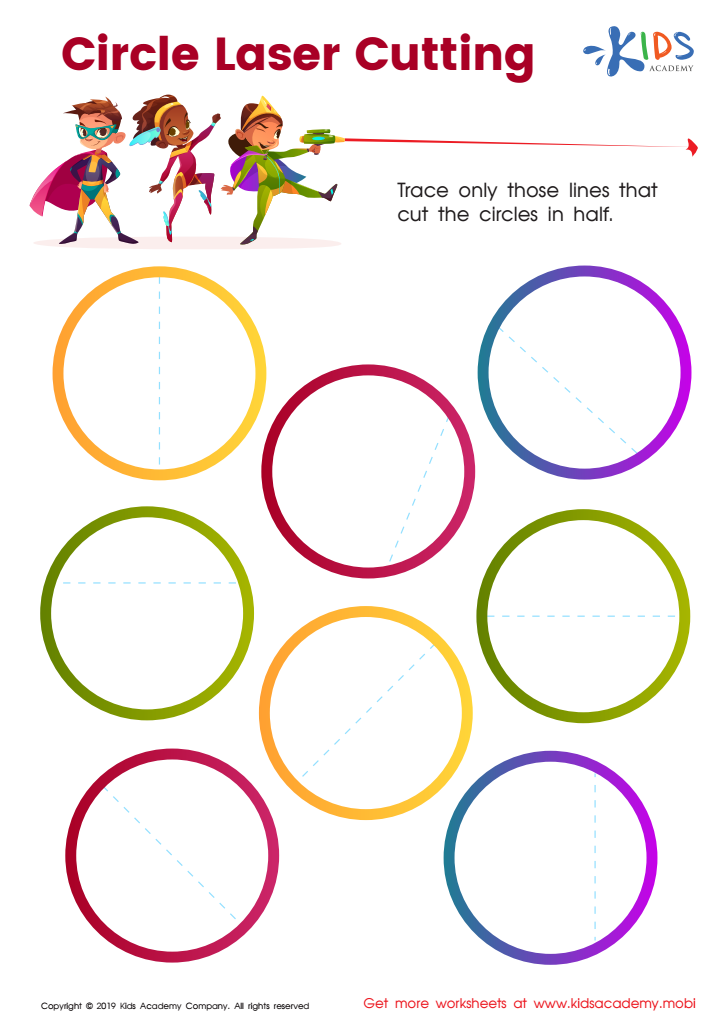
Circle Laser Cutting Worksheet
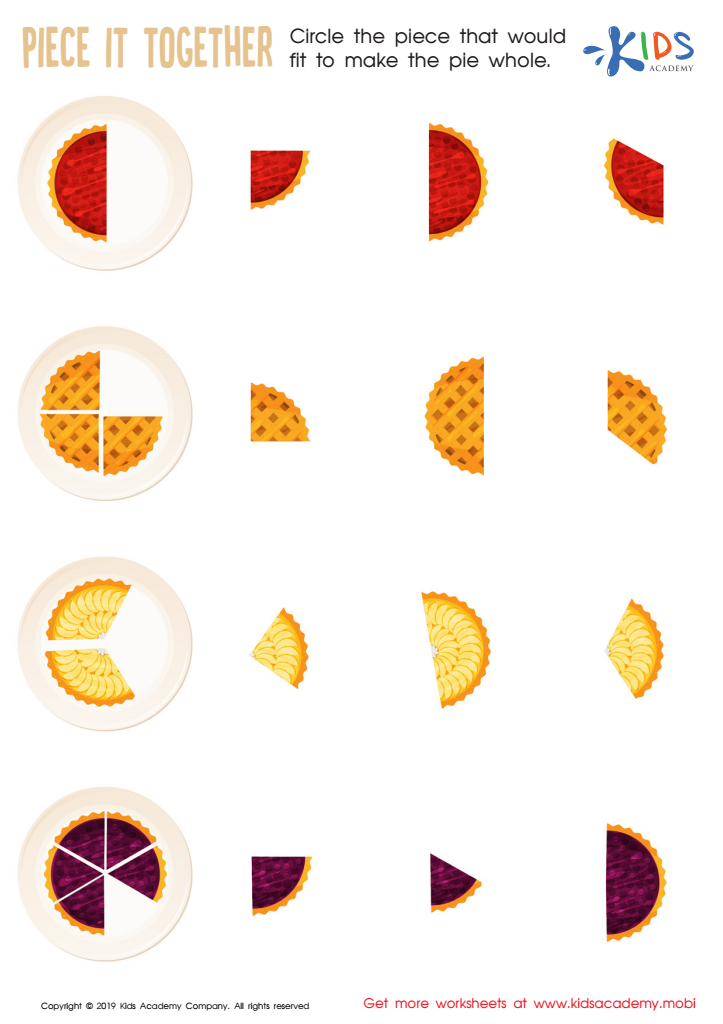
Piece it together Worksheet
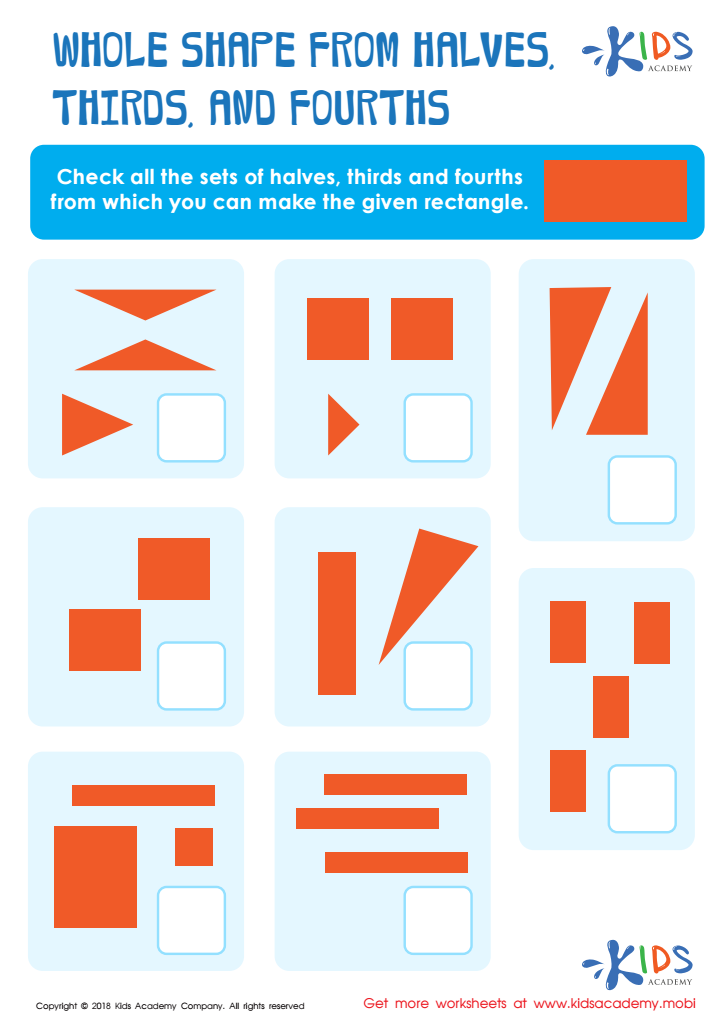
Whole Shape from Halves, Thirds and Fourths Worksheet








Shape recognition is a fundamental component of geometry and is crucial for children aged 8-9, as it lays the groundwork for more advanced mathematical understanding and various cognitive skills. Firstly, grasping different shapes helps kids develop spatial awareness, which is not only vital for subjects like Geography and Science but also essential for everyday activities such as moving through spaces or organizing personal items.
Moreover, learning about shapes enhances children's logical and problem-solving capabilities. Recognizing patterns, understanding symmetry, and identifying geometric properties allow kids to approach problems systematically and think critically. These skills are foundational for subjects like Math, encouraging advances from simple arithmetic to more intricate areas like algebra and calculus.
In addition, shape recognition supports literacy development by helping children distinguish different letters and numbers. For instance, understanding the distinctions between curvy and straight lines, or the number of lines and angles, will lead to improved reading and writing abilities.
Parents and teachers should also consider the impact of social and cognitive development. Making connections between classroom learning and real-world examples – like identifying shapes in playground equipment or everyday objects – facilitates meaningful learning experiences.
In essence, understanding and recognizing shapes is more than just a math lesson; it’s an integrative tool that promotes comprehensive educational development in young learners.








