Fine Motor Skills Science Worksheets for Ages 8-9
3 filtered results
-
From - To
Enhance your child's learning experience with our engaging Fine Motor Skills Science Worksheets designed specifically for ages 8-9. These worksheets are a perfect blend of science and motor skill development, offering fun and interactive activities that foster hand-eye coordination, dexterity, and concentration. Through creative tasks like cutting, tracing, and crafting, students will explore scientific concepts while simultaneously improving their fine motor abilities. Ideal for home study or classroom use, these worksheets ensure that children not only absorb essential science knowledge but also develop crucial skills for their academic journey. Start your child's adventure in learning with our expertly crafted worksheets today!
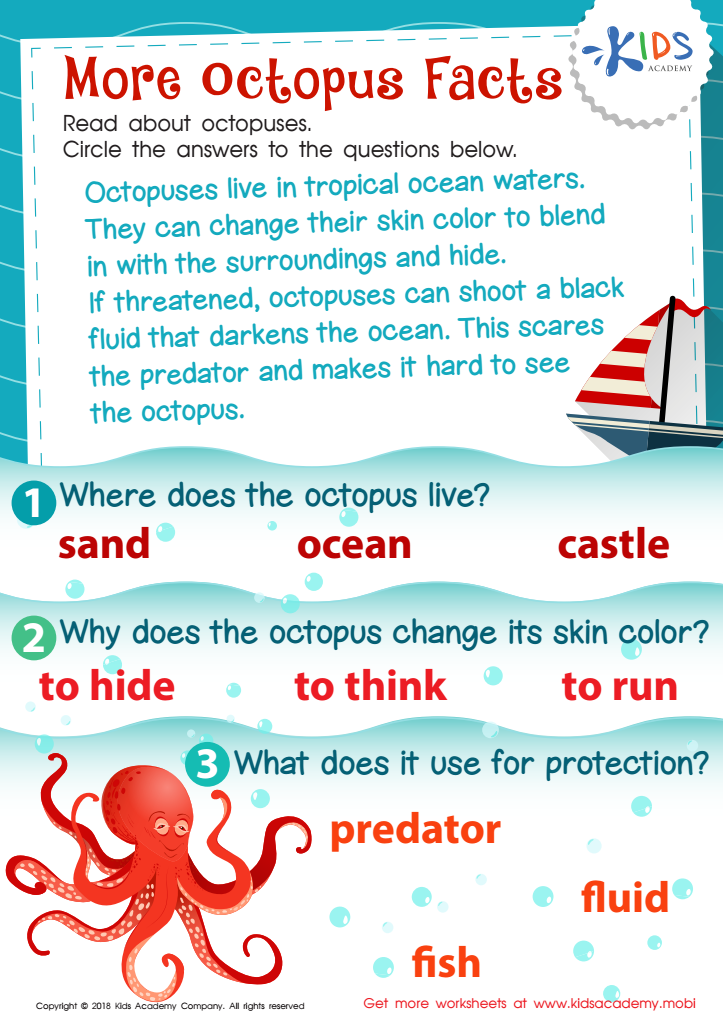
More Octopus Facts Worksheet
 Assign to My Students
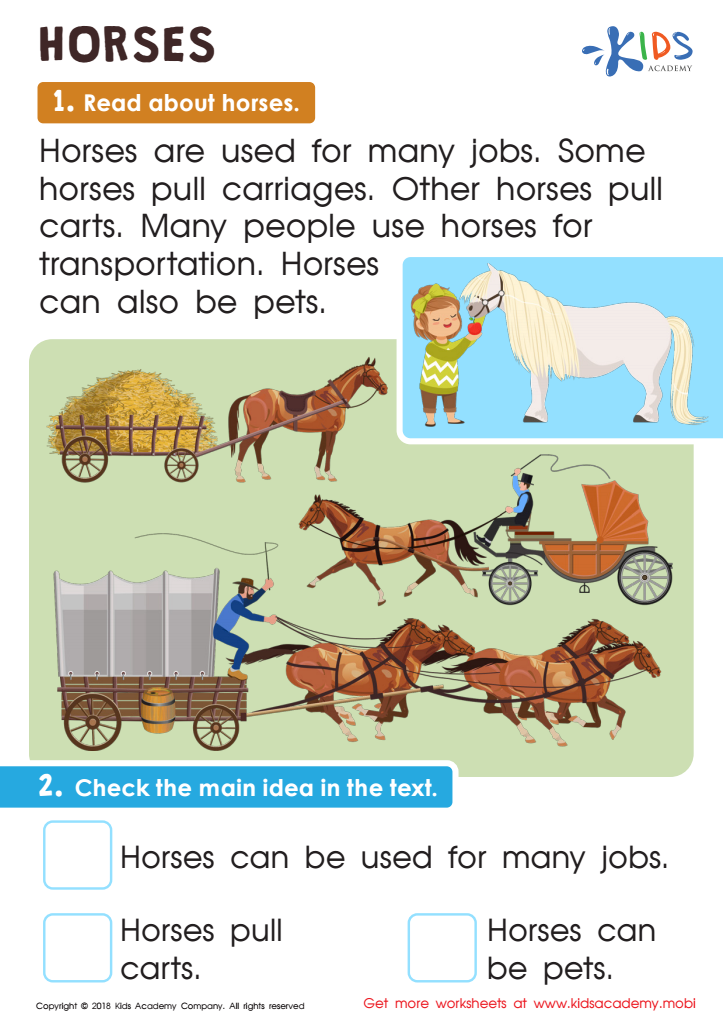
Horses Worksheet
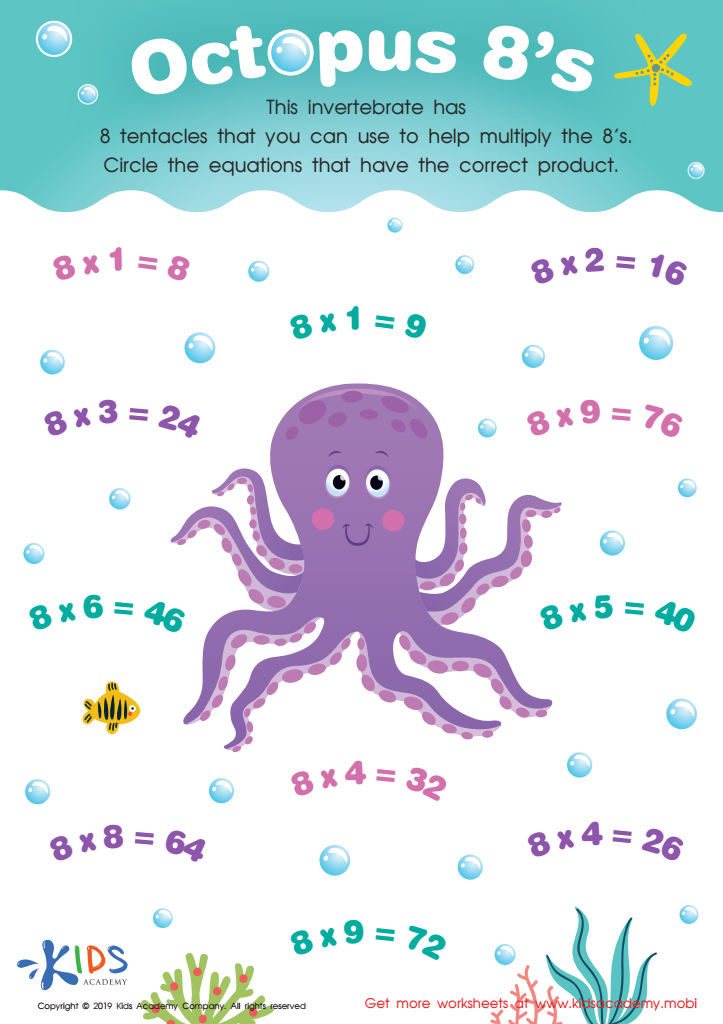
Octopus 8’s Worksheet








Fine motor skills are crucial for children aged 8-9 as they impact both their academic performance and overall development. During this age, children continue to refine their manual dexterity, which is essential for activities such as writing, drawing, and handling small objects. Improved fine motor skills enhance hand-eye coordination and are vital for complex tasks like tying shoelaces, using scissors, and carrying out computer-related tasks.
Parents and teachers should care about fine motor skill development because these abilities tie directly into a child’s confidence and independence. Struggles with fine motor tasks can lead to frustration, impacting a child’s willingness to engage in classroom activities. Furthermore, fine motor skills are closely linked to cognitive development, as many hands-on learning experiences also require the use of these skills.
Incorporating practices that enhance fine motor skills, such as arts and crafts, puzzles, and interactive games, not only makes learning enjoyable but also fosters creativity and problem-solving abilities. By prioritizing fine motor skill development, adults can better support children in becoming capable and self-assured individuals, laying a strong foundation for future learning and life skills. Investing in this crucial aspect of development ultimately benefits children both academically and socially.







