Space Worksheets for Ages 3-6 - Page 2
26 filtered results
-
From - To
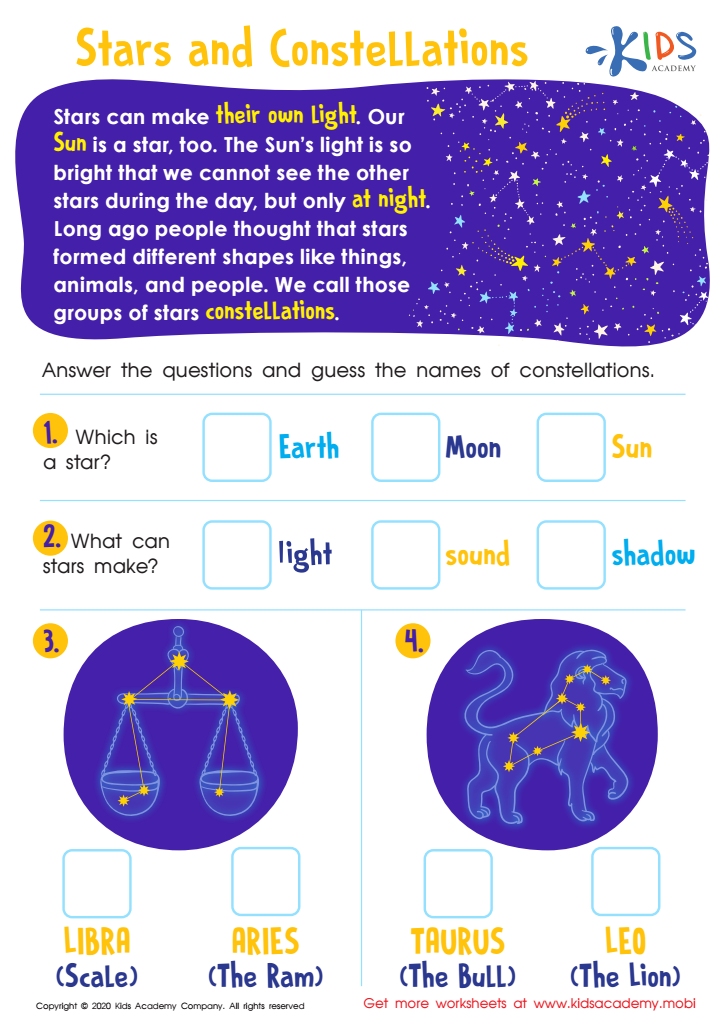
Stars and Constellations Worksheet
 Assign to My Students
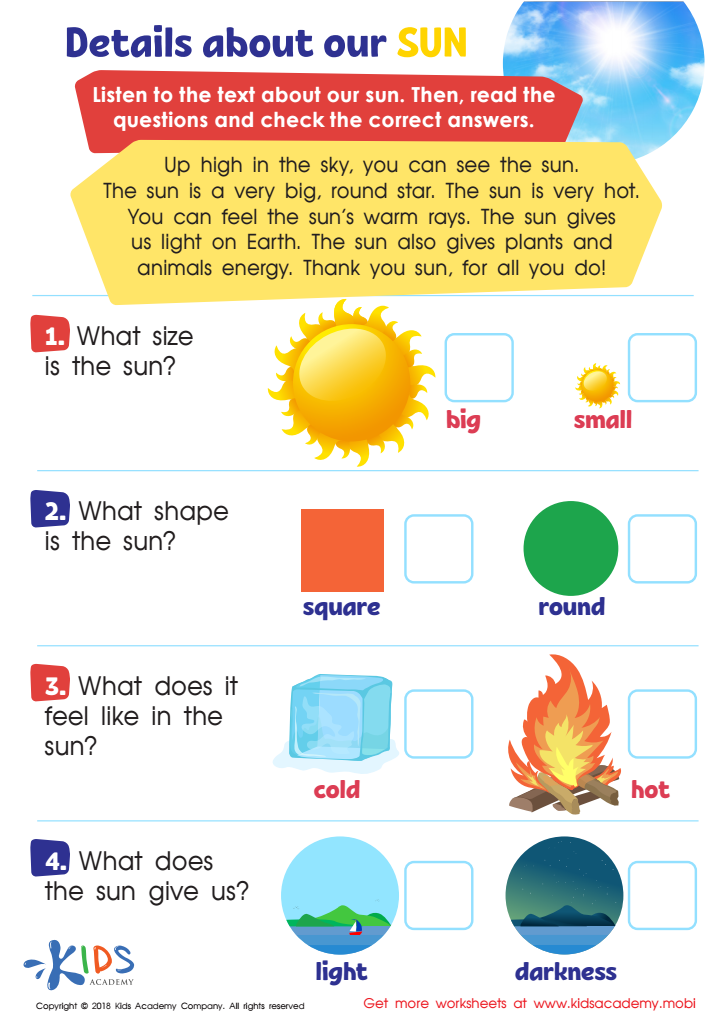
Details About Our Sun Worksheet






.jpg)

Parents and teachers should care about introducing space to children ages 3-6 because it sparks curiosity and fosters a lifelong love for learning. At this developmental stage, children's brains are like sponges, eagerly absorbing new information. Learning about space—such as planets, stars, and the moon—offers a fun and engaging way to build foundational science knowledge and critical thinking skills. This interest can inspire them to ask questions, seek answers, and make observations, essential components of scientific thinking.
Understanding space also helps children grasp basic concepts about Earth and their place in the universe. It nurtures a sense of wonder and imagination, encouraging them to envision a world beyond their immediate experience. Storybooks, educational videos, and interactive activities related to space can make abstract concepts tangible and exciting.
Moreover, discussing space promotes language development as children learn new vocabulary and concepts. These dialogues can improve cognitive abilities and social skills by enhancing communication between children and their caregivers or peers.
Incorporating space-related content into early education fosters a multidisciplinary approach, combining elements of science, math, art, and storytelling. This holistic educational experience is crucial for balanced intellectual and emotional development. Therefore, parents and teachers should embrace space topics to enrich young children’s lives, stimulate their minds, and lay the groundwork for future academic success.







