Comparison Worksheets for Ages 4-8
19 filtered results
-
From - To
Unlock a world of learning with our "Comparison Worksheets for Ages 4-8," designed to enhance your child's understanding of basic math concepts. These engaging worksheets focus on comparing quantities, numbers, and sizes through fun activities, making learning interactive and enjoyable. Perfect for preschool and early elementary students, our diverse range of exercises helps build foundational skills in mathematics, critical thinking, and visual recognition. Each worksheet comes equipped with answer keys for easy grading and encouragement. Support your child's educational journey as they explore comparisons in a playful and effective manner. Download and watch their confidence soar! Suitable for home or classroom use.
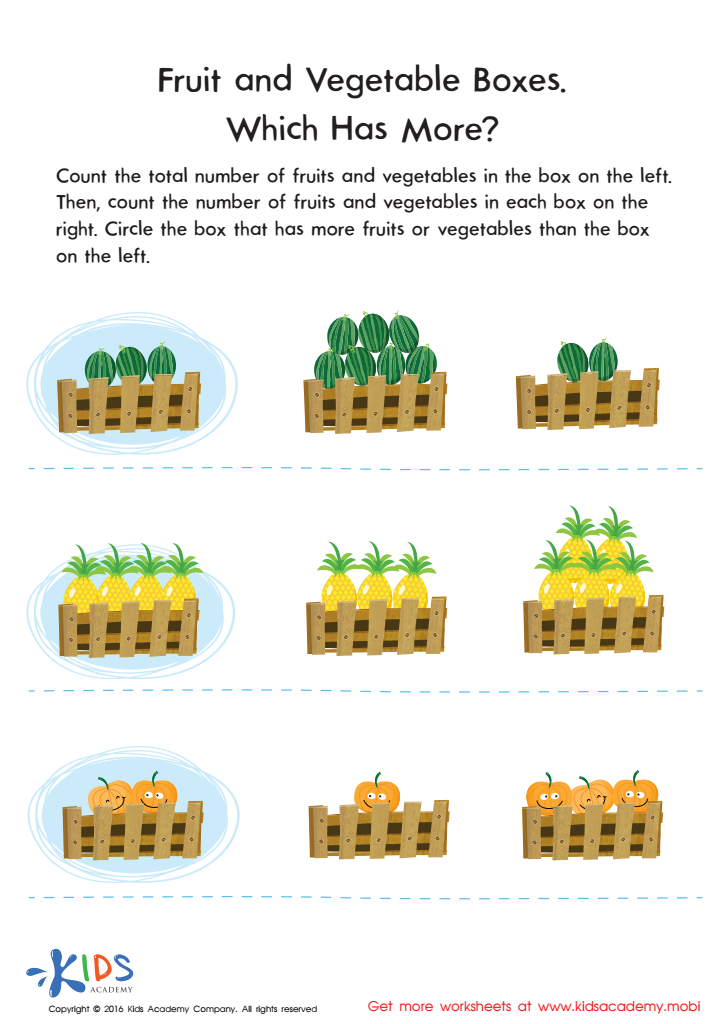
Which Has More? Size Worksheet
 Assign to My Students
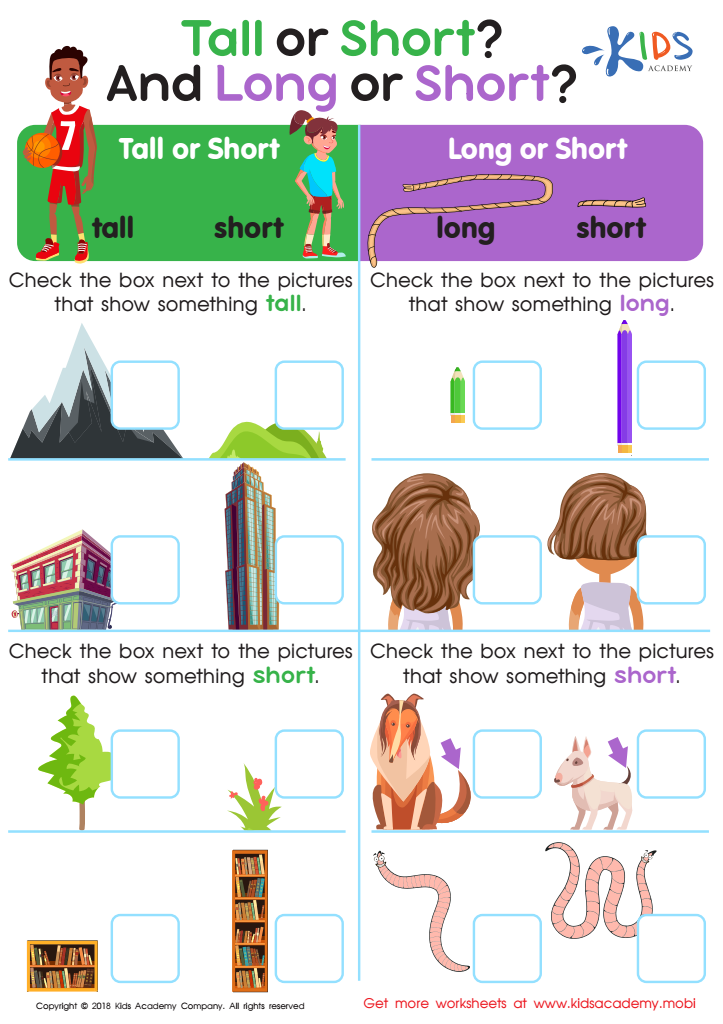
Tall or Short and Long or Short? Worksheet
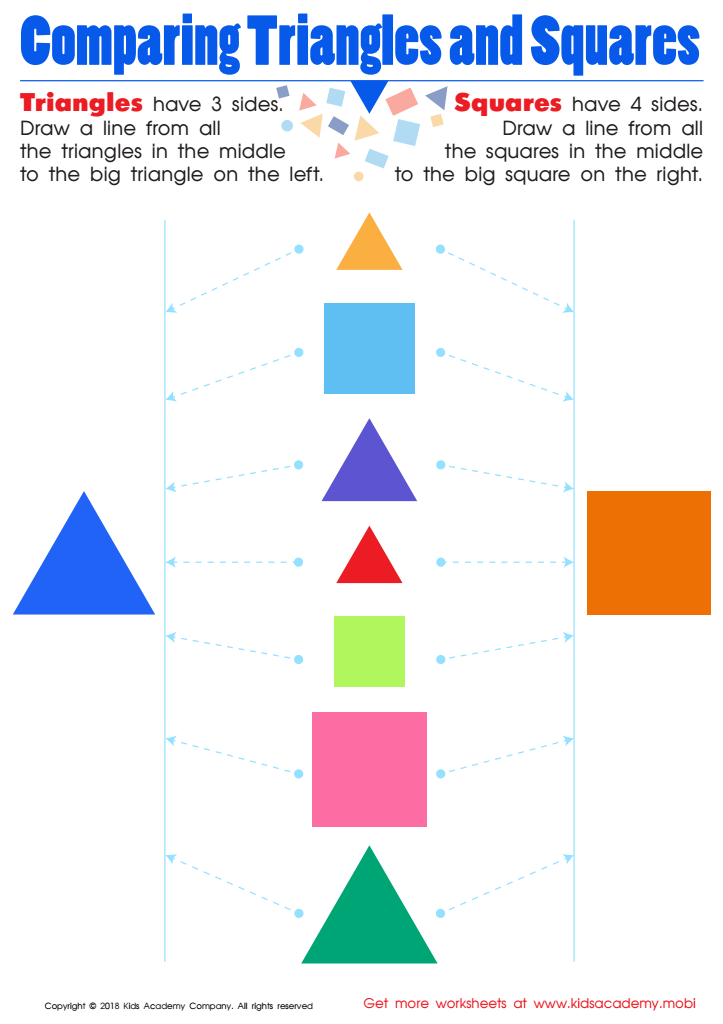
Comparing Triangles Squares Worksheet
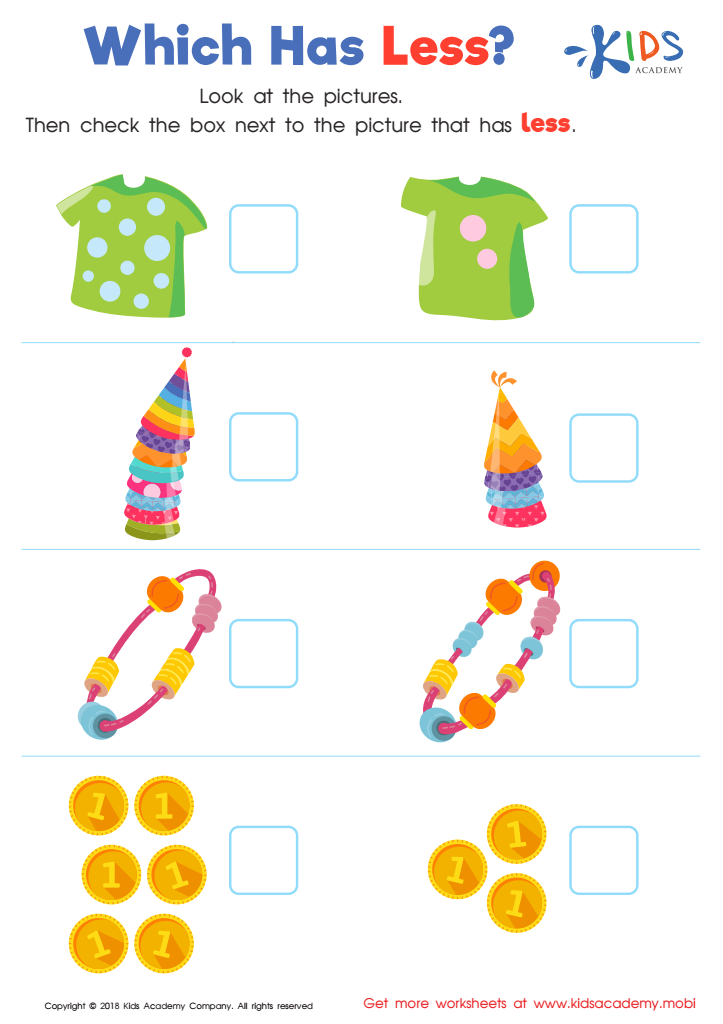
Which Has Less? Worksheet
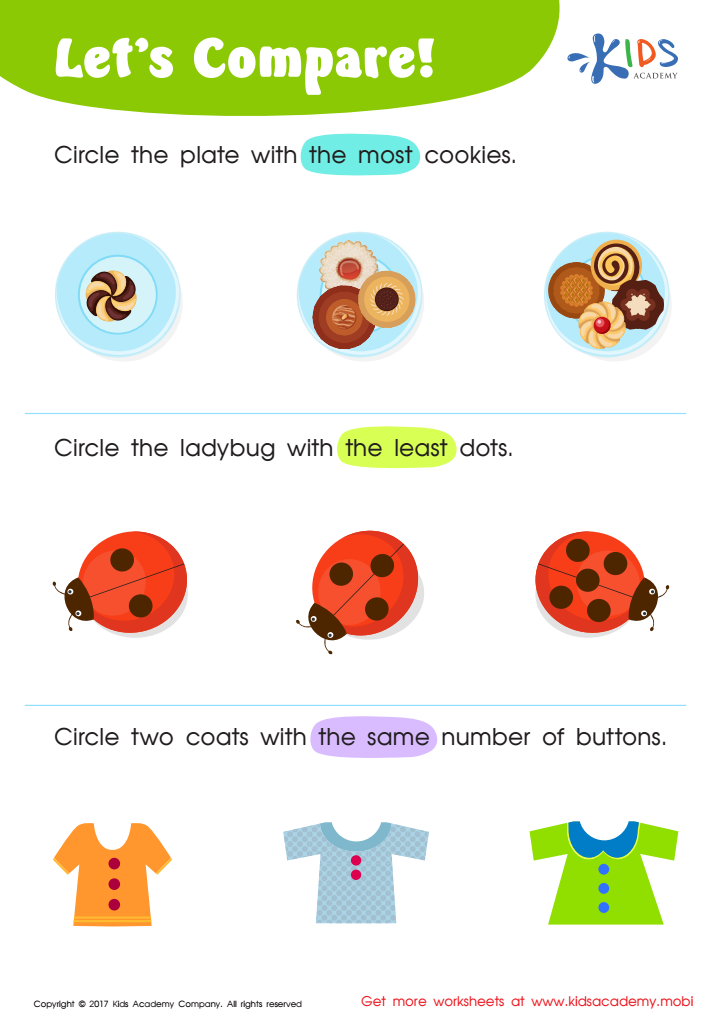
Matching: Classifying Toys by Size Worksheet
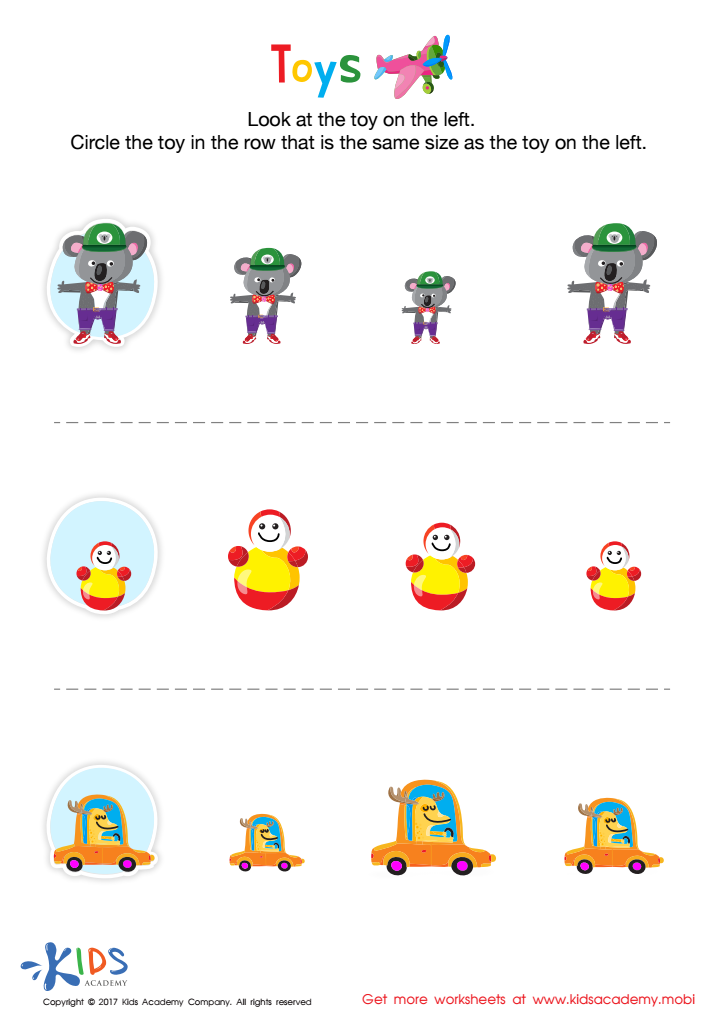
Matching: Classifying Toys by Size Worksheet
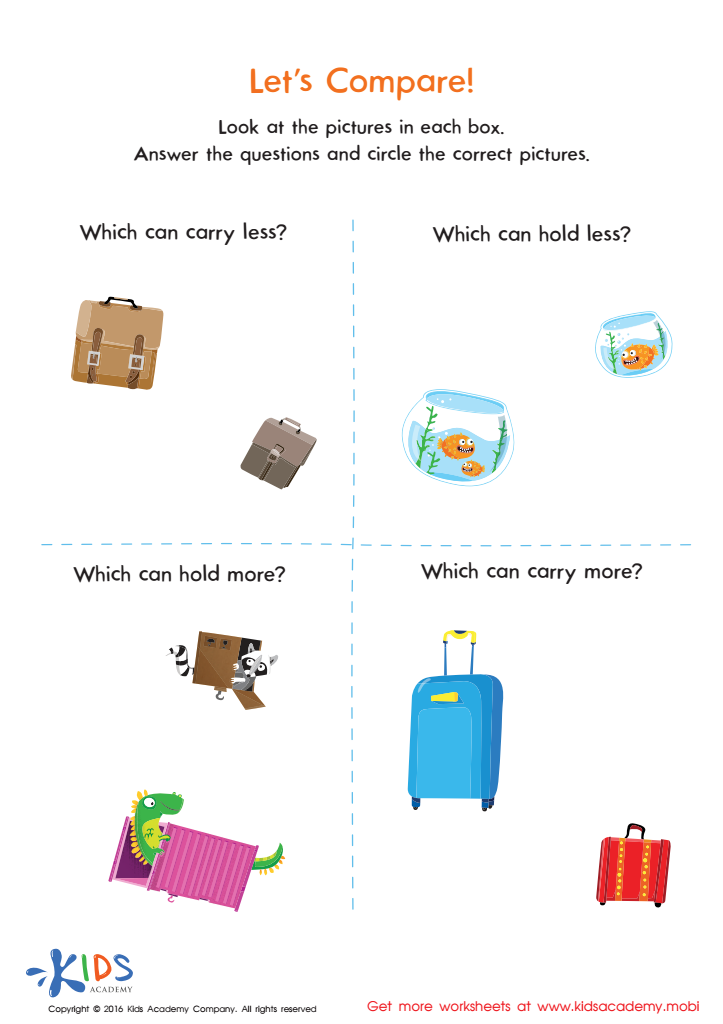
Let's Compare Worksheet: Big or Small
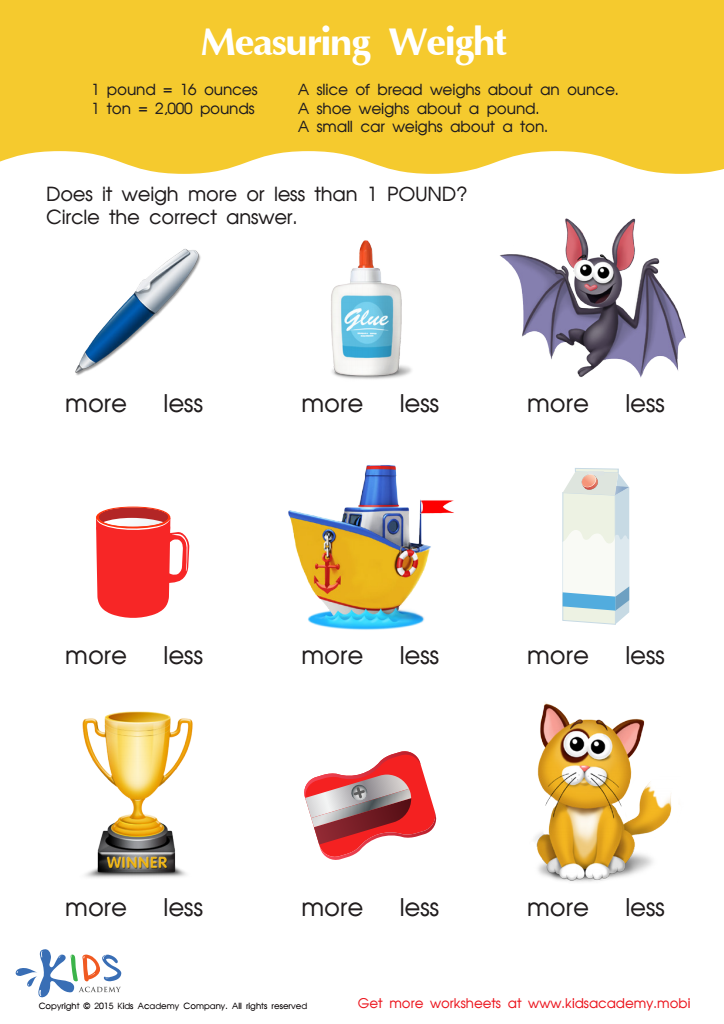
Measuring weight in pounds Worksheet
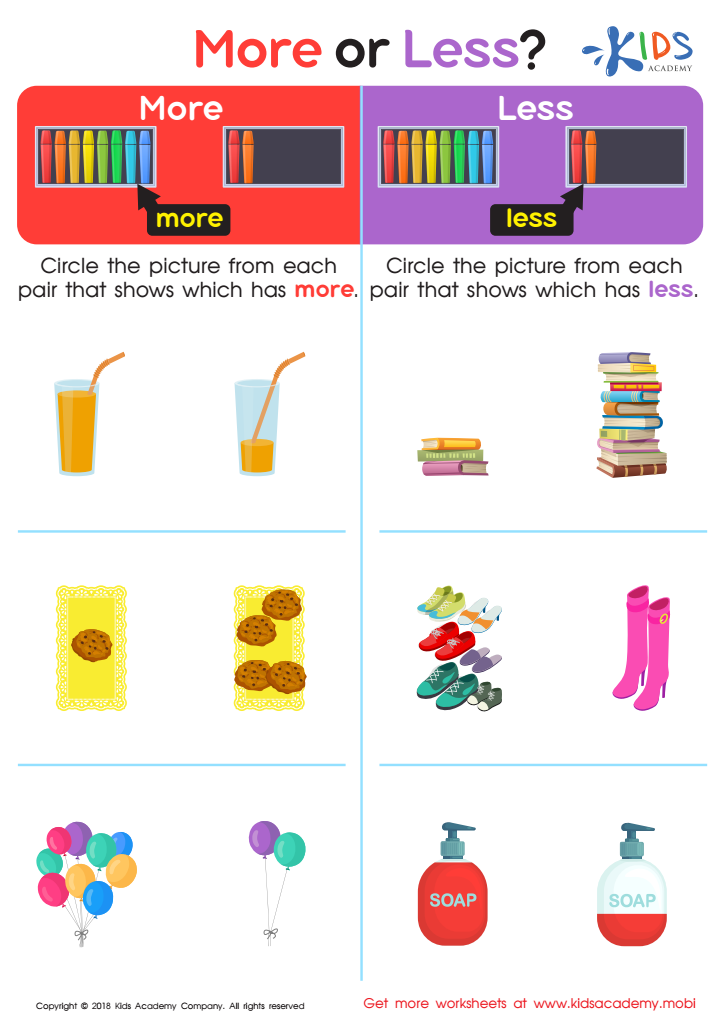
More or Less? Worksheet
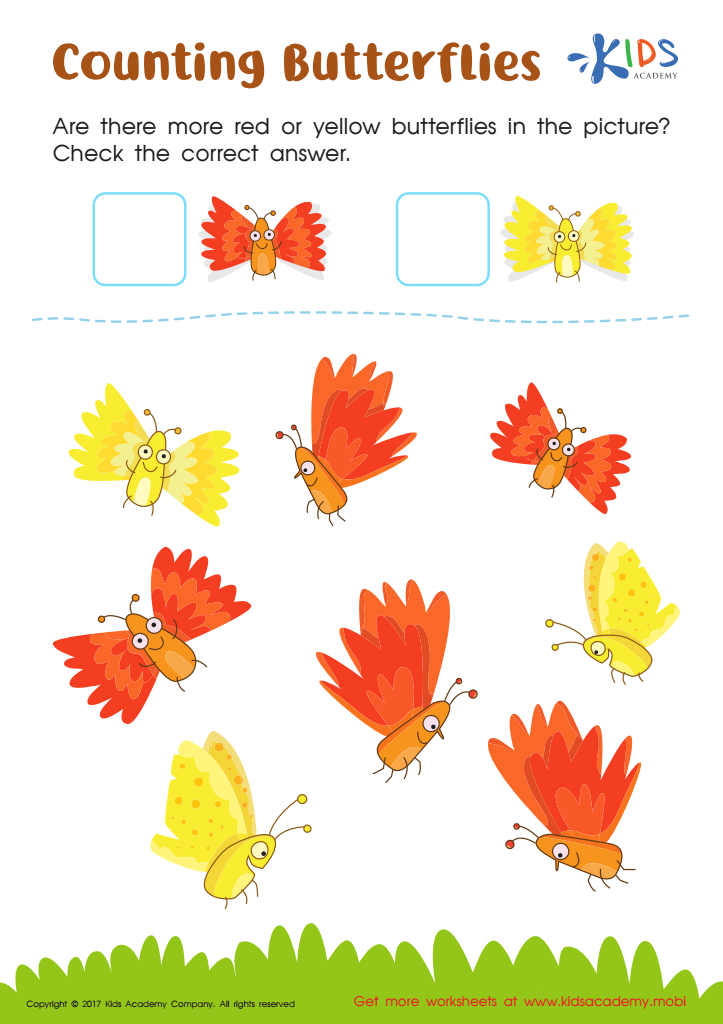
Counting Butterflies Worksheet
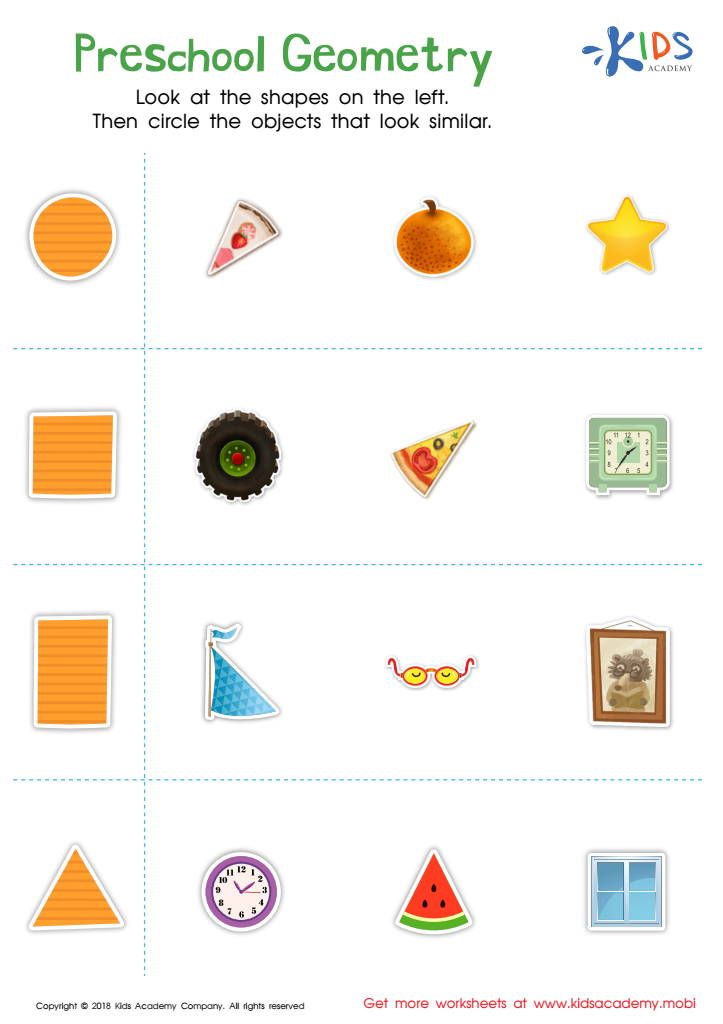
Preschool Geometry Worksheet
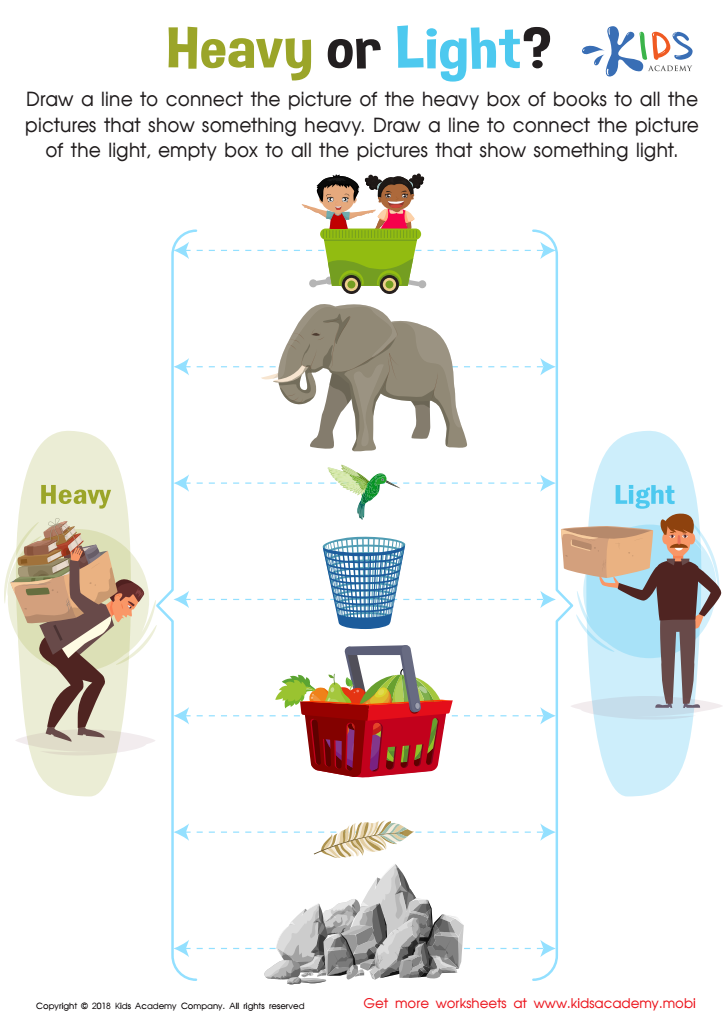
Heavy or Light? Worksheet
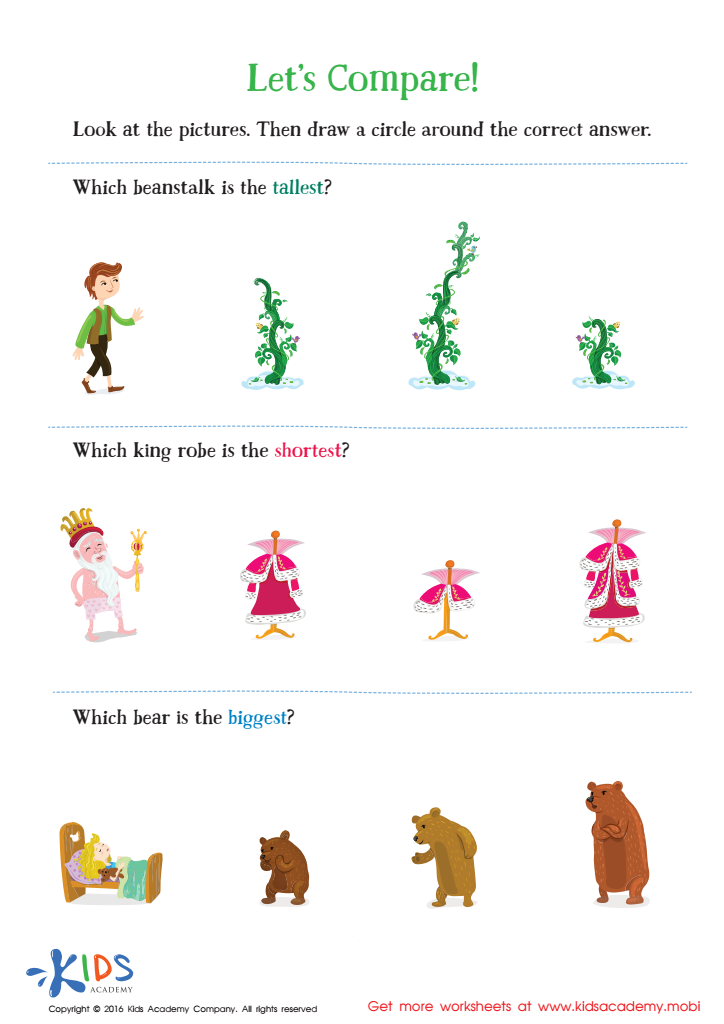
Fairy Tale Worksheet: Let's Compare
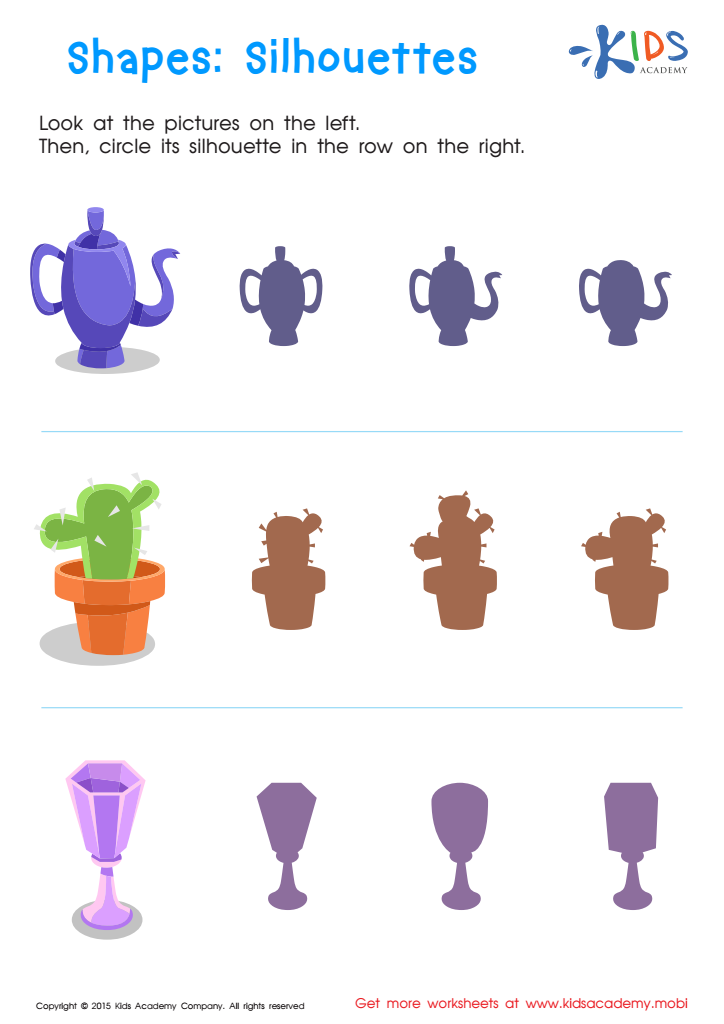
Silhouettes – Shapes Worksheet
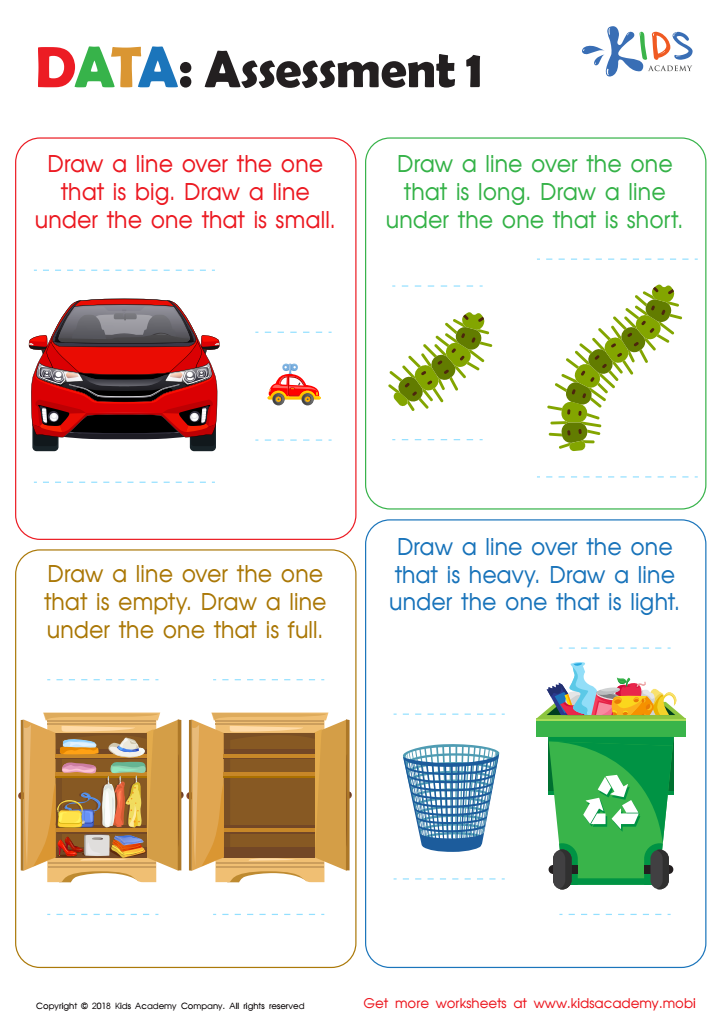
Data: Assessment 1 Worksheet
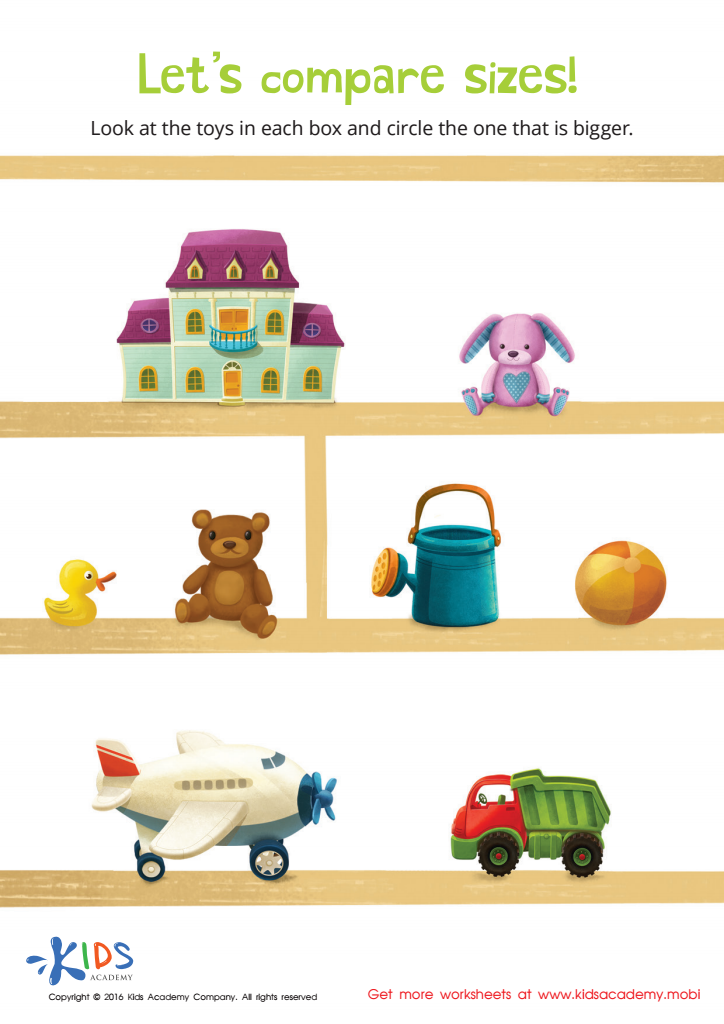
Classifying by Size Sorting Worksheet
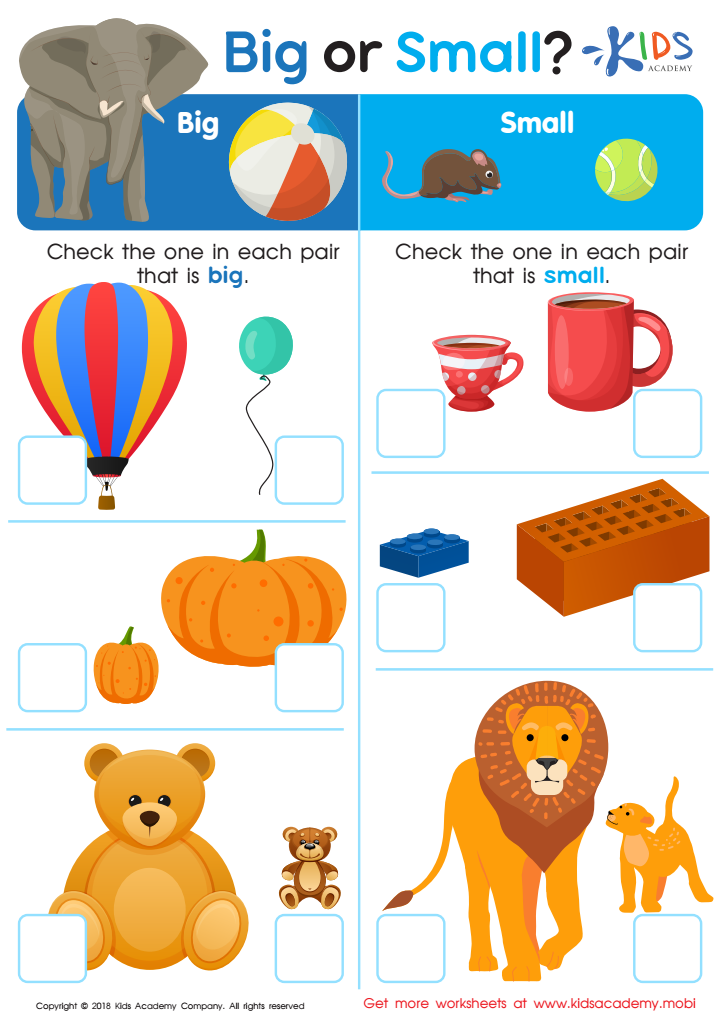
Big or Small? Worksheet
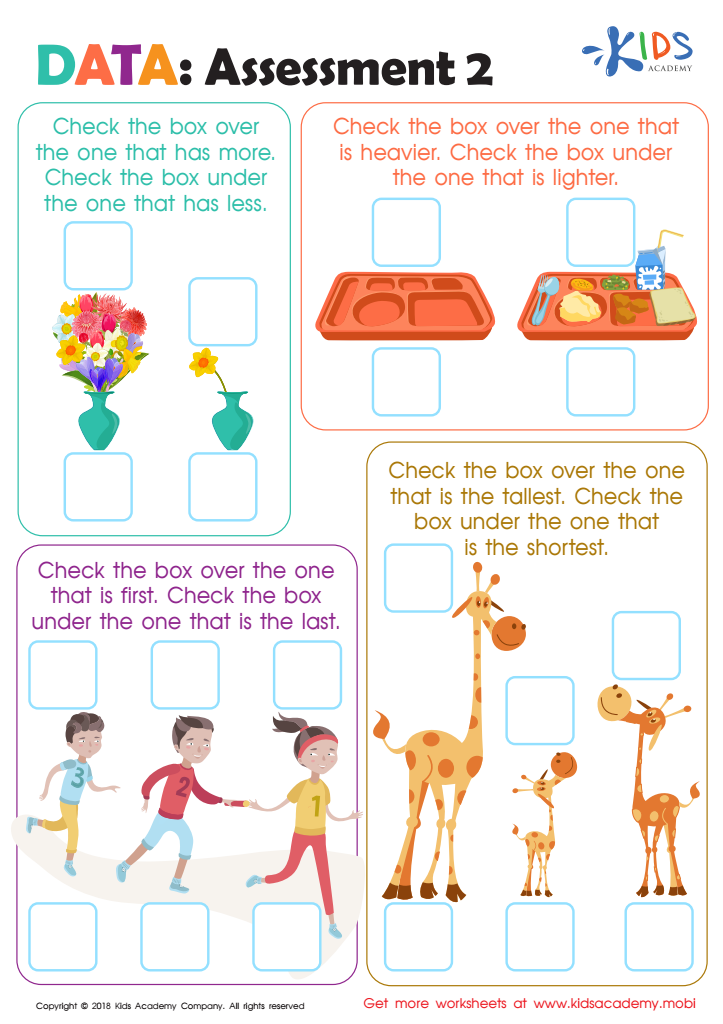
Data: Assessment 2 Worksheet
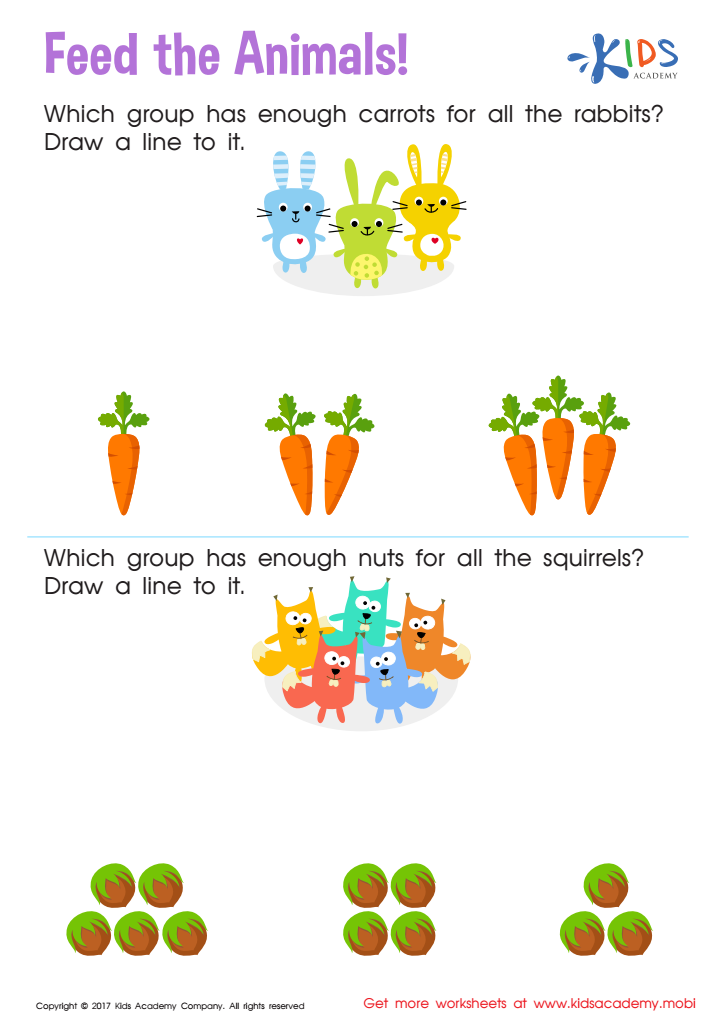
Count and Match: Feed the Animals Worksheet






Parents and teachers should care about comparisons for children aged 4-8 because this developmental stage is crucial for fostering self-awareness and social understanding. During these years, children begin to notice differences and similarities among their peers, which can influence their self-esteem, behavior, and learning experiences.
Understanding how to make healthy comparisons can help children build confidence. When adults actively guide children to recognize the strengths and weaknesses of themselves and others without negative judgments, it promotes a positive self-image and independence. Instead of feeling inferior in unfavorable comparisons, children can learn to appreciate their unique skills while respecting others.
Additionally, discussions about comparisons can facilitate meaningful dialogues about effort, perseverance, and setting personal goals. This helps children develop resilience and a growth mindset, emphasizing that everyone learns at their own pace.
Moreover, nurturing empathy in young children through guided comparisons teaches them to rejoice in others' successes and offer support in their challenges, strengthening social bonds.
Ultimately, helping children navigate the complexities of comparison during the ages of 4-8 lays the groundwork for their emotional intelligence, academic motivation, and ability to interact positively with those around them, fostering a harmonious learning environment.








