Extra Challenge Comparison Worksheets for Ages 4-8
7 filtered results
-
From - To
Discover our "Extra Challenge Comparison Worksheets for Ages 4-8," designed to enhance your child's math skills through engaging and interactive activities. These worksheets focus on important comparison concepts, helping young learners identify similarities and differences in various contexts. Ideal for strengthening critical thinking and problem-solving abilities, our worksheets incorporate fun visuals and step-by-step instructions to keep students motivated. Perfect for classroom use or at-home practice, these extra challenges are tailored to meet developmental needs while making learning enjoyable. Empower your child’s educational journey with the best resources to master comparison skills—download our worksheets today and watch them thrive!
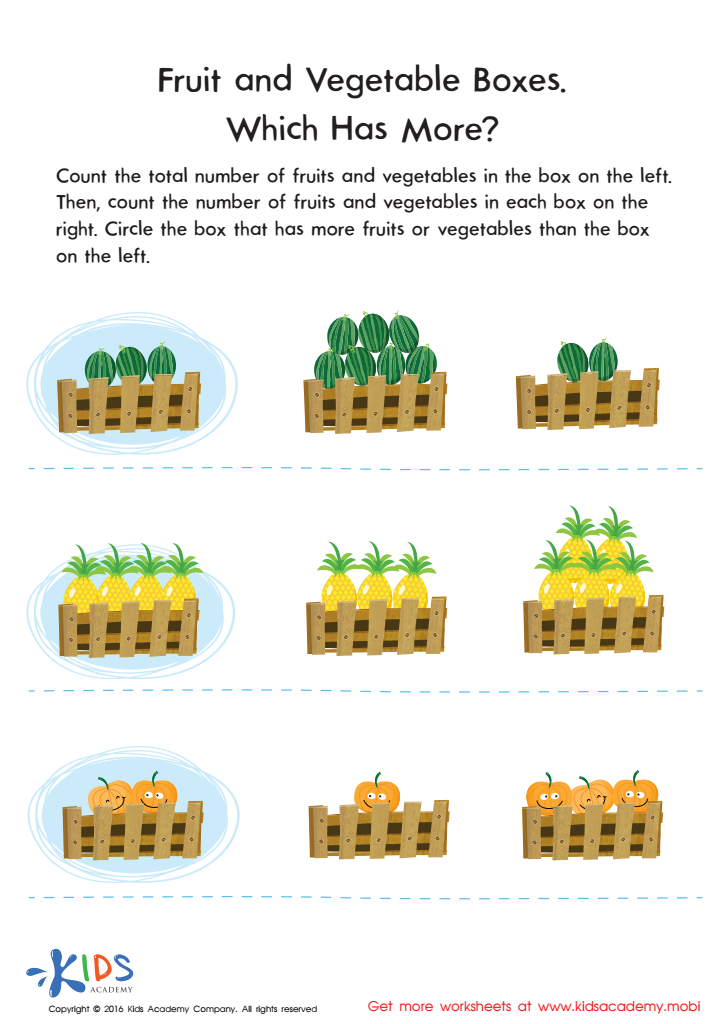
Which Has More? Size Worksheet
 Assign to My Students
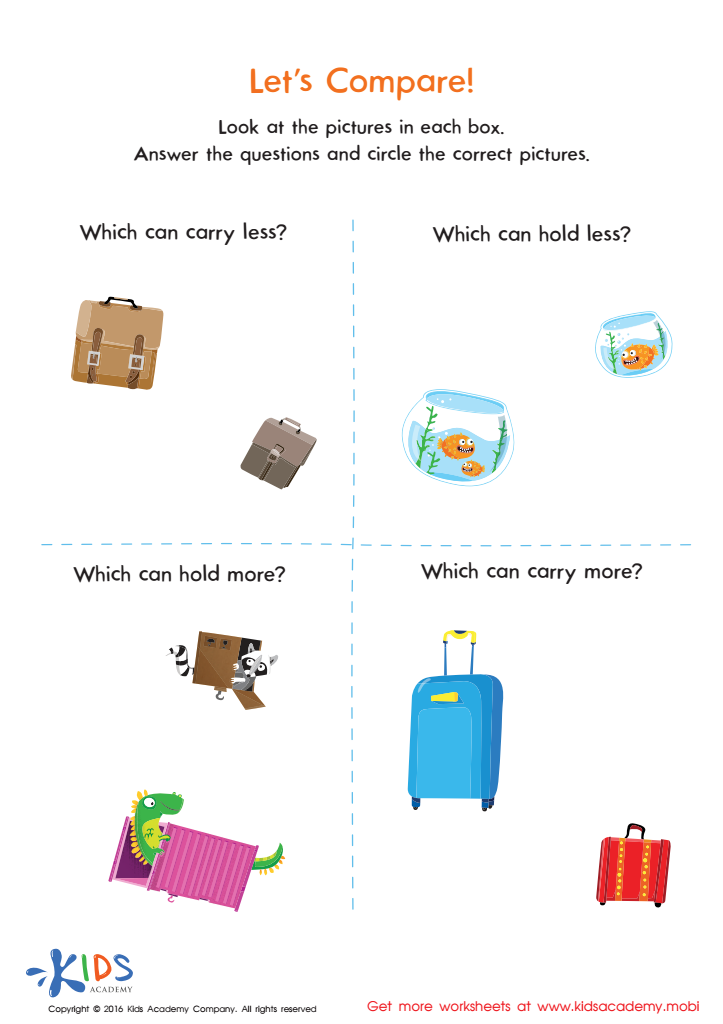
Let's Compare Worksheet: Big or Small
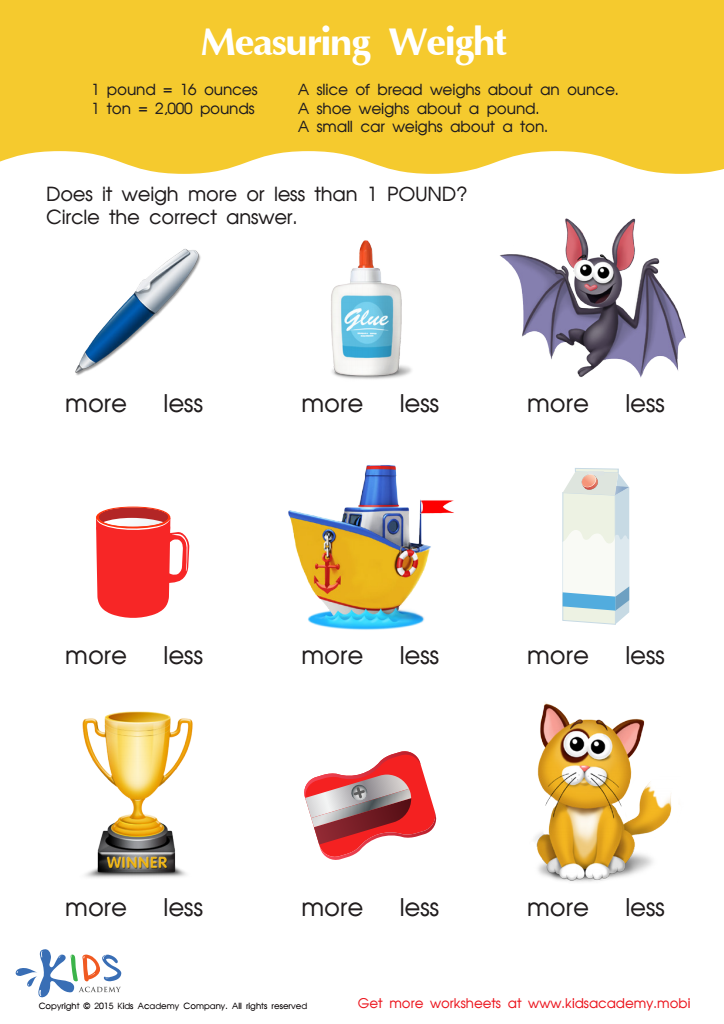
Measuring weight in pounds Worksheet
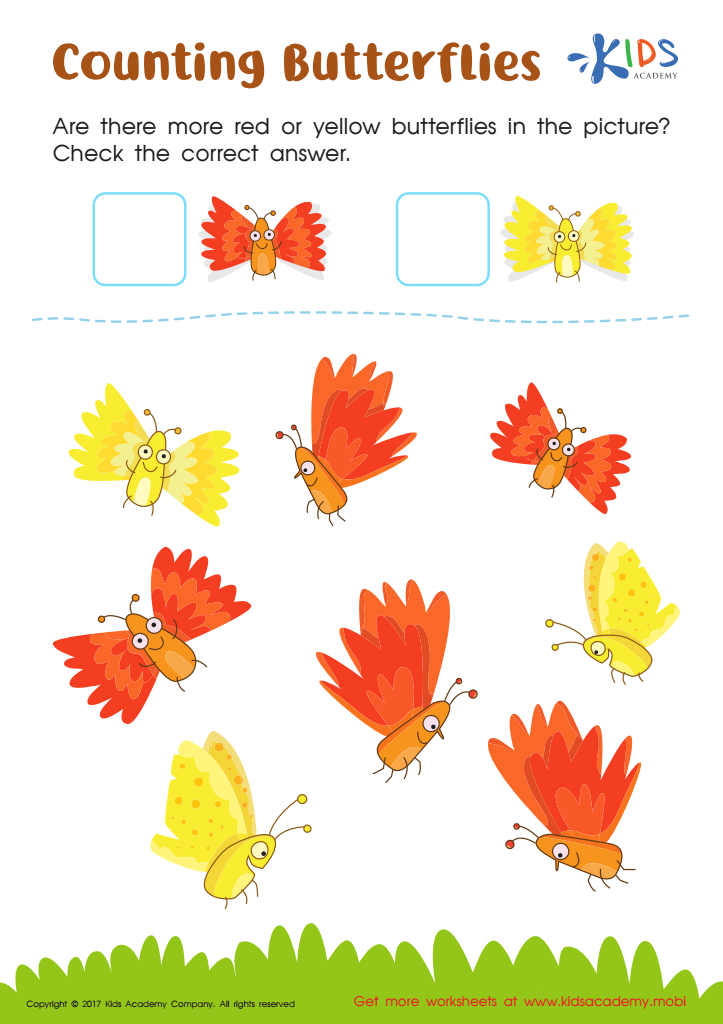
Counting Butterflies Worksheet
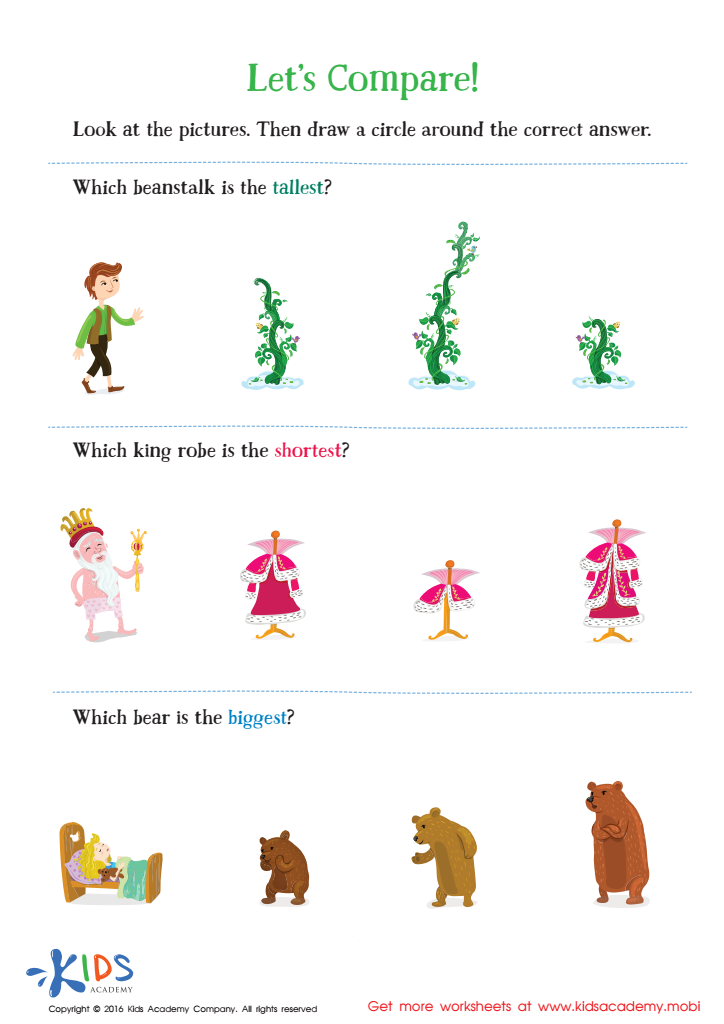
Fairy Tale Worksheet: Let's Compare
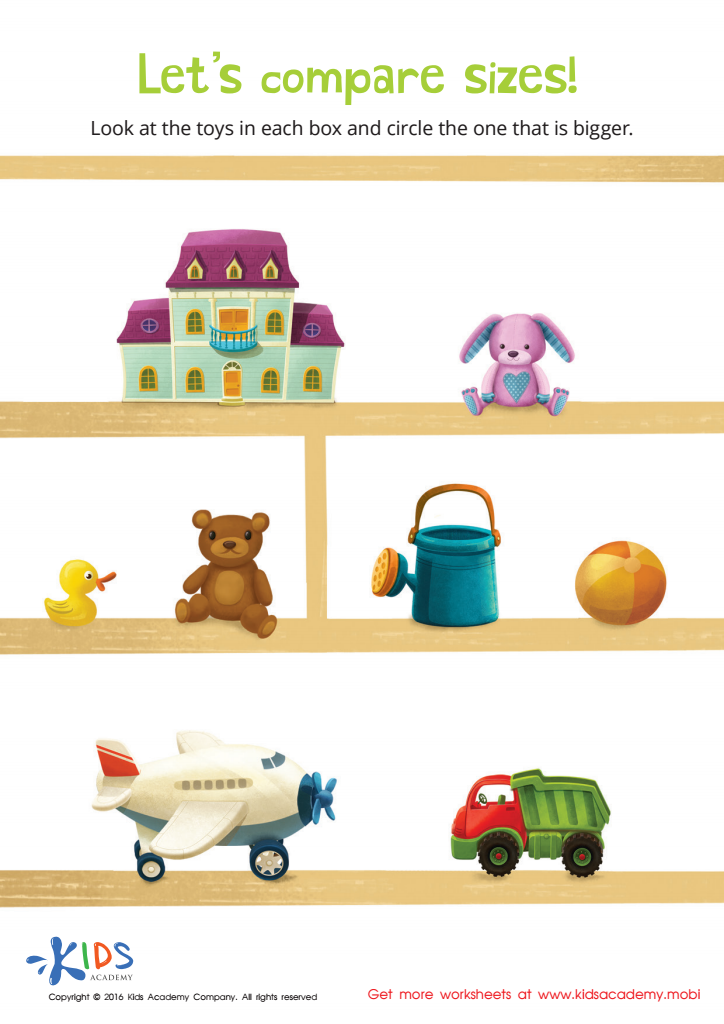
Classifying by Size Sorting Worksheet
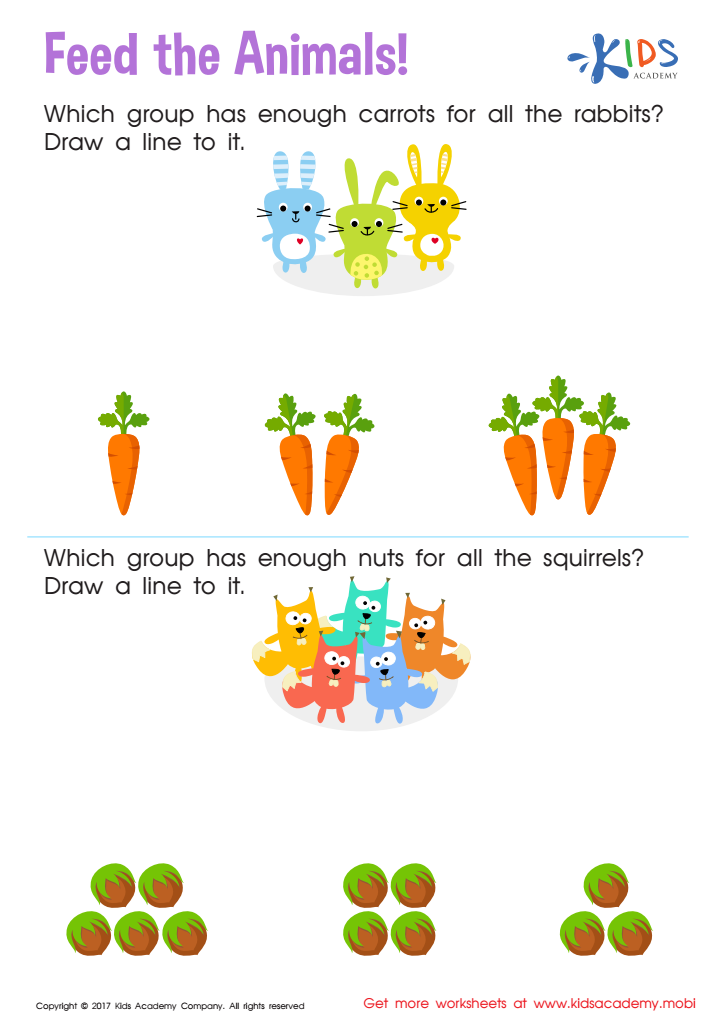
Count and Match: Feed the Animals Worksheet







Parents and teachers should pay close attention to Extra Challenge Comparison for children aged 4-8 because it plays a critical role in supporting each child's unique learning journey. During these formative years, children's cognitive, social, and emotional skills develop rapidly, and tailored challenges can enhance their growth. Engaging children in activities that stretch their capabilities encourages critical thinking, problem-solving skills, and resilience, helping them to develop a growth mindset.
Understanding the comparison of these challenges across different dimensions, such as individual strengths, peer performance, and developmental milestones, allows parents and teachers to tailor learning experiences that cater to each child's needs. By recognizing where a child may need an extra push or an adjustment in their learning approach, adults can provide suitable challenges that motivate rather than overwhelm.
Moreover, fostering an environment where children are encouraged to embrace challenges helps them build confidence and self-efficacy, laying a solid foundation for future learning endeavors. Parents and teachers who prioritize this comparison are more equipped to nurture a passion for learning and ensure that each child is progressing at an appropriate pace, ultimately contributing to lifelong success and well-being. Engaging in these considerations shapes not just academic outcomes, but holistic development as well.