Normal Chess Worksheets for Ages 4-7 - Page 2
47 filtered results
-
From - To
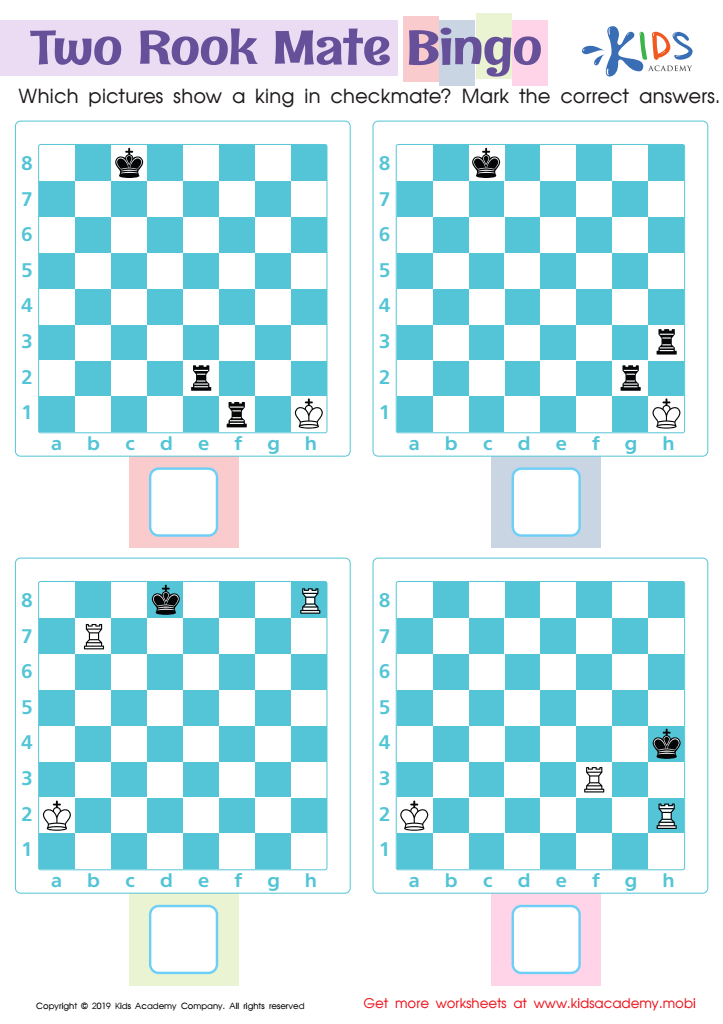
Two Rook Bingo Worksheet
 Assign to My Students
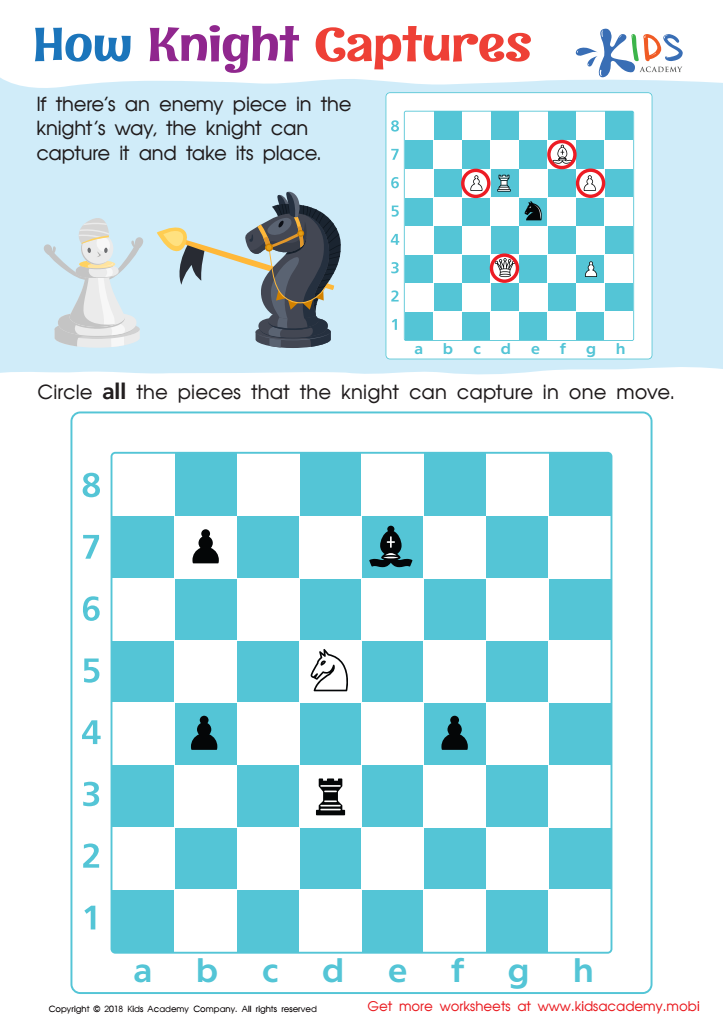
How Knight Captures Worksheet
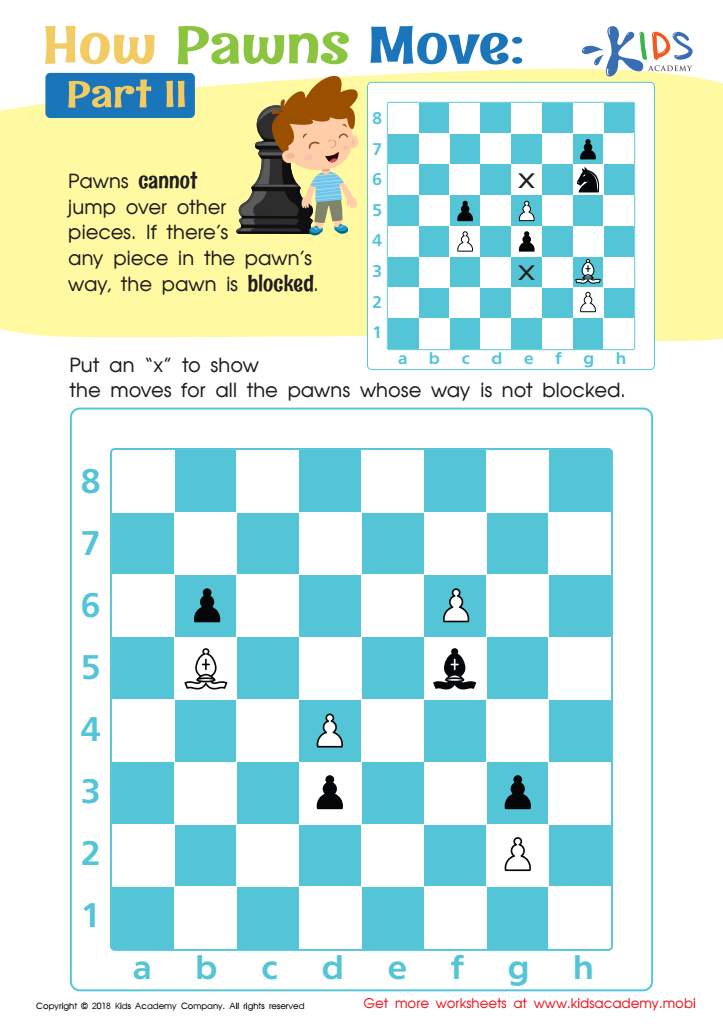
How Pawns Move: Part II Worksheet
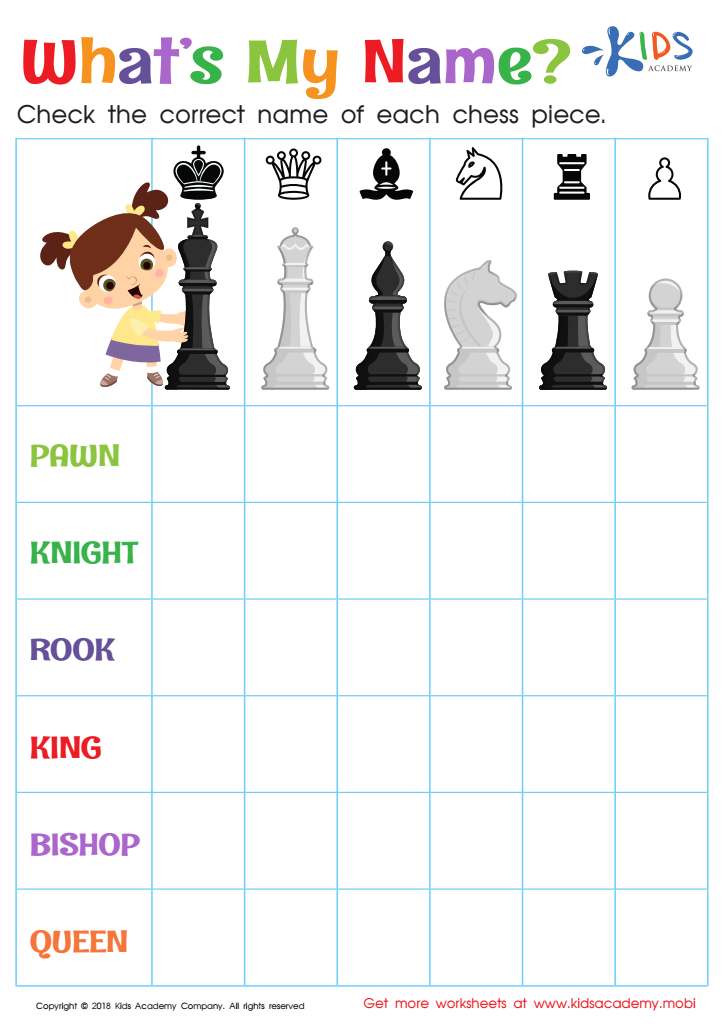
What's My Name? Worksheet
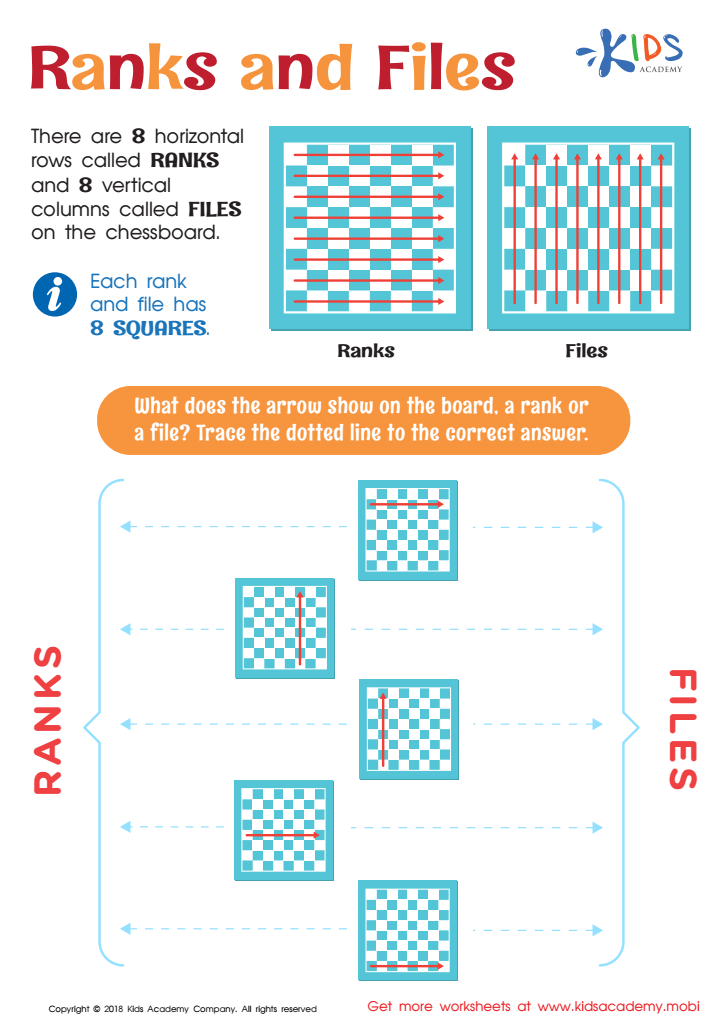
Ranks and Files Worksheet
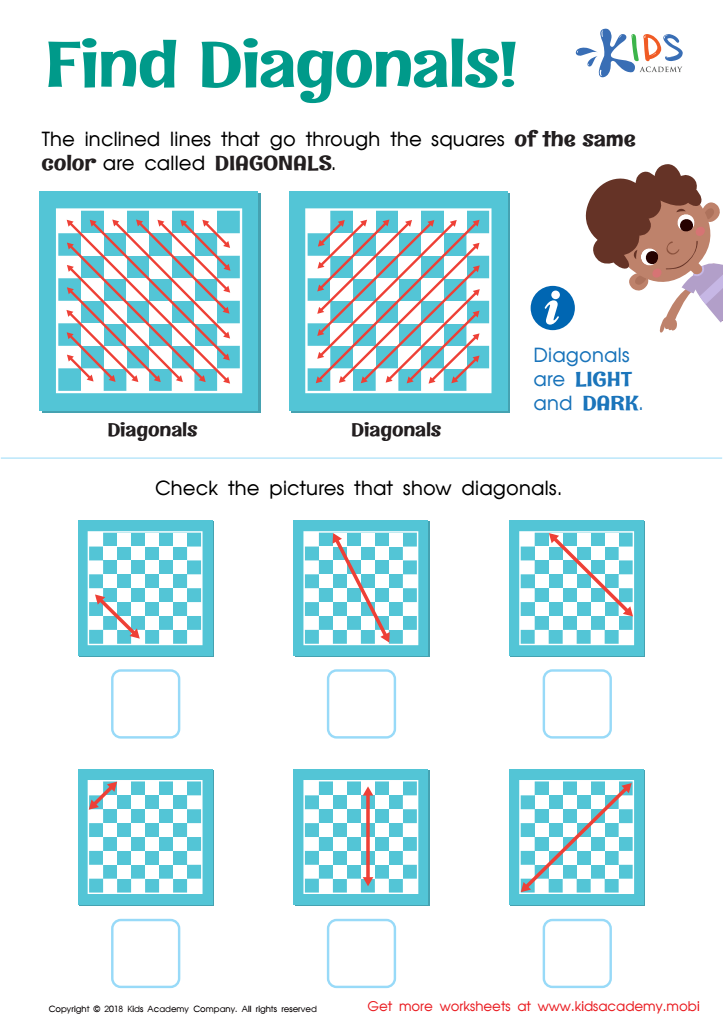
Find Diagonals Worksheet
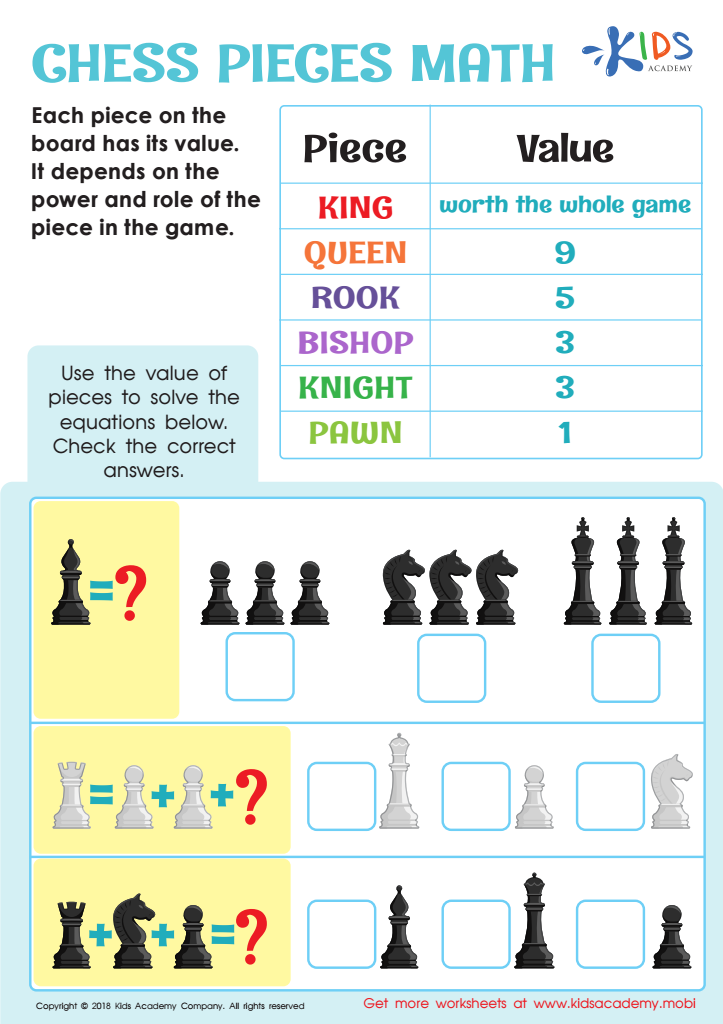
Chess Pieces Math Worksheet
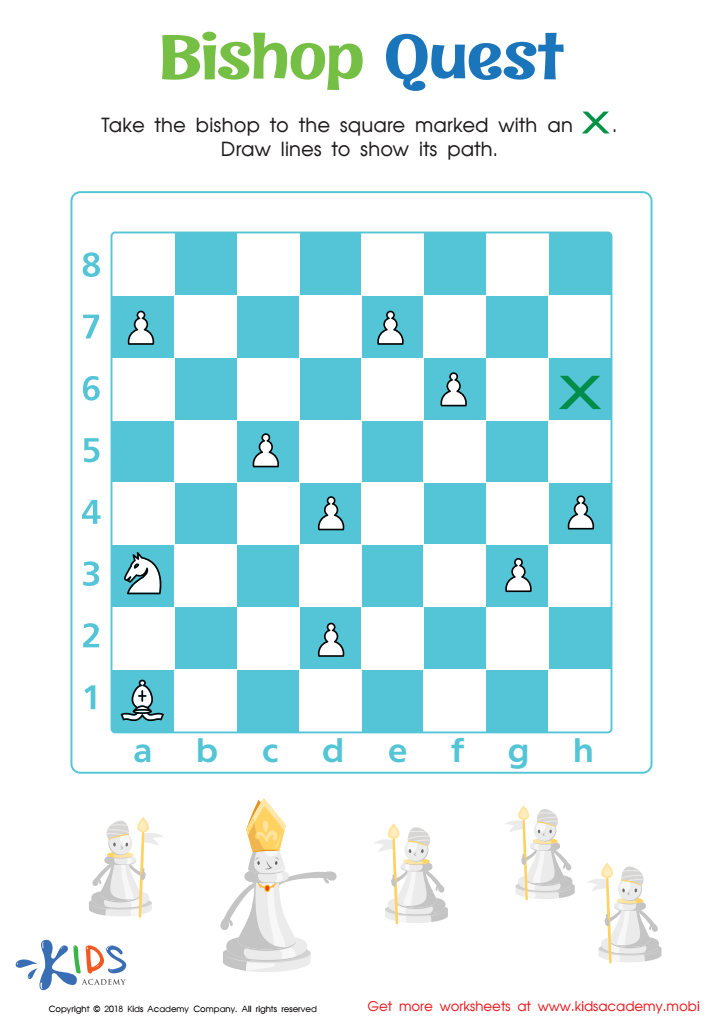
Bishop Quest Worksheet
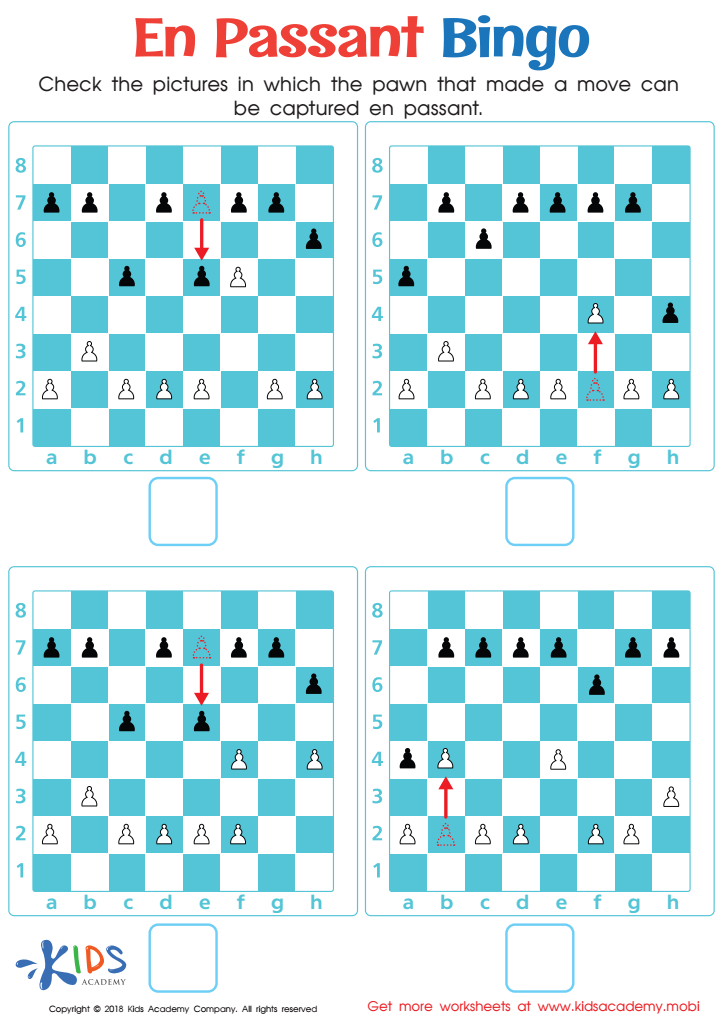
En Passant Bingo Worksheet
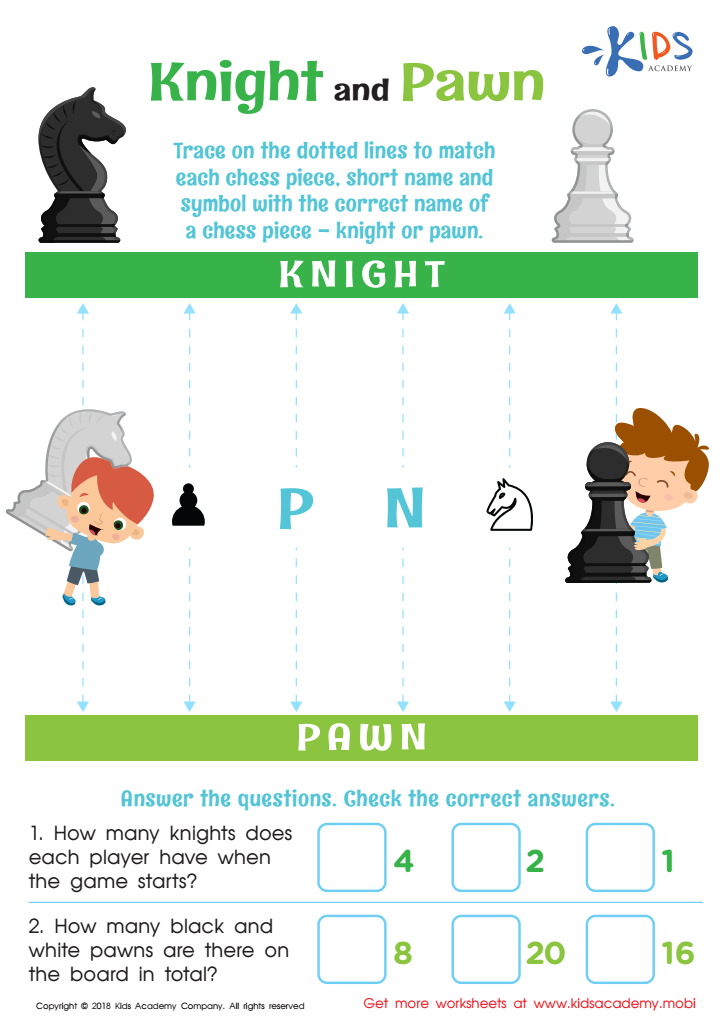
Knight and Pawn Worksheet
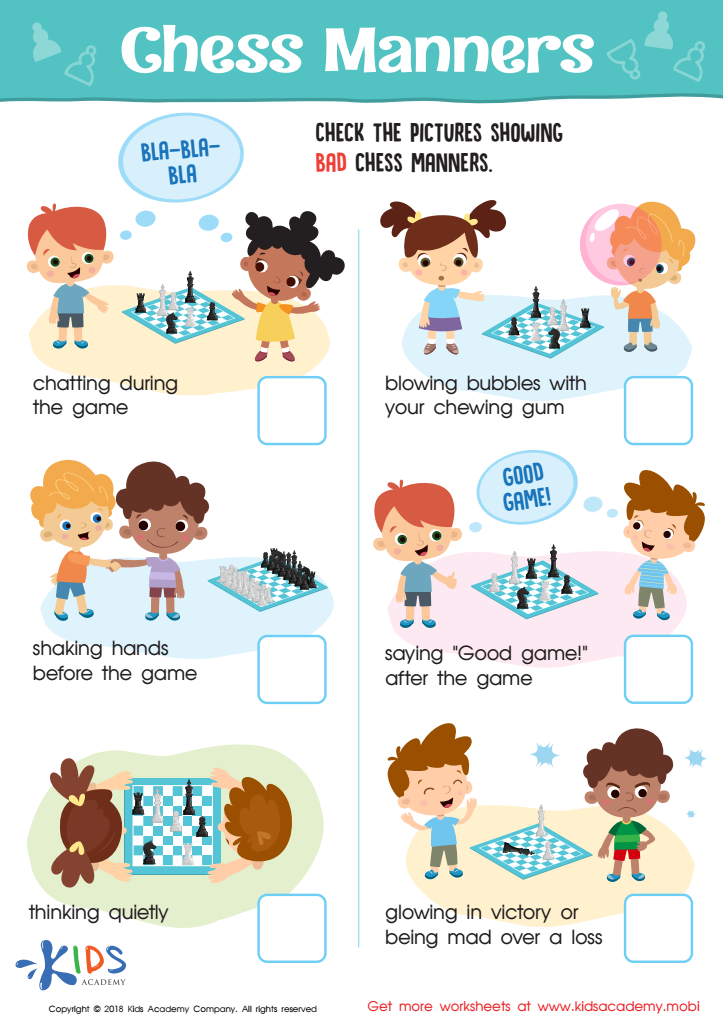
Chess Manners Worksheet
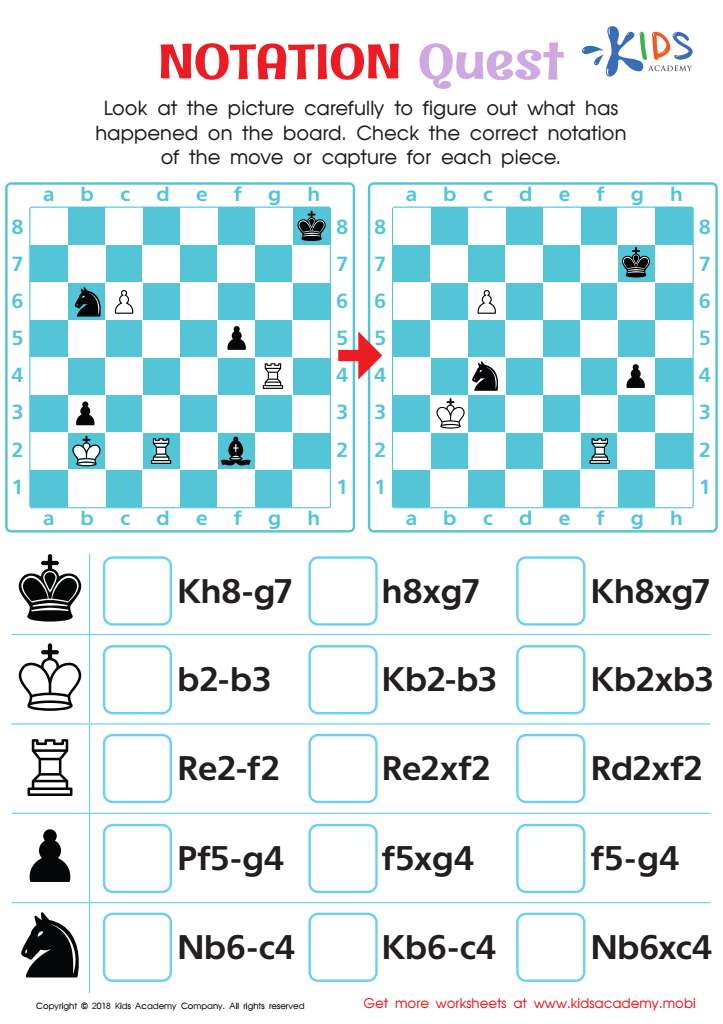
Notation Quest Worksheet
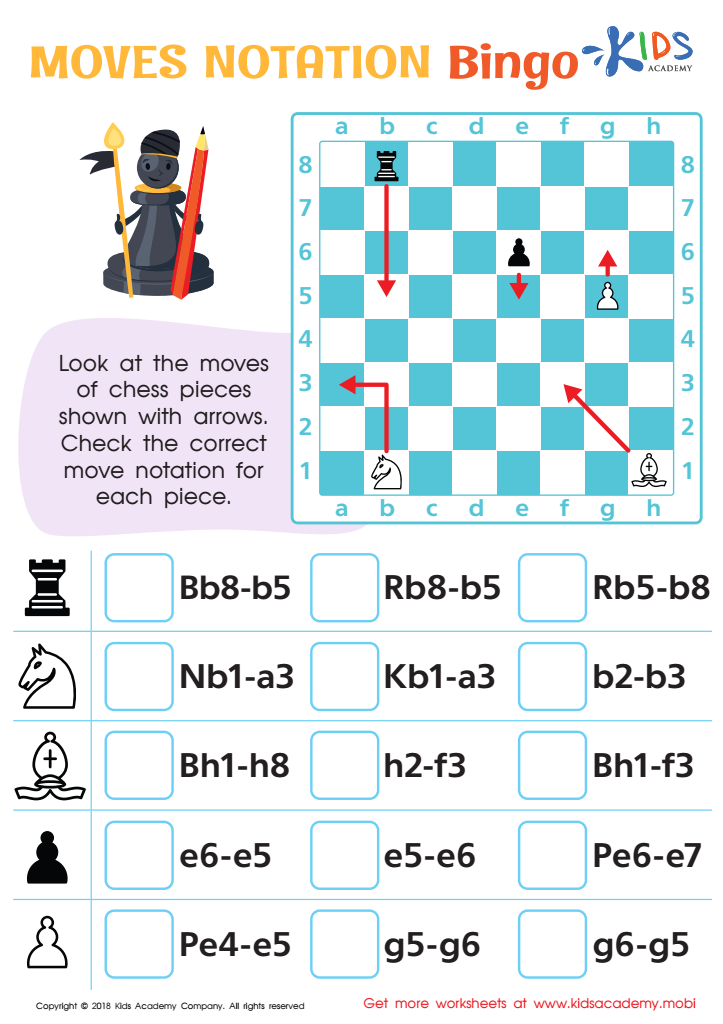
Moves Notation Bingo Worksheet
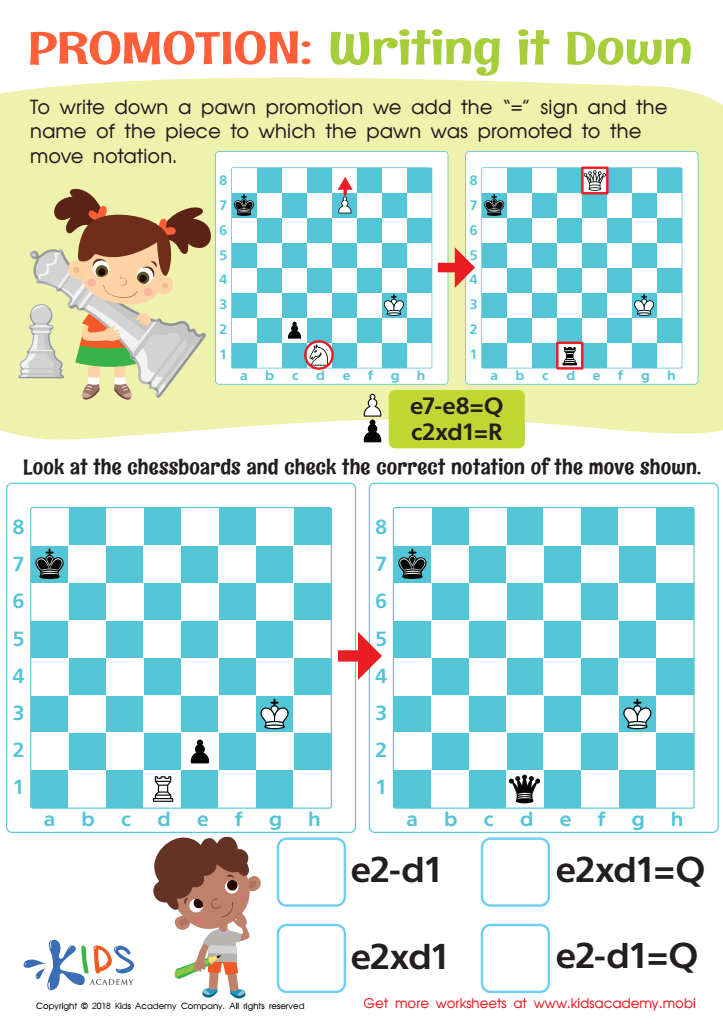
Writing it Down Worksheet
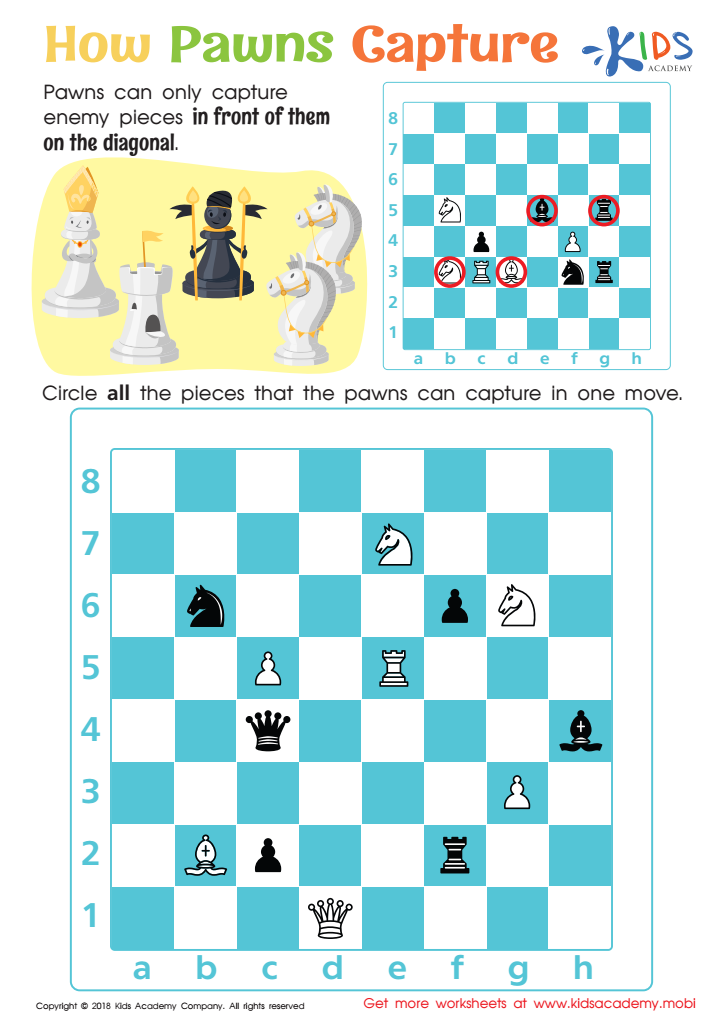
How Pawns Capture Worksheet
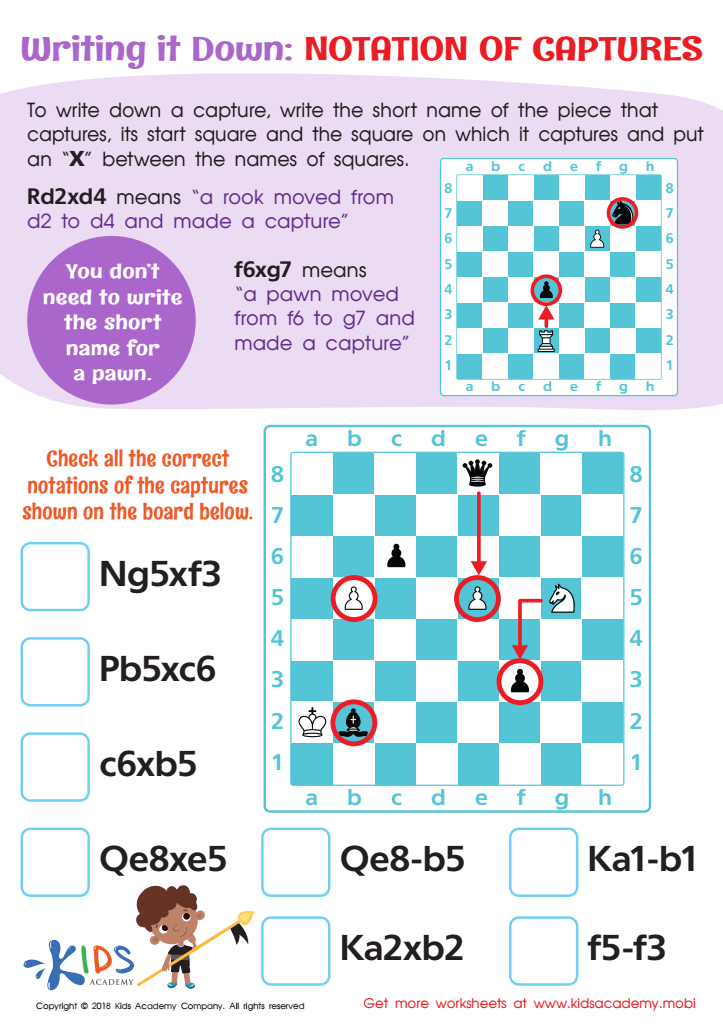
Notation of Captures Writing it Down Worksheet
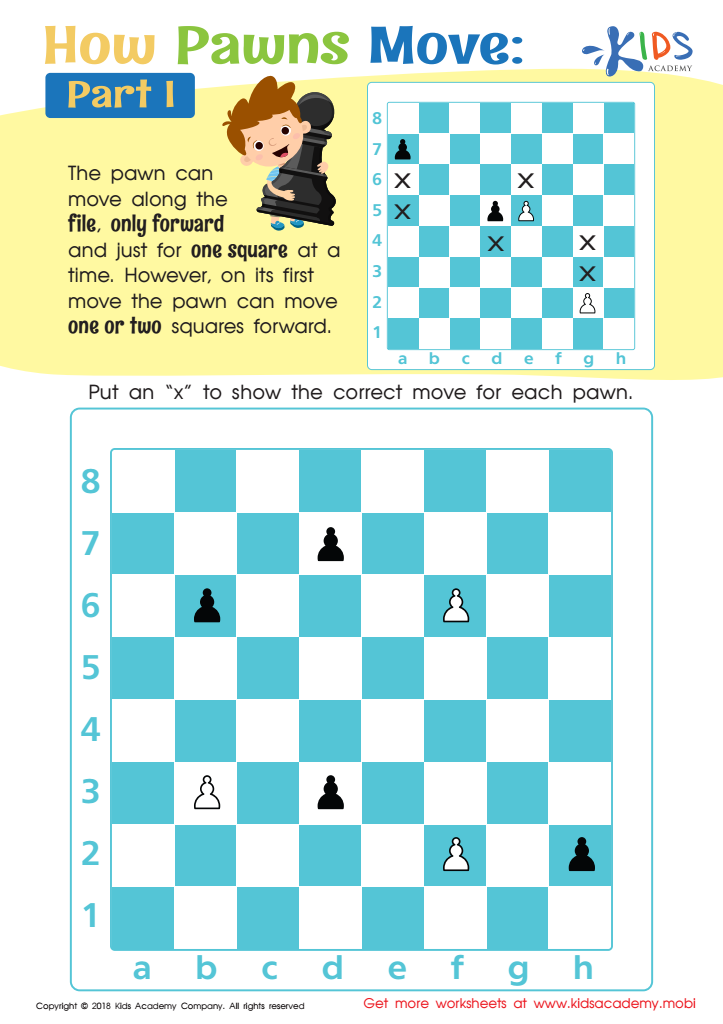
How Pawns Move: Part I Worksheet
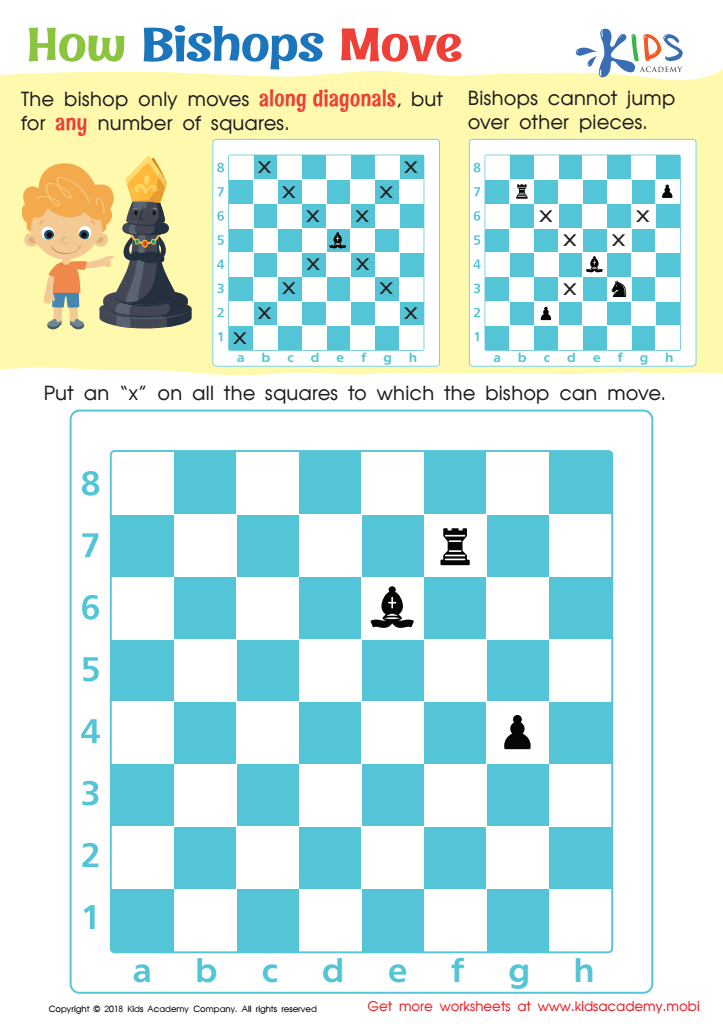
How Bishops Move Worksheet
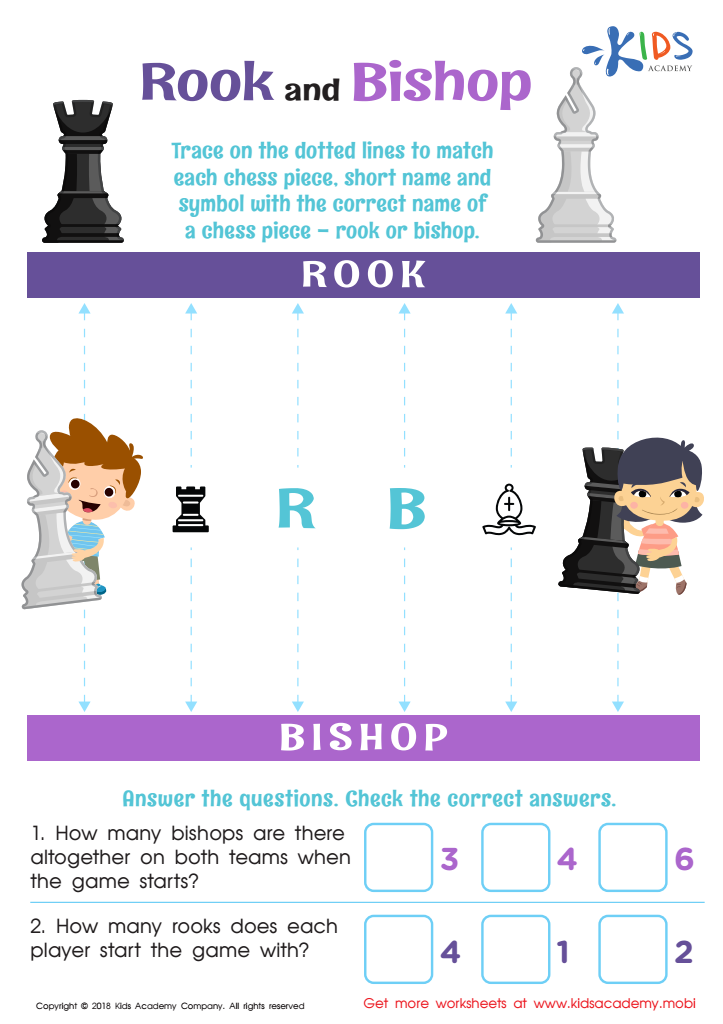
Rook and Bishop Worksheet
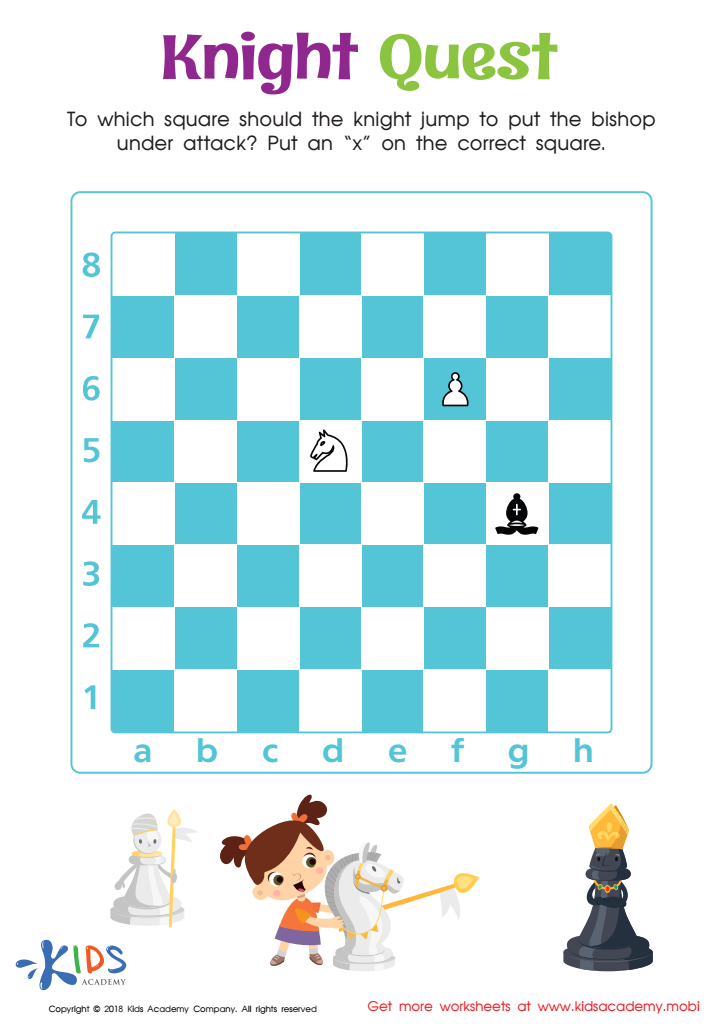
Knight Quest Worksheet
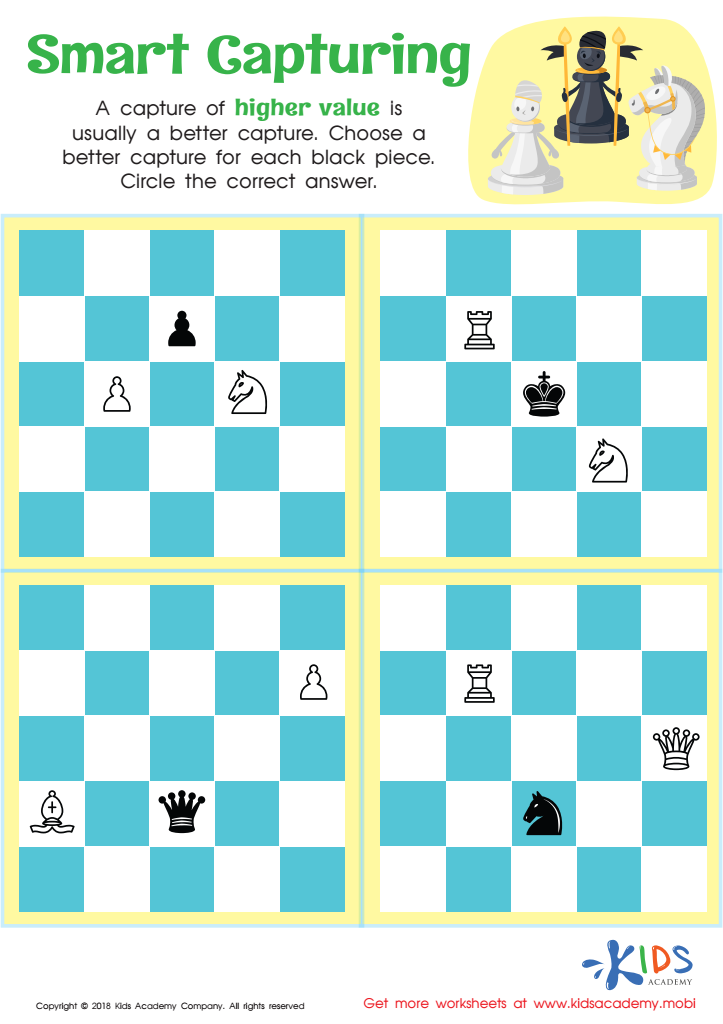
Smart Capturing Worksheet
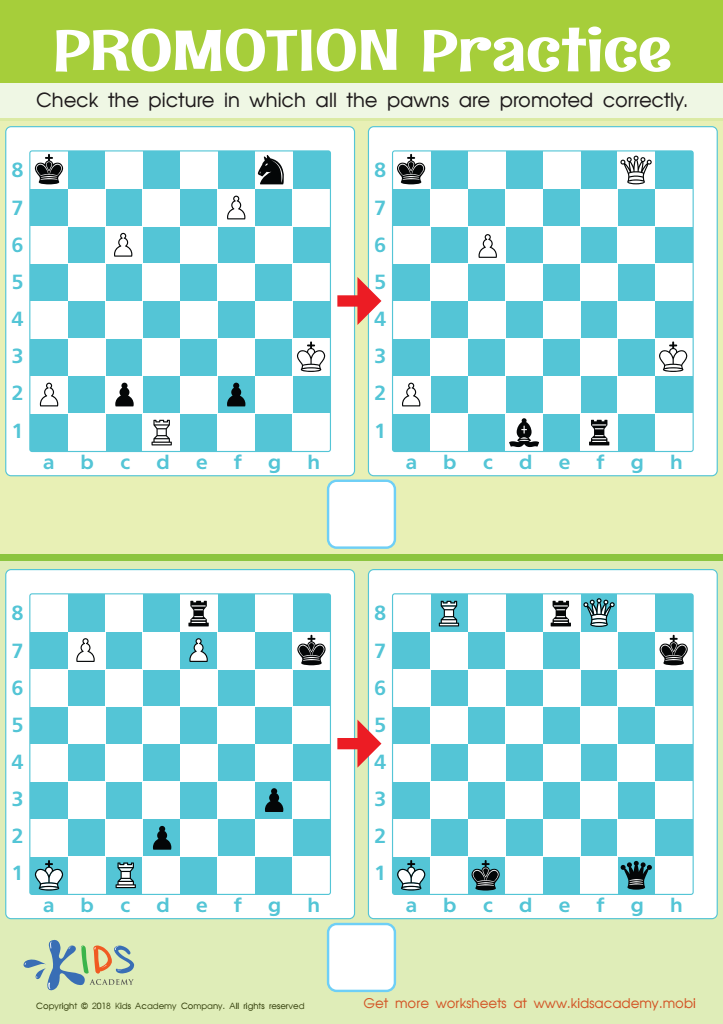
Promotion Practice Worksheet
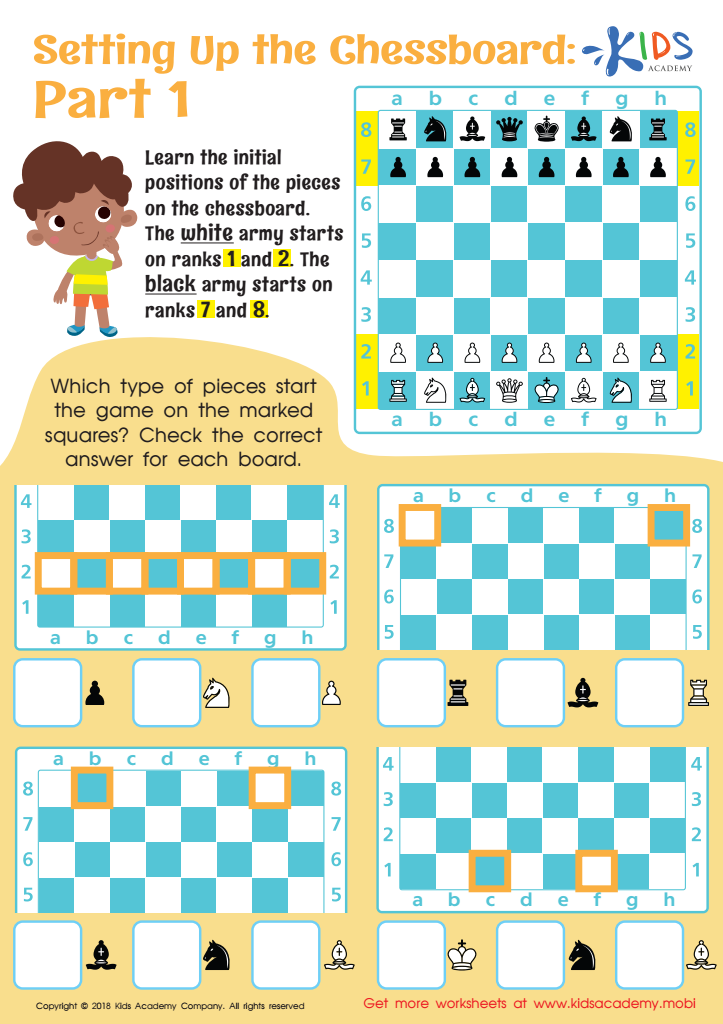
Setting up the Chessboard: Part 1 Worksheet





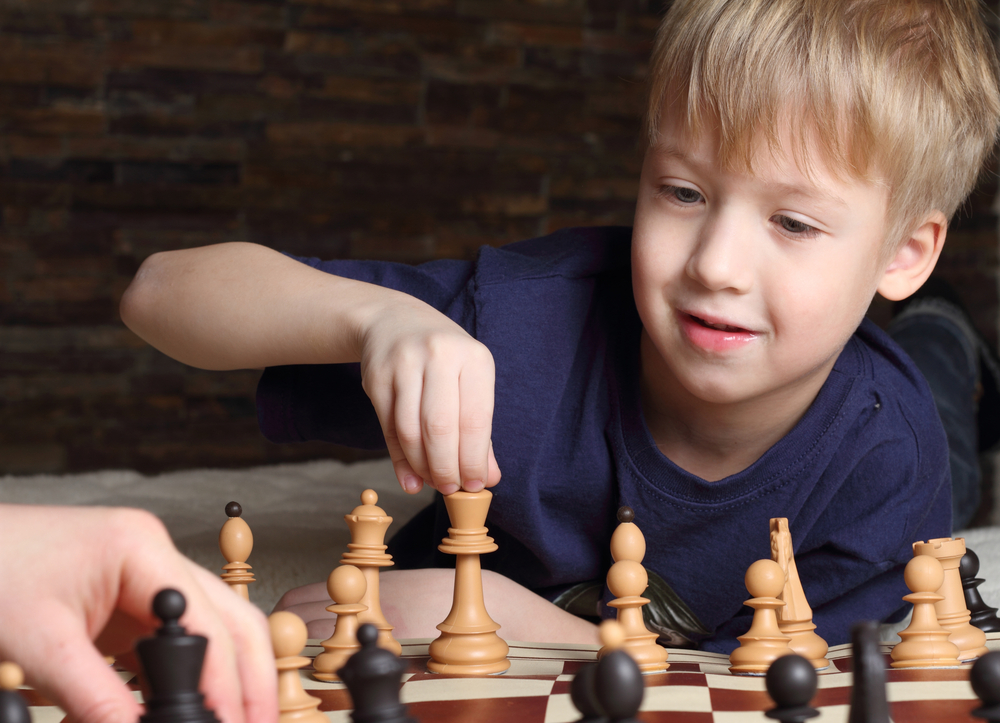


Parents and teachers should take an interest in Normal Chess for children aged 4-7 because it provides numerous cognitive, educational, and social benefits. At this young age, children's brains are incredibly receptive to new challenges and problem-solving activities, which chess offers in abundance. Learning chess helps to develop critical thinking and analytical skills by encouraging children to think several moves ahead and anticipate their opponent's actions. These strategic thinking skills are directly transferrable to their academic learning, enhancing their capabilities in math and science.
Moreover, chess improves memory and concentration. Young players must remember the rules, the moves of various pieces, and their opponent's strategies. This focus and recall practice are foundational skills for successful learning in any subject.
In addition, chess fosters patience, discipline, and sportsmanship. Winning requires thoughtful deliberation, while learning to cope with losing helps build emotional resilience and the ability to graciously accept setbacks. Social interaction benefits are also significant, as children have the chance to communicate with peers, practice taking turns, and negotiate rules, which are key aspects of social development.
Introducing chess at an early age creates a fun and engaging way for children to develop a wide array of useful life skills, which can contribute to their academic and personal growth.