Normal Consonants Worksheets for Ages 4-8
26 filtered results
-
From - To
Enhance your child's reading skills with our Normal Consonants Worksheets designed for ages 4-8. Our printable worksheets focus on consonant recognition and practice, providing engaging activities that foster letter familiarity and phonics mastery. Through fun exercises and captivating illustrations, children will identify consonant sounds, match pictures to letters, and trace and write consonants, laying a solid foundation for literacy development. Ideal for classroom use or at-home practice, these worksheets make learning enjoyable for young learners. Equip your child with the tools they need to succeed in reading and writing with these expertly crafted resources.
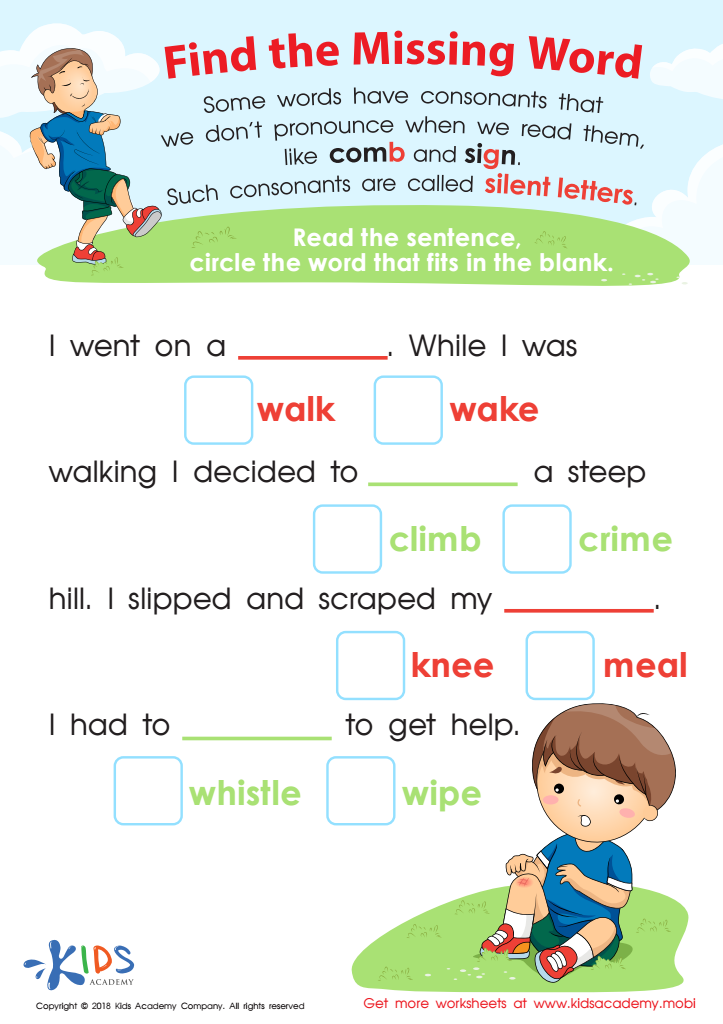
Find The Missing Word Worksheet
 Assign to My Students
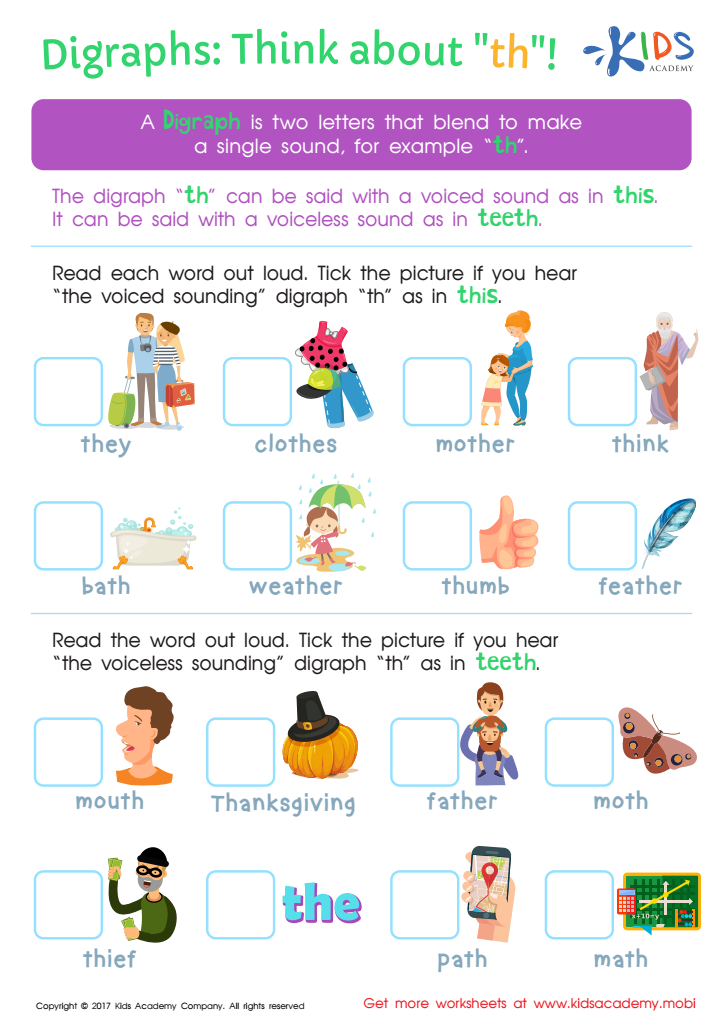
Digraphs: Think About "th" Worksheet
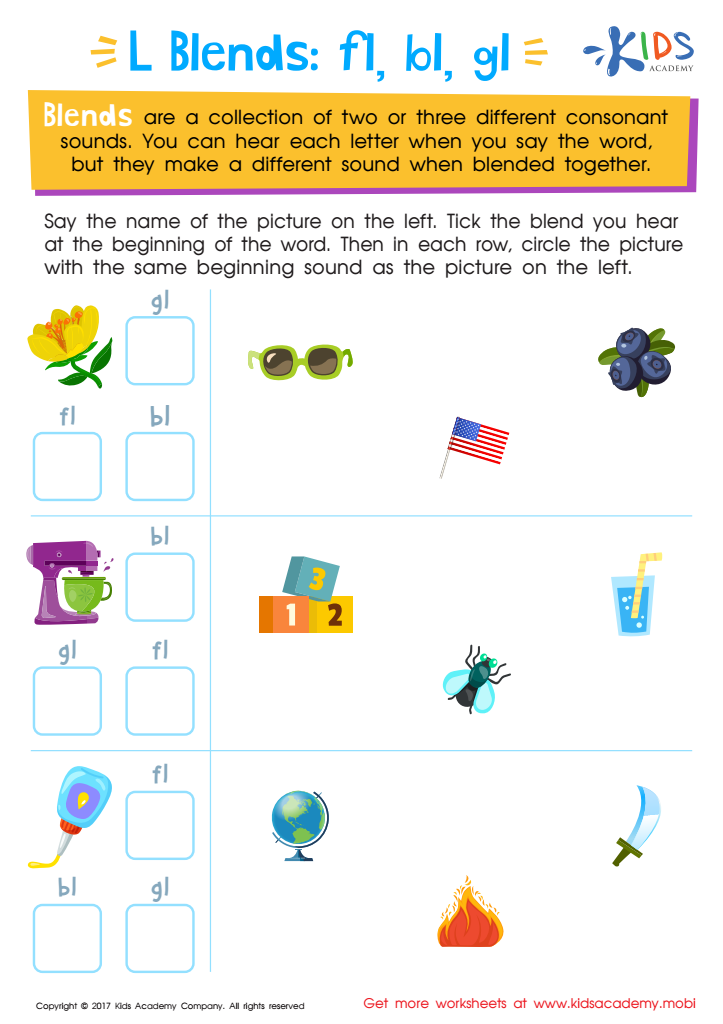
Blending Consonants: "Fl", "Bl" and "Gl" Printable
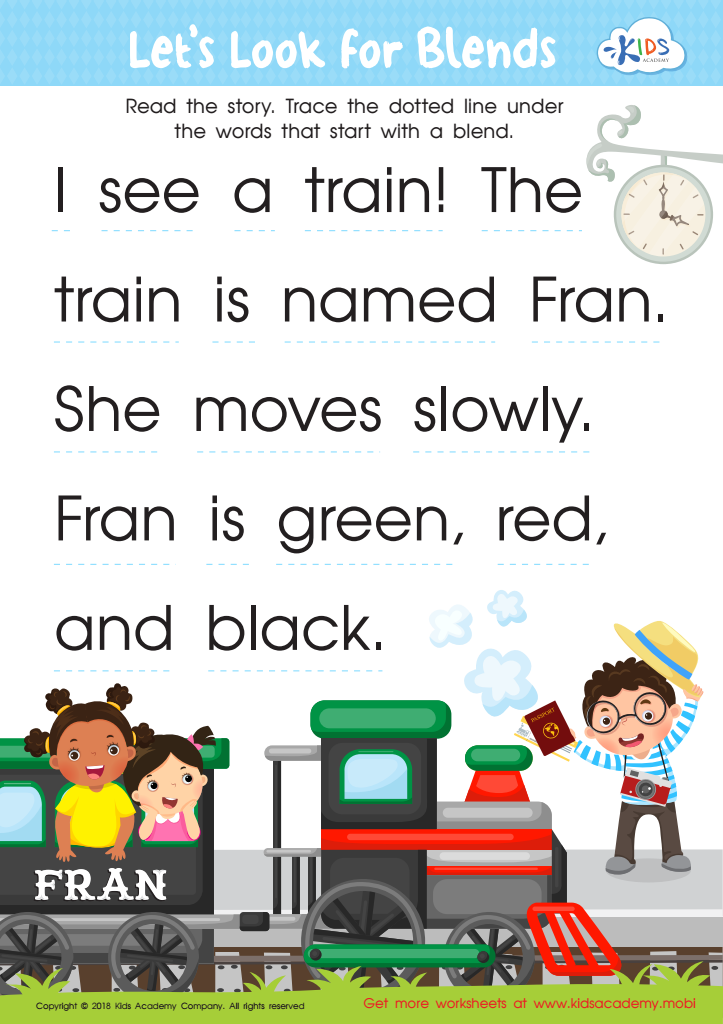
Let's Look for Blends Worksheet
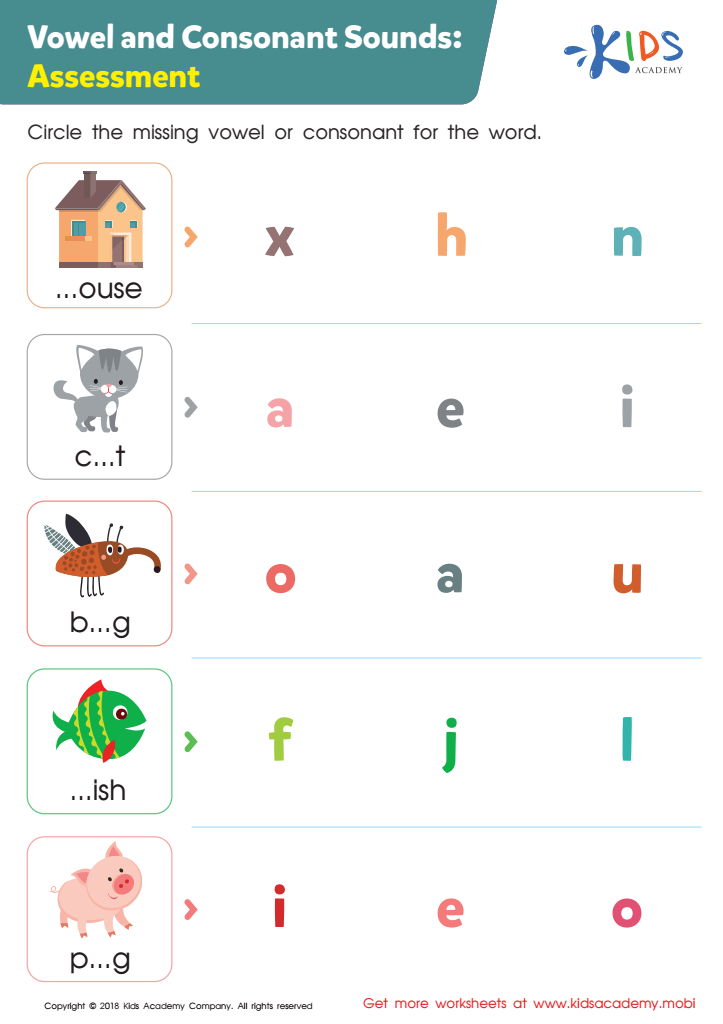
Vowel and Consonant Sounds: Assessment Worksheet
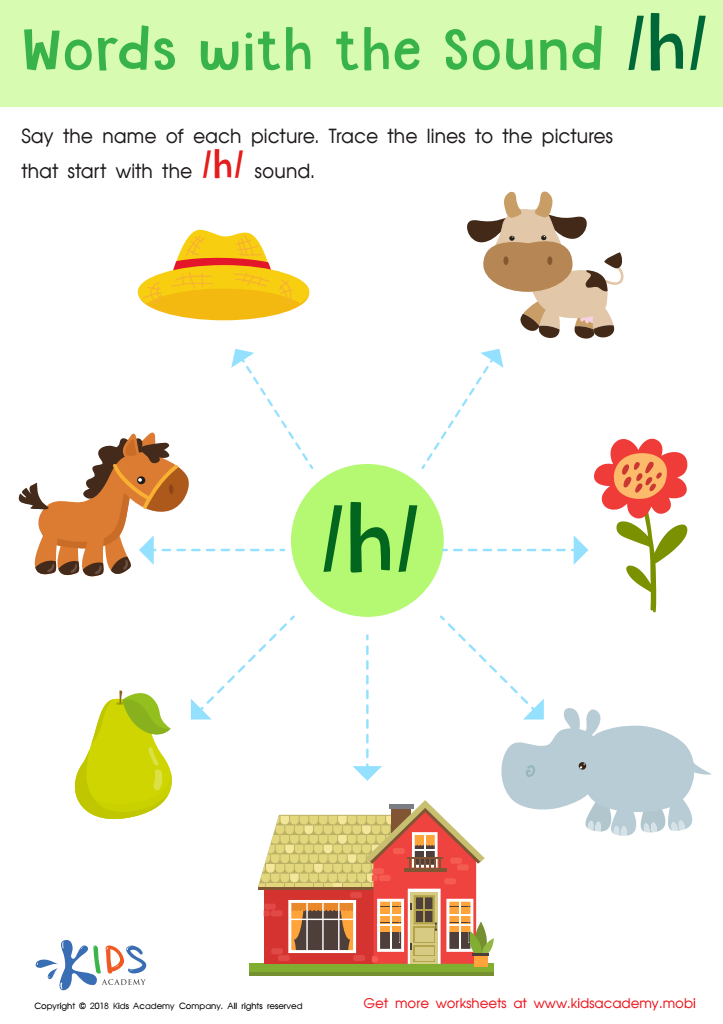
Words with sound h Reading Worksheet
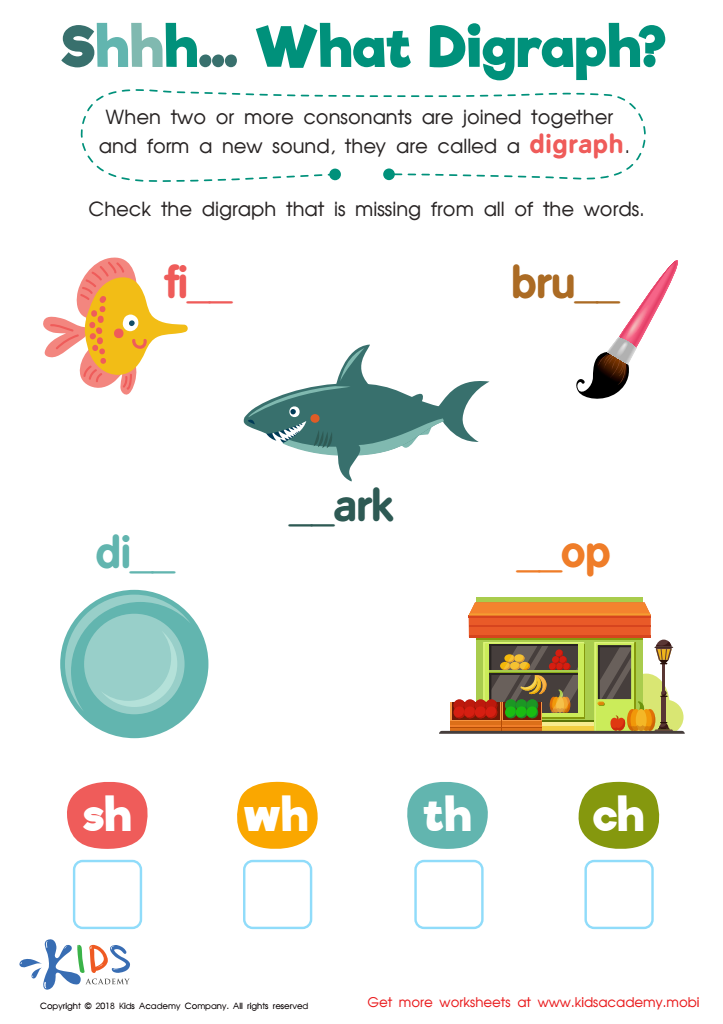
Shhh... What Digraph? Worksheet
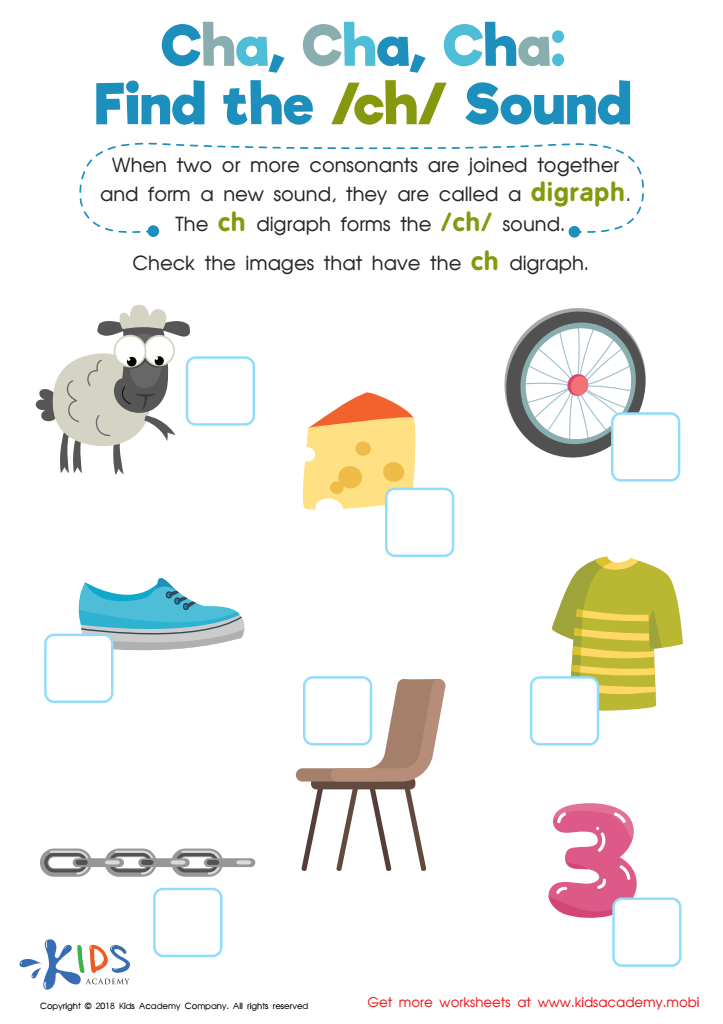
Cha, Cha, Cha: Find the /Ch/ Sound Worksheet
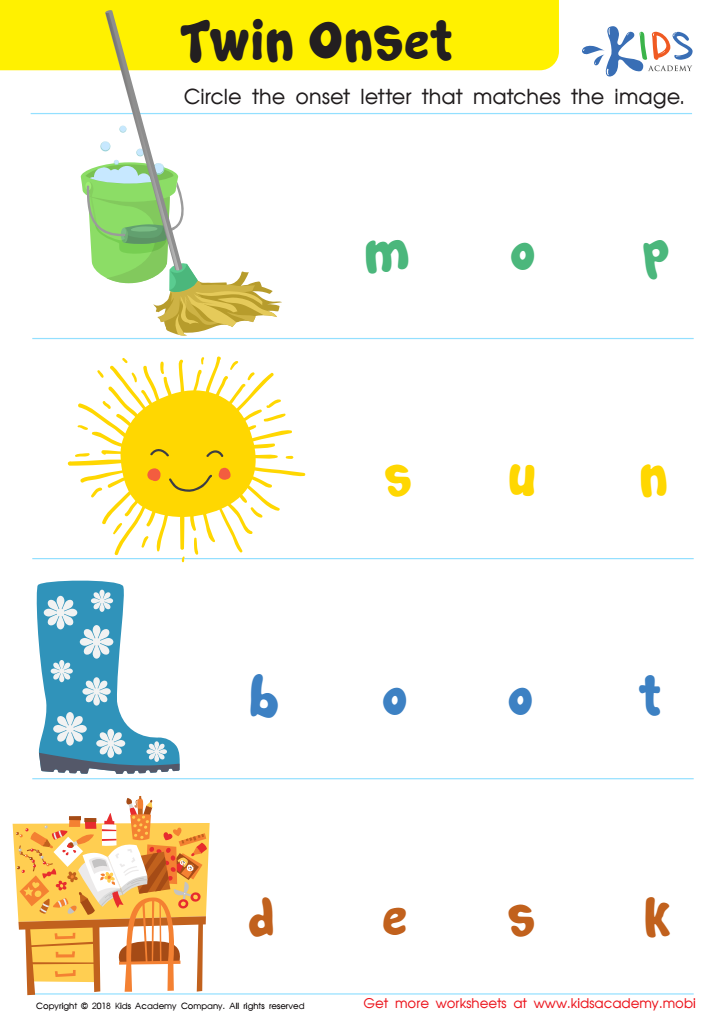
Twin Onset Worksheet
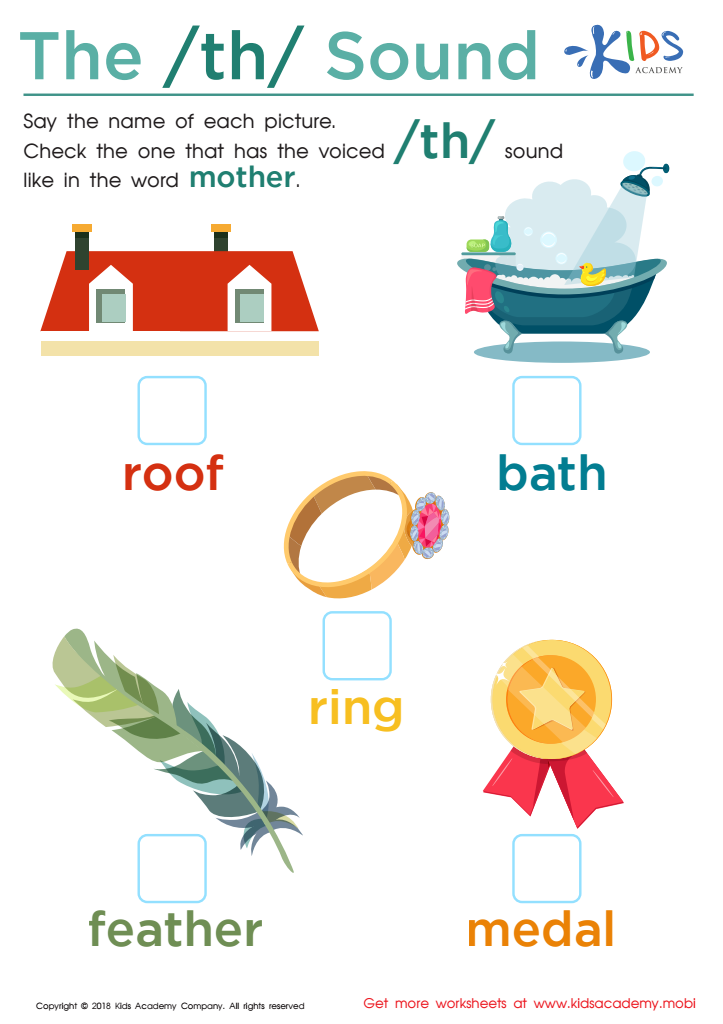
The /th/ Sound Worksheet
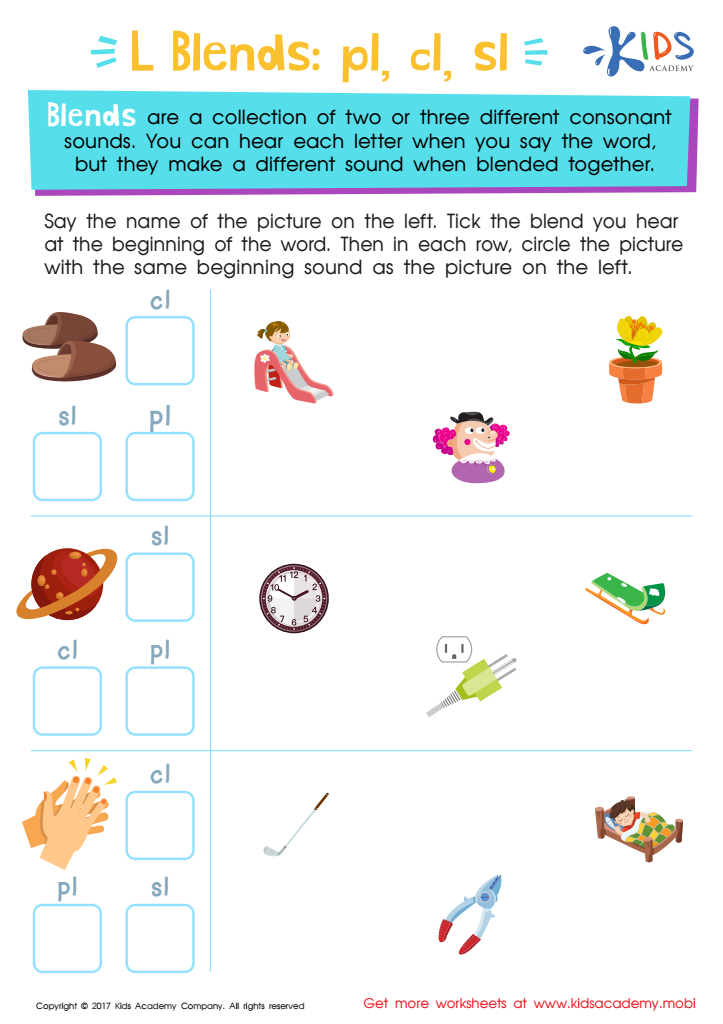
L Blends: "Pl", "Cl" and "Sl" Printable
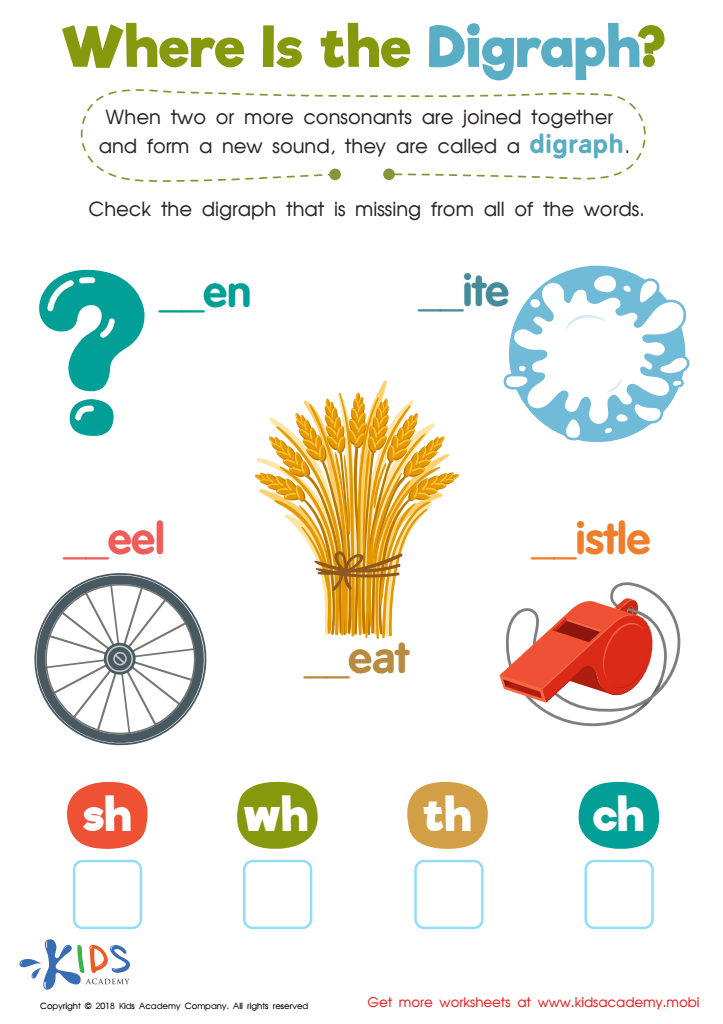
Where Is the Digraph? Worksheet
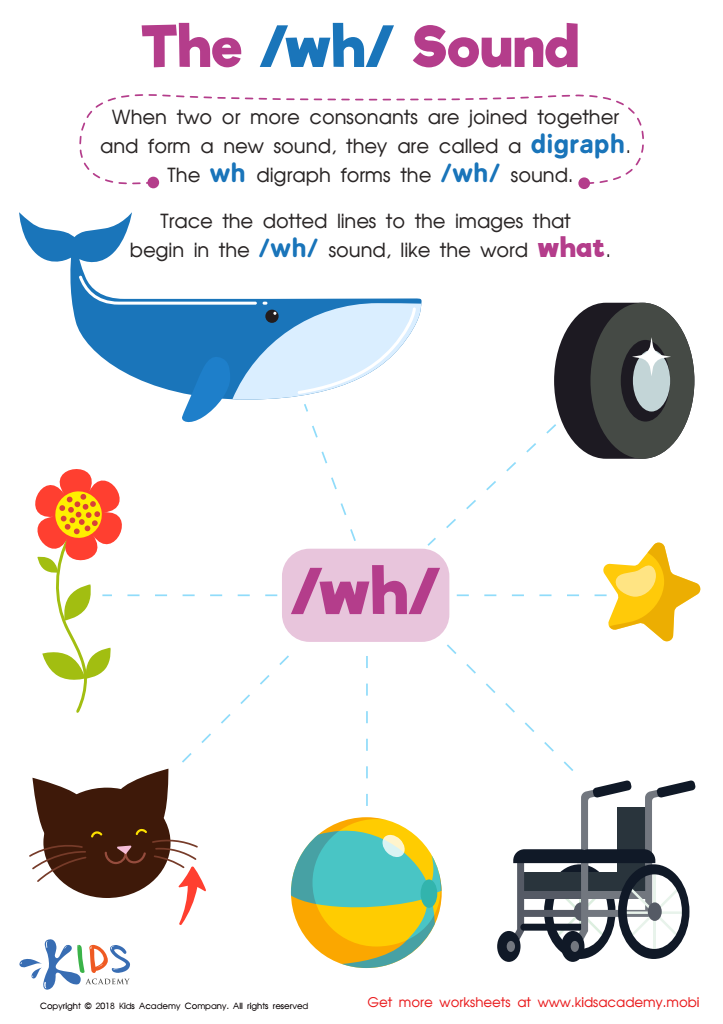
The /wh/ Sound Worksheet
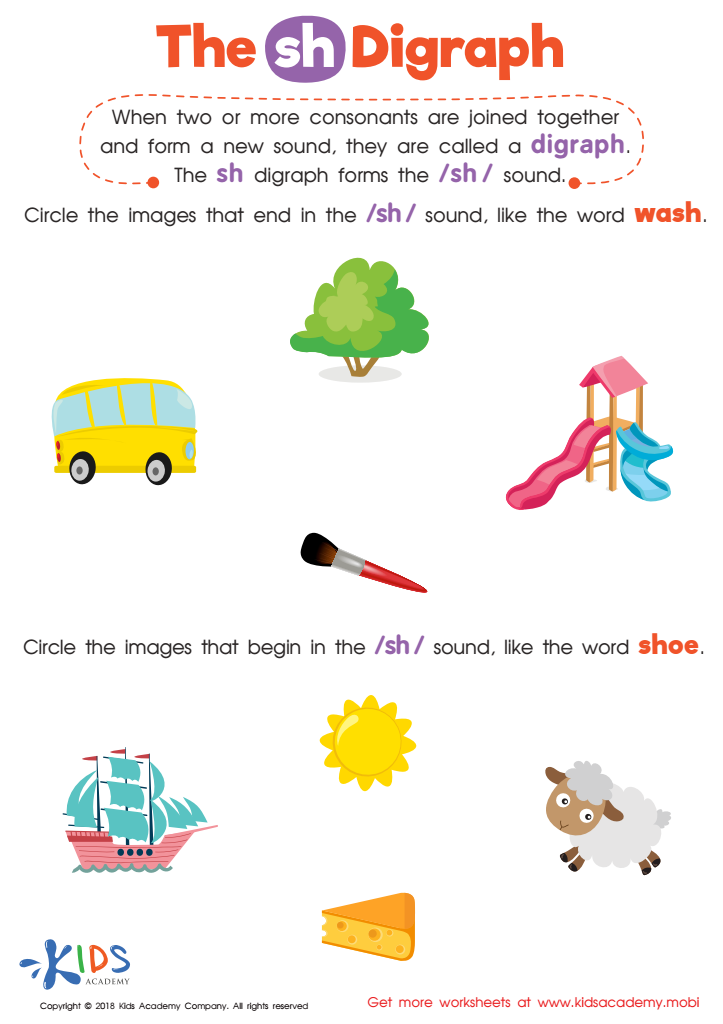
The SH Digraph Worksheet
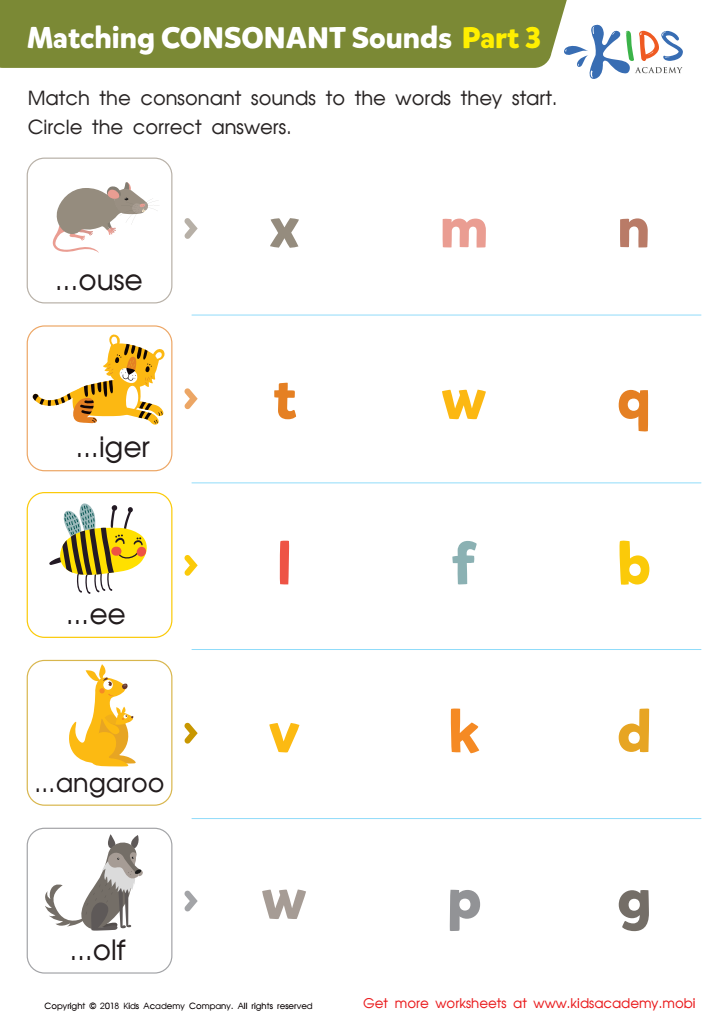
Matching Consonant Sounds: Part 3 Worksheet
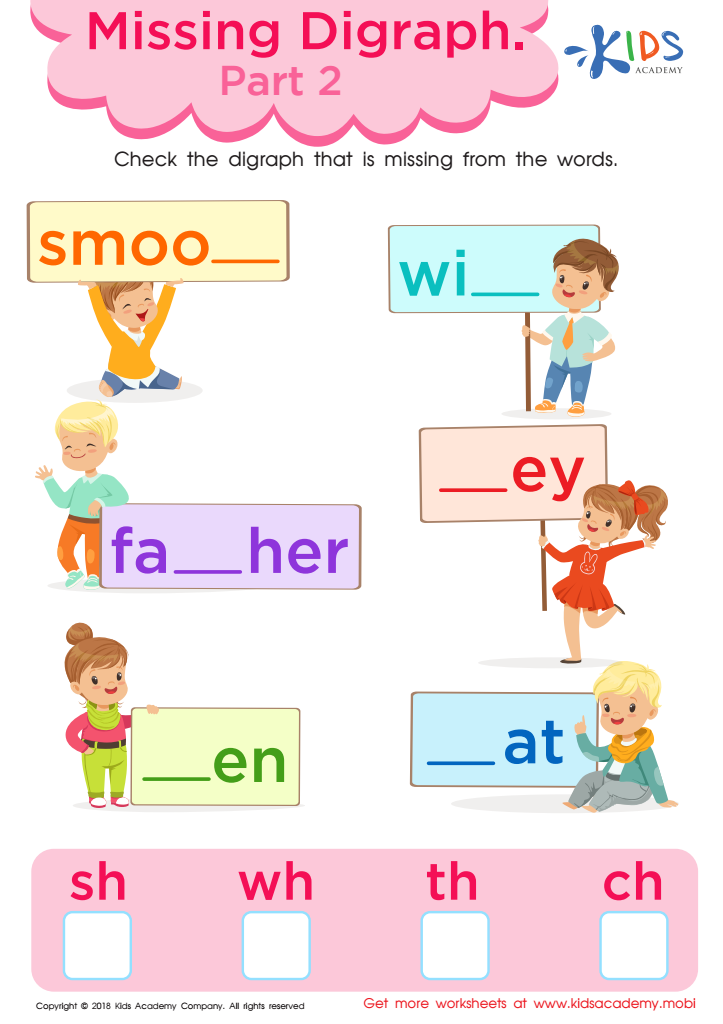
Missing Digraph: Part 2 Worksheet
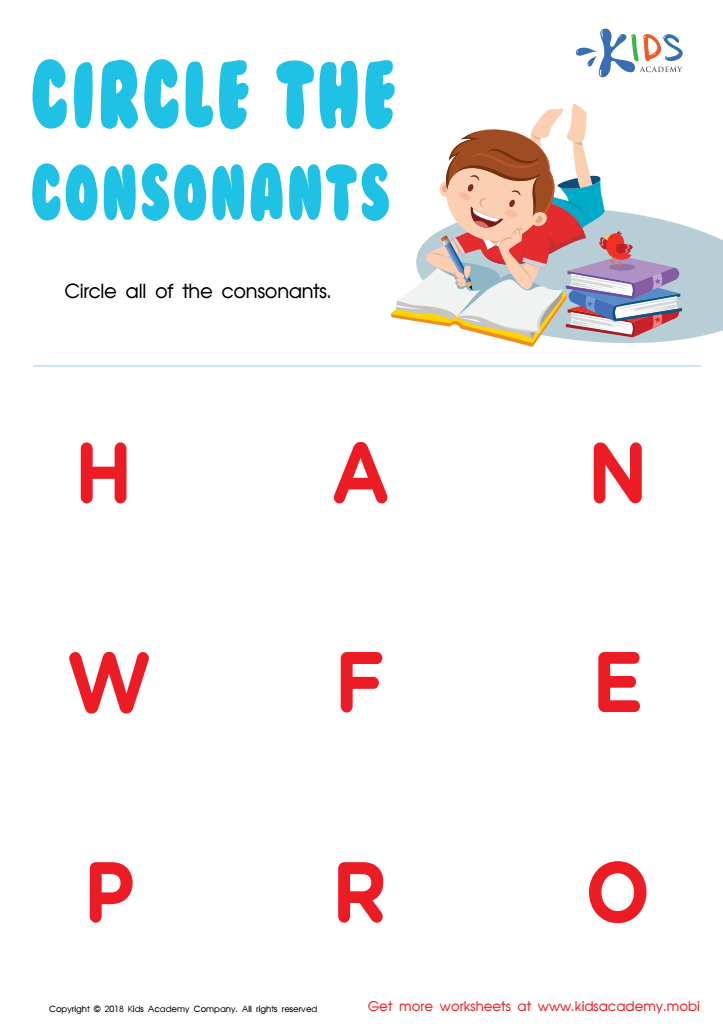
Circle the Consonants Worksheet
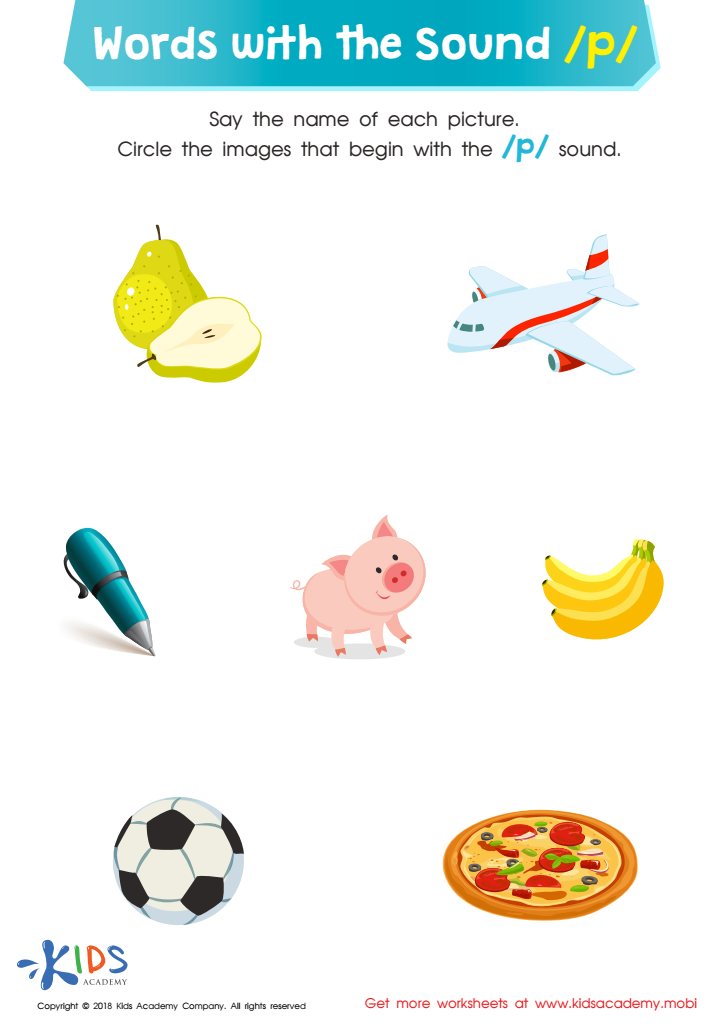
Words with sound p Reading Worksheet
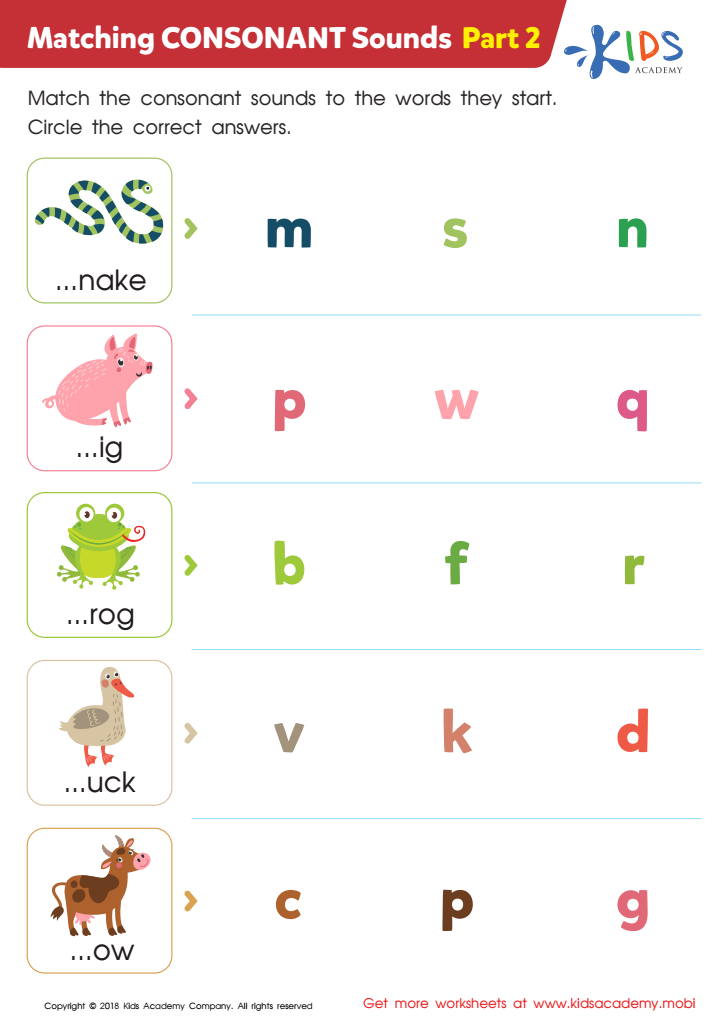
Matching Consonant Sounds: Part 2 Worksheet
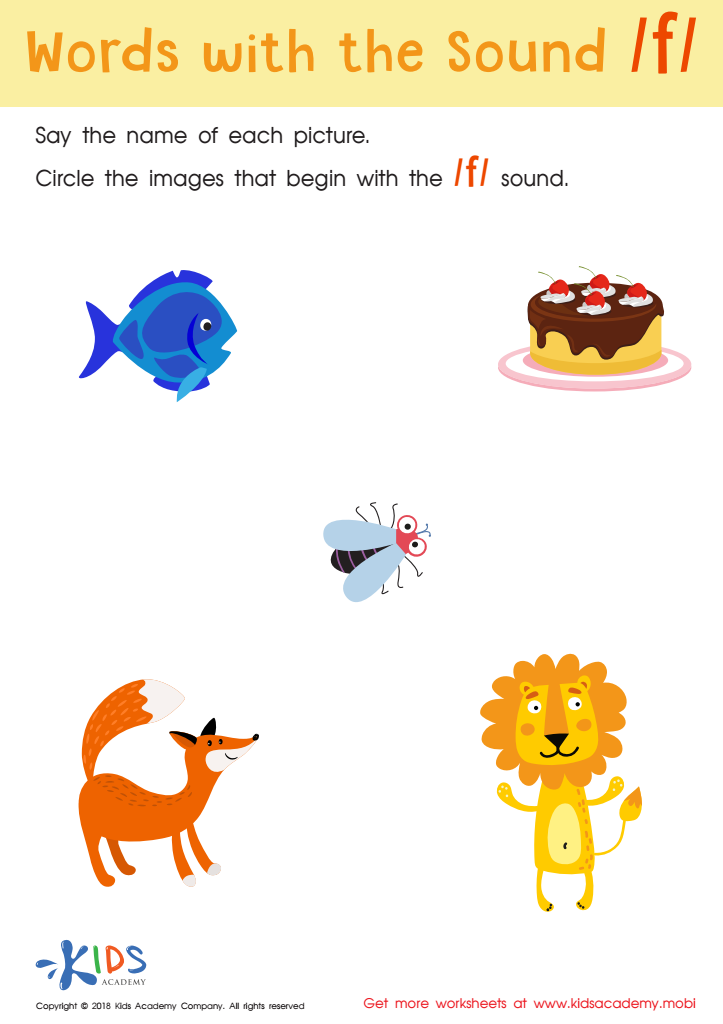
Words with sound f Reading Worksheet
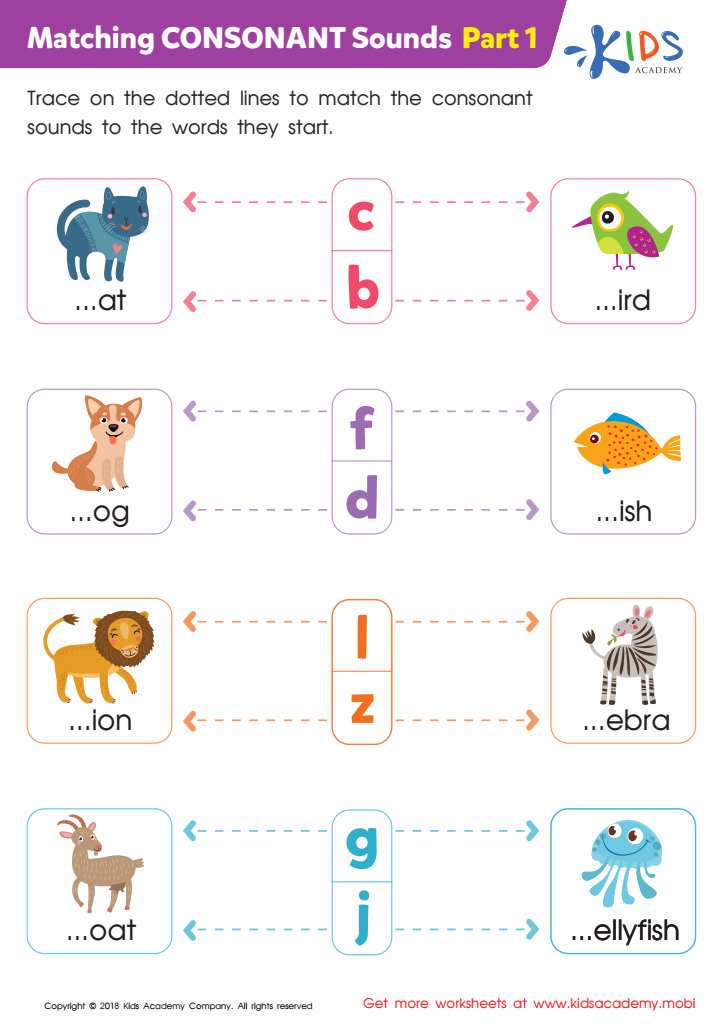
Matching Consonant Sounds: Part 1 Worksheet
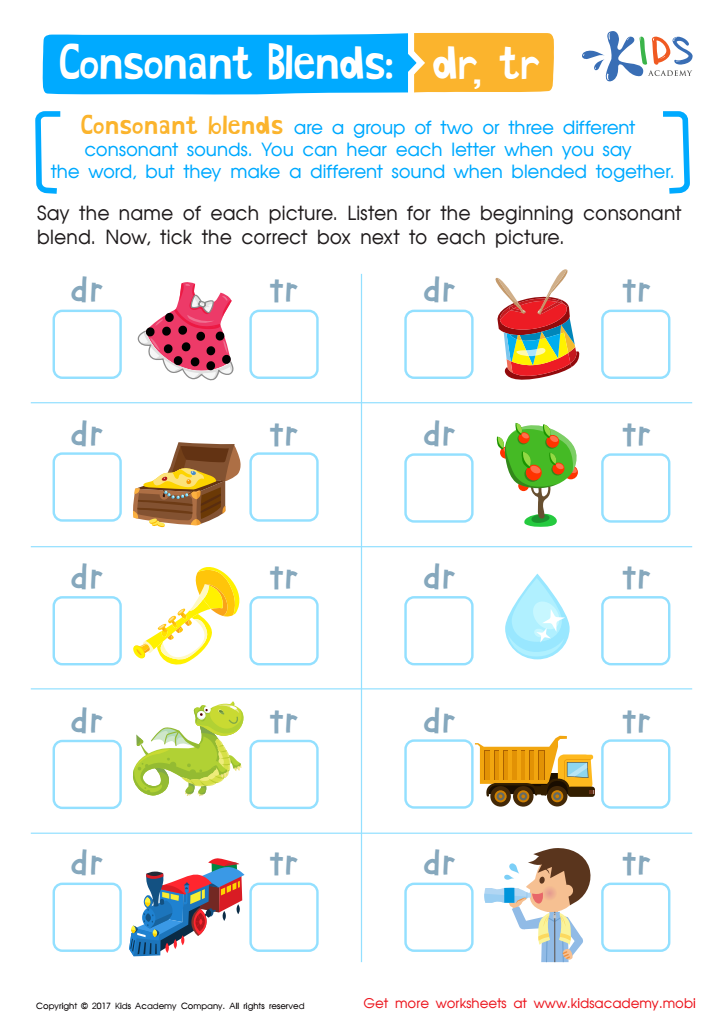
Consonant Blends: "Dr" and "Tr" Printable
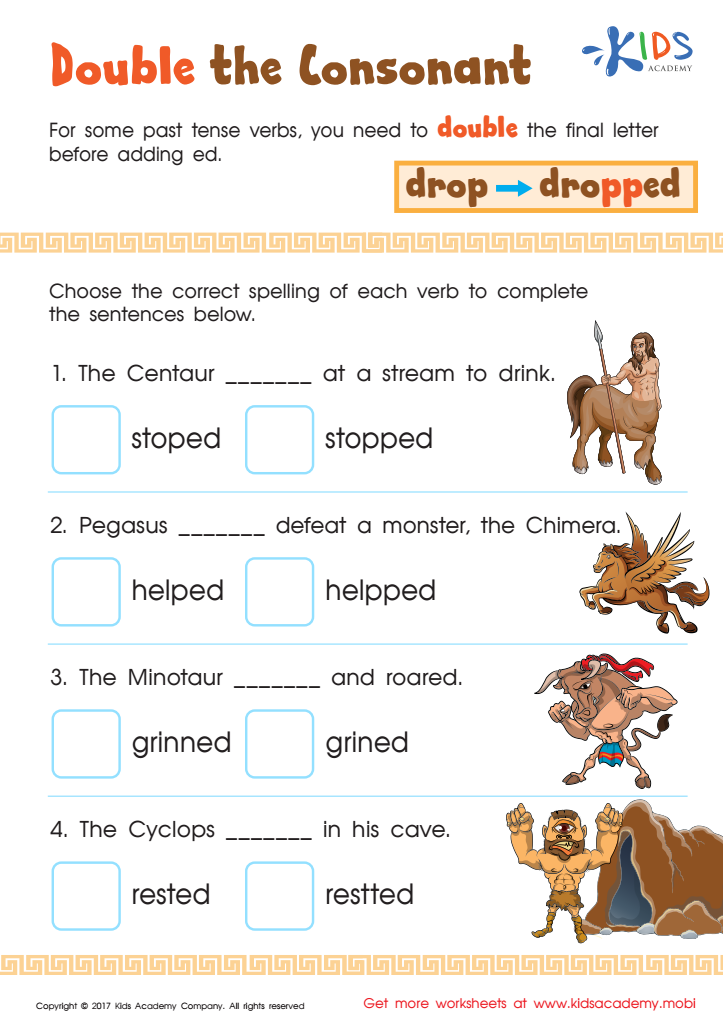
Double Consonant Spelling Worksheet
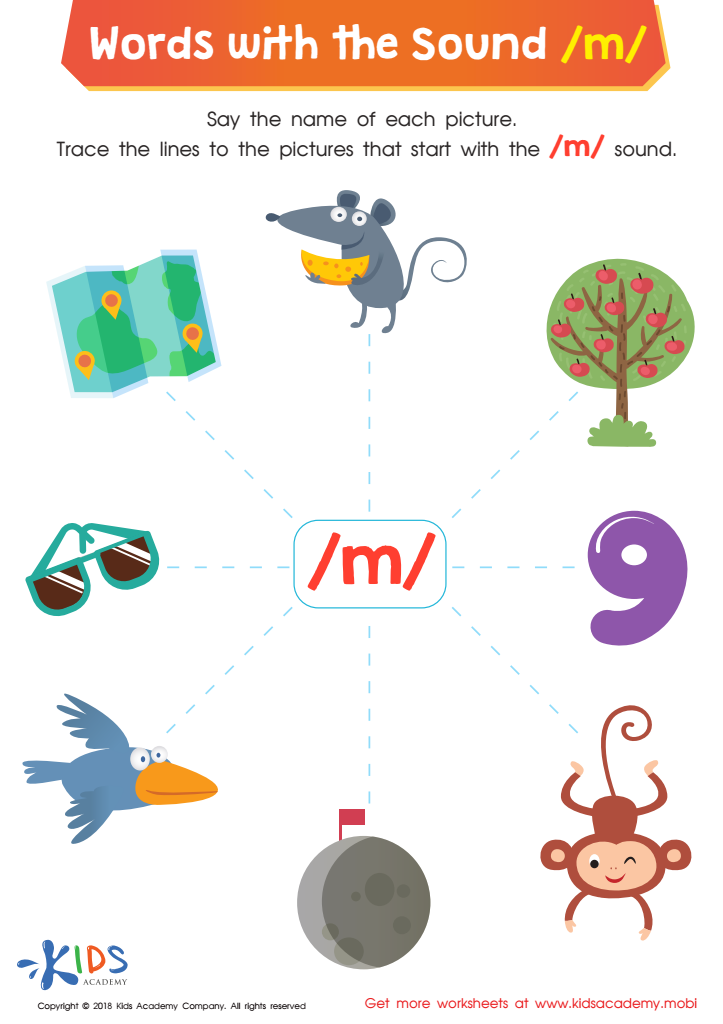
Words with Sound M Reading Worksheet



Learning normal consonants is crucial for children ages 4-8 because these sounds are foundational building blocks for literacy skills. At the early stages of language development, understanding and correctly pronouncing consonants helps children in decoding words, an essential step in learning to read. Knowing consonant sounds enhances phonemic awareness, which allows children to break down words into individual sounds, recognize patterns, and blend sounds together to form words.
Proper pronunciation of consonants also affects a child's ability to communicate clearly and effectively. Mispronounced consonants can lead to misunderstandings and affect a child's confidence in speaking and interacting with peers and adults. For both parents and teachers, being attentive to these language skills can help identify any speech or phonological awareness issues early, allowing for timely interventions such as speech therapy or specialized teaching methods.
Furthermore, competence in consonant sounds supports writing skills. When children can sound out letters and words accurately, they are better equipped to spell correctly and write comprehensibly. Mastery over consonants paves the way for more complex language skills, including grammar, vocabulary expansion, and reading comprehension, thus setting a strong foundation for all future academic endeavors. Prioritizing these skills during ages 4-8 positions children for long-term educational success.






