Normal Consonant Blends Worksheets for Ages 5-6
5 filtered results
-
From - To
Discover our engaging Normal Consonant Blends Worksheets, perfect for children ages 5-6! These printable resources are designed to help young learners master consonant blends through fun and interactive activities. Each worksheet encourages skill development in reading and writing, fostering a solid foundation in phonics. With vibrant illustrations and approachable exercises, children will enjoy assessing and building their language skills while they learn. These worksheets promote critical thinking and creativity, making learning an exciting adventure. Ideal for home or classroom use, our consonant blends materials offer a valuable support tool for early education. Start your child's literacy journey today!
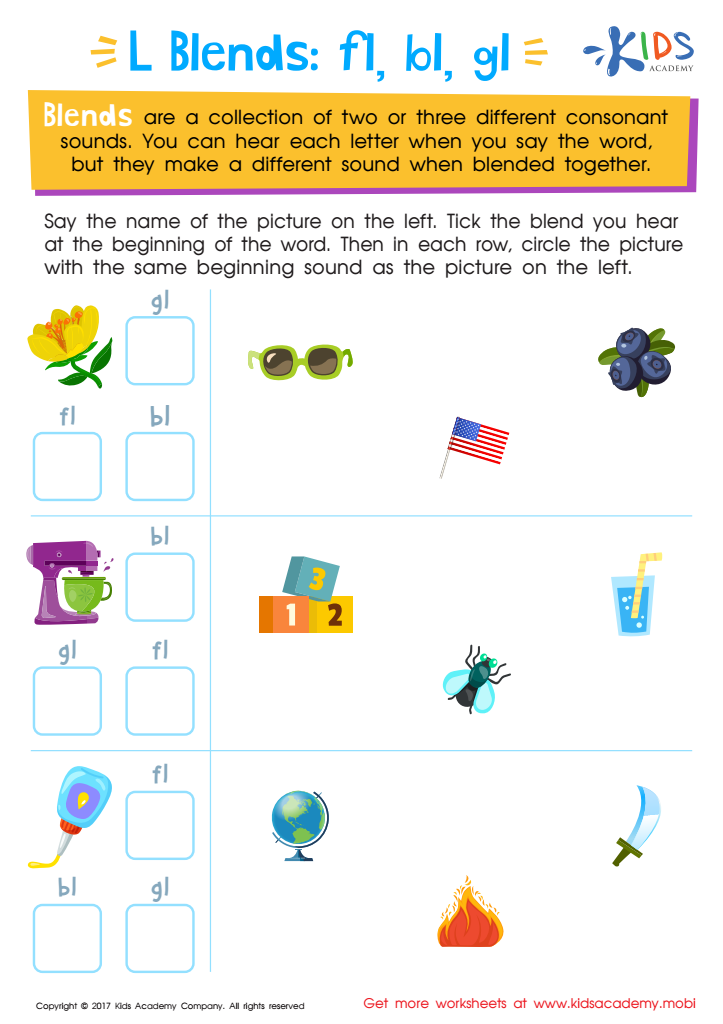
Blending Consonants: "Fl", "Bl" and "Gl" Printable
 Assign to My Students
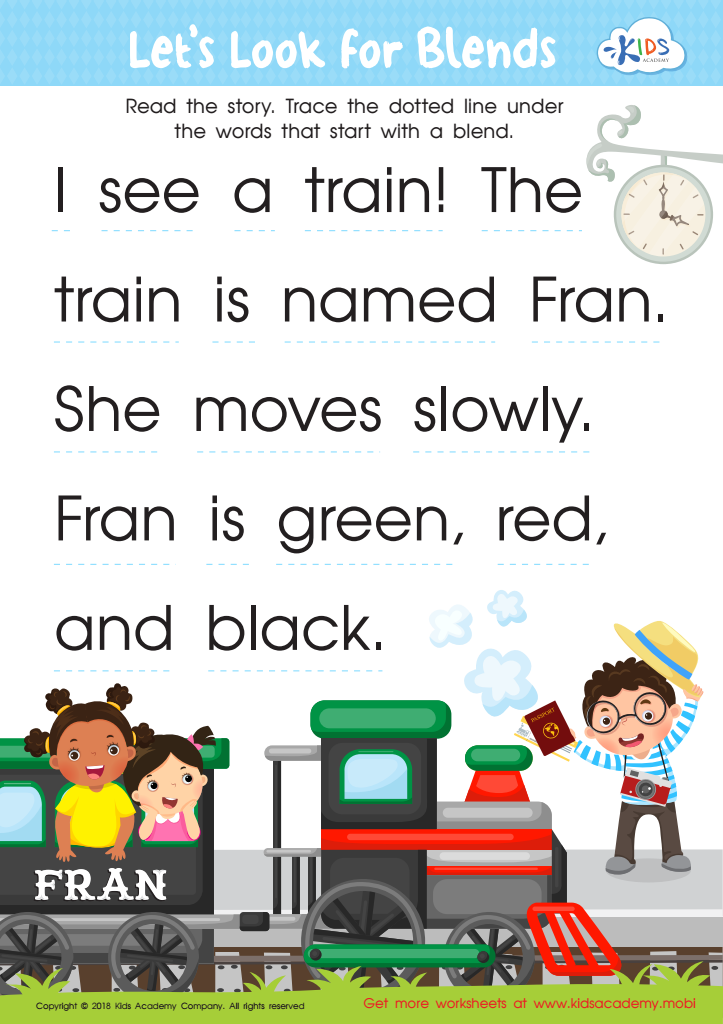
Let's Look for Blends Worksheet
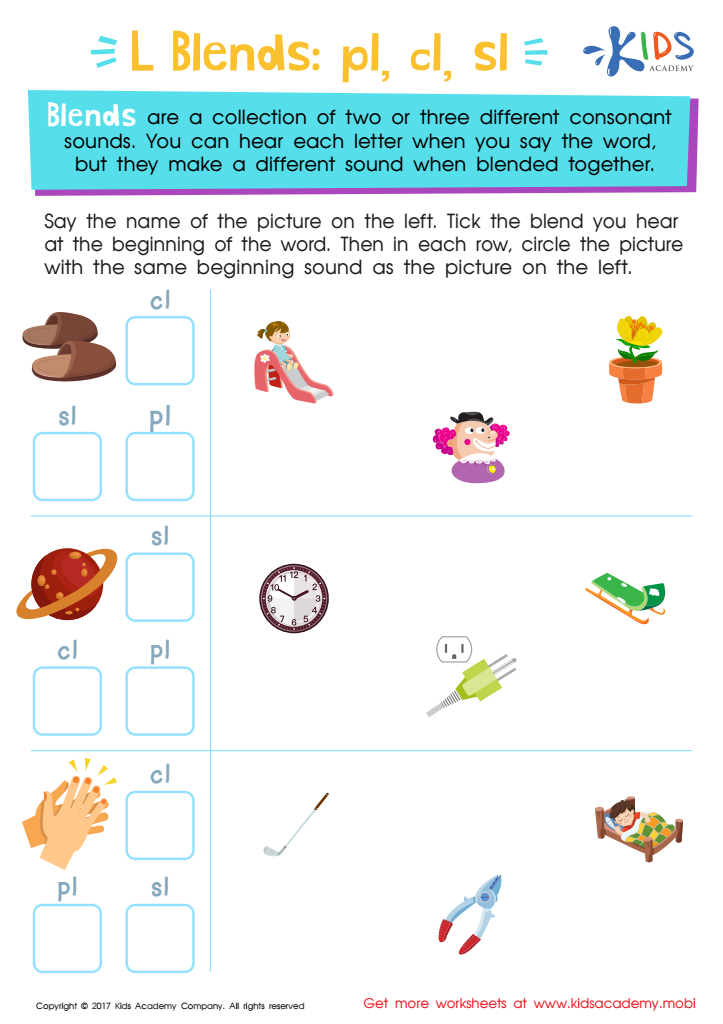
L Blends: "Pl", "Cl" and "Sl" Printable
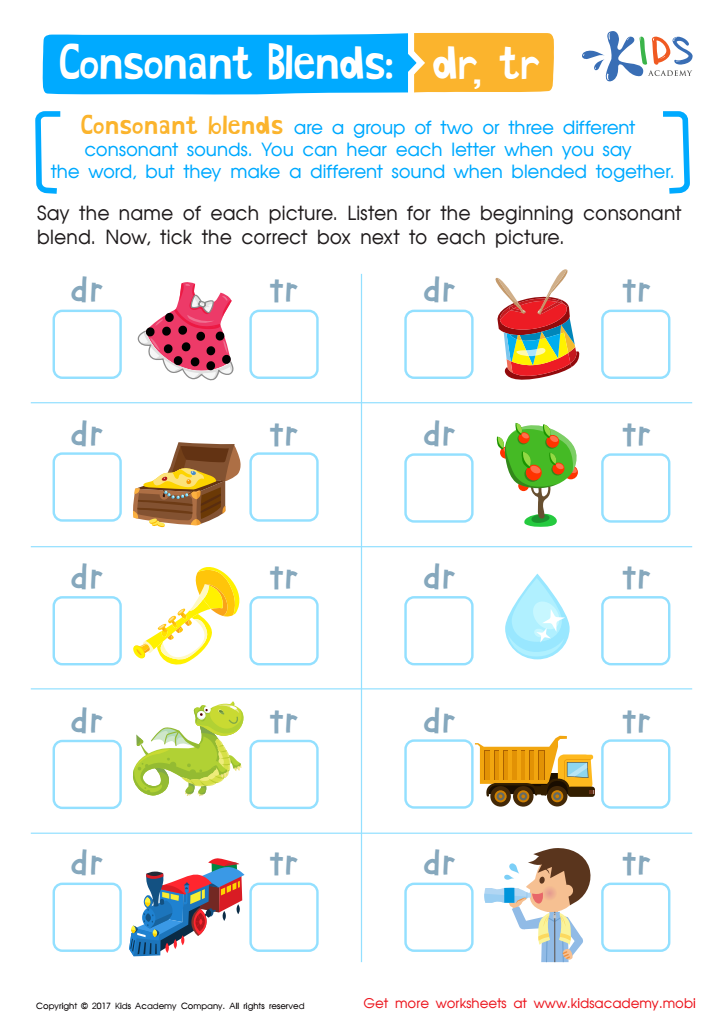
Consonant Blends: "Dr" and "Tr" Printable
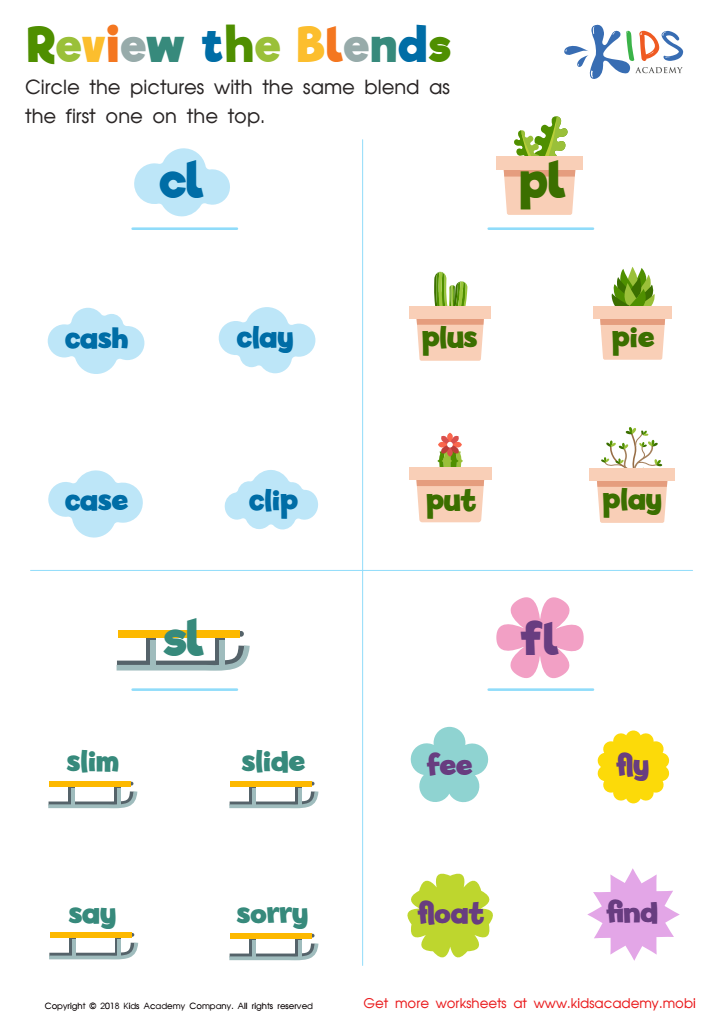
Review the Blends Worksheet





Consonant blends are crucial for early literacy development, and understanding their importance can significantly impact a child's reading and writing skills. For children aged 5-6, who are typically in kindergarten or first grade, mastering consonant blends lays the foundation for building words and improving phonemic awareness.
When two or more consonants are blended together, they create distinct sounds, such as in "bl" in "black" or "tr" in "tree." By recognizing these blends, children gain the ability to decode and spell a wider range of words, enhancing their reading fluency. This early phonics instruction fosters confidence as children learn to tackle more complex words, leading to greater enjoyment in reading.
Parents and teachers should embrace activities that include consonant blends through games, songs, and interactive reading exercises. This approach not only develops their phonological awareness but also makes learning engaging and fun. Additionally, familiarity with consonant blends supports overall communication skills, facilitating better expression and comprehension.
In summary, prioritizing consonant blends in early education promotes language development, enhances reading abilities, and equips children with essential skills they will use throughout their academic journey and beyond. Hence, parents and teachers play a vital role in nurturing this foundational competency.