Filters

63 filtered results

Clear all filters
Favorites
With answer key
Interactive

63 filtered results

Difficulty Level

Grade


Check out this FREE Trial Lesson on Reading Fiction for age 5-6!

Recognize Common Types of Texts

Favorites
With answer key
Interactive
  • 5-6
  • With answer key
  • Reading Fiction
  • Normal
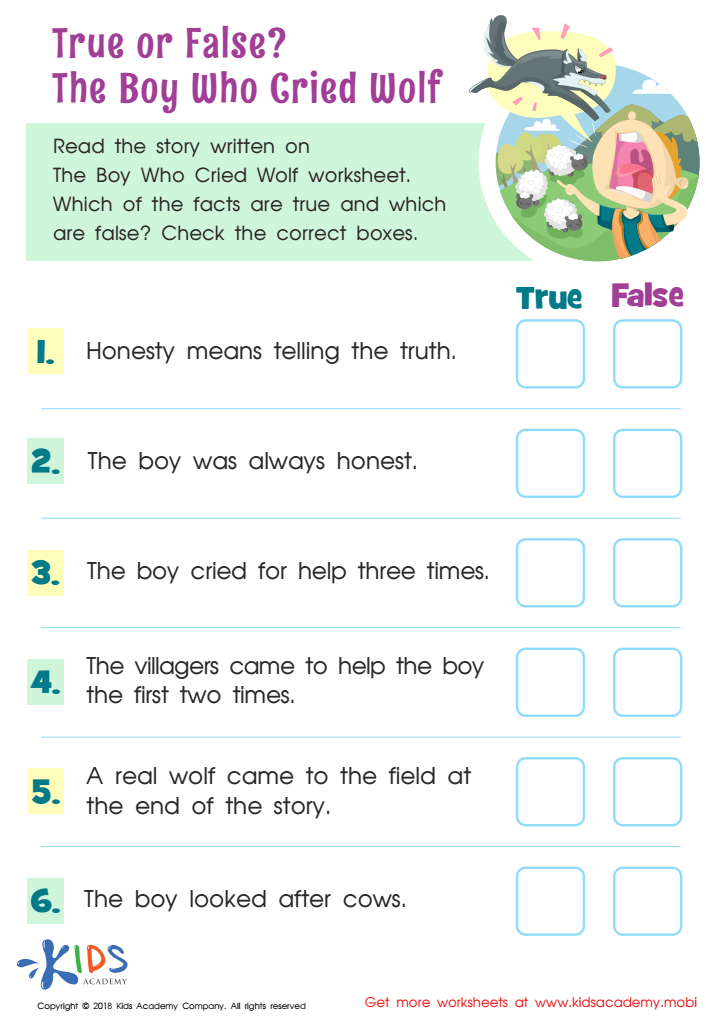
True or False? The Boy Who Cried Wolf Worksheet

True or False? The Boy Who Cried Wolf Worksheet

Test students' understanding of The Boy Who Cried Wolf with this free downloadable worksheet. It contains true/false questions to assess comprehension of key events. Easy to complete, it checks students can recall facts from the story. Try it and see!
True or False? The Boy Who Cried Wolf Worksheet
Worksheet
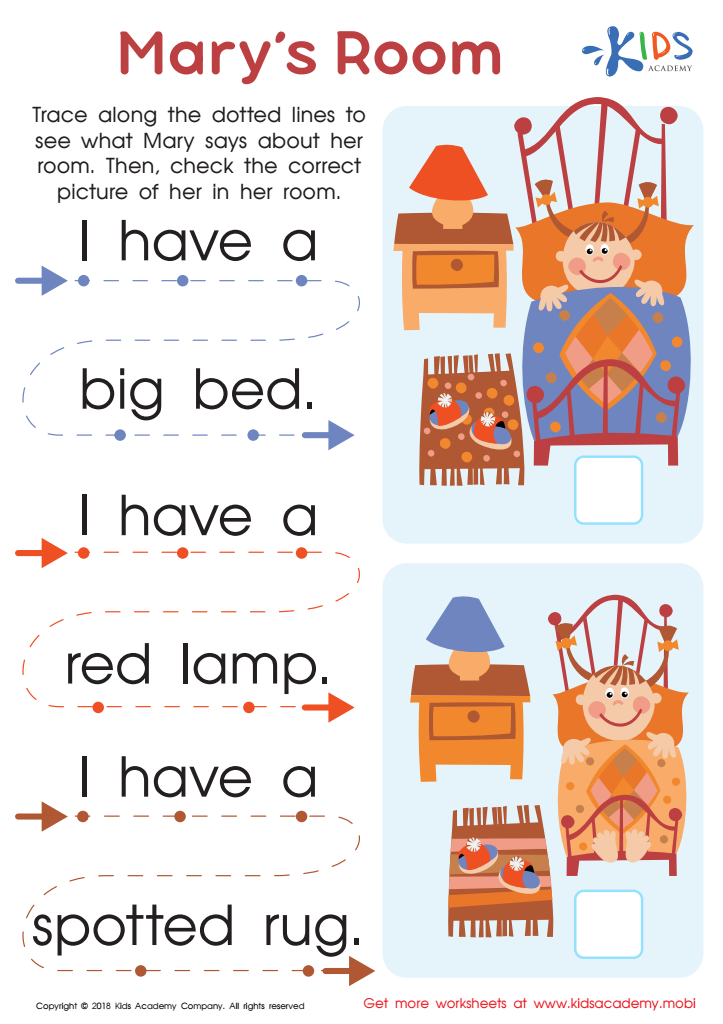
Mary's Room Worksheet

Mary's Room Worksheet

This cute PDF worksheet is a great way to help your young reader build their comprehension and directionality skills in a fun way. They'll use the images and clues to determine which room belongs to Mary. Following the traceable lines can give them a sense of being a detective, and help with directionality and fine motor skills too. Let them have fun and enjoy the activity - their skills will thank you!
Mary's Room Worksheet
Worksheet
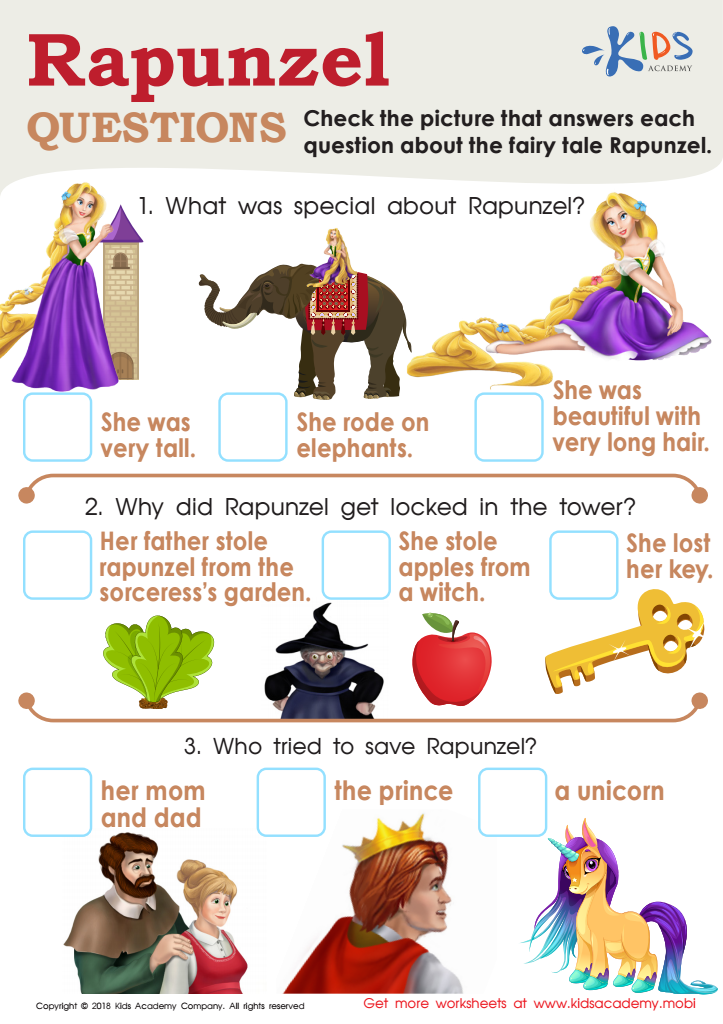
Rapunzel Questions Worksheet

Rapunzel Questions Worksheet

Read the fairy tale 'Rapunzel' to your kids. For those who really enjoyed it, read it twice and ask questions to test their understanding. Then, get them to check the pictures related to the questions to test their comprehension of the story.
Rapunzel Questions Worksheet
Worksheet
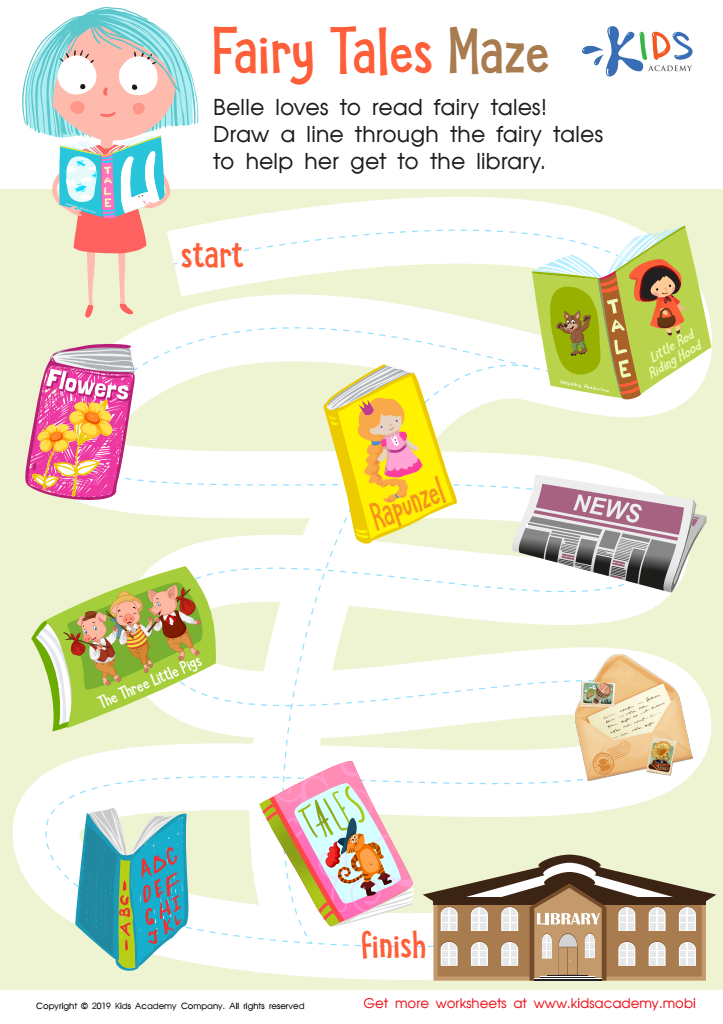
Fairy Tales Maze Worksheet

Fairy Tales Maze Worksheet

Kids love mazes and fairy tales, so this free worksheet is a great way to help teach young readers about familiar topics. They'll join Bella and use the traceable lines to travel through different reading genres, and find their way to the library for a nice reward!
Fairy Tales Maze Worksheet
Worksheet
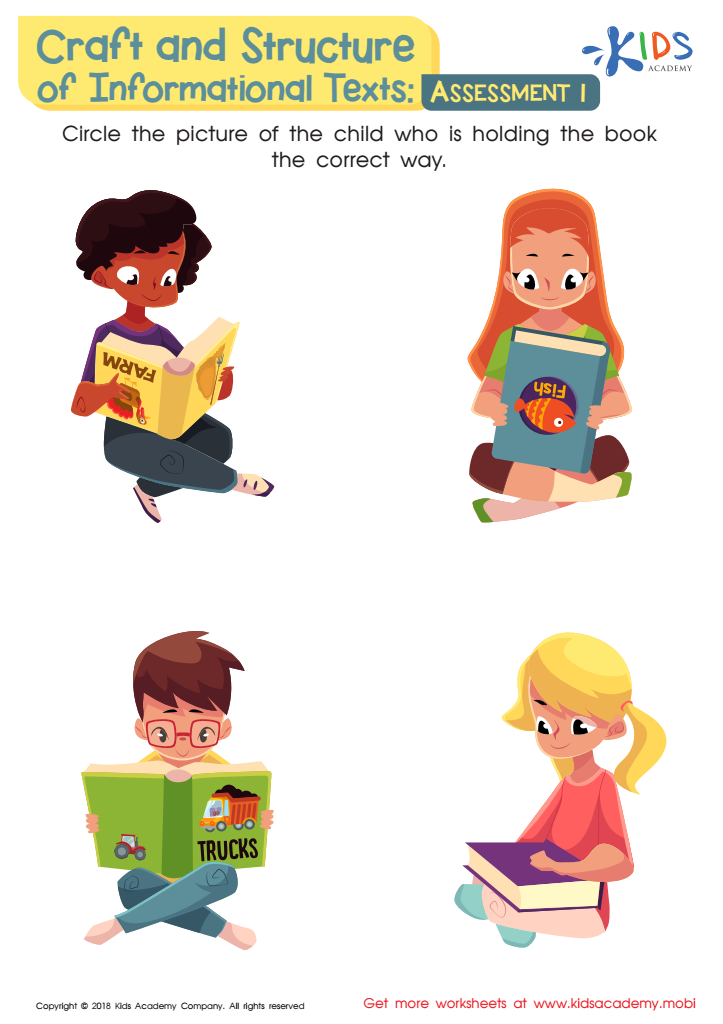
Craft and Structure of Informational Texts: Assessment 1 Worksheet

Craft and Structure of Informational Texts: Assessment 1 Worksheet

Young children need to know how to hold books correctly when they start reading. This assessment worksheet helps them show they know what to do. They'll look at the pictures and circle the child who is holding the book correctly. It's a great way to tell they are well on their way to becoming lifetime readers!
Craft and Structure of Informational Texts: Assessment 1 Worksheet
Worksheet
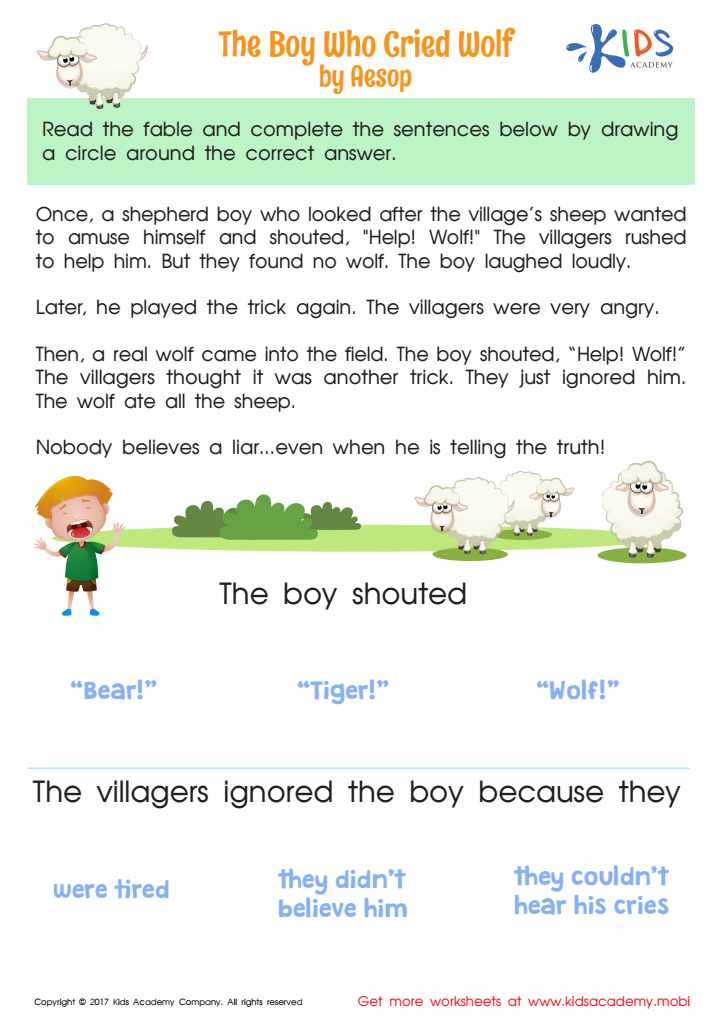
Worksheet: The Boy Who Cried Wolf

The Boy Who Cried Wolf Worksheet

Test your child's reading comprehension with The Boy Who Cried Wolf worksheet. Read the fable, then answer the questions. Use the text to help your child check their answers are correct. Boost reading skills in a fun, interactive way!
The Boy Who Cried Wolf Worksheet
Worksheet
Take a Look - Part 1 Worksheet

Take a Look - Part 1 Worksheet

Young learners gain understanding when using picture clues when reading. Looking at illustrations can help students learn the meaning of key vocabulary when reading fiction or informational text. Ask your students to look at the worksheet and observe what they can learn from the picture. It's a great comprehension strategy for early readers.
Take a Look - Part 1 Worksheet
Worksheet
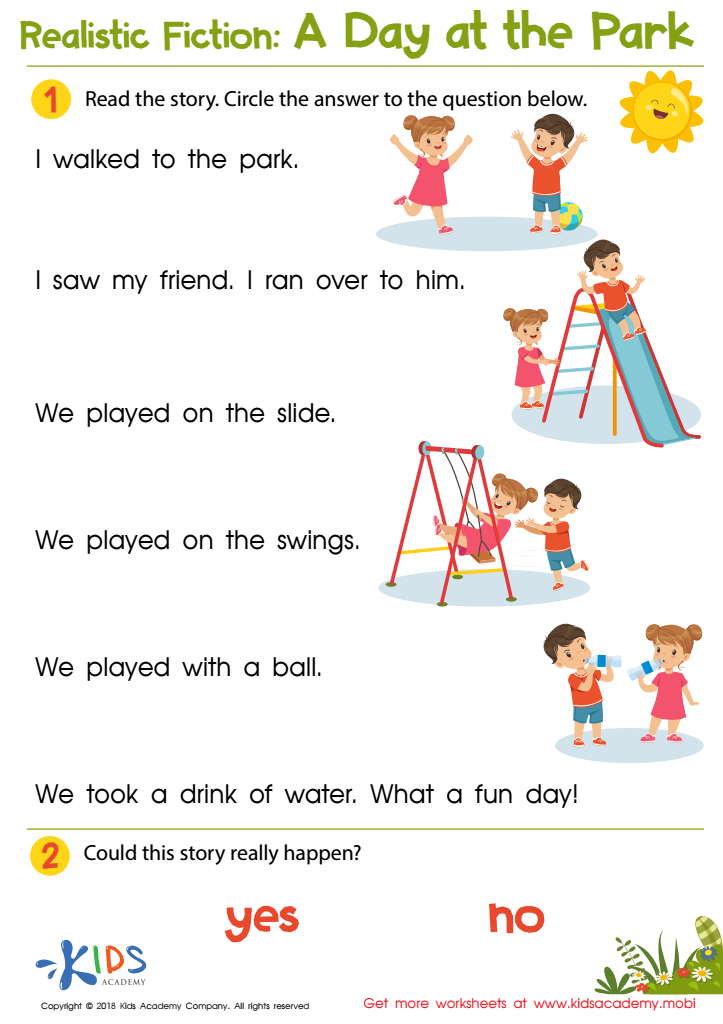
A Day at the Park Worksheet

A Day at the Park Worksheet

Kids as young as preschool-age can be taught to evaluate stories! Use this fun worksheet about a day at the park. Read each sentence aloud, looking at the pictures. Ask your child if the events in the story could happen in real life - if yes, circle yes, otherwise circle no. When finished, discuss with them the genre, realistic fiction.
A Day at the Park Worksheet
Worksheet
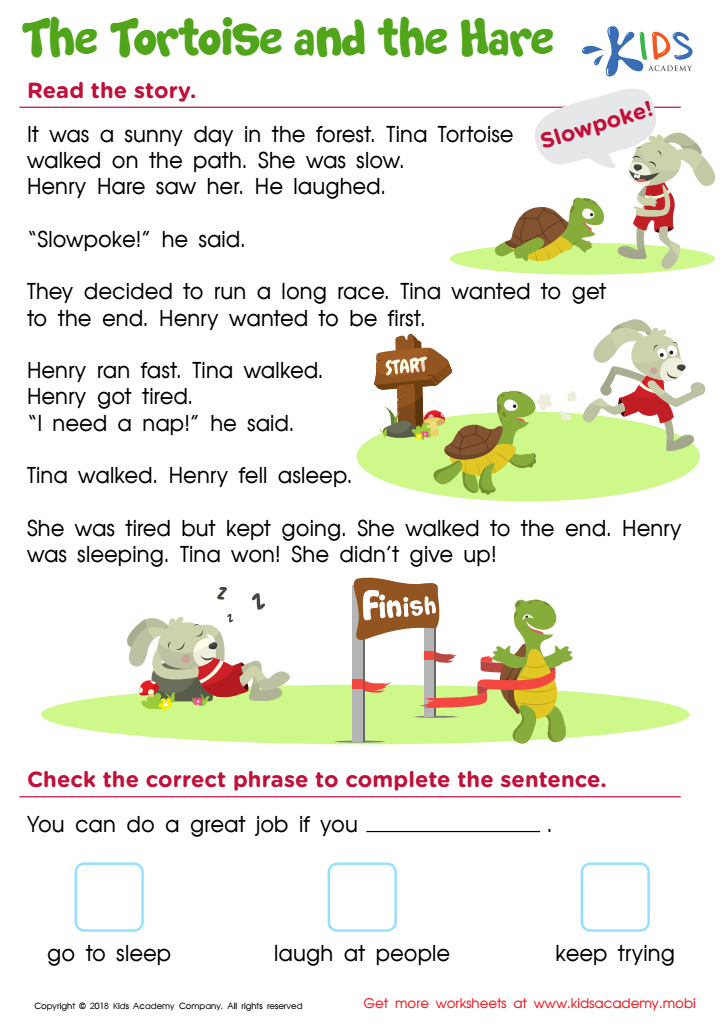
The Tortoise and the Hare Worksheet

The Tortoise and the Hare Worksheet

Help your child uncover the hidden moral in a classic children's tale with this free downloadable worksheet. Joyful illustrations bring the story to life and help young readers visualize the events. With your help, they can answer the question and fill in the blank with the phrase that serves as the story's lesson. Check the box to complete the worksheet!
The Tortoise and the Hare Worksheet
Worksheet
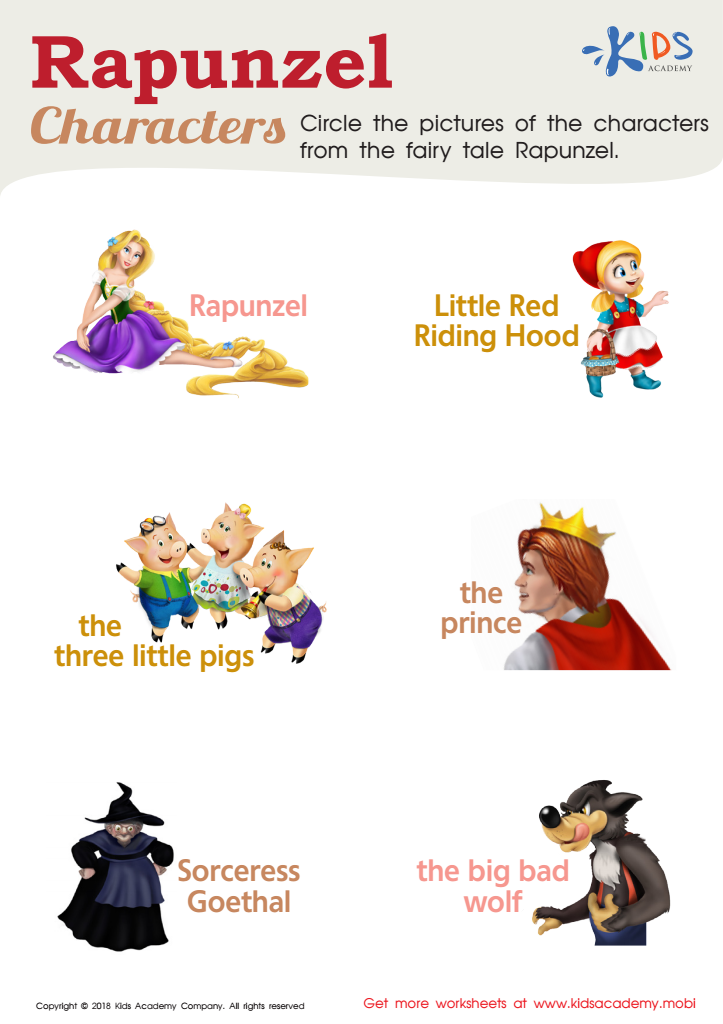
Rapunzel Characters Worksheet

Rapunzel Characters Worksheet

This fun and colourful worksheet is perfect to see what your kids have learned from story time. Test their knowledge with a Rapunzel-themed exercise! Ask them to circle the pictures of the characters from the fairy tale. Helping them to remember the lessons taught in the stories you have read.
Rapunzel Characters Worksheet
Worksheet
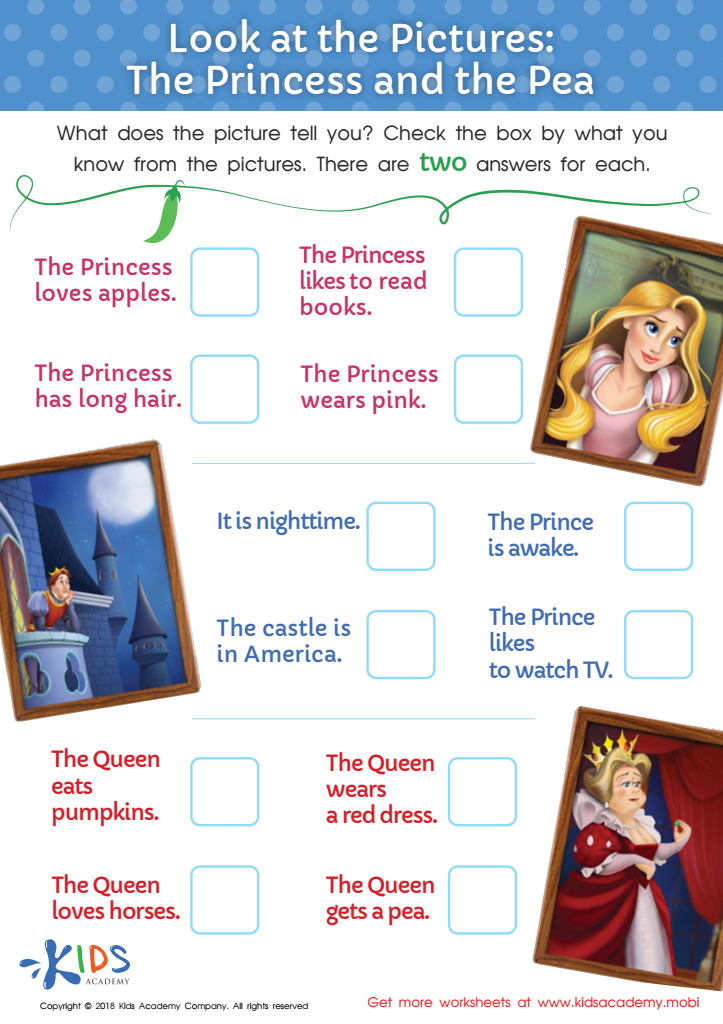
Look at the Pictures: The Princess and the Pea Worksheet

Look at the Pictures: The Princess and the Pea Worksheet

Early readers can benefit from picture clues to understand stories and text. Looking at images helps them learn the meaning of words and comprehend events. Use this worksheet on The Princess and the Pea to let students observe and learn from the pictures. It's a great way to help them comprehend early reading materials.
Look at the Pictures: The Princess and the Pea Worksheet
Worksheet
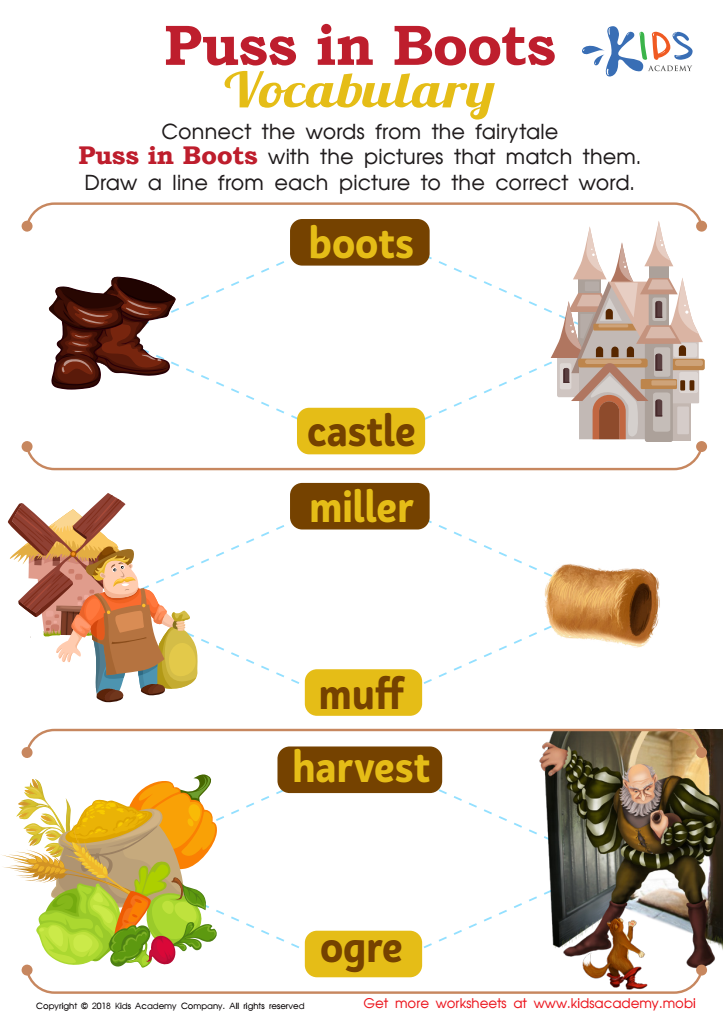
Puss in Boots Vocabulary Worksheet

Puss in Boots Vocabulary Worksheet

Let your kids enjoy story-telling while learning at the same time. Help them learn from the fairytale, Puss in Boots, by connecting words from the worksheet with the matching pictures. Ask them to draw a line between each picture and corresponding word to build their vocabulary.
Puss in Boots Vocabulary Worksheet
Worksheet
Reading Comprehension Worksheet: Aladdin

Story Elements Printable

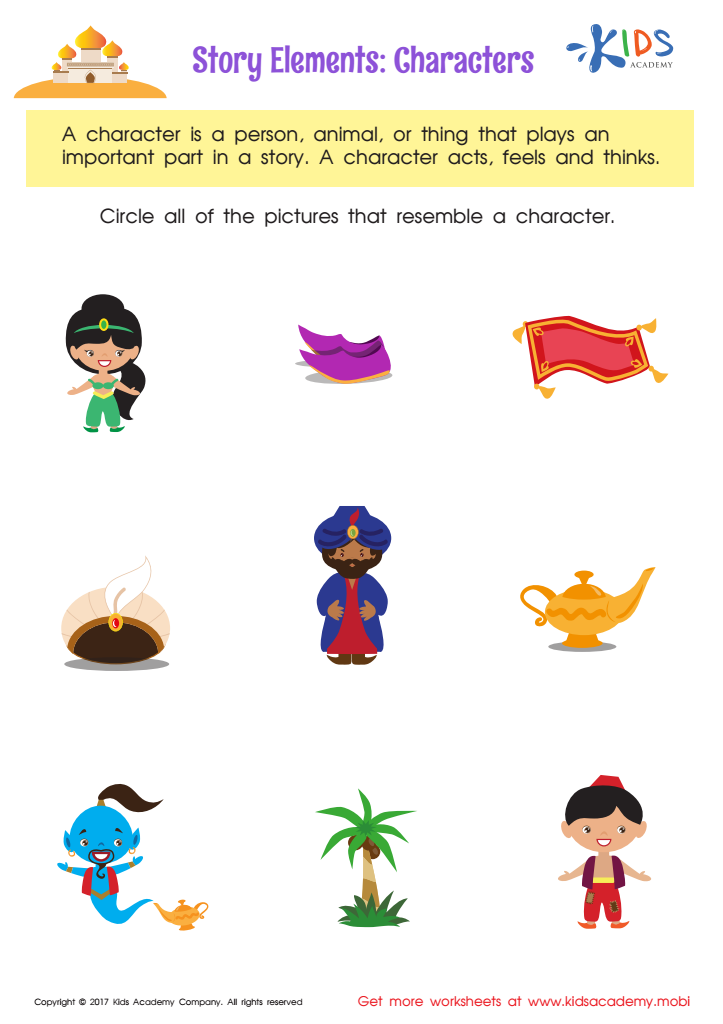
Read the text and review the characters, settings and plot in a guided discussion. Take your child on a journey to the Middle East and review the characters, settings and plot of their favorite childhood stories with this Aladdin-themed worksheet! It'll help them master early analysis skills and learn about characterization. Enjoy a fun, guided discussion with your child as you review important story elements.
Story Elements Printable
Worksheet
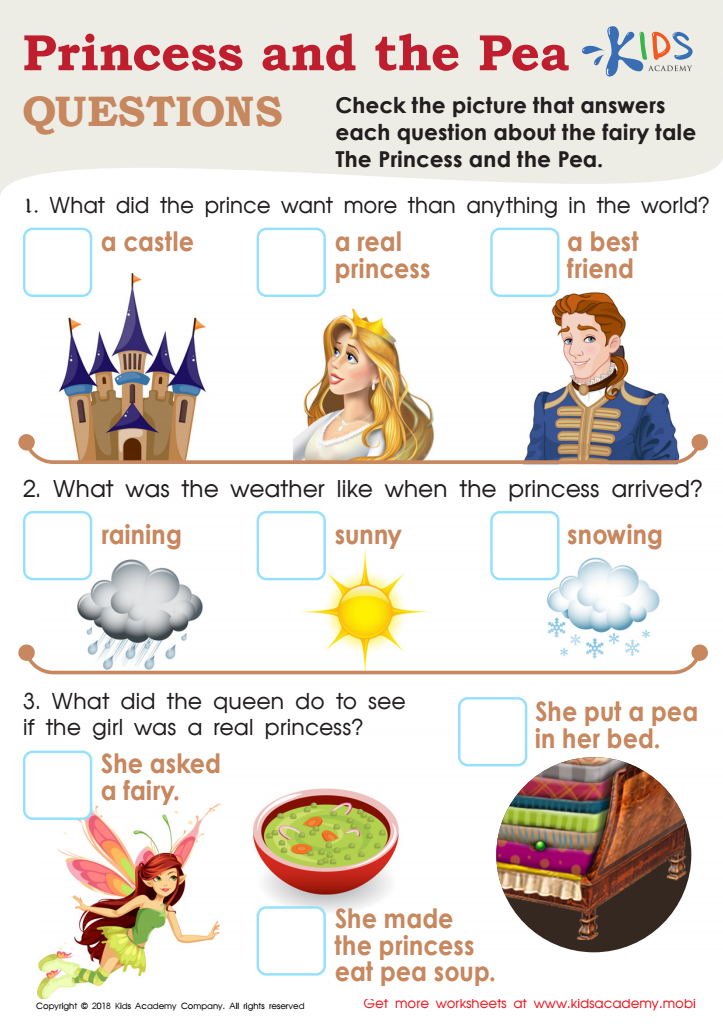
Princess and the Pea Questions Worksheet

Princess and the Pea Questions Worksheet

Your kid knows The Princess and the Pea inside-out? Test their knowledge with this worksheet. Ask your little one to read the questions and match each one to the picture. It's a fun way to see just how much attention they've paid to their bedtime story.
Princess and the Pea Questions Worksheet
Worksheet
Craft and Structure of Informational Texts: Assessment 3 Worksheet


Craft and Structure of Informational Texts: Assessment 3 Worksheet

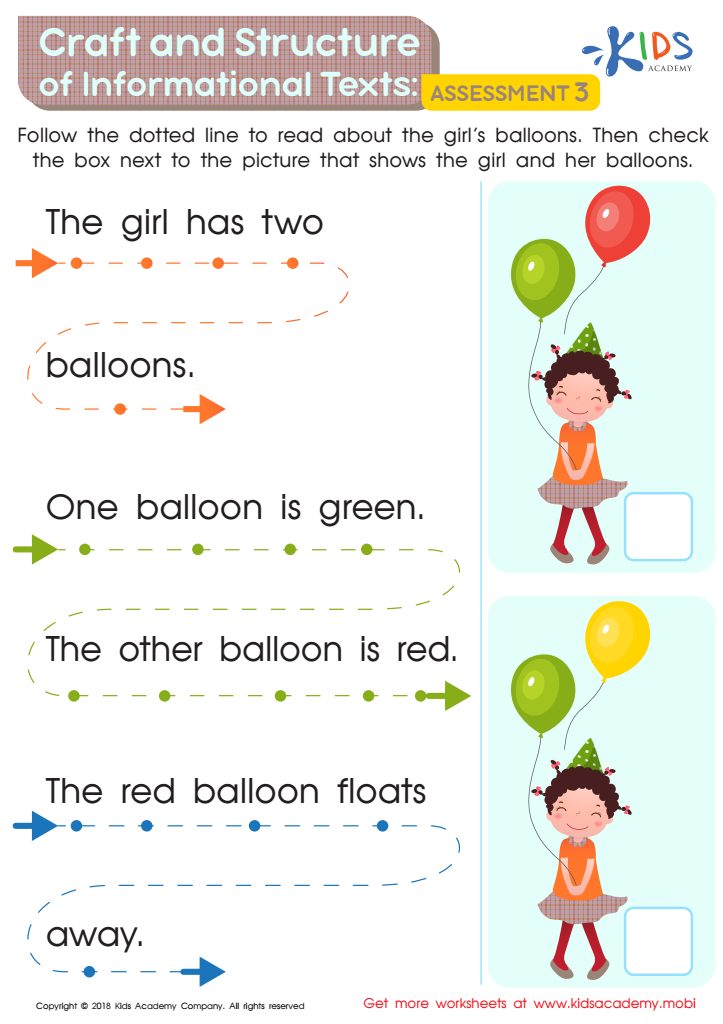
Test your beginning reader's understanding of left-to-right directionality and use of details from informational texts with this fun worksheet. Follow the traceable paths to find the right picture for each sentence. This will help your child gain confidence and be successful as a reader.
Craft and Structure of Informational Texts: Assessment 3 Worksheet

Worksheet


... 2 3

Normal Reading Fiction for Ages 5-6 worksheets are a crucial learning tool designed to nurture the burgeoning literacy skills of young children. At this pivotal age, children are at the cusp of transitioning from decoding simple words to becoming more fluent readers, capable of diving into the imaginative worlds fiction offers. These worksheets are tailored specifically to support this significant developmental leap.

By incorporating Normal Reading Fiction for Ages 5-6 worksheets into their learning routine, children are presented with an array of stories that capture their interest while concurrently challenging their reading abilities. This not only helps in enhancing their vocabulary but also in improving their comprehension skills. Through answering questions related to the text, children learn to recall specific details, understand plot development, and identify character traits, fostering a deeper understanding and appreciation of the narrative.

Moreover, engagement with fiction at this age sparks creativity and encourages empathy. Children begin to imagine themselves in the shoes of different characters, exploring various emotions and situations. This emotional and cognitive engagement is crucial for early childhood development.

In essence, Normal Reading Fiction for Ages 5-6 worksheets are more than just tools for reading practice; they are gateways to building a lifelong love for reading, enhancing critical thinking skills, and nurturing a rich imagination.