Normal Comparison Worksheets for Ages 5-7
8 filtered results
-
From - To
Discover "Normal Comparison Worksheets for Ages 5-7" at Kids Academy! Perfect for early learners, these engaging worksheets help children develop crucial comparison skills through fun, interactive activities. Each worksheet is designed to enhance numerical understanding, teaching kids to compare quantities, sizes, and weights in an intuitive, hands-on way. Ideal for use in the classroom or at home, these worksheets support early math curriculum and empower children with confidence in their budding mathematical abilities. Explore our collection today and give your child the tools they need to excel in math real-world situations. Kids Academy makes learning fun and effective!
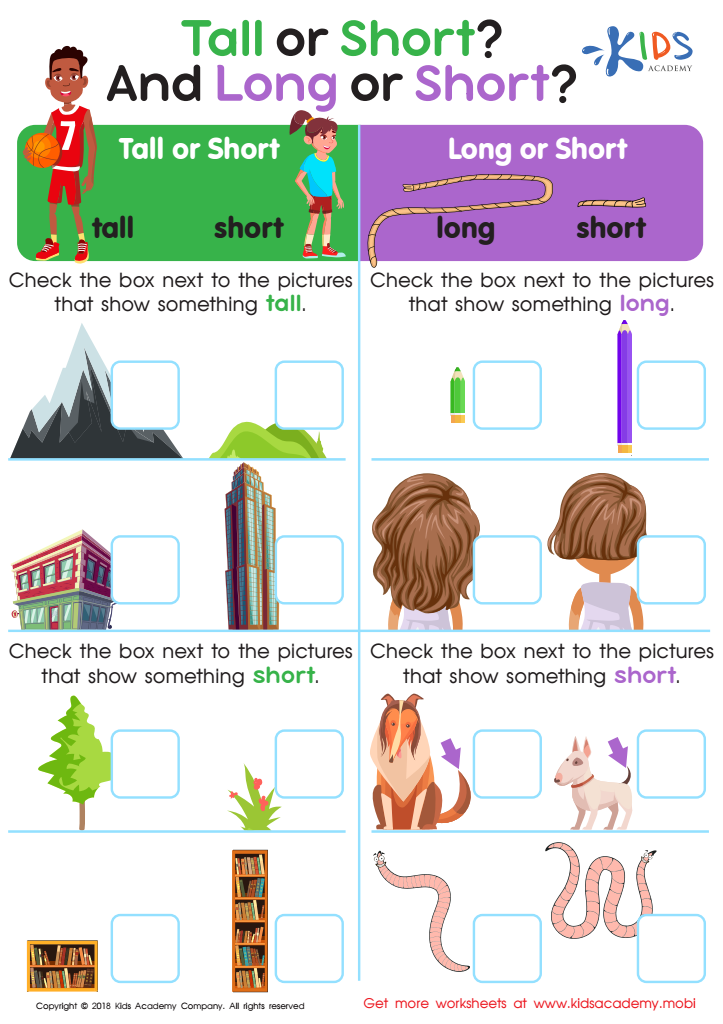
Tall or Short and Long or Short? Worksheet
 Assign to My Students
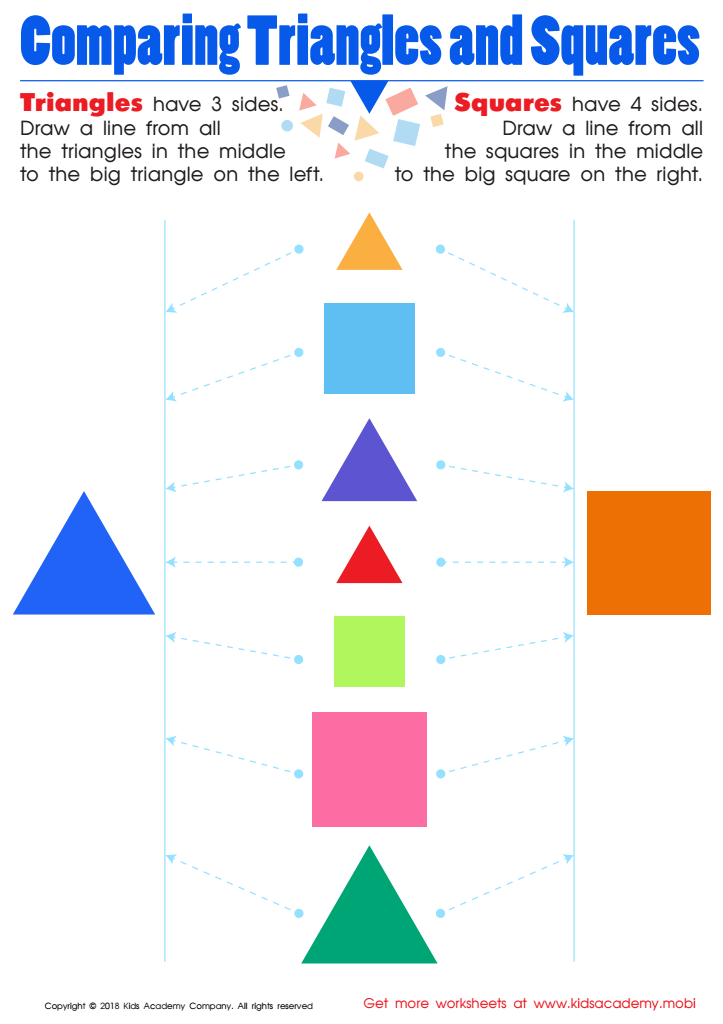
Comparing Triangles Squares Worksheet
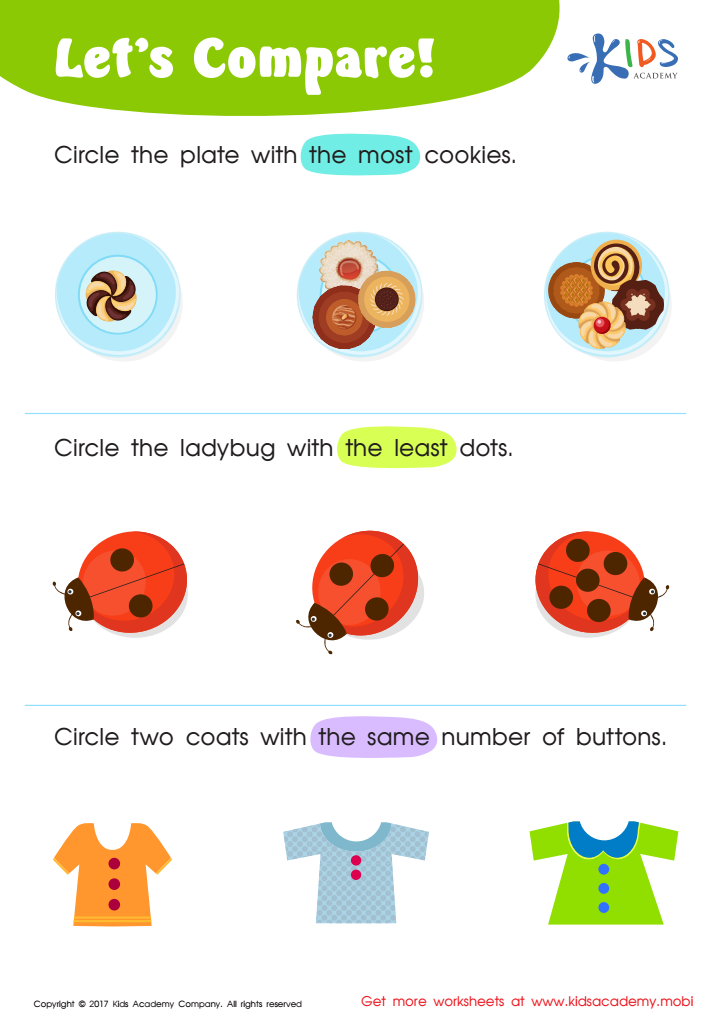
Matching: Classifying Toys by Size Worksheet
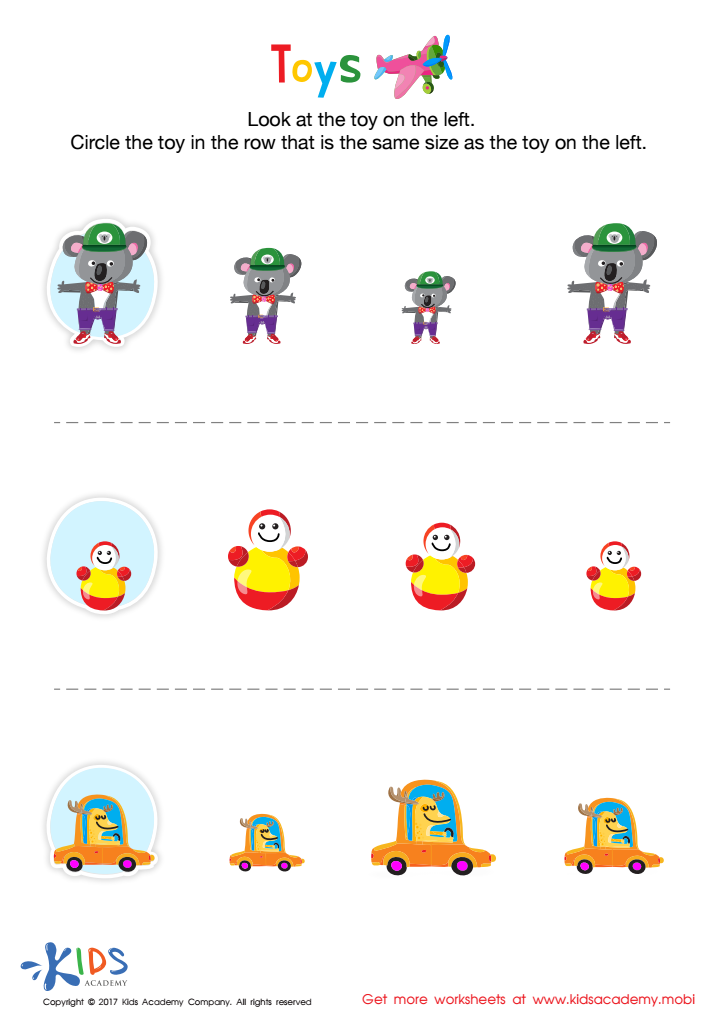
Matching: Classifying Toys by Size Worksheet
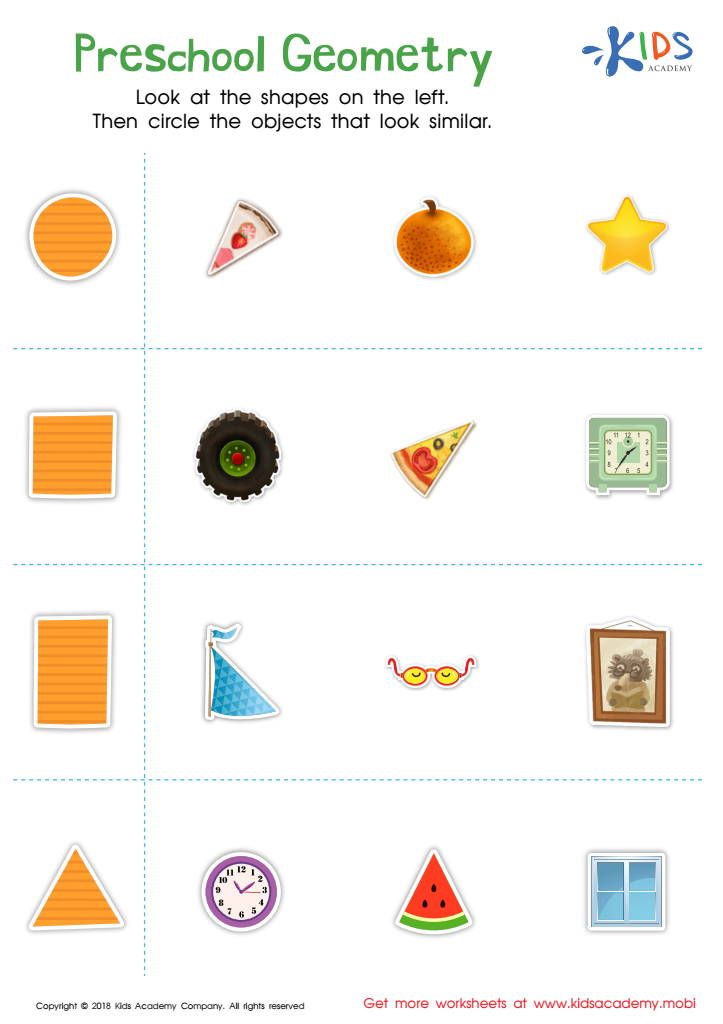
Preschool Geometry Worksheet
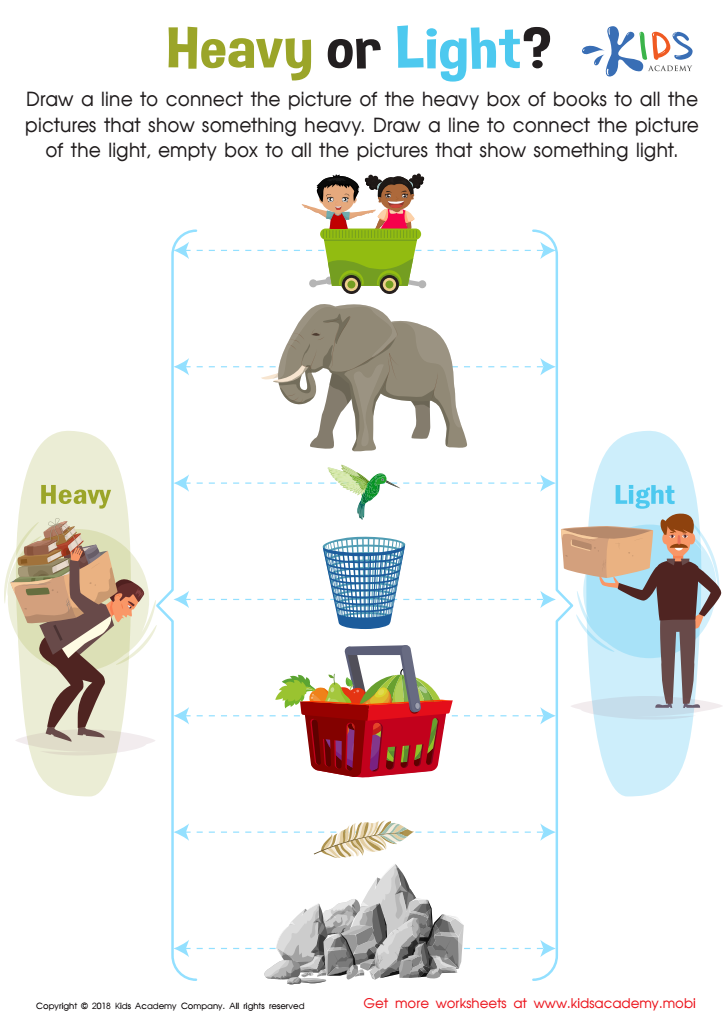
Heavy or Light? Worksheet
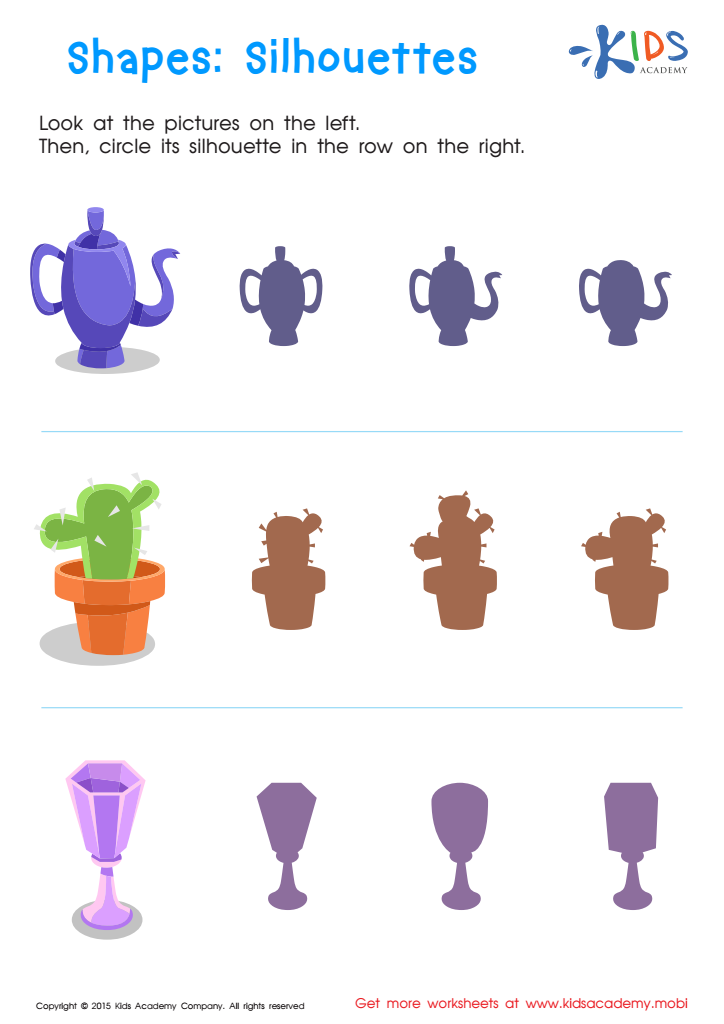
Silhouettes – Shapes Worksheet
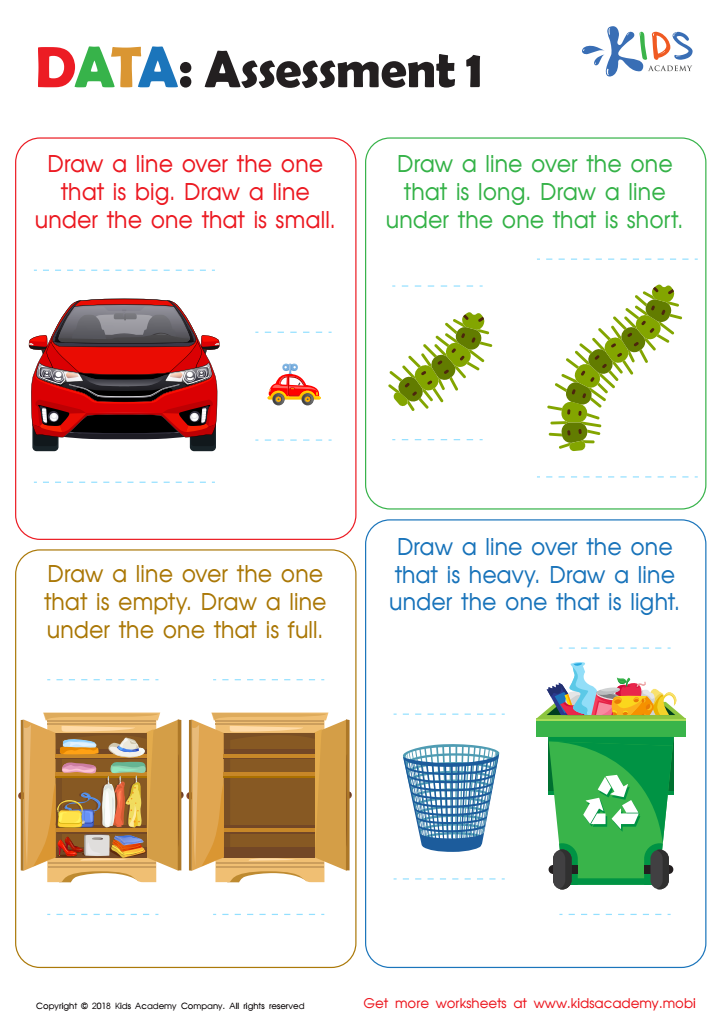
Data: Assessment 1 Worksheet







Normal comparison, or normative comparison, is essential for ages 5-7 because it helps parents and teachers understand a child's development relative to typical age-related milestones. At this foundational stage, children undergo significant physical, cognitive, emotional, and social development. By comparing a child's progress to established norms, parents and teachers can identify areas where a child is excelling or may need additional support.
For instance, in the realm of literacy, children are generally expected to recognize letters, begin phonics, and start reading simple texts. If a child lags in these areas compared to peers, early intervention can prevent future learning difficulties. Similarly, social skills like sharing, taking turns, and expressing emotions mature rapidly during these years, and knowing the normative benchmarks can help in guiding children towards healthy social development.
Furthermore, normative comparison provides an early-warning system for potential learning disabilities or developmental delays. Early identification of such issues ensures timely access to resources and specialized support, which can effectively mitigate obstacles to future academic and personal success.
Thus, using normative comparisons equips parents and teachers with the tools to create customized plans that cater to each child's unique needs, fostering a well-rounded and inclusive educational environment.








