Normal Consonant Digraphs Worksheets for Ages 7-9
13 filtered results
-
From - To
Enhance your child’s phonics skills with our engaging Normal Consonant Digraphs Worksheets, designed specifically for ages 7-9. These worksheets introduce young learners to consonant digraphs through fun, interactive activities. Each worksheet promotes recognition and understanding of common digraphs such as "ch," "sh," and "th," aiding in vocabulary development and reading fluency. Our carefully crafted exercises include fill-in-the-blank, matching, and writing activities, making learning enjoyable and effective. Perfect for classrooms or at-home practice, these resources will empower your child as they explore the exciting world of consonant digraphs. Download the worksheets today and watch their reading skills flourish!
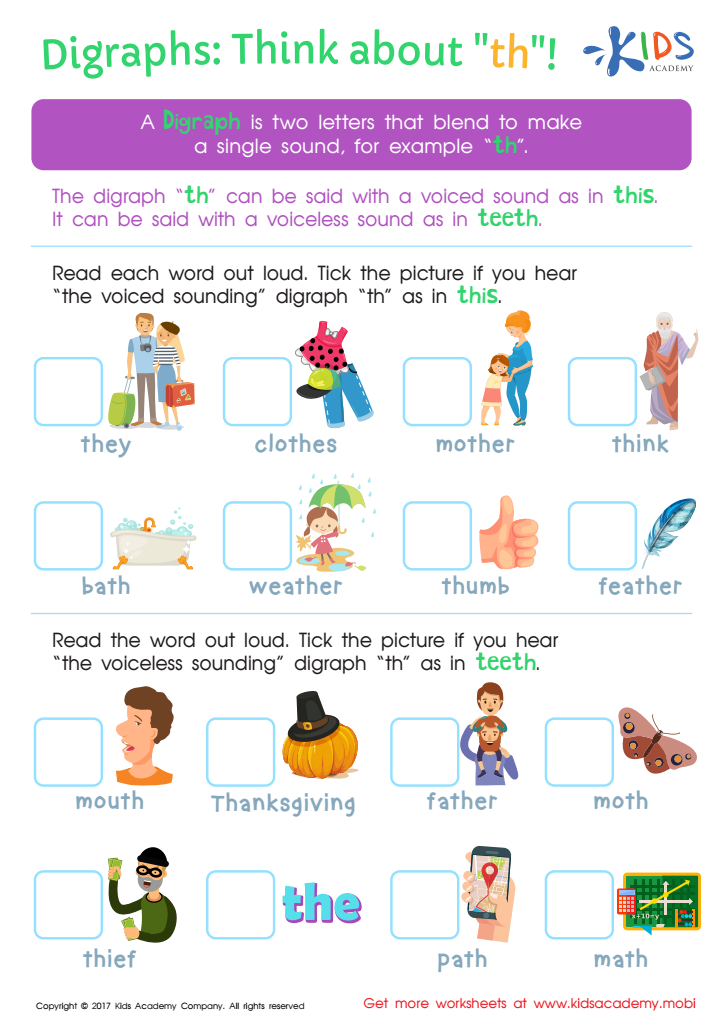
Digraphs: Think About "th" Worksheet
 Assign to My Students
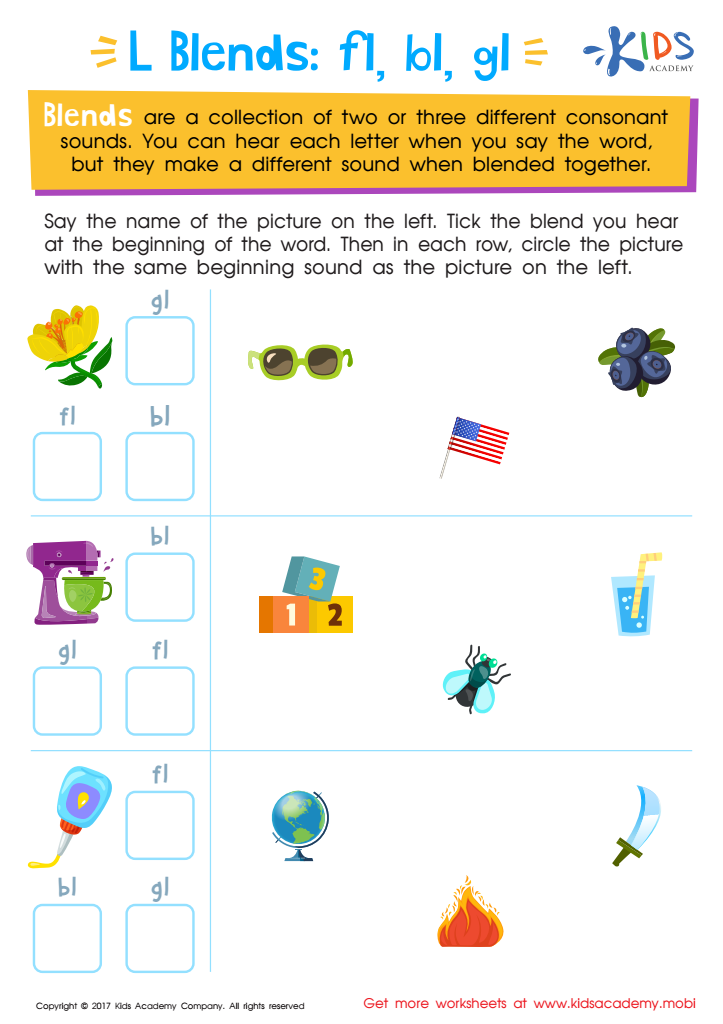
Blending Consonants: "Fl", "Bl" and "Gl" Printable
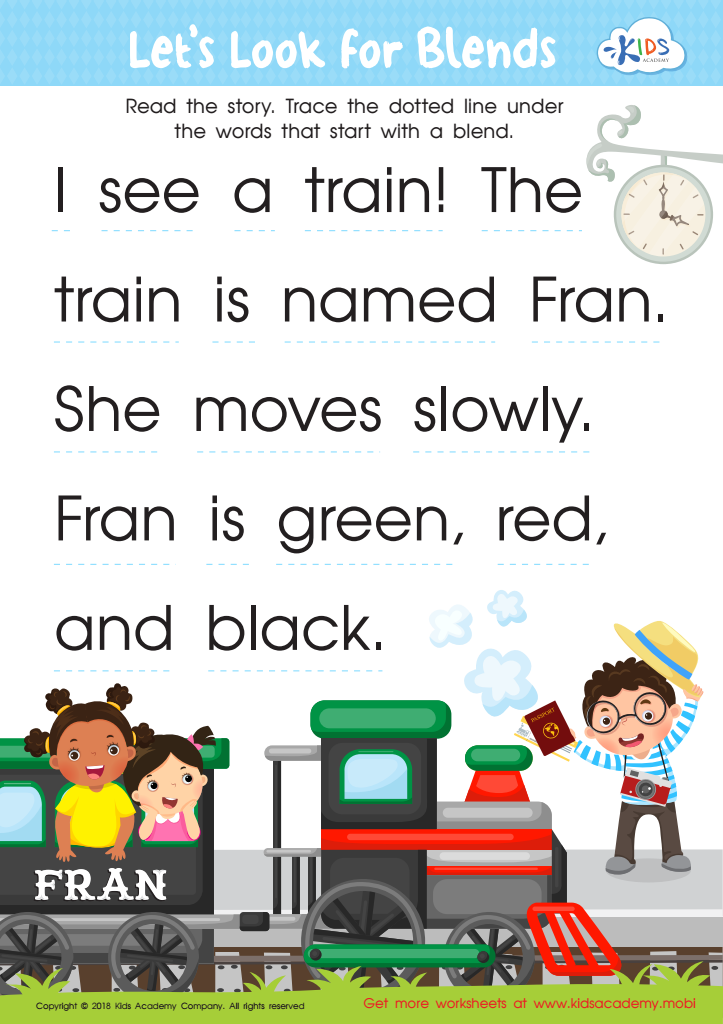
Let's Look for Blends Worksheet
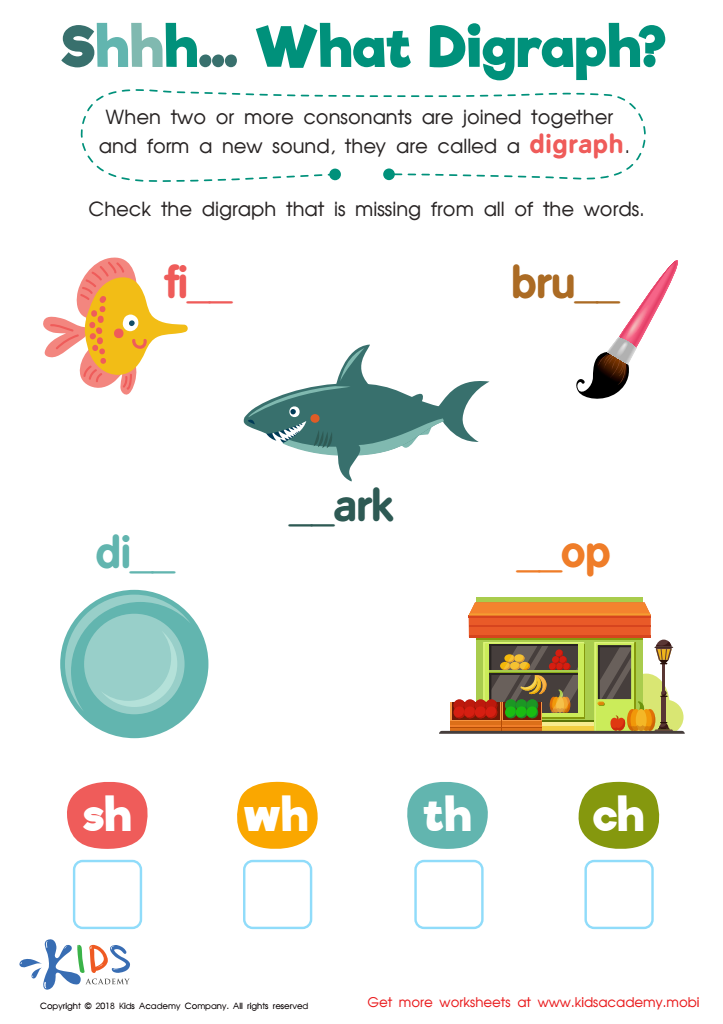
Shhh... What Digraph? Worksheet
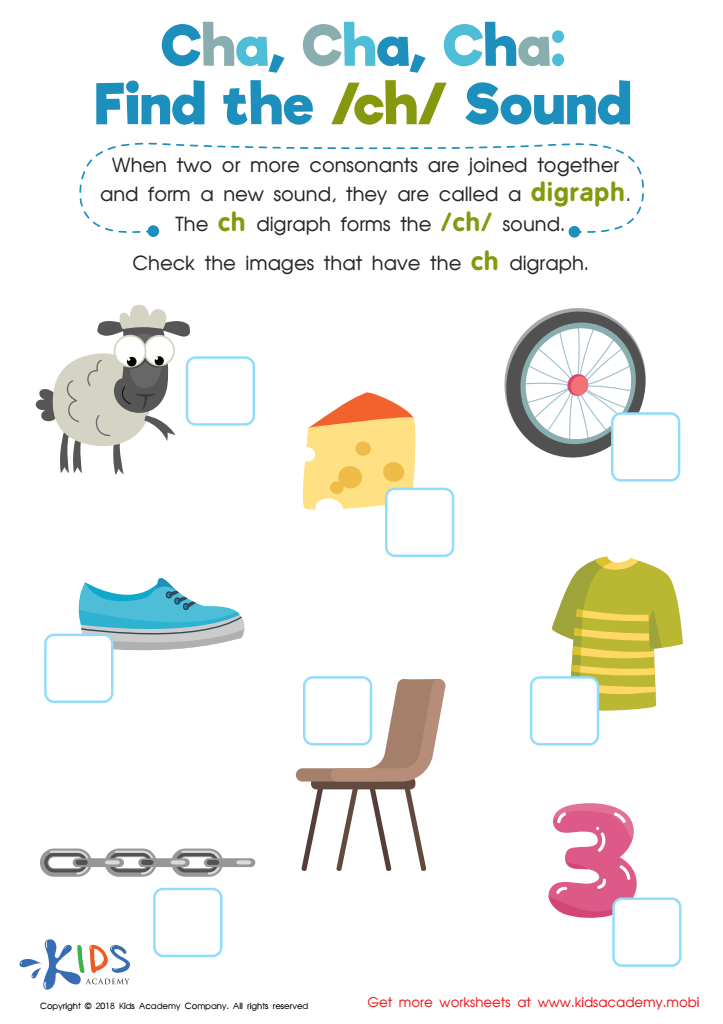
Cha, Cha, Cha: Find the /Ch/ Sound Worksheet
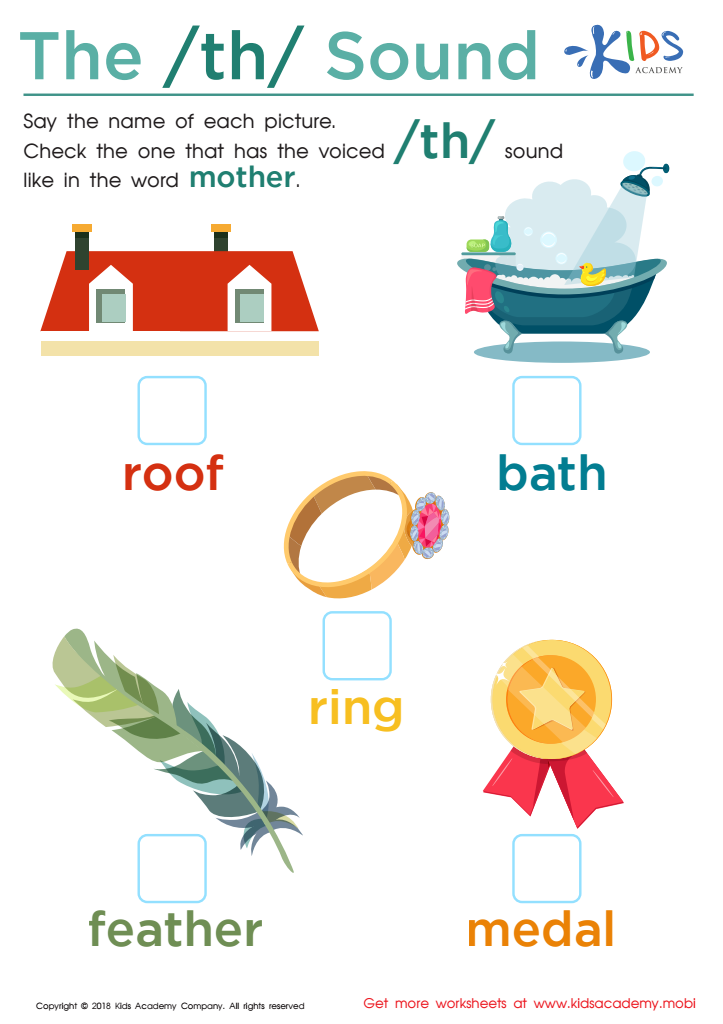
The /th/ Sound Worksheet
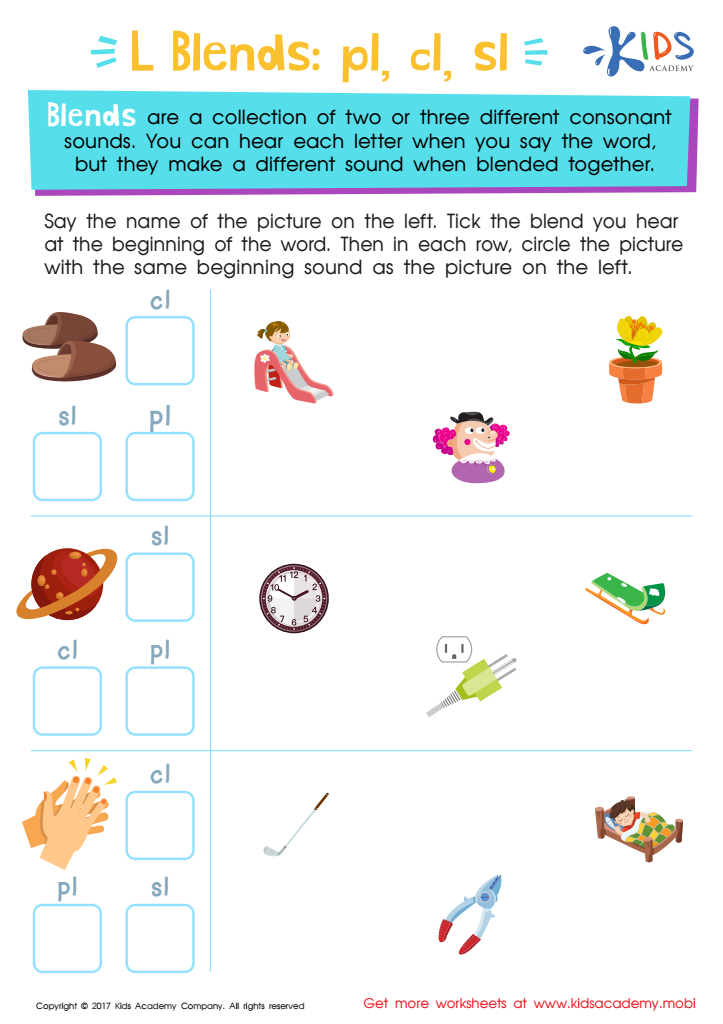
L Blends: "Pl", "Cl" and "Sl" Printable
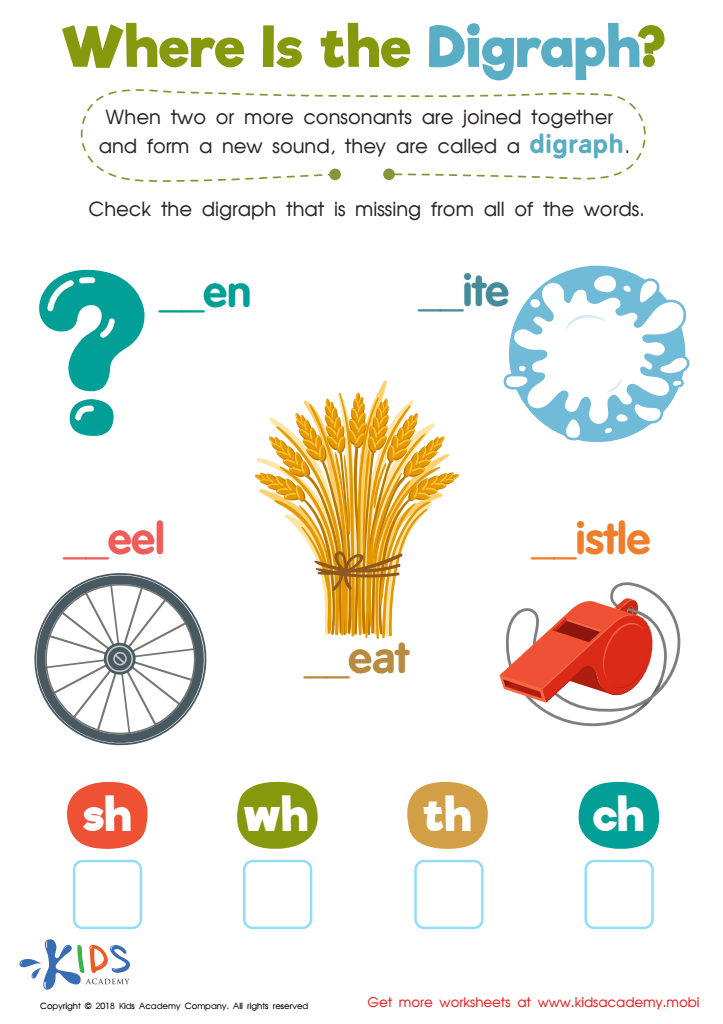
Where Is the Digraph? Worksheet
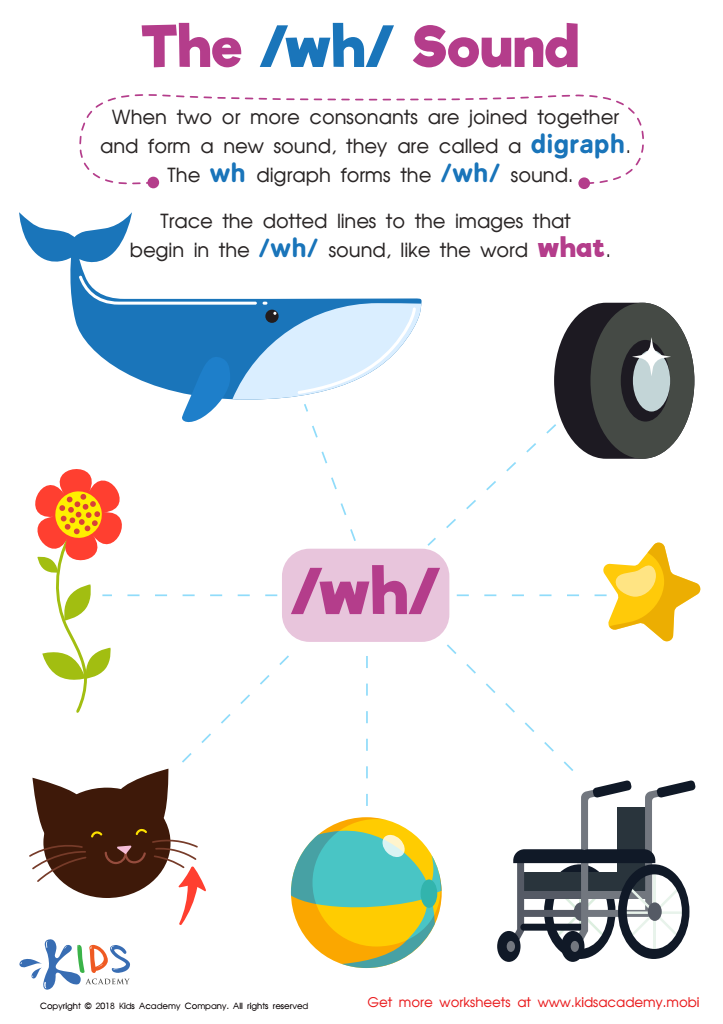
The /wh/ Sound Worksheet
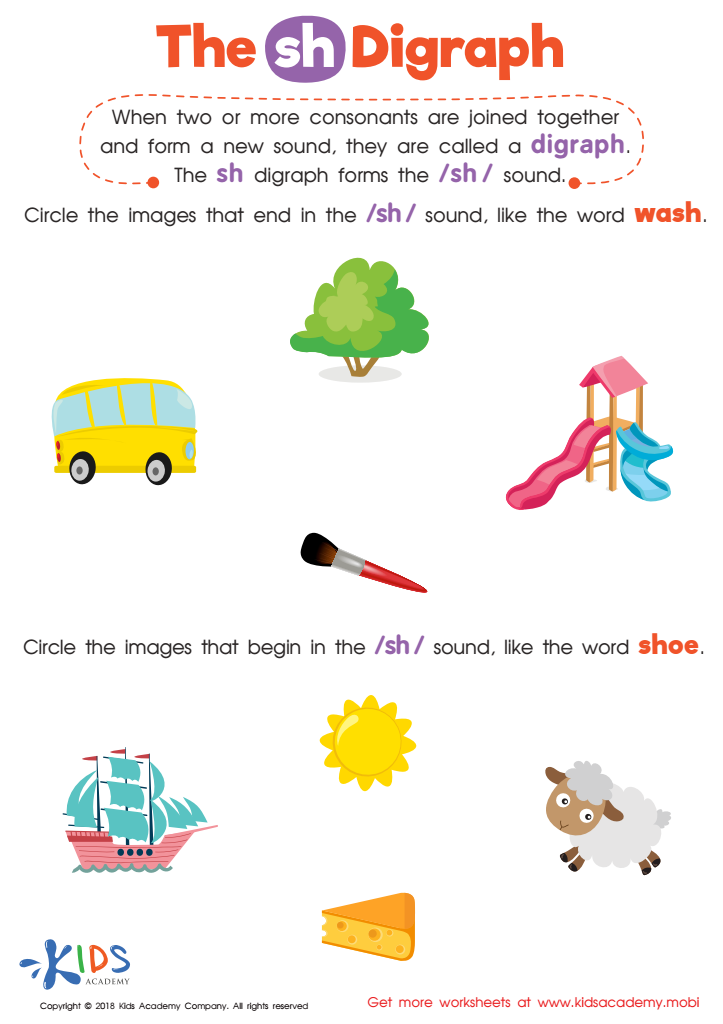
The SH Digraph Worksheet
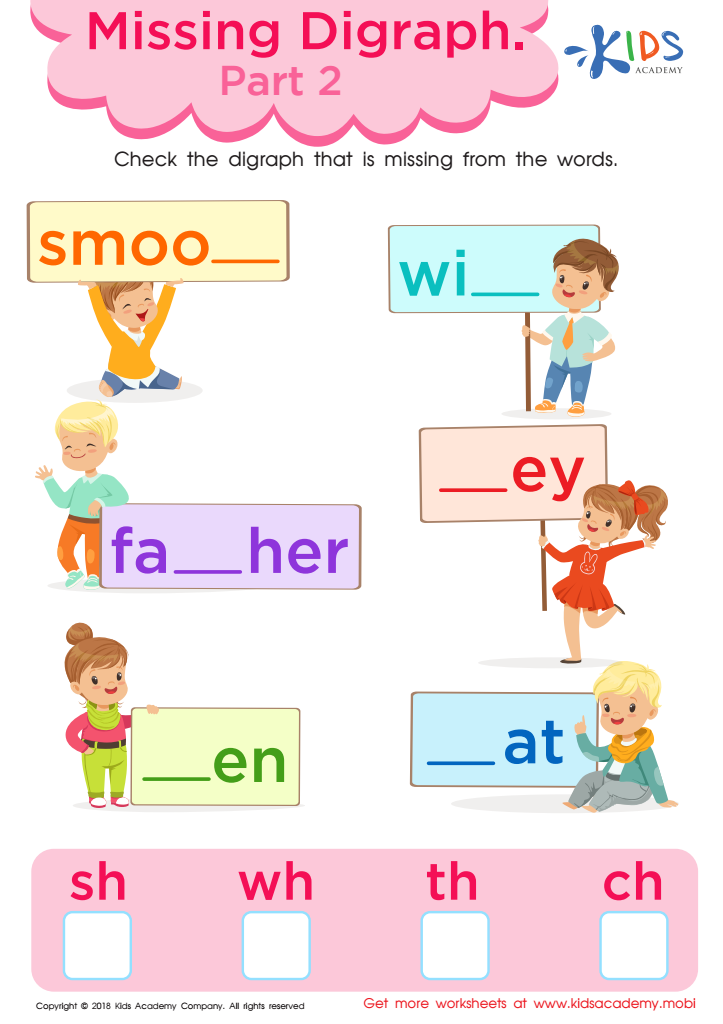
Missing Digraph: Part 2 Worksheet
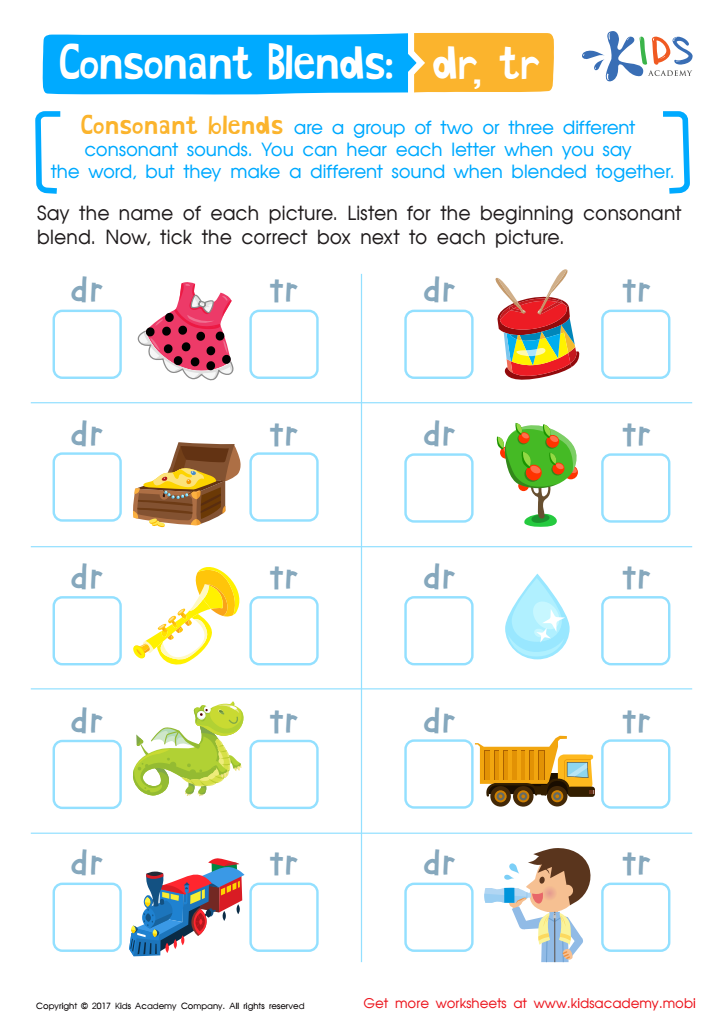
Consonant Blends: "Dr" and "Tr" Printable
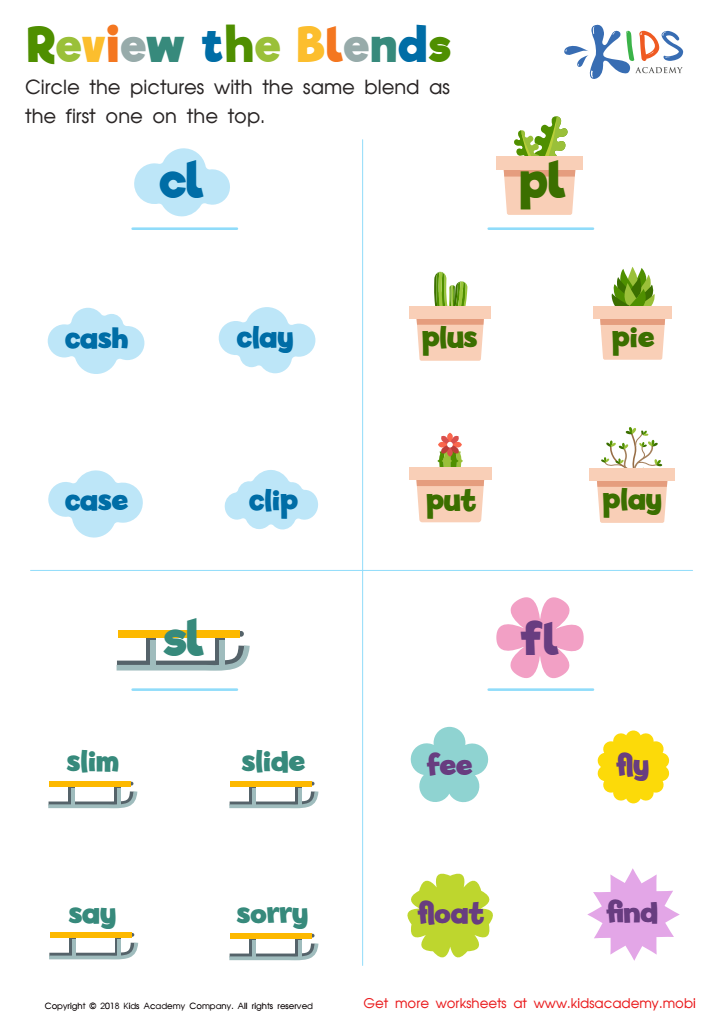
Review the Blends Worksheet


Parents and teachers should prioritize teaching Normal Consonant Digraphs to children aged 7-9 because these phonetic combinations play a crucial role in literacy development. Digraphs, like "ch," "sh," "th," and "wh," consist of two consonants that together produce a single sound. Mastering these sounds helps young learners improve their reading and spelling skills, which are foundational for successful communication.
Understanding consonant digraphs enhances phonemic awareness, allowing children to decode unfamiliar words more easily. As they read more fluently, their confidence grows, fostering a love for reading that contributes to lifelong learning. This increased familiarity also aids in vocabulary expansion, enhancing comprehension.
Moreover, teach ing these digraphs supports spelling development. Digraphs are common in many age-appropriate words, and recognizing them can help children produce more accurate spellings. With a solid grasp of consonant digraphs, children are better equipped to tackle more complex language concepts in later grades.
Ultimately, investing time in teaching Normal Consonant Digraphs ensures that children build essential reading and writing skills, laying a strong foundation for academic success and effective communication in the future. Engaging activities and practice can make this learning process enjoyable and rewarding for both parents and teachers.