Normal Chess Worksheets for Ages 7-9 - Page 2
47 filtered results
-
From - To
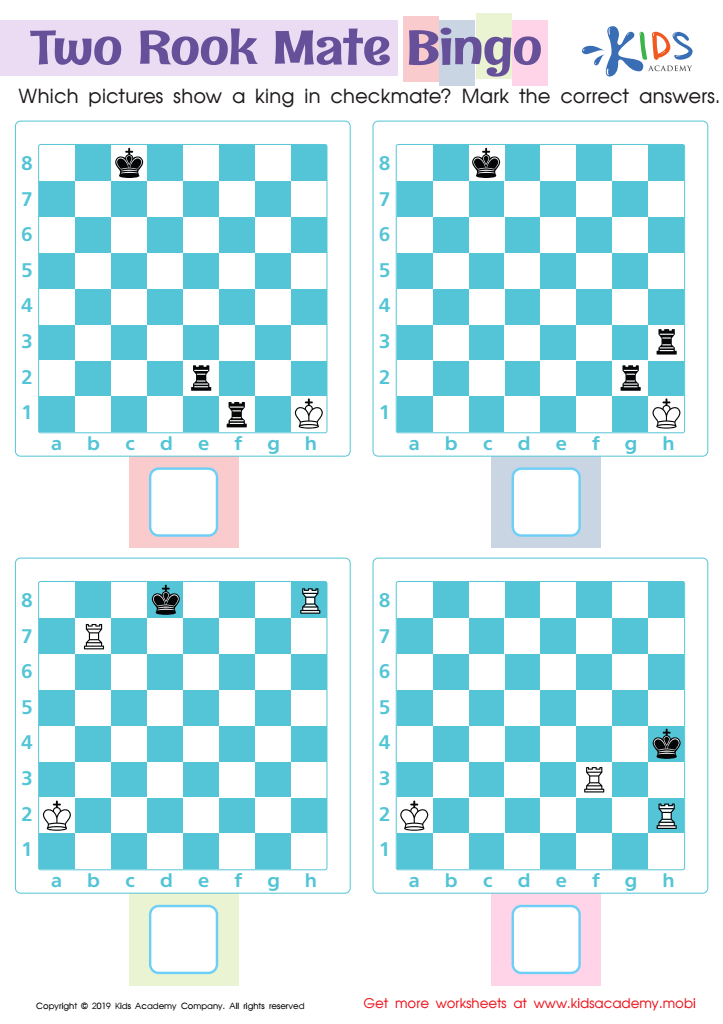
Two Rook Bingo Worksheet
 Assign to My Students
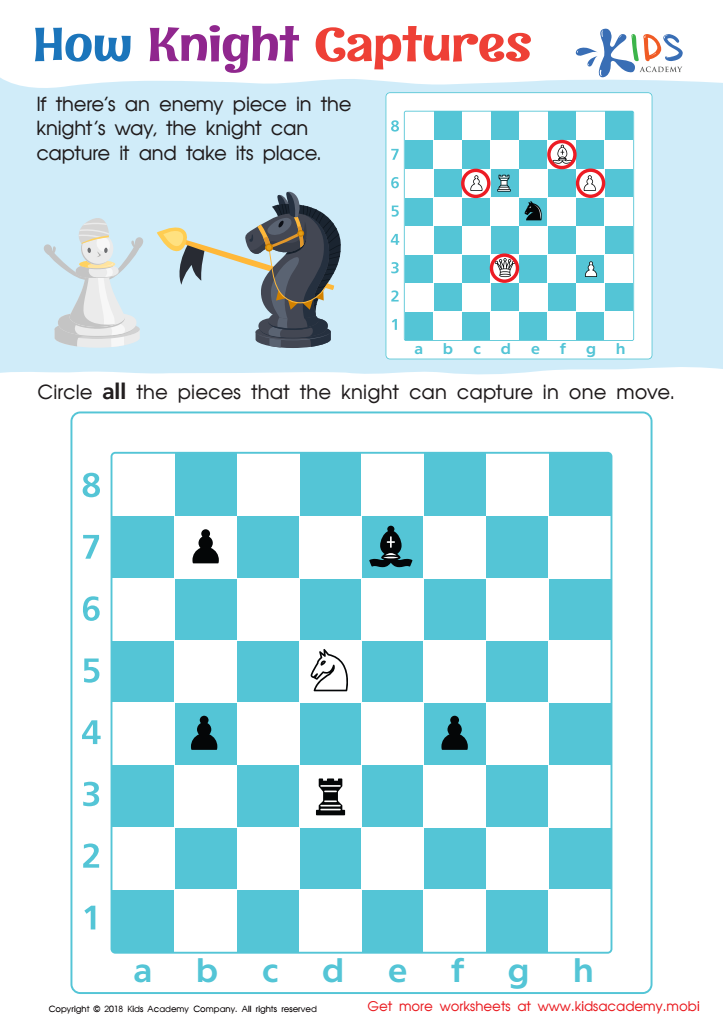
How Knight Captures Worksheet
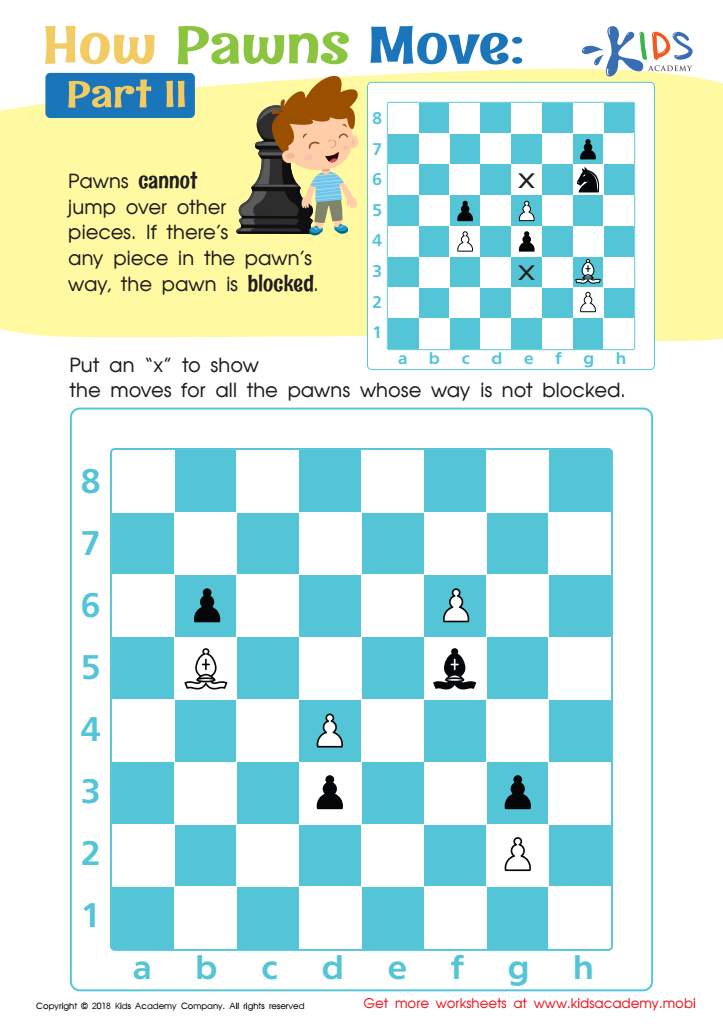
How Pawns Move: Part II Worksheet
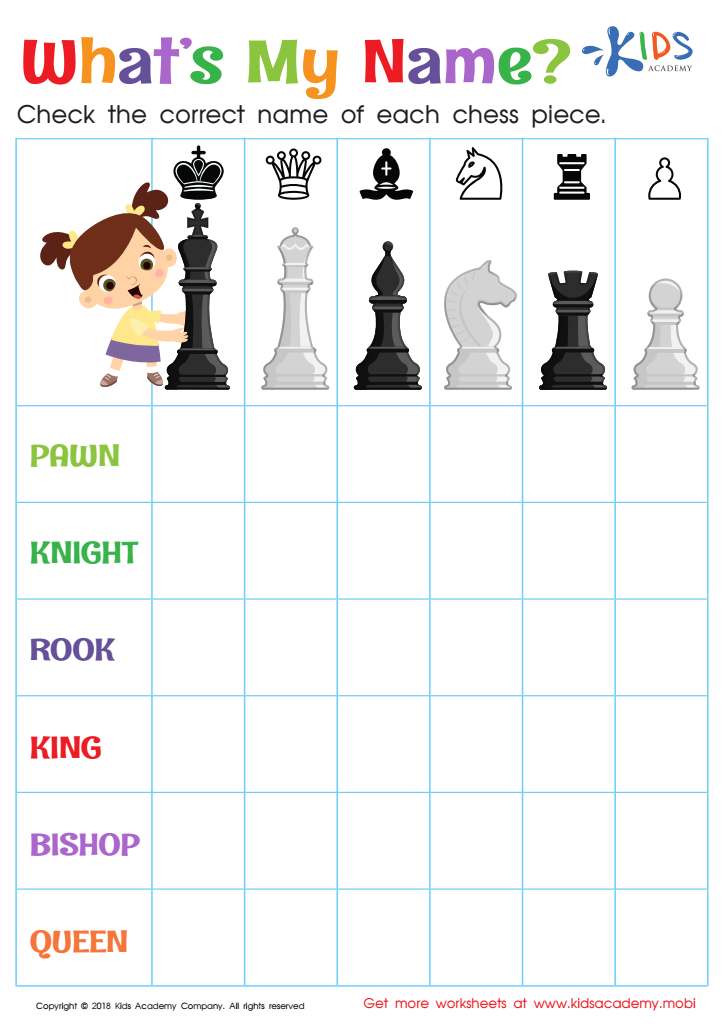
What's My Name? Worksheet
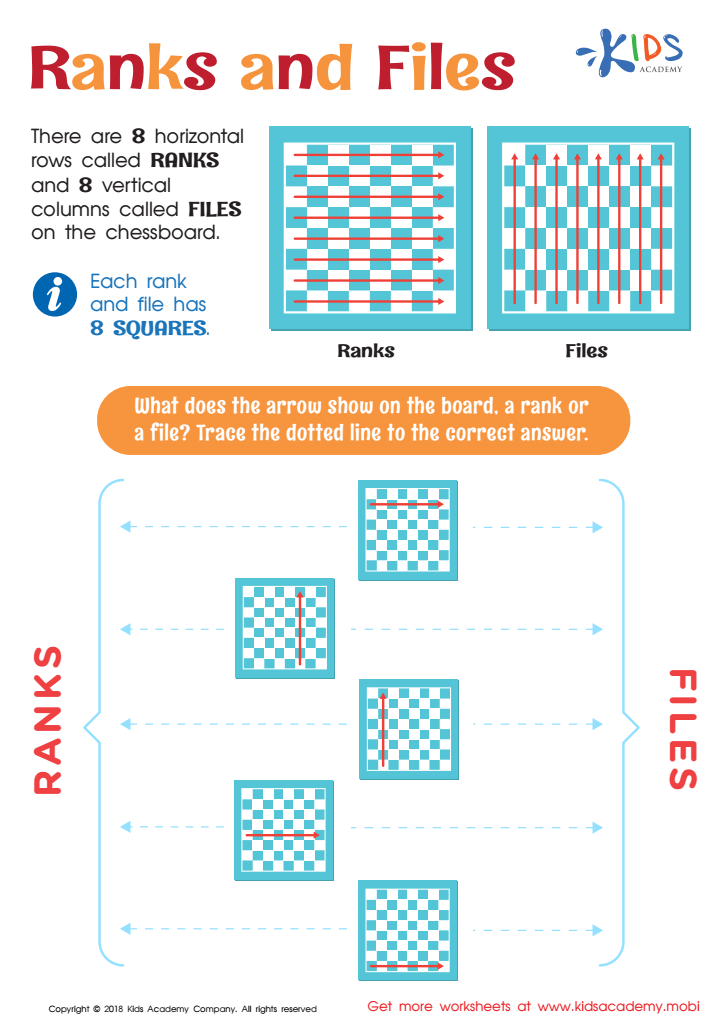
Ranks and Files Worksheet
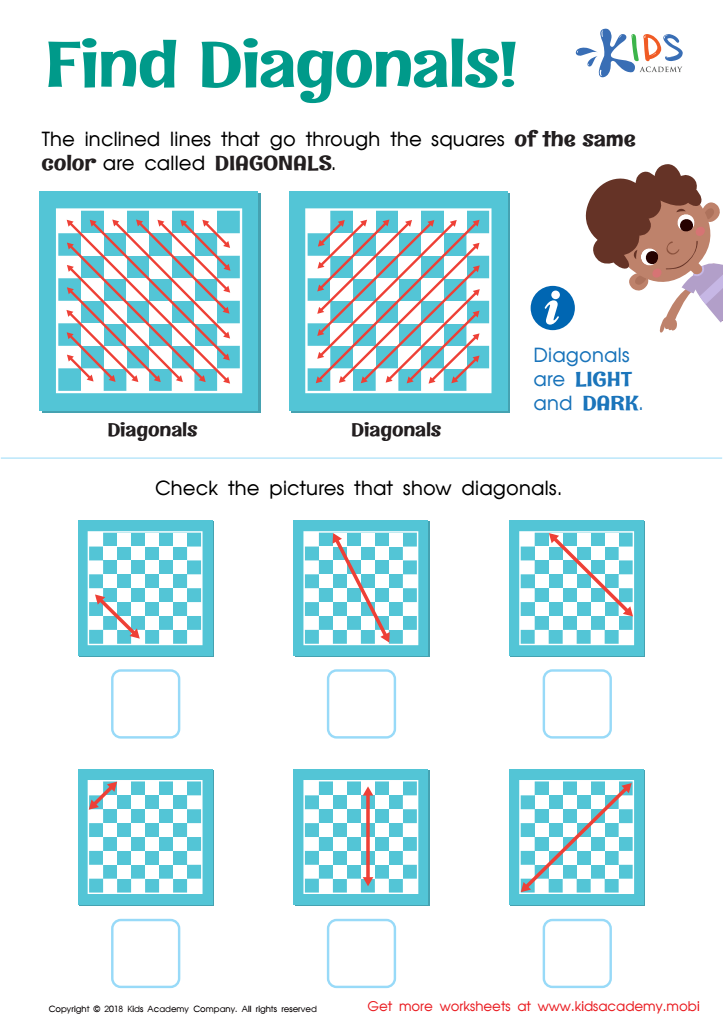
Find Diagonals Worksheet
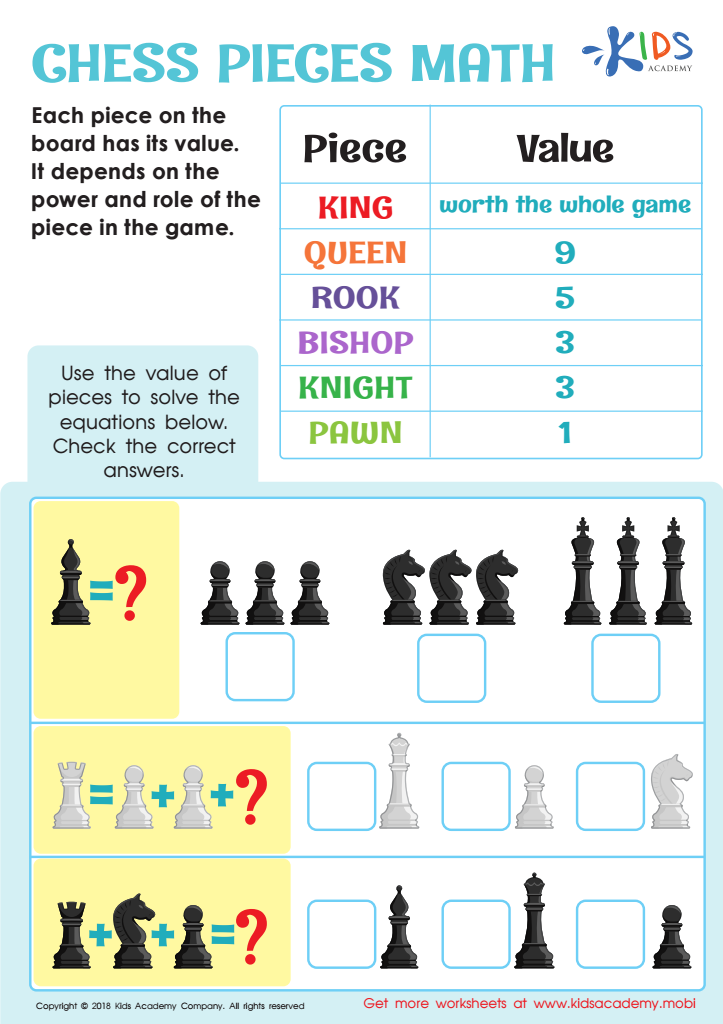
Chess Pieces Math Worksheet
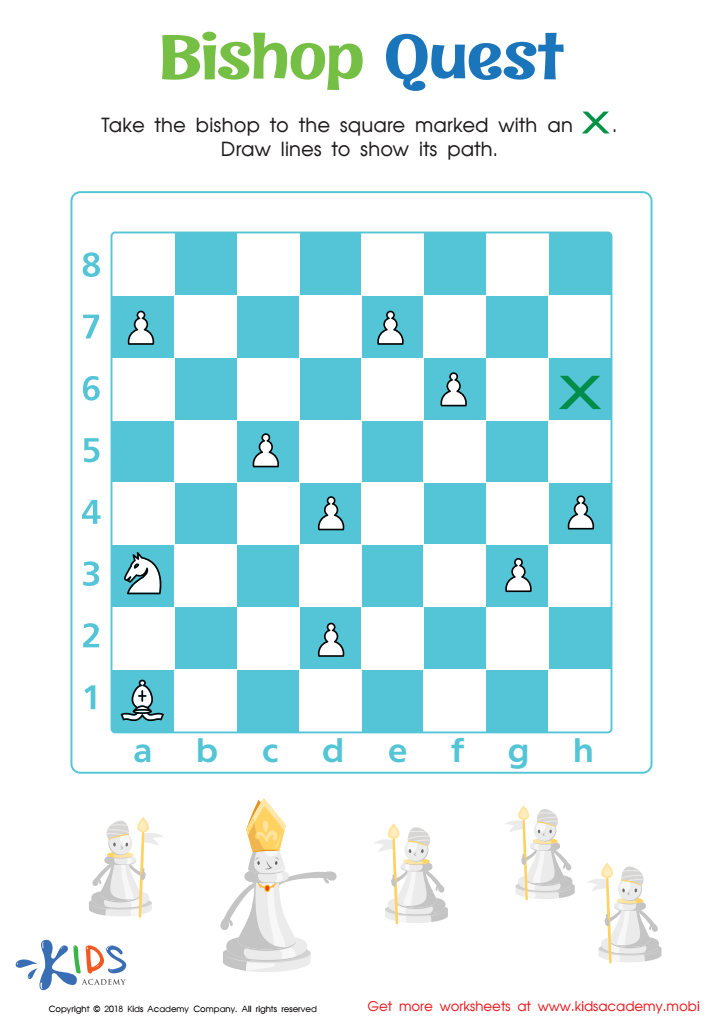
Bishop Quest Worksheet
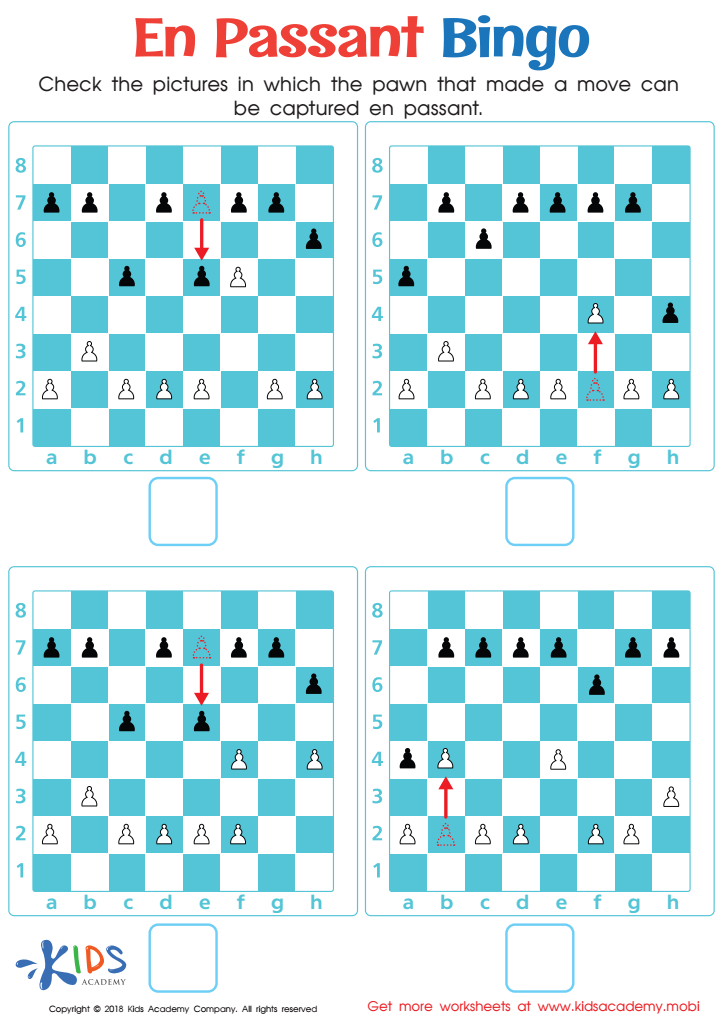
En Passant Bingo Worksheet
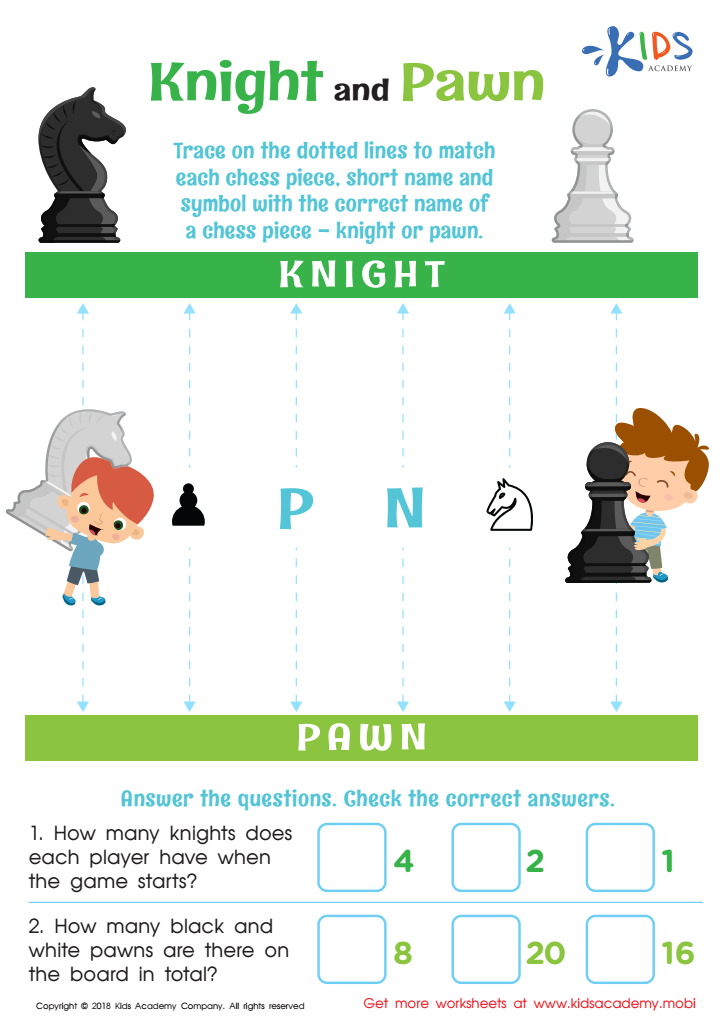
Knight and Pawn Worksheet
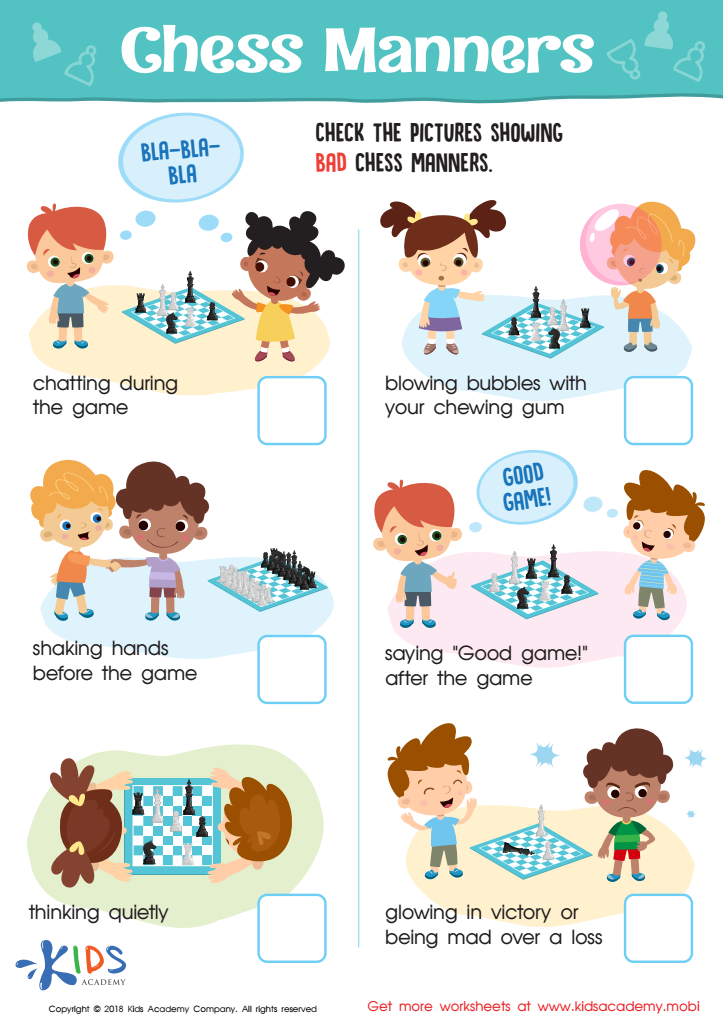
Chess Manners Worksheet
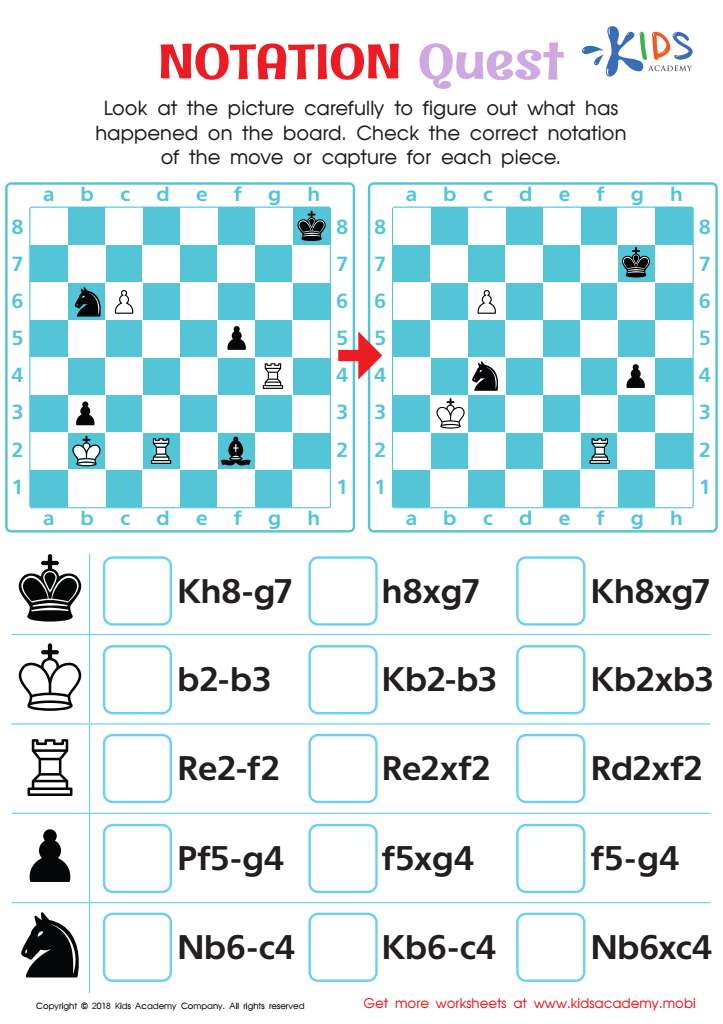
Notation Quest Worksheet
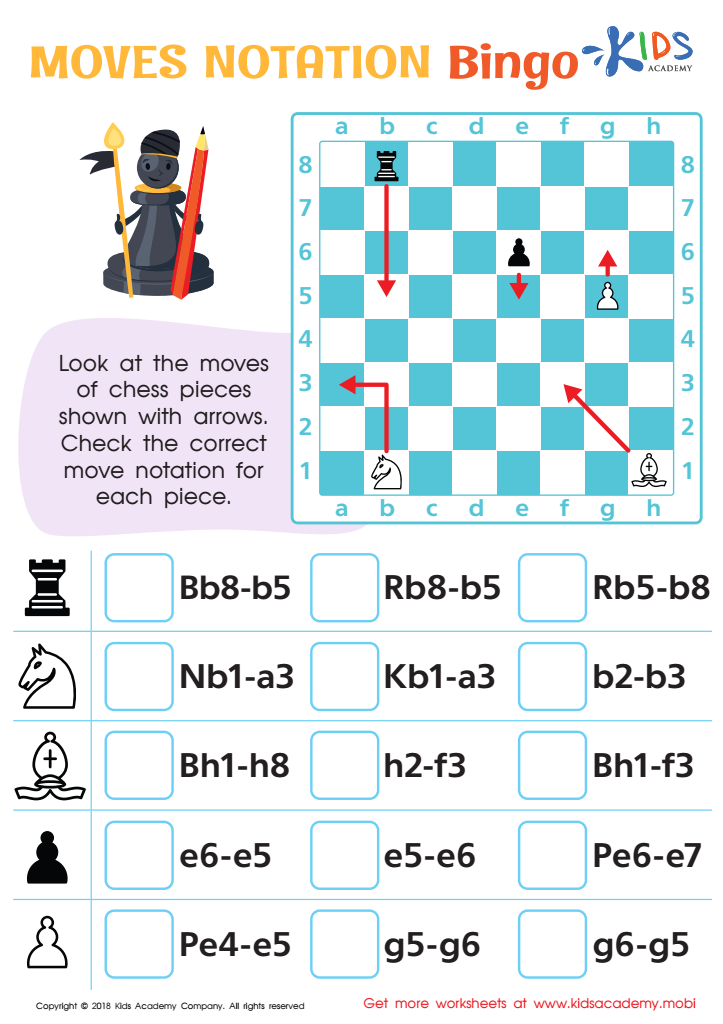
Moves Notation Bingo Worksheet
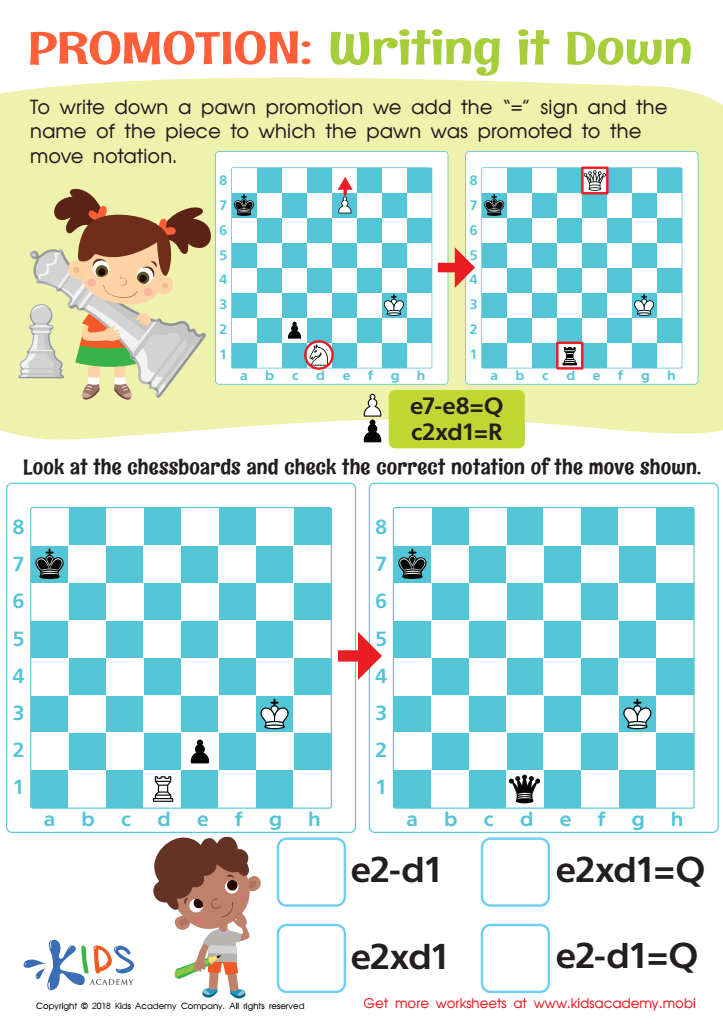
Writing it Down Worksheet
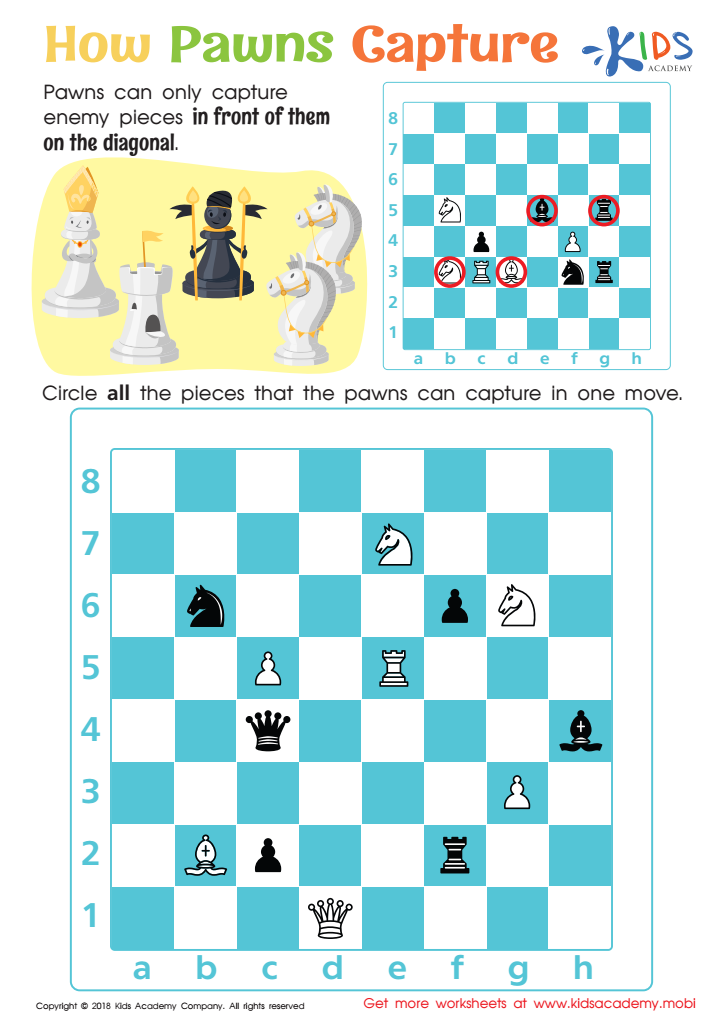
How Pawns Capture Worksheet
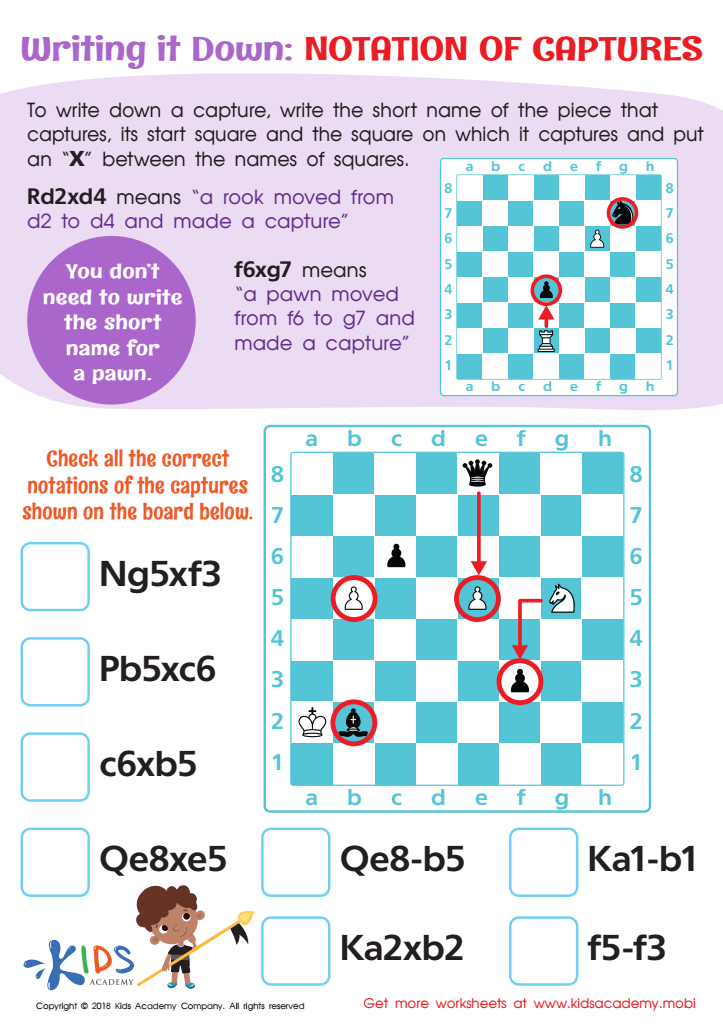
Notation of Captures Writing it Down Worksheet
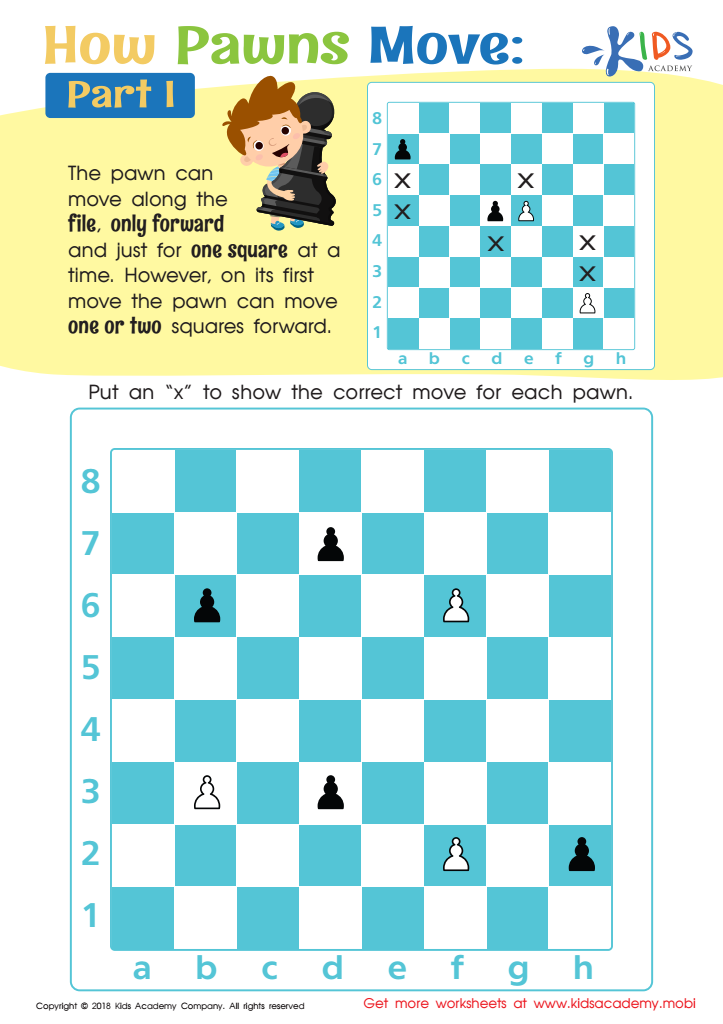
How Pawns Move: Part I Worksheet
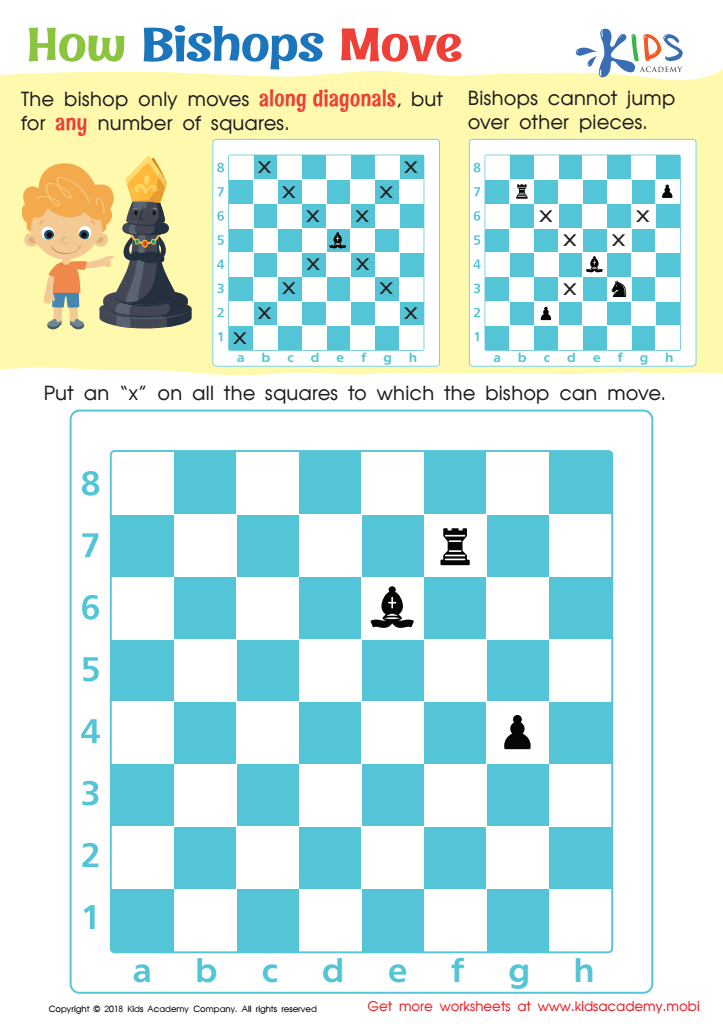
How Bishops Move Worksheet
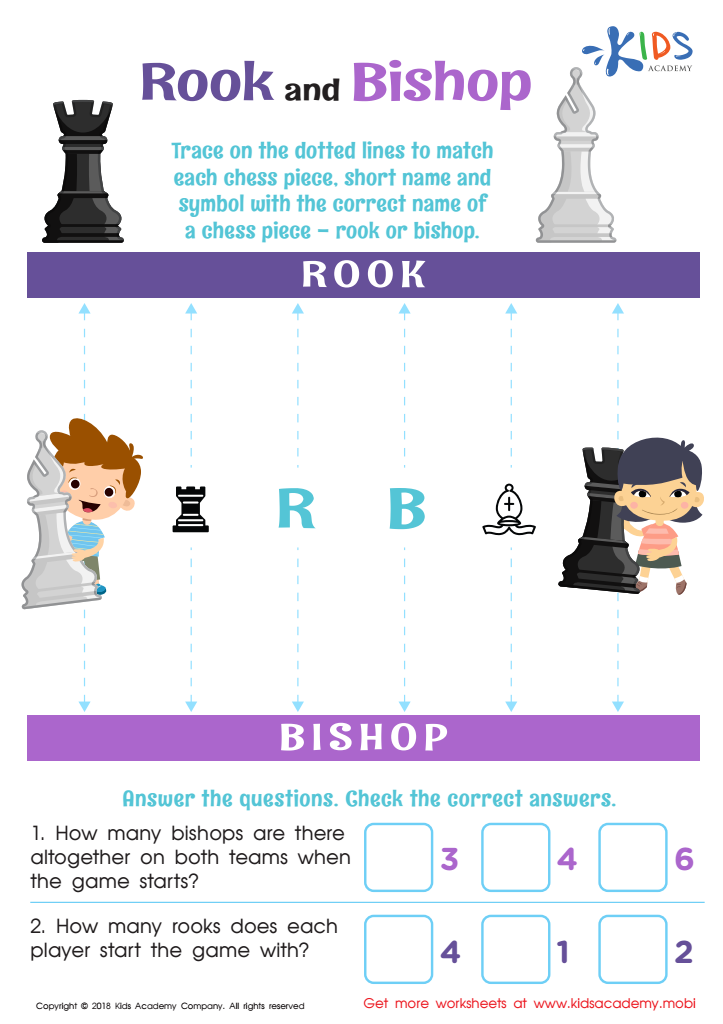
Rook and Bishop Worksheet
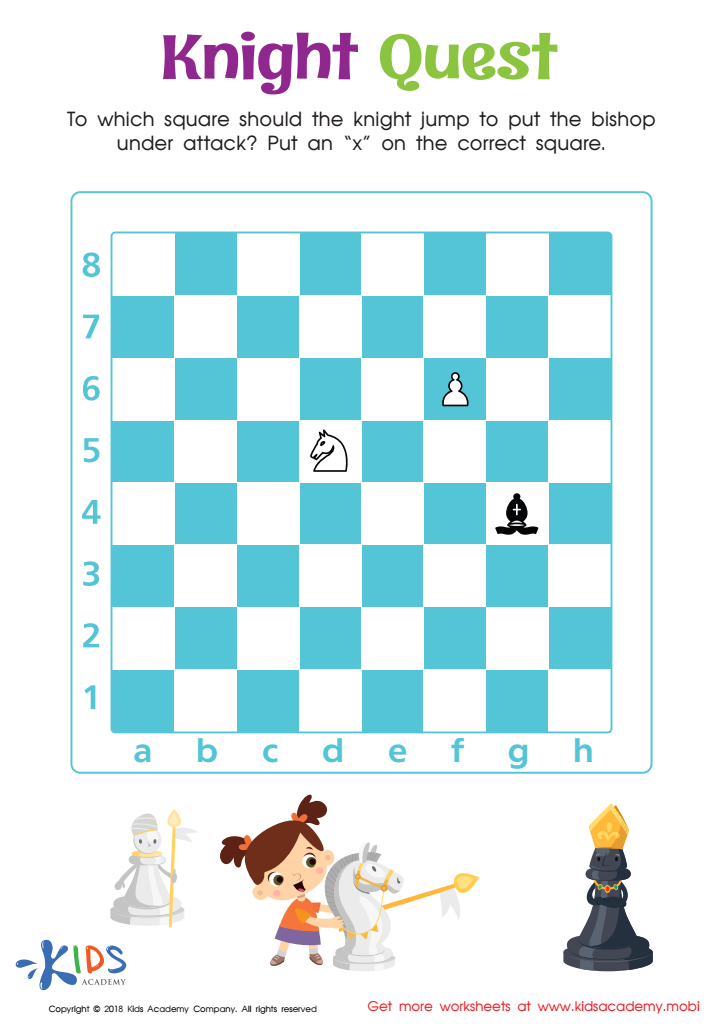
Knight Quest Worksheet
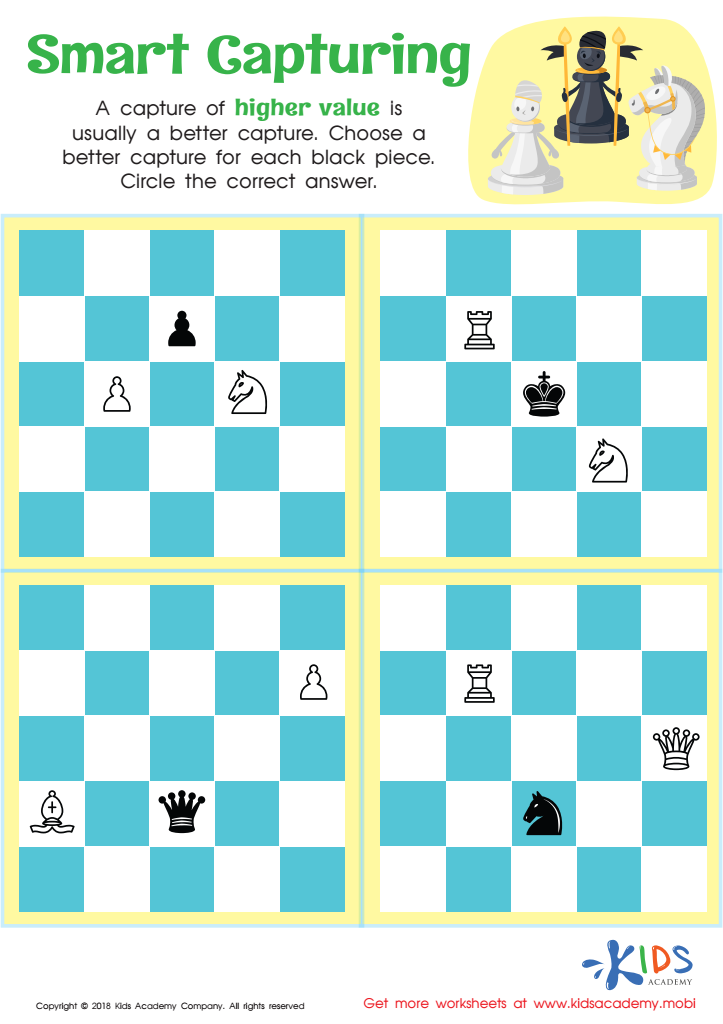
Smart Capturing Worksheet
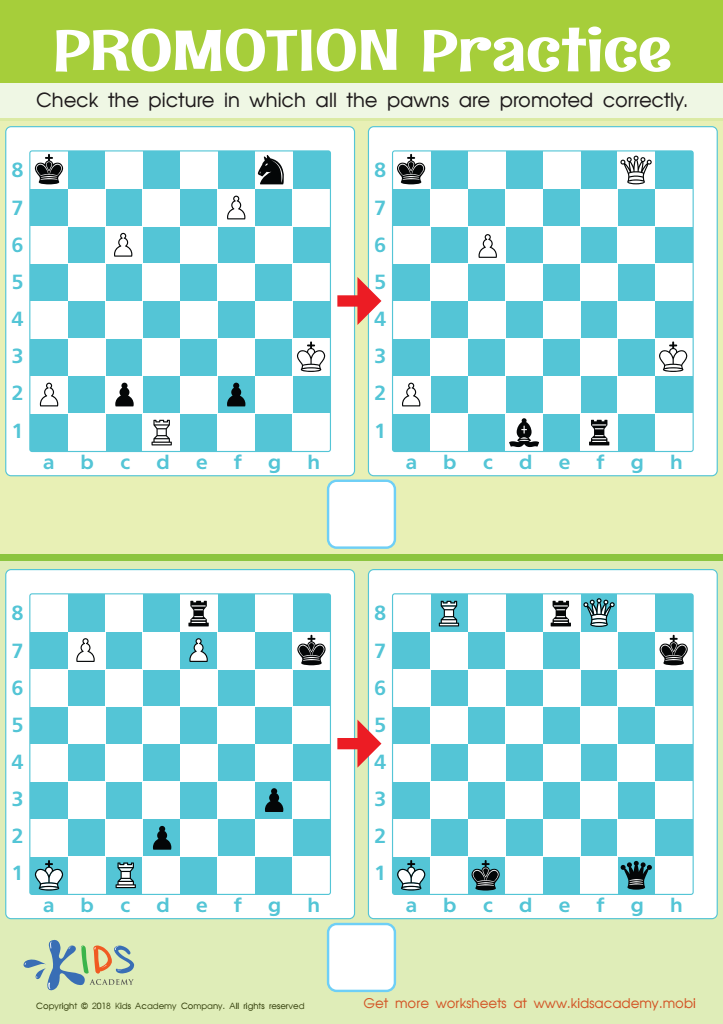
Promotion Practice Worksheet
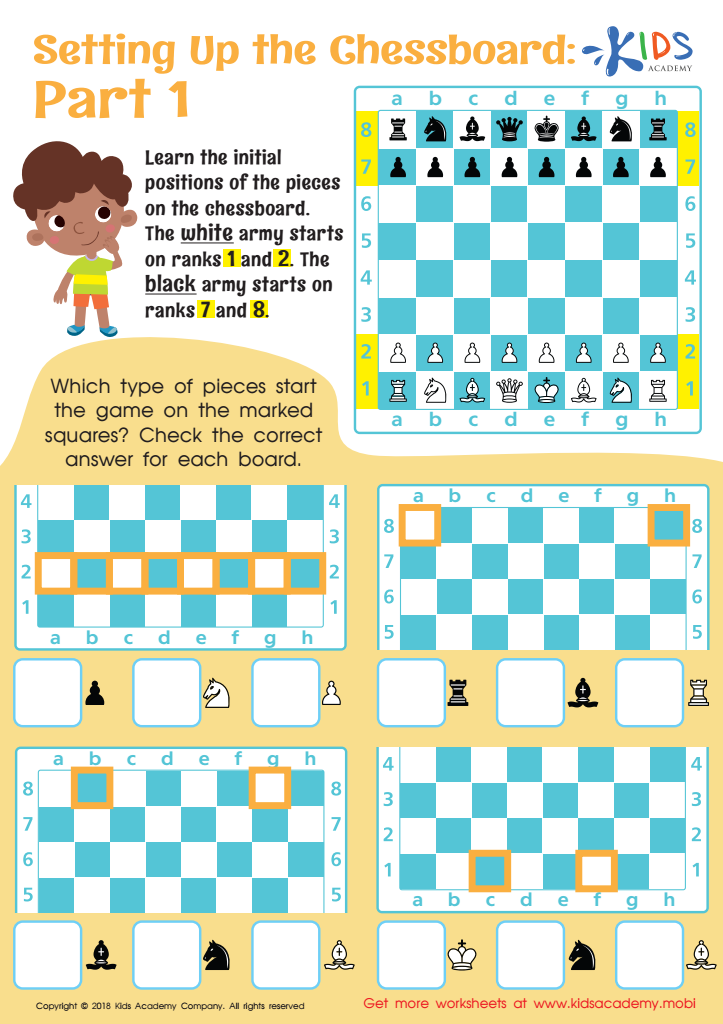
Setting up the Chessboard: Part 1 Worksheet






Normal Chess provides numerous benefits for children aged 7-9, making it an essential game for parents and teachers to prioritize. Firstly, chess enhances critical thinking and problem-solving skills, as children must evaluate different potential moves and consequences in real time. Such cognitive engagement supports their academic growth, fostering a mindset that values strategy and foresight.
Additionally, chess promotes important social skills. Playing chess encourages kids to take turns, respect opponents, and handle wins or losses gracefully, providing a platform for teaching sportsmanship and emotional intelligence. Furthermore, normative rules of chess cultivate patience and concentration, qualities that are vital for success in any educational setting.
Moreover, Normal Chess can act as a powerful tool for reinforcing math and logic skills. Recognizing patterns, counting pieces, and understanding spatial awareness translates into enhanced mathematical abilities deeper into their academic careers.
Lastly, integrating chess into early education can make learning more enjoyable and engaging. It serves as an inclusive extracurricular activity, allowing children from diverse backgrounds to connect and form friendships centered around a common interest. With these multifaceted benefits, it's clear that introducing Normal Chess to young learners is a vital commitment for parents and teachers.