Normal Community Worksheets for Ages 7-9 - Page 2
46 filtered results
-
From - To
 Assign to My Students
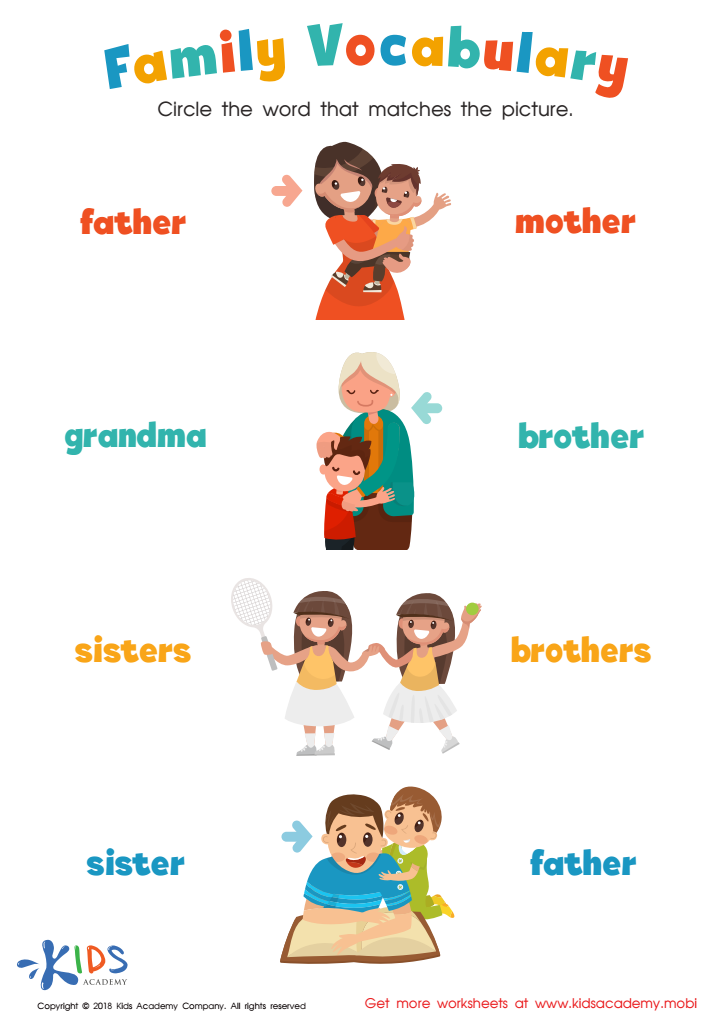
Family Vocabulary Worksheet
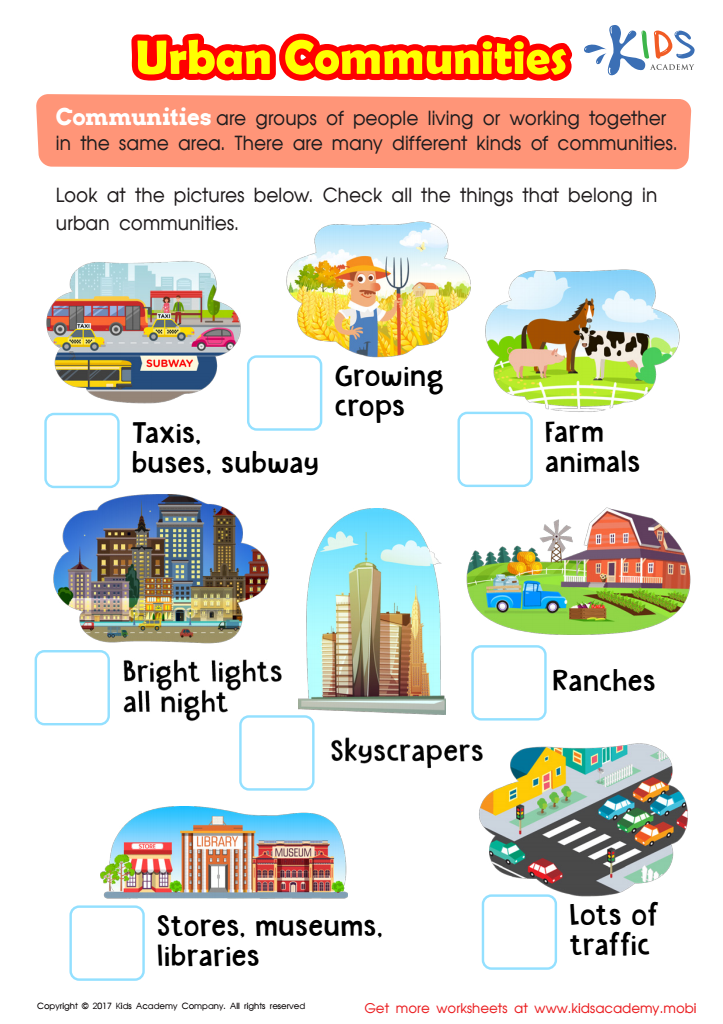
Urban Communities Printable
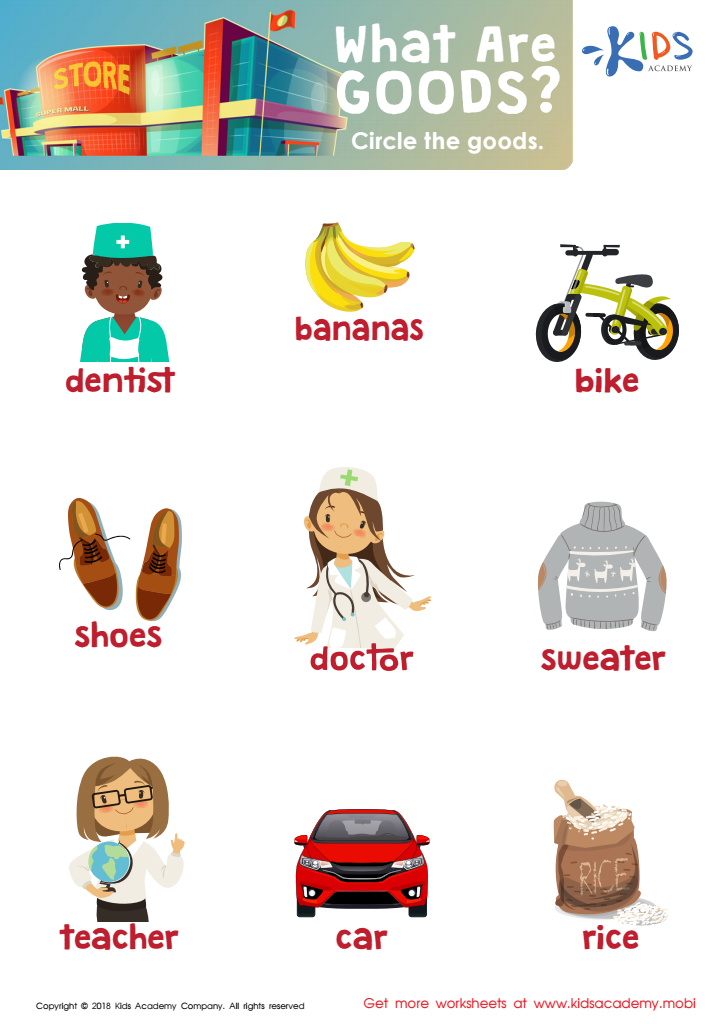
What Are Goods? Worksheet
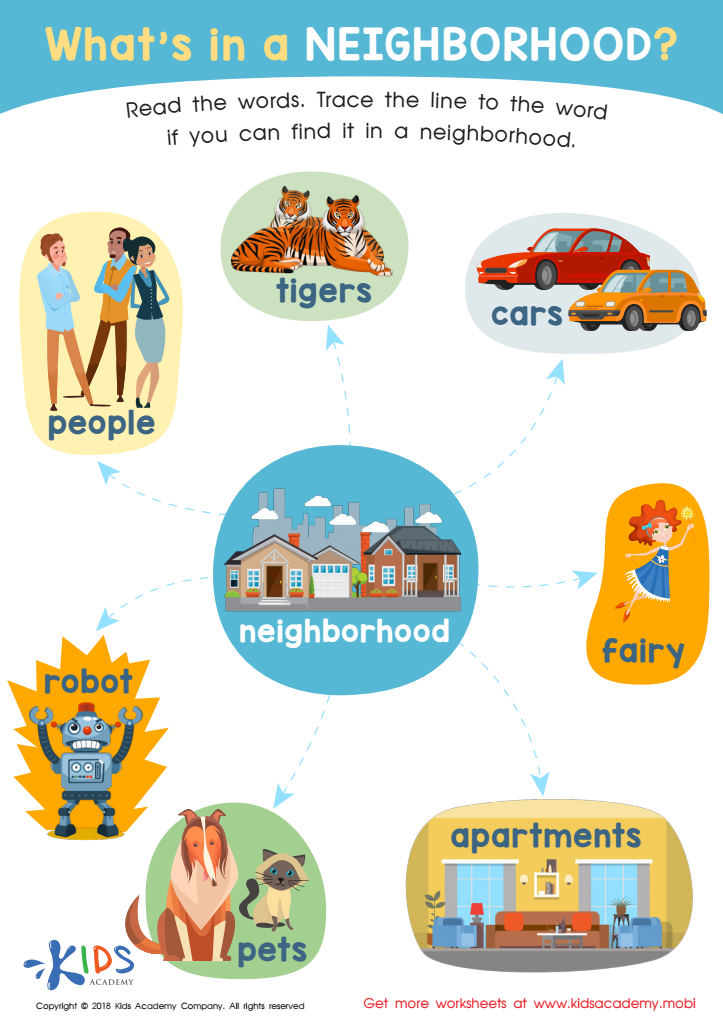
What's in a Neighborhood? Worksheet
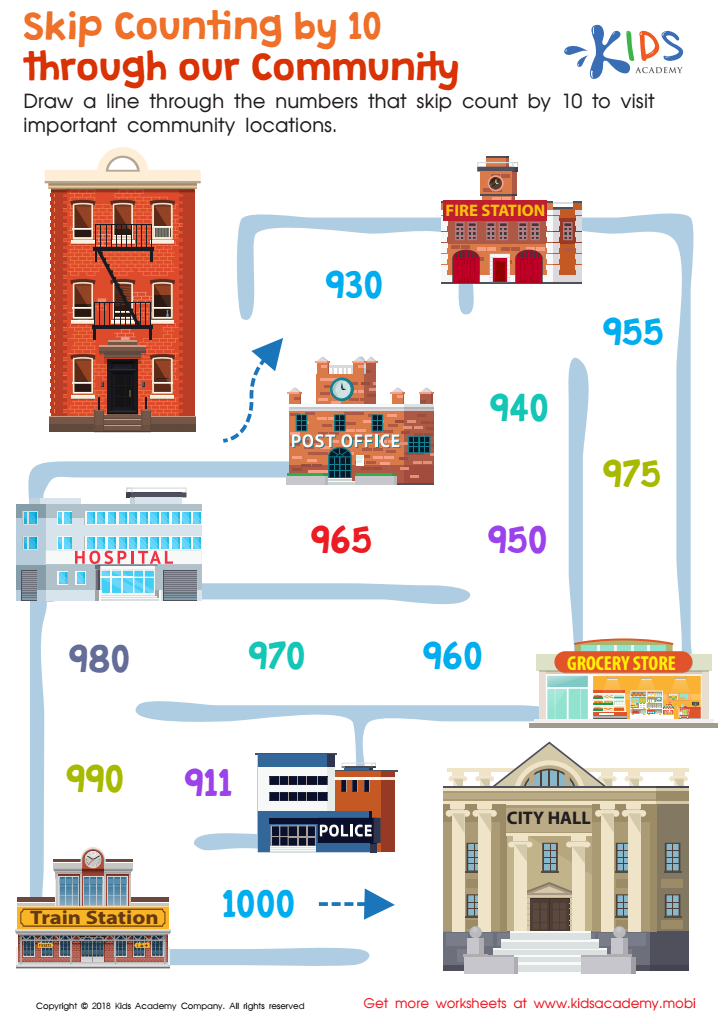
Skip Counting by 10 Through Our Community Worksheet
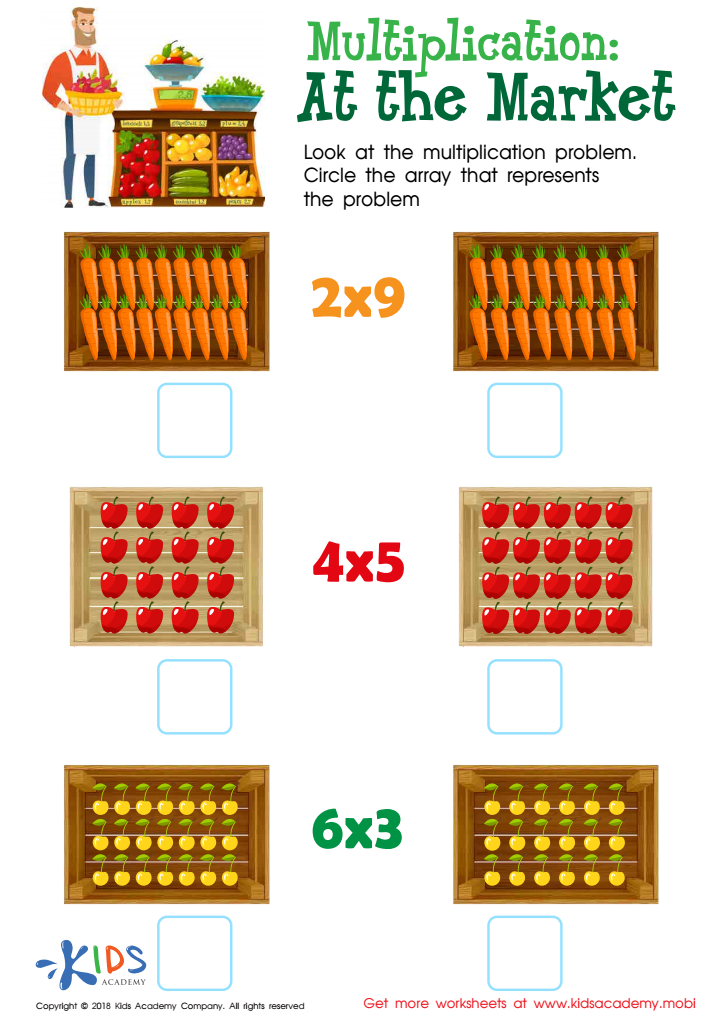
At the Market Worksheet

Chinese Word Tracing: Ni Hao Worksheet
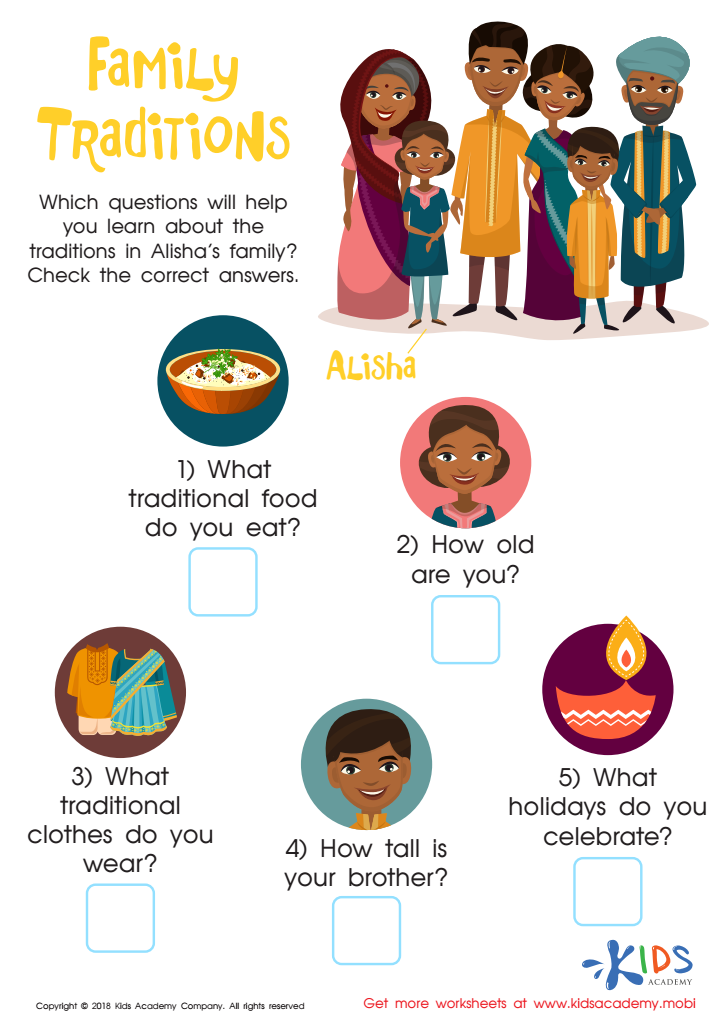
Family Traditions Worksheet
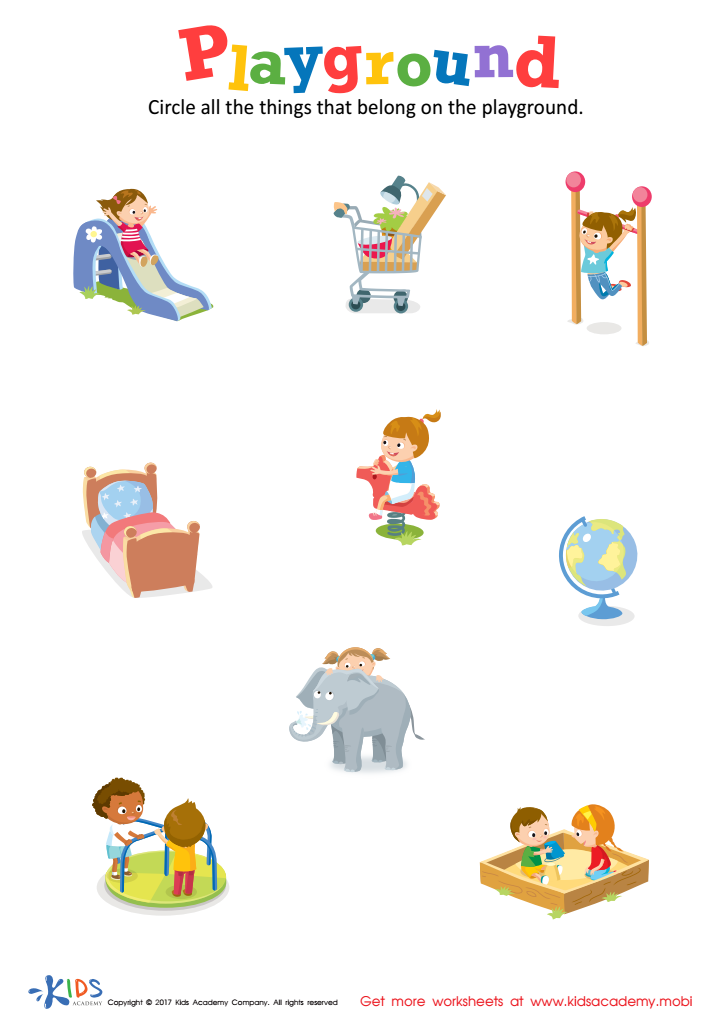
Playground Worksheet
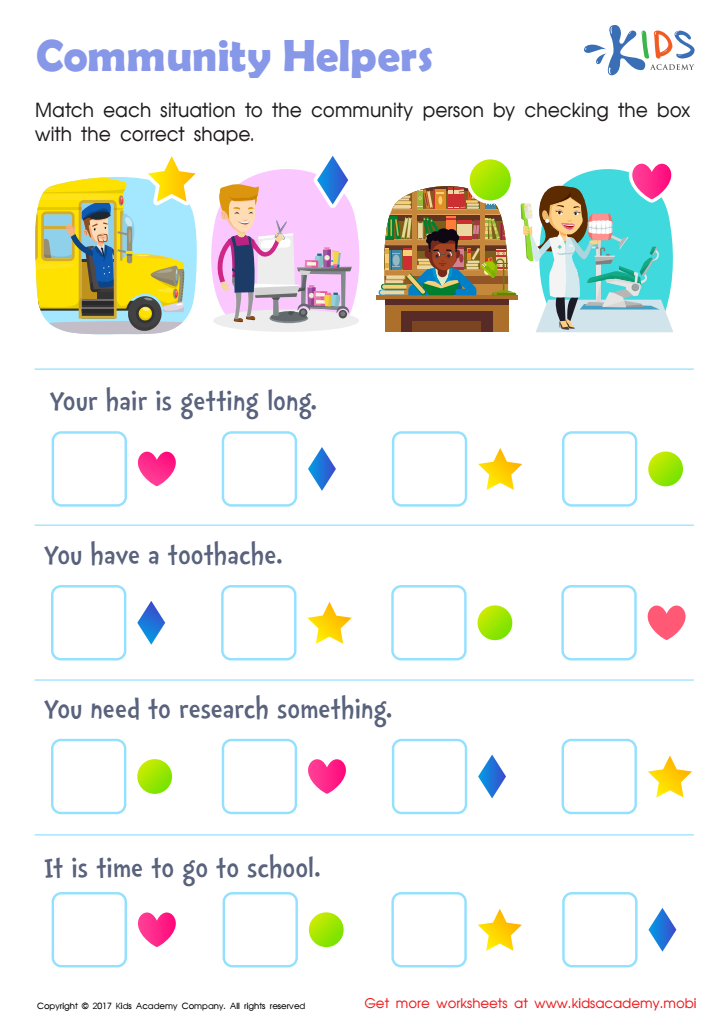
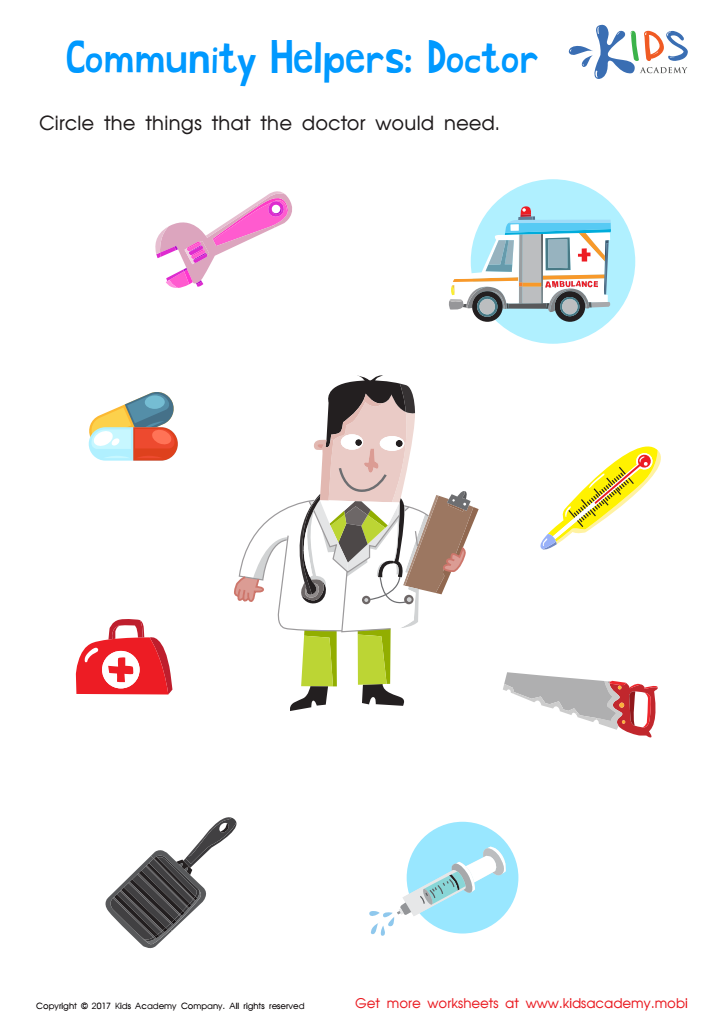
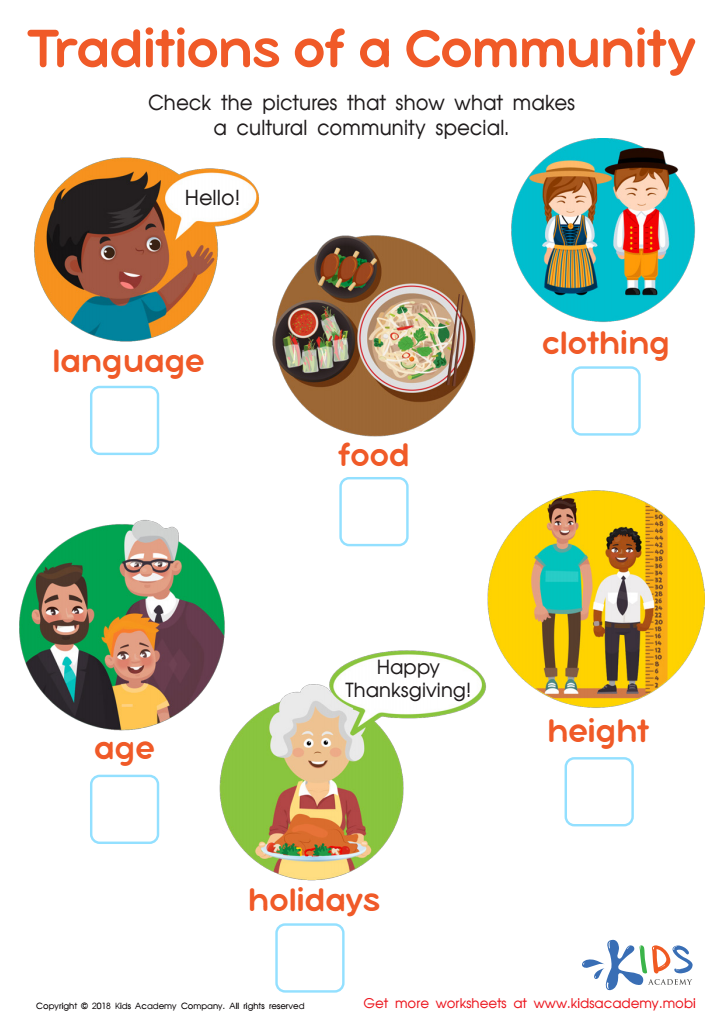
Traditions of a Community Worksheet
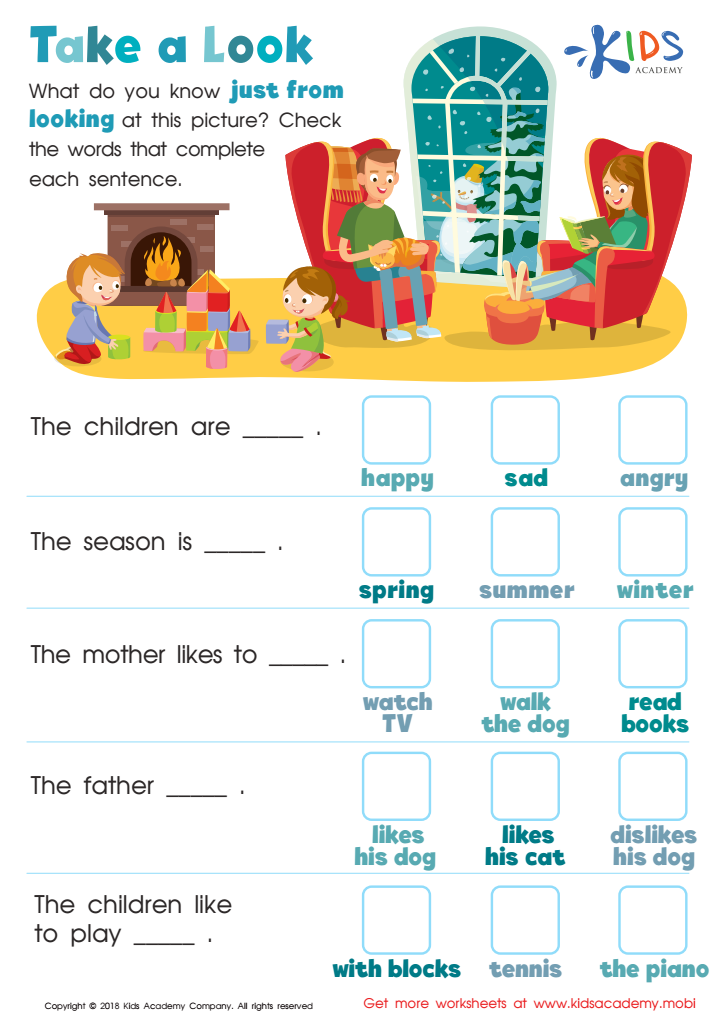
Take a Look - Part 1 Worksheet
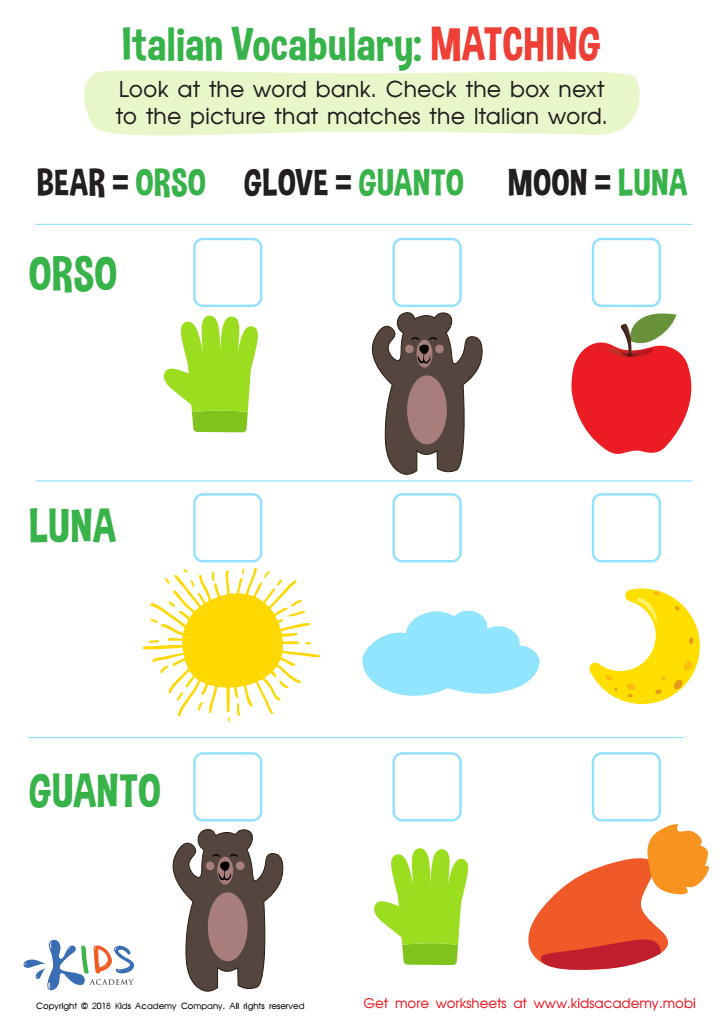
Italian Vocabulary Matching Worksheet
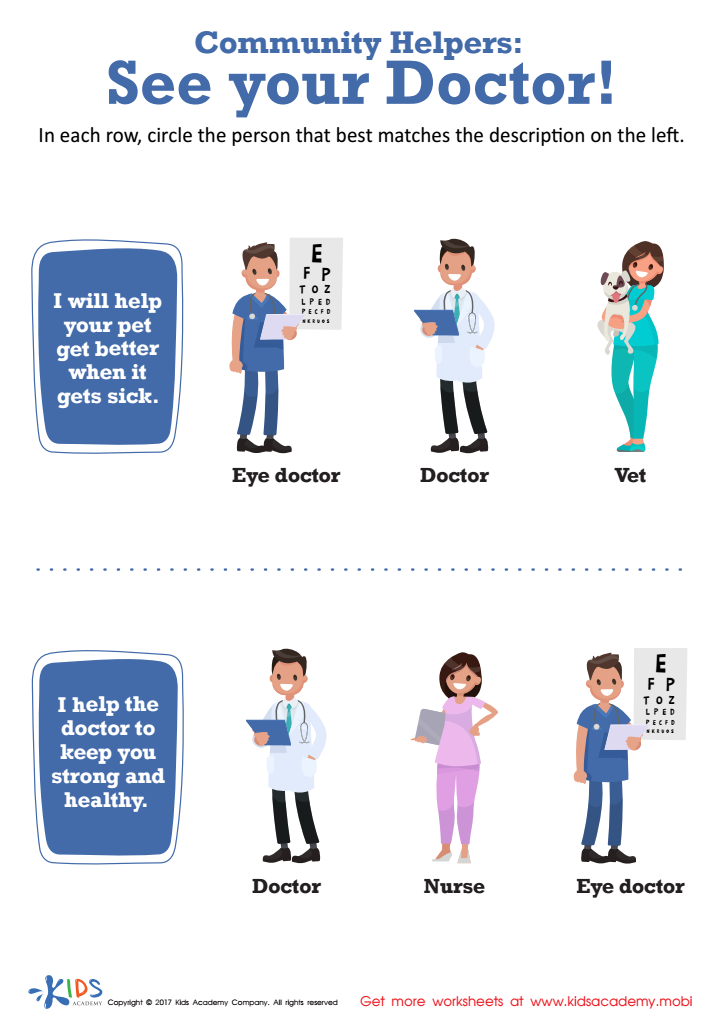
See Your Doctor (Part 2) Printable
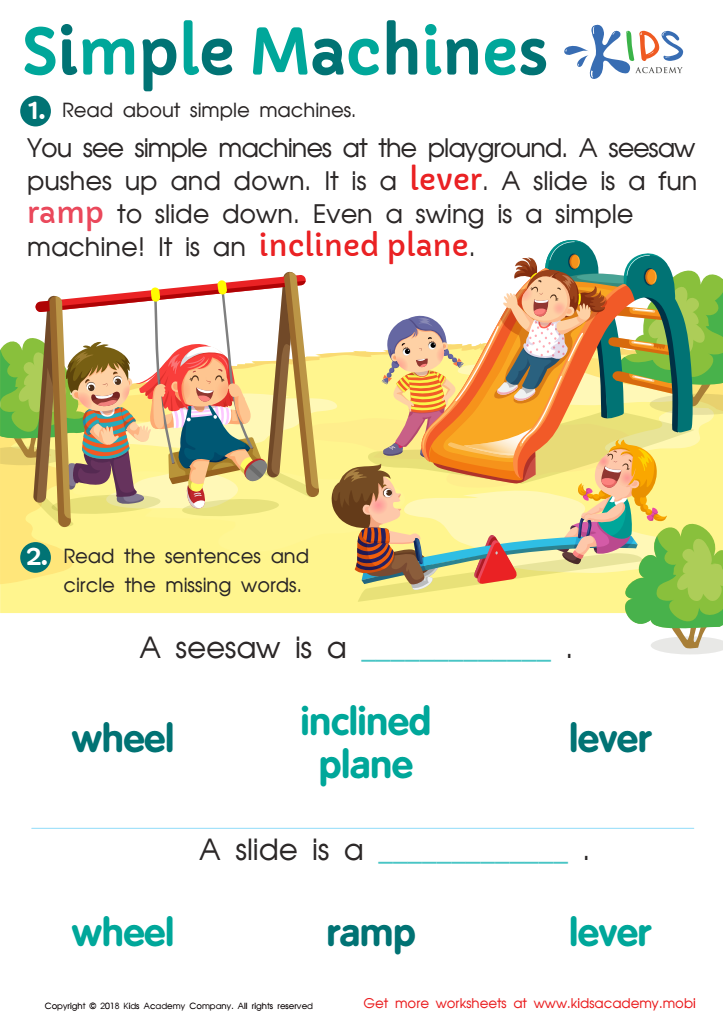
Simple Machines Worksheet
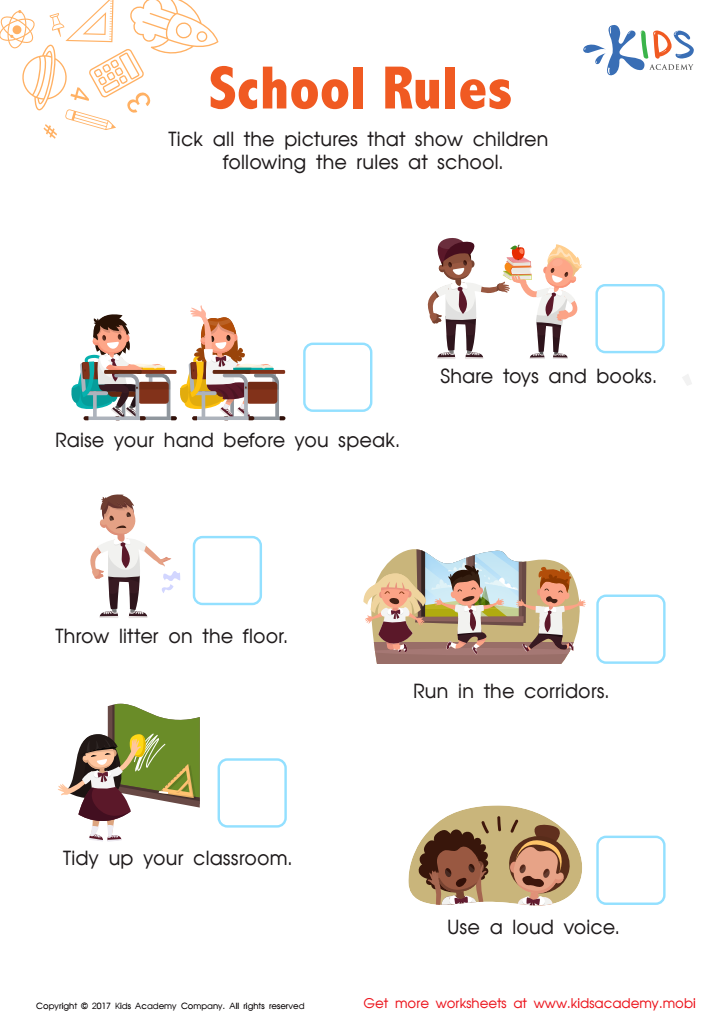
School Rules Worksheet
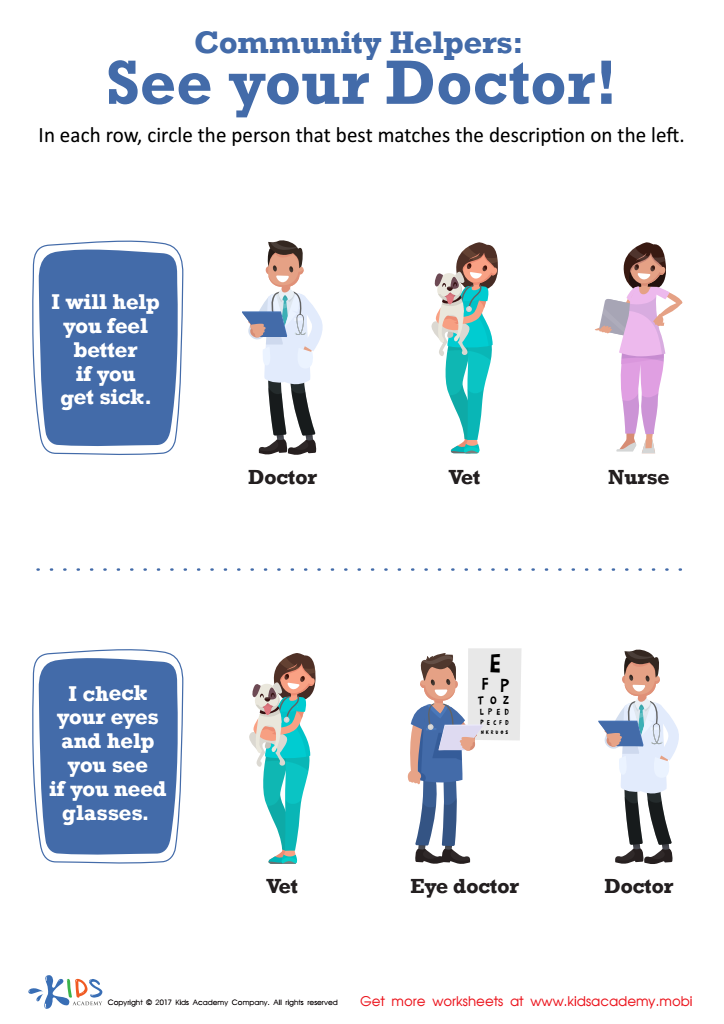
See Your Doctor (Part 1) Printable
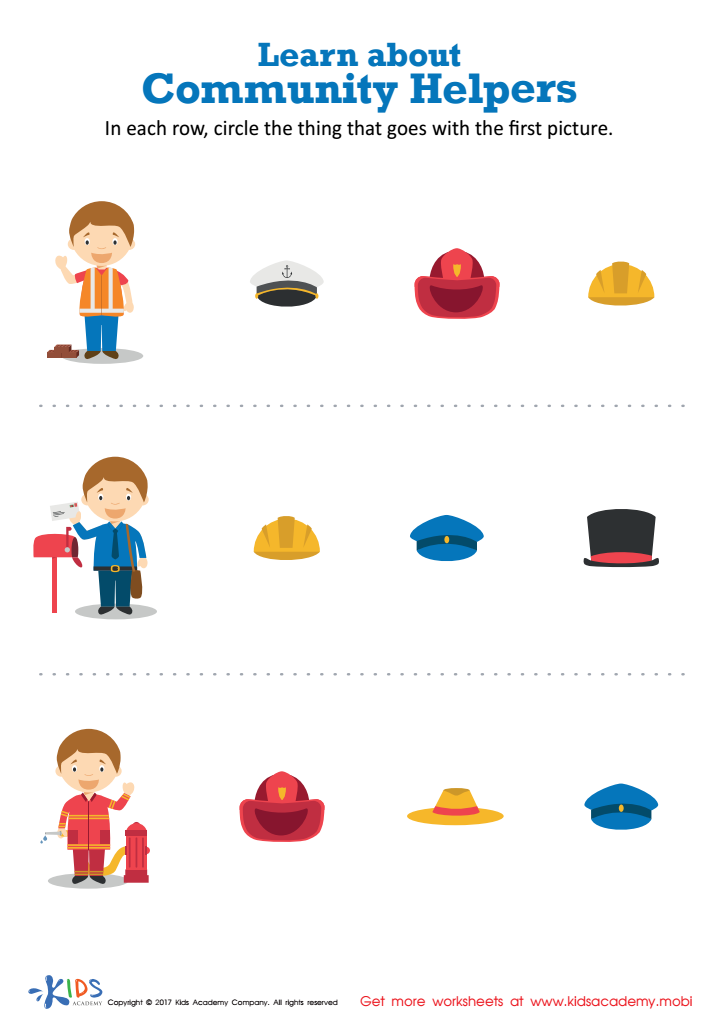
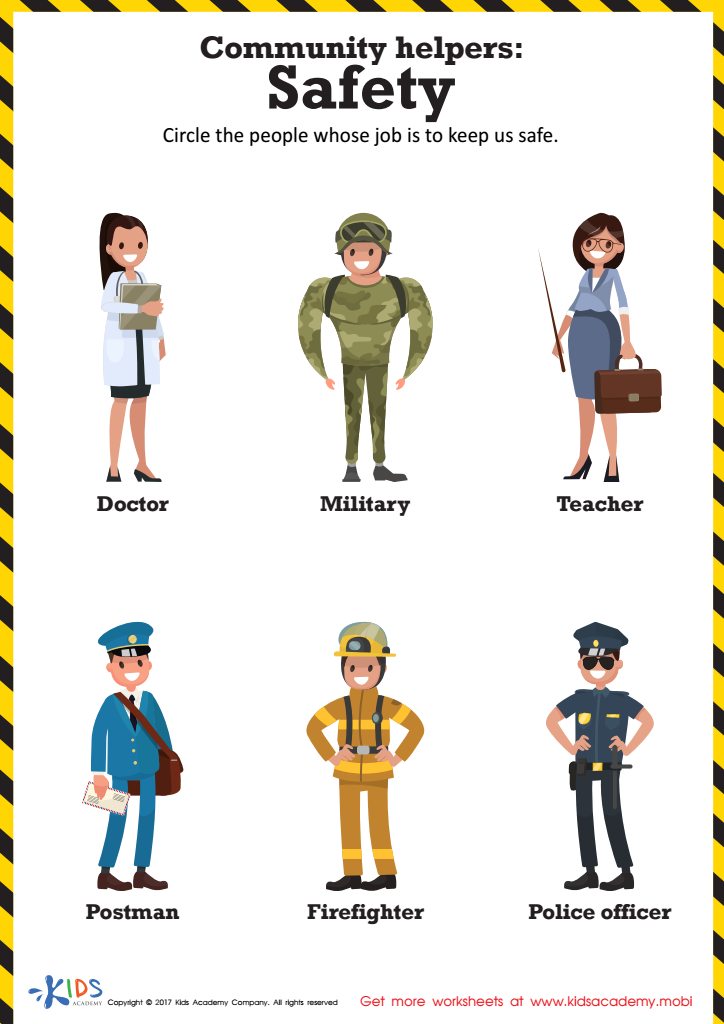
Learn about Community Helpers Printable
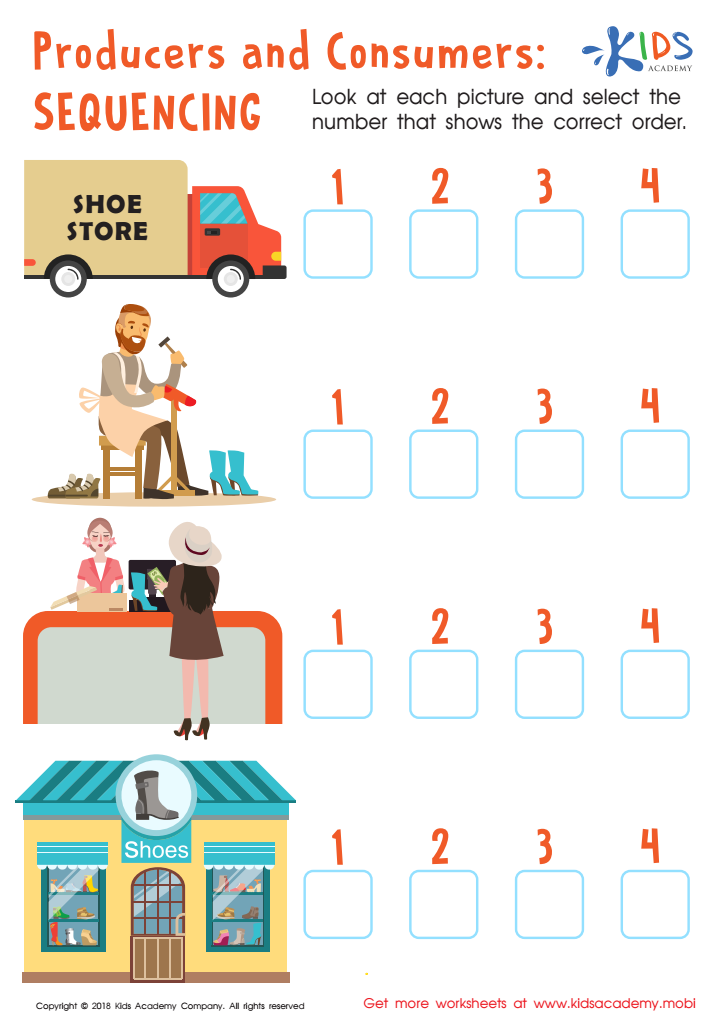
Producers and Consumers: Sequencing Worksheet
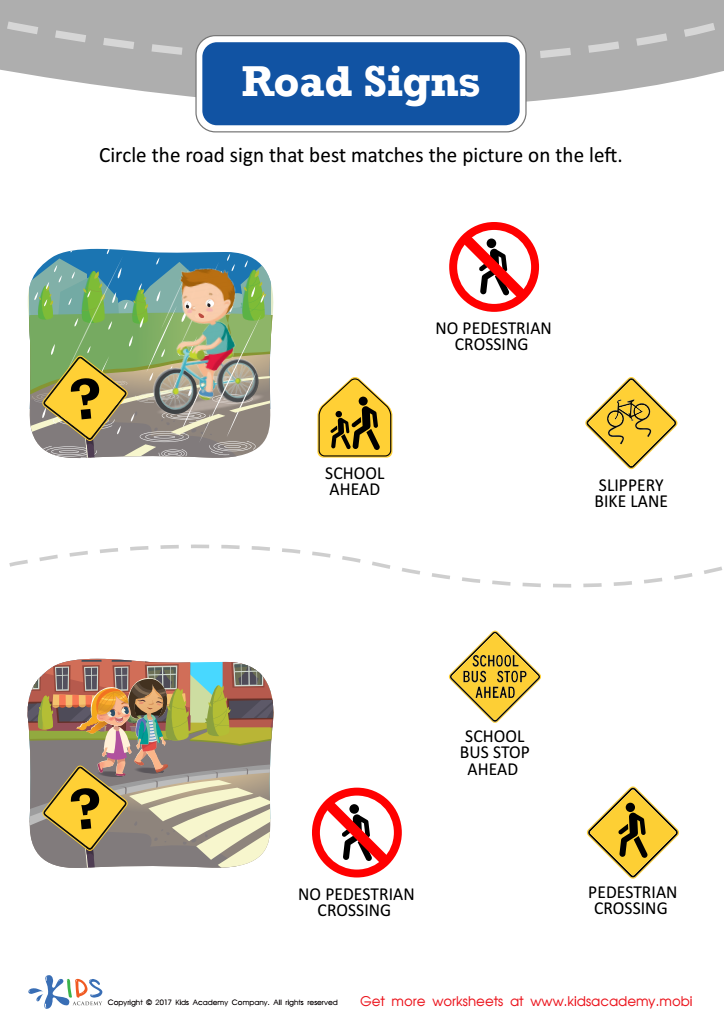
Road Signs (Part 2) Printable


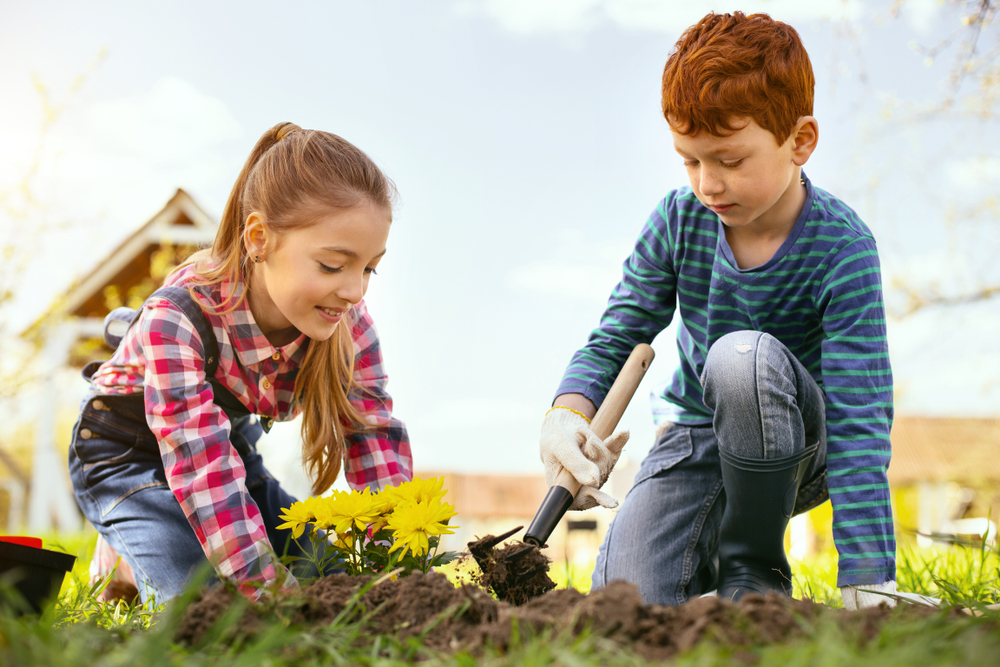





Caring about a normal community for children ages 7-9 is crucial because it plays a fundamental role in their overall development. At this age, children are highly impressionable and are developing social skills, moral values, and academic fundamentals that will shape their futures. A stable, supportive community provides essential opportunities for safe social interaction, play, and learning, which are all key to developing self-esteem and emotional well-being.
For parents, being engaged with the community means they can better understand and influence the environments where their children spend a significant amount of time. It allows them to network with other families, share resources, and collectively address any issues that affect their children’s well-being.
Teachers, on the other hand, benefit from an engaged and supportive community by being able to apply consistent values and standards in and outside the classroom, leading to a more wholesome education experience. Collaboration with parents and community members can provide additional academic support, enriching extracurricular activities, and real-world learning opportunities that foster a love for learning and curiosity.
Ultimately, a caring and involved community context ensures that children have access to a nurturing, secure, and stimulating environment that aids in their holistic growth and prepares them to be well-rounded individuals.