Practice and Free Normal Difficulty Phonics Worksheets With Answers for Kids - Page 5
178 filtered results
Difficulty Level
Grade
Age
-
From - To
Subject
Activity
Standards
Favorites
With answer key
Interactive
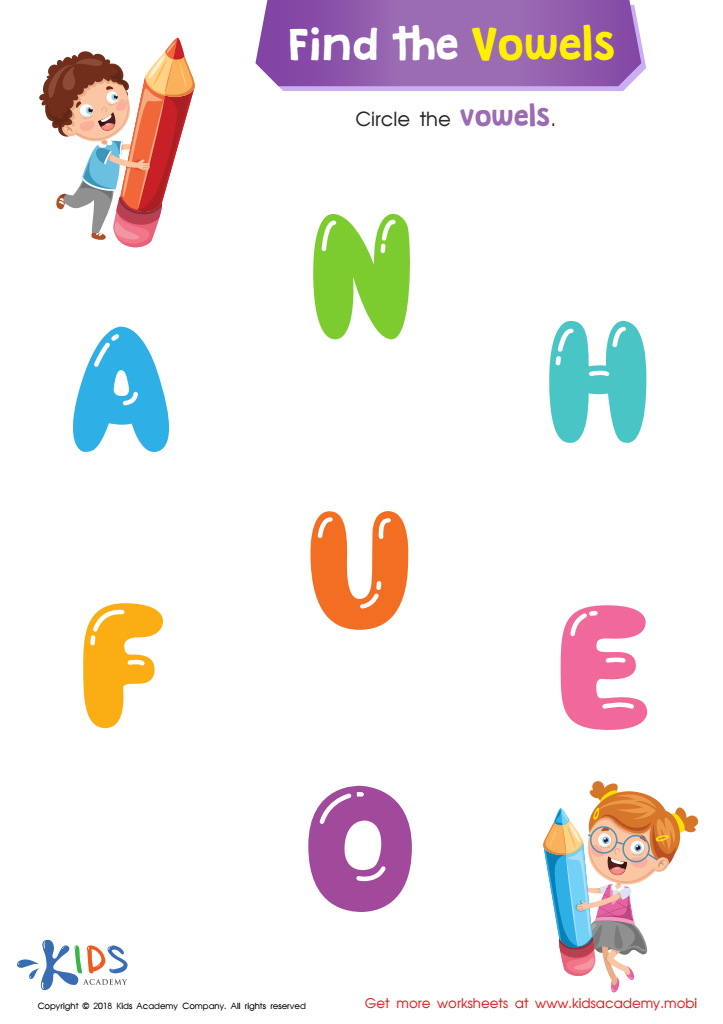
Find the Vowels Reading Worksheet
This worksheet helps kids identify vowels with bright colors and engaging activities to strengthen their visual discrimination and fine motor skills. Young learners will find it easy to succeed and be excited to keep reading!
 Assign to My Students
Find the Vowels Reading Worksheet
Worksheet
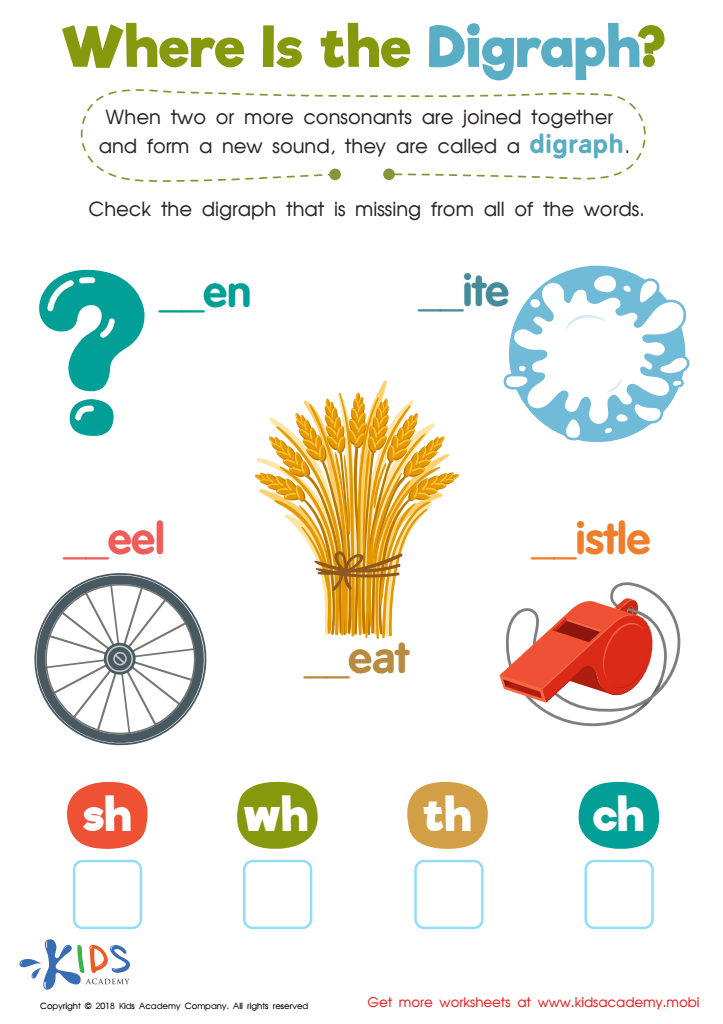
Where Is the Digraph? Worksheet
Teach your child about digraphs - two or more consonants that form one sound, like /wh/, /sh/, and /ch/. Show them words with these sounds and use this worksheet to help. Ask them which digraph is missing from the words and point out the pictures. 80 words.
Where Is the Digraph? Worksheet
Worksheet
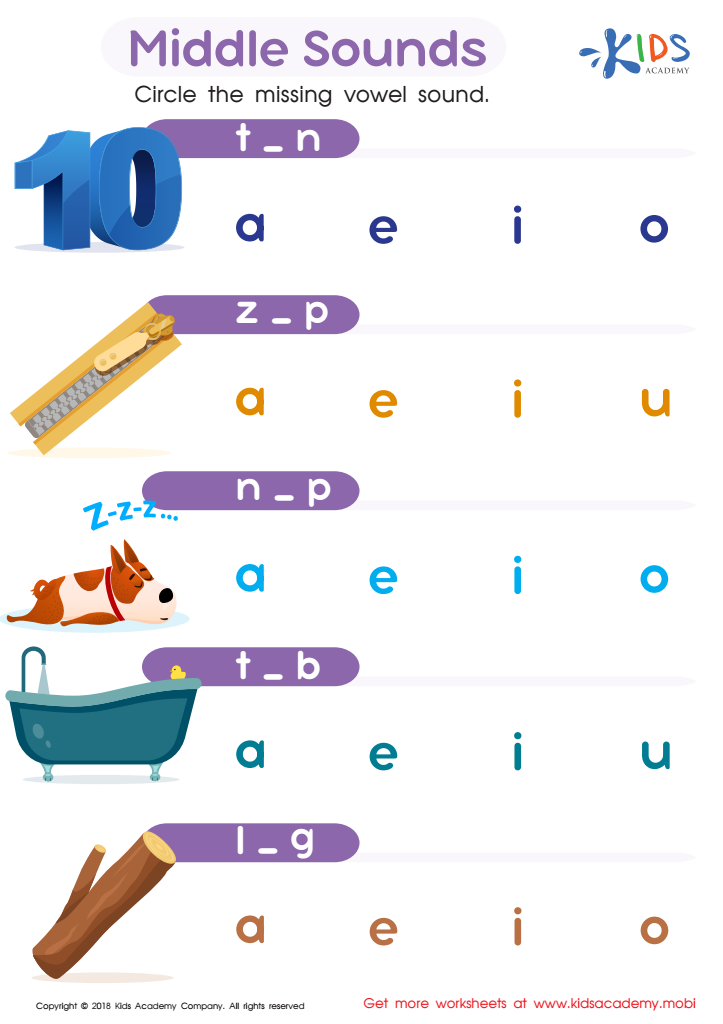
Middle Sounds Worksheet
Download this free worksheet and help your reader identify middle sounds in words. Pictures provide clues to the word, while tracing circles around the middle vowel sound strengthens fine motor and visual discrimination skills. It's a great way to teach sound discrimination between similar-sounding short vowels - a key component for proficient reading.
Middle Sounds Worksheet
Worksheet
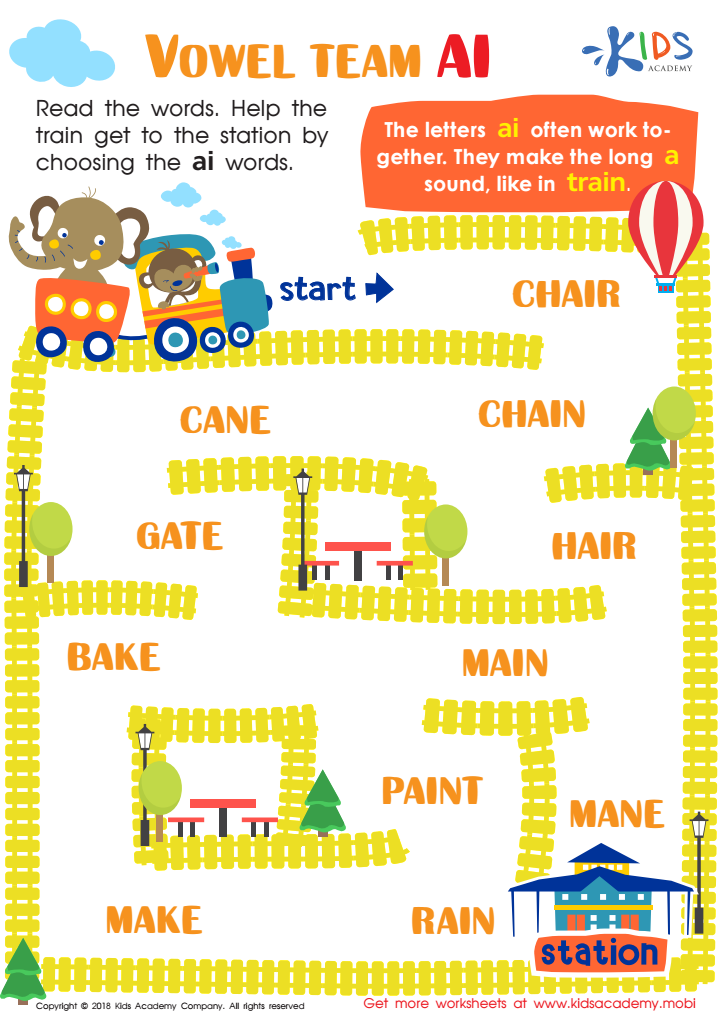
Vowel team ai Worksheet
Kids will have a blast learning about the -ai digraph with this fun worksheet. They'll read words with it and practice their motor skills as they help the animal duo get back to the train station. With success, they'll smile and enjoy the activity!
Vowel team ai Worksheet
Worksheet
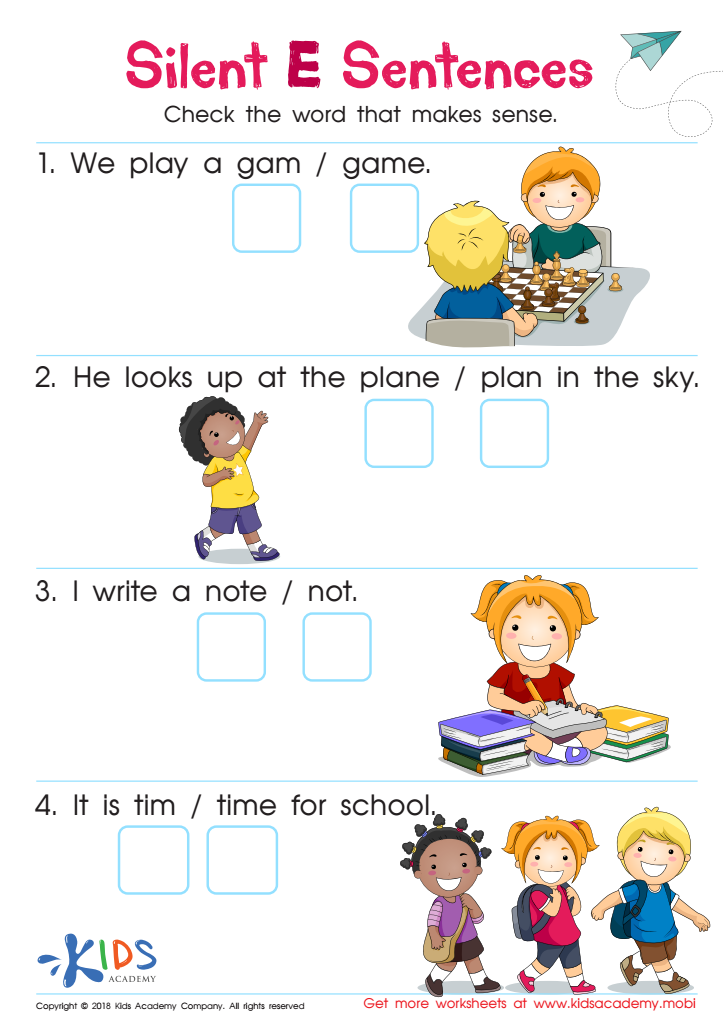
Silent E Sentences Worksheet
Young readers can find learning Silent E tricky, so this helpful worksheet can help! It teaches them to distinguish words that look the same but for the Silent E and choose the right word for sentence blanks. Kids can mark the correct answer and become familiar with closed syllables and words that require the E.
Silent E Sentences Worksheet
Worksheet
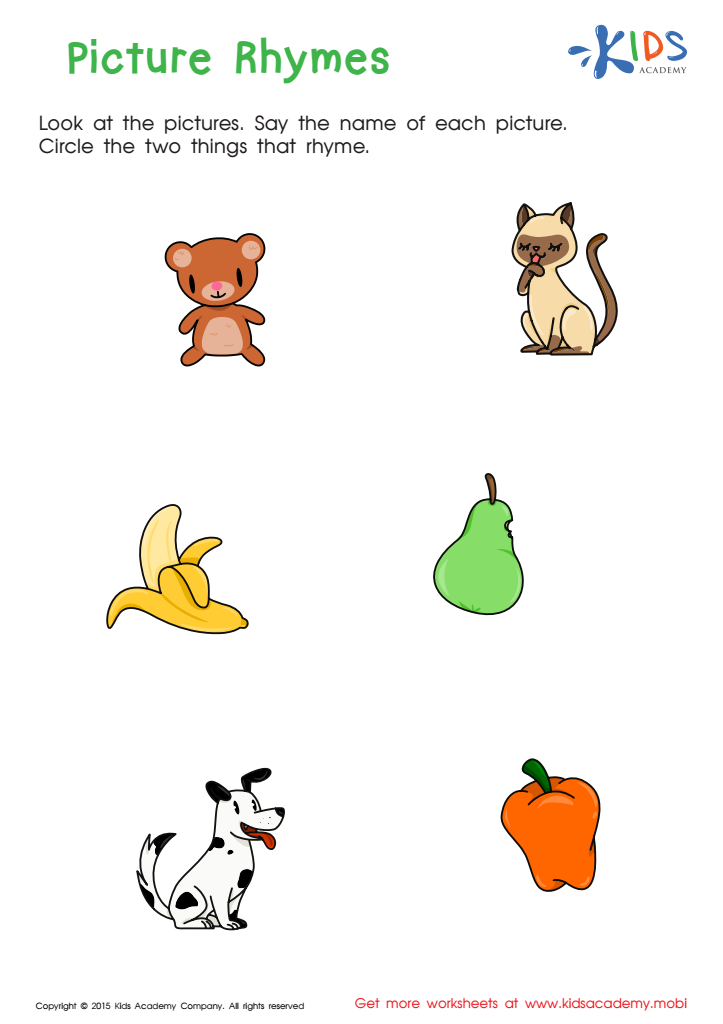
First Words: Picture Rhymes Worksheet
Rhyming helps kids understand language, read and write better. This printable worksheet boosts problem-solving and cognitive skills with vibrant pictures. It teaches kids to identify words, recognize rhymes, complete mental tasks and write words. An extra activity: show them how rhyming words share some of the same letters.
First Words: Picture Rhymes Worksheet
Worksheet
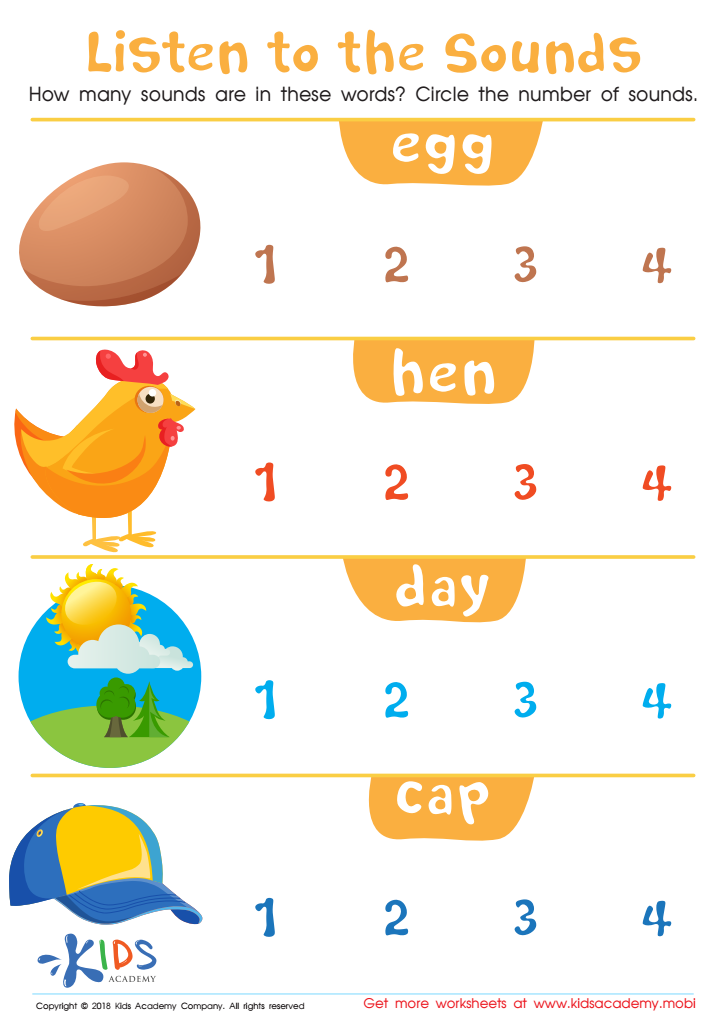
Listen to the Sounds Worksheet
This worksheet builds emerging readers' skills in using sounds for reading and spelling. It helps strengthen auditory processing by having them count the sounds in each word, then trace the corresponding number. Fun and cheerful!
Listen to the Sounds Worksheet
Worksheet
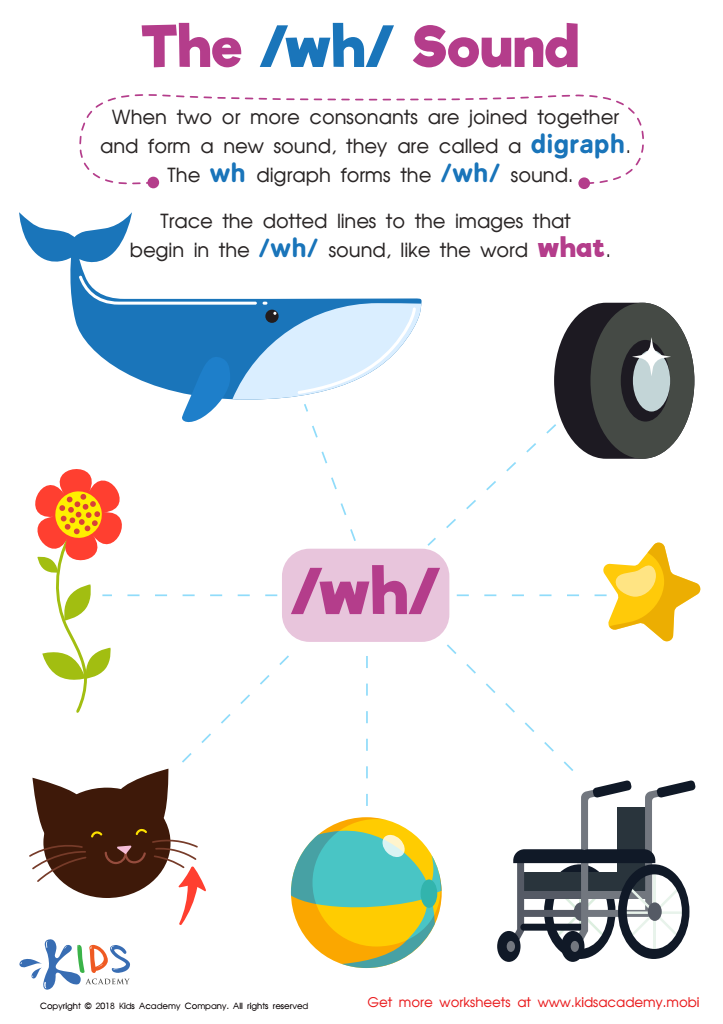
The /wh/ Sound Worksheet
Digraphs join two consonants to make a new sound, like /wh/. Give examples, like "whale", "when" and "why". Ask kids to name pictures in a worksheet and trace dotted lines to images beginning with the /wh/ sound; "what" is one example.
The /wh/ Sound Worksheet
Worksheet
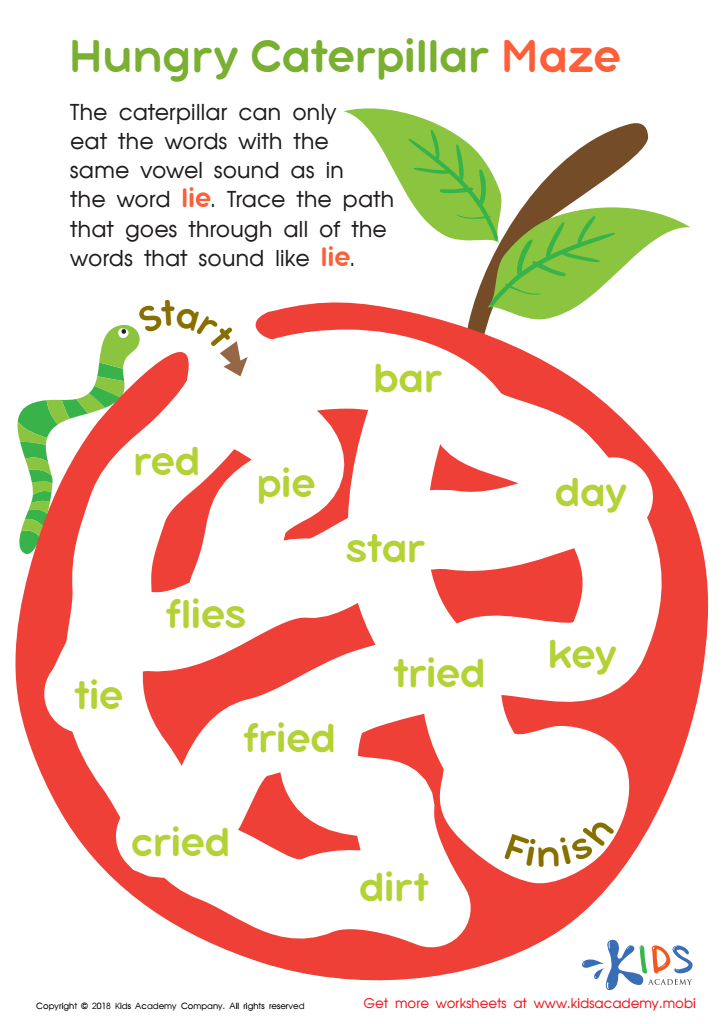
Hungry Caterpillar Maze Worksheet
Remind the kids that caterpillars turn into butterflies! This worksheet helps them practice their vowel sounds. They must trace the path of words that sound like ‘lie’ to help the caterpillar reach the finish line. It's a fun way to learn and explore!
Hungry Caterpillar Maze Worksheet
Worksheet
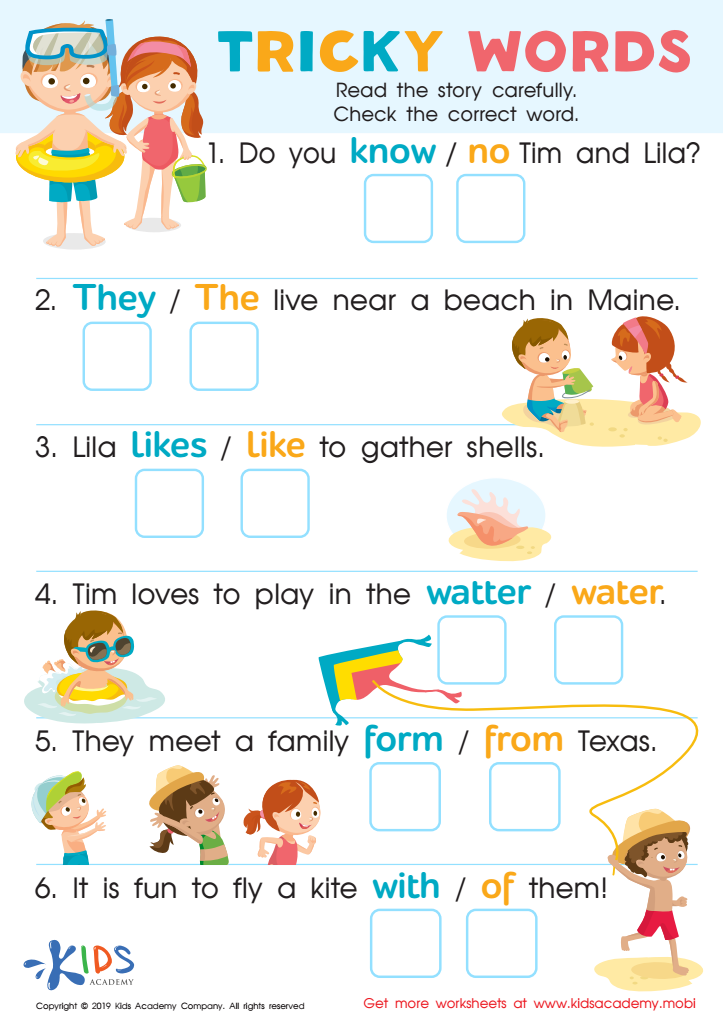
Tricky Words Worksheet
Reading can be tricky to start with, but this worksheet helps kids learn the basics of editing and strengthens their attention to detail. They'll select the right word from tricky choices, improving their reading and grammar skills.
Tricky Words Worksheet
Worksheet
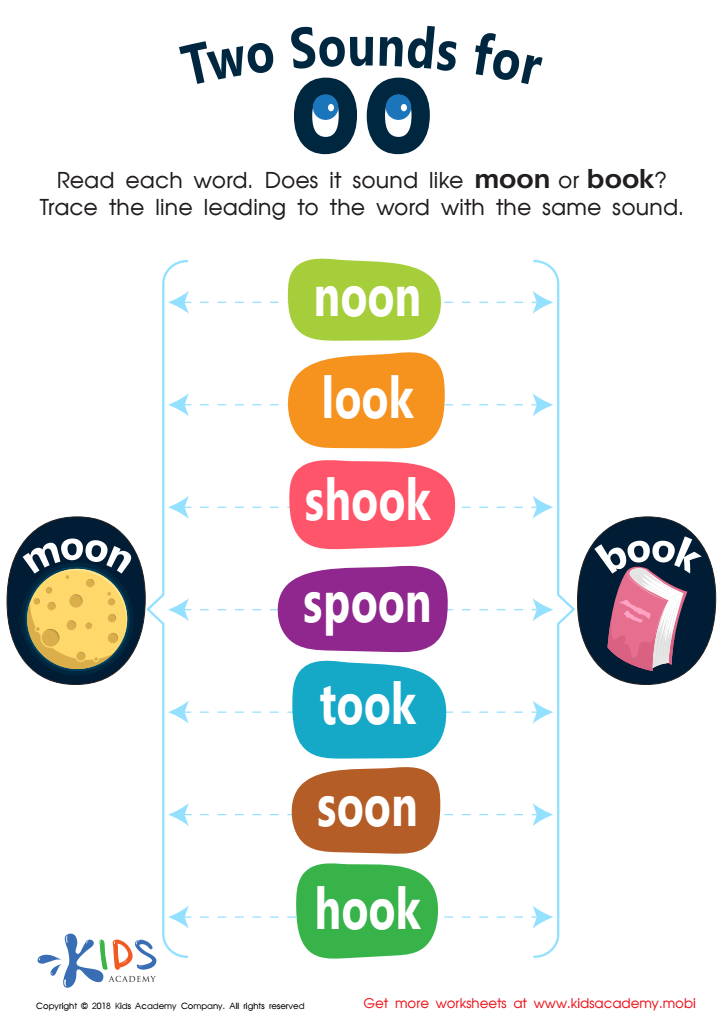
Two Sounds for OO Worksheet
This worksheet helps kids learn the different sounds of the -oo digraph. They match words based on whether they sound like moon or book, plus practice fine motor skills tracing lines. Fun and educational!
Two Sounds for OO Worksheet
Worksheet
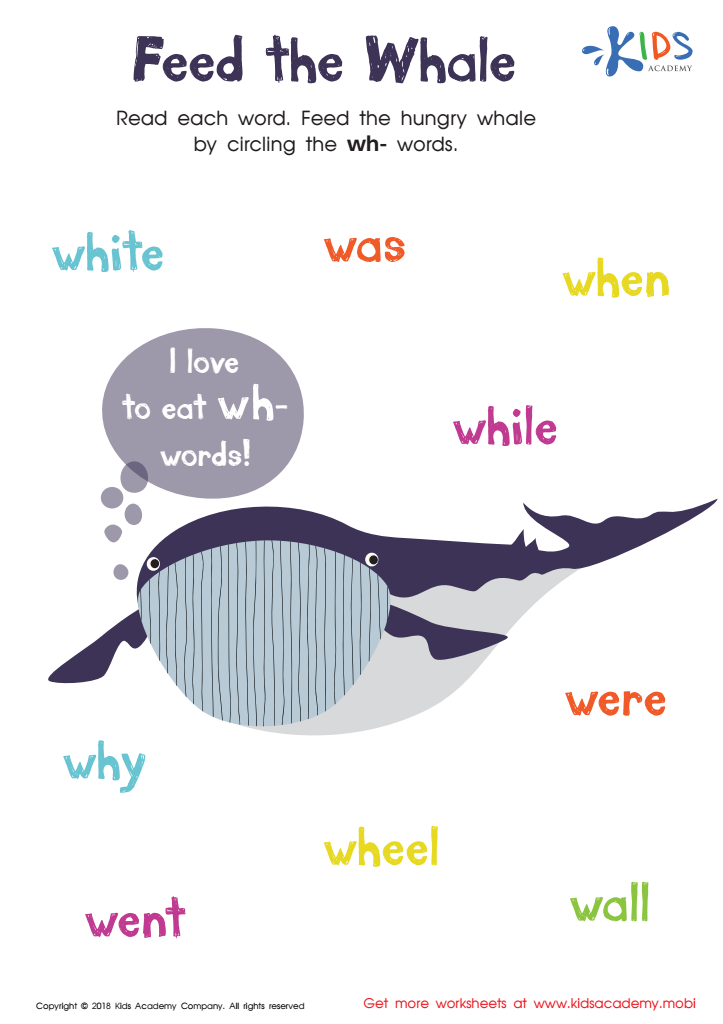
Feed the Whale Worksheet
Help your early reader build beginning consonant and blend recognition with this fun whale worksheet! They'll feed the whale wh- words, circle sight words, and build fine motor skills—all while discriminating between differently colored words.
Feed the Whale Worksheet
Worksheet
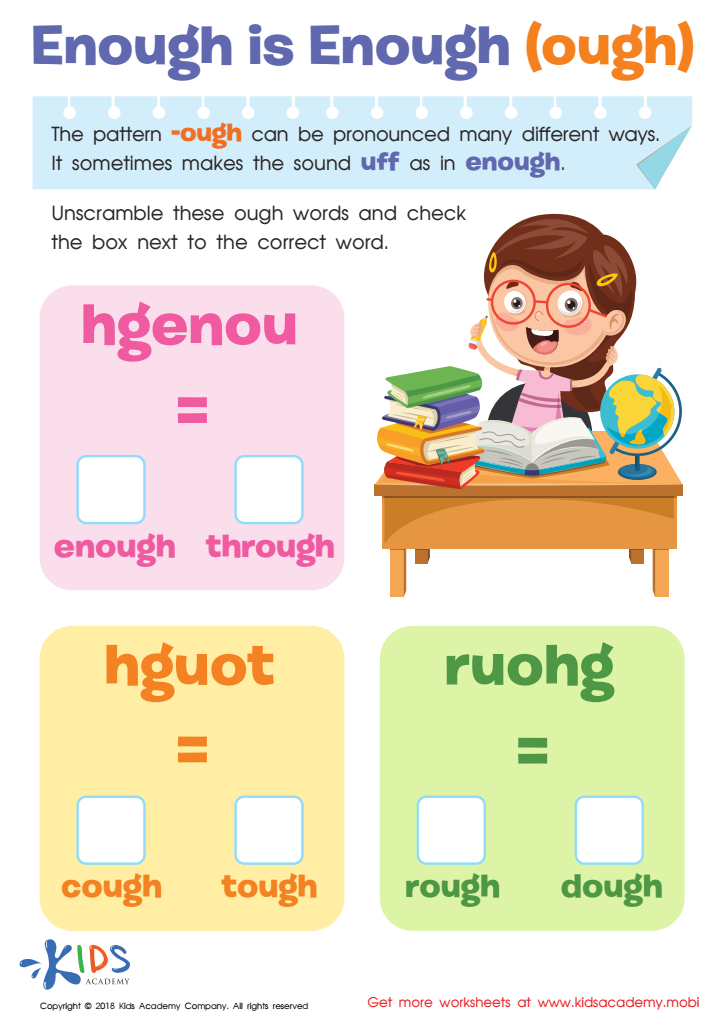
Enough Is Enough (ough) Worksheet
As your students learn more about reading and pronouncing words, they can explore how some word patterns can be said differently. The 'ough' pattern, for instance, can be pronounced several ways. 'Enough' has the 'uff' sound. Provide your students with examples of words pronounced similarly and help them unscramble 'ough' words on this worksheet, ticking the box for the correct word.
Enough Is Enough (ough) Worksheet
Worksheet
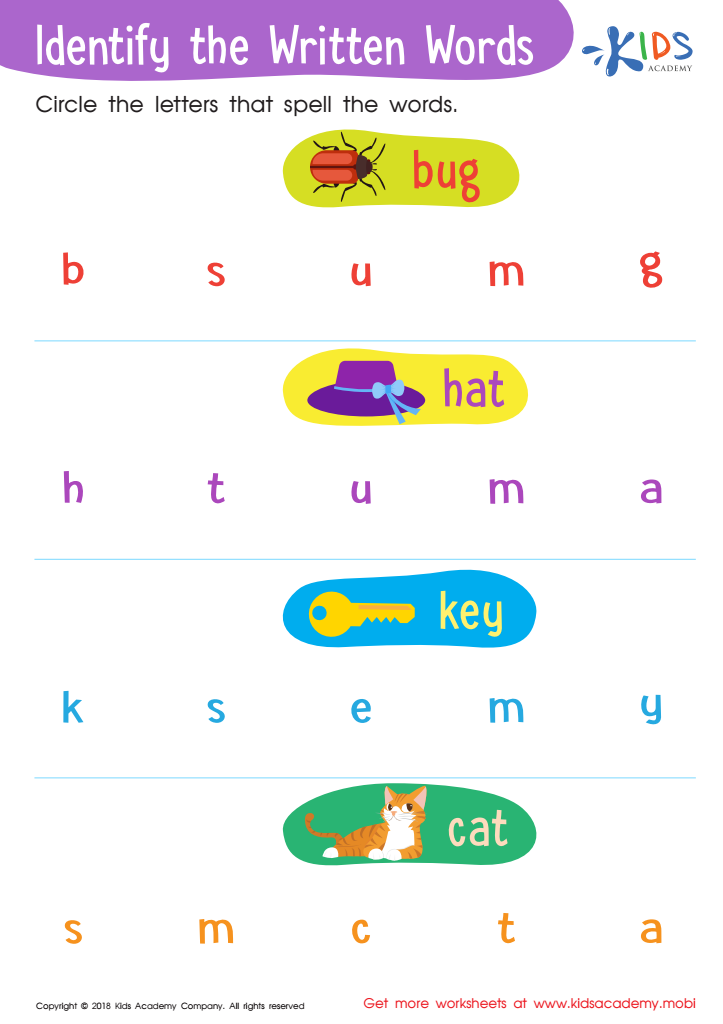
Identify the Written Words Worksheet
Have your students identify the objects on the printout, then spell the words. If they already know how to spell, this exercise should be easy. Help them circle the correct letters from the set to spell out the words. This is a great way to reinforce reading and spelling skills. Max 80 words.
Identify the Written Words Worksheet
Worksheet
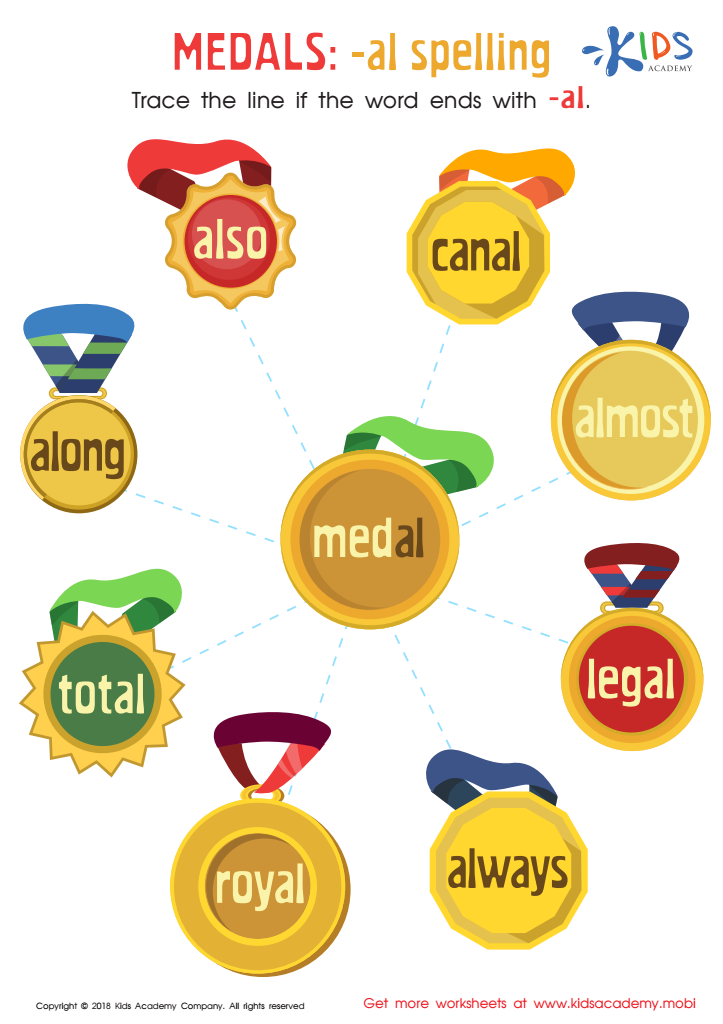
Medals: Al Spelling Worksheet
Have your students list common words ending with -al. See how many they can give and spell. Give examples of your own, assisting with spelling. Now review the words in the worksheet. Guide students to trace the line for each word ending with -al. 80 words
Medals: Al Spelling Worksheet
Worksheet
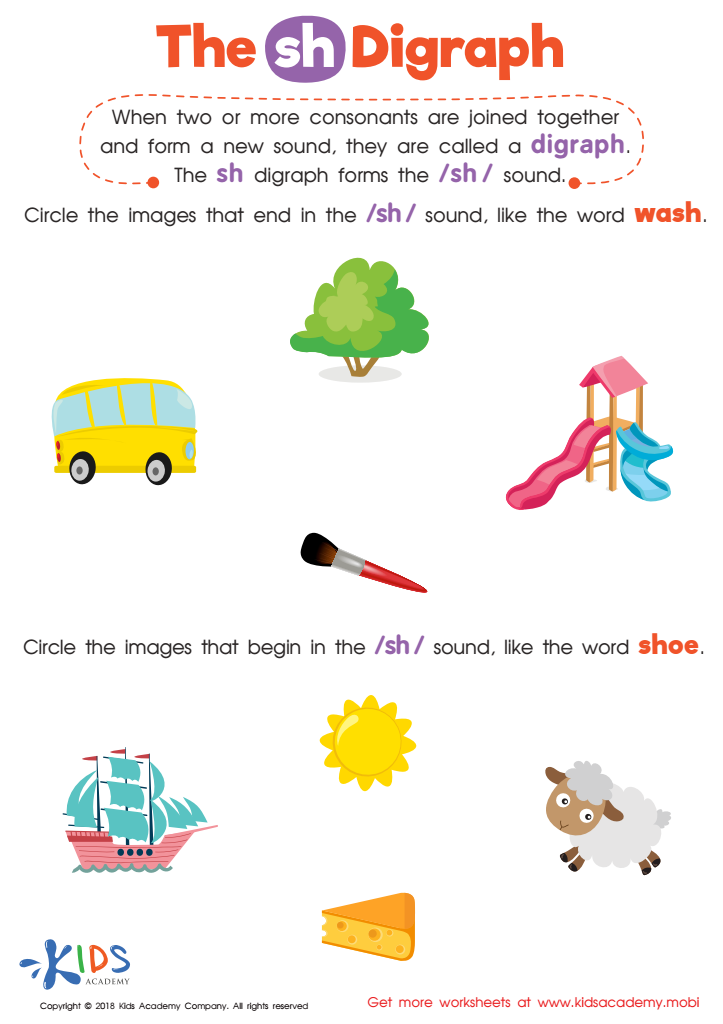
The SH Digraph Worksheet
There are many phonetic sounds, each with its own unique sound. When two or more consonants are combined to create a new sound, it's called a digraph. Example: the sh digraph creates the /sh/ sound. Have kids look at the pictures and say the words aloud. Help them circle the images ending with /sh/, like 'wash'.
The SH Digraph Worksheet
Worksheet
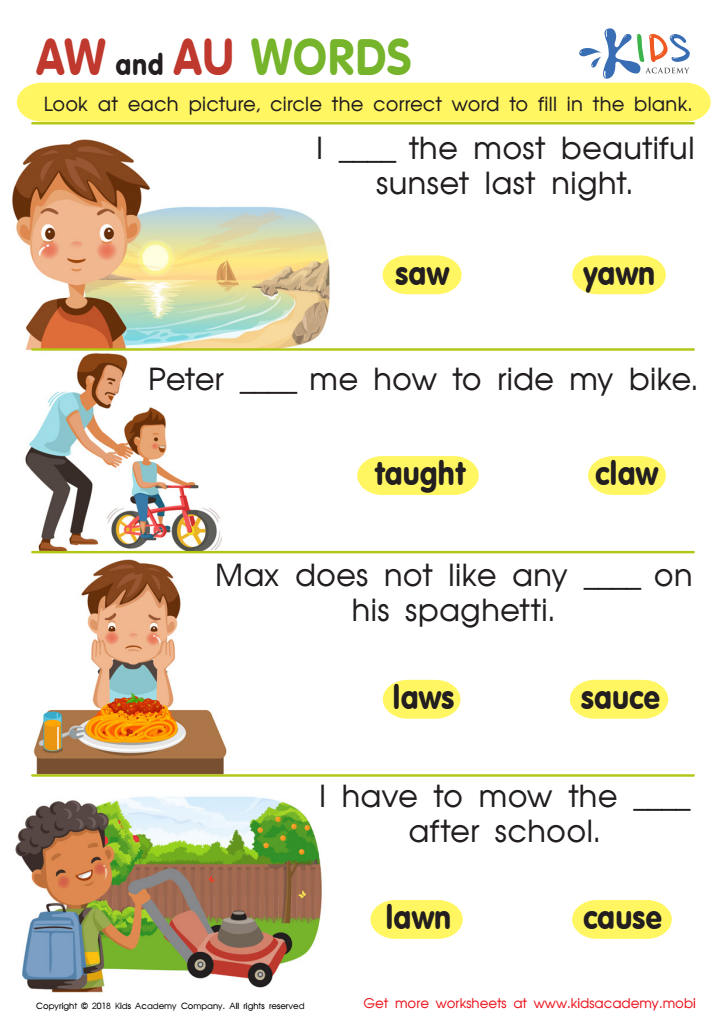
Reading: AW and AU Words Worksheet
This worksheet helps kids recognize that /au/ and /aw/ can make the same sound. Students read sentences and pick the correct word with one of the digraphs. Understanding digraphs improves decoding and reading fluency. Perfect for reading and phonics classes.
Reading: AW and AU Words Worksheet
Worksheet
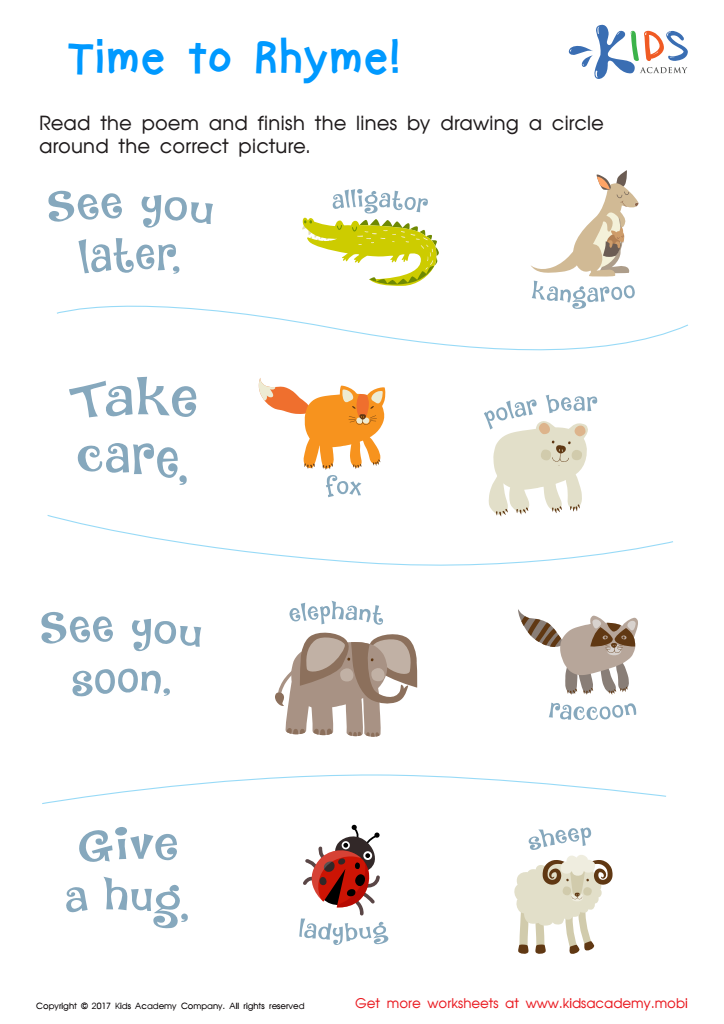
Time to Rhyme Rhyming Worksheet
This worksheet helps kids learn catchy sayings with rhymes, notice words and sounds that rhyme, and use problem solving to solve expressions. By using these expressions in everyday talk, kids gain the repetition needed to internalize the skills they've learned. Check out our nursery rhymes to further support them!
Time to Rhyme Rhyming Worksheet
Worksheet
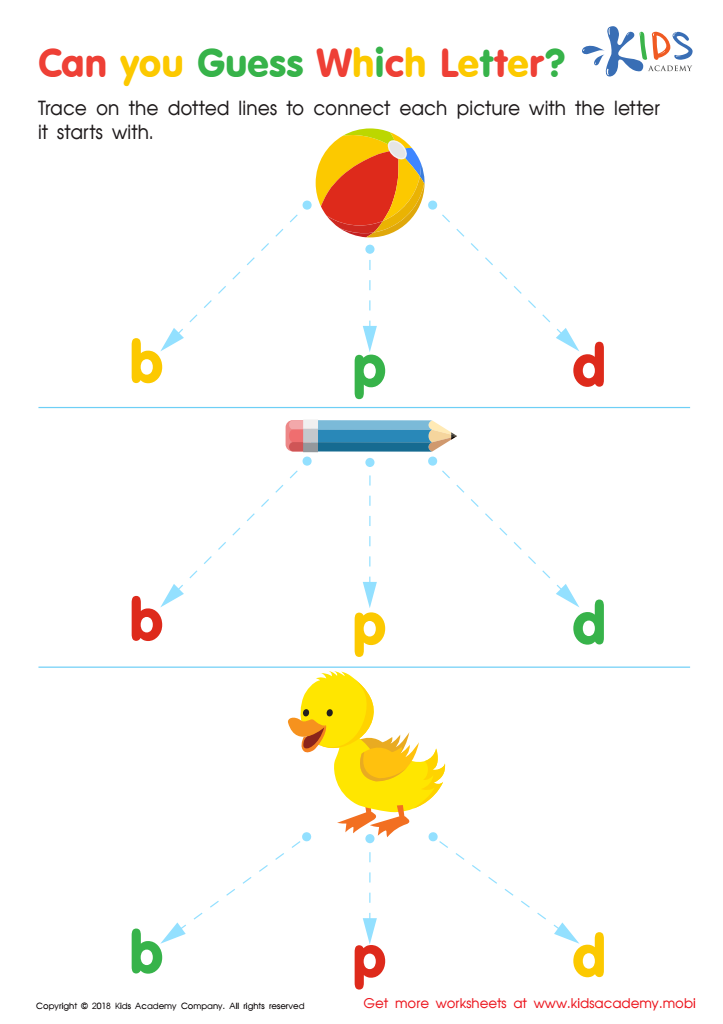
Can you Guess Which Letter? Worksheet
Connect the pictures with their corresponding letters with this fun worksheet! Ask your child what each picture is, then what letter it begins with. Download the PDF for colorful images and engaging texts to hold their attention, making learning an enjoyable activity.
Can you Guess Which Letter? Worksheet
Worksheet
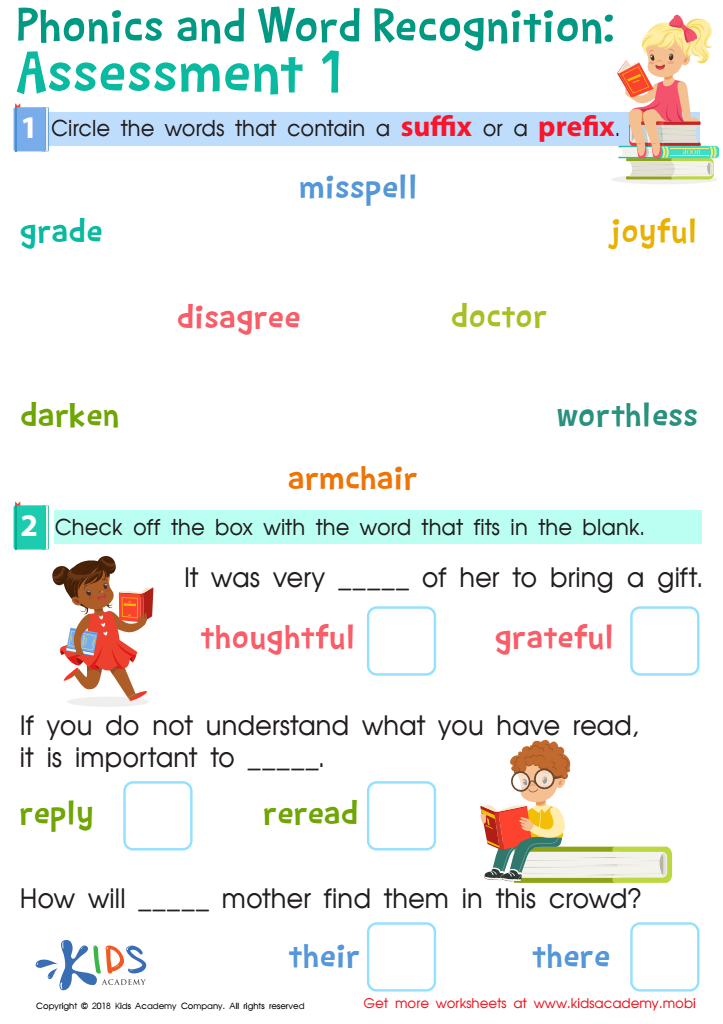
Phonics and Word Recognition: Assessment 1 Worksheet
Explain prefixes (words added to start of another word to give it a new meaning) and suffixes (added to end of word to change its meaning) to your kids with examples like 'unhappy' (prefix) and 'forgetful' (suffix). Now, help your child complete this worksheet, including circling words and checking boxes.
Phonics and Word Recognition: Assessment 1 Worksheet
Worksheet
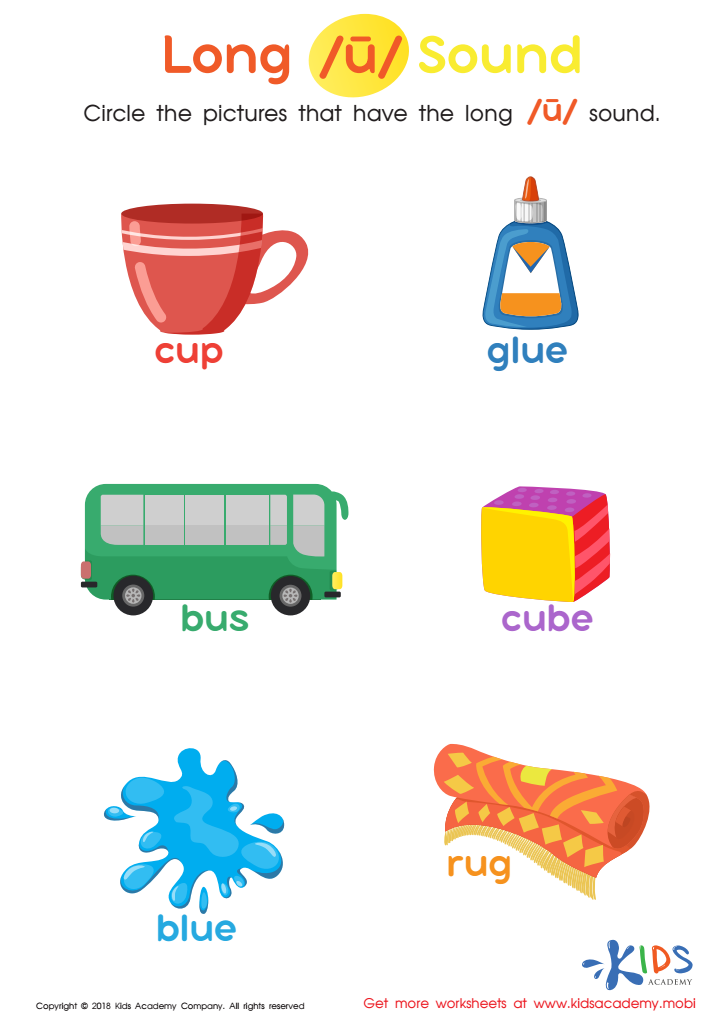
Long «u» Sound Worksheet
This fun and engaging free PDF worksheet teaches kids to differentiate between long and short «u» sounds. Through tracing circles around the correct words, they'll practice their fine motor skills while also recognizing patterns (silent-e for «ū» sound) in closed-syllable words. Bright and cheery pictures make it a great confidence booster for new readers!
Long «u» Sound Worksheet
Worksheet
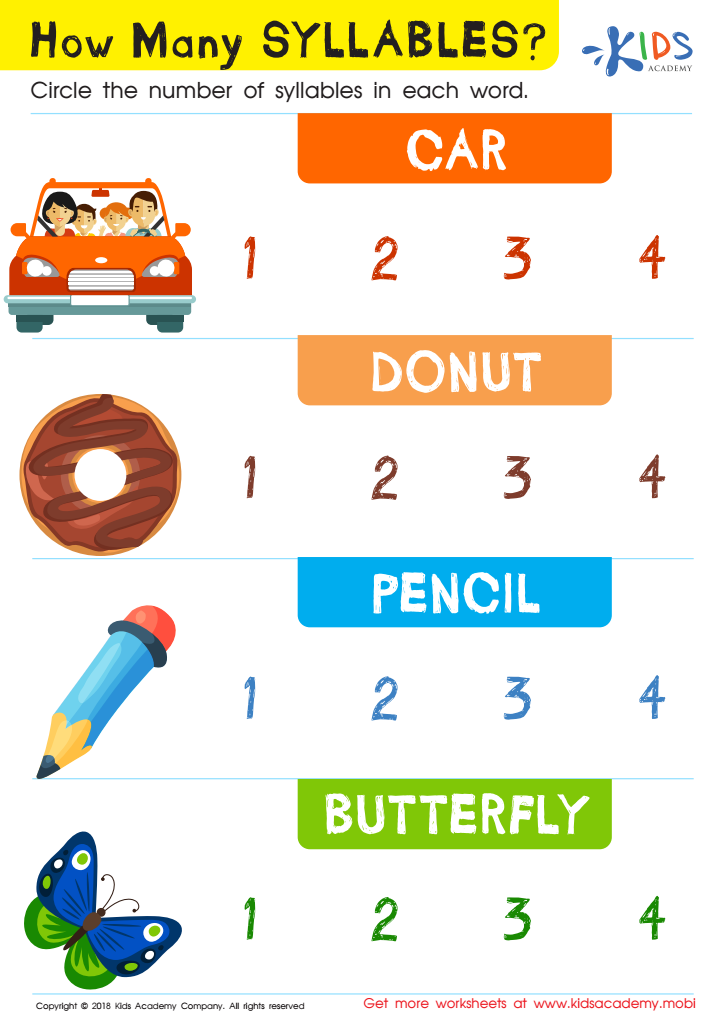
How Many Syllables? Worksheet
Syllabication or 'chunking' helps students decode words more quickly and increase fluency. This traceable worksheet is great for emerging readers, combining fun and fine motor practice with chunking words and counting syllables.
How Many Syllables? Worksheet
Worksheet
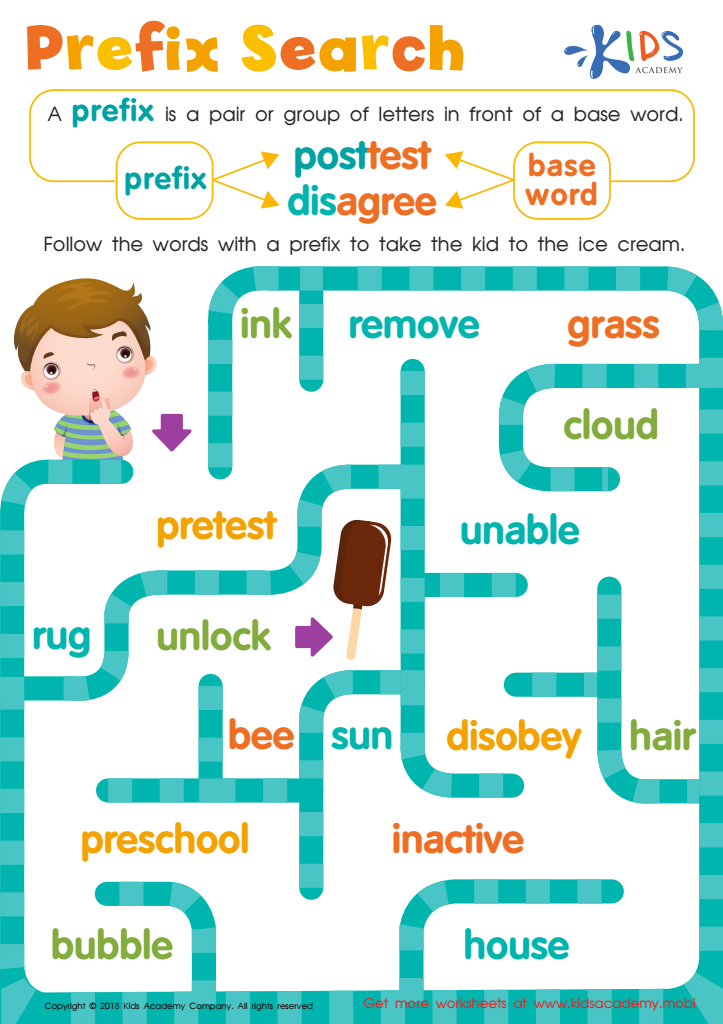
Reading: Prefix Search Worksheet
Maze your way through prefixes! This worksheet helps students practice reading new words with a prefix and figuring out the base word. An understanding of prefixes gives students the skills to comprehend new words. A fun and useful activity for the reading classroom!
Reading: Prefix Search Worksheet
Worksheet
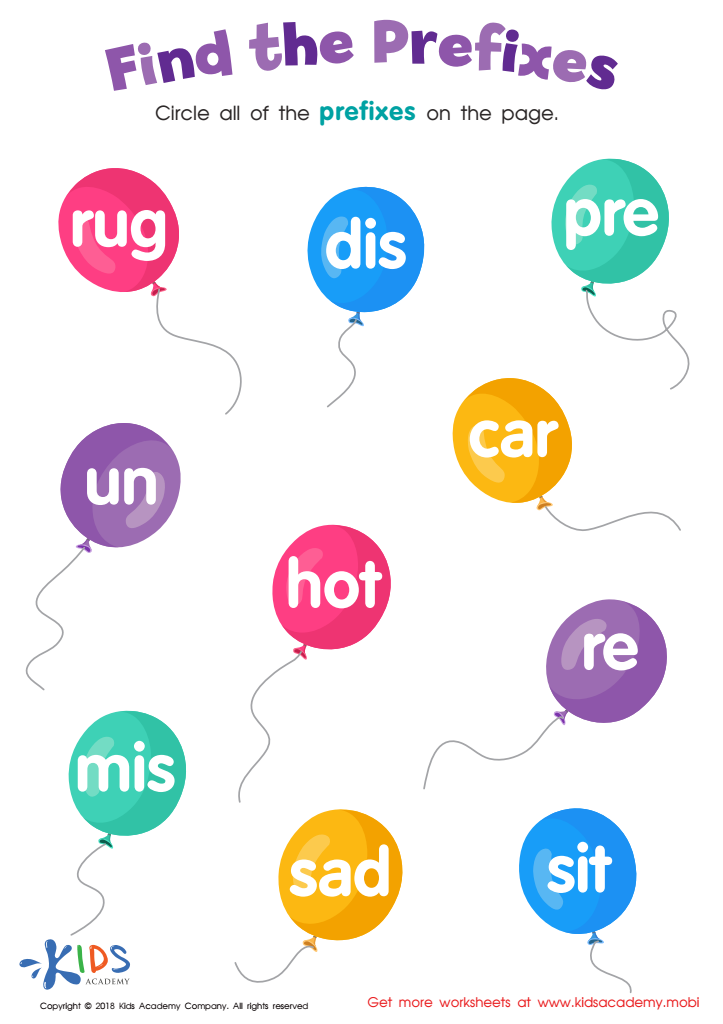
Reading: Find the Prefixes Worksheet
Students are asked to circle all prefixes on this worksheet and brainstorm a list of words that have them. It's a great tool for teaching vocabulary and helps students understand new and unfamiliar words by recognizing how prefixes change meaning.
Reading: Find the Prefixes Worksheet
Worksheet
Join Kids Academy for Free
Who is primarily going to use this learning content?















