Problem-Solving Skills Chess Worksheets
22 filtered results
Difficulty Level
Grade
Age
-
From - To
Subject
Activity
Standards
Enhance your child's problem-solving skills with our engaging Chess Worksheets. Designed specifically for early learners, these worksheets incorporate fun chess-related exercises that challenge young minds and foster critical thinking. Each activity promotes strategies for overcoming obstacles, recognizing patterns, and making decisions, essential skills that extend beyond the chessboard. Our user-friendly layout and colorful illustrations keep kids motivated while honing their cognitive abilities. Whether in the classroom or at home, these worksheets offer a valuable resource for parents and educators looking to inspire a love for learning through the timeless game of chess. Download and unlock your child's potential today!
Favorites
With answer key
Interactive
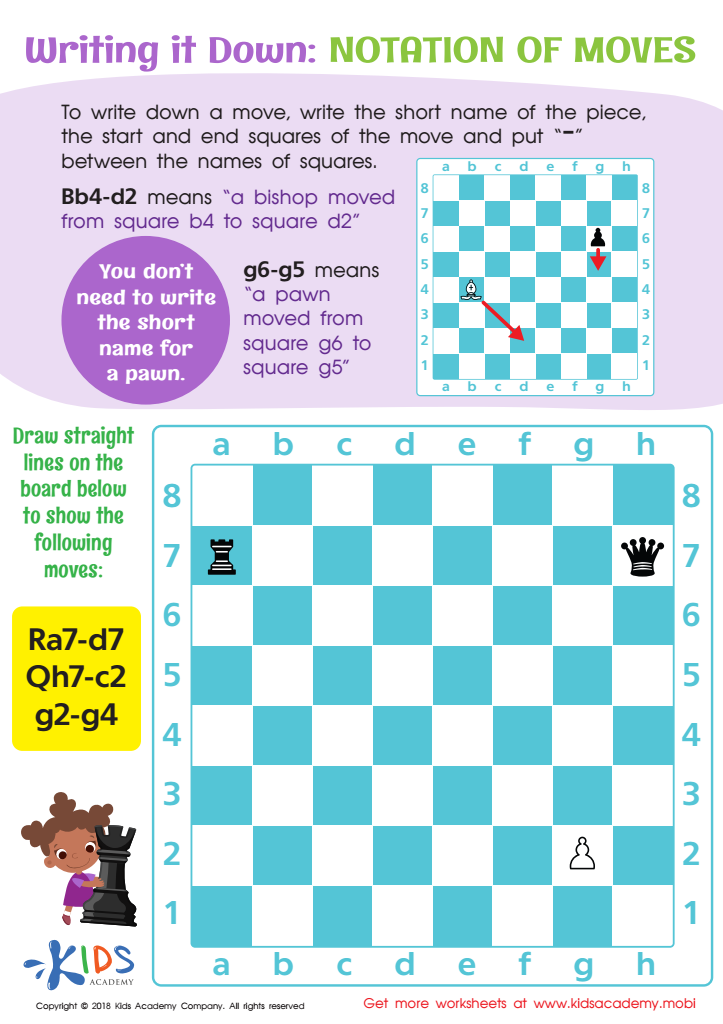
Notation of Moves Writing it Down Worksheet
Notating chess moves can be tricky for kids to learn. This worksheet will help them better understand it. To notate a move, write the piece's short name, start and end squares, and separate them with a "-". For instance, Bd4-d2 means a bishop moved from b4 to d2. No need to write pawns' short names.
 Assign to My Students
Notation of Moves Writing it Down Worksheet
Worksheet
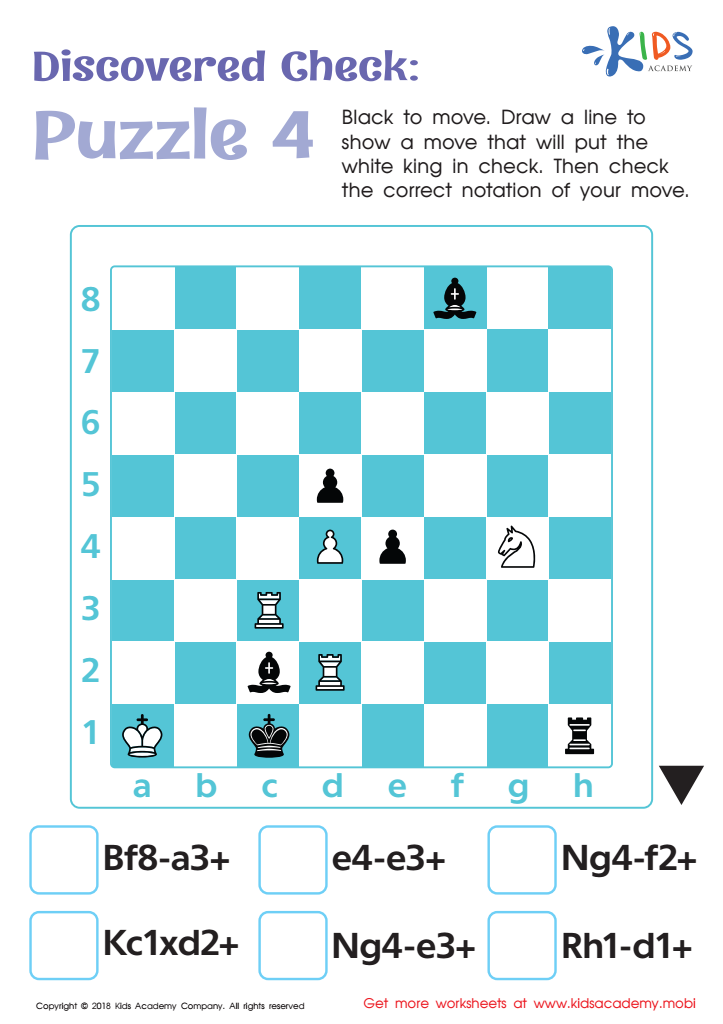
Discovered Check: Puzzle 4 Worksheet
Let your child test their chess skills with this easy worksheet. Have them take control of the black pieces and try to put the white king in checkmate. Ask them to draw a line from their chess piece to the white king, showing the move they'll make, then check the correct answer.
Discovered Check: Puzzle 4 Worksheet
Worksheet
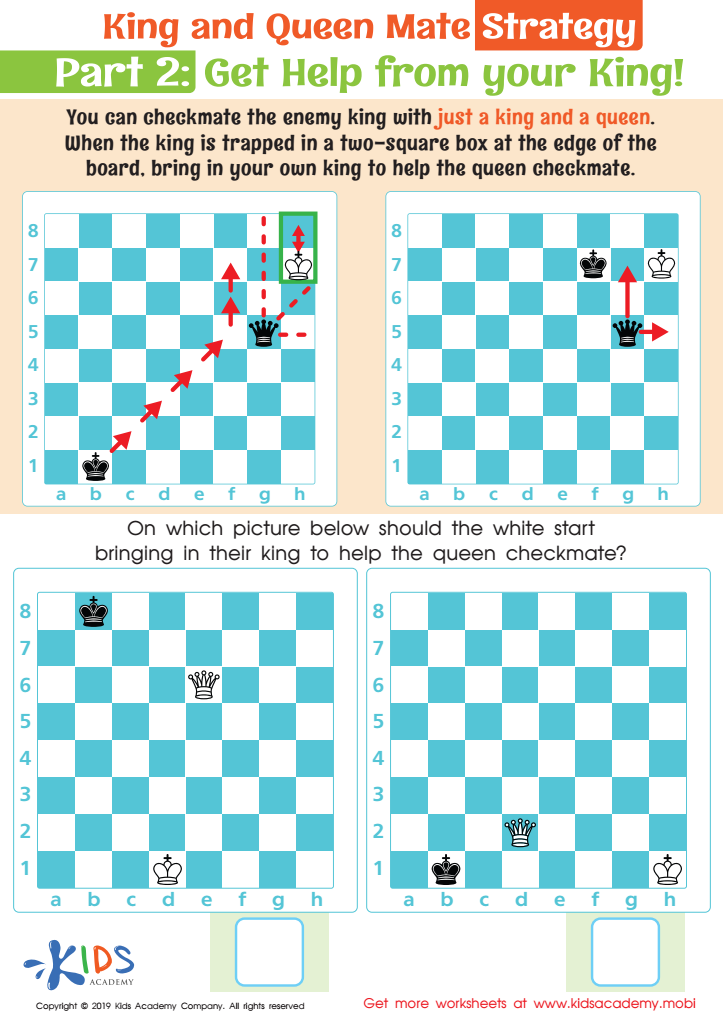
King and Queen Mate Strategy: Part 2 Worksheet
This worksheet helps your child learn to checkmate the opposing king with their king and queen. Descriptive sample boards show the strategy, and more boards help determine which one demonstrates how the king assists the queen.
King and Queen Mate Strategy: Part 2 Worksheet
Worksheet
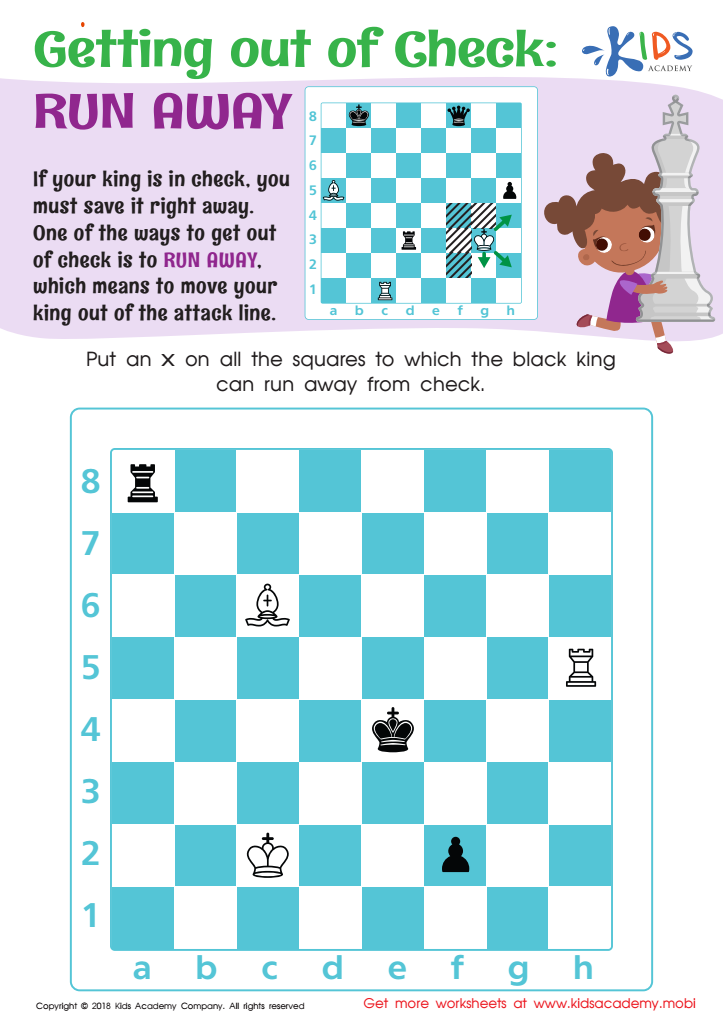
Getting out of Check: Run Away Worksheet
Playing chess boosts your children's brainpower and this worksheet helps them out of sticky situations. It teaches them how to flee with their king to avoid checkmate, as well as how to initiate their own strategic moves on the board. Get your kids on the road to success with this helpful PDF.
Getting out of Check: Run Away Worksheet
Worksheet
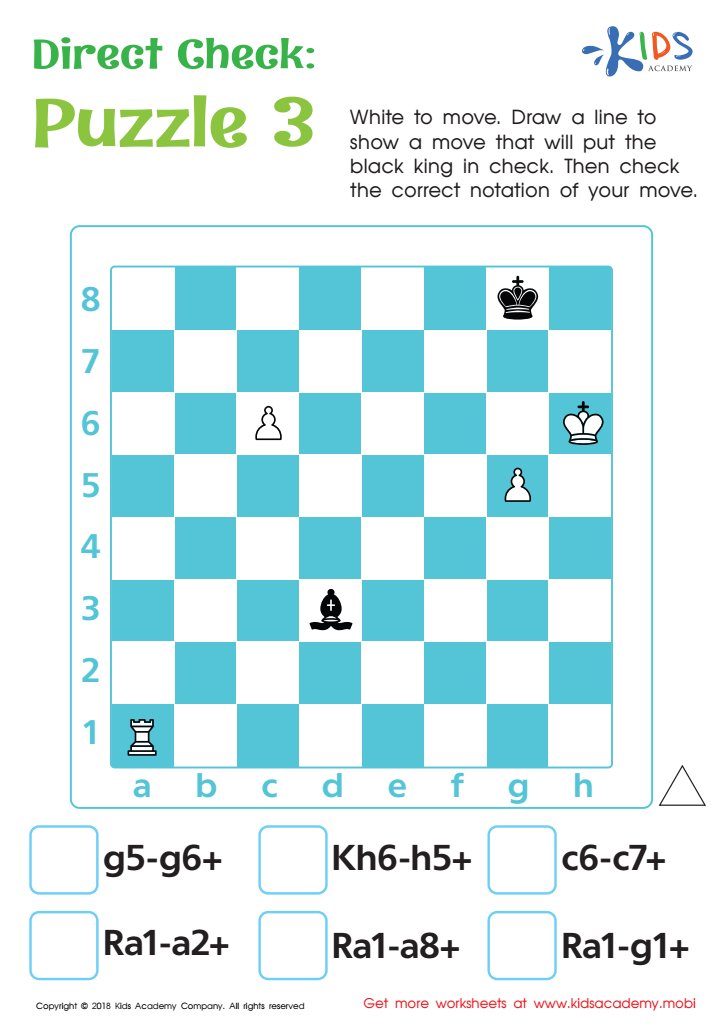
Direct Check: Puzzle 3 Worksheet
Chess is a great way to help your child develop their strategic, mathematical, and thinking skills. Test their understanding with this simple worksheet: they must get the black king in checkmate with white pieces, then select the notation that shows the correct move. See just how much progress they've made!
Direct Check: Puzzle 3 Worksheet
Worksheet
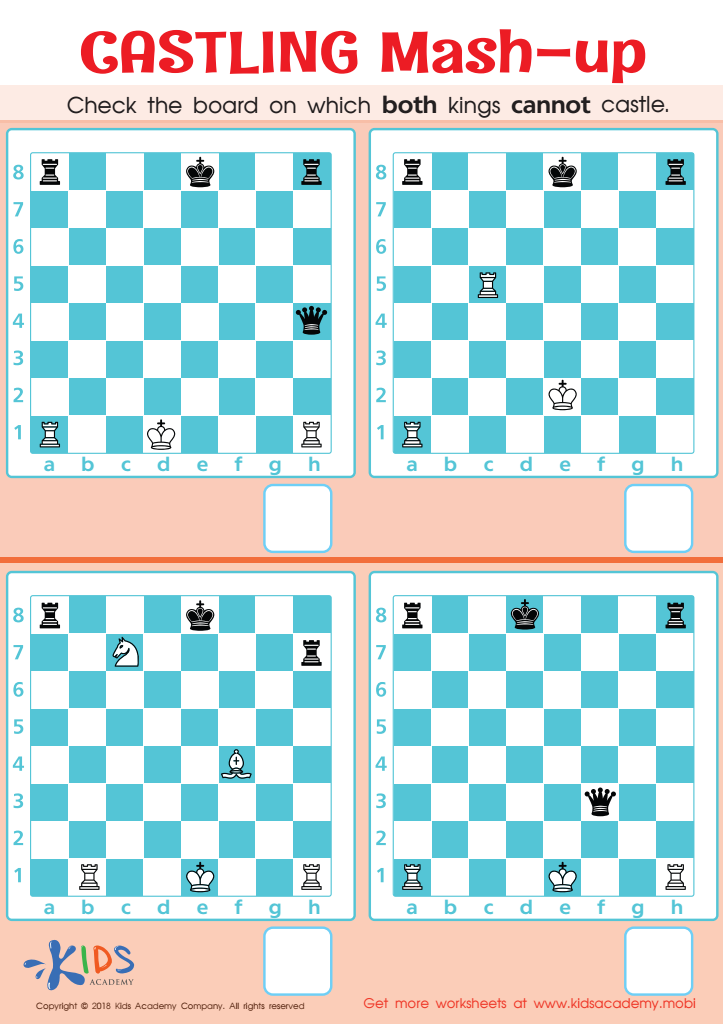
Castling Mash–up Worksheet
Before starting the worksheet, ensure your child understands castling in chess. If not, take time to explain it. Once they have a clear grasp of the rules, help them complete the exercise. Check the board to ensure that neither king can castle.
Castling Mash–up Worksheet
Worksheet
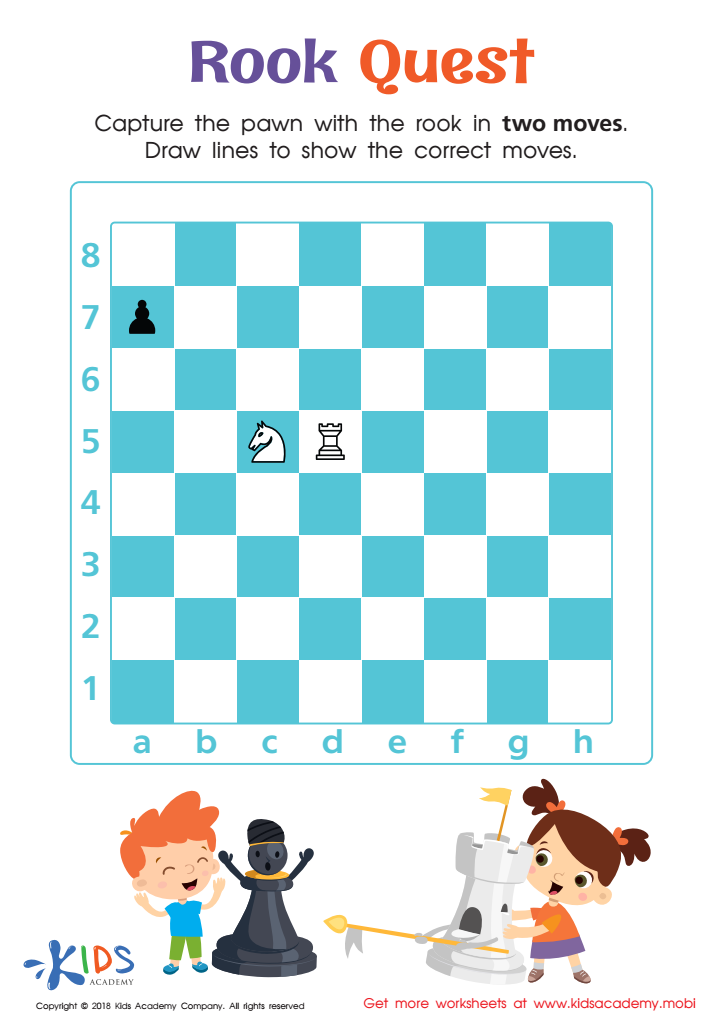
Rook Quest Worksheet
Is your child a chess whiz? Check their progress with this rook quest: get the enemy's pawn piece in just two moves. Have them draw the lines for the moves they'll make. See how quickly they master it!
Rook Quest Worksheet
Worksheet
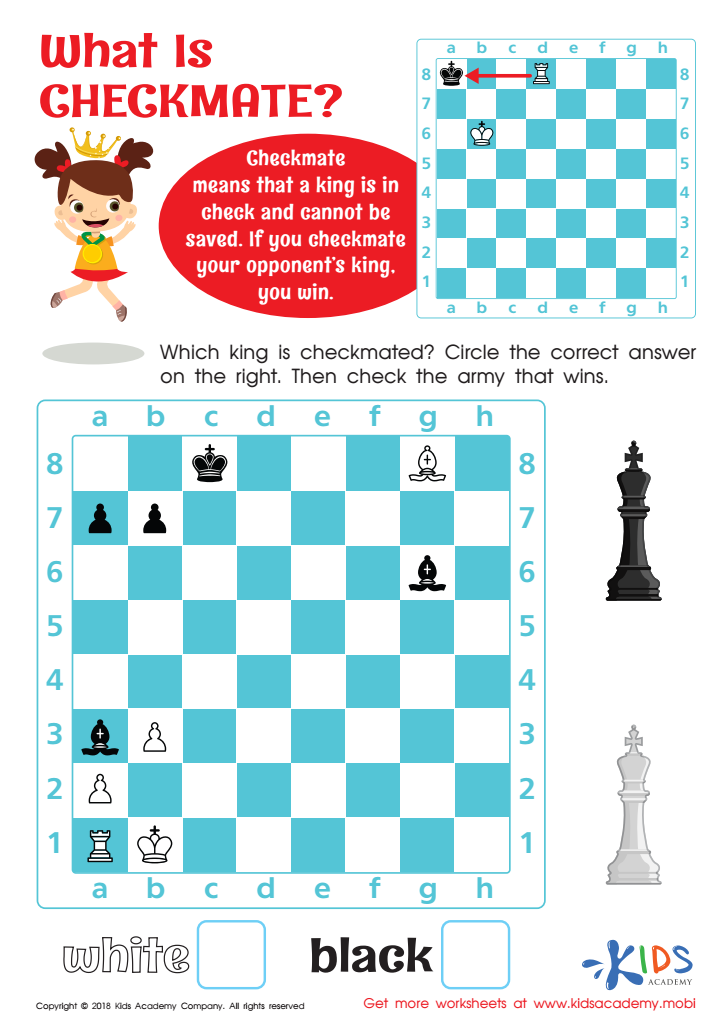
What is Checkmate? Worksheet
This downloadable PDF worksheet lets your child practice identifying when a king is checkmated and how it looks on a chessboard. Checkmate is the best move and with this colorful worksheet, they'll learn that it means their opponent's king is in check and cannot be saved, so they can win!
What is Checkmate? Worksheet
Worksheet
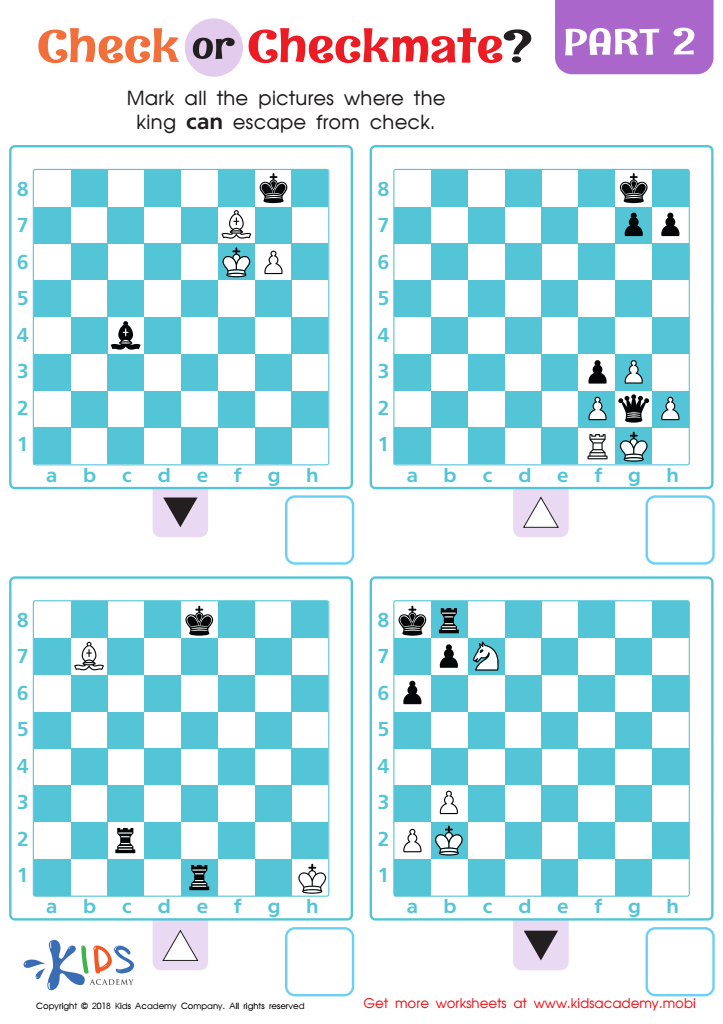
Check or Checkmate: Part 2 Worksheet
Chess is a fun and competitive way for your child to practice strategic thinking, problem-solving and critical reasoning. This free PDF will help them sharpen their skills, by analyzing boards and marking ones where the king can escape check. An invaluable skill when playing on real boards.
Check or Checkmate: Part 2 Worksheet
Worksheet
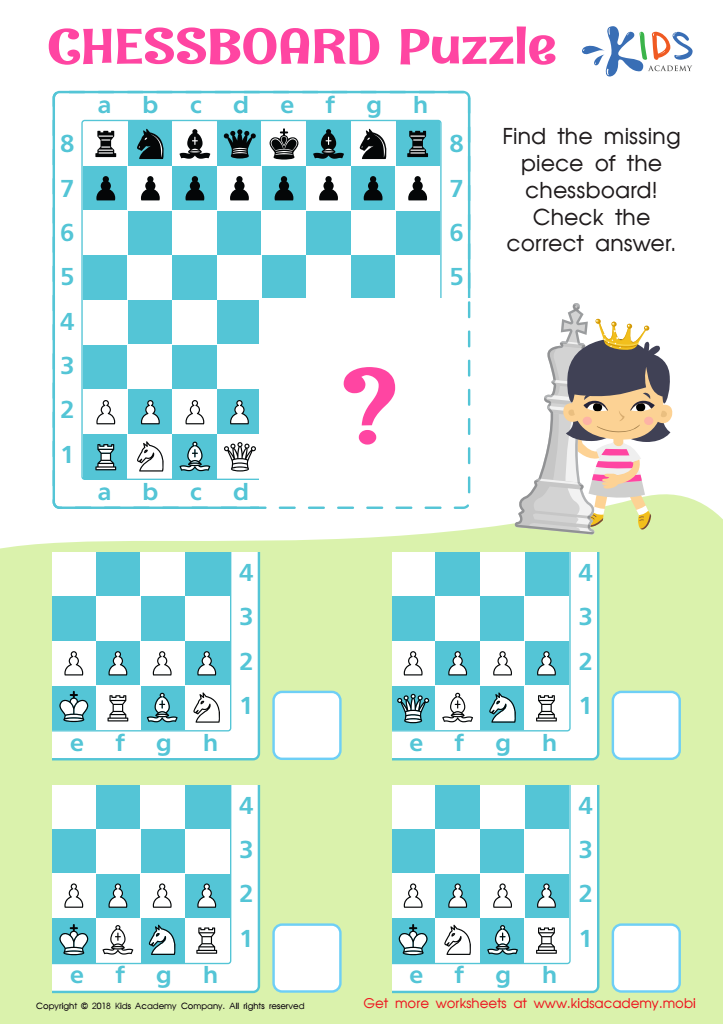
Chessboard Puzzle Worksheet
Test your child's chess prowess with this simple worksheet. They must find the missing pieces to complete the white side of an empty chessboard. The black pieces are already arranged properly on the board. Correct answers are provided so you can see how they did!
Chessboard Puzzle Worksheet
Worksheet
One Move Checkmates: Puzzle 3 Worksheet
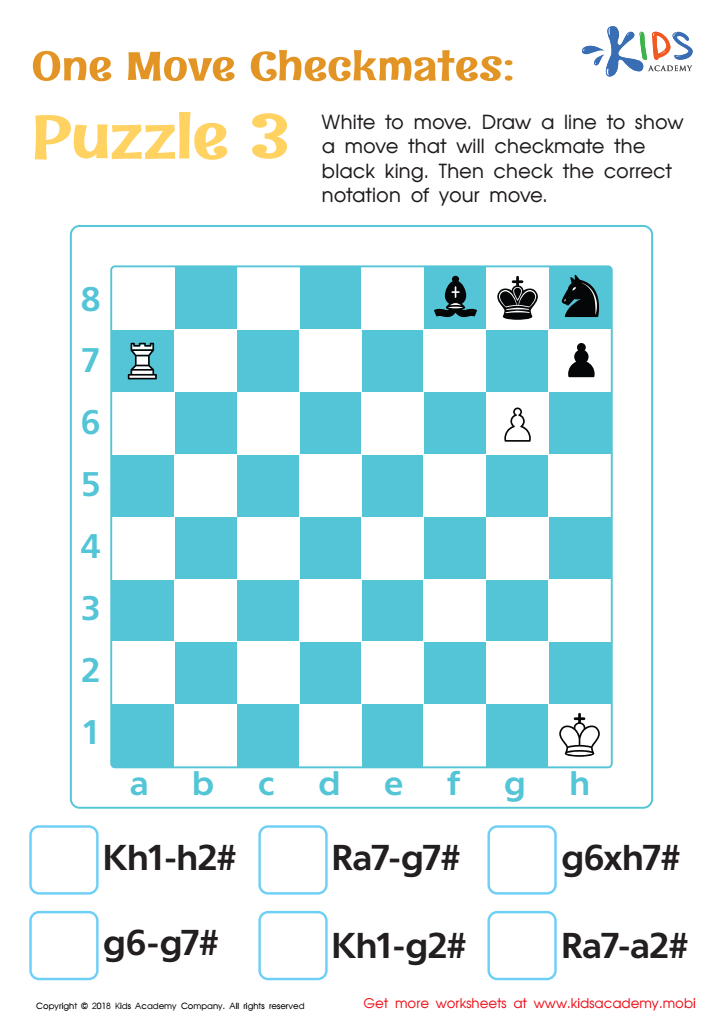
Boost your child's critical thinking and strategy skills with this fun puzzle activity. They'll use their logical thinking to plot ways to checkmate the black king, and then check their answer with the given choices. A great way to improve their skills and have a blast doing it!
One Move Checkmates: Puzzle 3 Worksheet
Worksheet

Discovered Check: Puzzle 2 Worksheet
This worksheet exercise will stimulate your child's thinking and let them show off their chess skills. Ask them to use the white pieces and draw a line, pointing to the move that will put the black king in checkmate. Then they should check the correct option. Challenge your child and help them learn more about chess with this fun and educative activity.
Discovered Check: Puzzle 2 Worksheet
Worksheet
How Pawns Move: Part II Worksheet
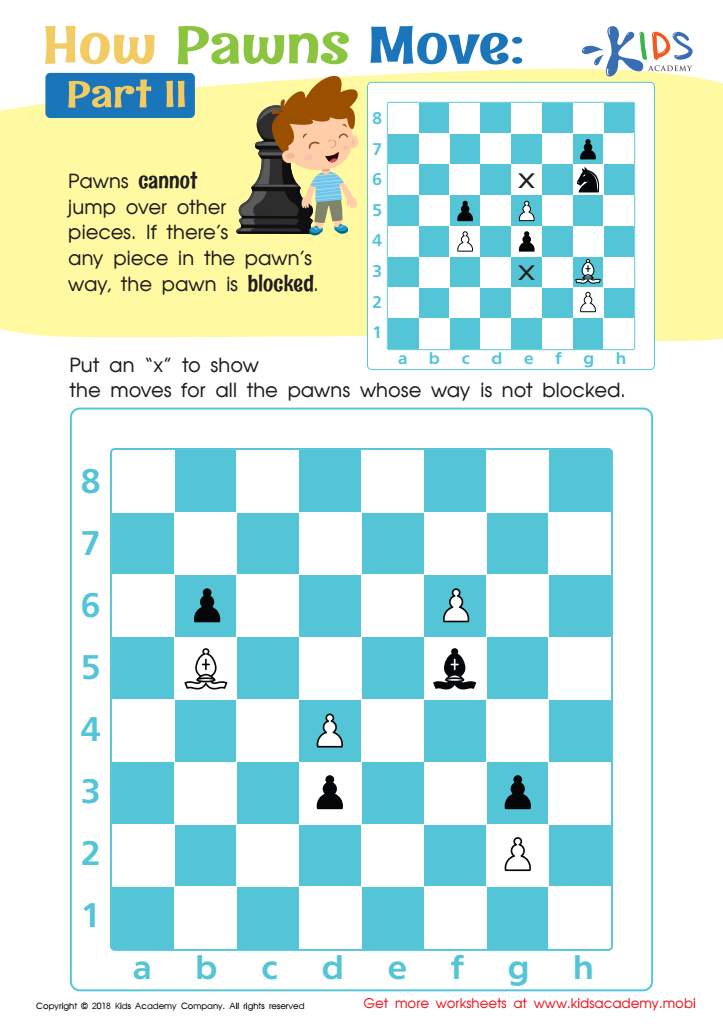
Pawns are the first to attack in chess and each player has the most pieces. They can't jump over other pieces, so if there's an obstacle, the pawn can't move. Ask your child to put an X to show all possible moves for the pawns not blocked by other pieces. (80)
How Pawns Move: Part II Worksheet
Worksheet
Checkmate the King Worksheet
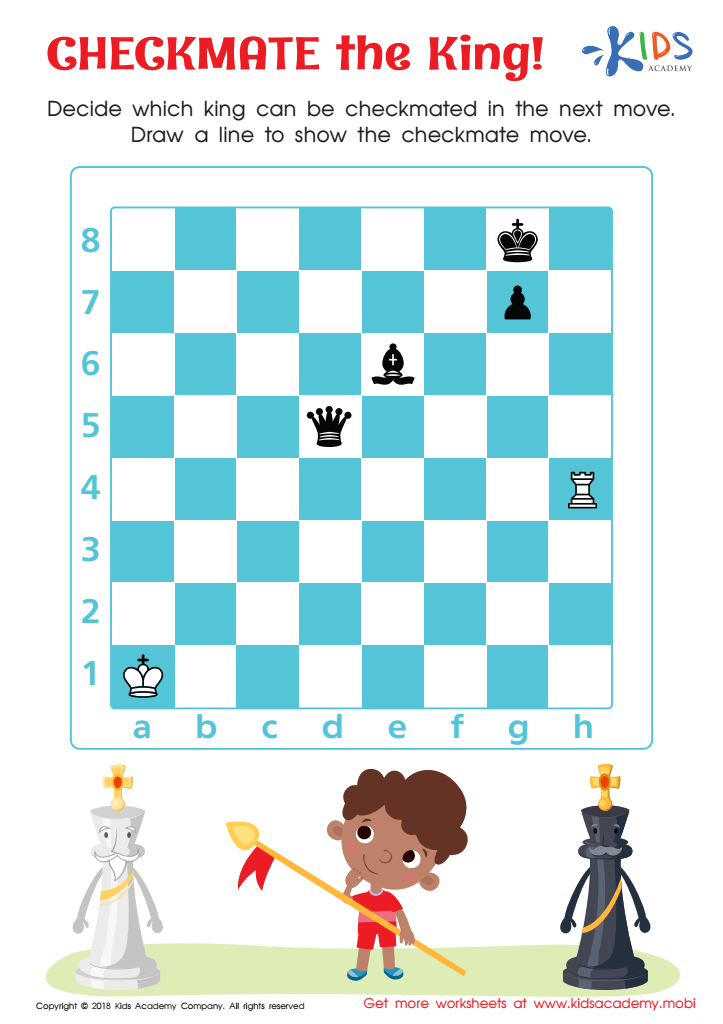
Chess is great for growing problem-solving and critical thinking skills in children, and it's even better if they have fun winning! This worksheet will help kids practice checkmating their opponent's king. They can use the sample board to draw the line of their winning move. Who doesn't love being a winner?!
Checkmate the King Worksheet
Worksheet
Bishop Quest Worksheet
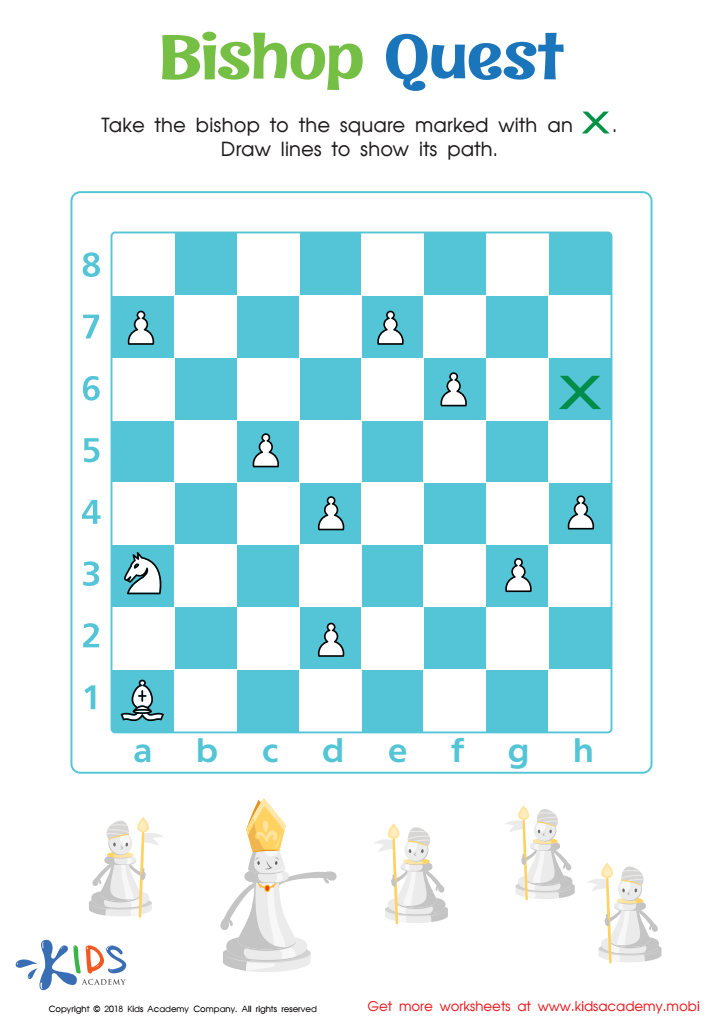
Show kids the board and ask them to identify the bishop. Then ask them to move it to the square marked 'x', drawing lines to show its path. This worksheet helps teach kids how to move the bishop on a chessboard.
Bishop Quest Worksheet
Worksheet
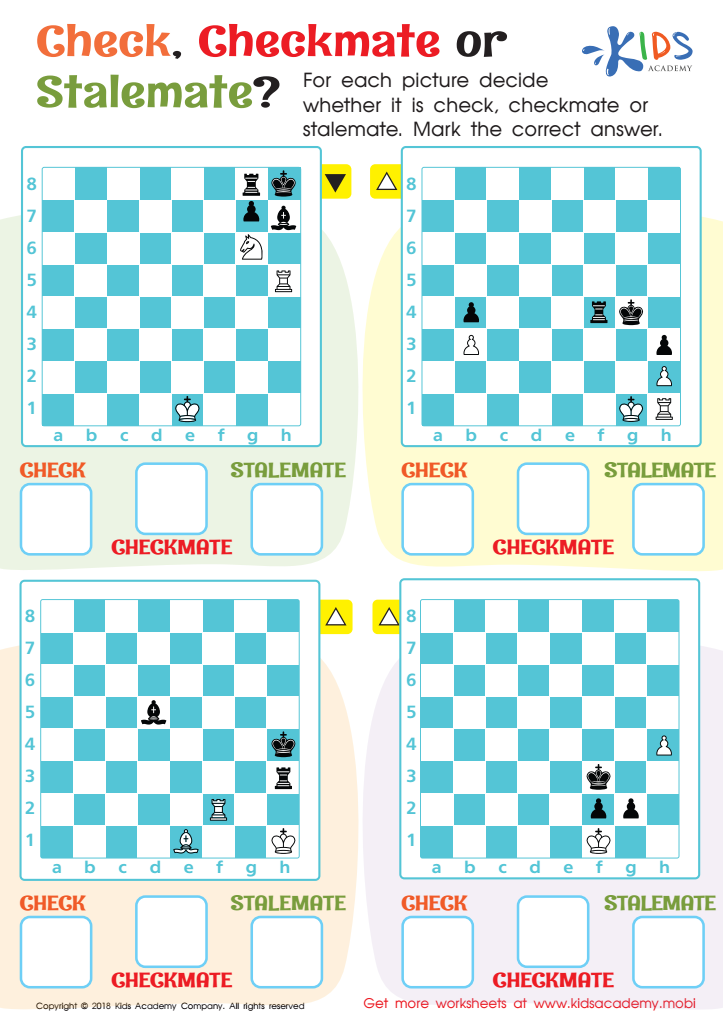
Check. Checkmate or Stalemate? Worksheet
Chess teaches critical thinking, reasoning, and logic skills in a fun way. With this downloadable worksheet, kids can look at chess boards and decide if the sides are in check, checkmate, or stalemate. Win or lose, a stalemate can be a great outcome, and kids can learn and build skills with each move!
Check. Checkmate or Stalemate? Worksheet
Worksheet
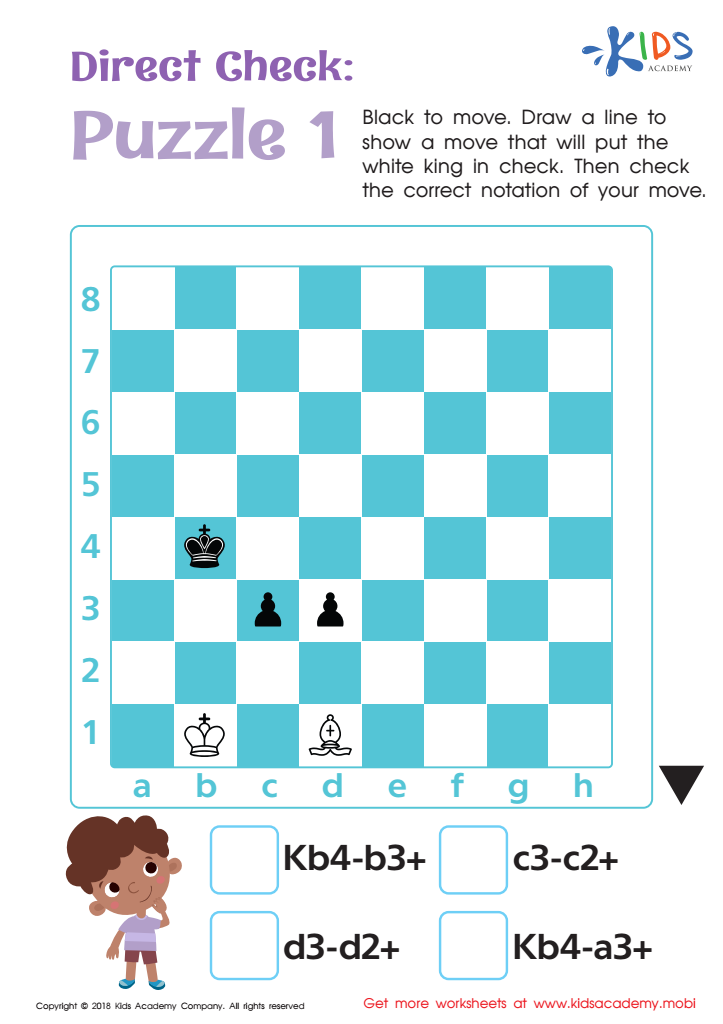
Direct Check: Puzzle 1 Worksheet
Your child can test their chess knowledge with this worksheet. If they've been taking lessons or playing regularly, they'll enjoy connecting the dots to put the white king in checkmate, then checking the correct notation. Challenge their chess skills!
Direct Check: Puzzle 1 Worksheet
Worksheet
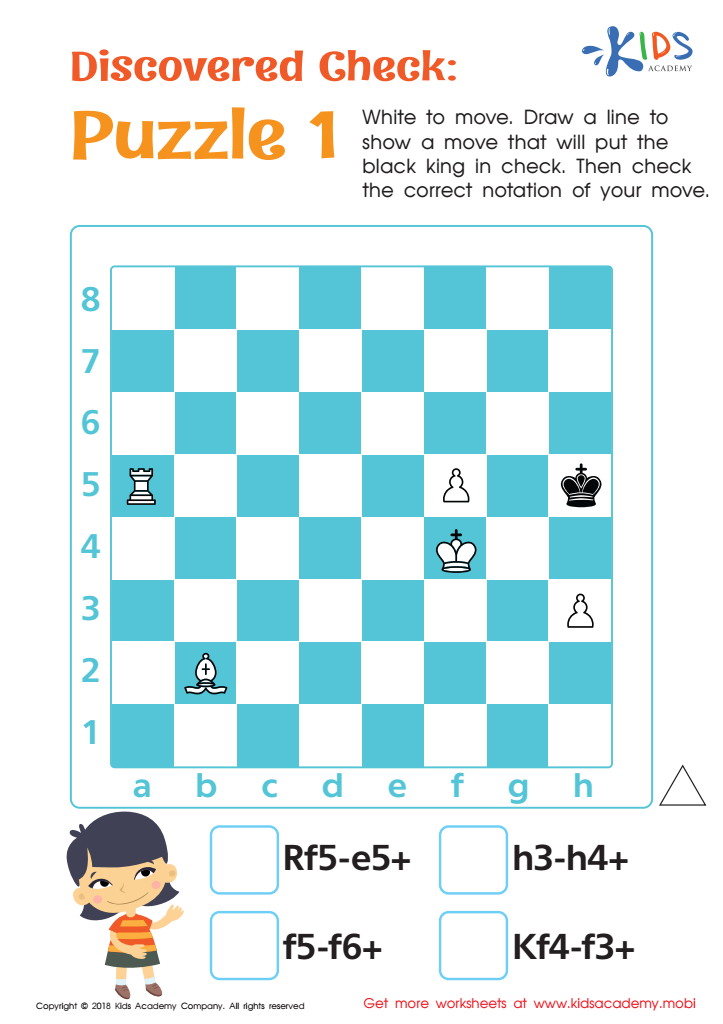
Discovered Check: Puzzle 1 Worksheet
Chess is an excellent way to engage your kids' brains and strengthen thinking skills. This worksheet is ideal for inspiring and growing their interest in the game. Have your child take the white pieces and move them to checkmate the black king. Compare their move against the provided notations to check accuracy.
Discovered Check: Puzzle 1 Worksheet
Worksheet
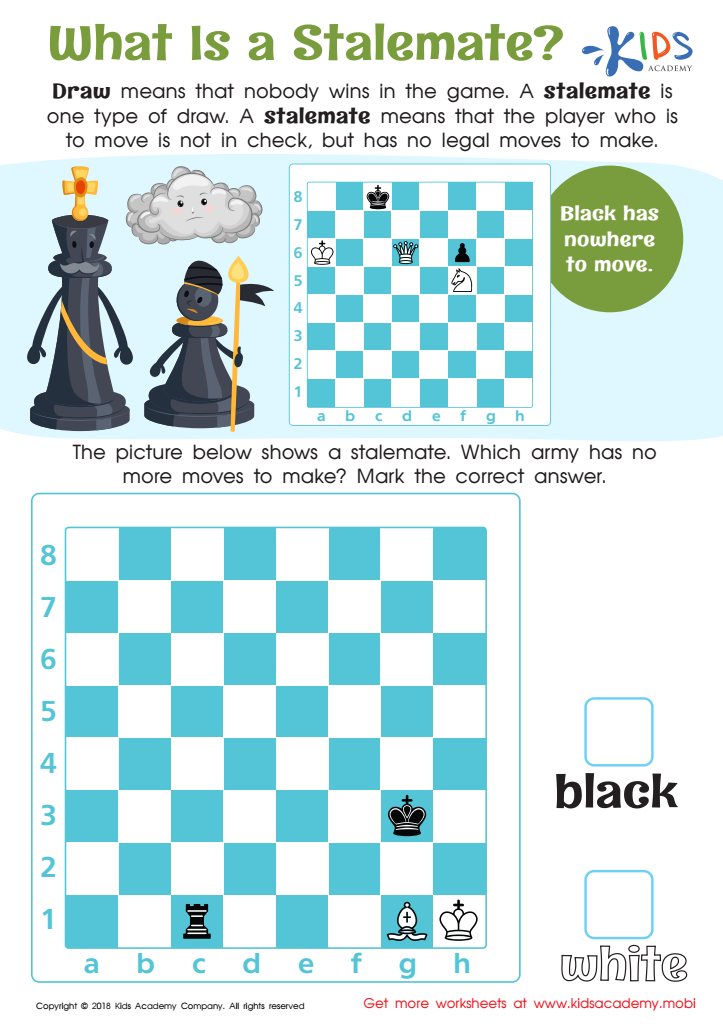
What Is a Stalemate? Worksheet
Chess is an ideal way to develop logic, strategizing, problem-solving and more! Even kids can learn it. With this worksheet, children can learn about draws and stalemates. Sample boards will help them decide which team, black or white, is at a stalemate.
What Is a Stalemate? Worksheet
Worksheet
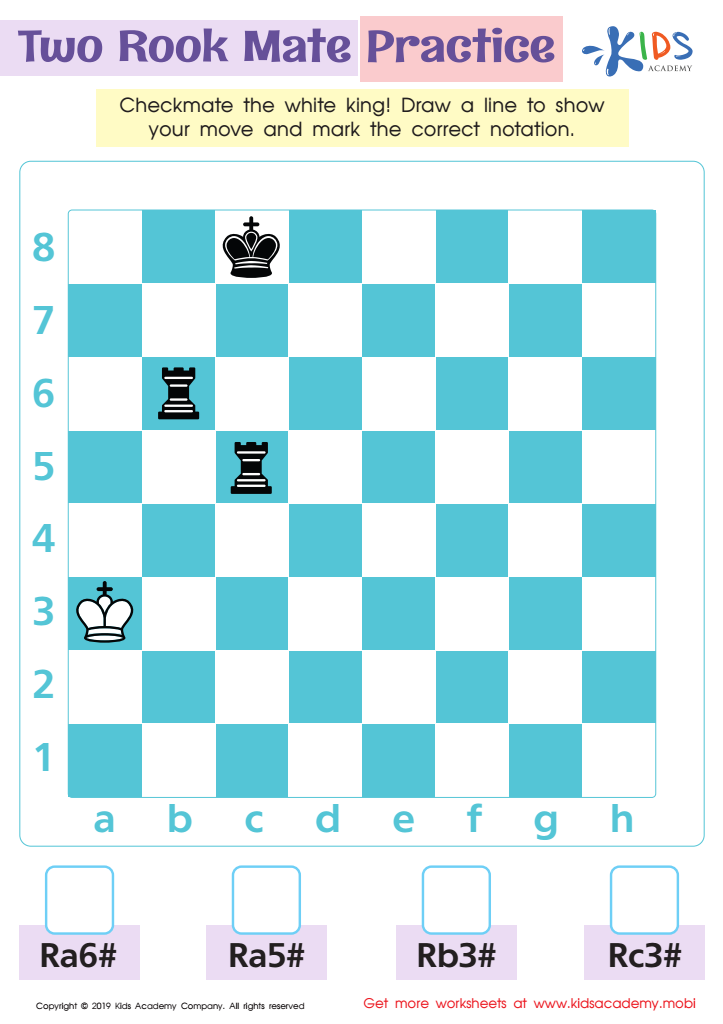
Two Rook Mate Practice Worksheet
Chess is all about checkmating your opponent. This free Two Rook Mate practice worksheet is a fun way for your mini strategist to do just that. They can draw a line showing their move then pick the correct notation for the mate! A great way for them to practice fine motor skills, too.
Two Rook Mate Practice Worksheet
Worksheet
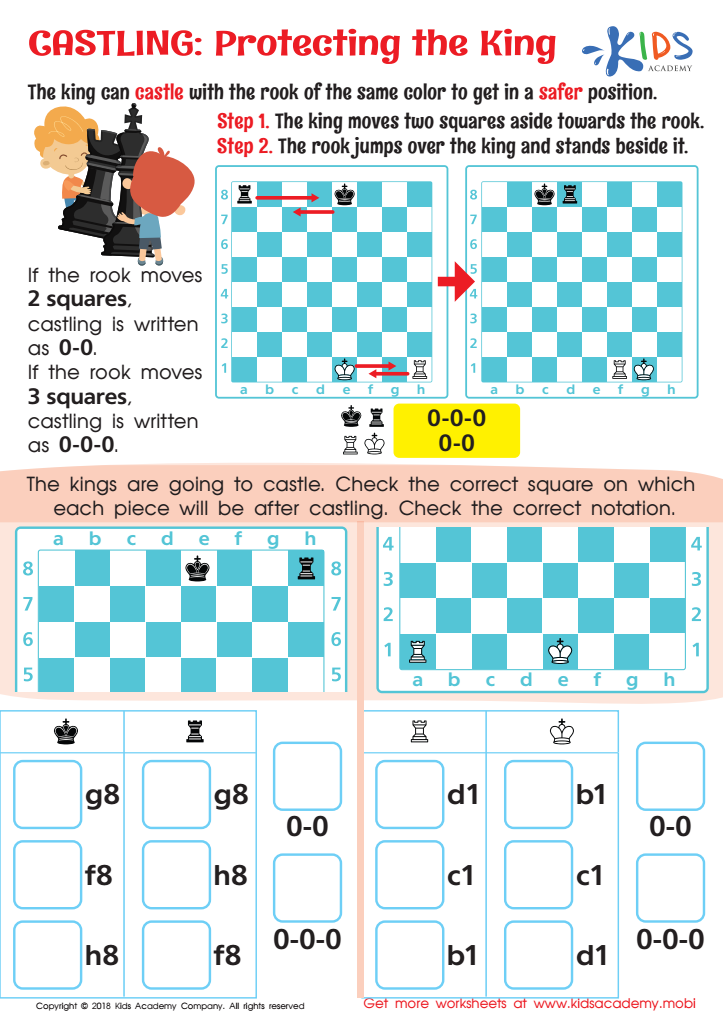
Castling: Protecting the King Worksheet
Castle your king with the rook to get into a safer position! Write 0-0 for a two-square move, or 0-0-0 for a three-square move. Look at the worksheet with your child; on the first chessboard, the king has moved two squares and the rook is beside it. On the second, the rook has jumped over the king. Let your child use their castling knowledge to answer the questions in the easy pdf.
Castling: Protecting the King Worksheet
Worksheet
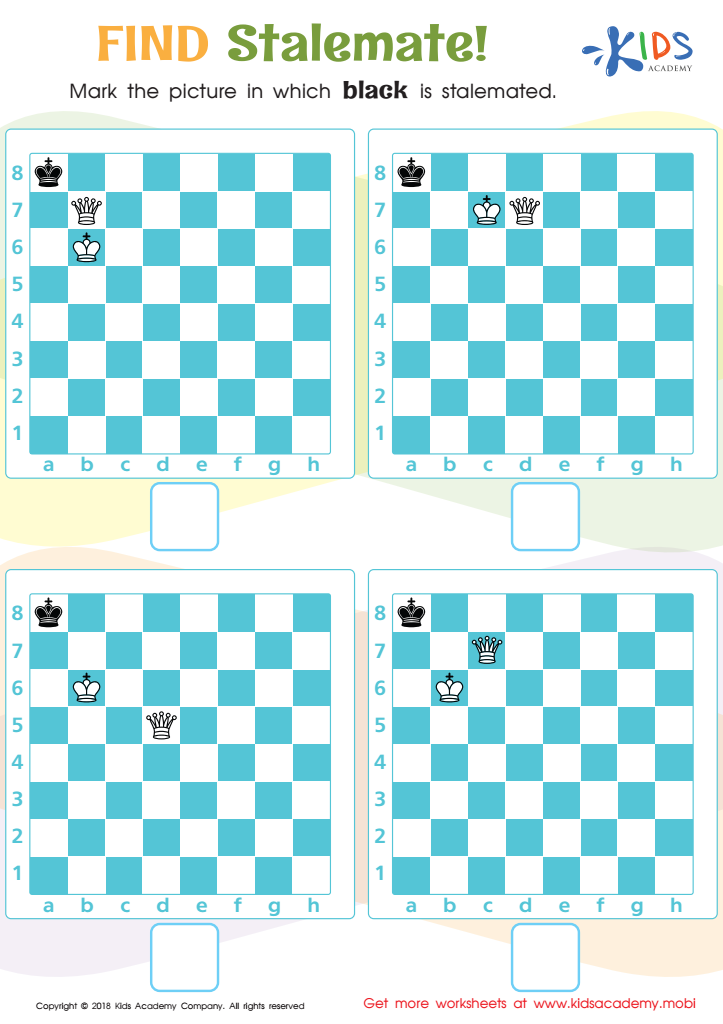
Find Stalemate! Worksheet
Teach your kids Chess and give them more than a hobby - equip them with critical thinking, rationale and problem-solving skills! This free worksheet helps them understand stalemates by examining various sample boards. By providing visual discernment and the joy of the game, your child's logical skills will soar!
Find Stalemate! Worksheet
Worksheet
Join Kids Academy for Free
Who is primarily going to use this learning content?




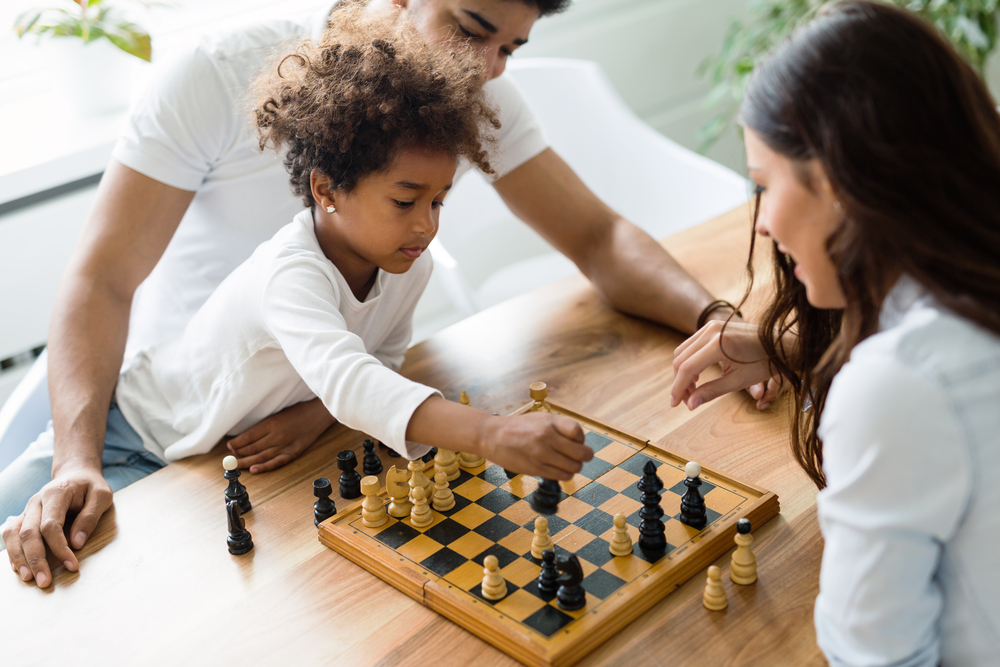

Parents and teachers should care about problem-solving skills cultivated through chess because these skills are foundational for a child's cognitive development and overall academic success. Chess promotes critical thinking, creativity, and strategic analysis, enabling children to approach problems methodically. The game requires players to evaluate different scenarios, foresee potential outcomes, and make informed decisions, skills that are easily transferable to real-world situations and academic settings.
Moreover, chess encourages patience and perseverance. Children learn to navigate setbacks, managing their emotions when faced with defeat, which builds resilience—an essential life skill. By solving chess puzzles or competing in matches, children improve their ability to assess situations, identify challenges, and devise effective solutions.
Additionally, chess fosters social skills through interaction with peers during gameplay, teaching teamwork, communication, and sportsmanship. This engagement helps cultivate a sense of community and improves interpersonal relationships.
Incorporating chess into educational programs develops well-rounded individuals, giving them tools beyond the classroom. Ultimately, fostering problem-solving skills through chess lays a robust foundation for lifelong learning, preparing children to tackle the complexities of future academic pursuits and personal ventures. Thus, promoting chess is not just about the game; it's about equipping children for success in various aspects of life.