Normal Geometry Worksheets for Ages 4-8 - Page 4
75 filtered results
-
From - To
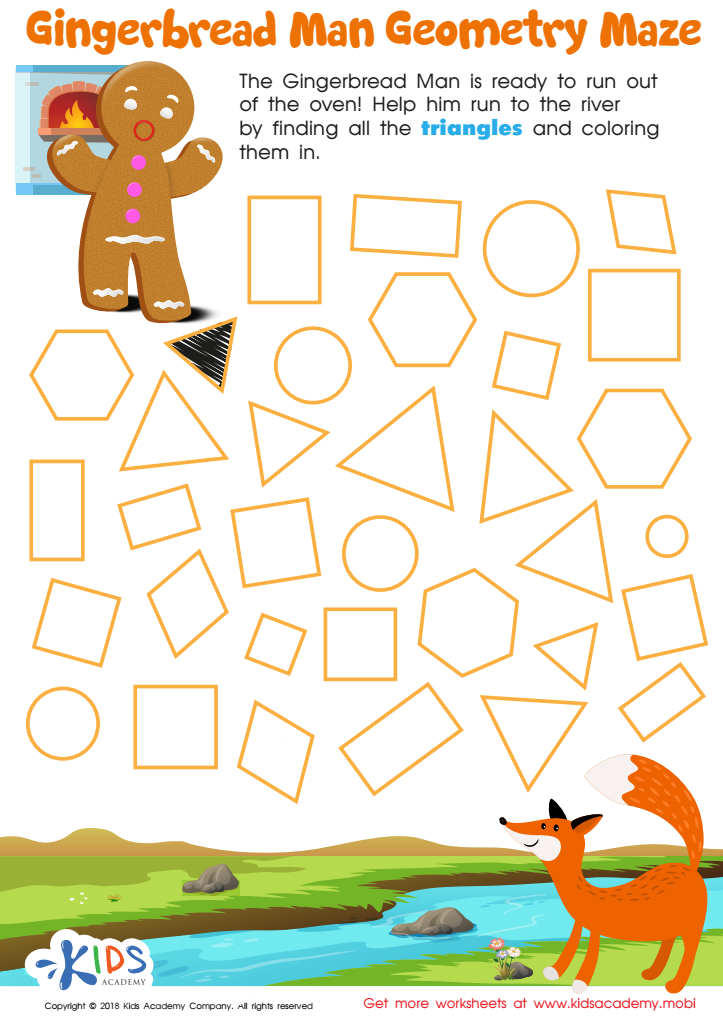
Gingerbread Man Geometry Maze Worksheet
 Assign to My Students











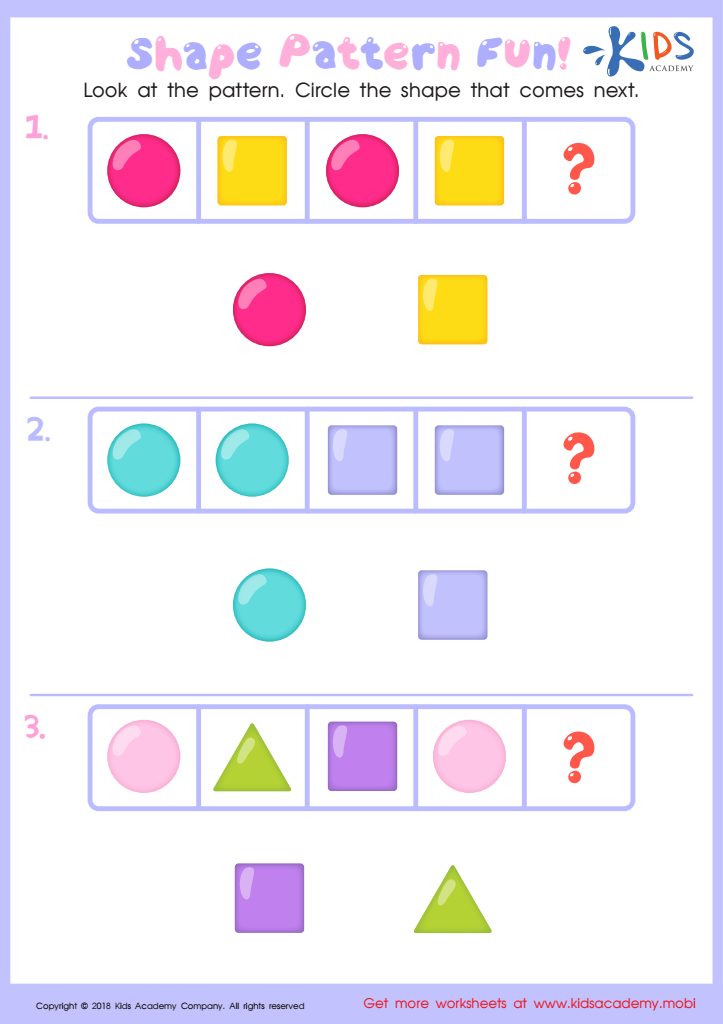
Shape Pattern Fun Worksheet
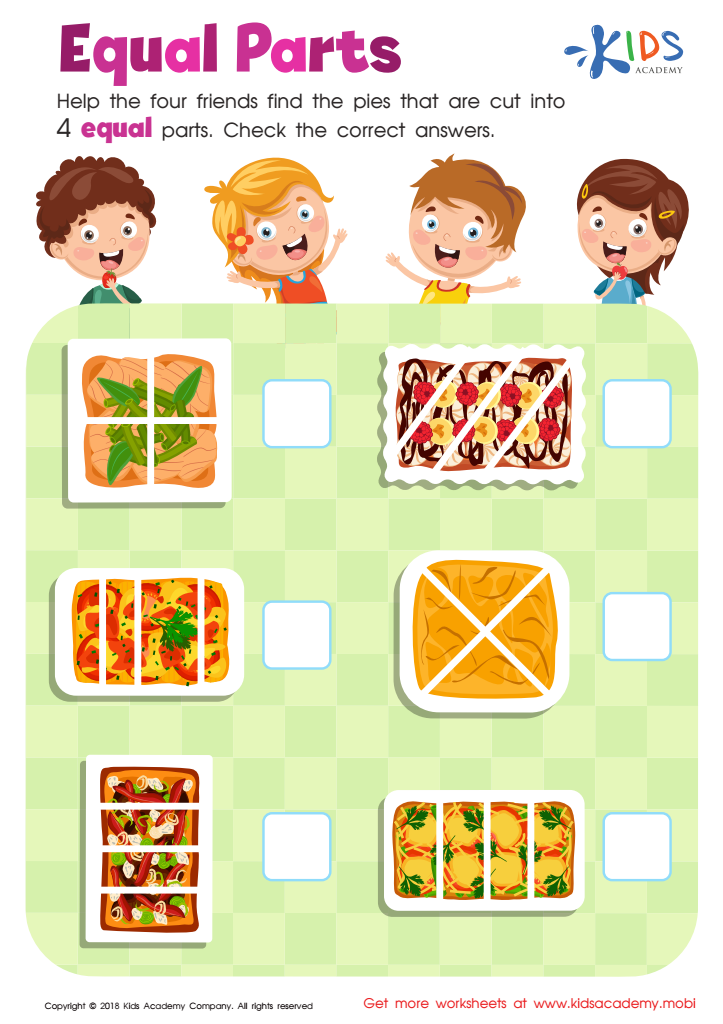
Equal Parts: Food Worksheet








Normal Geometry for Ages 4-8 is crucial in a child's early development because it lays the foundation for essential cognitive skills. At this age, children are naturally curious about shapes, sizes, and spatial relationships, making it an ideal time to introduce geometric concepts. Engaging with geometry fosters critical thinking and problem-solving skills, helping children learn to recognize patterns, categorize objects, and make connections between the physical world and abstract concepts.
Moreover, understanding geometry enhances a child's communication skills. They begin to articulate their observations regarding shapes and their properties, discussing dimensions and relationships in unfamiliar terms. Spatial reasoning, a key element in geometry, correlates with later success in mathematics and even fields like engineering and architecture. By integrating geometry into daily activities and play, parents and teachers can make learning enjoyable and impactful.
Additionally, geometry helps develop fine motor skills through hands-on activities, such as drawing shapes or building structures with blocks. Ultimately, understanding these fundamental geometric concepts promotes confidence in young learners, encouraging a positive attitude towards mathematics as they progress in their educational journey. Thus, parents and teachers should prioritize Normal Geometry for Ages 4-8 to ensure holistic developmental skills in their children.








