Filters

34 filtered results

Clear all filters
Favorites
With answer key
Interactive

34 filtered results

Difficulty Level

Grade


Subject

    Check out this FREE Trial Lesson on Measurement for age 5-7!

    Describing Weight

    Favorites
    With answer key
    Interactive
    • 5-7
    • Measurement
    • Normal
    Heavy or Light? Worksheet
    Heavy or Light? Worksheet

    Heavy or Light? Worksheet

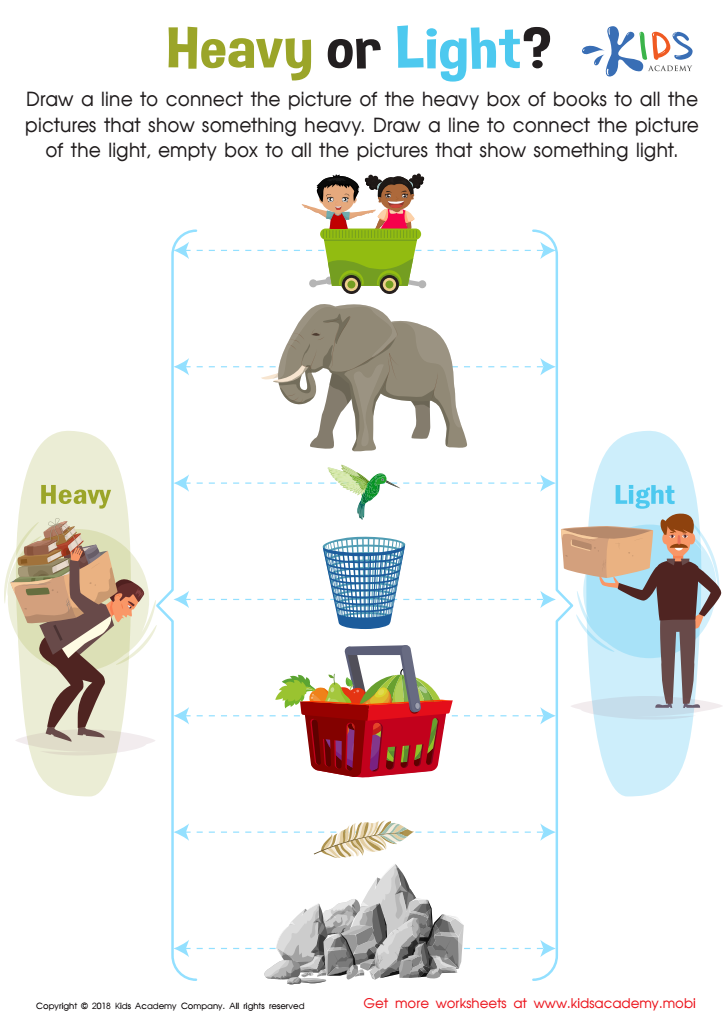
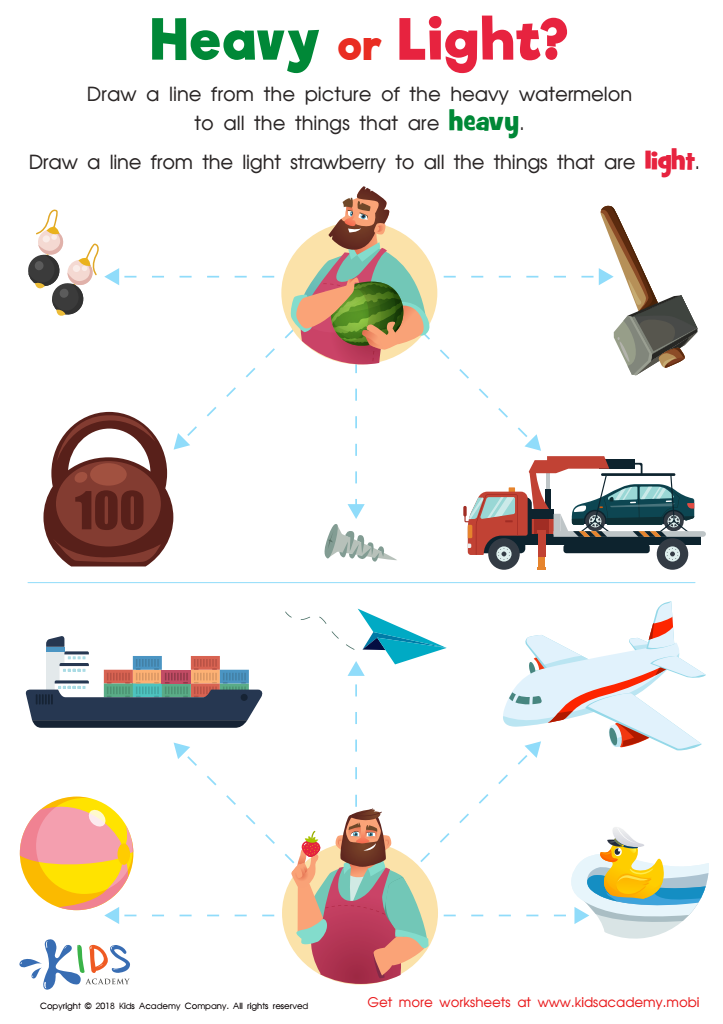
    Kids can struggle to understand weight comparison, as size and mass matter. This free PDF helps develop fine-motor and hand-eye skills as kids trace lines to match pictures. The familiar pictures create concrete representations, ideal for learning more complex concepts.
    Heavy or Light? Worksheet
    Worksheet
    Time to Catch the Train Part 1 Worksheet
    Time to Catch the Train Part 1 Worksheet

    Time to Catch the Train Part 1 Worksheet

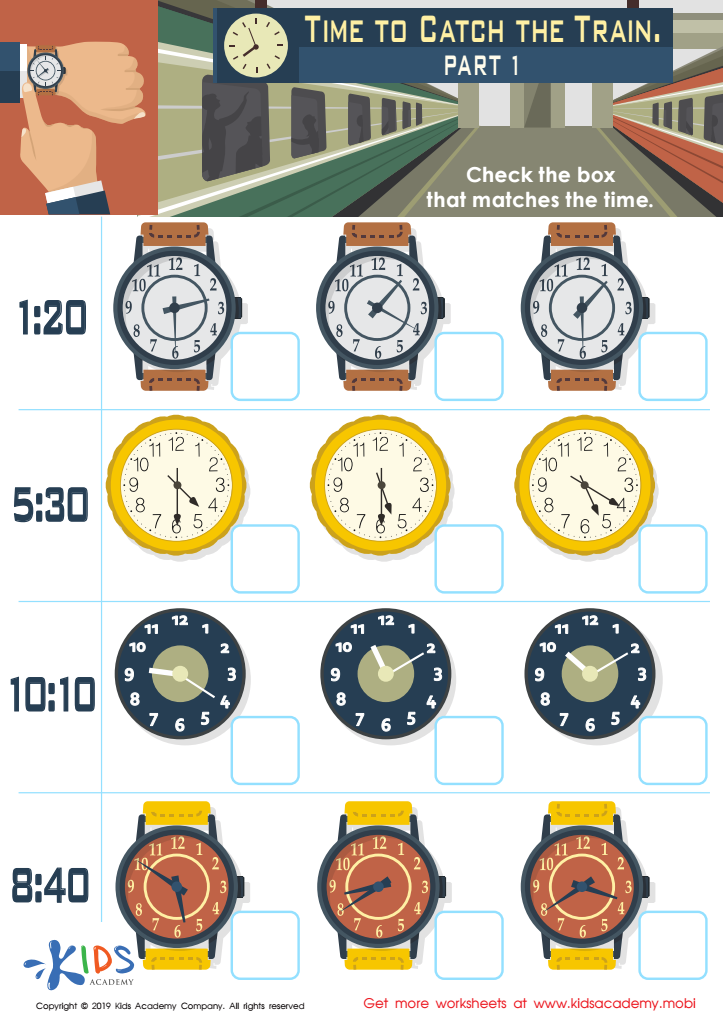
    Time is essential for us; it lets us know when to do various things. Your kids likely wake up at a specified hour and prepare for the school bus. Demonstrate to them that time-telling is vital, and show them there are multiple ways to show time. Point to the time written on the left and the watches in the picture. Assist your children to check the box that corresponds to the time.
    Time to Catch the Train Part 1 Worksheet
    Worksheet
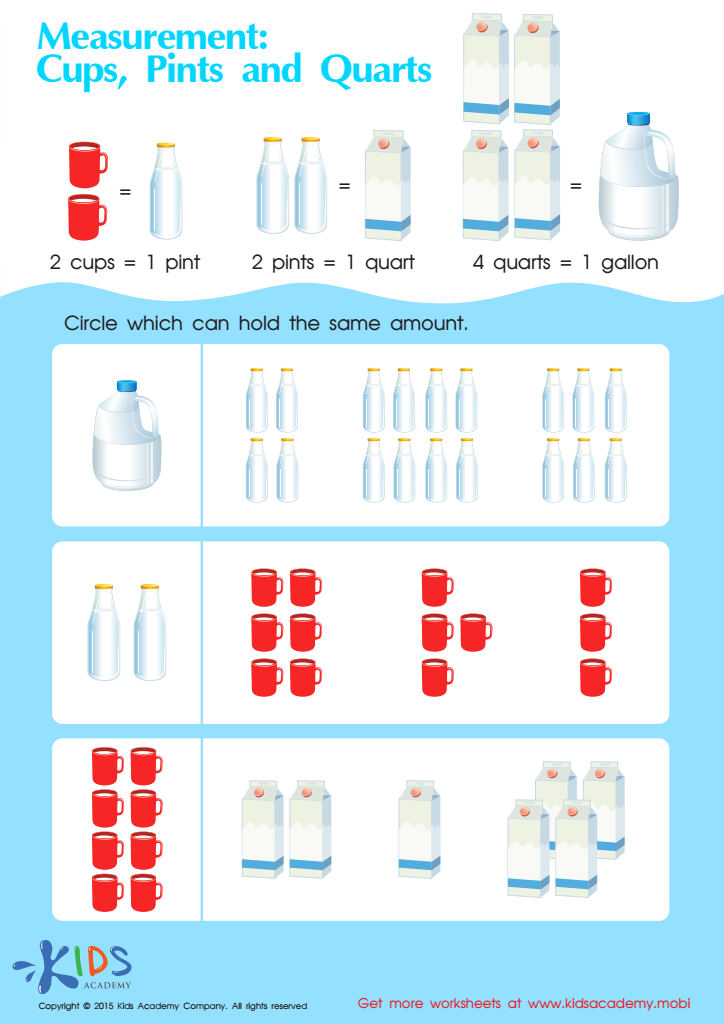
    Math PDF Worksheets: Cups, Pints and Quarts 2
    Math PDF Worksheets: Cups, Pints and Quarts 2

    Cups, Pints and Quarts 2 Worksheet

    Practice measuring liquids with our free math worksheets. Learn how many cups are in a quart and how many quarts are in a gallon. Accurately calculate the answers and write them in the provided spaces. Visit Kids Academy for a collection of free worksheets and make math fun!
    Cups, Pints and Quarts 2 Worksheet
    Worksheet
    Which holds more- capacity worksheet
    Which holds more- capacity worksheet

    Which Holds More: Capacity Worksheet
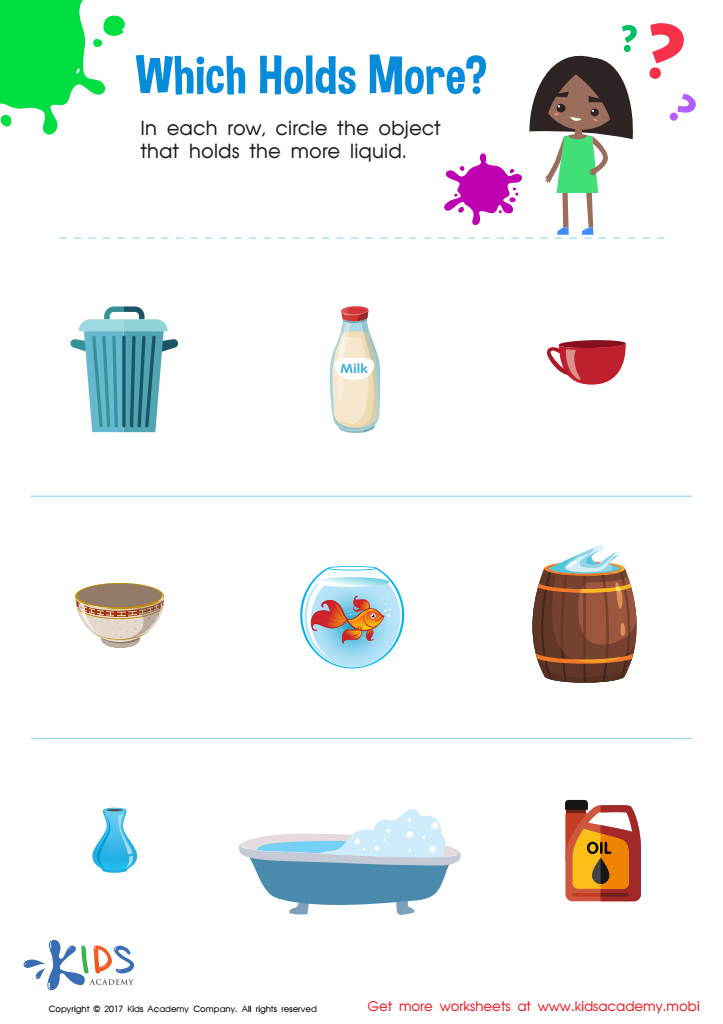
    Kids learn volume with containers of different capacities, such as mugs and barrels, and understand which can hold more liquid. A fun and interactive way to teach essential math concepts.
    Which Holds More: Capacity Worksheet
    Worksheet
    Heavy or Light? Worksheet
    Heavy or Light? Worksheet

    Heavy or Light? Worksheet

    This fun, free worksheet helps kids build measurement skills and reinforce concepts of 'heavy' and 'light', while also improving their fine motor skills. Kids use traceable lines to connect the gentleman to objects they know, giving them a strong foundation for understanding weight.
    Heavy or Light? Worksheet
    Worksheet
    Time practice worksheets for 2nd grade
    Time practice worksheets for 2nd grade

    Time Practice Worksheet

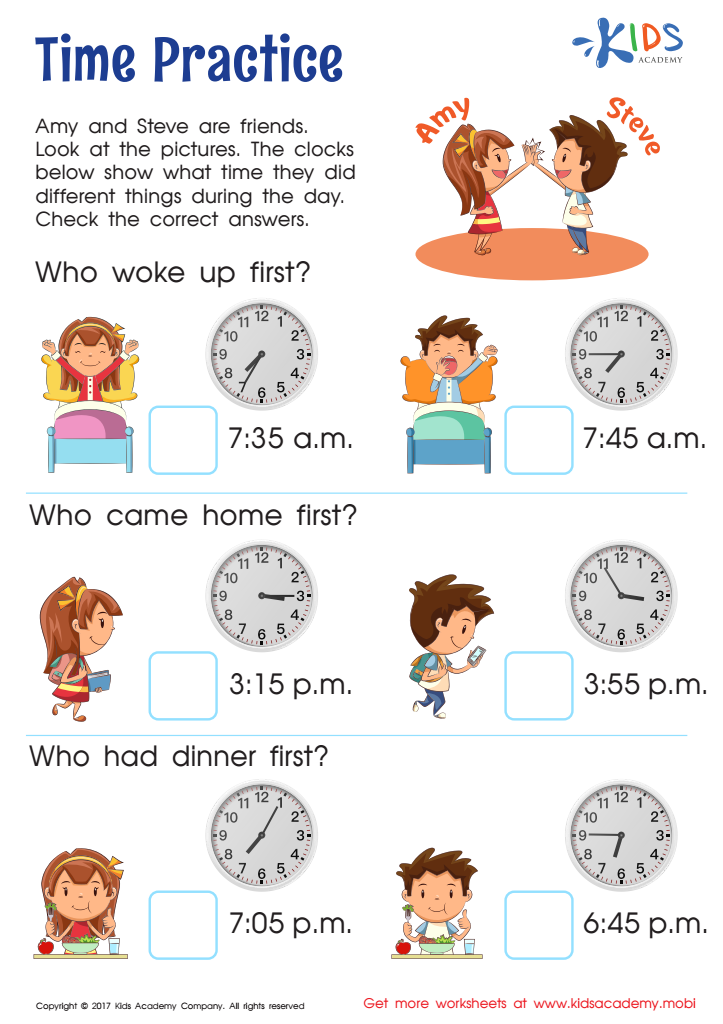
    It's perfect for 2nd graders as they gain a better understanding of time. Get them to tell the time on analog clocks, improve their math skills, and boost their confidence! Second graders can brush up on timekeeping with our time practice worksheets. They'll learn to read minutes on analog clocks, honing math and confidence. Perfect for mastering this tricky concept!
    Time Practice Worksheet
    Worksheet
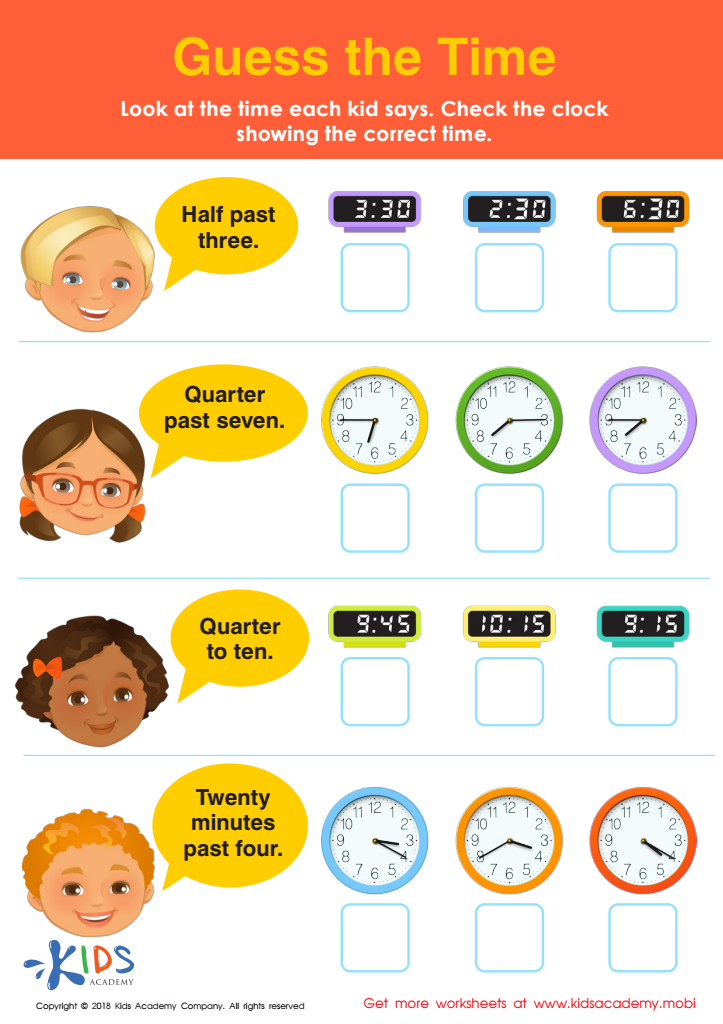
    Guess the Time Worksheet
    Guess the Time Worksheet

    Guess the Time Worksheet

    Help students tell the time accurately with this fun exercise. Read the time each person says and find the corresponding clock. Check the options on the left and have students guess the right time. This worksheet is sure to sharpen their time-telling skills.
    Guess the Time Worksheet
    Worksheet
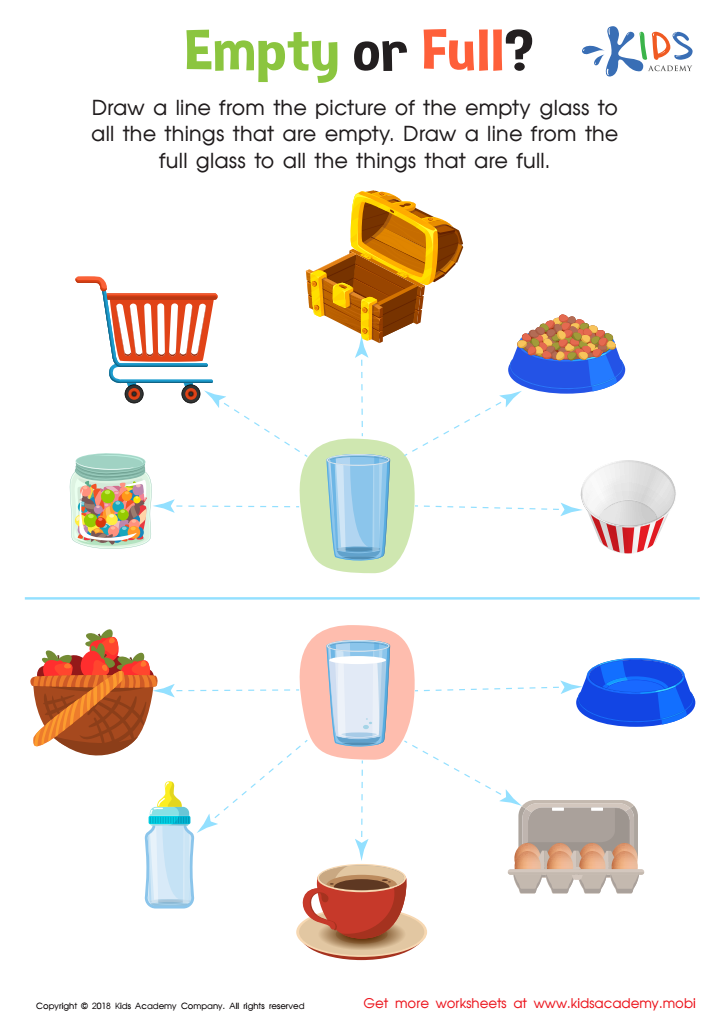
    Empty or Full? Worksheet
    Empty or Full? Worksheet

    Empty or Full? Worksheet

    Let students get to grips with the concepts of empty and full with this PDF worksheet. It uses fun, bright pictures to help them comprehend the difference and also helps develop fine-motor skills with tracing lines. Kids will be proud of themselves as they get answers right!
    Empty or Full? Worksheet
    Worksheet
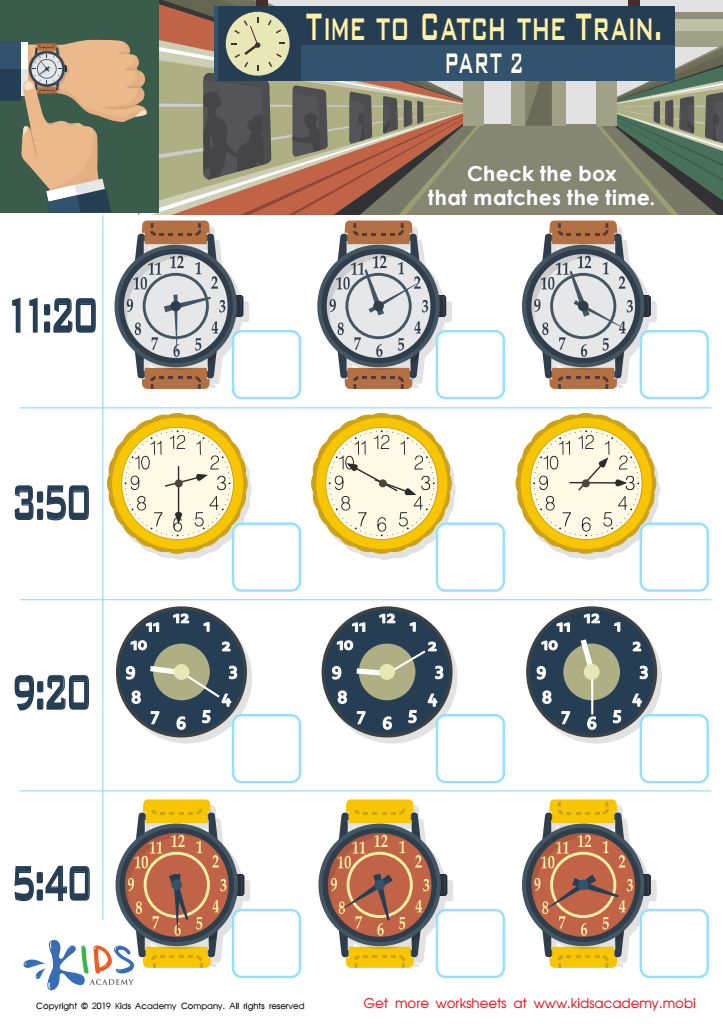
    Time to Catch the Train Part 2 Worksheet
    Time to Catch the Train Part 2 Worksheet

    Time to Catch the Train Part 2 Worksheet

    Teach your kids the importance of telling time and how to do it. Explain that there are multiple ways to show the time, such as written on the left side or watches in the picture. Guide them to check the box that matches the time. Knowing the time is essential to get things done and create order. Ensure your kids understand this and they will reap the benefits.
    Time to Catch the Train Part 2 Worksheet
    Worksheet
    Sorting: Tallest to Shortest Worksheet

    Sorting: Tallest to Shortest Worksheet

    Sorting: Tallest to Shortest Worksheet

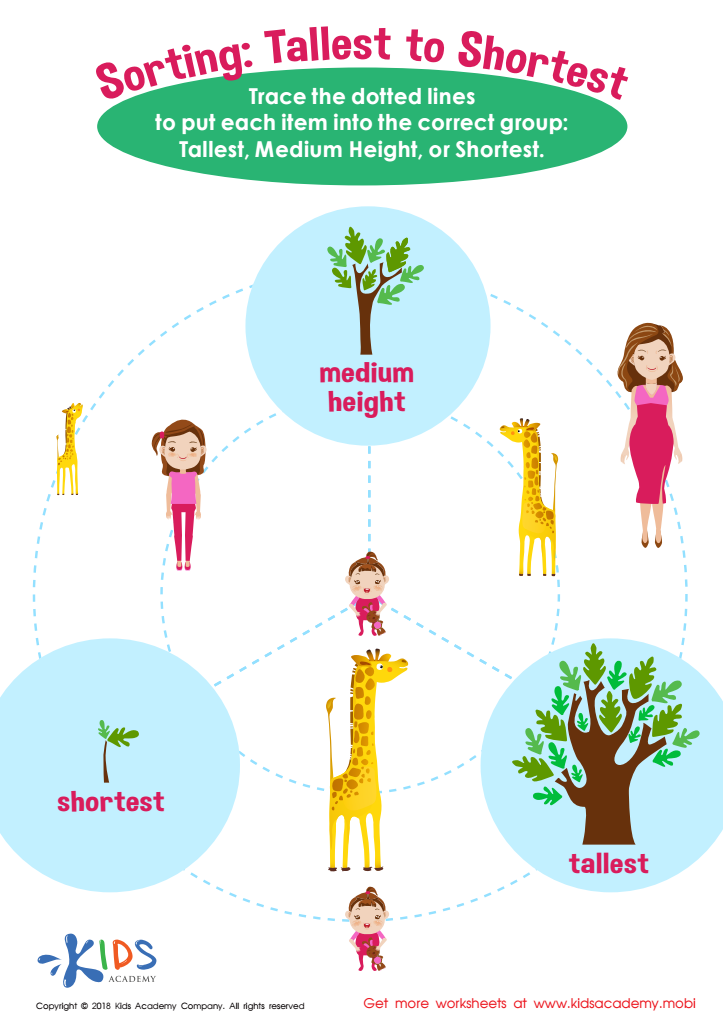
    This worksheet is great for preschoolers to practice foundational measurement skills. Traceable lines help them sort pictures into Tallest, Shortest and Medium categories, giving them concrete examples to compare. Fine motor skills and understanding of relationships between sizes are also developed - perfect for preparing them for larger measurement concepts.
    Sorting: Tallest to Shortest Worksheet

    Worksheet


    Normal measurement is a fundamental concept for children aged 5-7 that lays the groundwork for their understanding of math and science. At this young age, children are naturally curious about their surroundings, and introducing measurement fosters that curiosity, enhancing their problem-solving skills and logical thinking.

    Parents and teachers should care about normal measurement because it aids in developing children's spatial awareness and conceptual understanding of size, quantity, and comparison. Engaging in activities like measuring objects or practicing rudimentary concepts such as longer/shorter or heavier/lighter allows children to apply math to real-world scenarios. This not only makes learning enjoyable but also encourages active participation and experimentation.

    Additionally, establishing strong measurement skills early on supports future learning. It prepares children for more complex mathematical concepts they will encounter later in school, such as fractions and geometry. Furthermore, proficiency in measurement promotes confidence, as children learn to express their ideas clearly and understand relationships between different quantities.

    Finally, integrating measurement into everyday life encourages collaboration and communication, as children often work in groups or teams. In essence, nurturing an understanding of normal measurement in early education is essential for cognitive, social, and personal development, setting a solid foundation for lifelong learning.