Fine Motor Skills Normal Geometry Worksheets for 5-Year-Olds
6 filtered results
-
From - To
Enhance your child's learning experience with our Fine Motor Skills Normal Geometry Worksheets tailored for 5-year-olds! Designed to engage young learners, these worksheets combine essential geometry concepts with activities to improve fine motor abilities. Kids will have fun tracing shapes, coloring patterns, and practicing skills that lay the foundation for future mathematical understanding. Each worksheet promotes eye-hand coordination and precision, making learning both effective and enjoyable. Perfect for homeschooling or classroom use, our resources provide a comprehensive approach to developing critical skills in a playful manner. Equip your child with the foundational knowledge they need while fostering their fine motor skills!
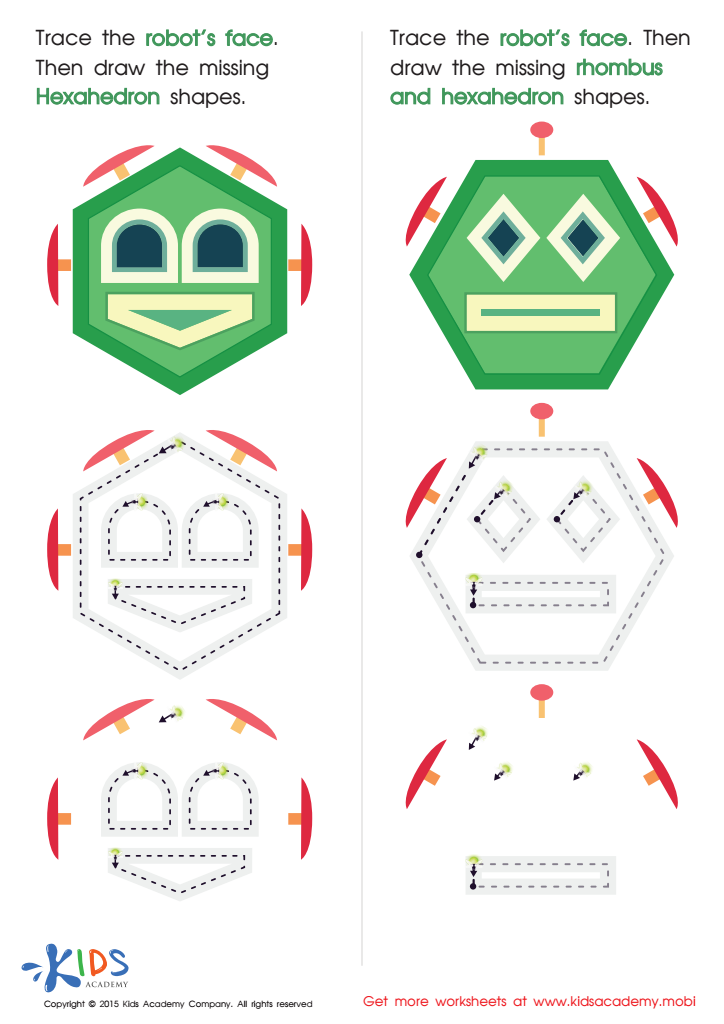
Practice Drawing Hexahedrons And a Rhombus Worksheet
 Assign to My Students











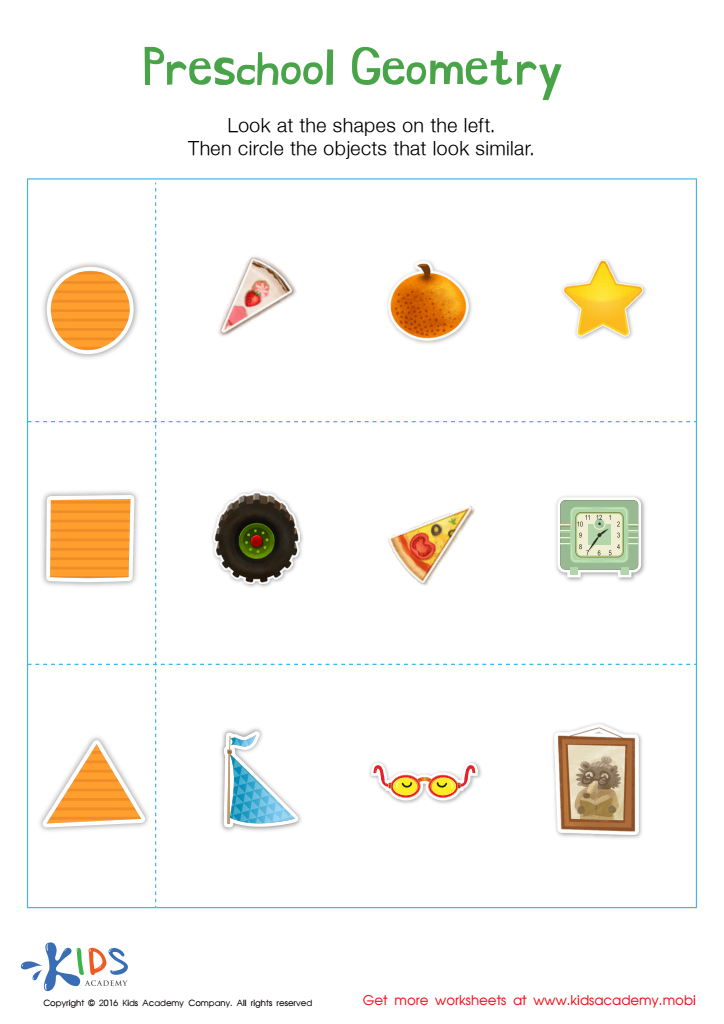
Preschool Geometry Match Up Worksheet
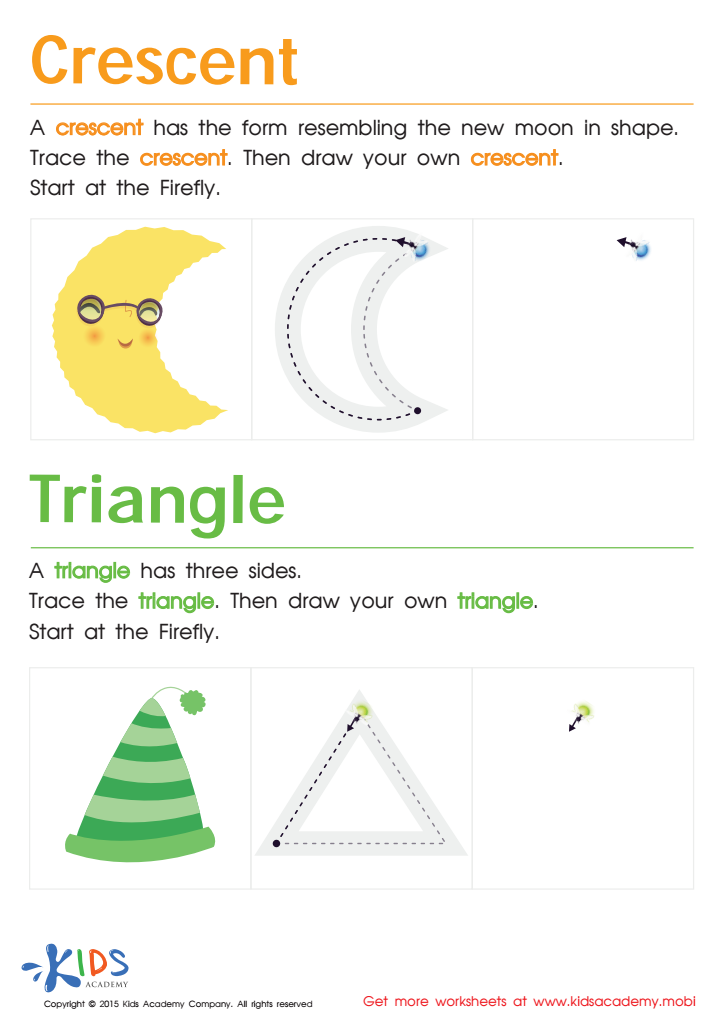
Learning to Draw Crescents And Triangles Worksheet
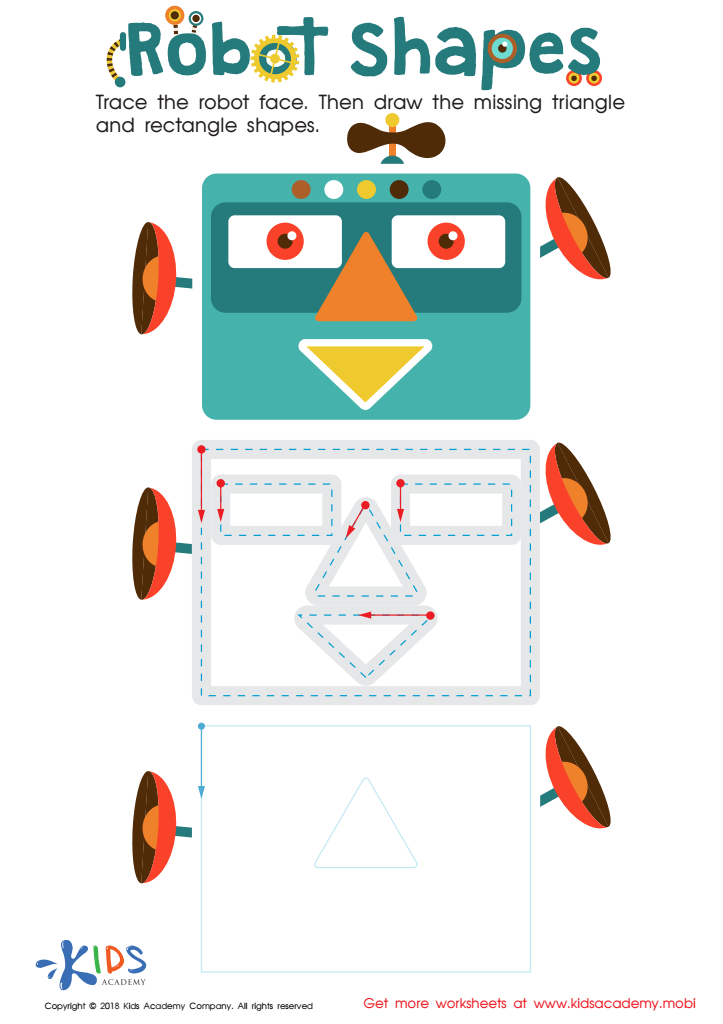
Robot Shapes Worksheet
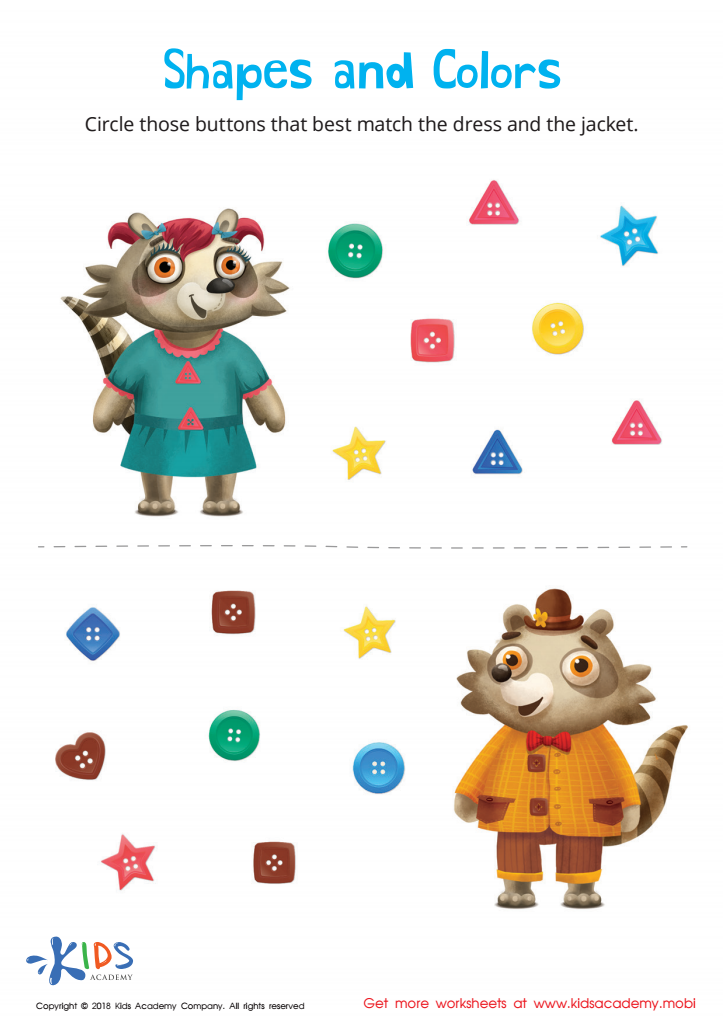
Shapes and Colors Worksheet
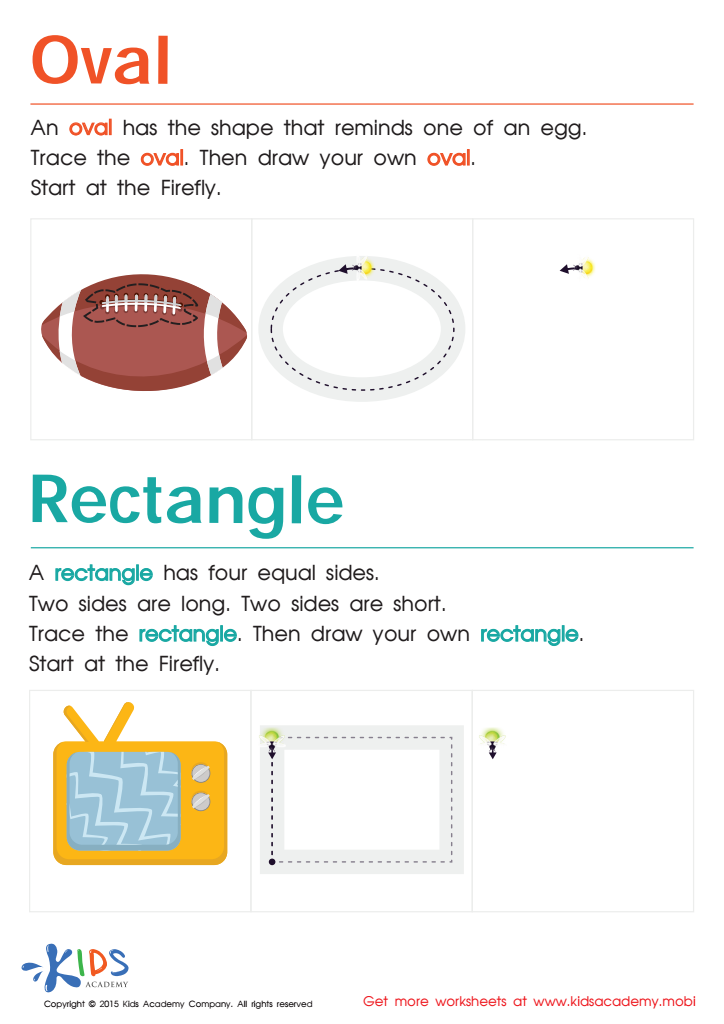
Easy Drawing of Ovals And Rectangles Worksheet








Fine motor skills and normal geometry are essential developmental aspects for 5-year-olds that parents and teachers should prioritize. Fine motor skills involve the ability to use small muscle movements, particularly in the hands and fingers, to perform tasks such as writing, drawing, and manipulating objects. These skills are foundational for everyday activities and play a crucial role in academic readiness, especially in writing and engaging with tools.
Incorporating normal geometry into activities aids in spatial awareness and introduces basic concepts of shapes, sizes, and relationships between objects. By connecting fine motor skills and geometry, children not only learn about their environment but also enhance their cognitive abilities. For instance, cutting shapes and assembling blocks promote hand-eye coordination while facilitating an understanding of geometric terms.
Moreover, these skills foster independence and confidence as children master new tasks, which positively impacts their self-esteem and enthusiasm for learning. When parents and teachers emphasize fine motor skills and geometry, they prepare children for future educational success, encouraging creativity and problem-solving abilities. Engaging in targeted activities can ignite a child’s interest in math and art, leading to well-rounded development both socially and academically. Investing in these areas today cultivates essential skills for tomorrow’s learners.








