
Fine Motor Skills Normal Geometry Worksheets
11 filtered results
Difficulty Level
Grade
Age
-
From - To
Subject
Activity
Standards
Our "Fine Motor Skills Normal Geometry Worksheets" are expertly crafted to enhance children’s fine motor skills while making early geometry concepts fun and accessible. These worksheets combine engaging activities with geometric shapes, promoting hand-eye coordination and precision. Each task encourages kids to trace, draw, and manipulate shapes, laying a solid foundation in both motor control and mathematical understanding. Perfect for home or classroom use, these printable resources are designed to support young learners in building confidence and skills. Ideal for kids embarking on their geometry journey, our worksheets ensure a stimulating and educational experience.
Favorites
With answer key
Interactive
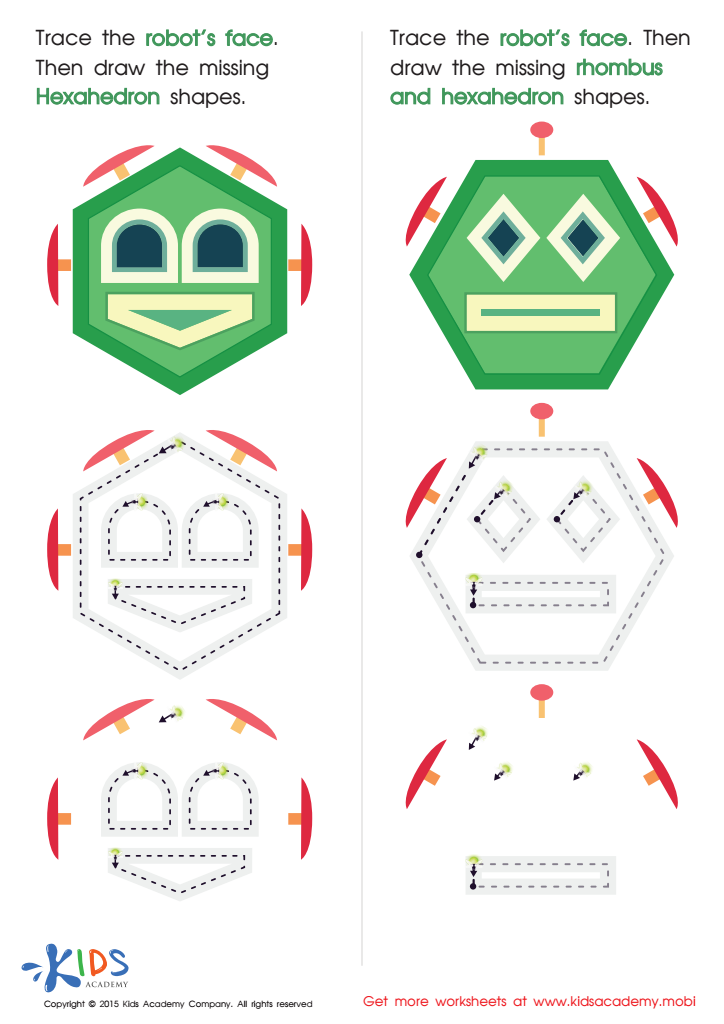
Practice Drawing Hexahedrons And a Rhombus Worksheet
Trace the Robot's face, draw hexahedron and rhombus shapes, then trace again. Our tracing shapes worksheets make it easy for kids to learn geometry. Get more materials from Kids Academy to practice all the shapes.
 Assign to My Students
Practice Drawing Hexahedrons And a Rhombus Worksheet
Worksheet











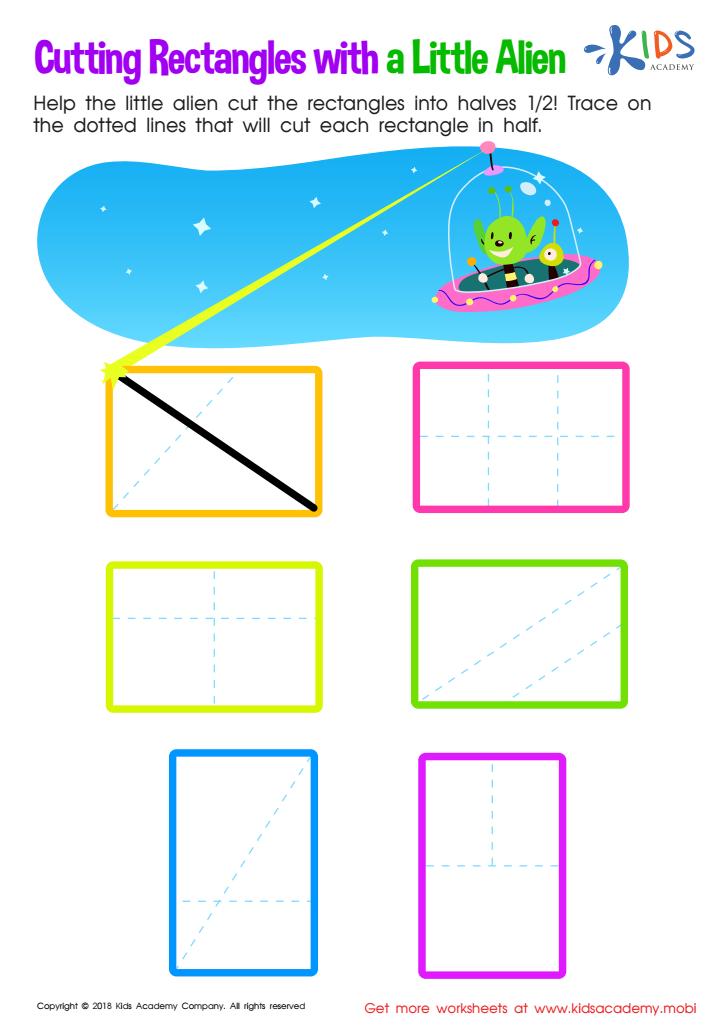
Cutting Rectangles with Alien Worksheet
If your students are interested in aliens and otherworldly events, they'll love this exercise! It requires them to help a small alien cut rectangles into halves (½). They must trace the dotted lines to accurately cut each rectangle.
Cutting Rectangles with Alien Worksheet
Worksheet
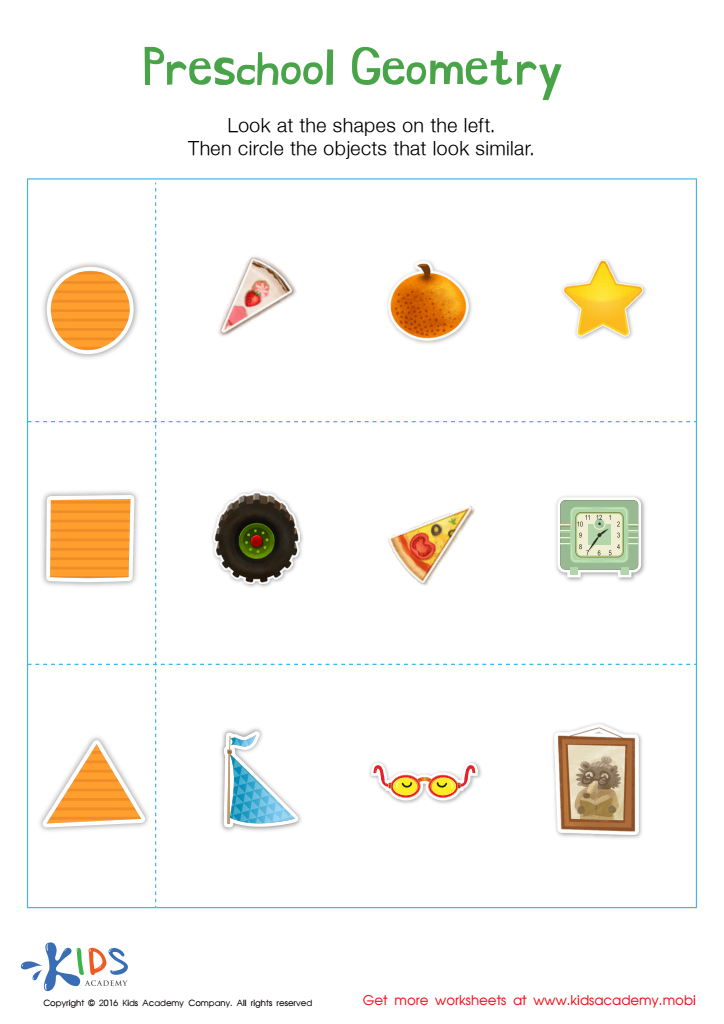
Preschool Geometry Match Up Worksheet
Teach your preschooler geometry using everyday objects. This printable worksheet helps them recognize, match, and follow directions like left and right. Start a conversation to extend their learning and they'll see how shapes appear in the world around them.
Preschool Geometry Match Up Worksheet
Worksheet
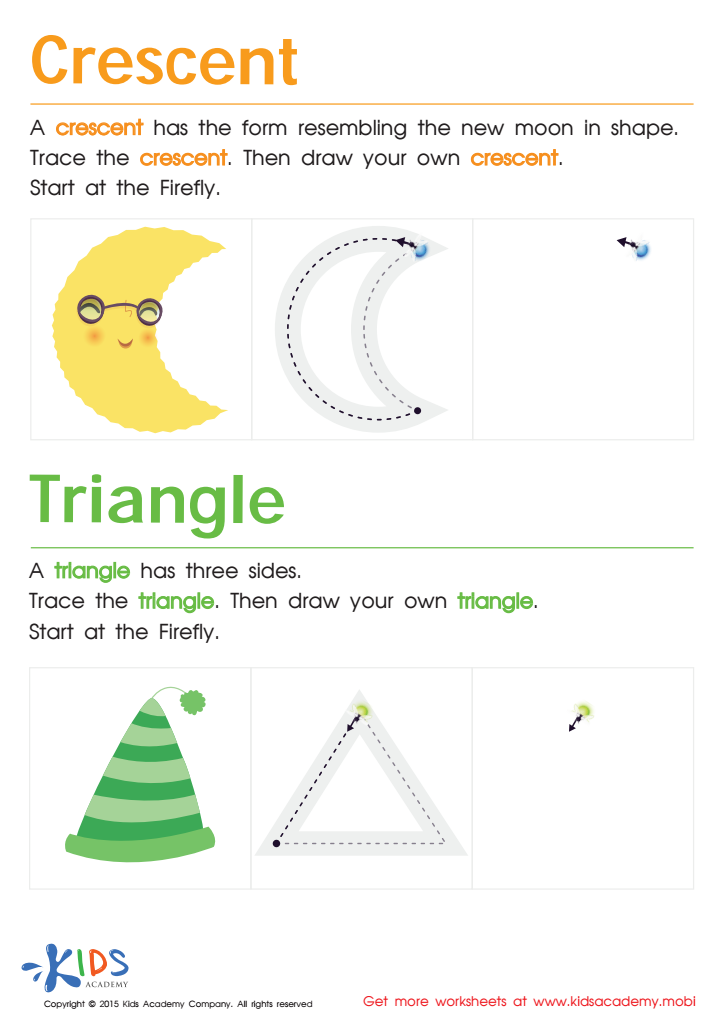
Learning to Draw Crescents And Triangles Worksheet
Help your kids draw a crescent and triangle with this free printable worksheet! Start by tracing a crescent in the form of the new moon, and then teach them that a triangle has three sides and looks like a hat. Find more geometry practice worksheets at Kids Academy!
Learning to Draw Crescents And Triangles Worksheet
Worksheet
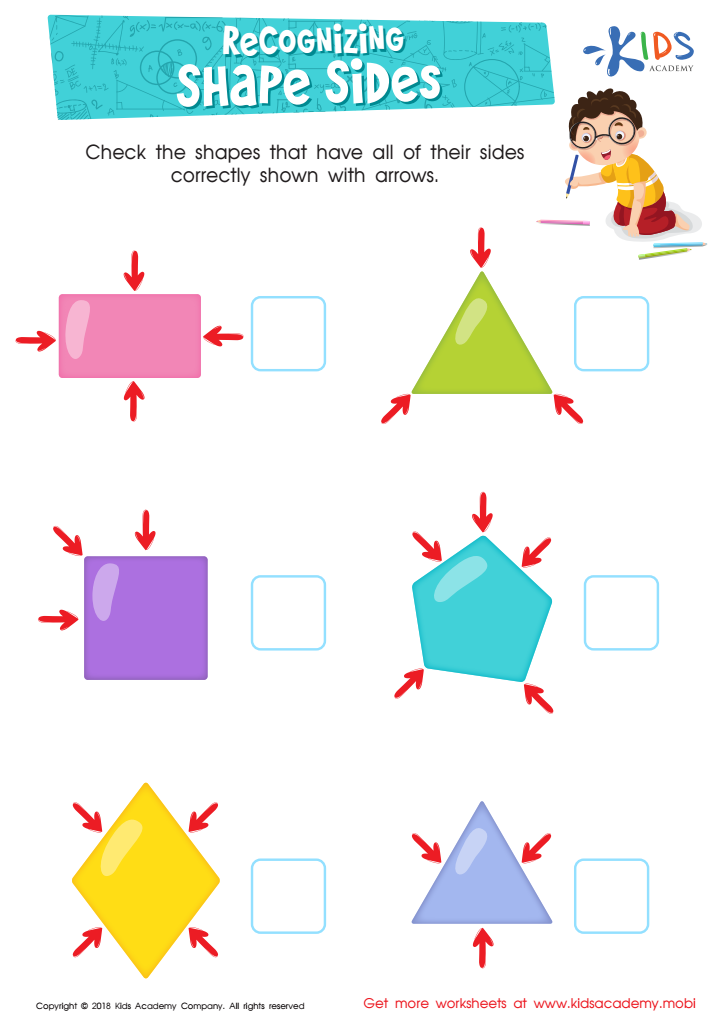
Recognizing Shape Sides Worksheet
This exercise will help your child recognize shape sides. Go over the difference between sides and angles first, then have them check the shapes with arrows to show the sides. They'll quickly get the hang of it and find it much easier after completing the colorful worksheet.
Recognizing Shape Sides Worksheet
Worksheet
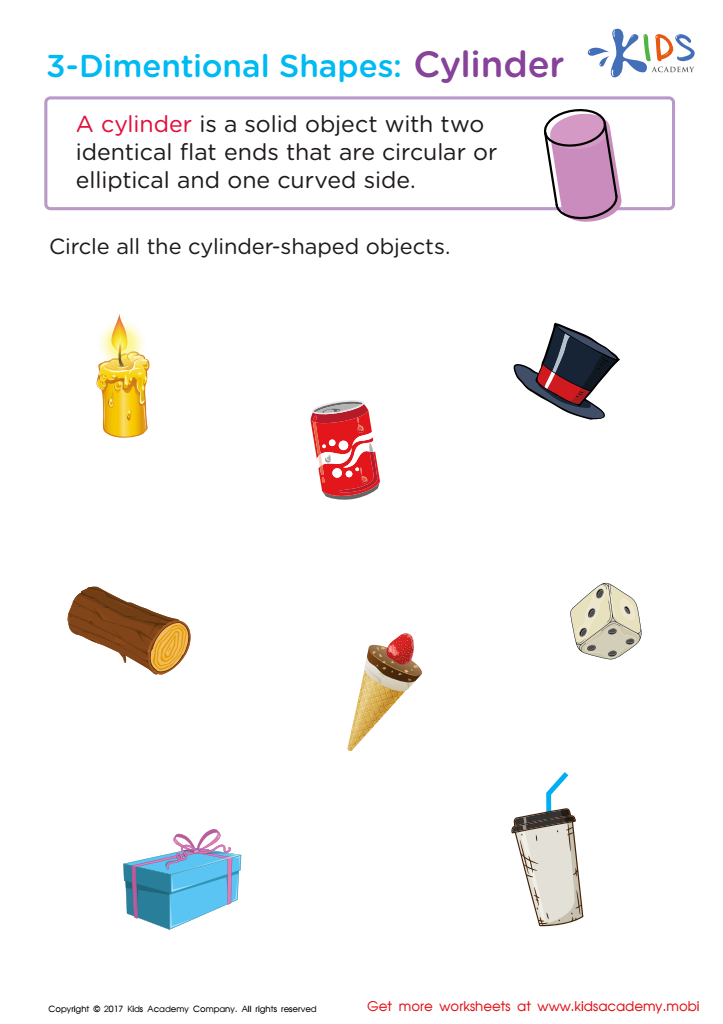
Three–Dimensional Shapes: Cylinder Worksheet
Introduce your toddler to geometry and 3D cylinders with this printable and watch their knowledge grow. It will help them recognize, define, and identify cylinders, as well as differentiate between 3D objects.
Three–Dimensional Shapes: Cylinder Worksheet
Worksheet
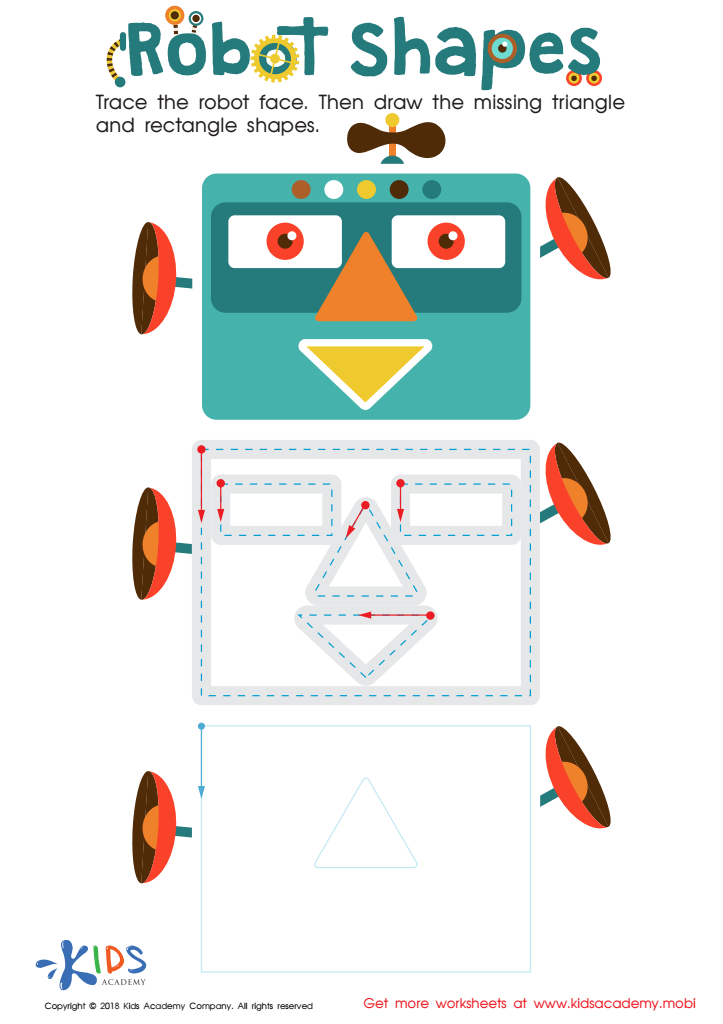
Robot Shapes Worksheet
Help your preschooler get started with math skills while having fun with this shape tracing worksheet featuring a cute robot! Ask them to study the first image, trace the dotted lines to draw the shapes in the second, and color the third. With this activity, they'll learn shapes while enjoying the funny robot pictures!
Robot Shapes Worksheet
Worksheet
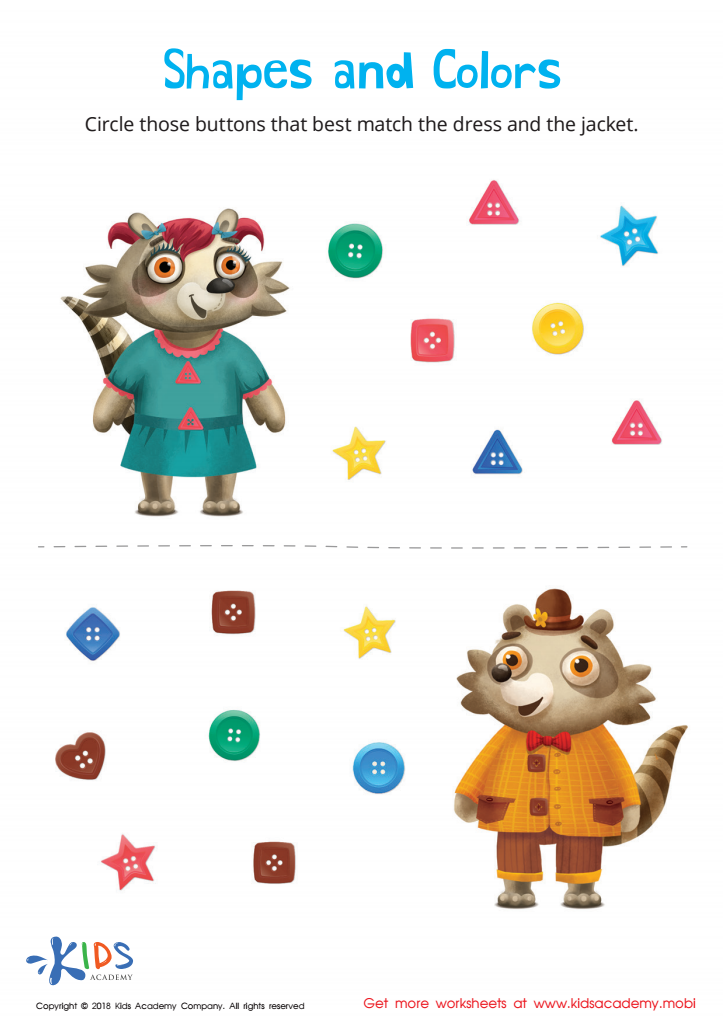
Shapes and Colors Worksheet
This worksheet is a fun way to teach toddlers shapes and colors! It has them match buttons on adorable racoon characters. Encourage your child to note the shape and color of the buttons then sort through and circle the matches. This helps build important attention to detail skills!
Shapes and Colors Worksheet
Worksheet
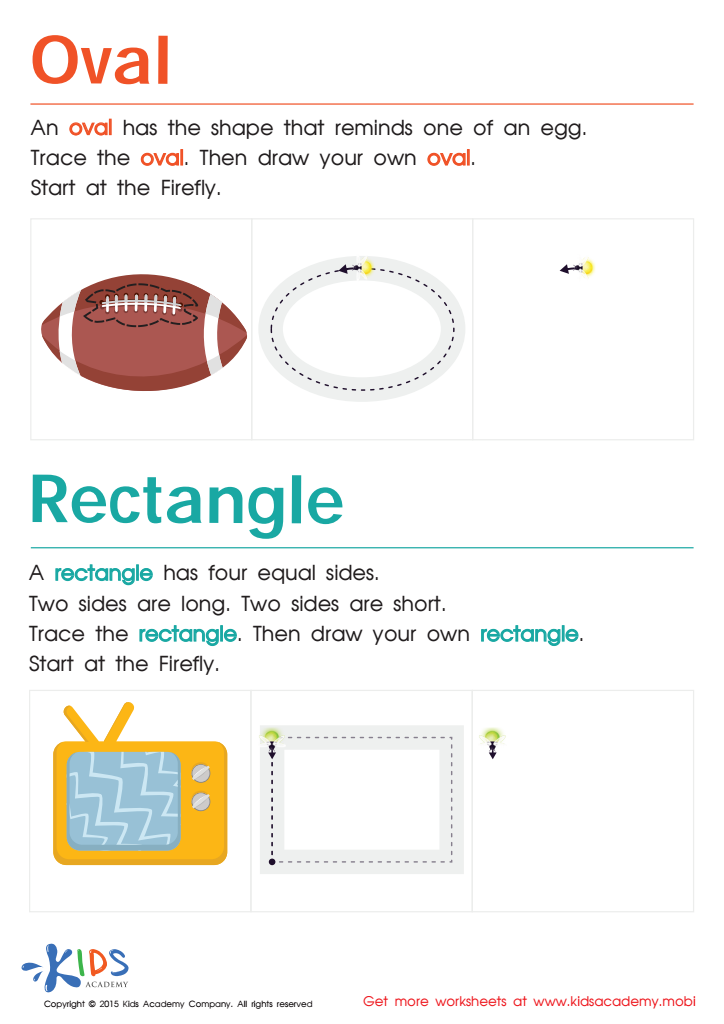
Easy Drawing of Ovals And Rectangles Worksheet
Kids Academy offers free geometry worksheets to make learning more fun and interesting. Trace an oval, rectangle, and many other shapes!
Easy Drawing of Ovals And Rectangles Worksheet
Worksheet
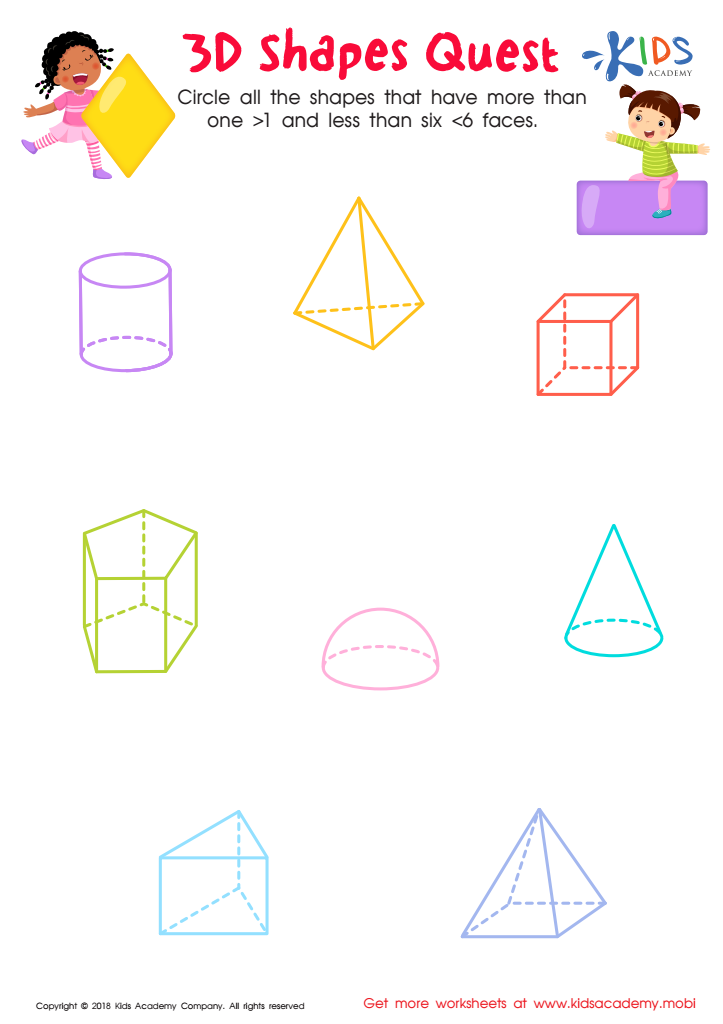
3D Shapes Quest Worksheet
Ask your child if they know what faces of shapes are. If not, explain that faces are flat surfaces on shapes. Ask what a square and rectangle have in common - both have four faces. Your child's task is to circle shapes with more than 1 and less than 6 faces in this exercise.
3D Shapes Quest Worksheet
Worksheet
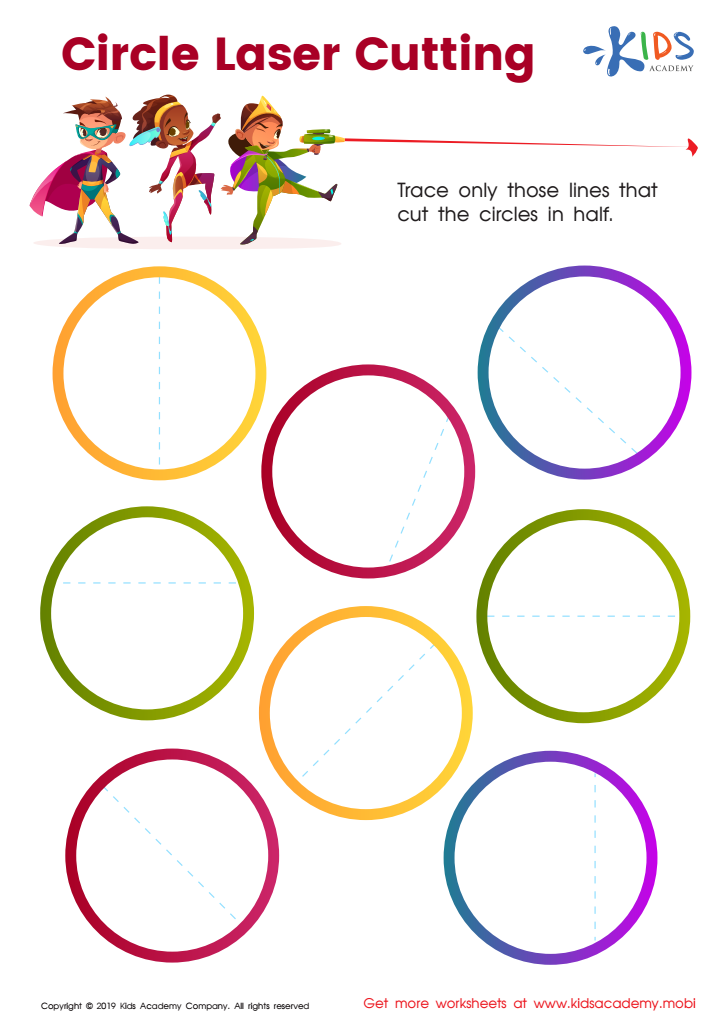
Circle Laser Cutting Worksheet
Encourage your kids to learn geometry! Remind them that when shapes are cut into two equal parts, they are called halves. Have them look at the circles in the worksheet, and trace the lines that cut the circles in half. Geometry is an essential part of education, and although it may not be exciting, it's a valuable skill to have.
Circle Laser Cutting Worksheet
Worksheet
Join Kids Academy for Free
Who is primarily going to use this learning content?








Fine motor skills are vital for children's development as they significantly impact various aspects of their growth. For parents and teachers, focusing on these skills is essential for several reasons. Firstly, fine motor skills enable children to perform everyday tasks independently, such as dressing, feeding, and personal hygiene, promoting self-sufficiency and confidence.
In an educational context, these skills are crucial for academic success. Activities like writing, cutting with scissors, and manipulating small objects directly correlate with fine motor development. Strong fine motor skills facilitate handwriting abilities, which are foundational for efficient communication and learning. Furthermore, tasks requiring hand-eye coordination, such as drawing and using geometric shapes, help with understanding spatial relationships and basic geometry concepts. Engaging students in such activities not only enhances their cognitive abilities but also their problem-solving and critical thinking skills.
From a broader perspective, fine motor skills also contribute to social and emotional development. Children who master these skills are more likely to engage in play and social interactions confidently, fostering mental and emotional well-being.
Hence, investing time in developing children's fine motor skills ensures well-rounded growth, equipping them for both academic and daily-life challenges, thereby fostering independence, competence, and holistic development.








