Phonics worksheets activities for Ages 3-8 - Page 2
25 filtered results
-
From - To
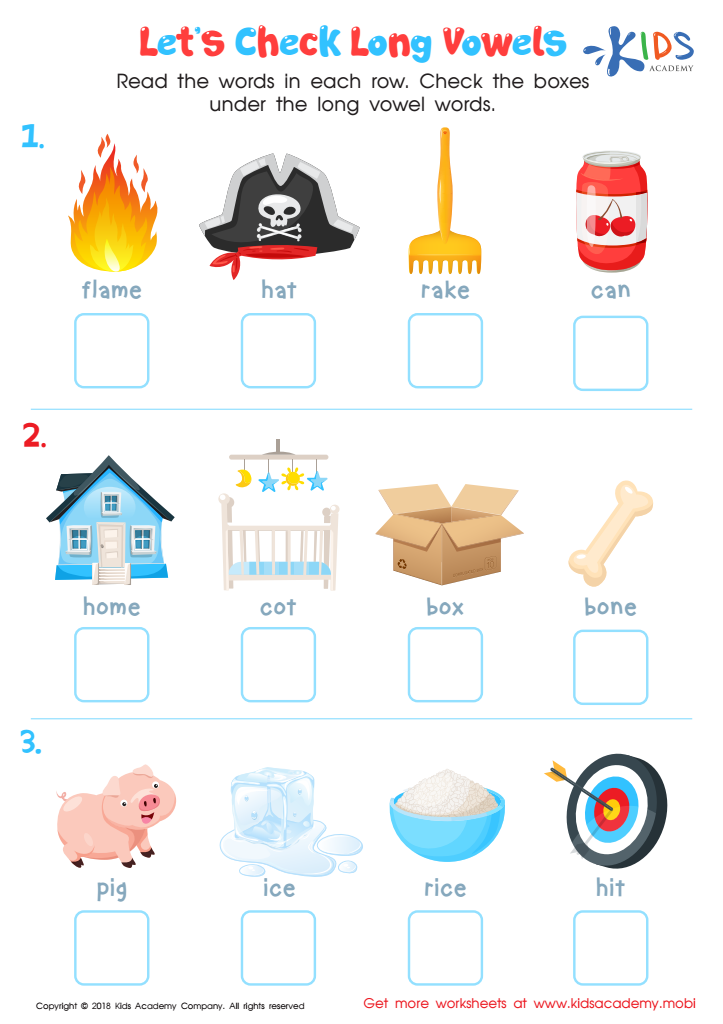
Let's Check Long Vowels: Assessment Worksheet
 Assign to My Students







Phonics activities are vital for children aged 3-8 because they lay the foundational skills for reading and writing. By systematically teaching children the relationships between letters and sounds, phonics helps them decode words, enhancing both their vocabulary and comprehension skills. These activities foster early literacy, which is crucial for academic success, as reading is a gateway to all subjects.
Engaging in phonics activities also boosts children's confidence. As they gain proficiency in blending sounds and recognizing words, they become more motivated to read independently, fueling a lifelong love for books. Moreover, phonics supports different learning styles, accommodating visual and auditory learners through various games and tools that make learning fun.
Parents and teachers should recognize that the early introduction of phonics not only equips children with essential skills but also stimulates their cognitive development. Children who grasp phonics early on are better prepared for the expectations of primary education and beyond. Furthermore, phonics activities help identify and address potential reading difficulties early, ensuring that all children receive the support they need to thrive. By prioritizing phonics, adults play a crucial role in shaping capable and confident readers.








