Filters

29 filtered results

Clear all filters
Favorites
With answer key
Interactive

29 filtered results

Difficulty Level

Grade


Check out this FREE Reading Trial Lesson for age 3-8!

Answer Questions about Key Details in an Informational Text

Favorites
With answer key
Interactive
  • Reading
  • 3-8
  • Interactive
Finding the Details and Connections: Assessment 2 Worksheet

Finding the Details and Connections: Assessment 2 Worksheet

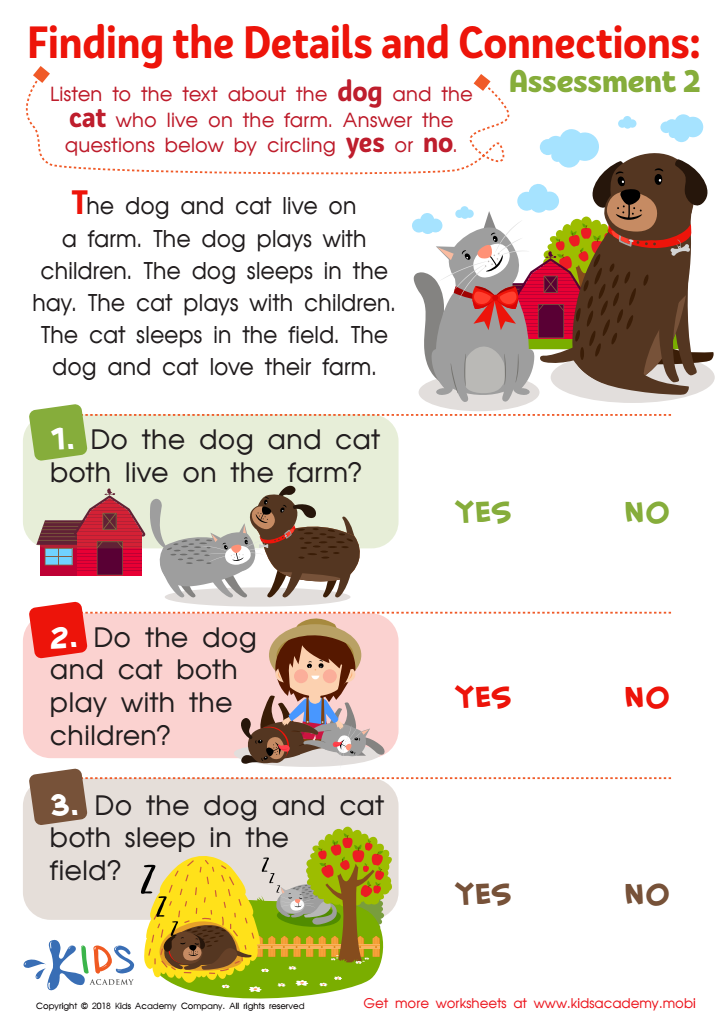
Does your child love animals? If you have pets, they'll relate to the text in this worksheet. Read it aloud to them and help them answer the simple questions by circling yes or no. The story is about a dog and cat living on a farm. Let your child read it aloud to you if they can.
Finding the Details and Connections: Assessment 2 Worksheet
Worksheet
Finding the Details and Connections: Assessment 1 Worksheet

Finding the Details and Connections: Assessment 1 Worksheet

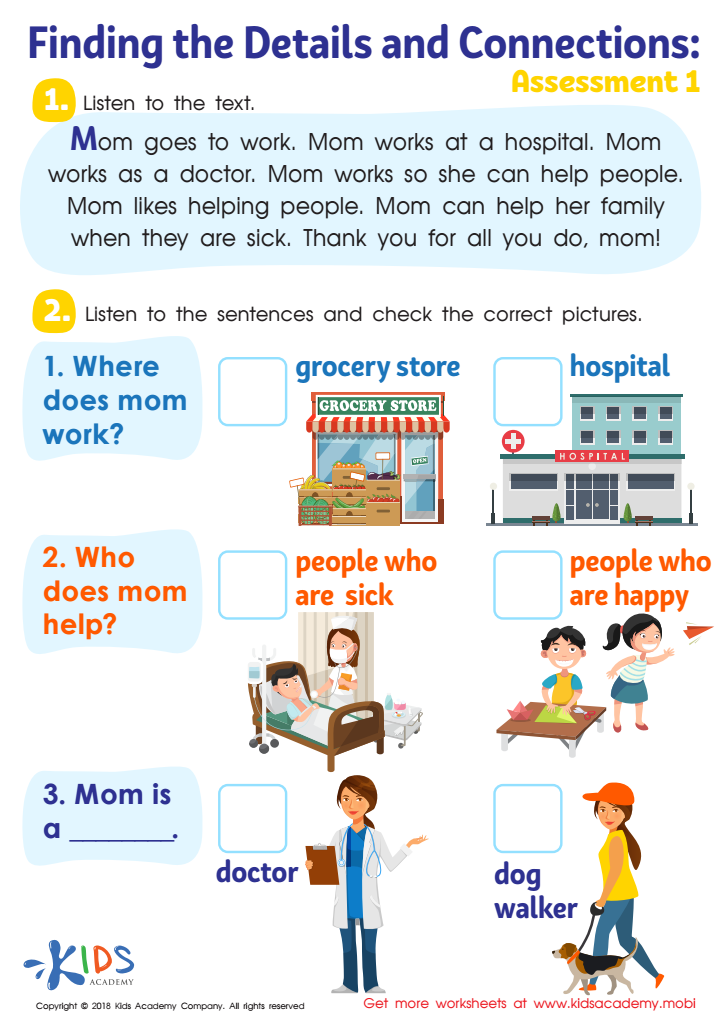
Ask your students what their parents do for a job. Do they know what profession their mom is in and where she works? Professionals have places they go to do their job. In this task, Mom goes to a hospital and is a doctor. Read the text and help them check the right pictures.
Finding the Details and Connections: Assessment 1 Worksheet
Worksheet
Synonyms or Antonyms: Assessment Worksheet

Synonyms or Antonyms: Assessment Worksheet

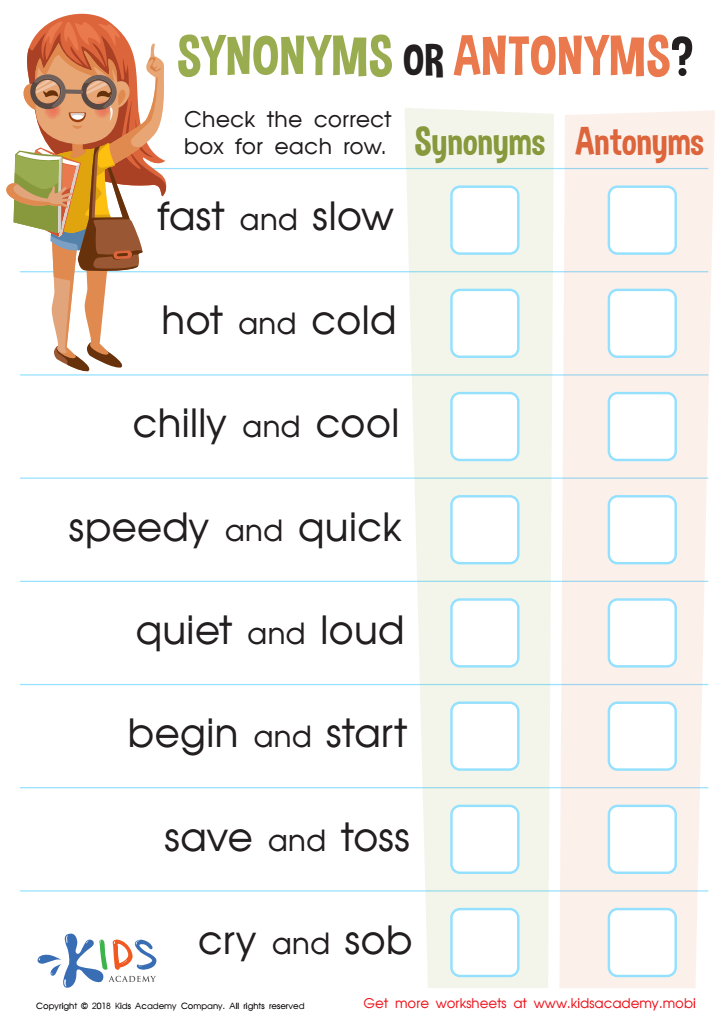
Test your child's knowledge with this fun worksheet! Ask them to read the words and select if they are synonyms or antonyms - e.g. 'happy' is a synonym and 'bad' is an antonym. For an extra challenge, ask them to provide two synonyms and two antonyms for each word.
Synonyms or Antonyms: Assessment Worksheet
Worksheet
Think About It: Assessment Worksheet

Think About It: Assessment Worksheet

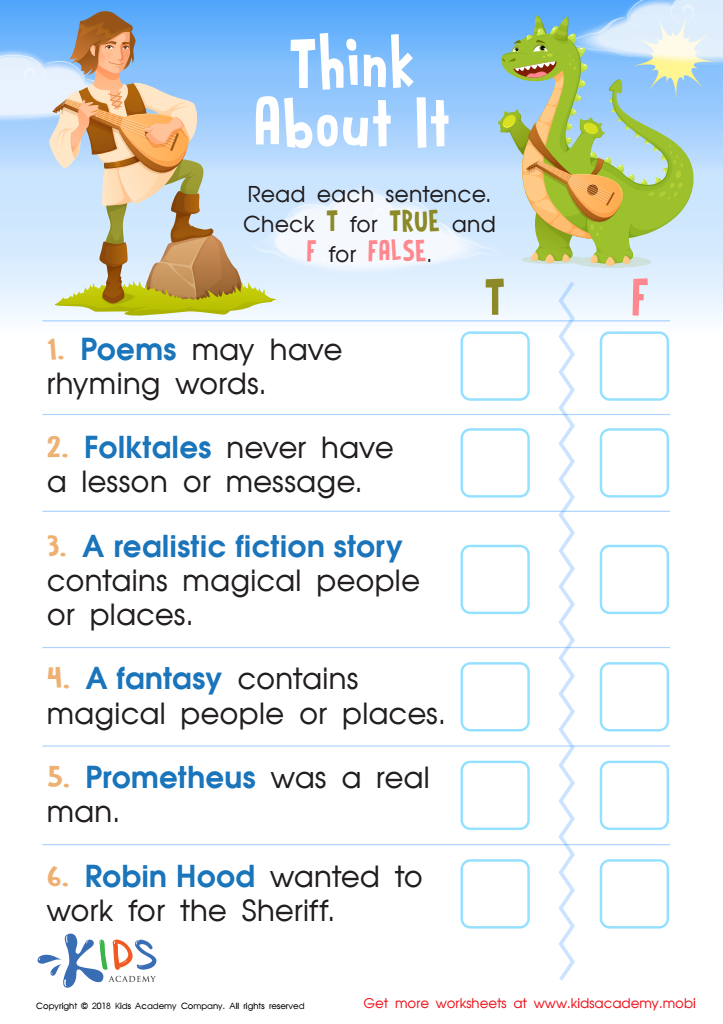
Reading is a fun and important way to learn. Help your students become better readers with this simple yet colorful worksheet. Read each sentence aloud, then have them read it by themselves. Ask them to check T for True and F for False. It's a great way to practice their reading skills!
Think About It: Assessment Worksheet
Worksheet
Sounding it Out: Assessment Worksheet


Sounding it Out: Assessment Worksheet

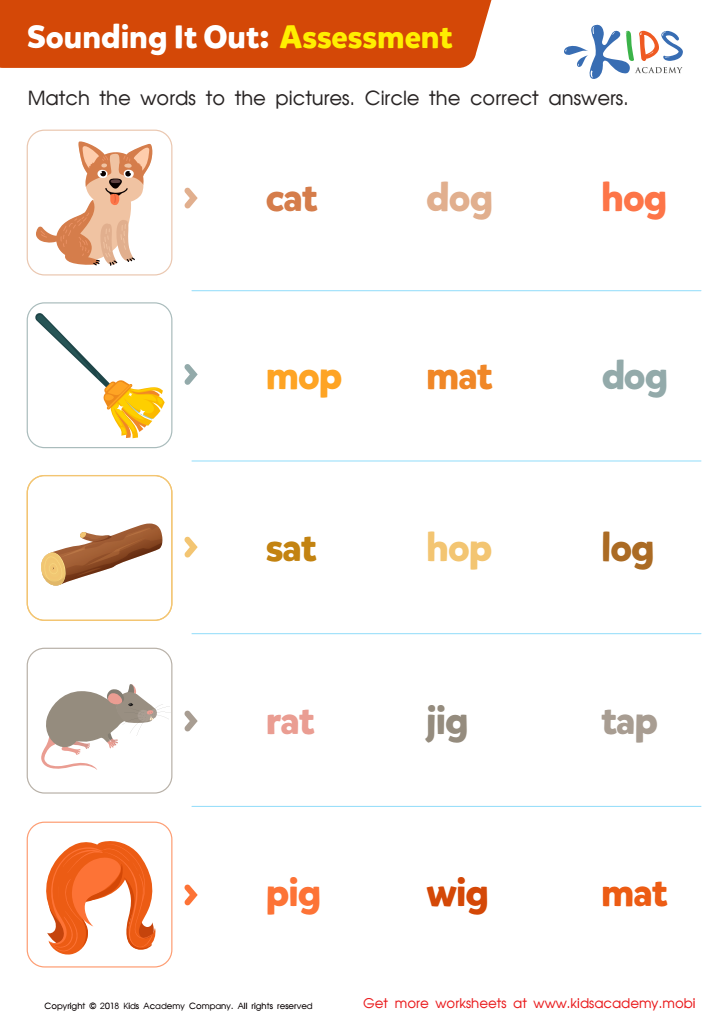
Give your little learner a fun challenge with this downloadable worksheet! With pictures to guide them, have them name the images and then sound out the words in the same row. Be careful though, as they all contain the same amount of similarly sounding letters. Once the correct word has been found, have them circle it!
Sounding it Out: Assessment Worksheet

Worksheet


Reading activities for children aged 3-8 are crucial for fostering essential literacy skills that set the foundation for lifelong learning. During these formative years, a child's brain develops rapidly, and engaging in reading-related activities can significantly enhance their cognitive, social, and emotional growth.

Firstly, early exposure to reading improves vocabulary and language skills. Children learn words, sentence structures, and storytelling, which enhances their ability to communicate effectively. This foundational knowledge boosts their confidence when they eventually begin formal education.

Moreover, reading activities promote imagination and creativity. Exposure to diverse stories introduces children to new ideas and cultures, nurturing empathy and social awareness. As they engage with characters and plots, their critical thinking skills develop, enabling them to make connections and interpret information more effectively.

Furthermore, these activities create valuable bonding experiences between parents, teachers, and children. Shared reading time fosters a love for books, making learning enjoyable and encouraging families to create a reading-rich environment.

In sum, engaging 3 to 8-year-olds in reading activities is not just about literacy; it's an investment in their overall development. Parents and teachers play a pivotal role in guiding and supporting this critical aspect of growth, laying the groundwork for future academic success and lifelong learning.