Filters

37 filtered results

Clear all filters
Favorites
With answer key
Interactive

37 filtered results

Difficulty Level

Grade


Check out this FREE Knowledge Check Trial Lesson for age 4-7!

Use Punctuation at the End of a Sentence

Favorites
With answer key
Interactive
  • Knowledge Check
  • 4-7
  • Interactive
  • Normal
Space: Assessment 1 Worksheet

Space: Assessment 1 Worksheet

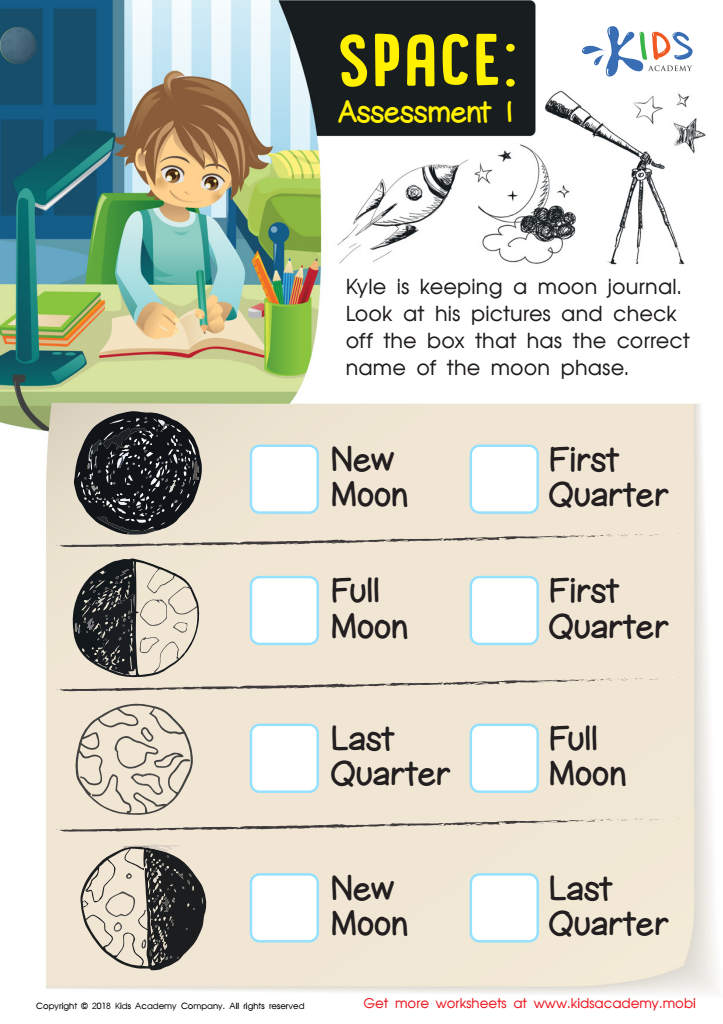
Introduce Kyle and his moon journal to your kids! Ask if they know what it is, or if they keep one too. Together, look at Kyle's pics and help them identify the phases of the moon. Have them check off the correct name of each. It's a great way to get kids interested in space!
Space: Assessment 1 Worksheet
Worksheet
Long and Short Vowel Sentences: Assessment Worksheet

Long and Short Vowel Sentences: Assessment Worksheet

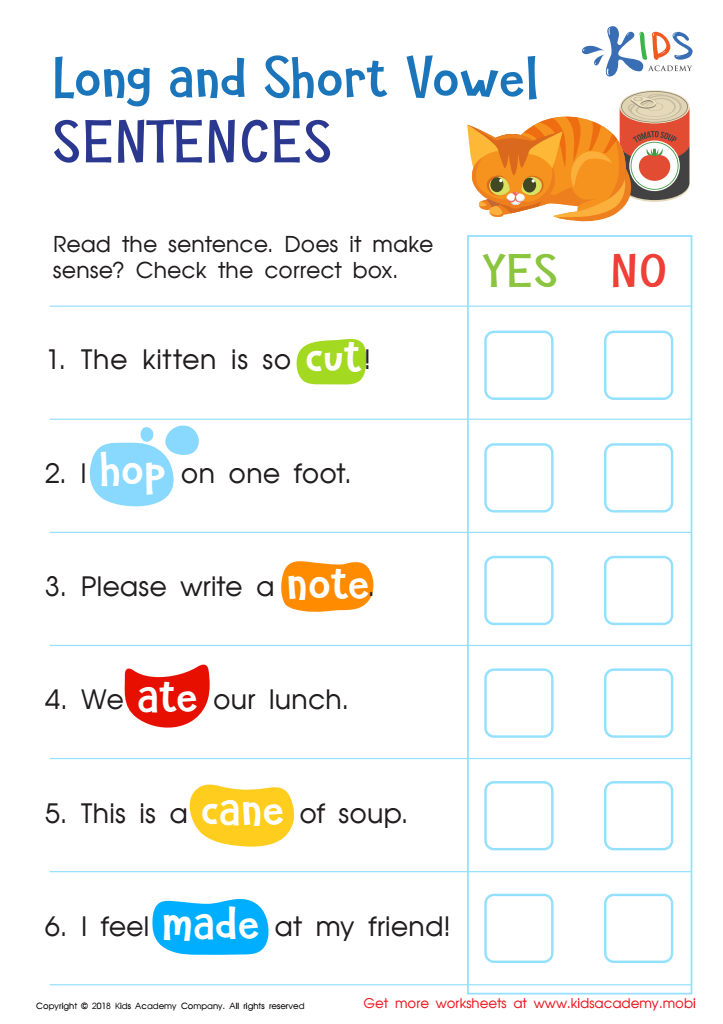
This printable worksheet helps kids practice differentiating between short and long vowel sounds. They'll use context clues to figure out which words make sense in simple sentences. A great way to build reading and writing skills!
Long and Short Vowel Sentences: Assessment Worksheet
Worksheet
Choose the Punctuation: Assessment Worksheet

Choose the Punctuation: Assessment Worksheet

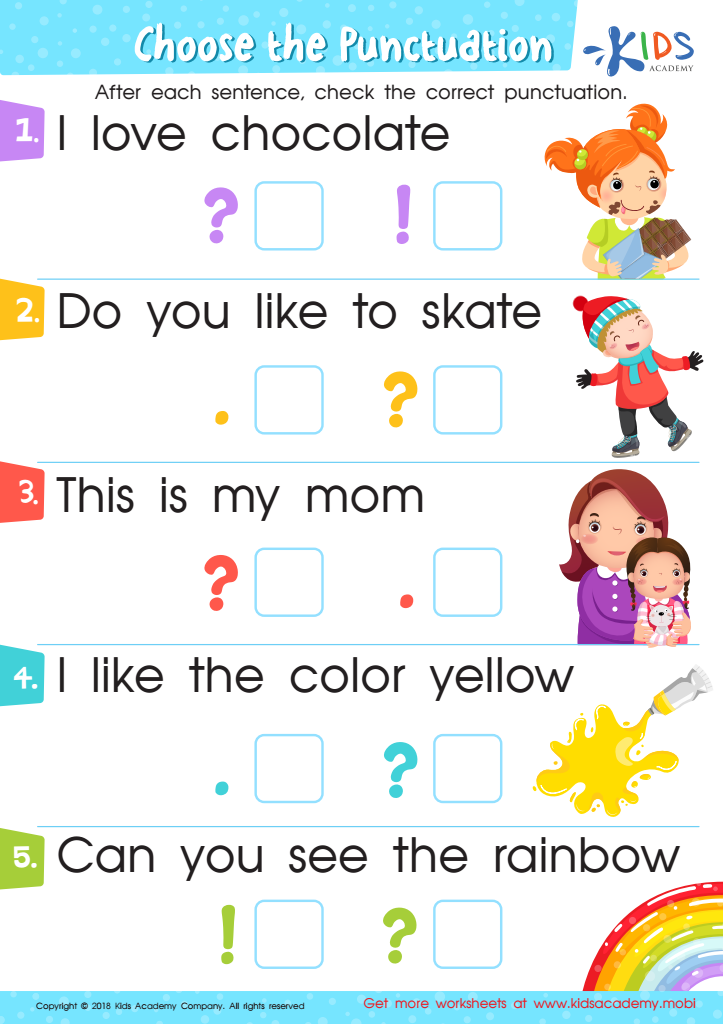
Does your child know punctuations? Found at the end of words, they signify the tone of the sentence. Ask them which punctuations they use daily. With your little one, look at a worksheet. Read each sentence aloud and ask them to identify the two punctuations given. Instruct them to choose the correct one. 80 words.
Choose the Punctuation: Assessment Worksheet
Worksheet
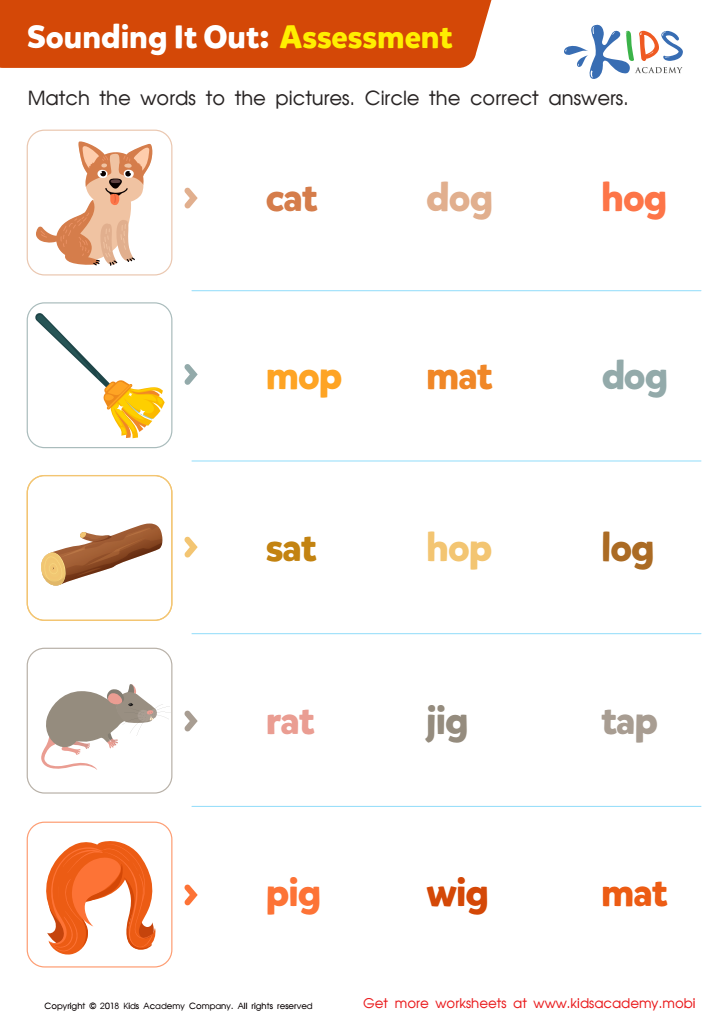
Sounding it Out: Assessment Worksheet

Sounding it Out: Assessment Worksheet

Give your little learner a fun challenge with this downloadable worksheet! With pictures to guide them, have them name the images and then sound out the words in the same row. Be careful though, as they all contain the same amount of similarly sounding letters. Once the correct word has been found, have them circle it!
Sounding it Out: Assessment Worksheet
Worksheet
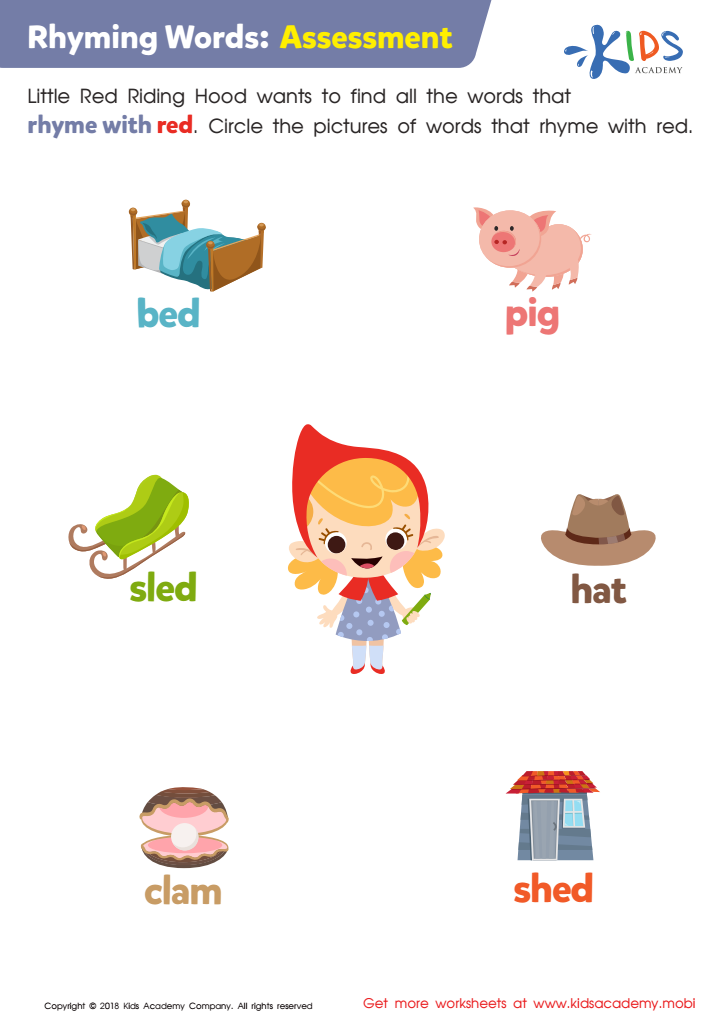
Rhyming Words: Assessment Worksheet

Rhyming Words: Assessment Worksheet

Help Little Red Riding Hood find rhyming words with "red". Download and print this worksheet. Have your child circle the rhyming words and pictures. Get them to say each word out loud and compare it to the word "red". When they're done, review the answers and talk about any words that don't rhyme.
Rhyming Words: Assessment Worksheet
Worksheet
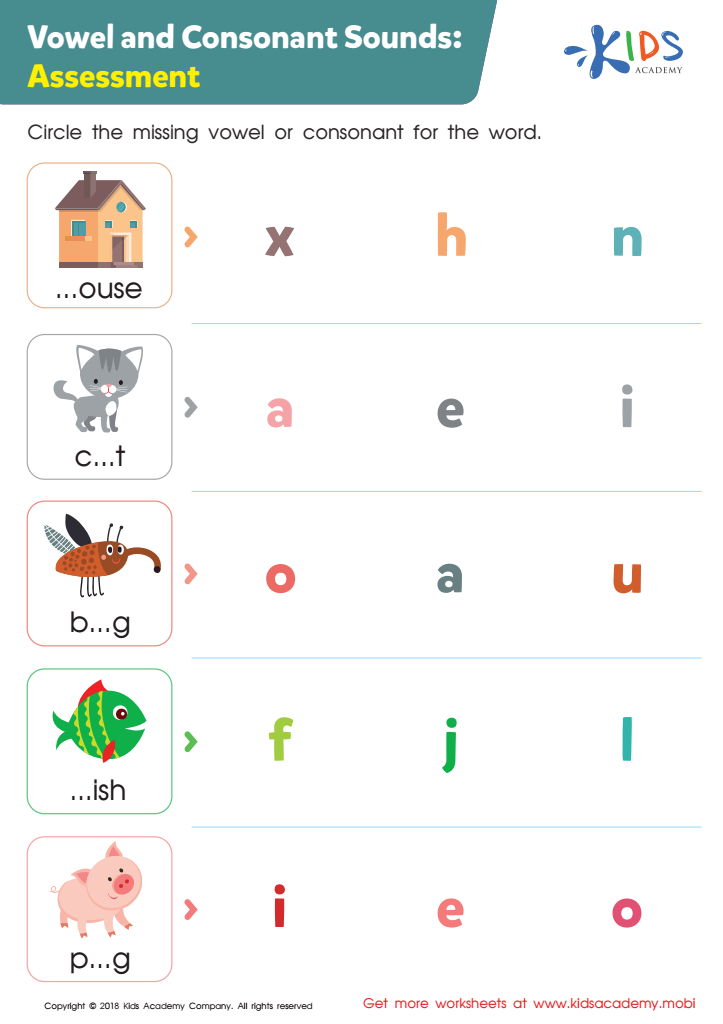
Vowel and Consonant Sounds: Assessment Worksheet

Vowel and Consonant Sounds: Assessment Worksheet

Test young elementary students on vowel and consonant sounds with this friendly phonics assessment worksheet. Get kids to name each image and look at the word underneath. Ask them to sound out the word, then circle the missing letter to complete. This will help assess their knowledge and skills!
Vowel and Consonant Sounds: Assessment Worksheet
Worksheet
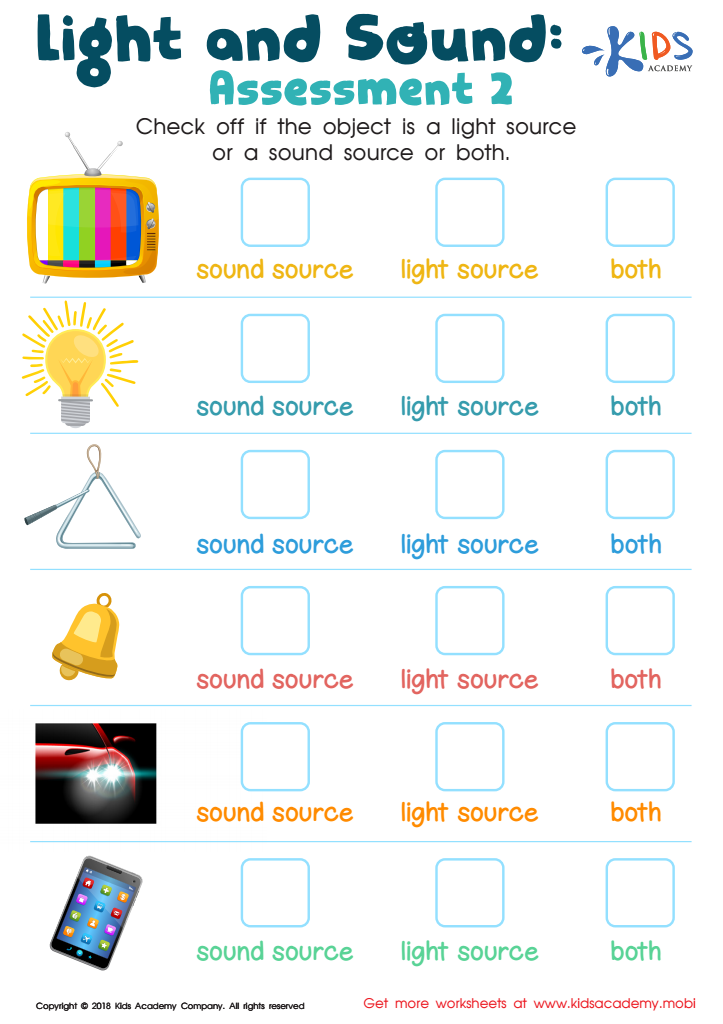
Light and Sound: Assessment 2 Worksheet

Light and Sound: Assessment 2 Worksheet

This worksheet introduces your kids to light and sound, with common sources of each. Identify the objects and help them check if it's a light source, a sound source, or both. Colourful and simple, it's a great way to teach your little ones! (80 words)
Light and Sound: Assessment 2 Worksheet
Worksheet
Matter: Assessment 2 Worksheet

Matter: Assessment 2 Worksheet

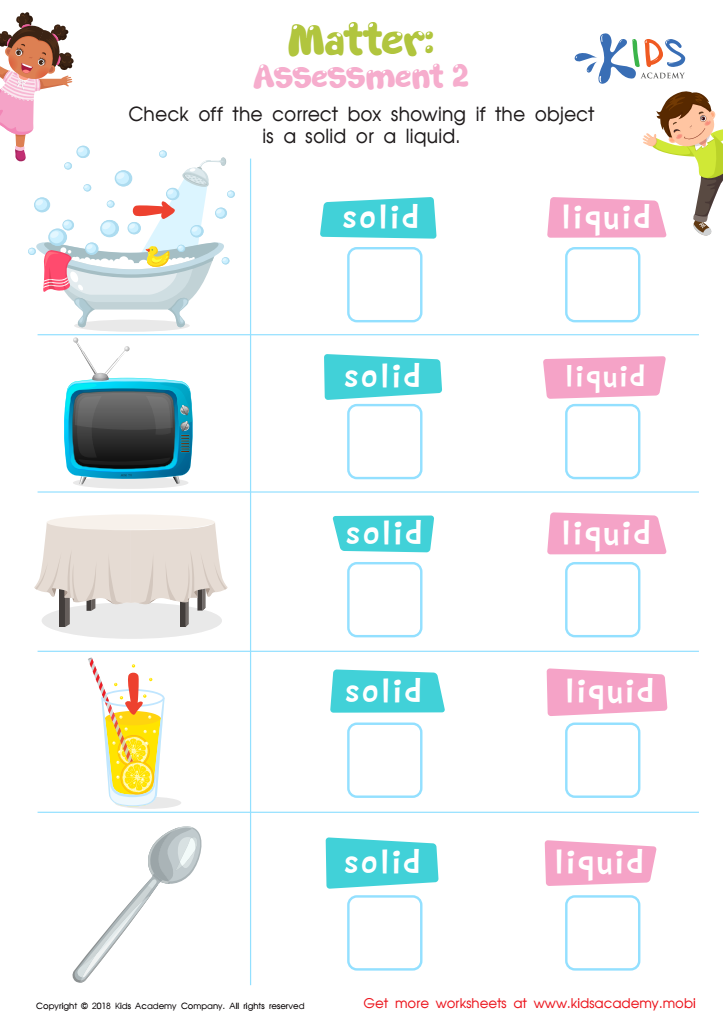
Identify the five objects in this worksheet as either solid or liquid. Ask your kids to check the correct box. Melting changes solids to liquids while freezing transforms liquids to solids.
Matter: Assessment 2 Worksheet
Worksheet
Matter: Assessment 1 Worksheet

Matter: Assessment 1 Worksheet

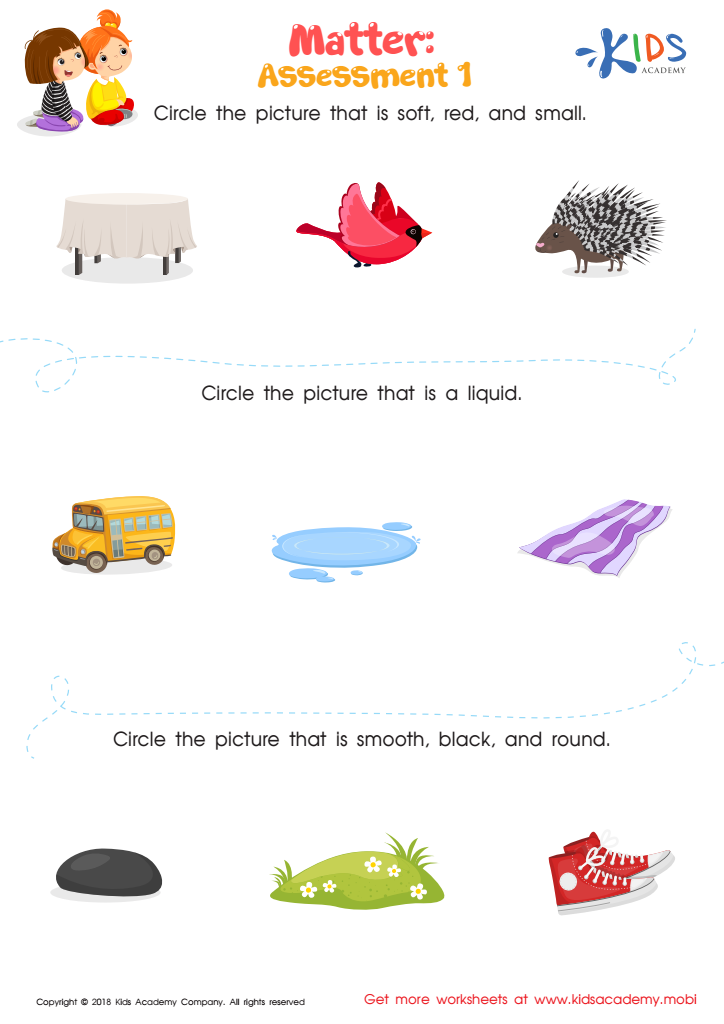
Have your children learn that anything that has weight and takes up space is matter. Examples include buses, tables, people, animals, and more. Use this worksheet to help them identify the objects and circle the soft, red, and small one; the liquid; and the smooth, black, and round one.
Matter: Assessment 1 Worksheet
Worksheet
Let's Check Long Vowels: Assessment Worksheet

Let's Check Long Vowels: Assessment Worksheet

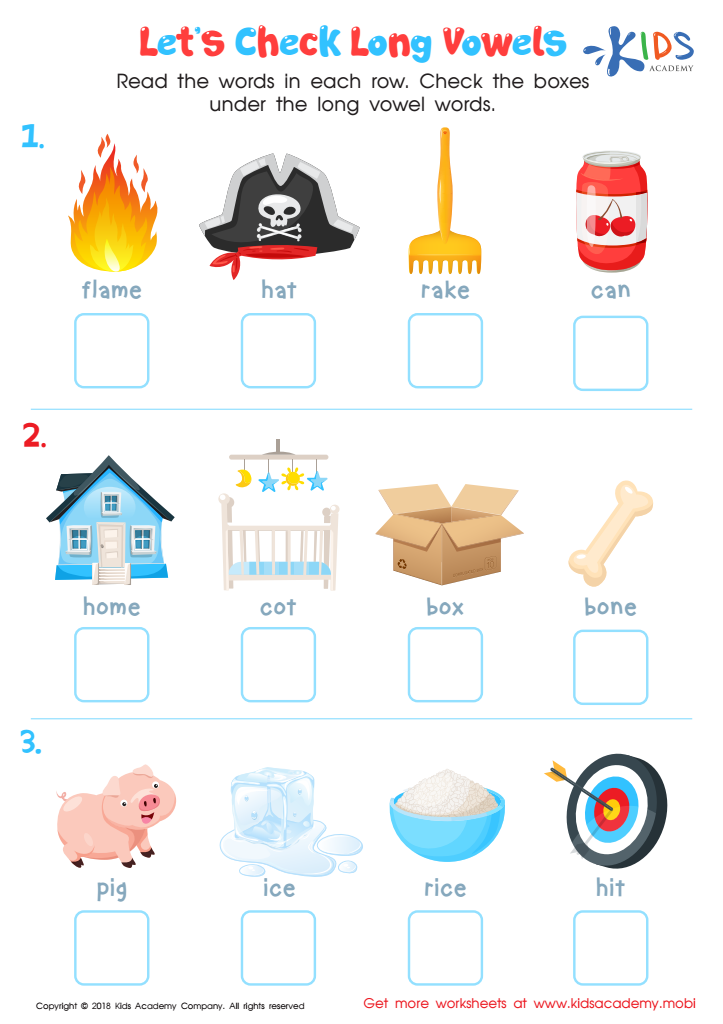
This worksheet helps your child identify objects and learn long vowel sounds. Ask them to say the names of the four objects in each row. Then, help them check the boxes to confirm they know the long vowel sounds. This will help them develop their reading skills.
Let's Check Long Vowels: Assessment Worksheet
Worksheet
Let's Look! Assessment Worksheet

Let's Look! Assessment Worksheet

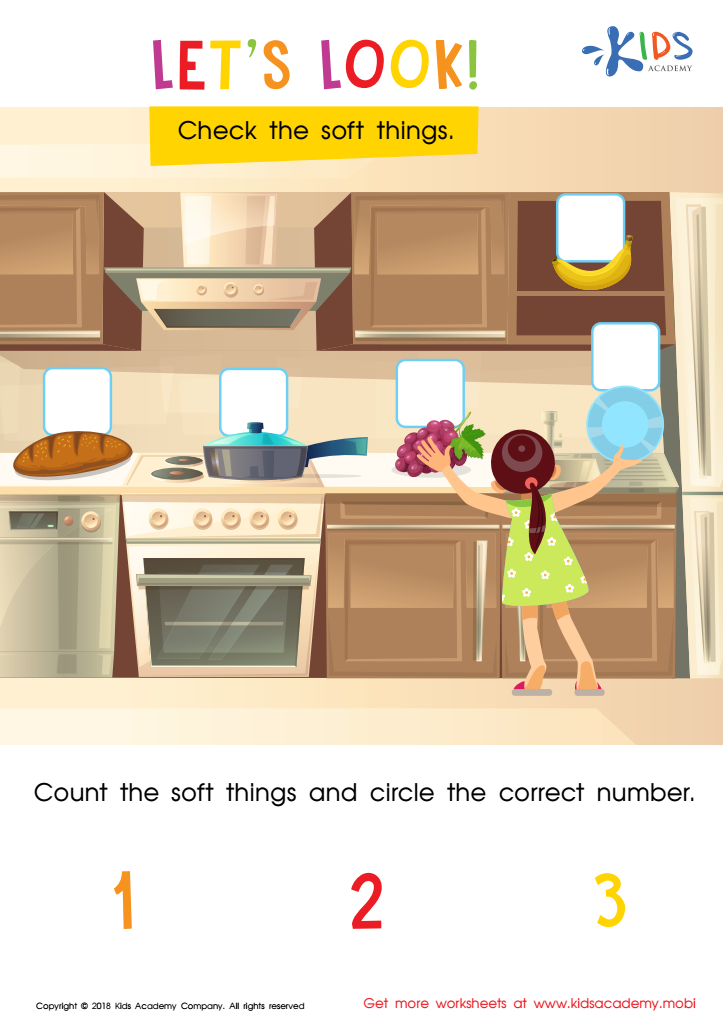
Have your child look at the picture in the printout and name the objects. Ask which ones are soft and hard and have them count the soft objects and circle the number. This worksheet will engage your child's thinking and teach them about texture.
Let's Look! Assessment Worksheet
Worksheet
Let's Check! Assessment Worksheet

Let's Check! Assessment Worksheet

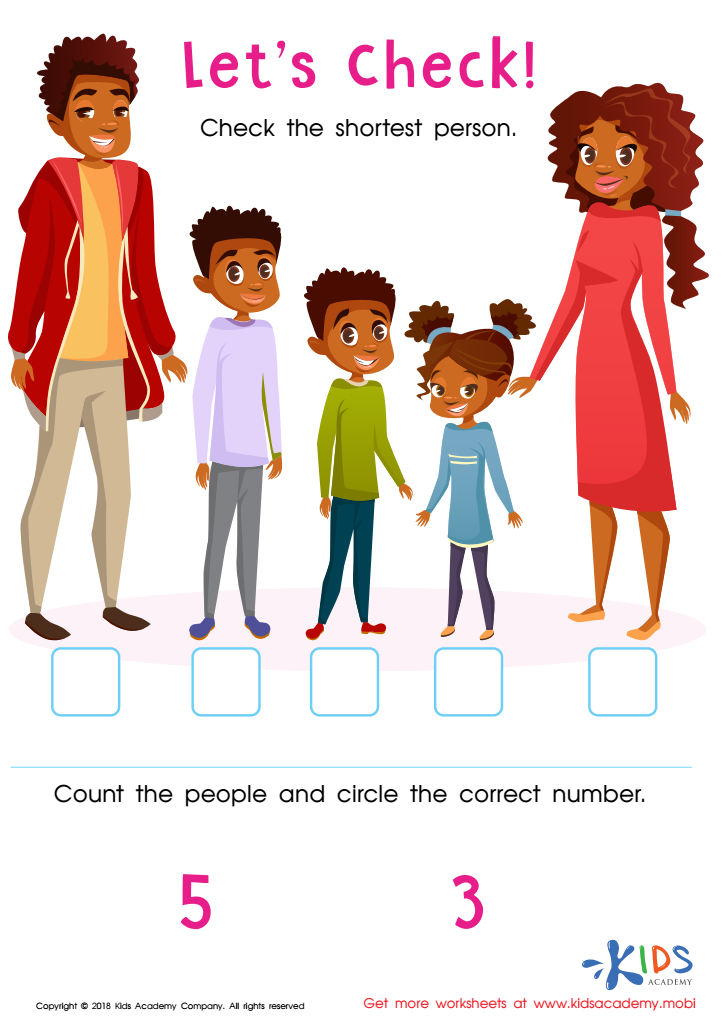
Check your child's understanding of height with this worksheet. Ask them to sort the objects in order of size and identify the tallest and shortest member of the family in the picture. See if they can correctly arrange the items from tallest to shortest.
Let's Check! Assessment Worksheet
Worksheet
Force and Interactions: Assessment 1 Worksheet


Force and Interactions: Assessment 1 Worksheet

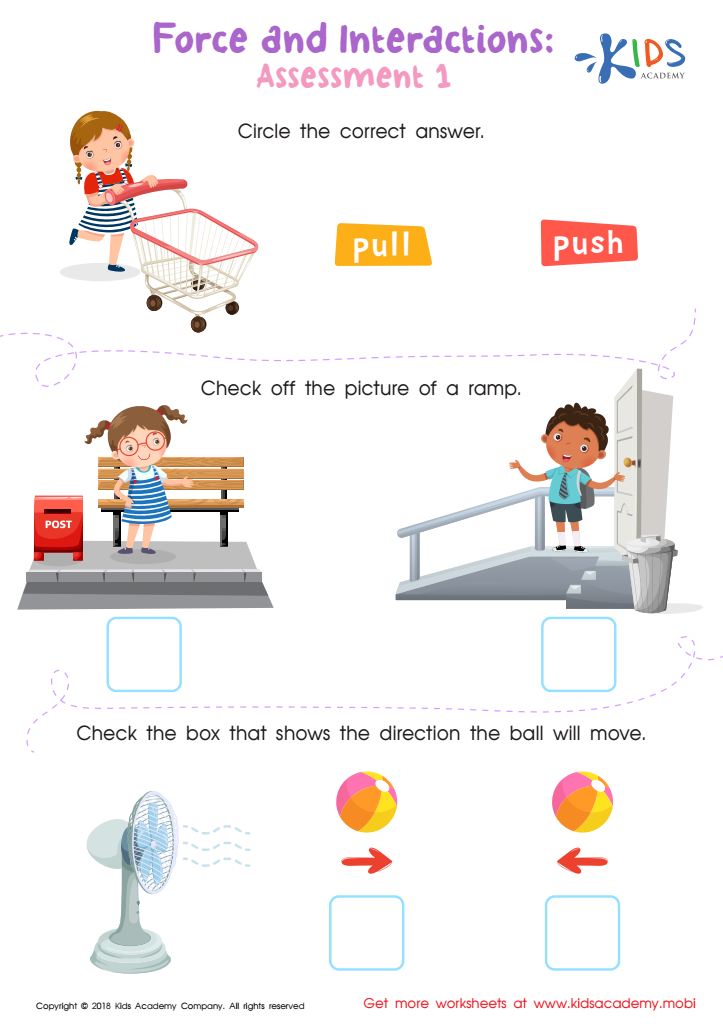
Test your students' knowledge of pushing, pulling, ramps and wind with this worksheet. The first task requires them to identify push or pull pictures. The second asks them to identify a ramp and the third to explain which direction a ball will move when exposed to wind.
Force and Interactions: Assessment 1 Worksheet

Worksheet


Normal Knowledge Check activities are essential for children aged 4-7 because they play a crucial role in early childhood development. At this age, children are rapidly acquiring new skills and information, and these activities help assess their understanding of key concepts. Parents and teachers should care about these checks for several reasons.

Firstly, they provide insight into a child's cognitive and emotional development, allowing adults to identify areas of strength and weakness. Early intervention can then be implemented to address any gaps, ensuring children are on track for future learning.

Secondly, Normal Knowledge Check activities are designed to be engaging and interactive, making learning enjoyable. This positive association with learning fosters a lifelong love for education and curiosity about the world.

Finally, these activities encourage communication between parents, teachers, and children. Discussing results can enhance parental involvement in education and foster collaborative strategies tailored to each child's needs.

Investing attention and resources into Normal Knowledge Check activities benefits children's educational journeys, promoting holistic development and laying a solid foundation for future academic success. In short, these checks not only monitor progress but also empower children to thrive in their learning environments.