Middle Vowel Worksheets for Ages 3-8
4 filtered results
-
From - To
Discover our engaging "Middle Vowel Worksheets" specially designed for children aged 3 to 8! These interactive resources help young learners recognize and practice middle vowel sounds, an essential skill in language development. Our worksheets come in a variety of fun and colorful formats, making the learning process enjoyable and effective. With activities like filling in the blanks, matching words, and identifying sounds, children will enhance their phonemic awareness and improve their reading skills. Perfect for classrooms or at-home learning, our middle vowel worksheets provide the ideal support for early literacy. Start your child's journey to reading success today!
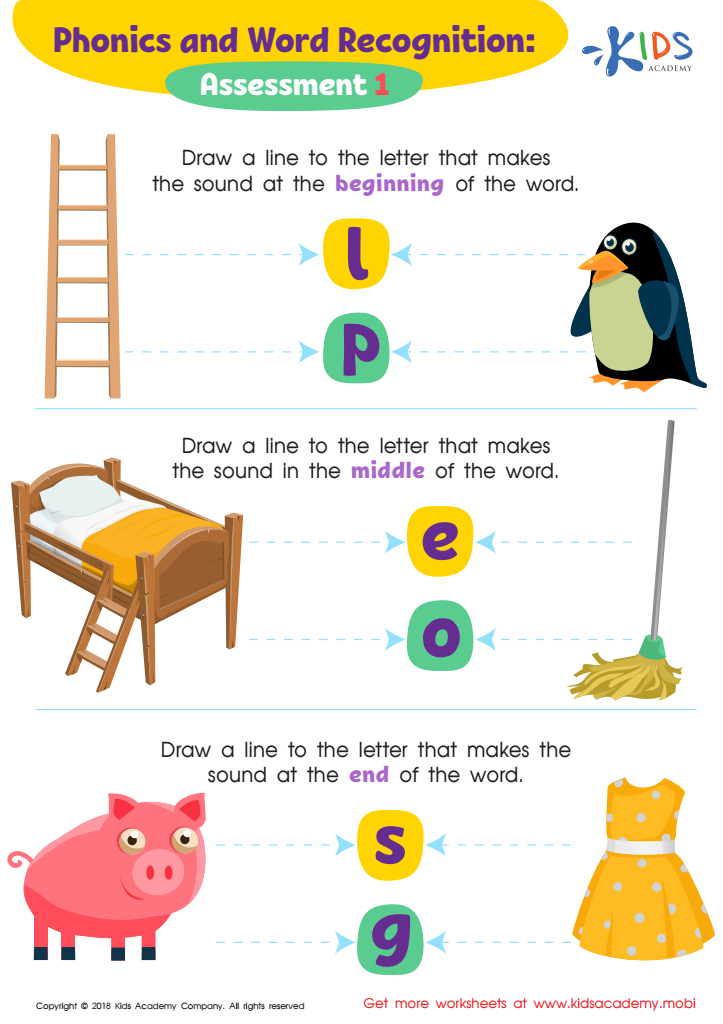
Phonics and Word Recognition: Assessment 1 ELA Worksheet
 Assign to My Students
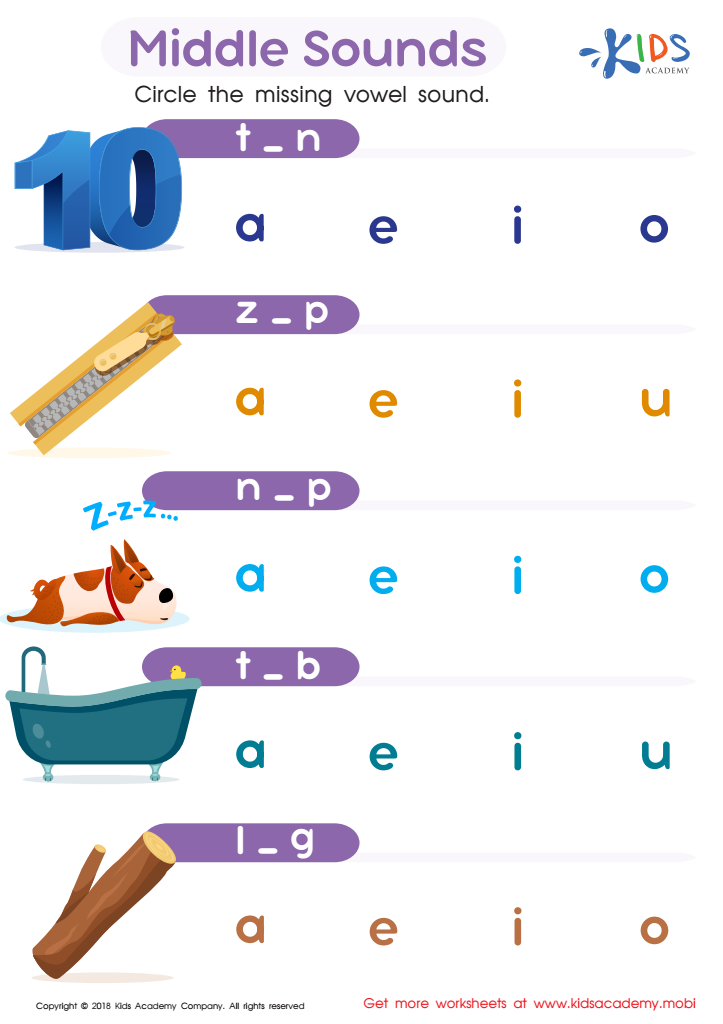
Middle Sounds Worksheet
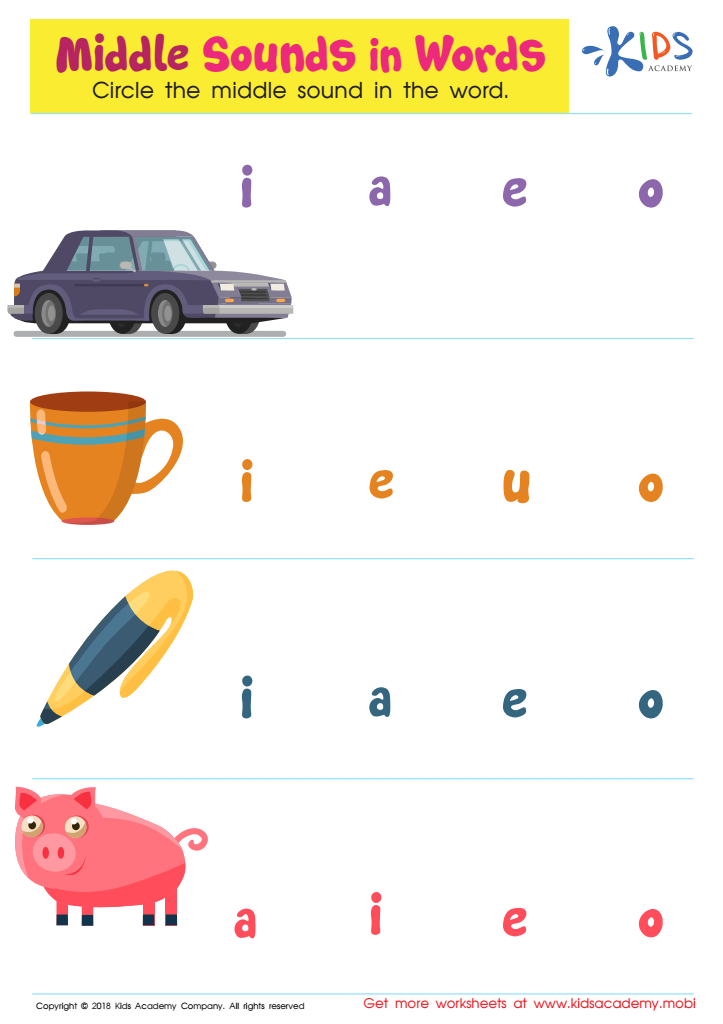
Middle Sounds in Words Worksheet
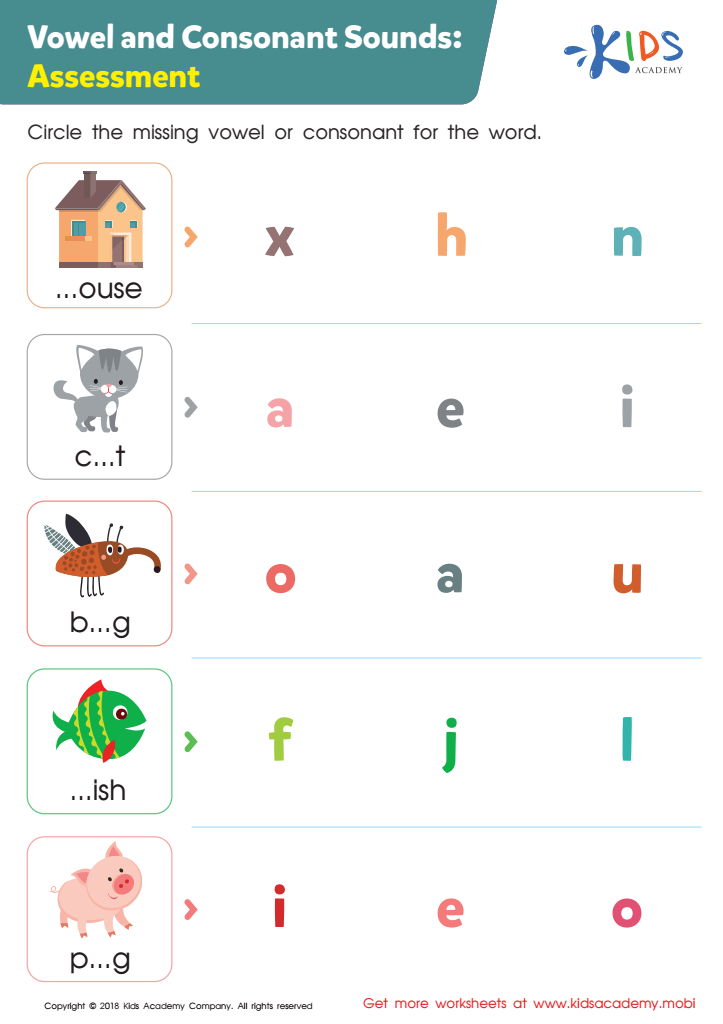
Vowel and Consonant Sounds: Assessment Worksheet



Middle vowel sounds are a crucial aspect of early literacy development for children aged 3-8, significantly influencing their reading and language skills. Parents and teachers should care about middle vowels because they form the foundation for phonemic awareness, which is essential for developing reading fluency and comprehension. Recognizing and manipulating middle vowel sounds helps children understand the structure of words, enabling them to decode unfamiliar words more easily.
Furthermore, middle vowels are central to phonics instruction, as they often change the meaning of words. For example, changing the middle vowel in "cat" to "cot" alters the word entirely. This distinction is vital for the development of strong language skills, allowing learners to expand their vocabulary and improve their spelling.
Additionally, focusing on middle vowels promotes critical auditory discrimination, boosting children's ability to hear and identify sounds within words. This skill not only aids in reading but also enhances their overall communication abilities.
Encouraging exploration of middle vowels through engaging activities, songs, and games can make learning enjoyable, encouraging a positive attitude towards literacy. When parents and teachers prioritize this aspect of language development, they lay a robust foundation for students' educational success.