2D Shapes Worksheets for Ages 3-8 - Page 4
75 filtered results
-
From - To
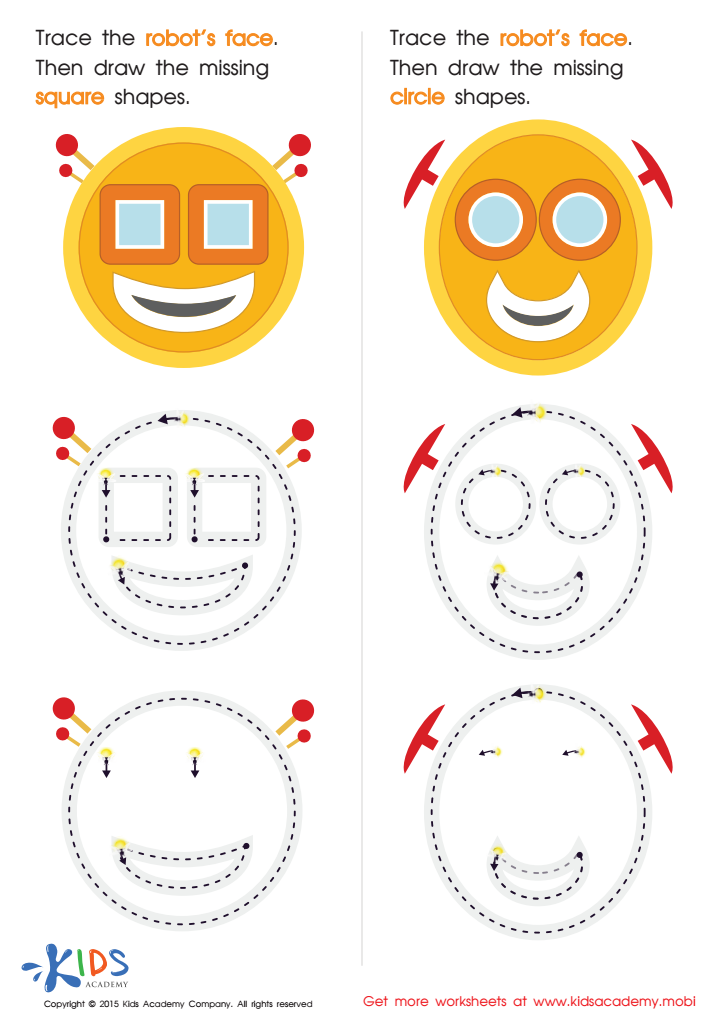
Practicing to Draw Circles And Squares Printable
 Assign to My Students


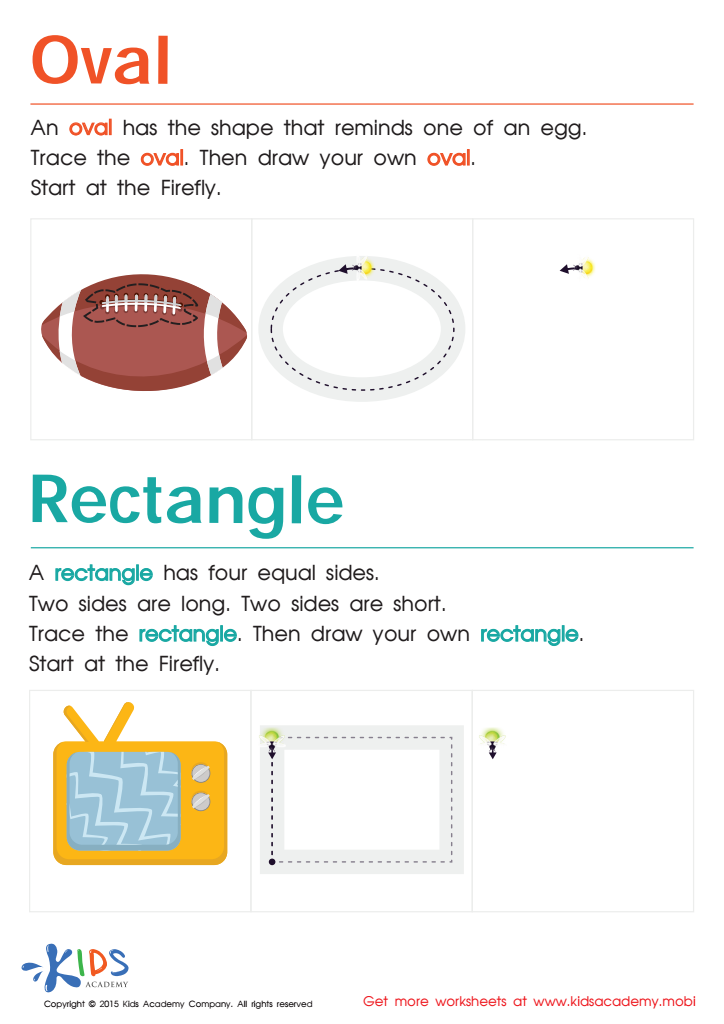
Easy Drawing of Ovals And Rectangles Worksheet
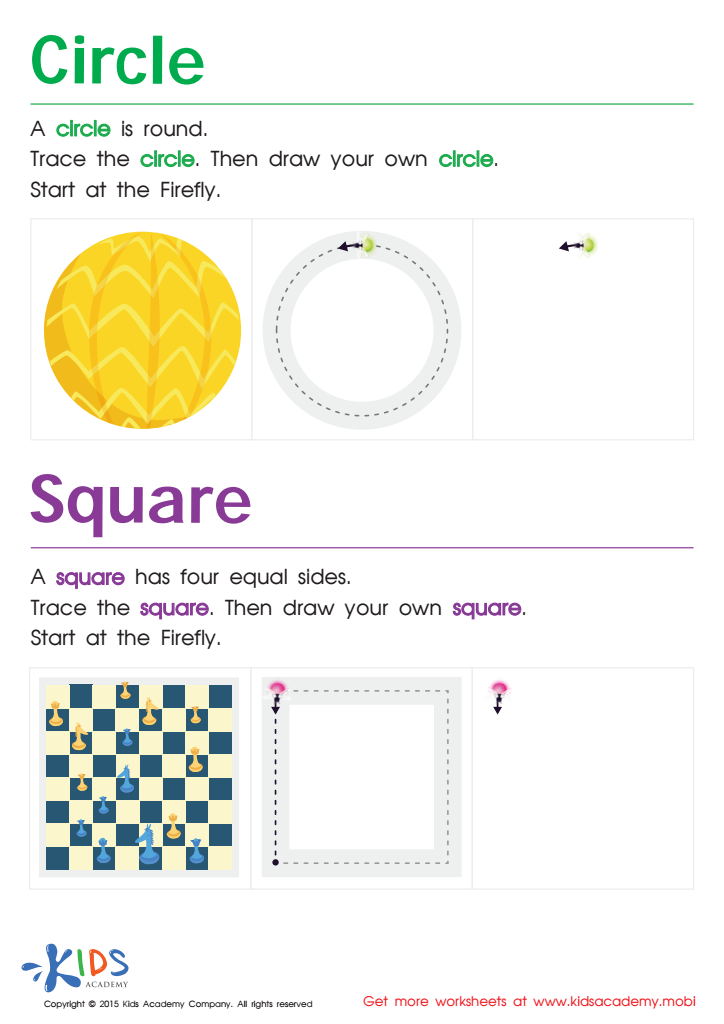
Trace And Draw a Circle And a Square Worksheet








Parents and teachers should prioritize the understanding of 2D shapes for children aged 3-8 due to their fundamental role in early mathematical learning and cognitive development. Recognizing shapes enhances a child's ability to categorize and make sense of their environment. When children learn about shapes, they engage in critical thinking and problem-solving skills, as identifying shapes requires them to observe, analyze, and understand spatial relationships.
Additionally, shape recognition lays the groundwork for more complex mathematics, such as geometry and measurement, introduced later in their education. By engaging with 2D shapes through hands-on activities like drawing, crafting, or playing with shape blocks, children develop fine motor skills and spatial awareness.
Moreover, learning about shapes fosters creativity and imagination. It encourages children to see the world through a geometrical lens, enhancing their ability to construct and represent their ideas visually. Interactive shape games and puzzles also promote social skills, as they often encourage teamwork and communication among peers.
In essence, teaching 2D shapes is integral not only for academic success but also for holistic child development, making it pertinent for parents and teachers to foster a solid foundation in this area.