Measurement Worksheets for Ages 7-9 - Page 4
81 filtered results
-
From - To
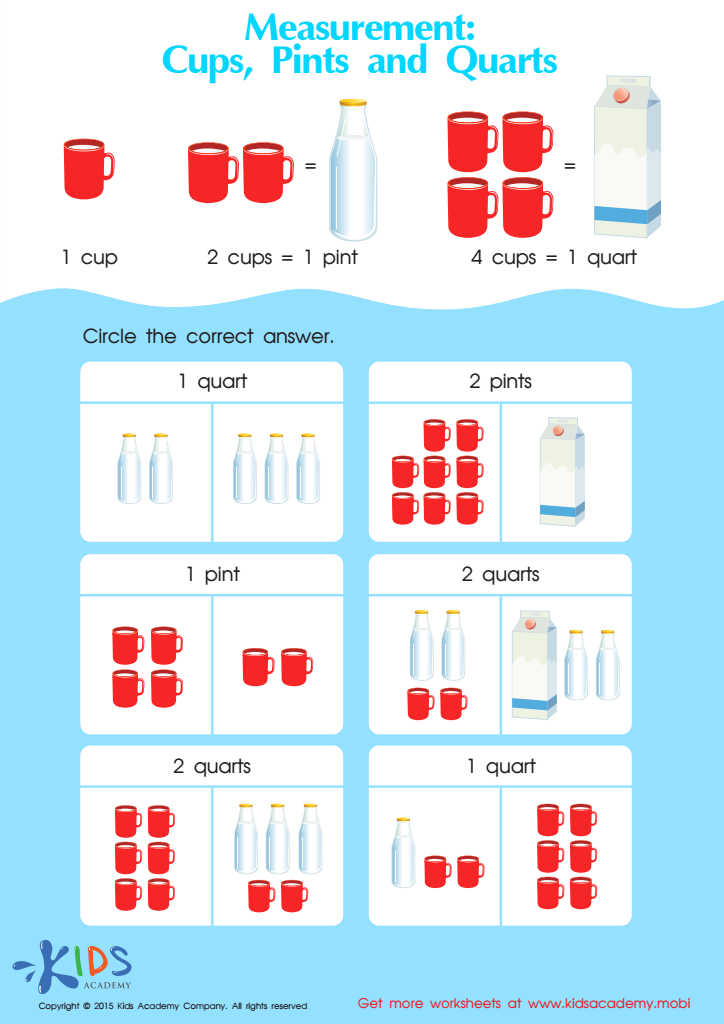
Cups, Pints and Quarts Worksheet
 Assign to My Students
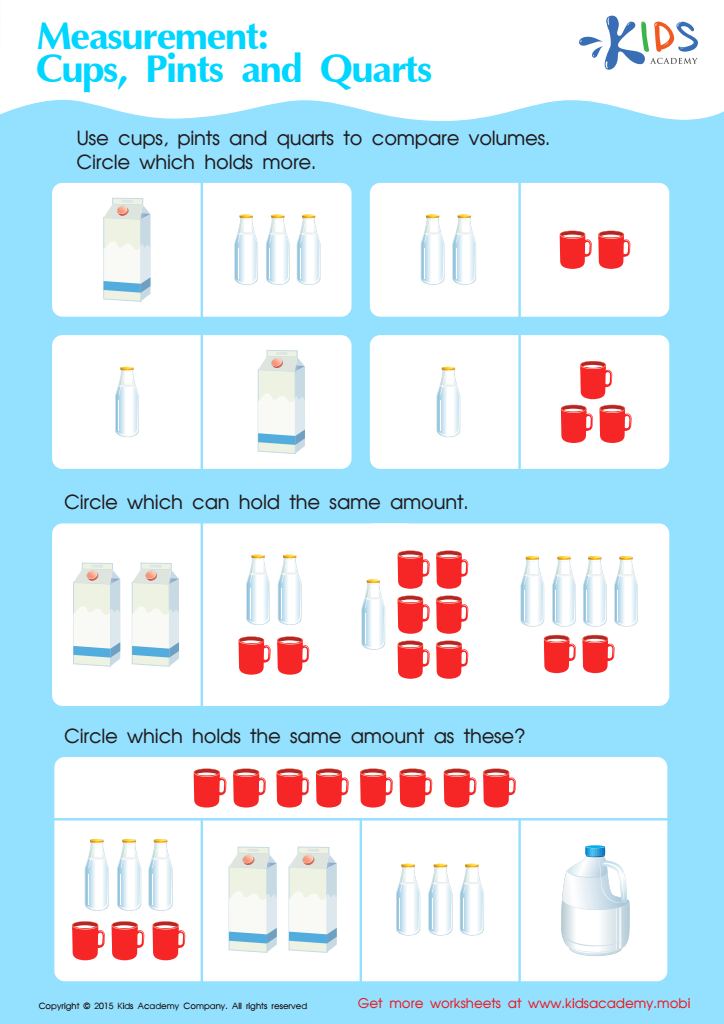
Measurement: Compare Volumes Worksheet
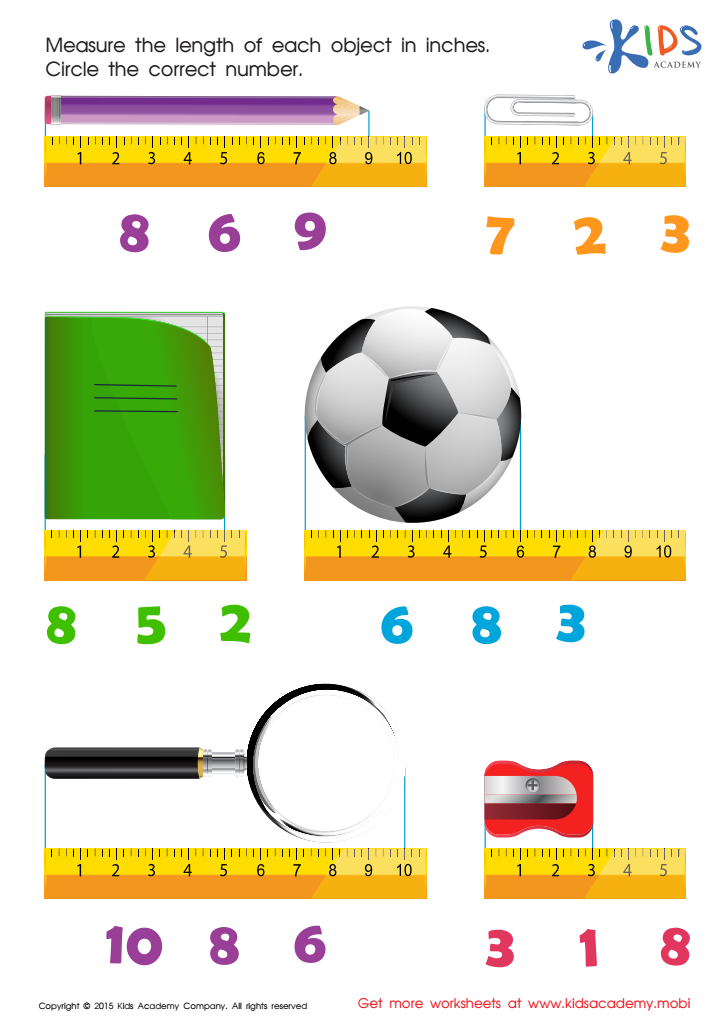
Learning measuring objects in inches Worksheet
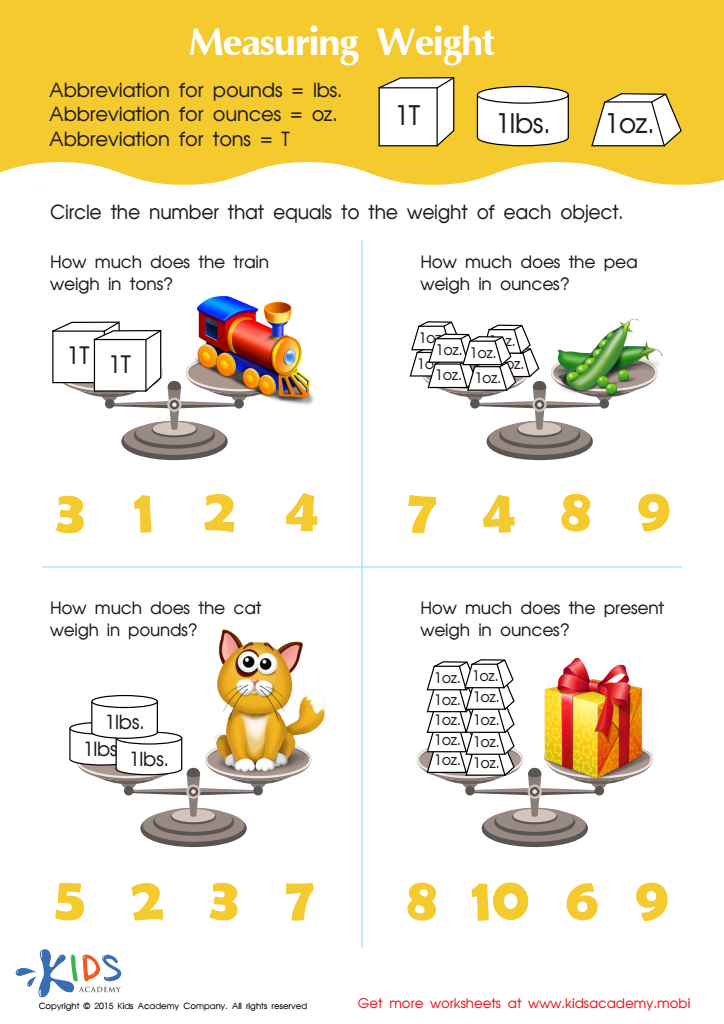
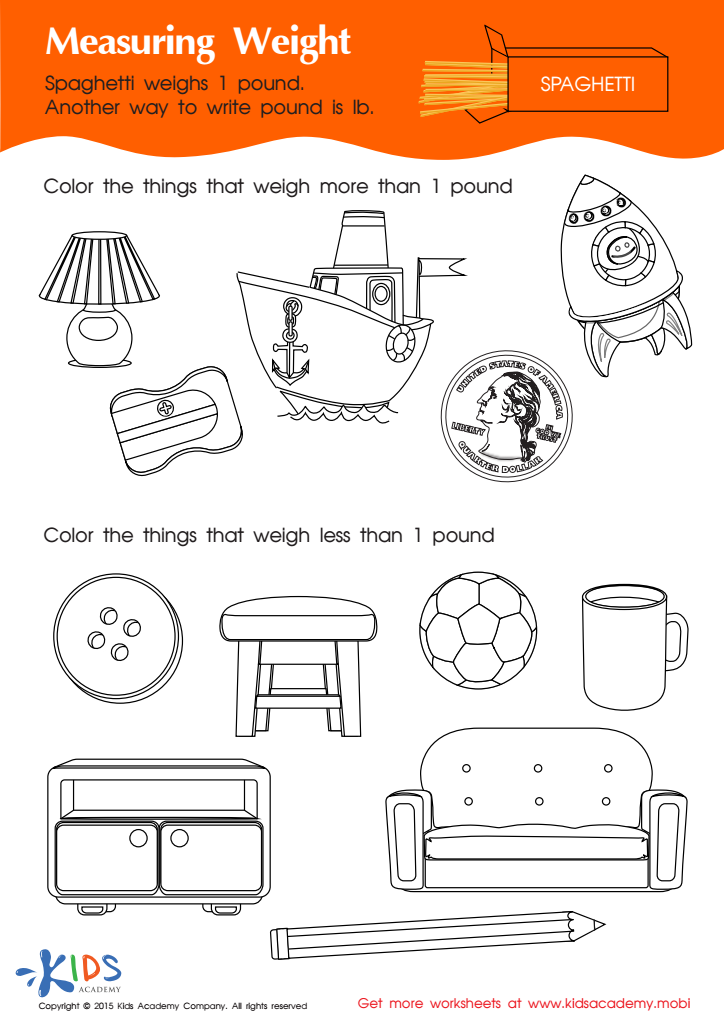
Measuring Weight in Ounces, Pounds and Tons Worksheet
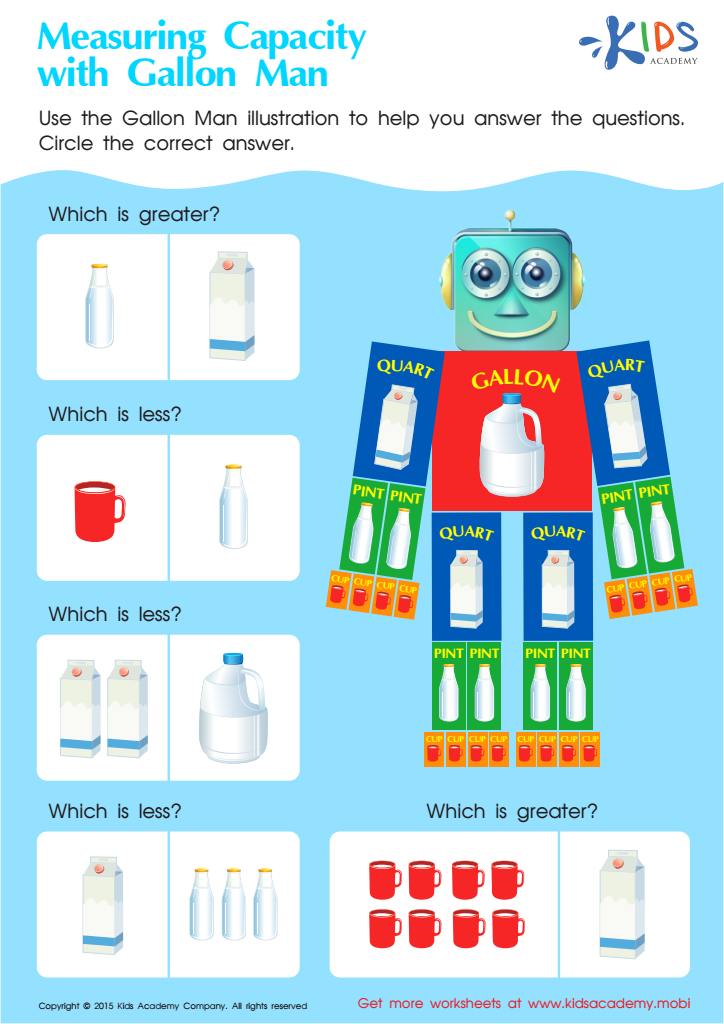
Measurement: Measuring Capacity with Gallon Man Worksheet
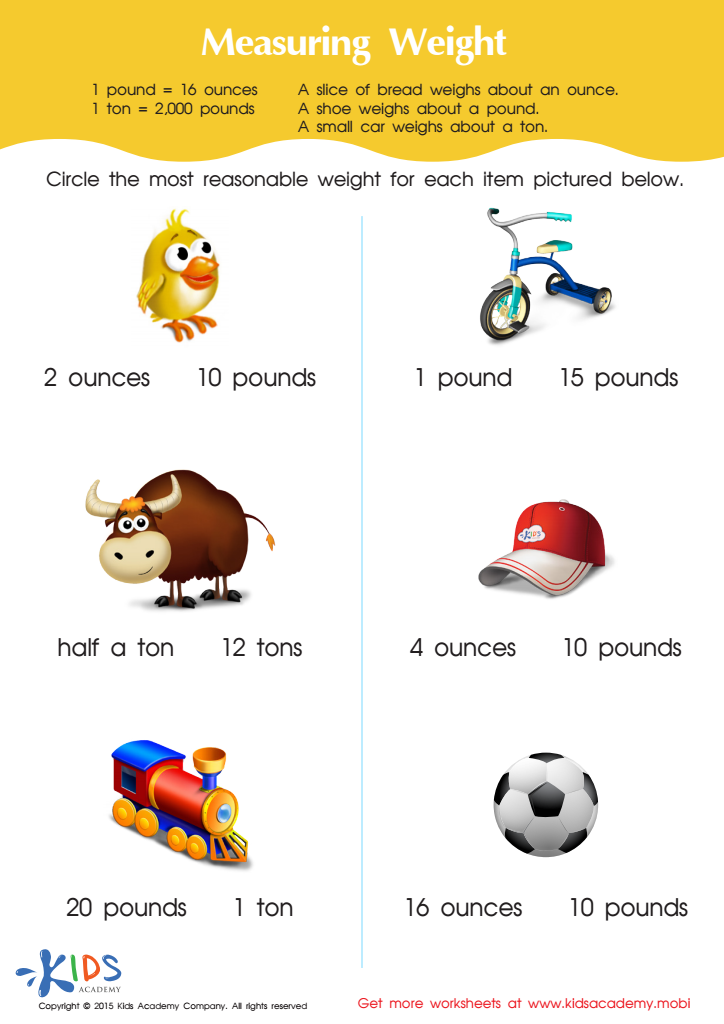
Measuring Weight in Ounces, Pounds and Tons (Part 2) Worksheet
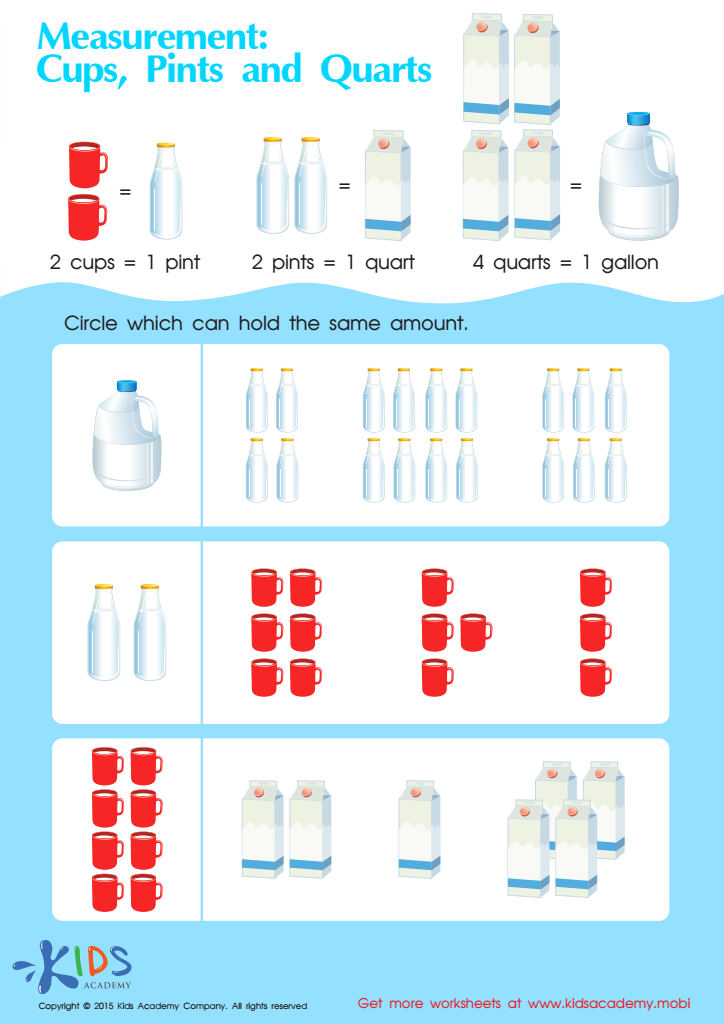
Cups, Pints and Quarts 2 Worksheet
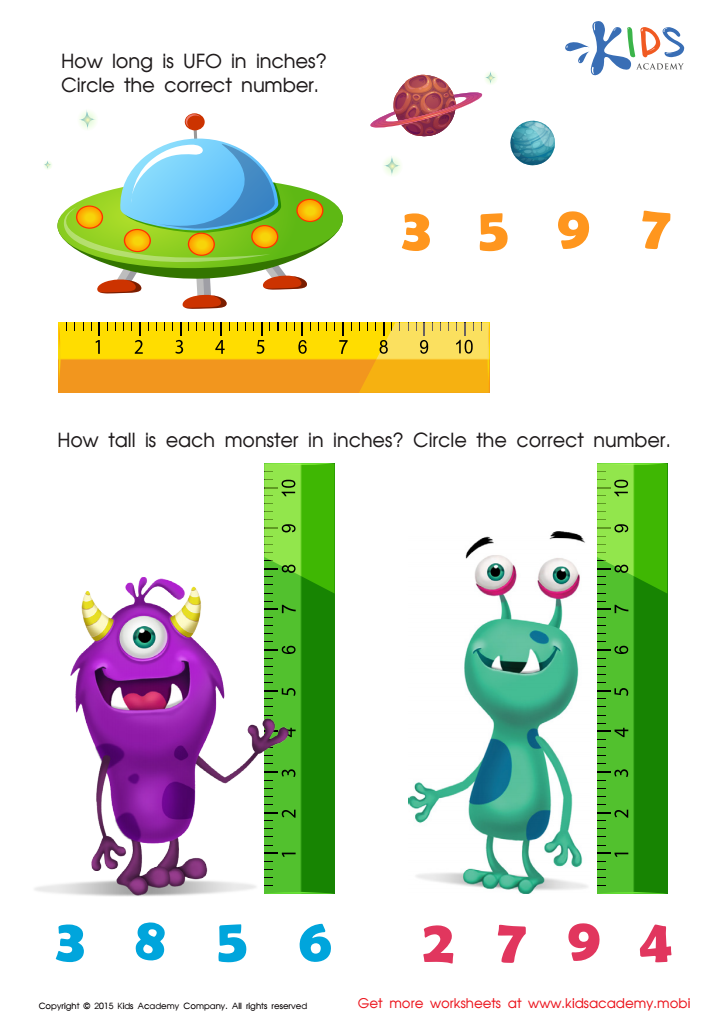
Measuring in Inches Worksheet








Measurement is a fundamental mathematical concept that serves as a gateway to understanding the world. For children aged 7-9, mastery of measurement lays a crucial foundation for their academic and everyday lives. First and foremost, measurement skills develop critical mathematical reasoning. When children learn to measure length, weight, or volume, they engage in problem-solving and spatial awareness, enhancing their cognitive abilities.
This age group is often exploring real-world applications, making understanding measurement vital for practical tasks. For instance, measuring ingredients for a recipe or understanding distances while playing sports blends learning with daily activities, fostering a love for math.
Moreover, measurement introduces significant concepts such as units and conversions, which are building blocks for future math topics, including geometry and arithmetic operations. These skills can spark curiosity and encourage inquiry-based learning, engaging students in hands-on activities.
From a parent and teacher perspective, cultivating measurement skills can improve children's confidence in mathematics. Engaging in measurement-based activities helps children not only excel in math but also equips them with critical life skills, Paving the way for academic success and informed decision-making in the future.








