English Language Arts online worksheets for Kindergarten - Page 2
275 filtered results
Difficulty Level
Grade
Age
-
From - To
Subject
Activity
Standards
Favorites
With answer key
Interactive
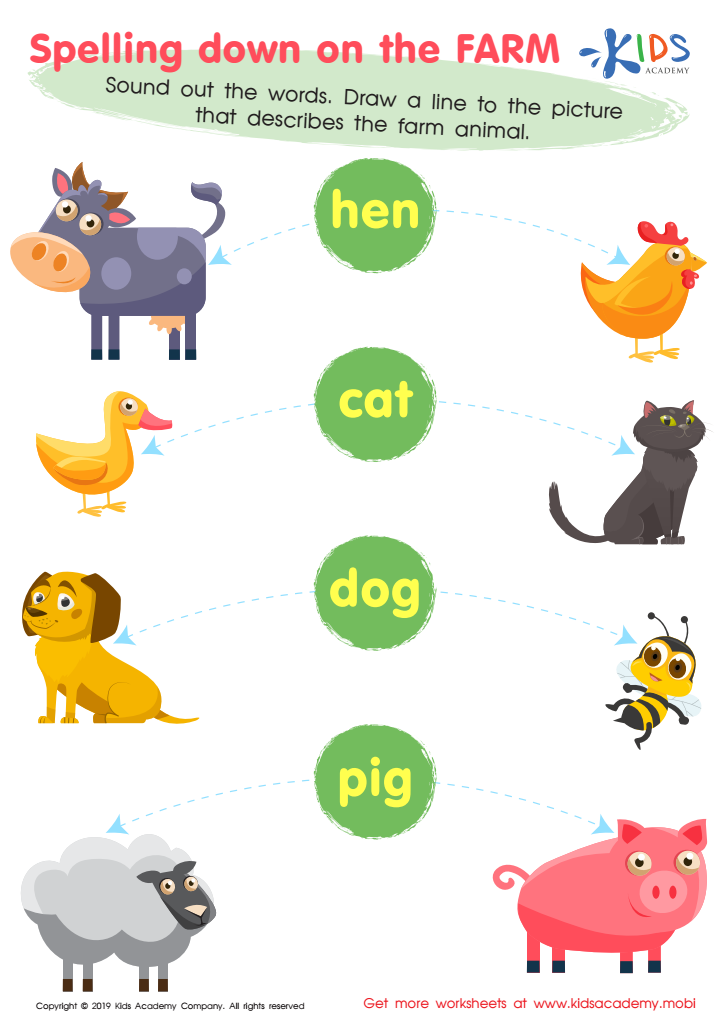
Spelling Down on the Farm Worksheet
Want to help your kids nail their spelling? Introduce them to this farm animal worksheet! Get them to look at the animals in the tracing sheet, name them and then sound out the words. Have them draw a line to the picture that describes it. You'll be surprised at how quickly their skills improve.
 Assign to My Students
Spelling Down on the Farm Worksheet
Worksheet
Which Punctuation Mark Worksheet
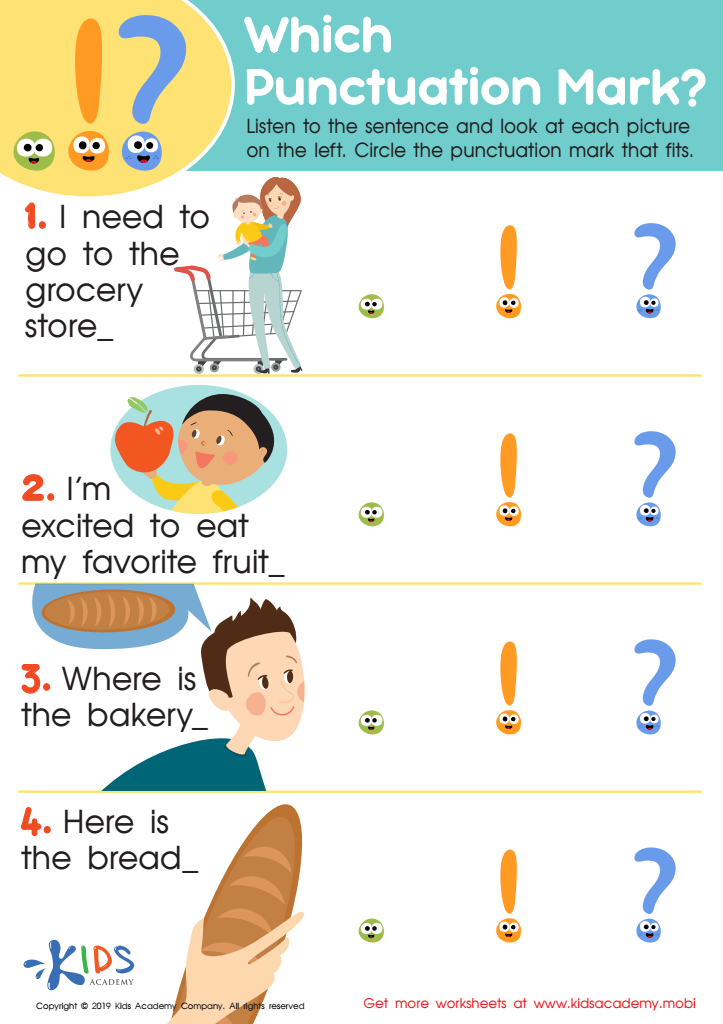
Punctuation marks are essential for expressing what we say. This worksheet asks your kindergarten student to circle the correct punctuation mark for each sentence. Read each sentence aloud and help them identify the expression needed. A picture accompanies each sentence. Enjoy! (79 words)
Which Punctuation Mark Worksheet
Worksheet
Recognize Punctuation Marks Worksheet
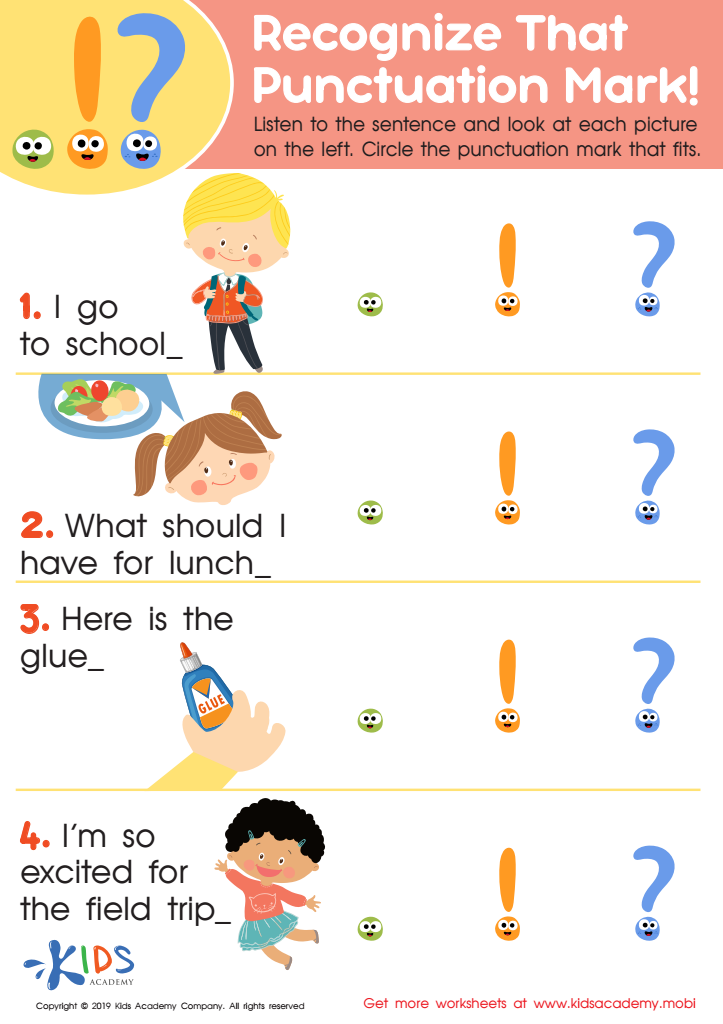
Before beginning the worksheet, ask your students to name punctuation marks they know and what they mean. Common punctuation marks are full stop, question mark and exclamation mark. Point out each one in the picture and read the sentences, helping them circle the right punctuation.
Recognize Punctuation Marks Worksheet
Worksheet
I Stands High Worksheet
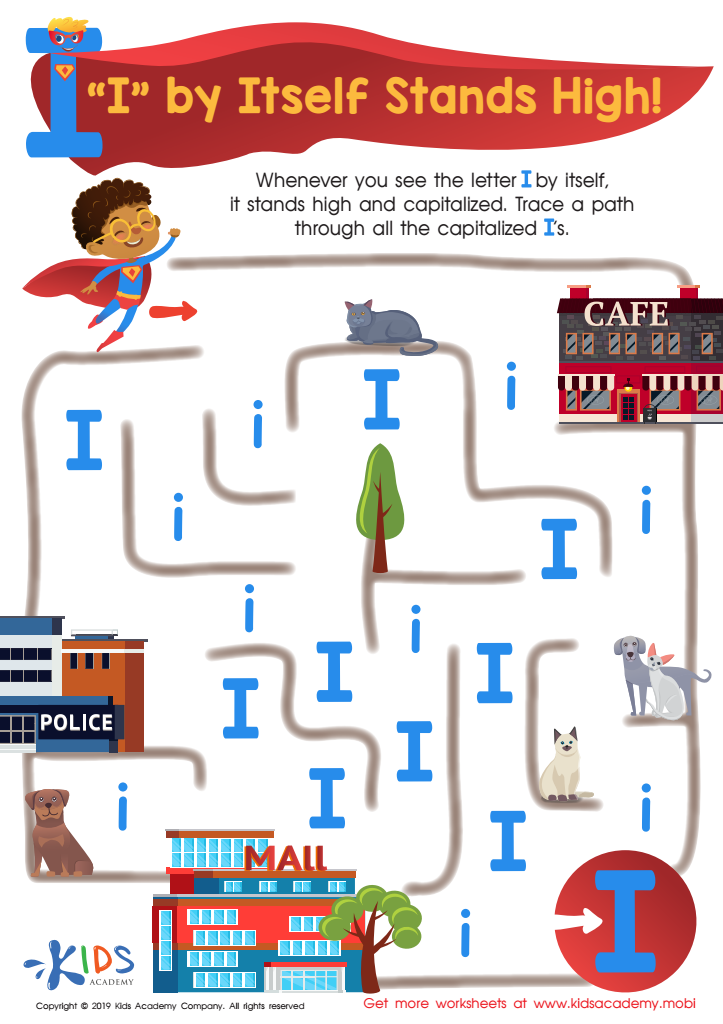
Kids can use their imagination to help a superhero find the uppercase 'I's on the 'I By Itself Stands High' worksheet. This helps children learn capitalization, and they can join the superhero in flying over a city of cats, dogs and buildings to locate the needed letters.
I Stands High Worksheet
Worksheet
How to Capitalize Worksheet
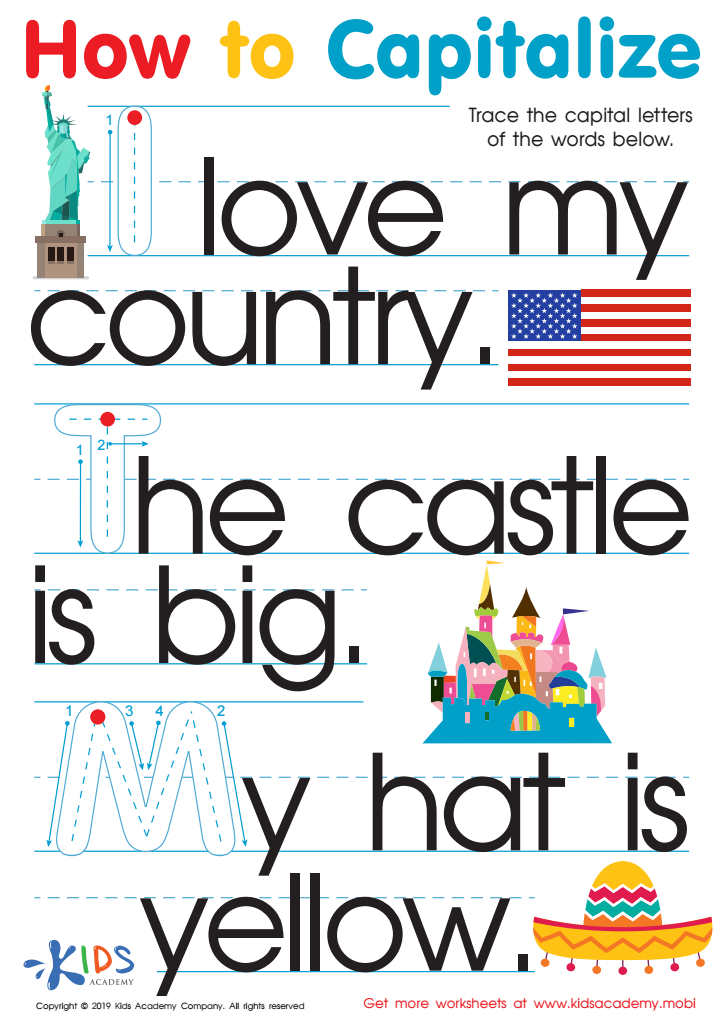
Capitalizing letters is important in English. This worksheet will help your child learn how to write them. Words such as "the" and "I" will be covered, with visuals such as the Statue of Liberty, the American Flag, a castle, and a sombrero. The "How to Capitalize" PDF is a great way to sharpen your child's writing and aid their success!
How to Capitalize Worksheet
Worksheet
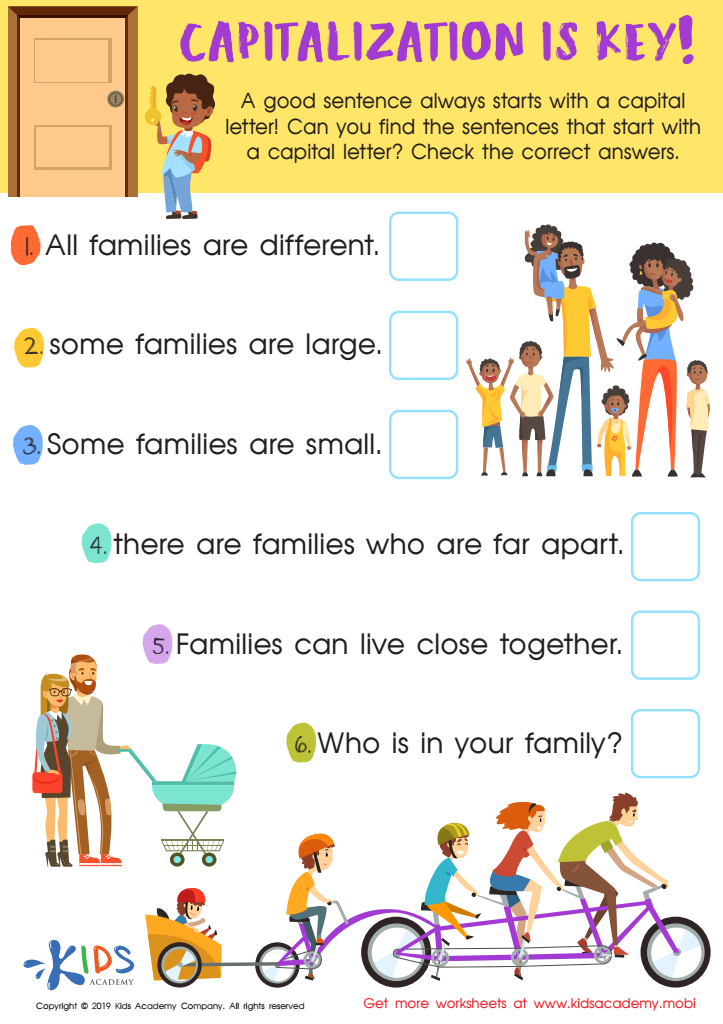
Capitalization Key Worksheet
Help your kids learn the importance of capitalizing at the start of sentences with this fun PDF! It features 6 family-themed sentences, with pictures, that your students have to find the correctly capitalized versions of. Perfect for young learners, this worksheet adds a fun twist to learning.
Capitalization Key Worksheet
Worksheet
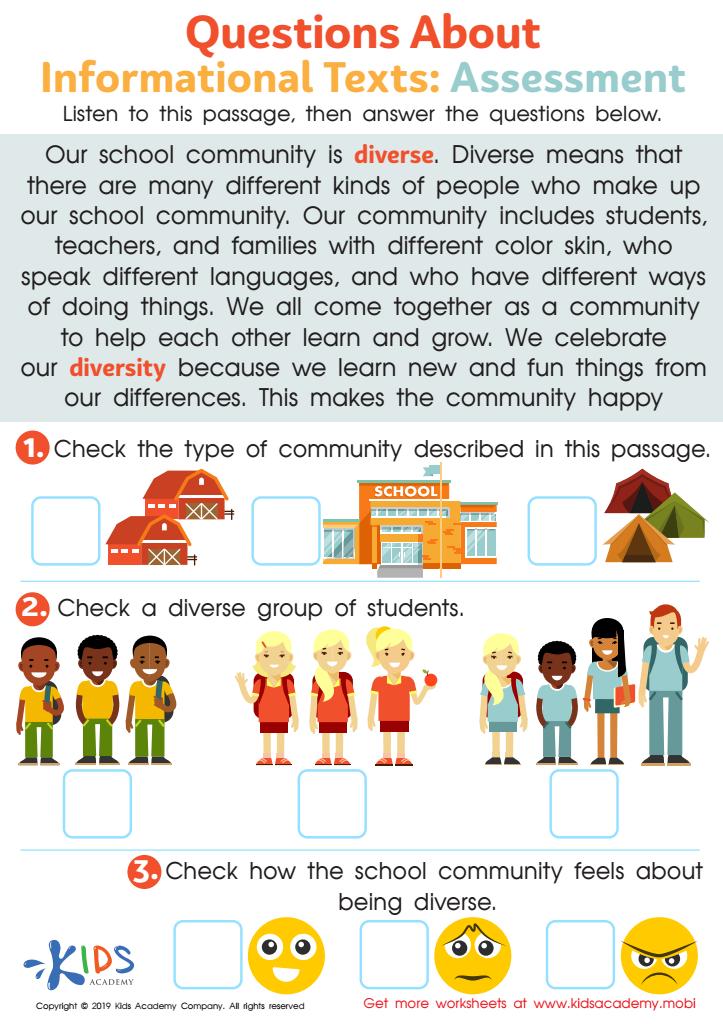
Questions About Informational Texts: Assessment 1 Worksheet
Ask your students: What comes to mind when we talk about a community? What different habits do people practice? What do fellow students do that seems strange? Read this passage aloud to your kindergartners and make sure they understand it. Then, answer the questions at the bottom of the page. (80 words)
Questions About Informational Texts: Assessment 1 Worksheet
Worksheet
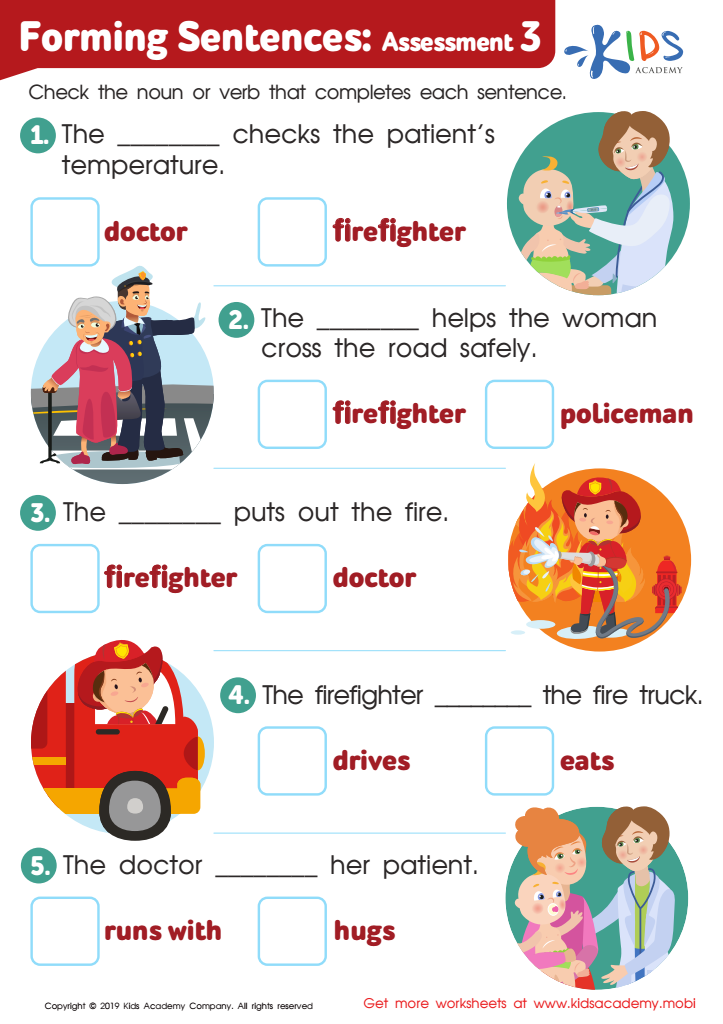
Forming Sentences: Assessment 3 Worksheet
Students must master sentence formation to be successful English learners. After grasping the ABCs and basic words, the next step is to construct sentences using those words. Worksheets like this one can help teach kids how to make sentences; they need to look at the pictures and select the correct noun or verb to complete each sentence.
Forming Sentences: Assessment 3 Worksheet
Worksheet
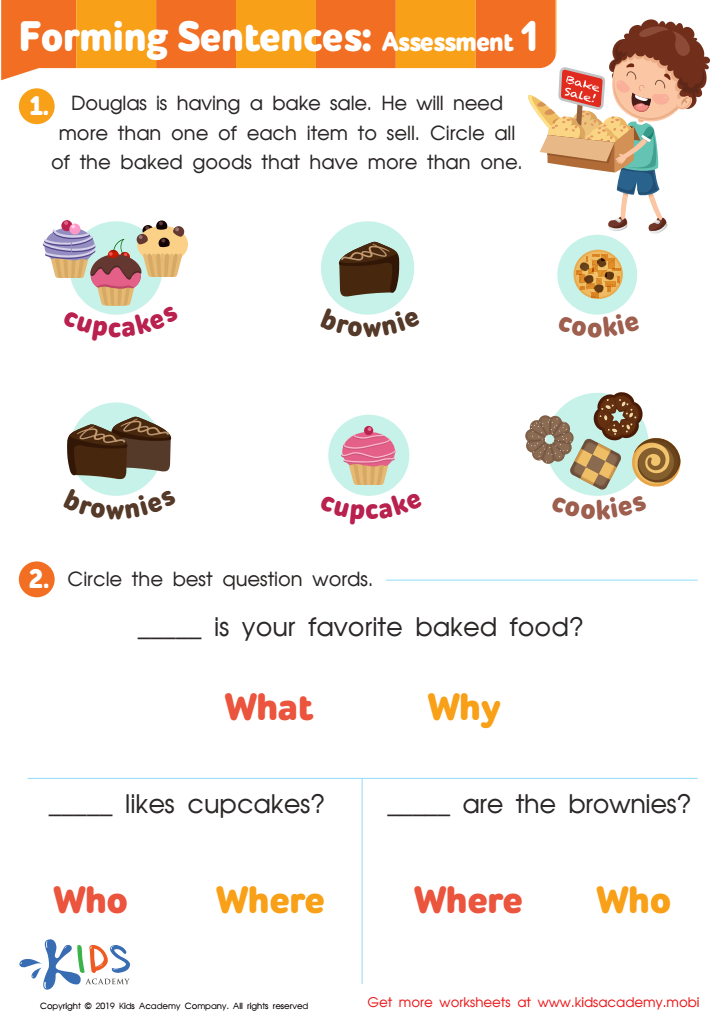
Forming Sentences: Assessment 1 Worksheet
Bake sales are great fun, offering a variety of goodies and treats! Kids also have a chance to make a bit of money. Help your students circle all the yummy baked goods with more than one in this worksheet - Douglas is hosting a bake sale and needs items in bulk!
Forming Sentences: Assessment 1 Worksheet
Worksheet
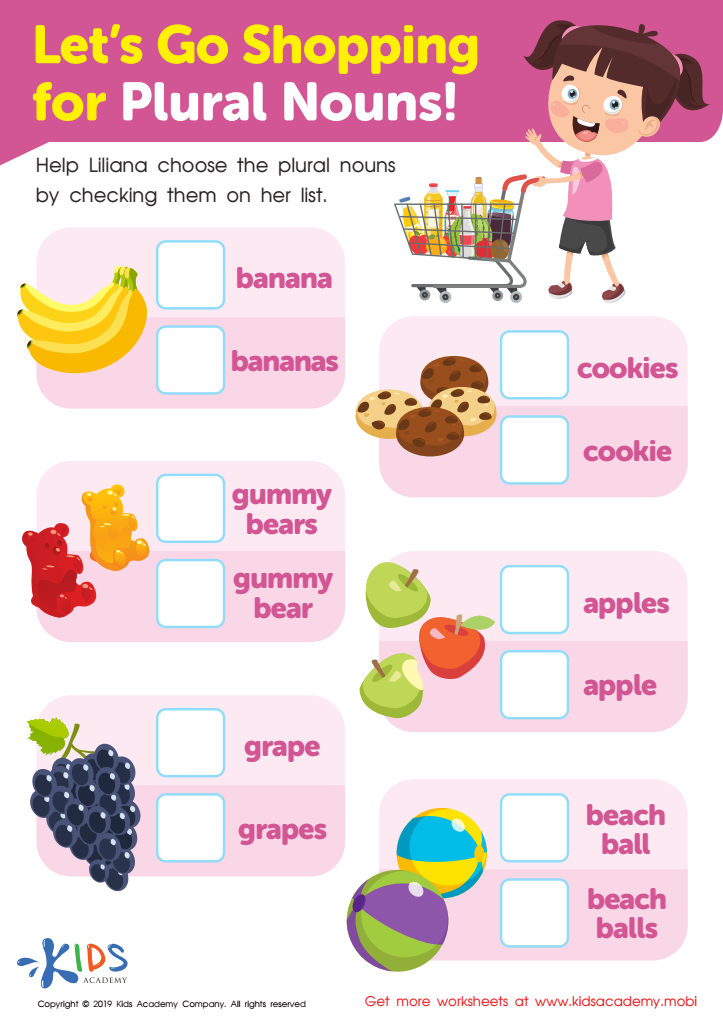
Let's Go Shopping for Plural Nouns! Worksheet
Help your students figure out the plural nouns in Lilliana's checklist. Look at the six objects in this PDF and add 's' to the nouns to make them plural. Show students how words can be tricky and explain how adding an 's' often changes the noun to its plural form.
Let's Go Shopping for Plural Nouns! Worksheet
Worksheet
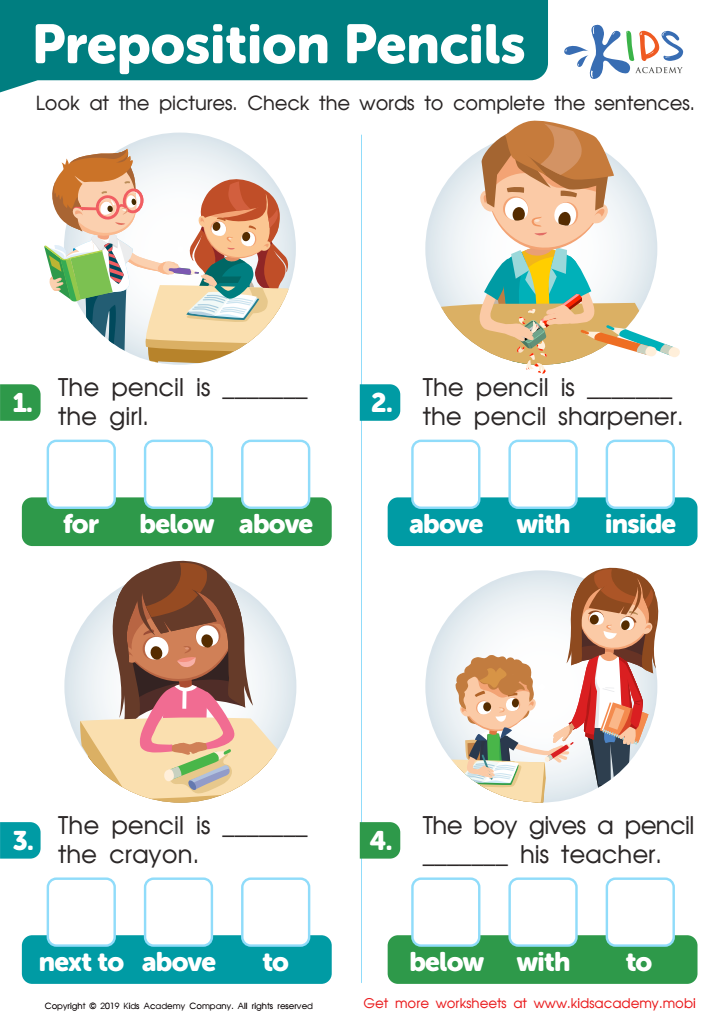
Preposition Pencils Worksheet
Constructing sentences follows rules. Parts of speech like nouns, verbs, adverbs, pronouns, and prepositions help. This worksheet focuses on prepositions. Explain prepositions to your child, then examine the pictures together and help them complete the sentences.
Preposition Pencils Worksheet
Worksheet
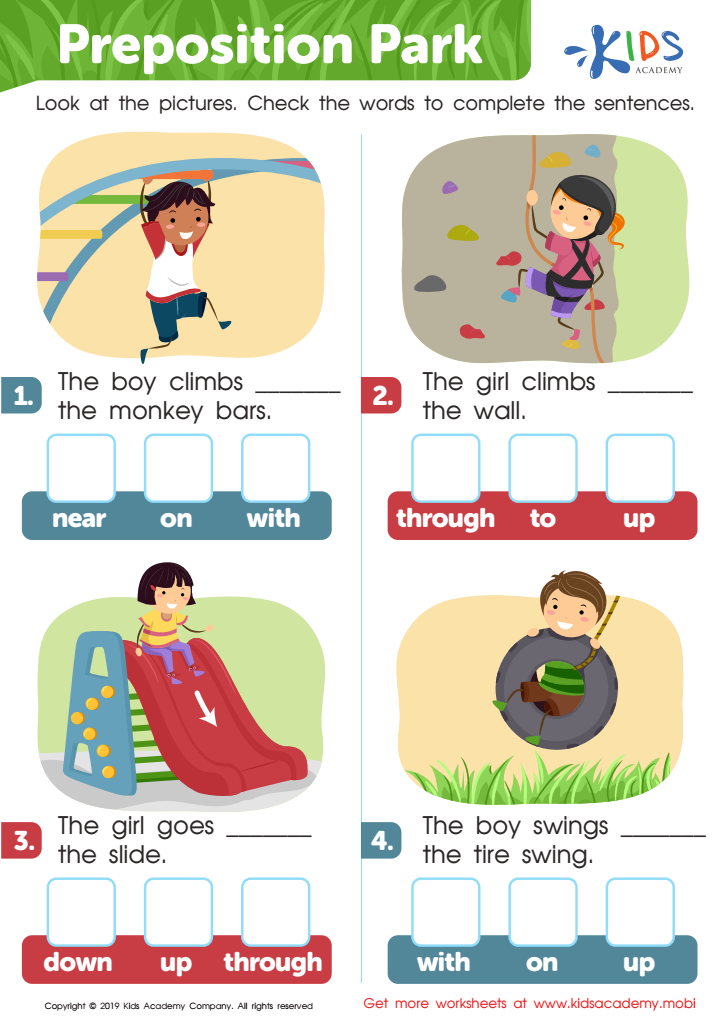
Preposition Park Worksheet
.
Check kids' understanding of prepositions by reminding them it's a word used to show location, direction or time. Look at the four pictures and ask what the kids are doing. Read the sentences below and help them check the words to complete them.
Preposition Park Worksheet
Worksheet
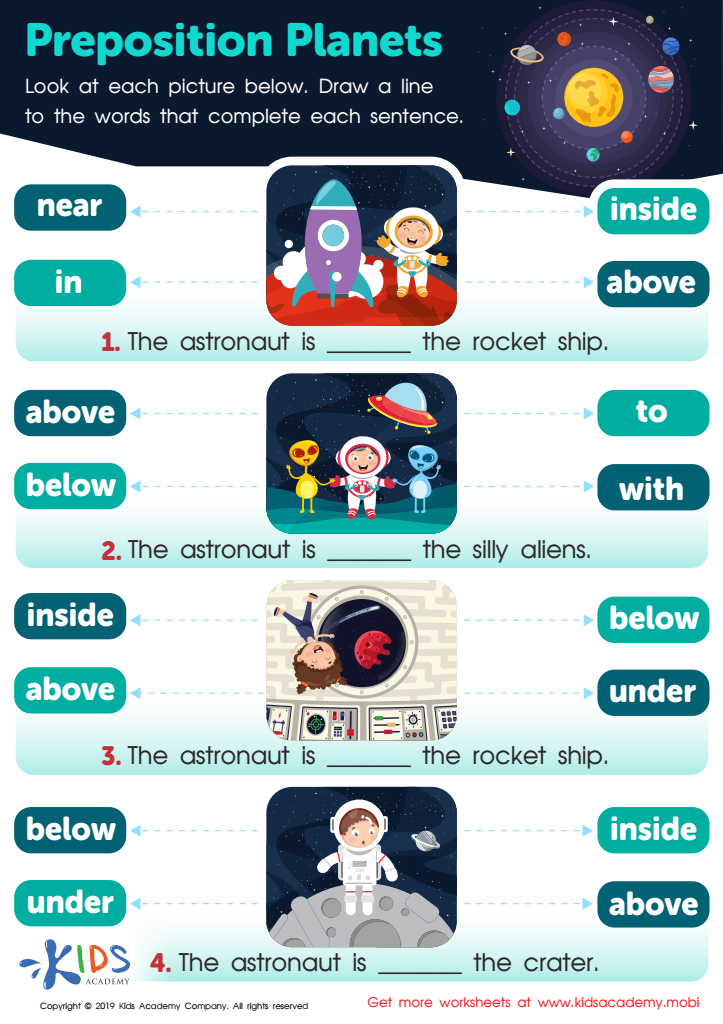
Preposition Planets Worksheet
Remind your child about outer space: which planet do we live on, and who travels there for research? Explain that prepositions show location, direction, and time. Look at the worksheet with colorful pictures of astronauts. Help your kids draw lines to the words that complete each sentence.
Preposition Planets Worksheet
Worksheet
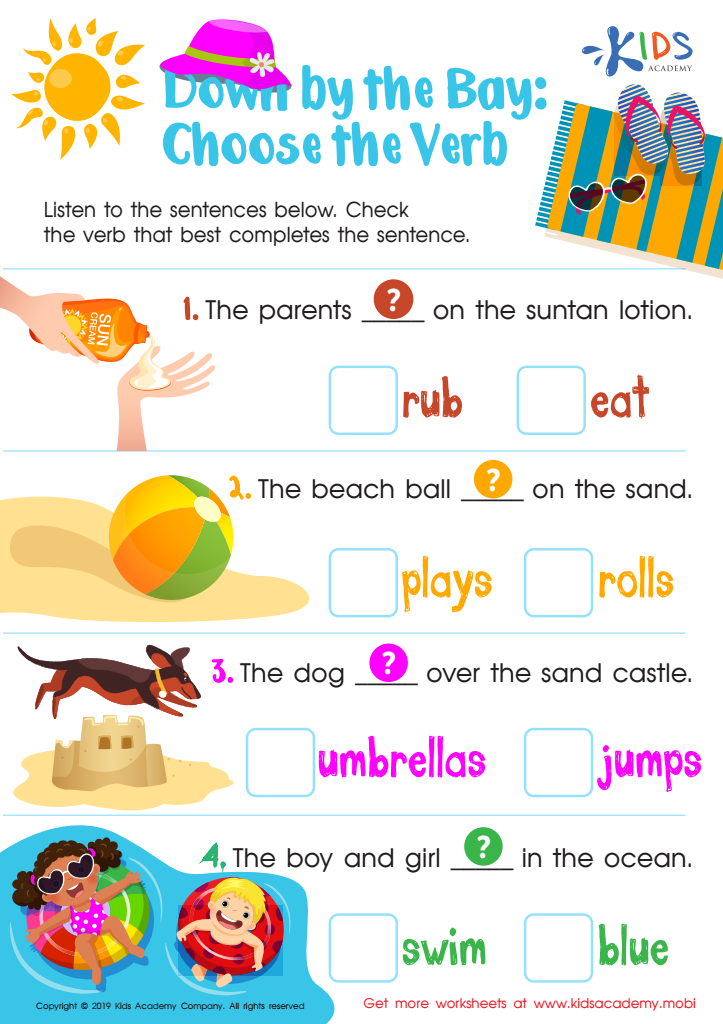
Down by the Bay: Choose the Verb Worksheet
Teach your kids about verbs: words that describe actions, like 'playing', 'eating', 'talking'. Ask your child to give their own verbs, then read the sentences in a worksheet and help them pick the best one for each question.
Down by the Bay: Choose the Verb Worksheet
Worksheet
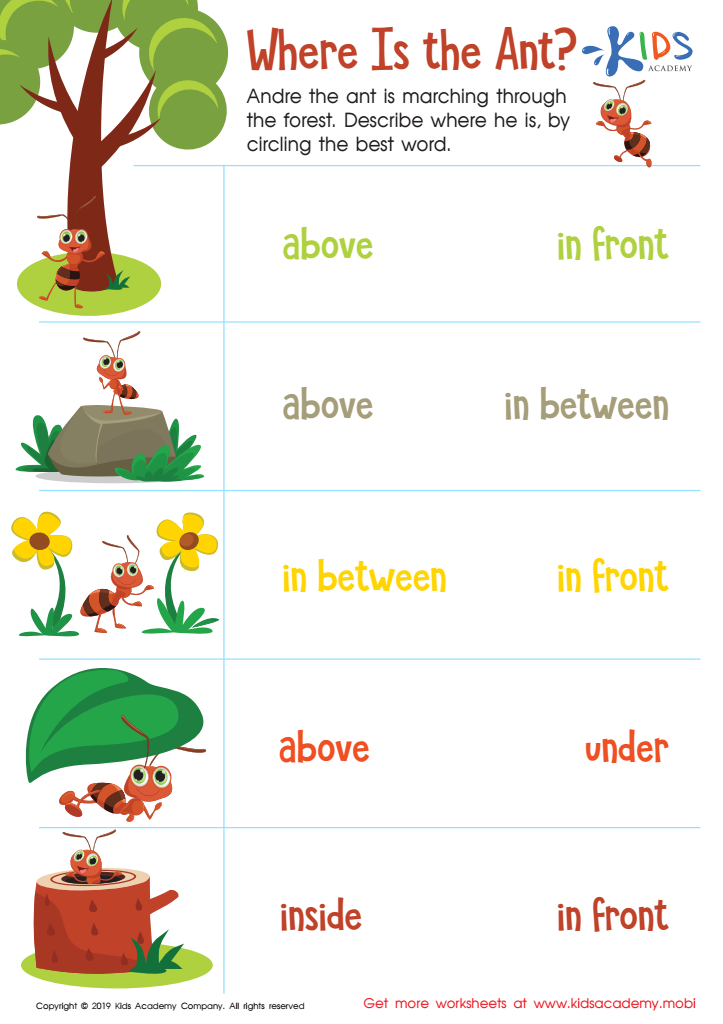
Where Is the Ant? Worksheet
Kids are captivated by ants. Andre is a busy ant, marching through the forest. Help your child circle the best word that best describes what he's doing in each picture. This colorful printout will show them the way.
Where Is the Ant? Worksheet
Worksheet
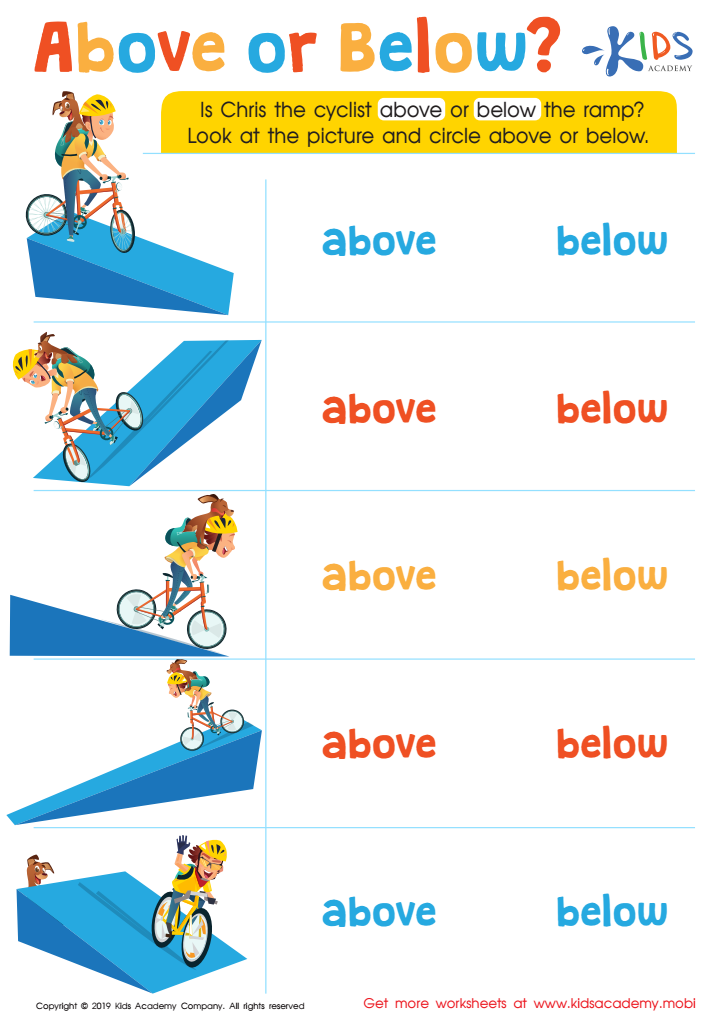
Above or Below? Worksheet
Do your kids cycle? Chris is a cyclist practicing on a ramp. Look at the pictures with them and decide if Chris is above or below the ramp. It's an important skill to help your kids become fluent speakers and writers - using the right words to describe something. Cycling is a fun sporting event.
Above or Below? Worksheet
Worksheet
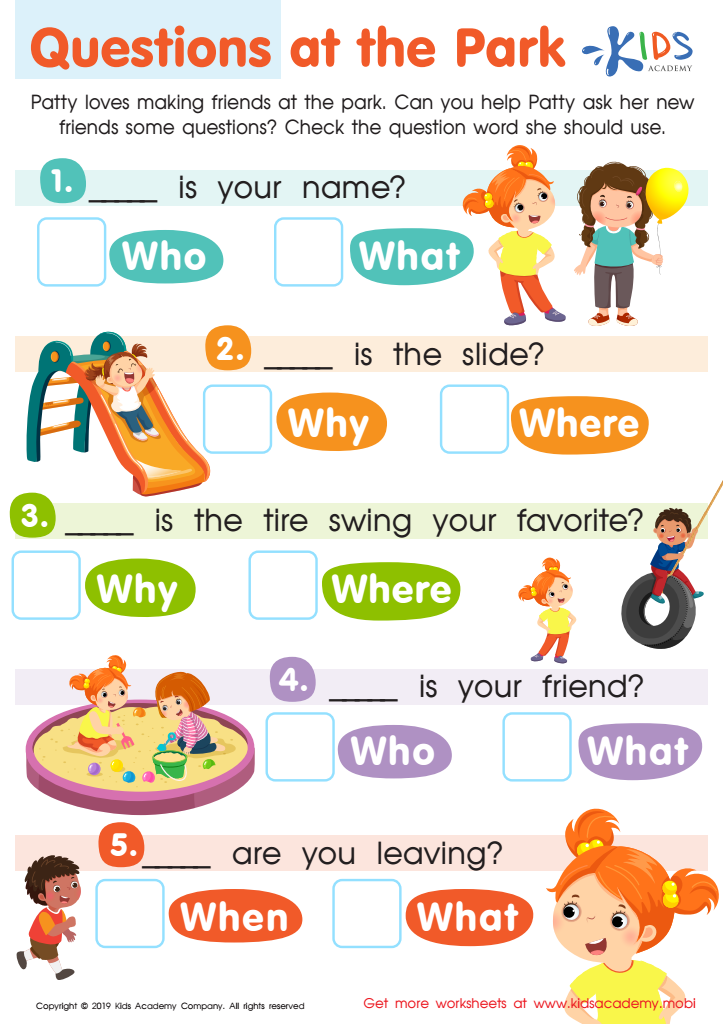
Questions at the Park Worksheet
Parks are great for fun! Kids can play, run and be as loud as they want! Ask them what their favorite activities are. If they love making friends, like Patty in this worksheet, help them practice their question words to get to know their new pals better.
Questions at the Park Worksheet
Worksheet
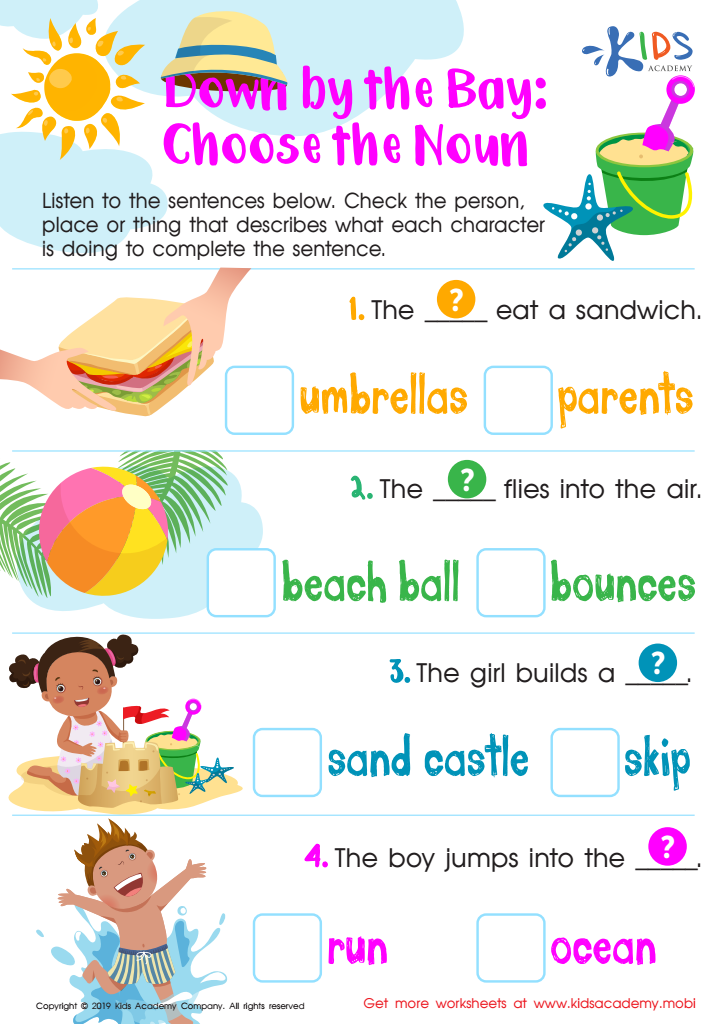
Down by the Bay: Choose the Noun Worksheet
Teach your child the basics of speaking and constructing English, like the parts of speech. Nouns are especially important; they are names of people, animals, objects, places, or things. Go through this worksheet with your kids and have them identify the nouns in the sentences. This exercise will help them understand the concept better.
Down by the Bay: Choose the Noun Worksheet
Worksheet
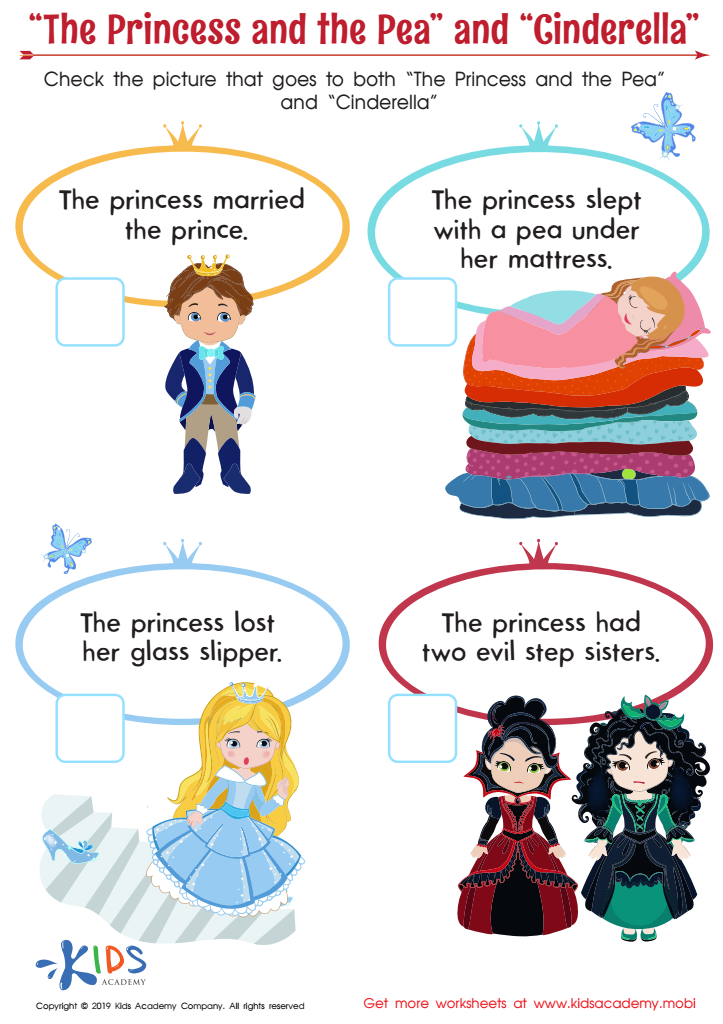
“The Princess and the Pea” and “Cinderella” Worksheet
Read "Cinderella" and "The Princess and the Pea" to your little ones. Ask them what their favorite parts were and what similarities they found in the princesses. This worksheet has four pictures of scenes from the stories. Ask your kids which picture goes with both tales.
“The Princess and the Pea” and “Cinderella” Worksheet
Worksheet
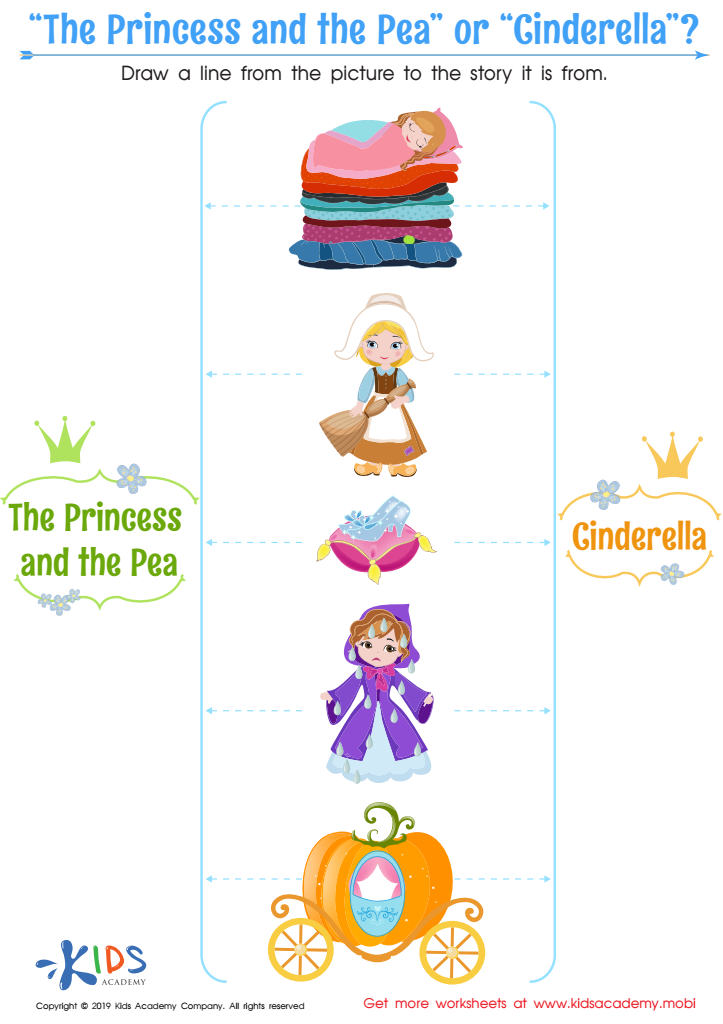
“The Princess and the Pea” or “Cinderella” Worksheet
Help your child identify the characters and objects from both the Princess and the Pea and Cinderella. Ask them to draw a line from the pictures to the story it's from on the tracing sheet. Encourage them to tell you the similarities between the two stories. Enjoy the tale with your daughter and watch her be fascinated by these two classic children's stories.
“The Princess and the Pea” or “Cinderella” Worksheet
Worksheet
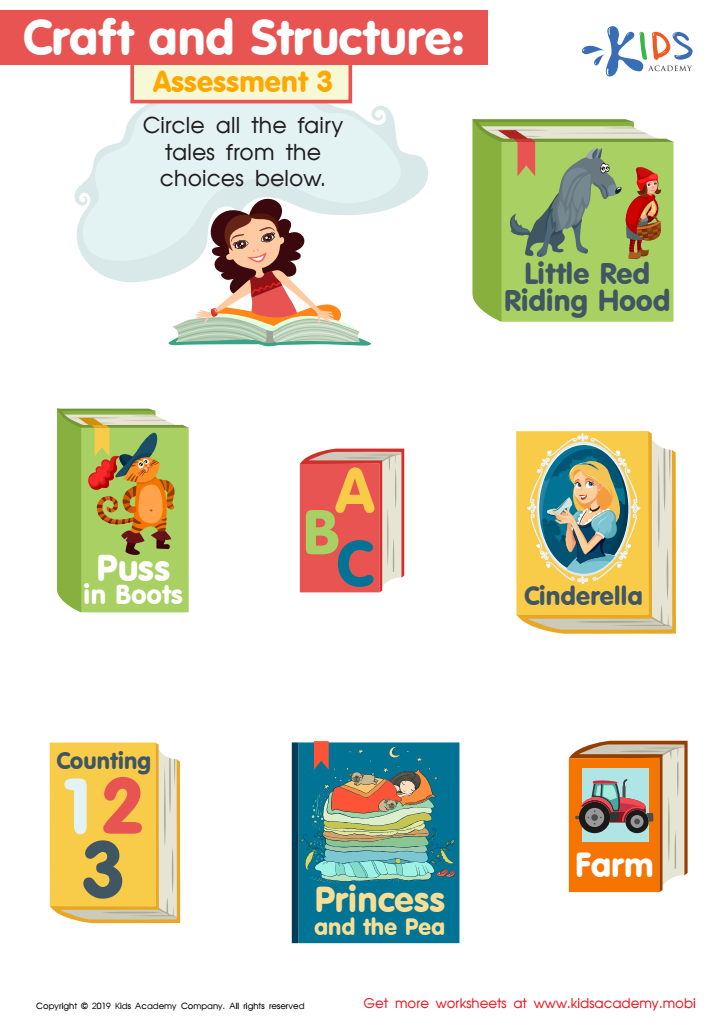
Craft and Structure: Assessment 3 Worksheet
Before starting the worksheet, ask your kids to recall their favorite bedtime stories. What characters and events can they remember? Four popular children's stories are hidden among pictures of other objects - help them search and circle the fairy tales in this PDF.
Craft and Structure: Assessment 3 Worksheet
Worksheet
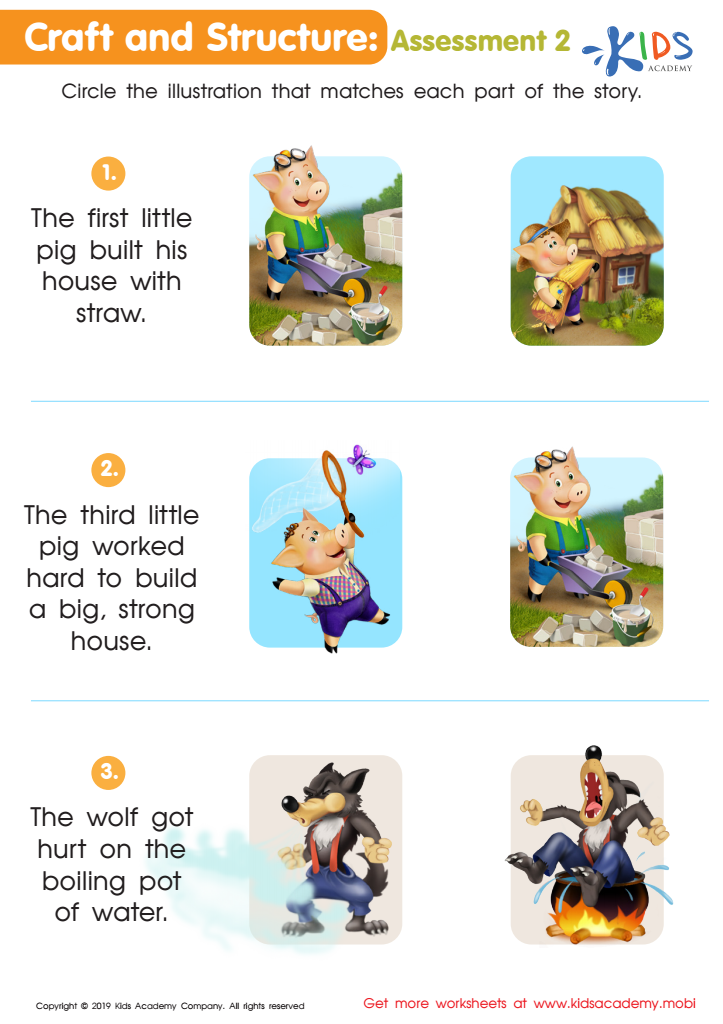
Craft and Structure: Assessment 2 Worksheet 2
This fun printout with colorful illustrations will assess how much your kids pay attention to story time. Go through the pictures and help them circle the ones that match each part of the story. Stimulate their brains and have fun in the process!
Craft and Structure: Assessment 2 Worksheet 2
Worksheet
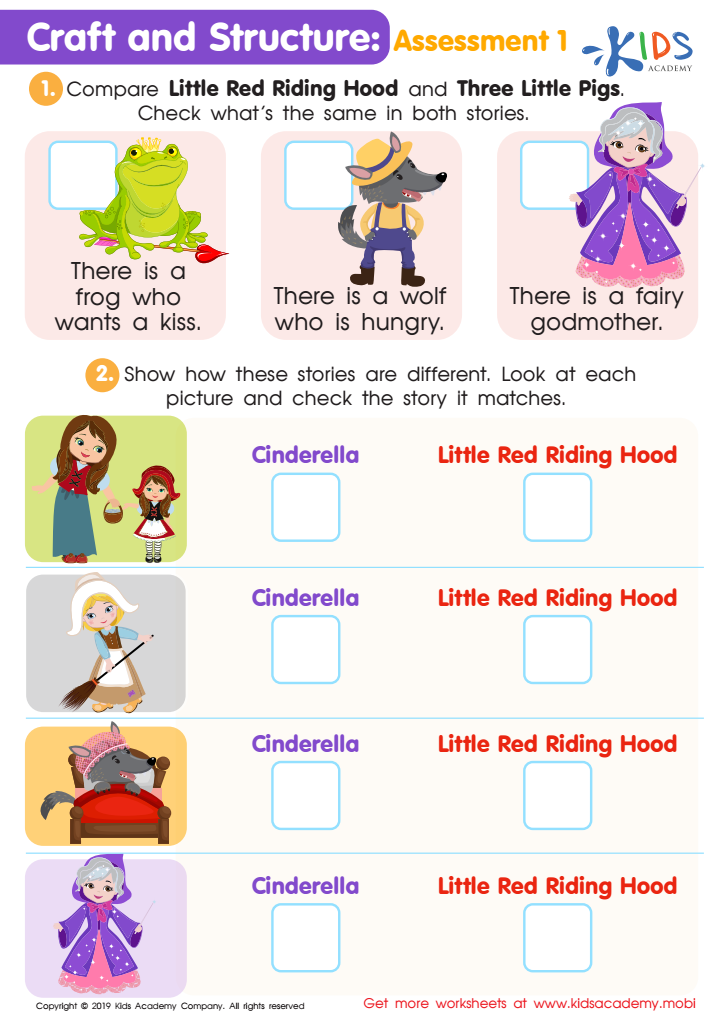
Craft and Structure: Assessment 1 Worksheet
Fairytales are a great way to bond with your kids while teaching them. Popular stories include Little Red Riding Hood and Three Little Pigs. Test how well they understood these two with this assessment worksheet. Ask them to compare the two stories and check what is the same. Doing this will help kids learn new words and sentence construction, as well as teaching them life lessons.
Craft and Structure: Assessment 1 Worksheet
Worksheet
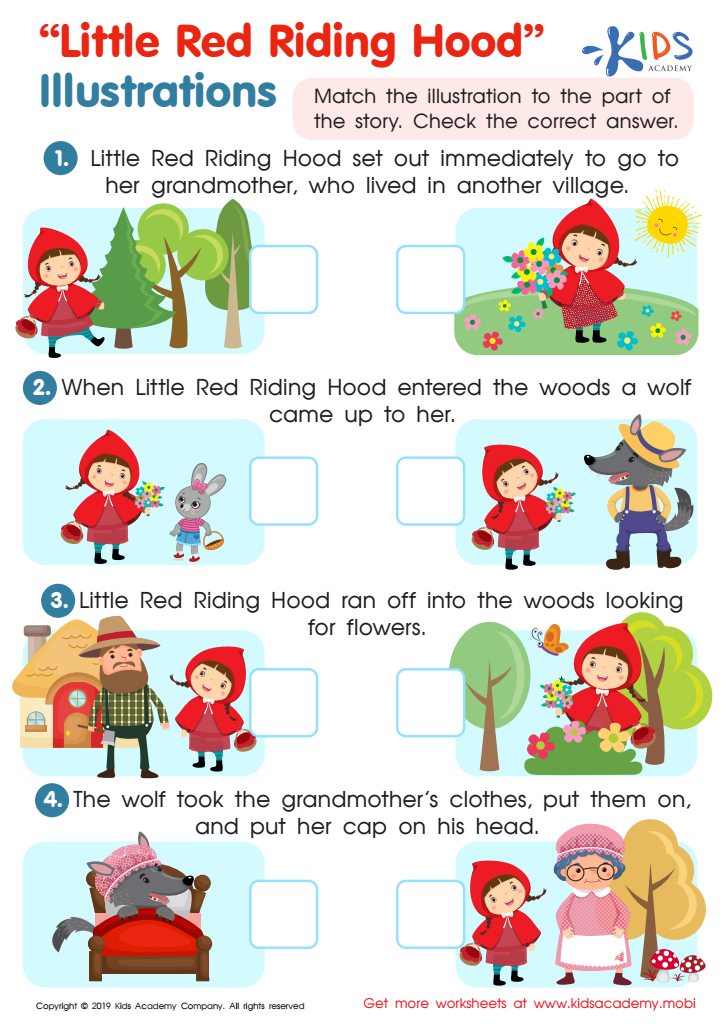
Little Red Riding Hood: Illustrations Worksheet
Comprehension is improved by having young readers recall and retell stories. This worksheet uses colorful illustrations of the fairytale Little Red Riding Hood. Children use their comprehension skills and strategy to match illustrations to the story parts, check off the appropriate boxes and use the pictures as clues.
Little Red Riding Hood: Illustrations Worksheet
Worksheet
Join Kids Academy for Free
Who is primarily going to use this learning content?