English Language Arts online worksheets for Grade 3 - Page 4
133 filtered results
Difficulty Level
Grade
Age
-
From - To
Subject
Activity
Standards
Favorites
With answer key
Interactive
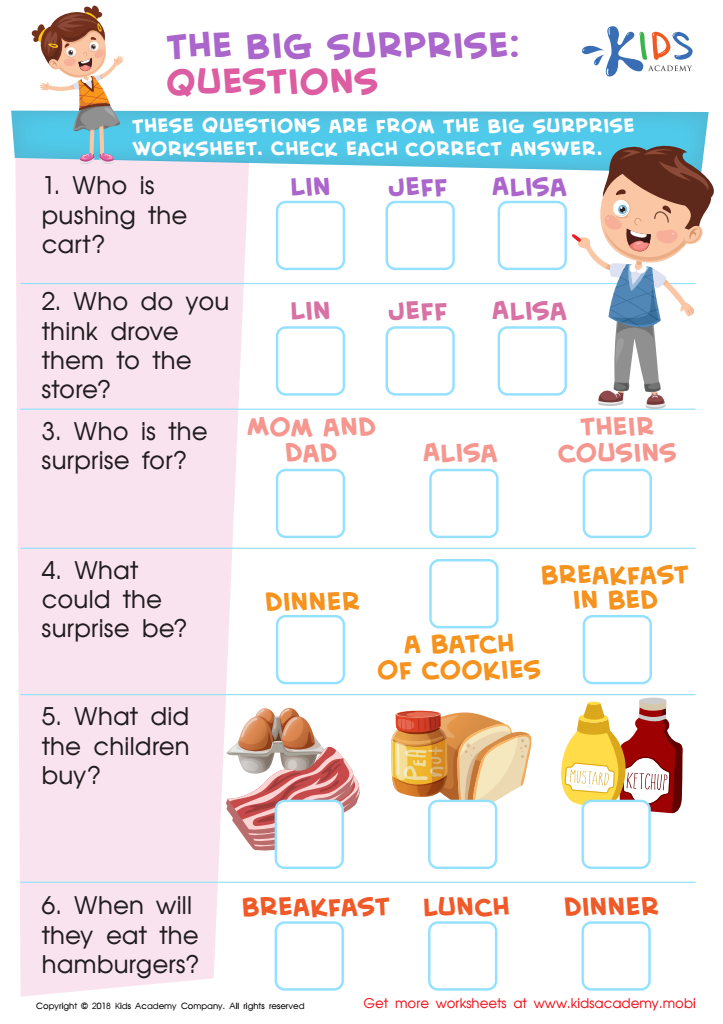
The Big Surprise: Questions Worksheet
Have your child read or listen to The Big Surprise. Ask them the questions in the printable, help check the answers and discuss the story. Keep it to 80 words.
Have your child read or listen to The Big Surprise, then ask them the questions in the printable. Discuss the story and help them check the answers.
 Assign to My Students
The Big Surprise: Questions Worksheet
Worksheet
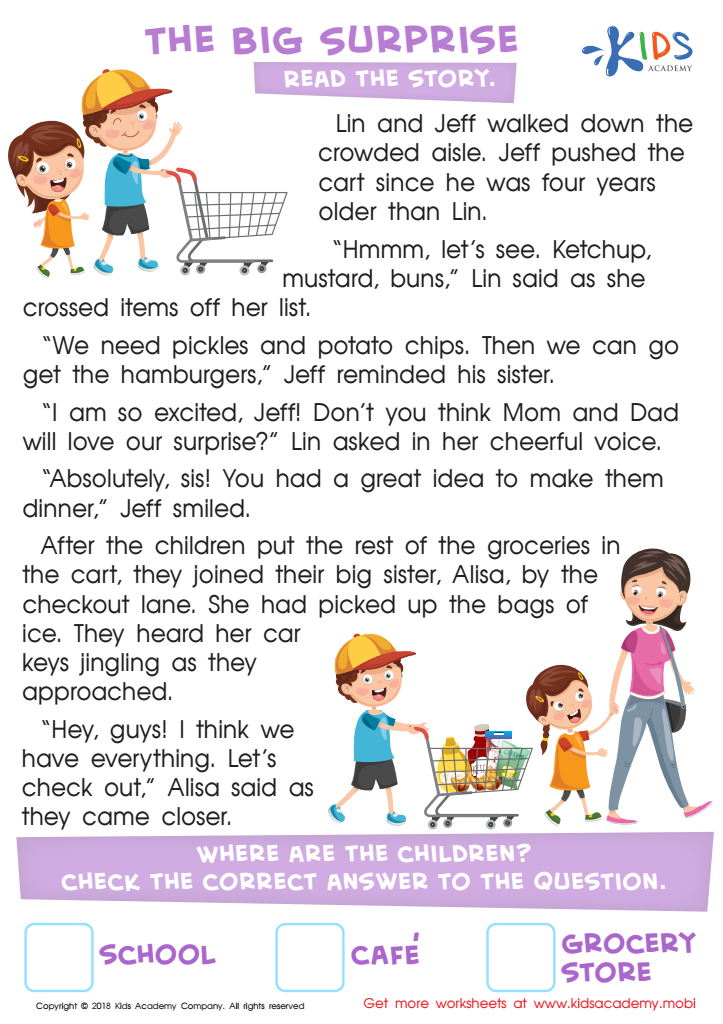
The Big Surprise Worksheet
Read this story to your kids: Lin and Jeff are in the supermarket with their big sister Alisa. They're excited to buy groceries. Listen closely to the details and ask the questions at the end to check your understanding. Read it twice to ensure full comprehension.
The Big Surprise Worksheet
Worksheet
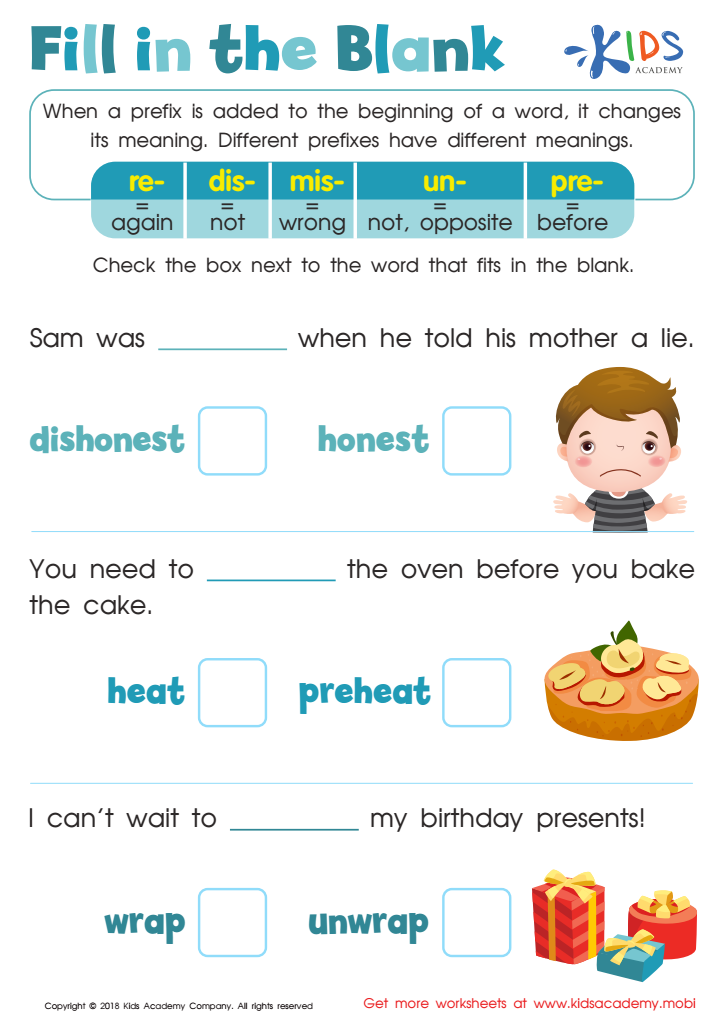
Reading: Fill in the Blank Worksheet
Students can practice understanding the meaning of common prefixes with this worksheet. They read sentences and pick the correct word with the appropriate prefix to complete it. Downloadable and a great addition to reading and vocabulary resources, this helps improve comprehension with mastery of the skill!
Reading: Fill in the Blank Worksheet
Worksheet
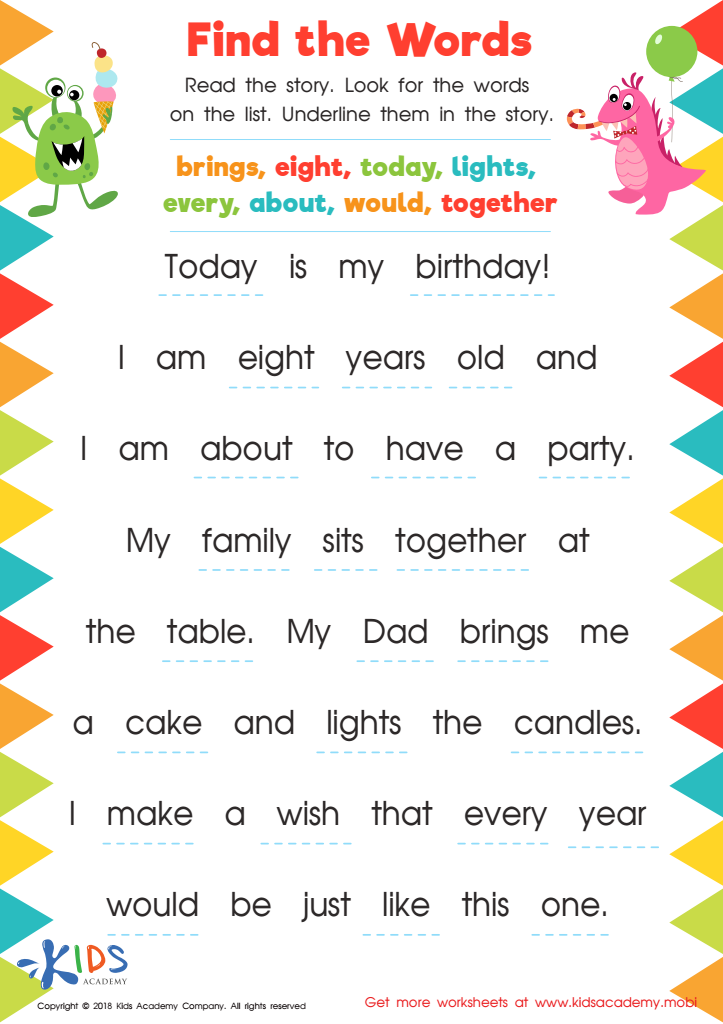
Find The Words Printable Worksheet
Hunt for words while reading this birthday story! This printable worksheet will help your child practice early reading skills as they search for words in the text. Enjoy the story and find the words!
Find The Words Printable Worksheet
Worksheet
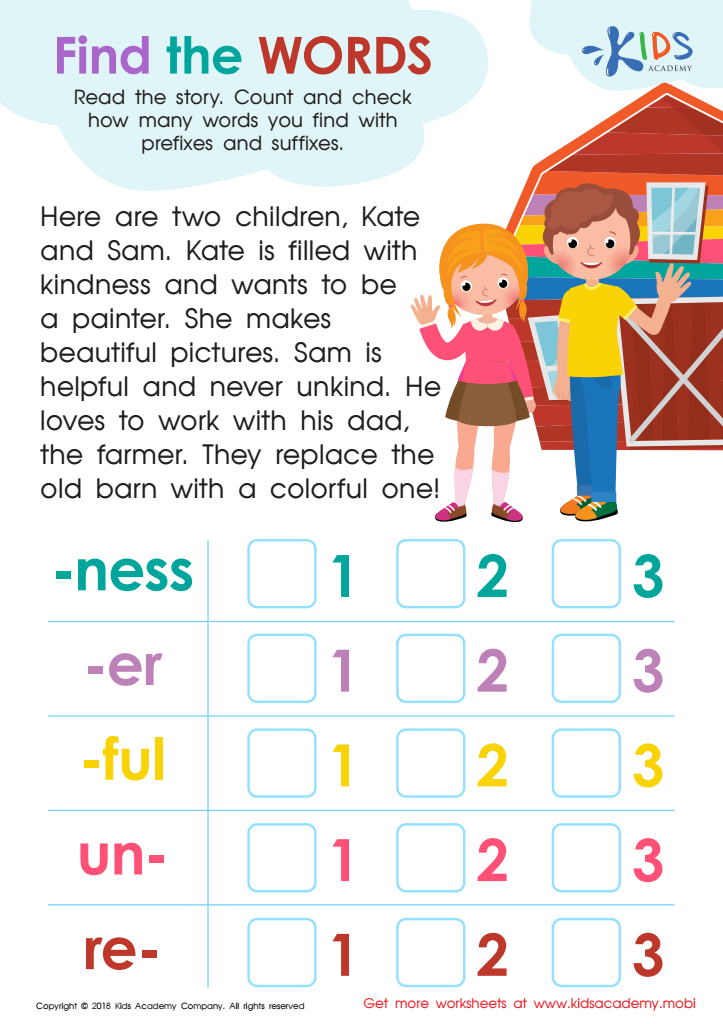
Prefix and Suffix Worksheet For Grade 3
Read the story about Sam and Kate and help your grade 3 child tally all the words with prefixes and suffixes. Check their work by counting the words and ticking the appropriate boxes. This entertaining worksheet will help develop their reading and counting skills! (80 words)
Prefix and Suffix Worksheet For Grade 3
Worksheet
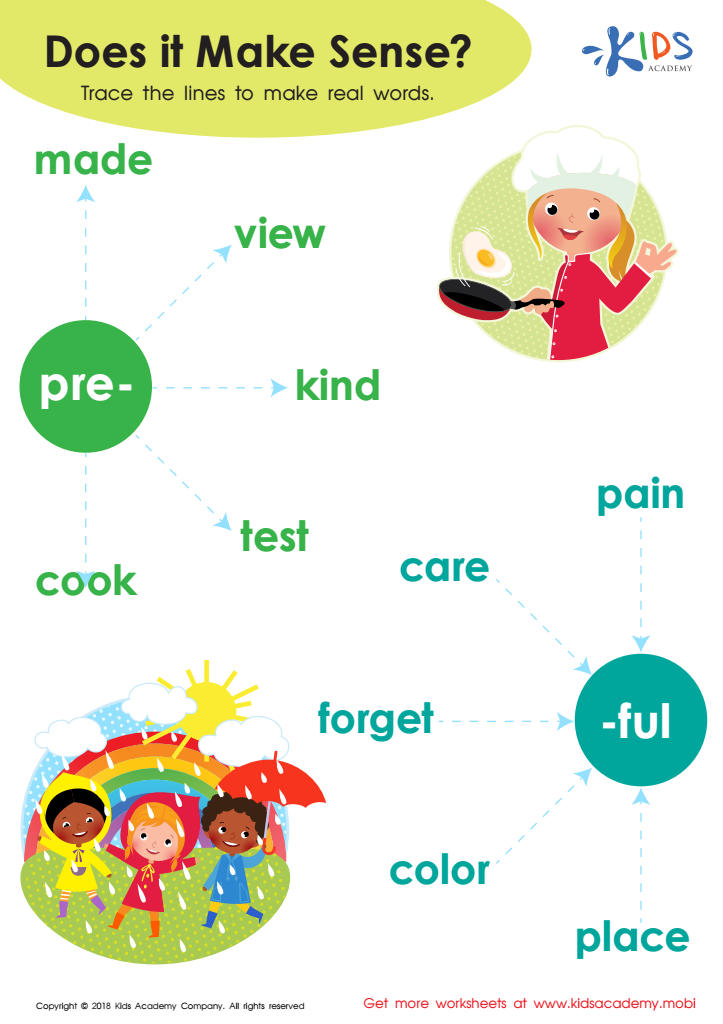
Prefix pre– and Suffix ful– Worksheet
Can't preforget something! This worksheet helps kids learn how to attach prefixes and suffixes to root words, forming new words that make sense. With this activity, they'll evaluate how the root words change when adding the prefix or suffix.
Prefix pre– and Suffix ful– Worksheet
Worksheet
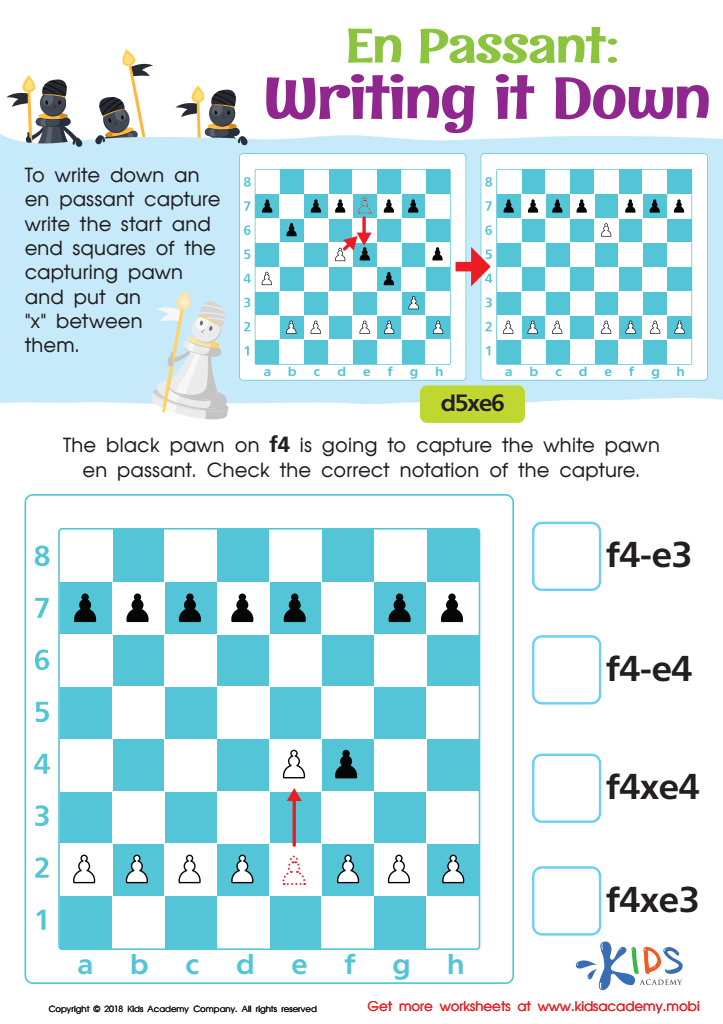
En Passant: Writing it Down Worksheet
Properly documenting moves in chess is often overlooked. En passant captures require your child to note the starting and ending squares (e.g. d5xe6) with an "X" in between them. Ask your children to review the worksheet and ensure they've notated the captures correctly. (80 words)
En Passant: Writing it Down Worksheet
Worksheet
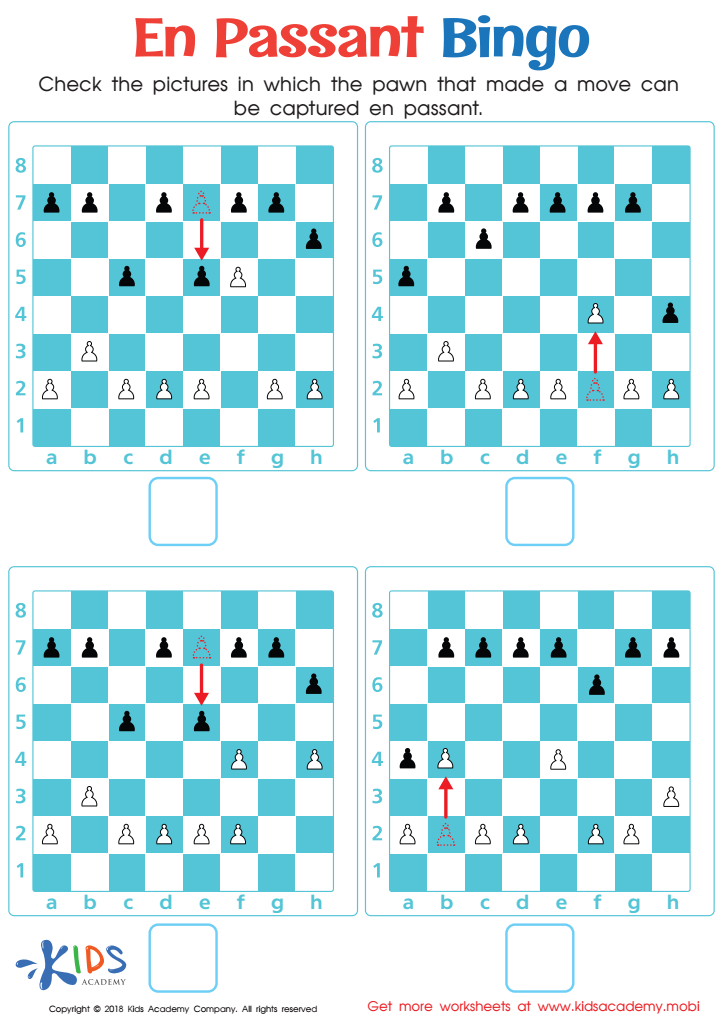
En Passant Bingo Worksheet
To teach kids to perfect the en passant move in chess, use this worksheet. It has pictures which depict when a pawn is in danger of being captured. By looking through the pictures, kids can easily understand and perfect the move.
En Passant Bingo Worksheet
Worksheet
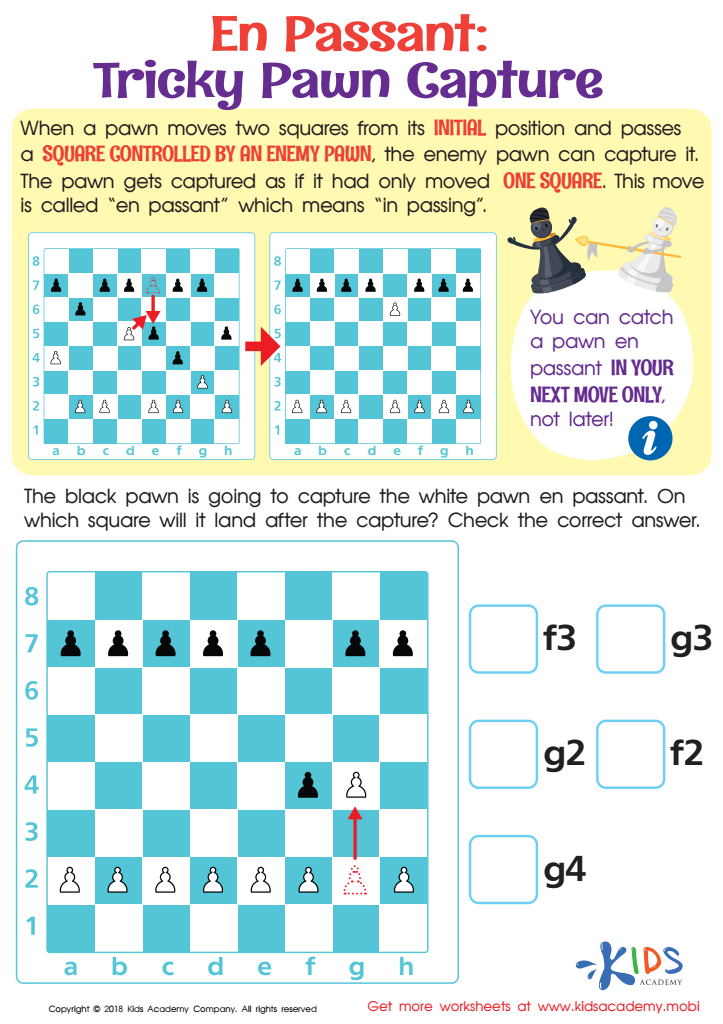
En Passant: Tricky Pawn Capture Worksheet
When a pawn moves two squares from its initial position and enters a square controlled by an enemy, the enemy can capture it as if it had moved one square. This move is called "en passant" (in passing). Ask your child which square the black pawn will land on after capturing the white pawn en passant using the provided chessboard.
En Passant: Tricky Pawn Capture Worksheet
Worksheet
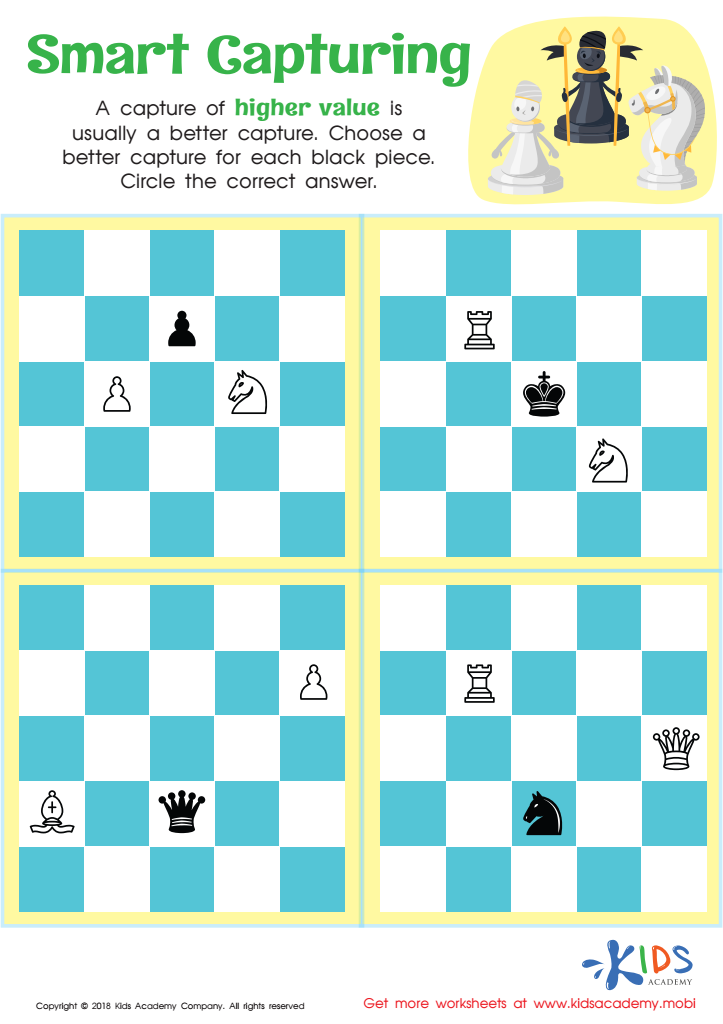
Smart Capturing Worksheet
Chess is a game of strategy and calculation. When presented with two captures, a player should always go for the one that yields the highest value. For example, taking a knight over a pawn. In this worksheet, your children will choose the best capture for each black piece. Ask them to circle the correct answers. (80 words)
Smart Capturing Worksheet
Worksheet
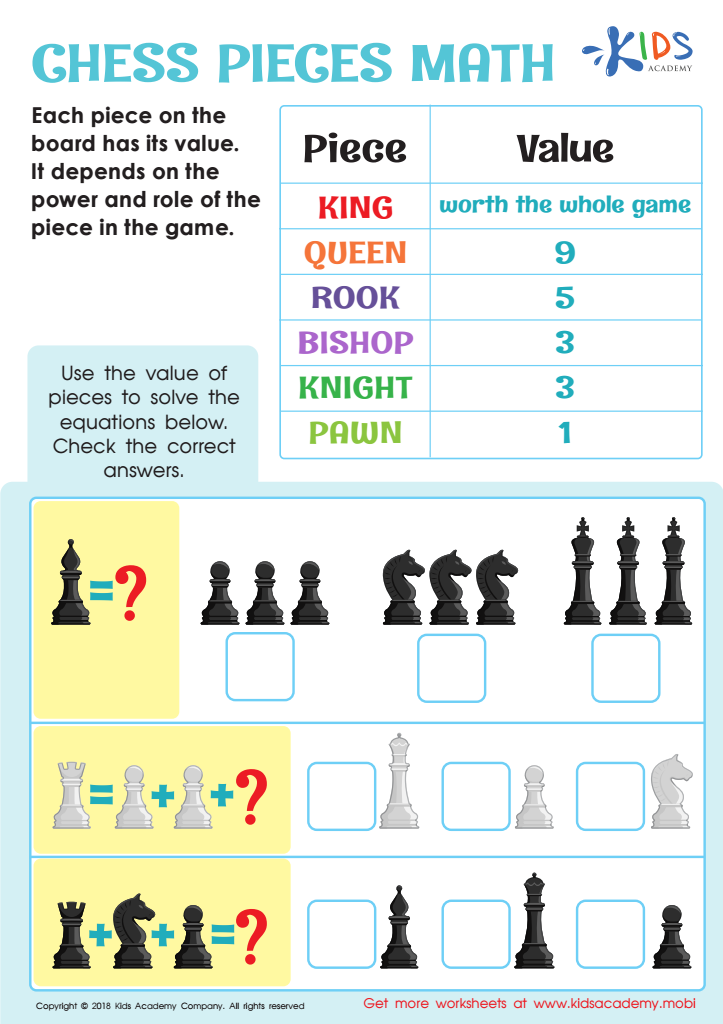
Chess Pieces Math Worksheet
Chess involves math! Each piece has its own value, from the king (worth the entire game) to the queen (9 points), varying according to their power and role. In the worksheet, your child must use these values to solve the equations at the bottom.
Chess Pieces Math Worksheet
Worksheet
Writing it Down Worksheet
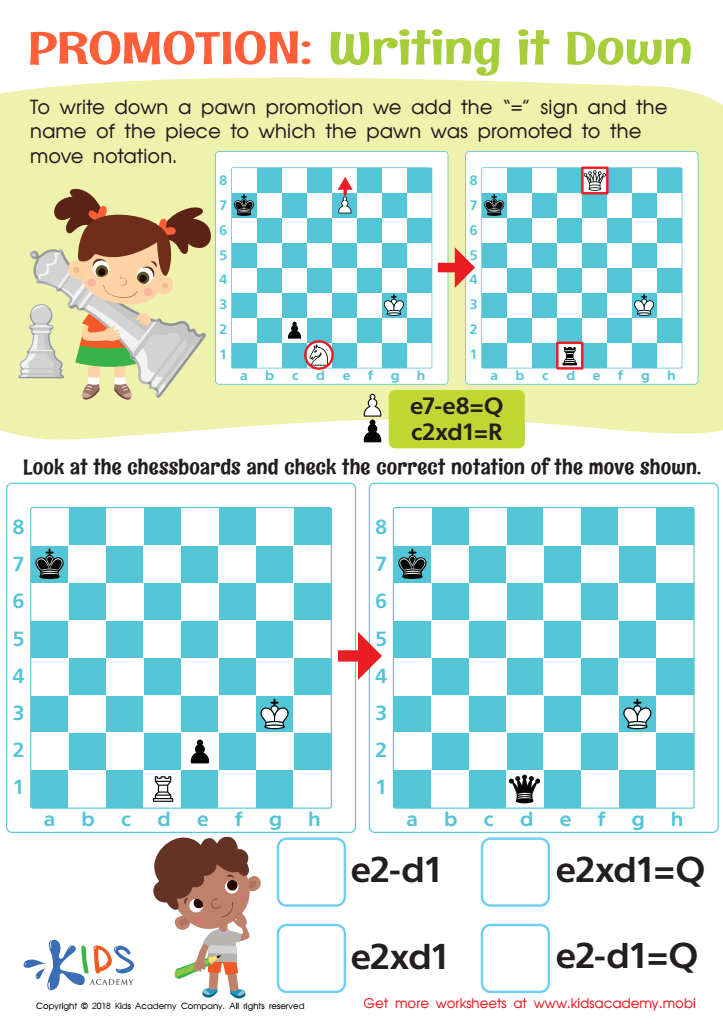
To document pawn promotion, add "=<piece name>" to the move notation. For example: e7-e8=Q. Ask your child to look at the chessboard and take note of the moves. Check the notations are correct. (80 words)
Writing it Down Worksheet
Worksheet
Promotion Practice Worksheet
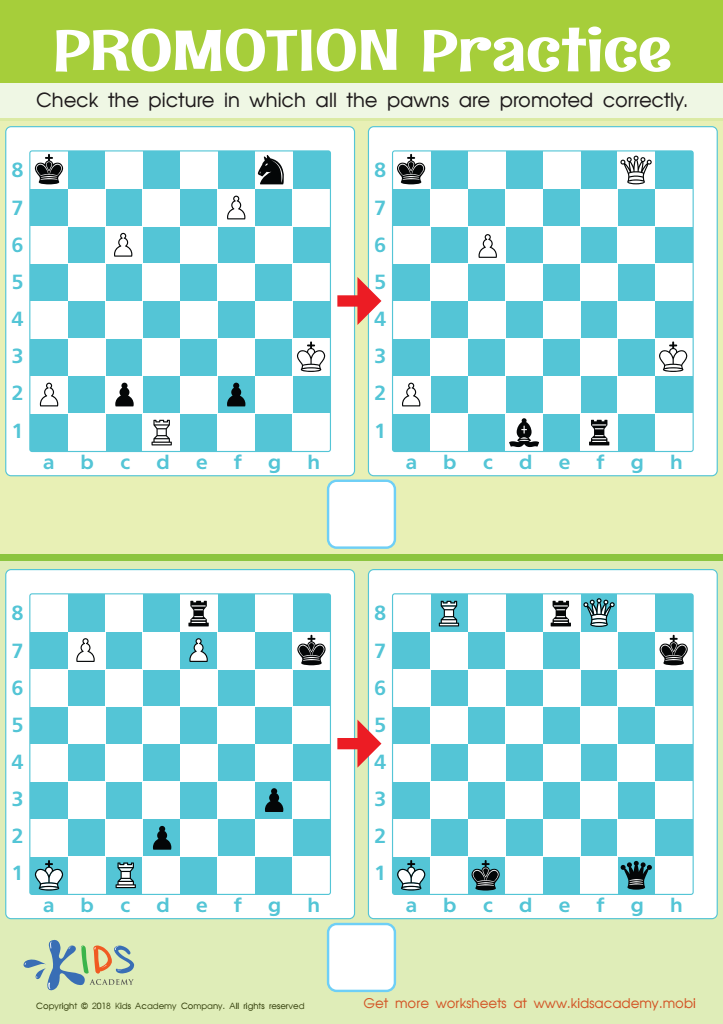
Test your kids' promotions skills with this worksheet! Ask them to find the pictures in which the pawns are correctly promoted. Remember, when a pawn reaches the last rank it may be promoted to a queen, bishop, knight or rook. In addition, a pawn can be promoted when it captures a chess piece on the last rank.
Promotion Practice Worksheet
Worksheet
Promoting a Pawn Worksheet
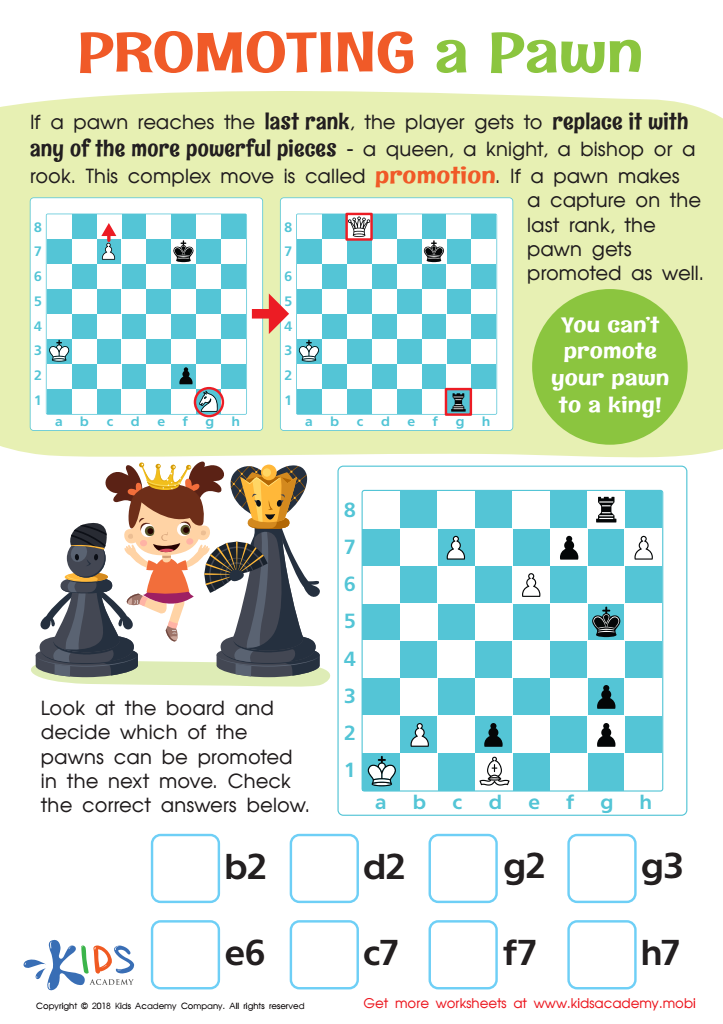
Teach your kids all about pawns with this fun worksheet! Pawns may seem restricted, but experienced players can guide them across the board. If a pawn reaches the last rank, the player can upgrade it to a more powerful piece (e.g. queen, knight), or promote it if it captures an enemy piece. Give them the tools to master the game!
Promoting a Pawn Worksheet
Worksheet
Chessboard Puzzle Worksheet
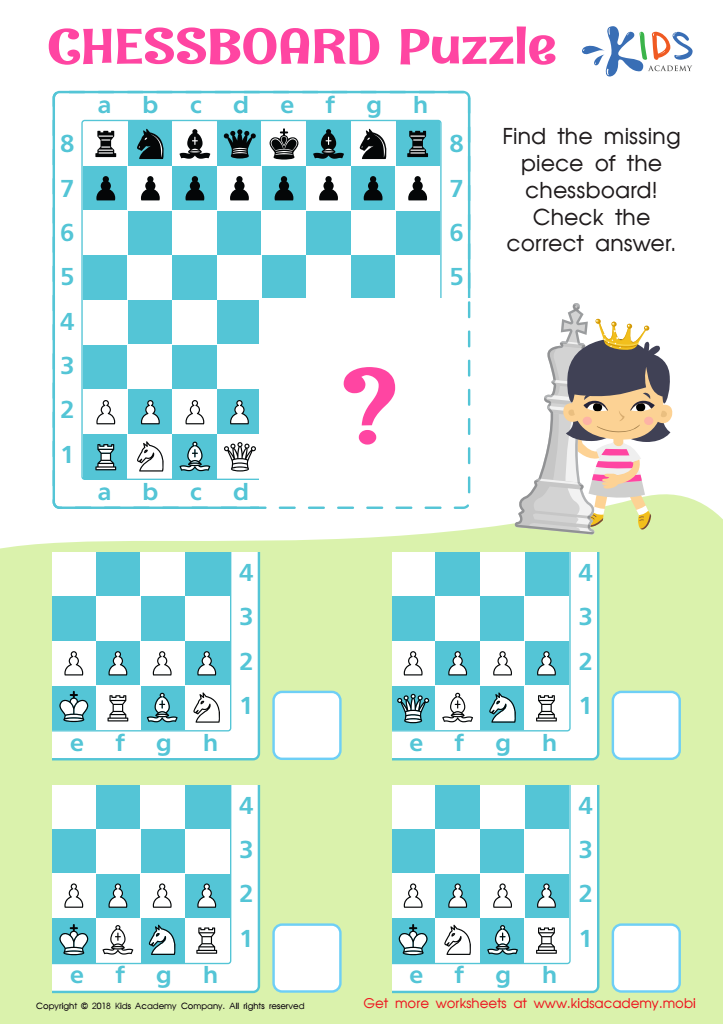
Test your child's chess prowess with this simple worksheet. They must find the missing pieces to complete the white side of an empty chessboard. The black pieces are already arranged properly on the board. Correct answers are provided so you can see how they did!
Chessboard Puzzle Worksheet
Worksheet
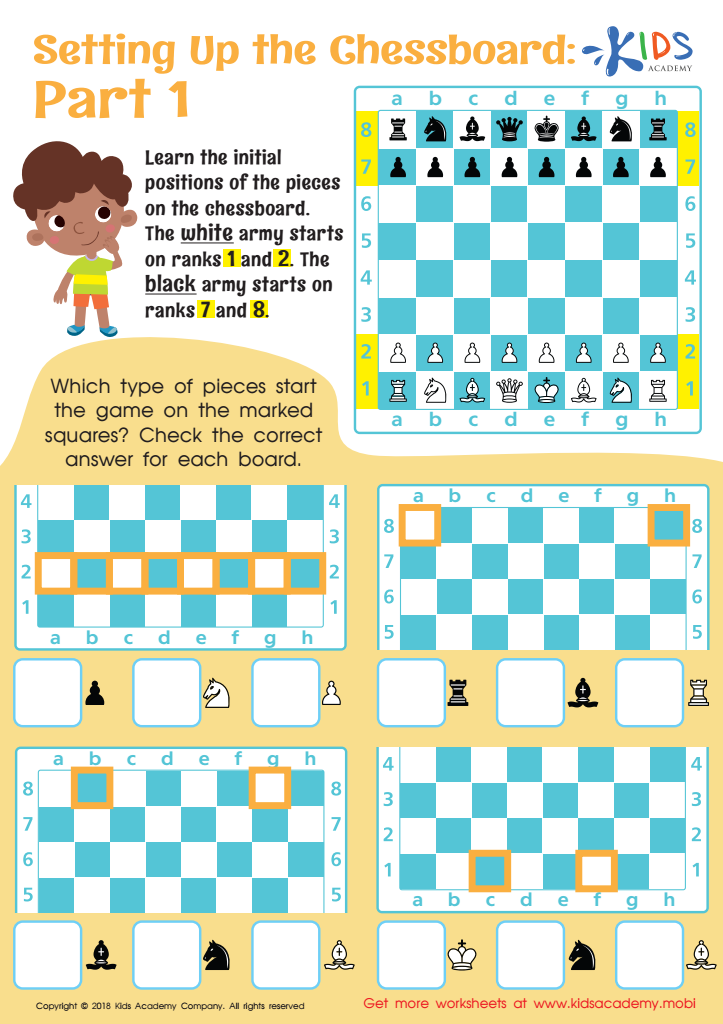
Setting up the Chessboard: Part 1 Worksheet
Teach your child the starting positions of the black and white armies on the chessboard. Black pieces are placed on ranks 7 and 8, and white pieces on ranks 1 and 2. Have them check the highlighted boxes on the chessboard to make sure they know the correct pieces to start with.
Setting up the Chessboard: Part 1 Worksheet
Worksheet
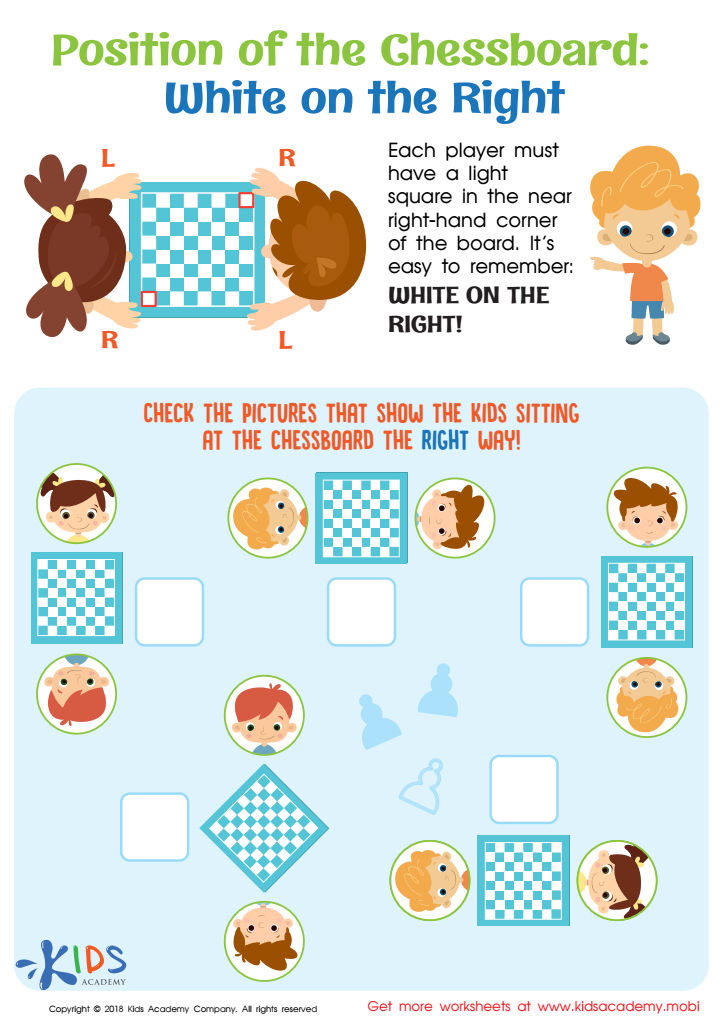
Position of the Chessboard: White on the Right Worksheet
Proper positioning of the chessboard and players is key. Before the game, make sure the white square is in the right-hand corner. A simple rhyme can help: "White on the right". Check pictures of kids at the chessboard to ensure correct positioning.
Position of the Chessboard: White on the Right Worksheet
Worksheet
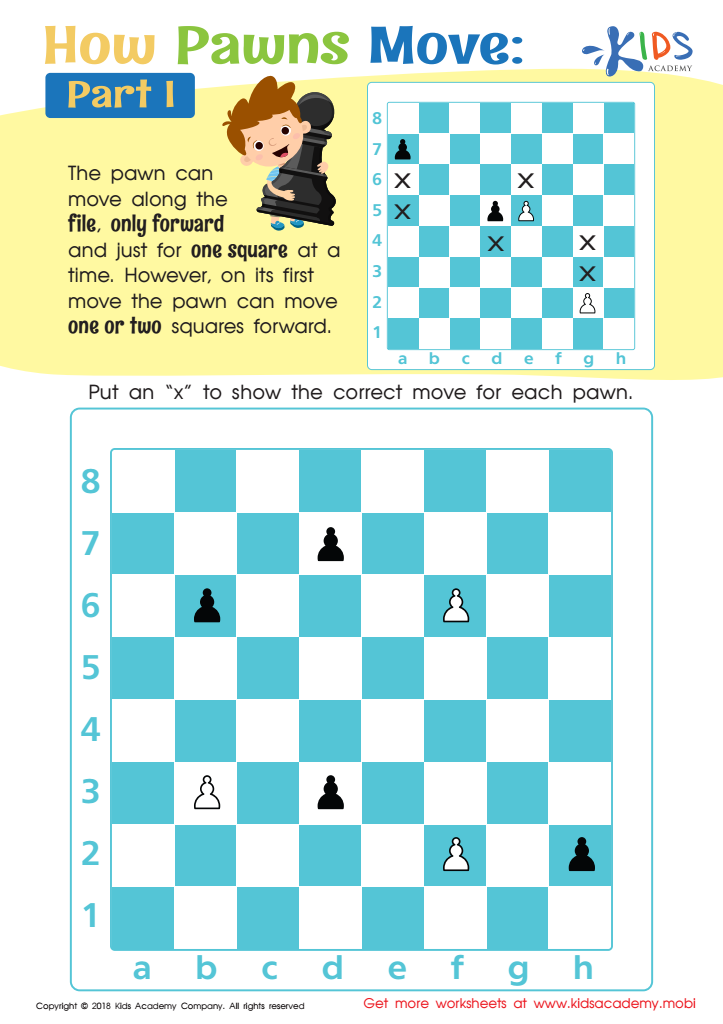
How Pawns Move: Part I Worksheet
Pawns can only move forward along the file one square at a time. For its first move, a pawn can move one or two squares. Show your child how to move pawns by asking them to put an X for the correct move on this worksheet. This exercise will help them gain confidence in using pawns.
How Pawns Move: Part I Worksheet
Worksheet
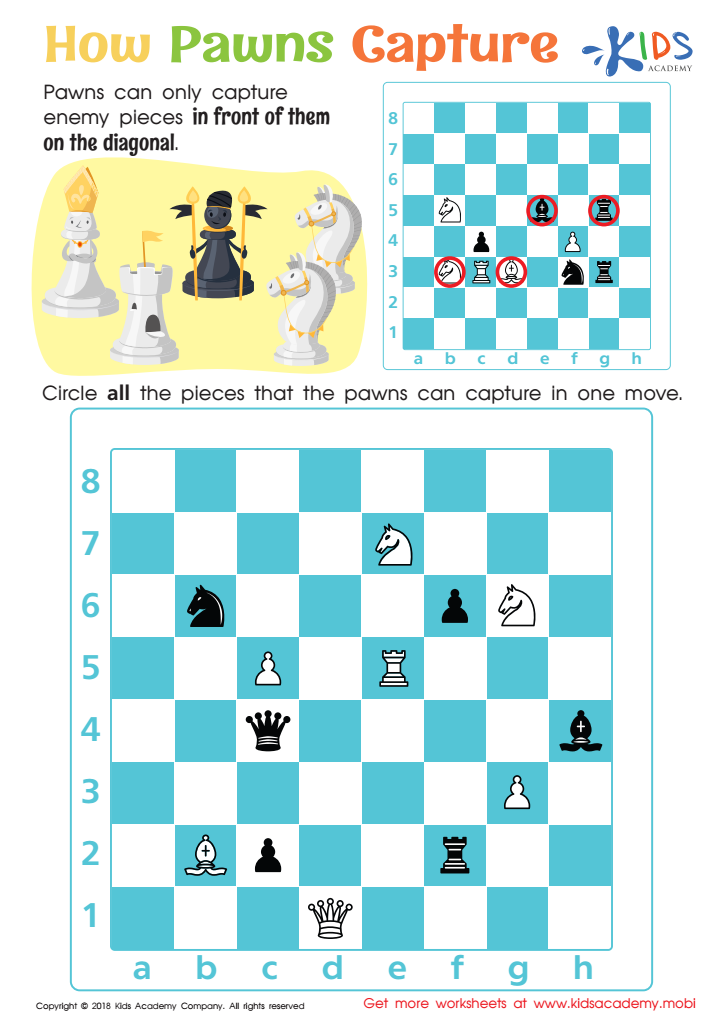
How Pawns Capture Worksheet
Ask your child to circle all the places a pawn can capture in one move on the diagonal. Pawns are limited in the moves they can make, but can still capture enemy pieces. This worksheet will help brush up on their knowledge of the rules of chess.
How Pawns Capture Worksheet
Worksheet
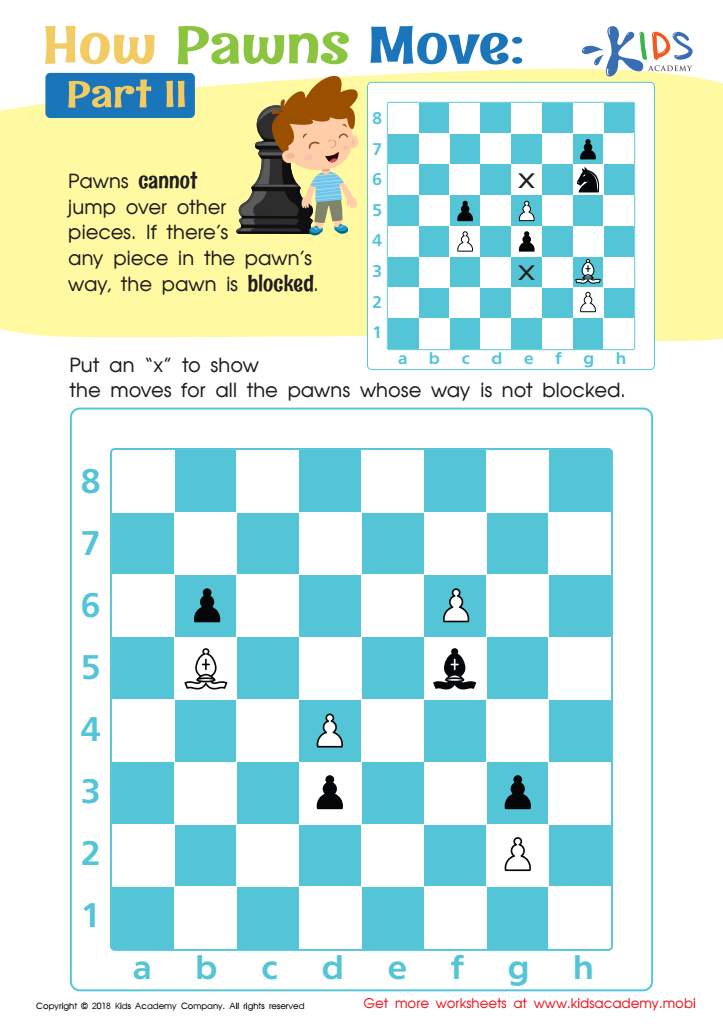
How Pawns Move: Part II Worksheet
Pawns are the first to attack in chess and each player has the most pieces. They can't jump over other pieces, so if there's an obstacle, the pawn can't move. Ask your child to put an X to show all possible moves for the pawns not blocked by other pieces. (80)
How Pawns Move: Part II Worksheet
Worksheet
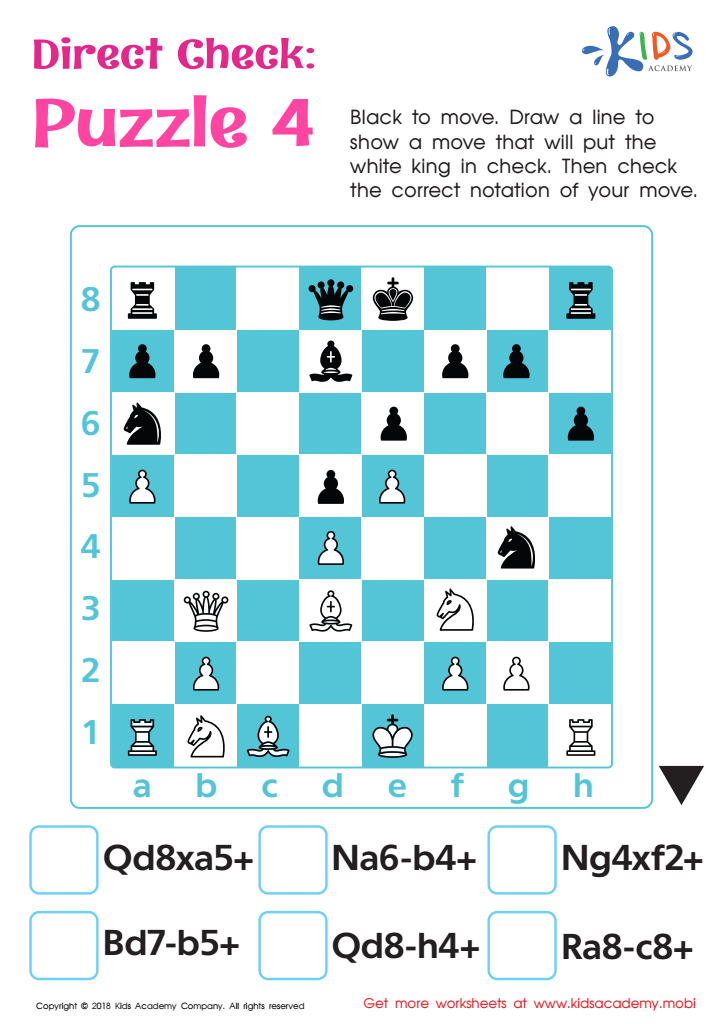
Direct Check: Puzzle 4 Worksheet
Assess your children or students' chess progress with this simple worksheet. They must play as black and draw a line to put the white king in check. Then, review the provided options and circle the correct notation. This will help you gauge their skills and understanding of strategic movements.
Direct Check: Puzzle 4 Worksheet
Worksheet
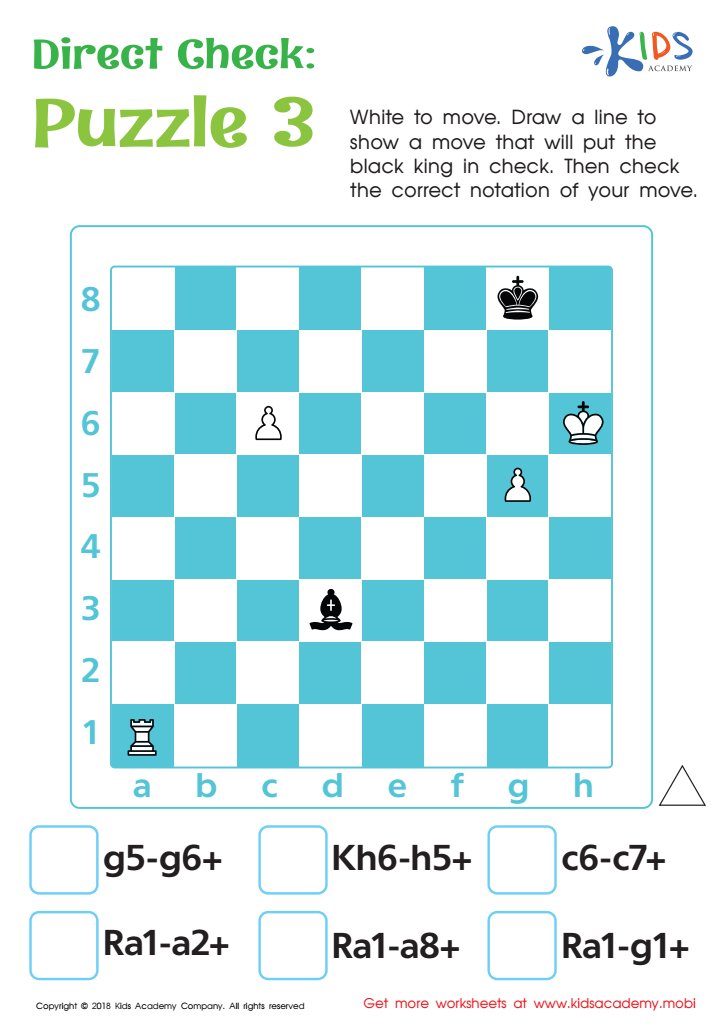
Direct Check: Puzzle 3 Worksheet
Chess is a great way to help your child develop their strategic, mathematical, and thinking skills. Test their understanding with this simple worksheet: they must get the black king in checkmate with white pieces, then select the notation that shows the correct move. See just how much progress they've made!
Direct Check: Puzzle 3 Worksheet
Worksheet
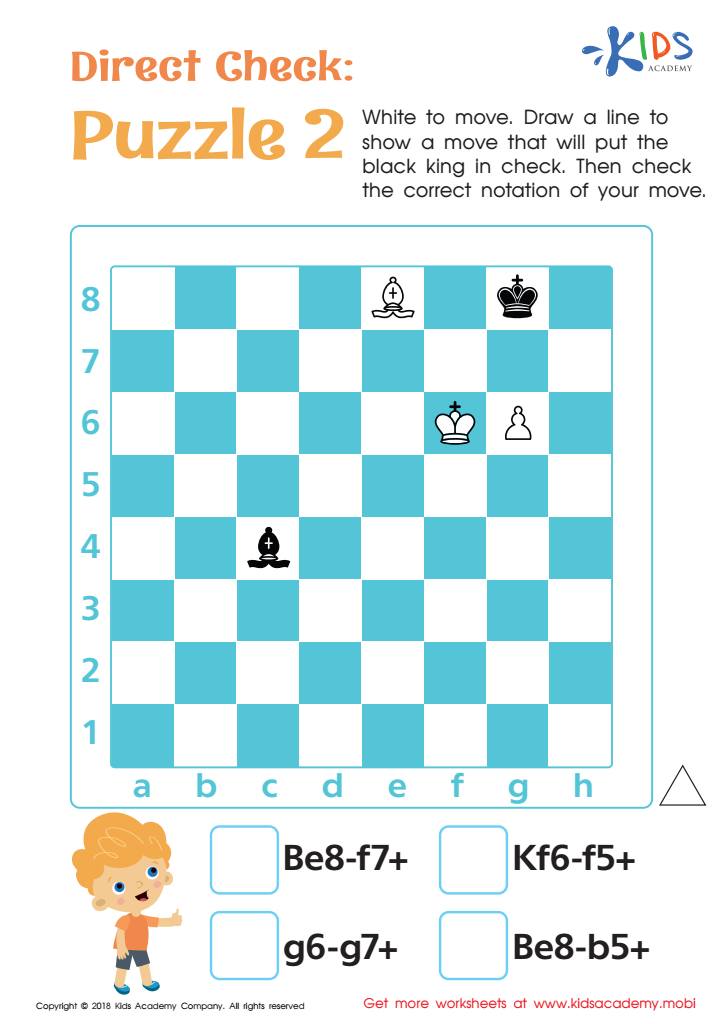
Direct Check: Puzzle 2 Worksheet
Test your kid's chess skills with this worksheet. Help them draw a line to put the black king in checkmate, then check the correct notation from the provided options. This will help them understand the correct notation of each move they make.
Direct Check: Puzzle 2 Worksheet
Worksheet
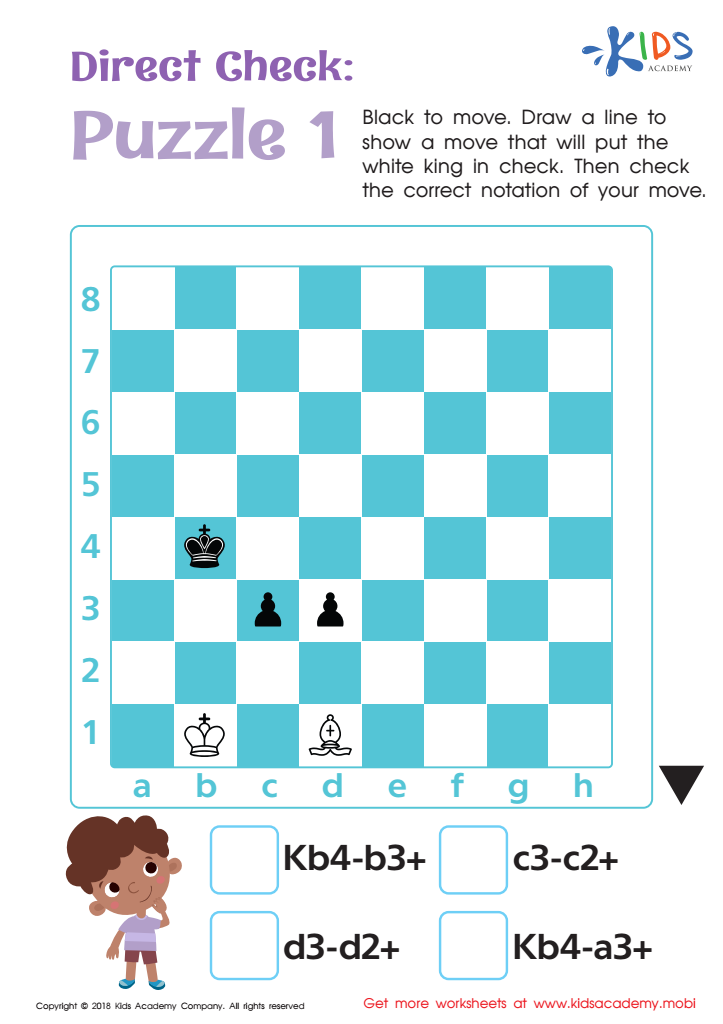
Direct Check: Puzzle 1 Worksheet
Your child can test their chess knowledge with this worksheet. If they've been taking lessons or playing regularly, they'll enjoy connecting the dots to put the white king in checkmate, then checking the correct notation. Challenge their chess skills!
Direct Check: Puzzle 1 Worksheet
Worksheet
Join Kids Academy for Free
Who is primarily going to use this learning content?