Normal Chess Worksheets for Ages 4-6 - Page 2
47 filtered results
-
From - To
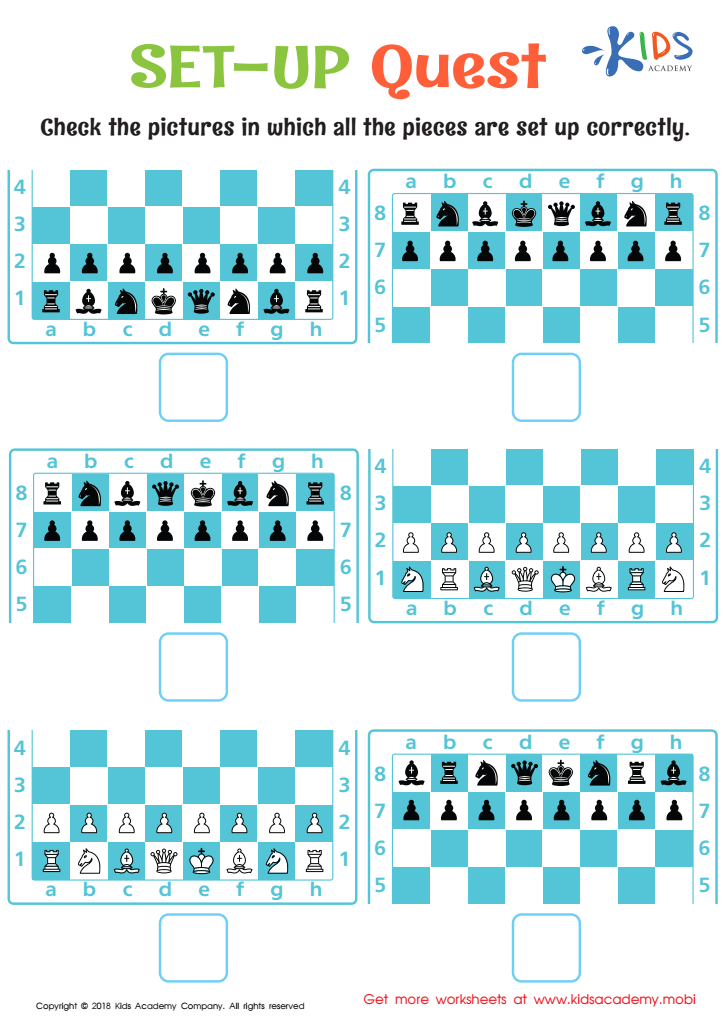
Set-up Quest Worksheet
 Assign to My Students
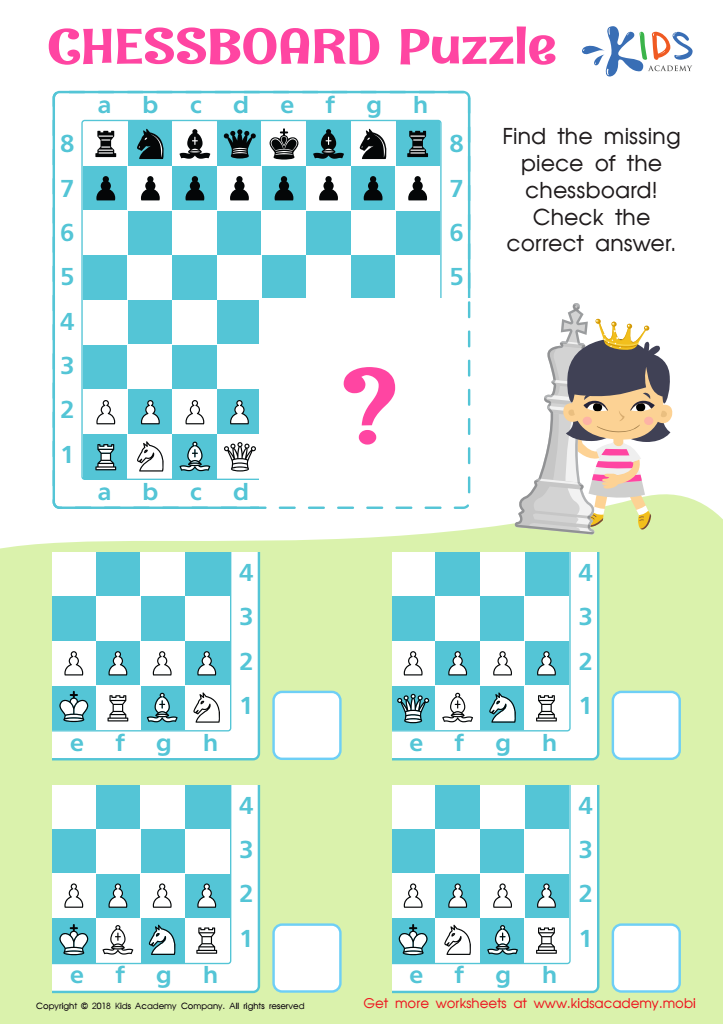
Chessboard Puzzle Worksheet
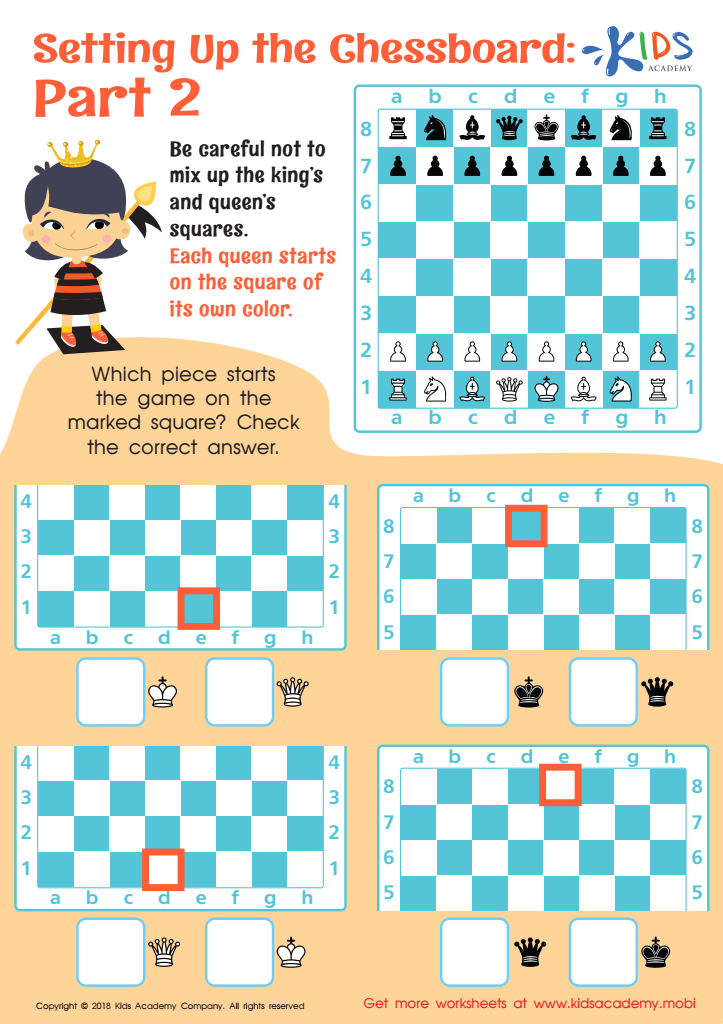
Setting up the Chessboard: Part 2 Worksheet
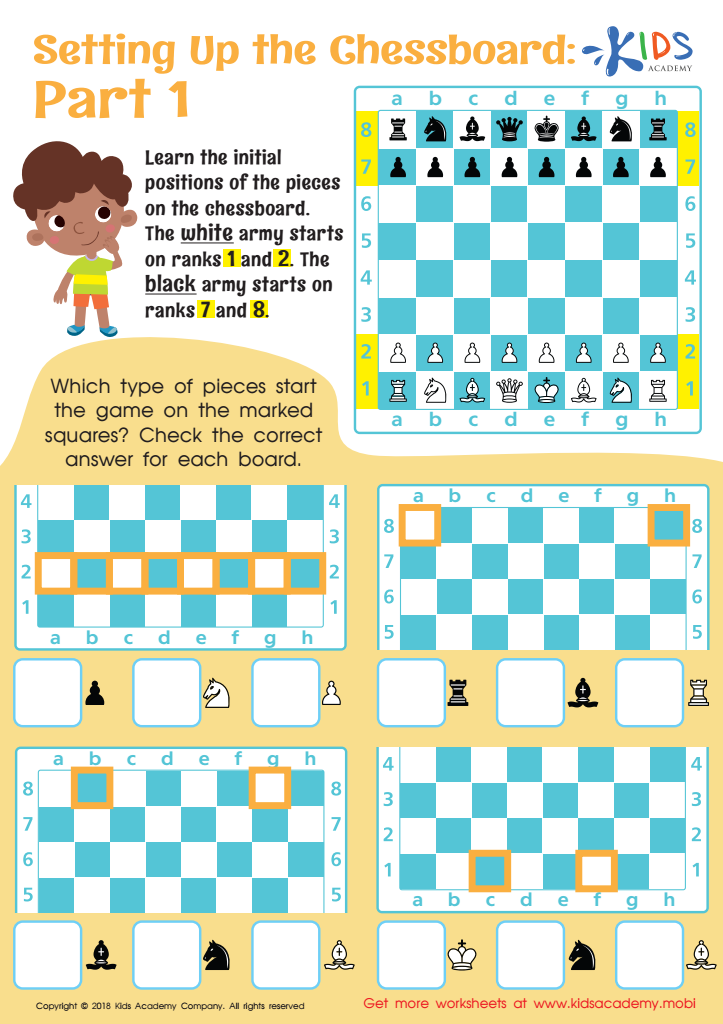
Setting up the Chessboard: Part 1 Worksheet
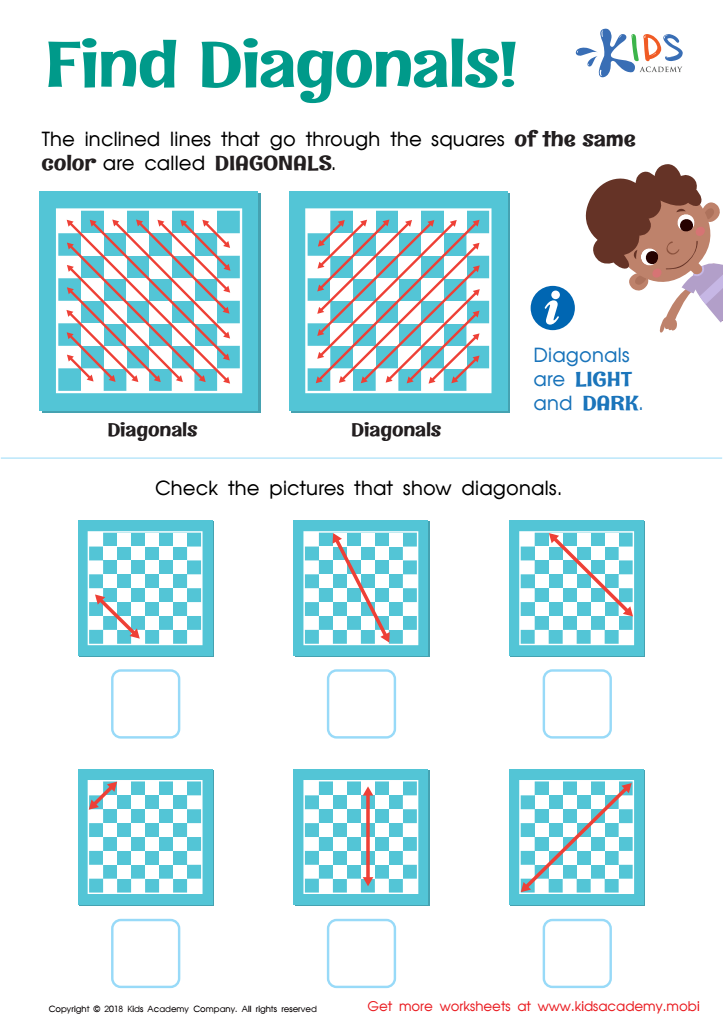
Find Diagonals Worksheet
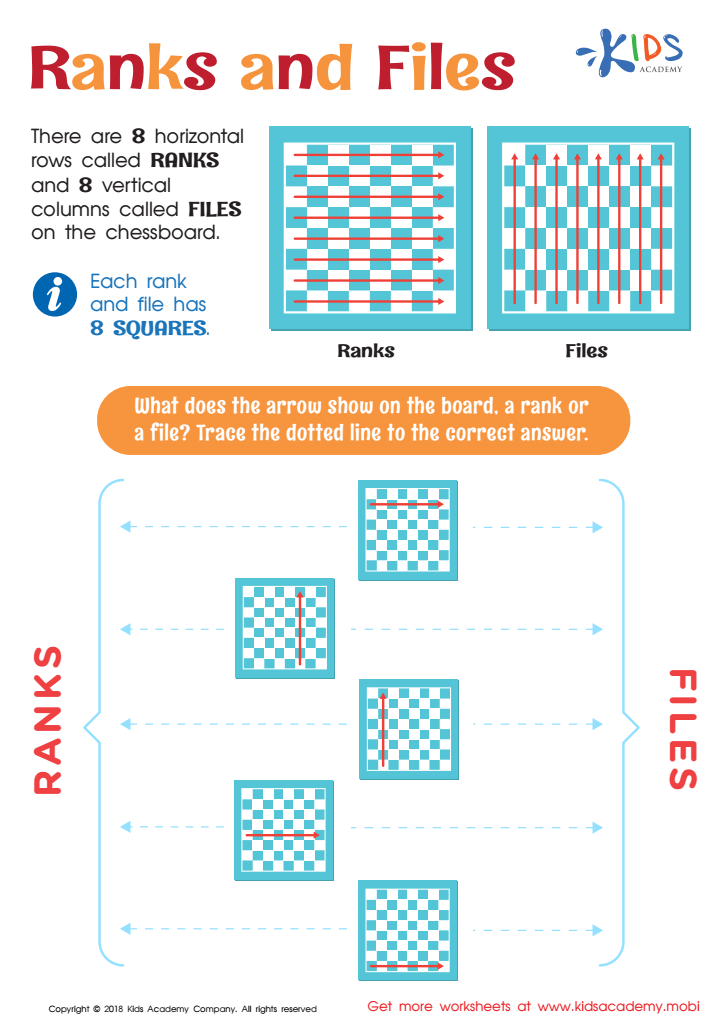
Ranks and Files Worksheet
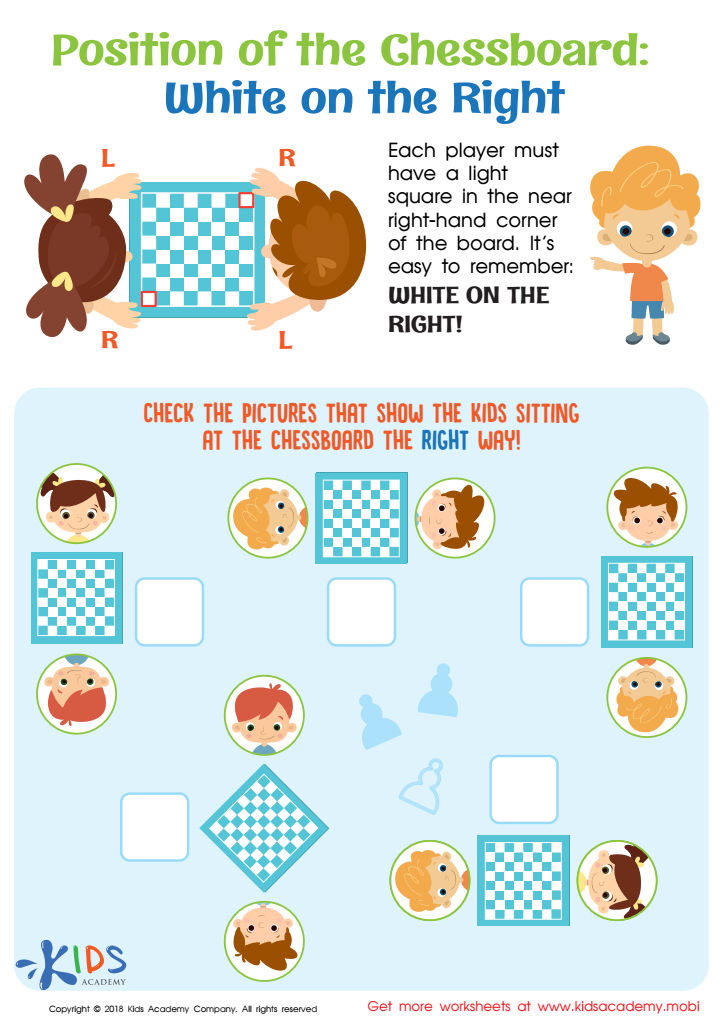
Position of the Chessboard: White on the Right Worksheet
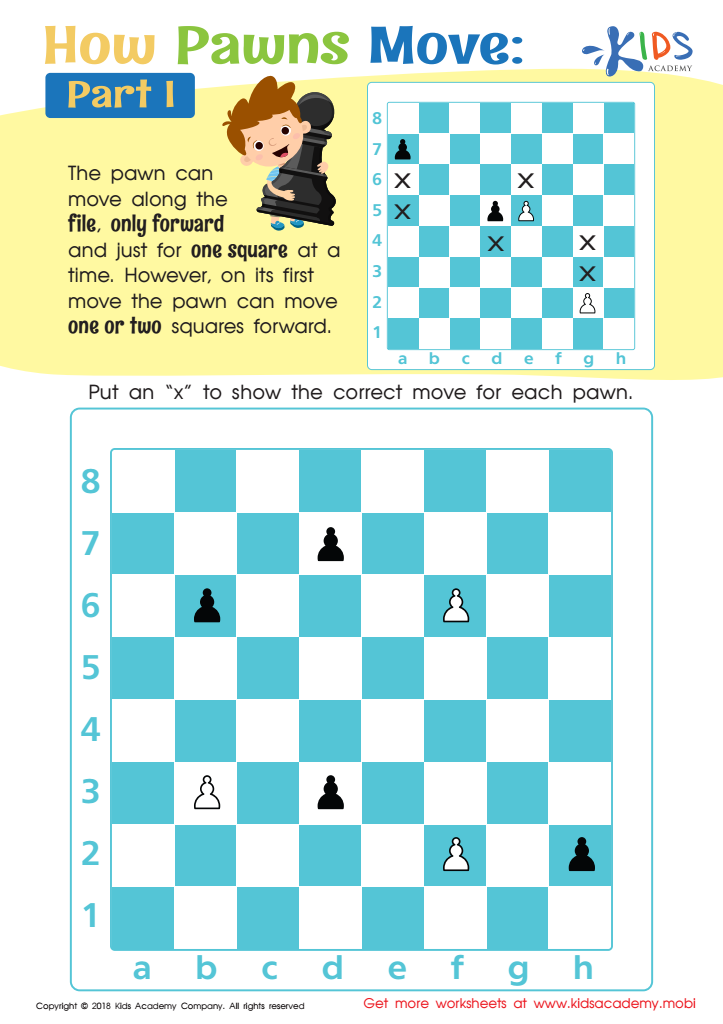
How Pawns Move: Part I Worksheet
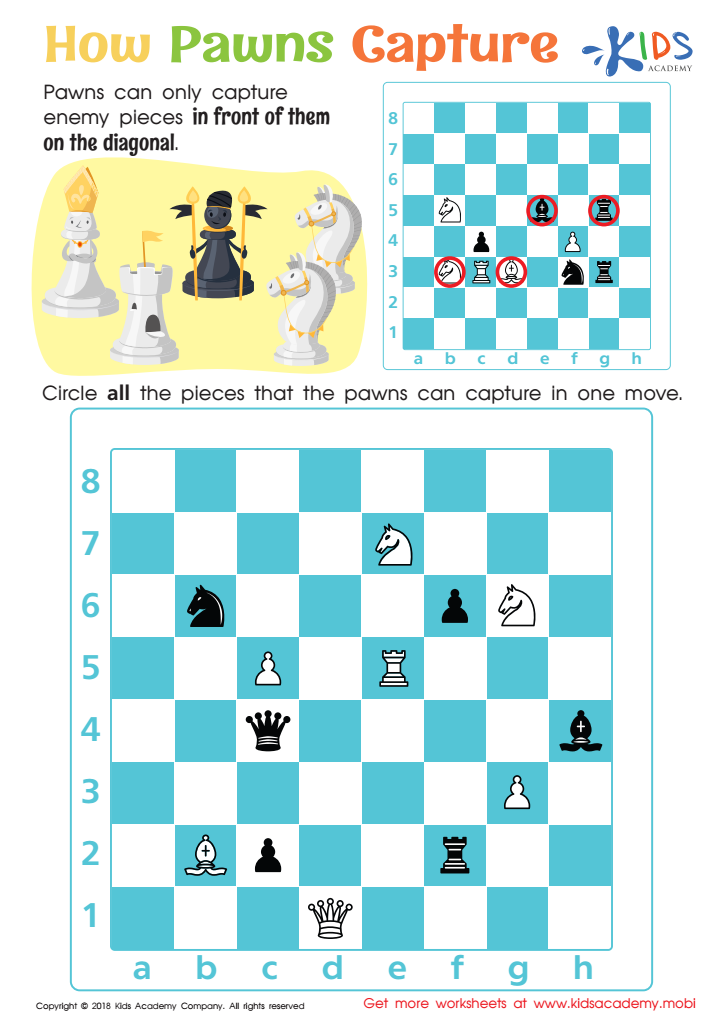
How Pawns Capture Worksheet
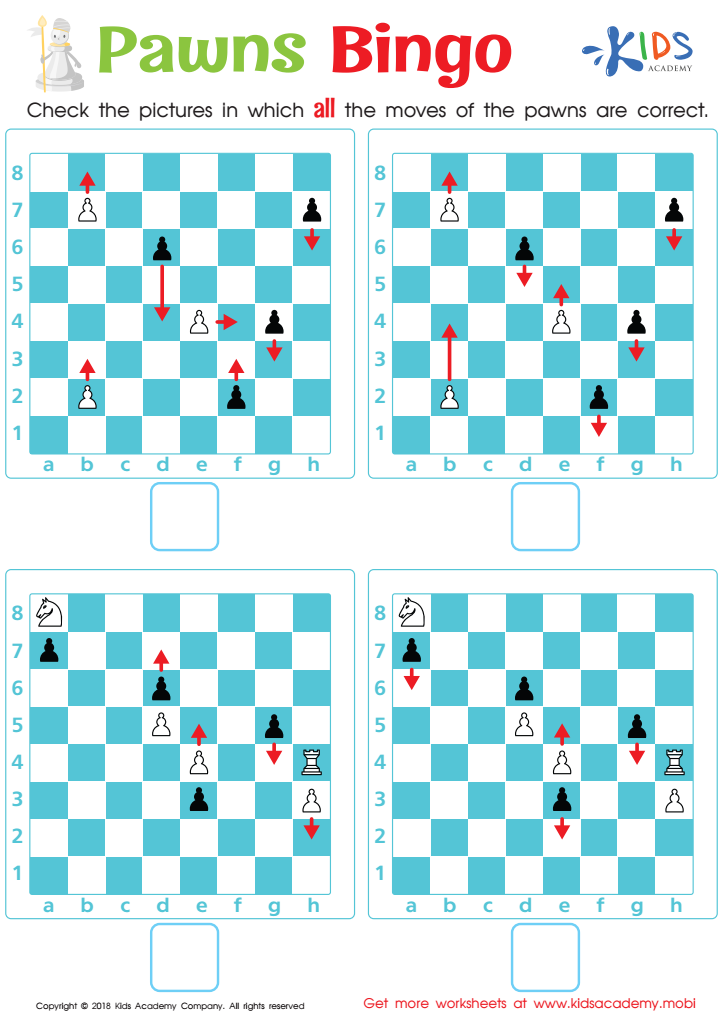
Pawns Bingo Worksheet
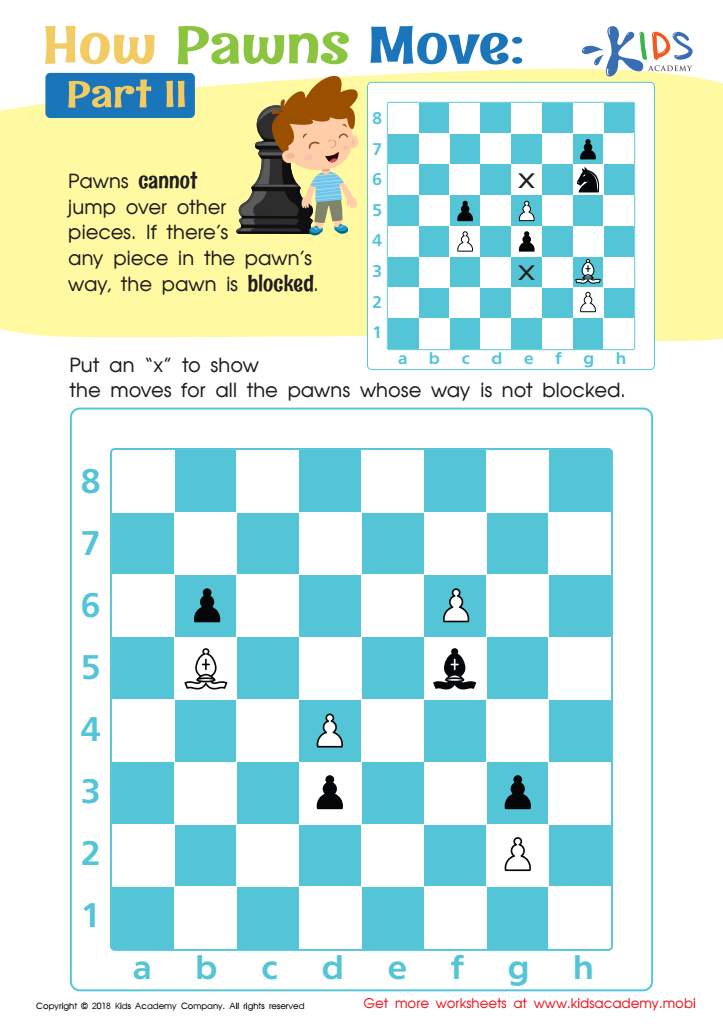
How Pawns Move: Part II Worksheet
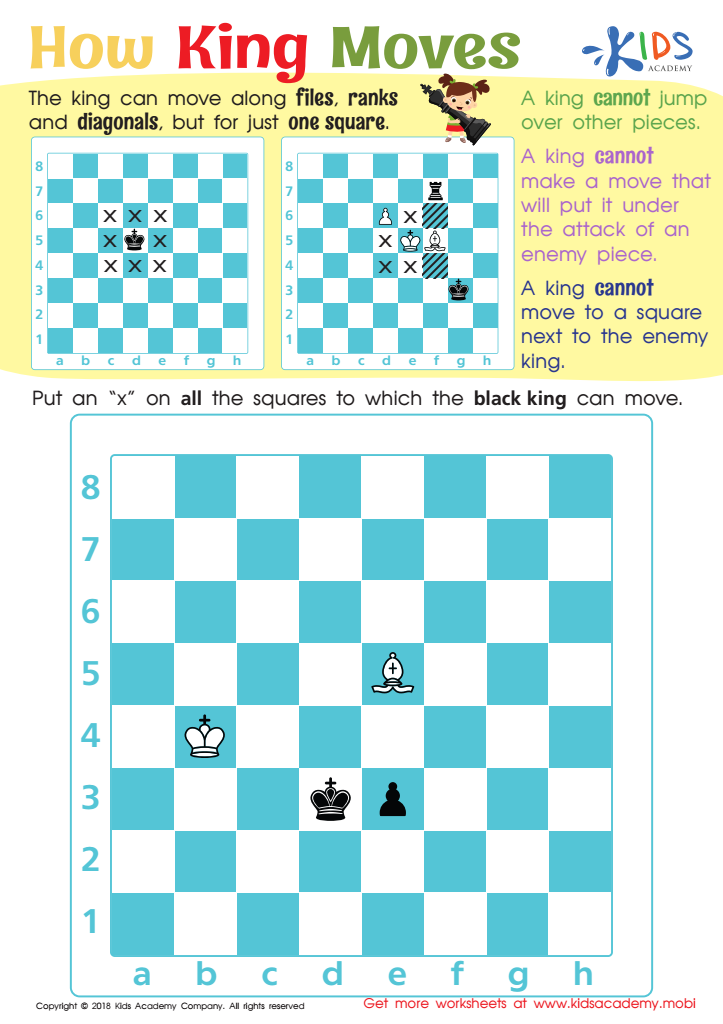
How King Moves Worksheet
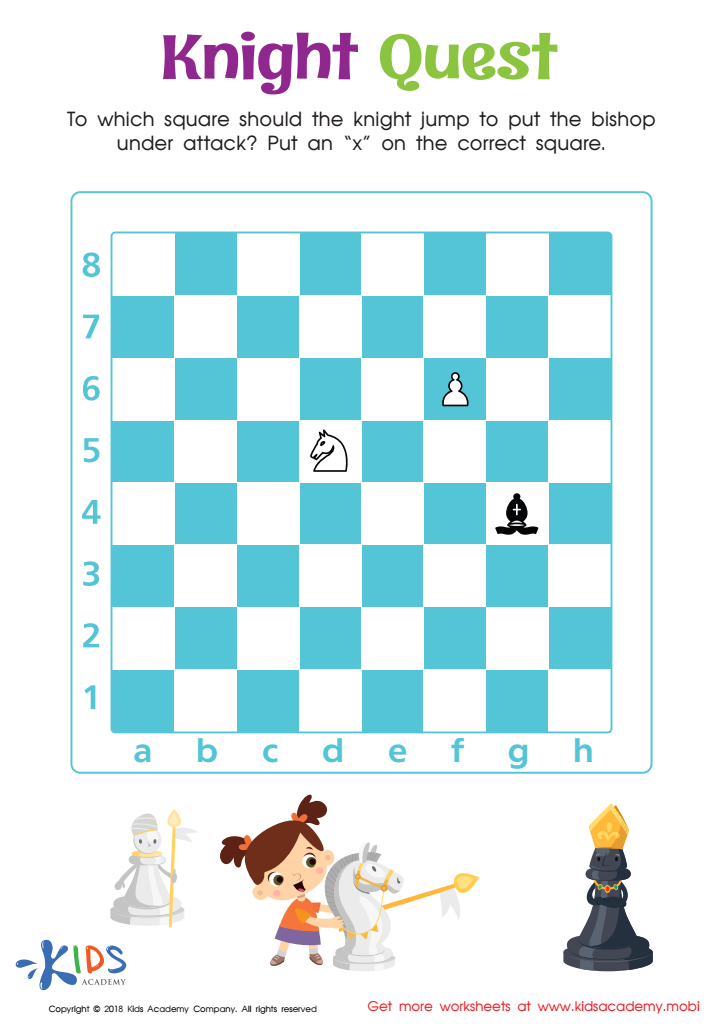
Knight Quest Worksheet
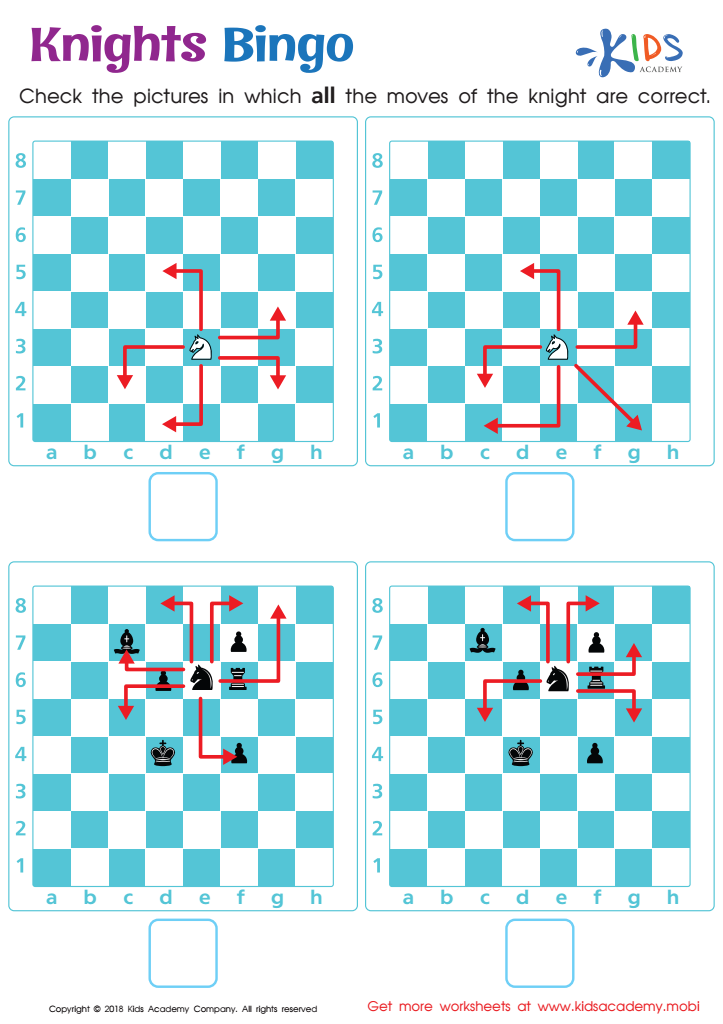
Knights Bingo Worksheet
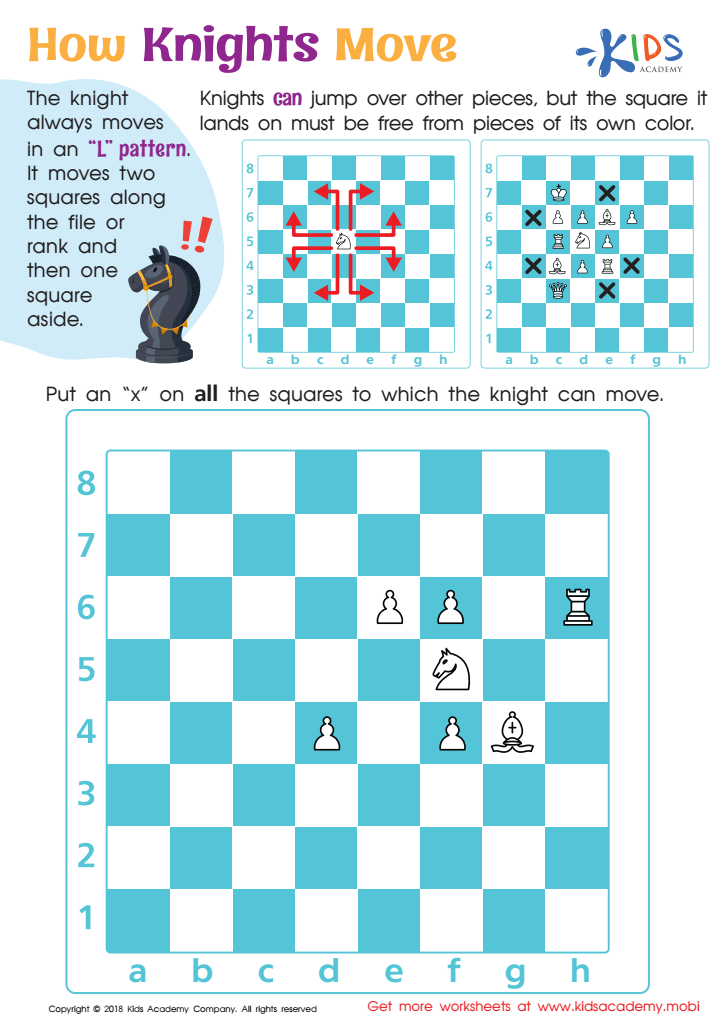
How Knights Move Worksheet
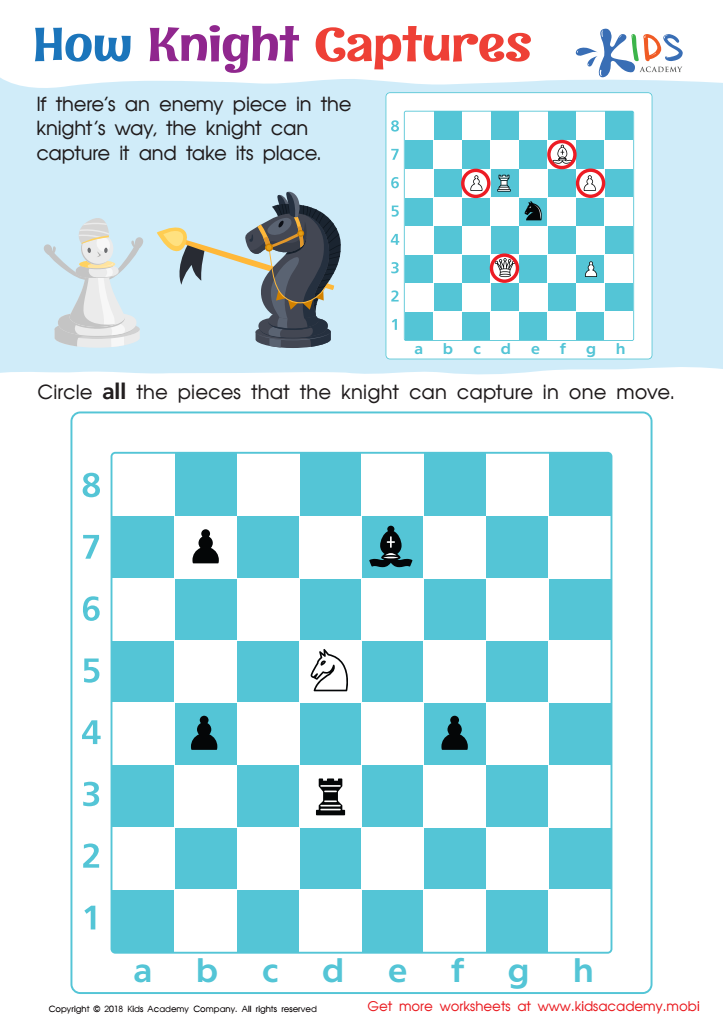
How Knight Captures Worksheet
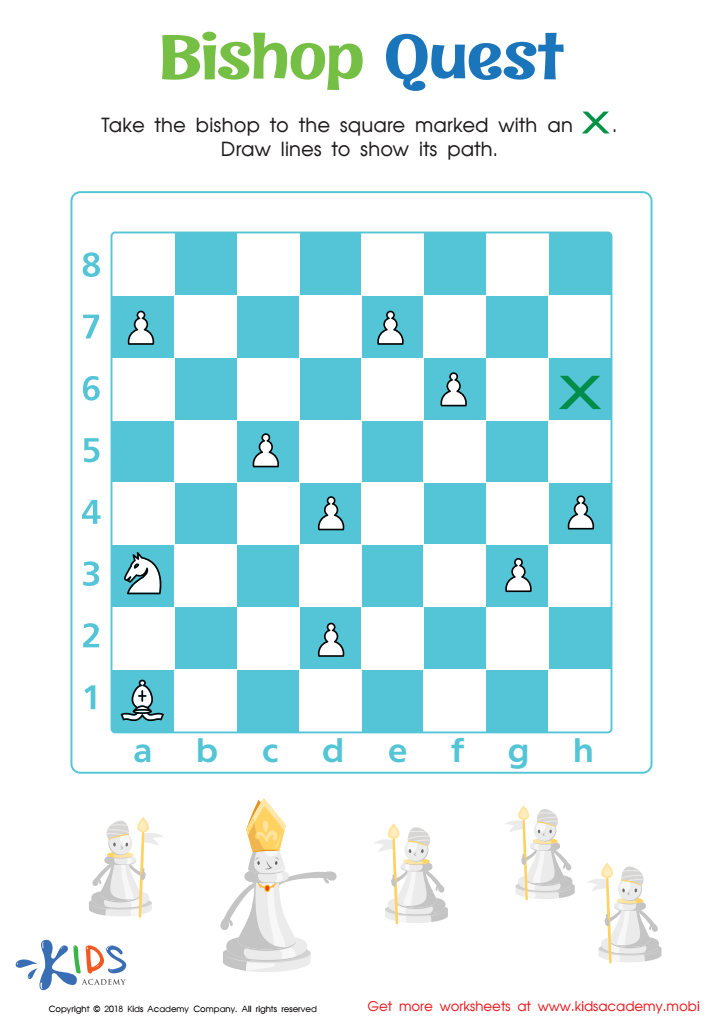
Bishop Quest Worksheet
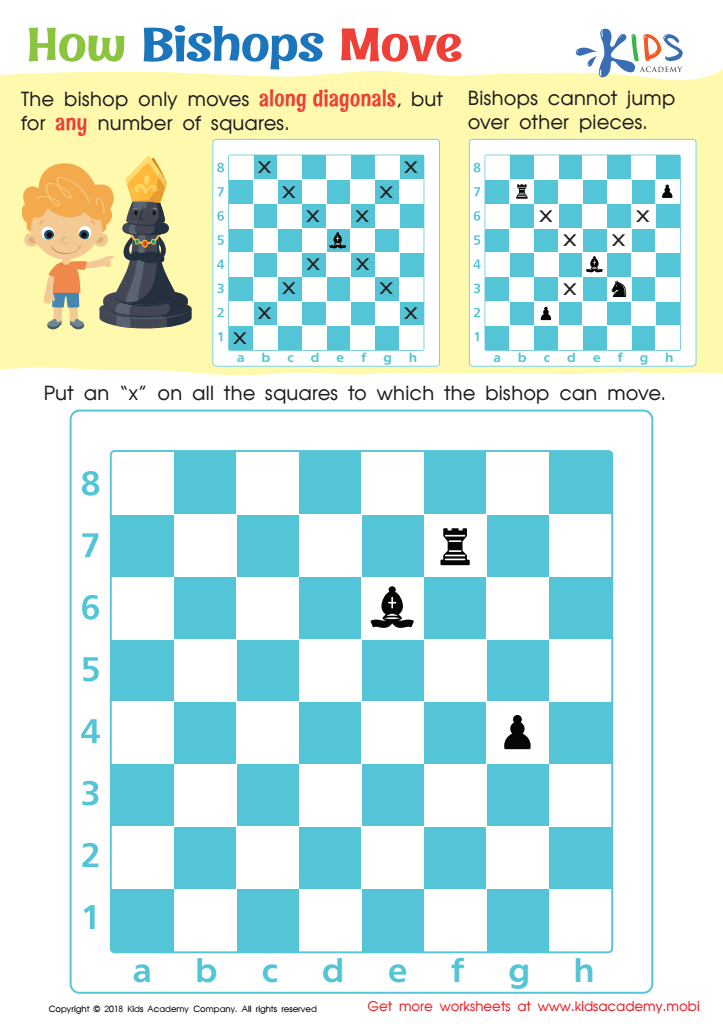
How Bishops Move Worksheet
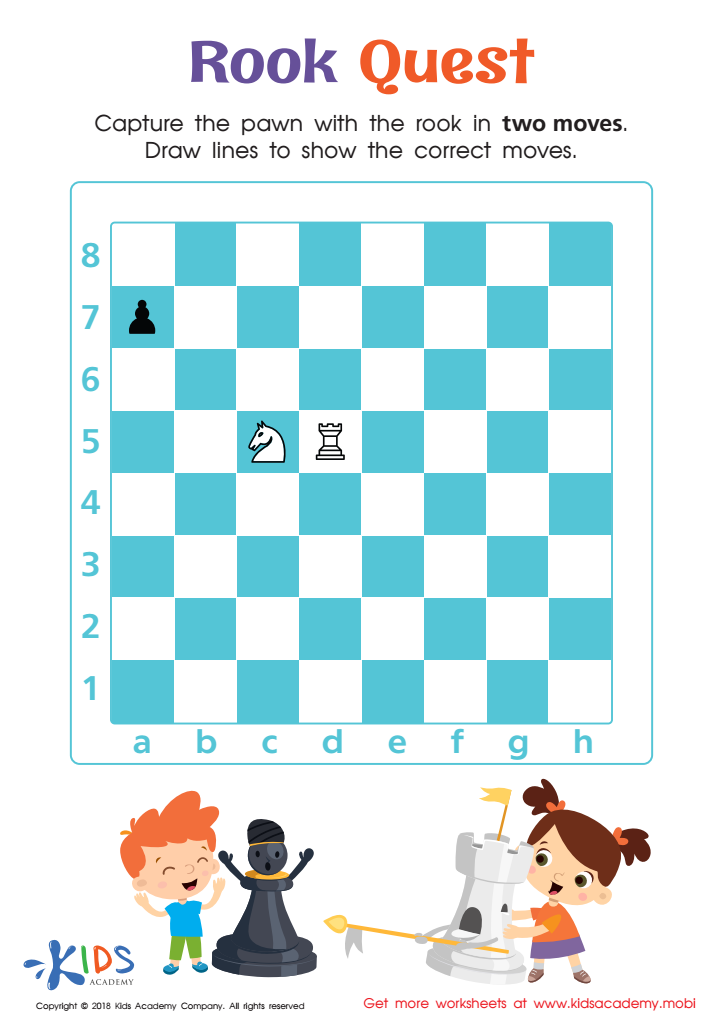
Rook Quest Worksheet
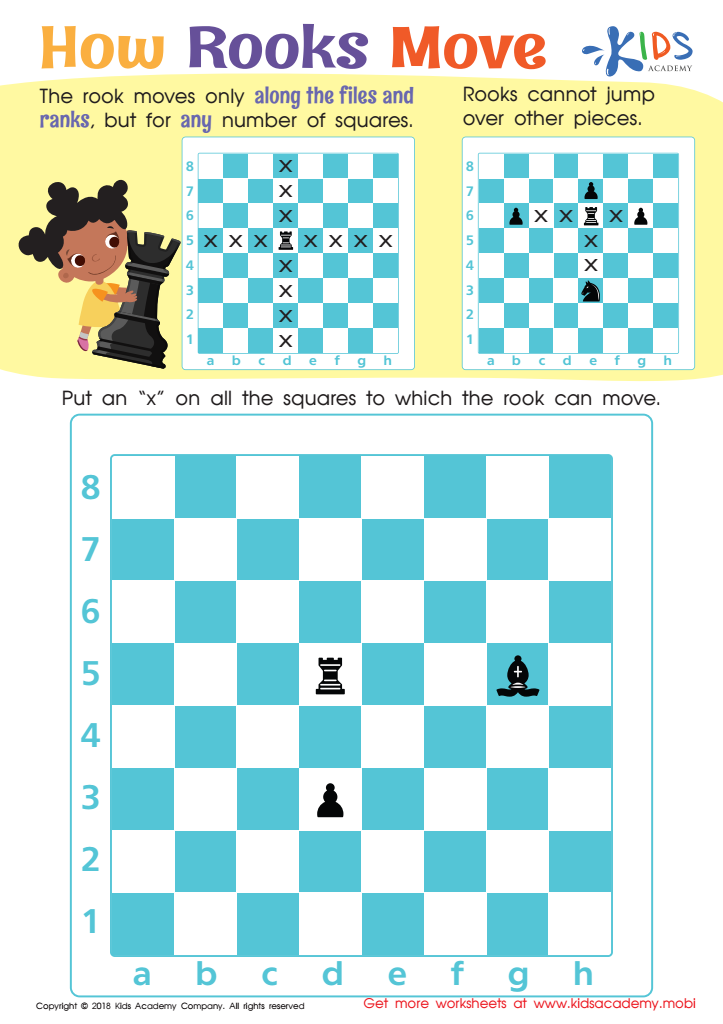
How Rooks Move Worksheet
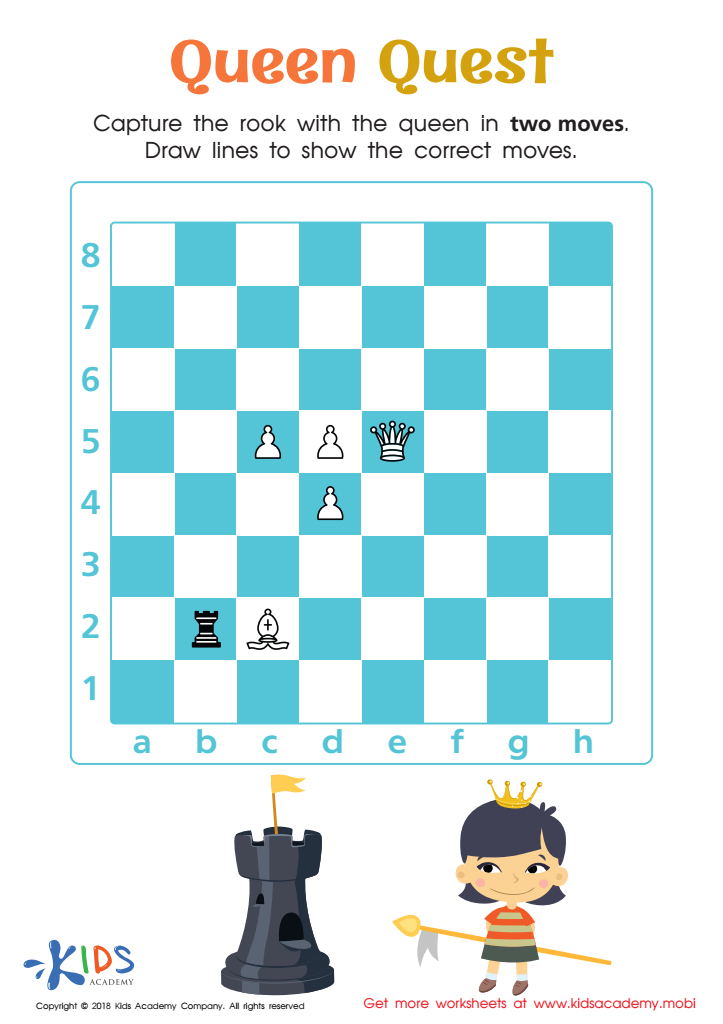
Queen Quest Worksheet
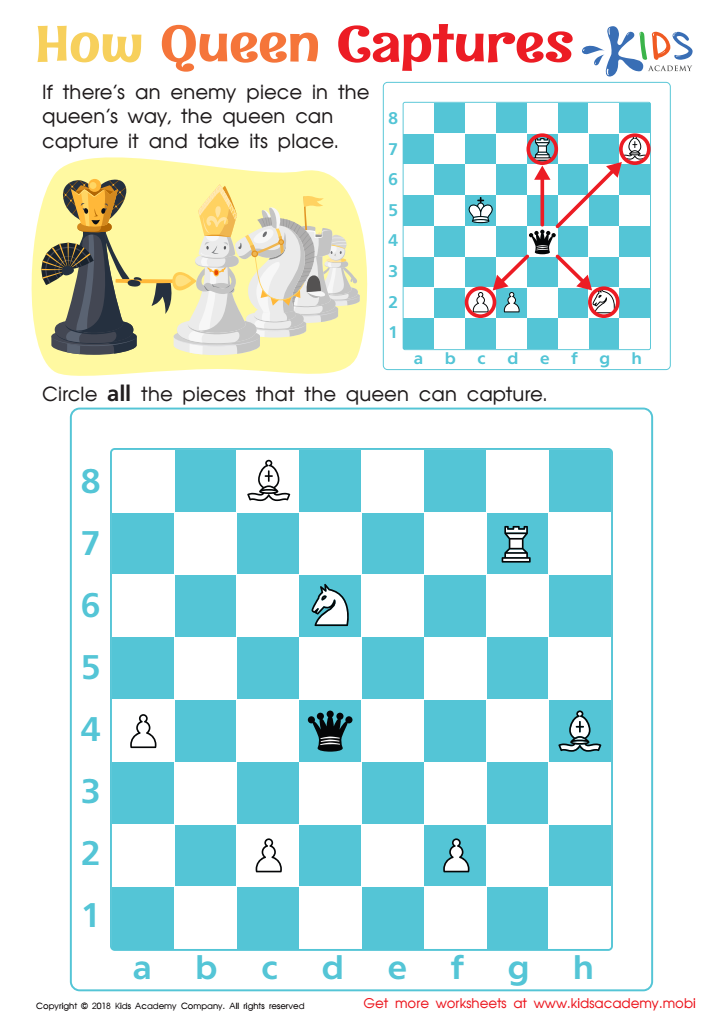
How Queen Captures Worksheet
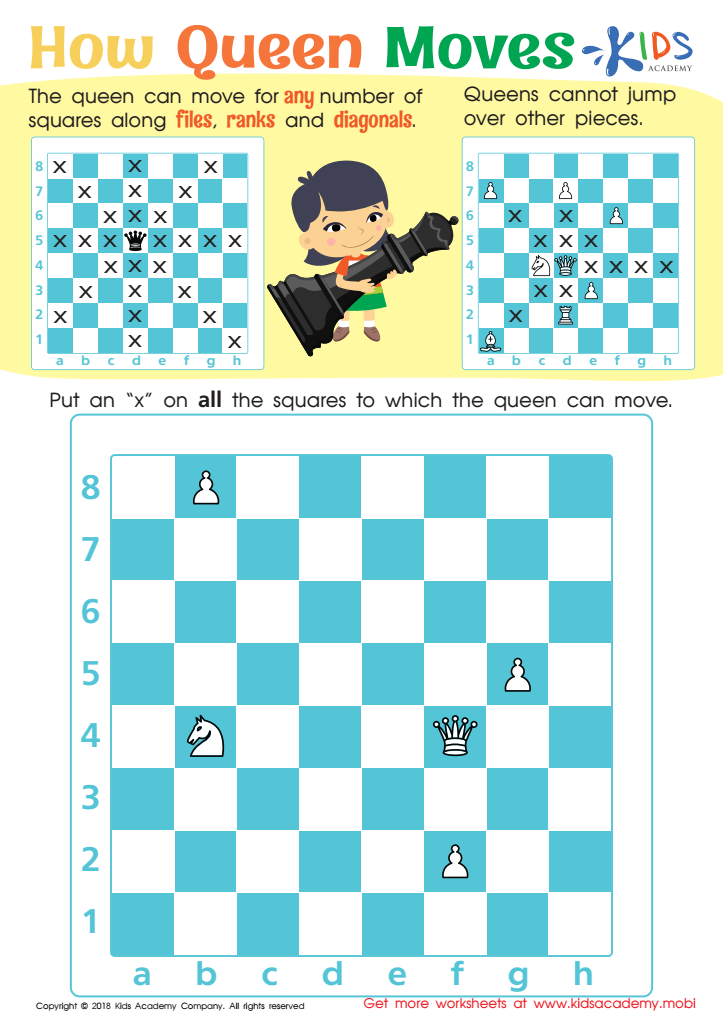
How Queen Moves Worksheet






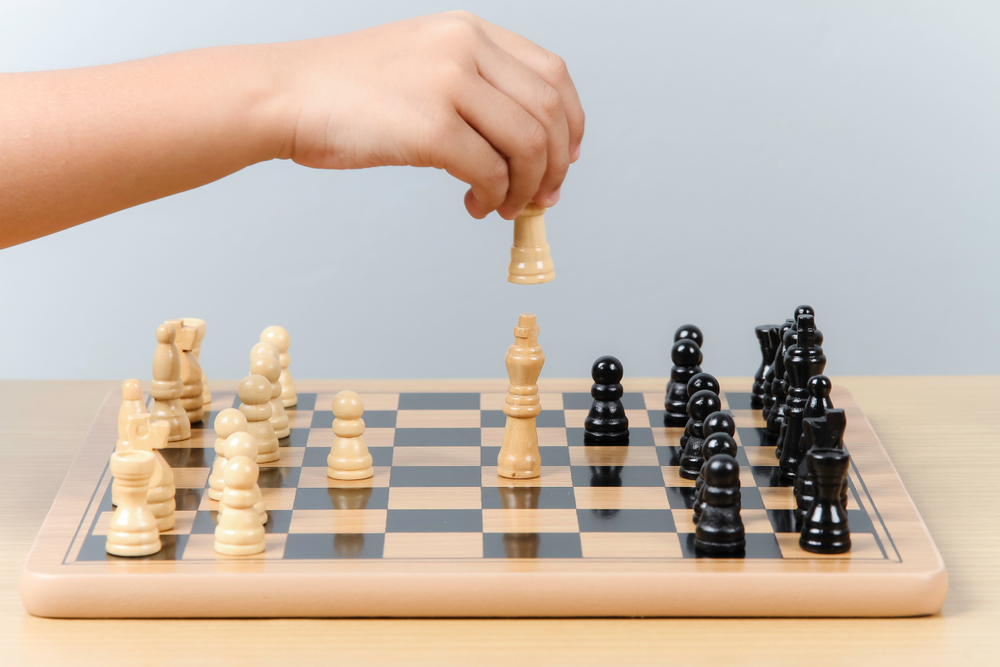
Teaching young children, especially those aged 4-6, to play chess offers impressive benefits that can positively impact their overall development. Firstly, chess significantly enhances cognitive abilities. It stimulates both strategic thinking and problem-solving skills, promoting critical thinking from an early age. As children plan their moves, they learn to anticipate consequences, helping to cultivate patience and foresight.
Chess also supports improved concentration and memory. The need to remember the moves and strategies involved in chess hones a child’s memory and their ability to concentrate over extended periods, a skill that's beneficial in academic settings and daily life. Practicing these skills regularly can lead to better performance in other subjects, such as math and reading.
Furthermore, chess nurtures essential social and emotional skills. The game requires turn-taking and helps children learn the value of good sportsmanship—whether in winning gracefully or accepting loss graciously. This helps to build emotional resilience and interpersonal skills, encouraging cooperation and respect among peers.
Lastly, chess offers a constructive alternative to screen time. It engages children in a recreational activity that promotes intellectual engagement rather than passive consumption. Given its proven benefits in fostering mental abilities and emotional regulation, introducing chess to kids aged 4-6 can set a strong foundation for lifelong learning and personal development.