Filters

173 filtered results

Clear all filters
Favorites
With answer key
Interactive

173 filtered results

Difficulty Level

Grade


Check out this FREE Trial Lesson on Building Vocabulary for age 4-8!

Key Details

Favorites
With answer key
Interactive
  • 4-8
  • Interactive
  • Building Vocabulary
  • Normal
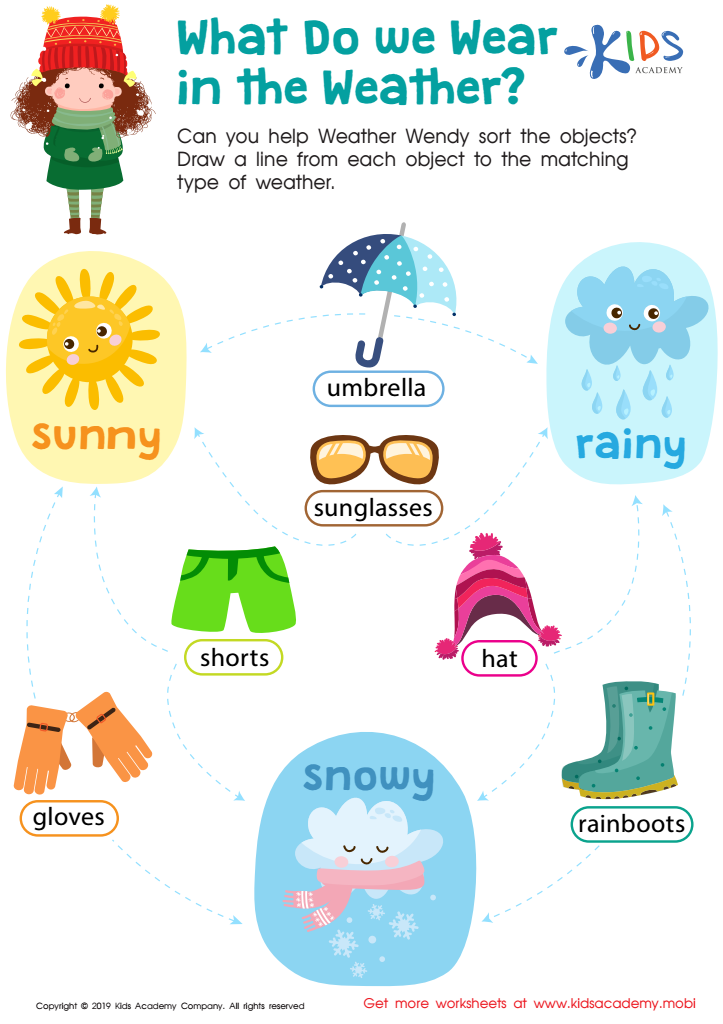
What Do We Wear in the Weather? Worksheet

What Do We Wear in the Weather? Worksheet

This worksheet boosts young learners' everyday vocab with fun high-frequency weather words. They'll see and match familiar pictures to the words they read. Plus, it helps them develop fine motor skills. Perfect for preschoolers.
What Do We Wear in the Weather? Worksheet
Worksheet
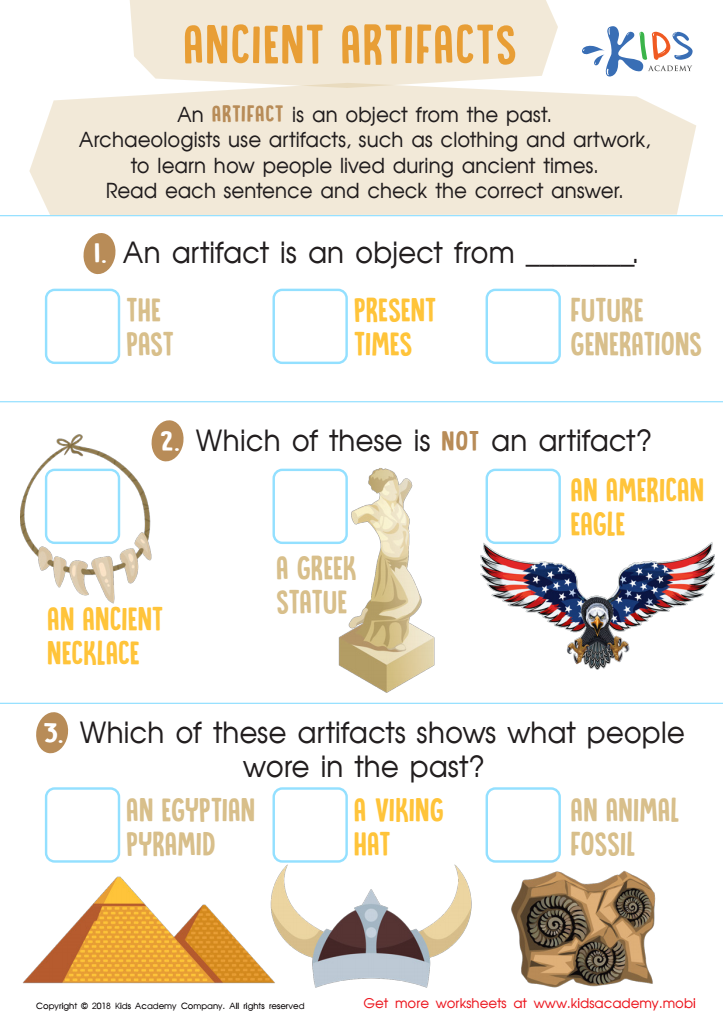
Ancient Artifacts Worksheet

Ancient Artifacts Worksheet

This free worksheet helps kids understand ancient artifacts, from statues to necklaces to fossils. They'll read comprehension questions and select answers from multiple choice options, with pictures to help them grasp the concept. It's a great way for children to learn about artifacts and what they may look like.
Ancient Artifacts Worksheet
Worksheet
Tracing Fun Worksheet

Tracing Fun Worksheet

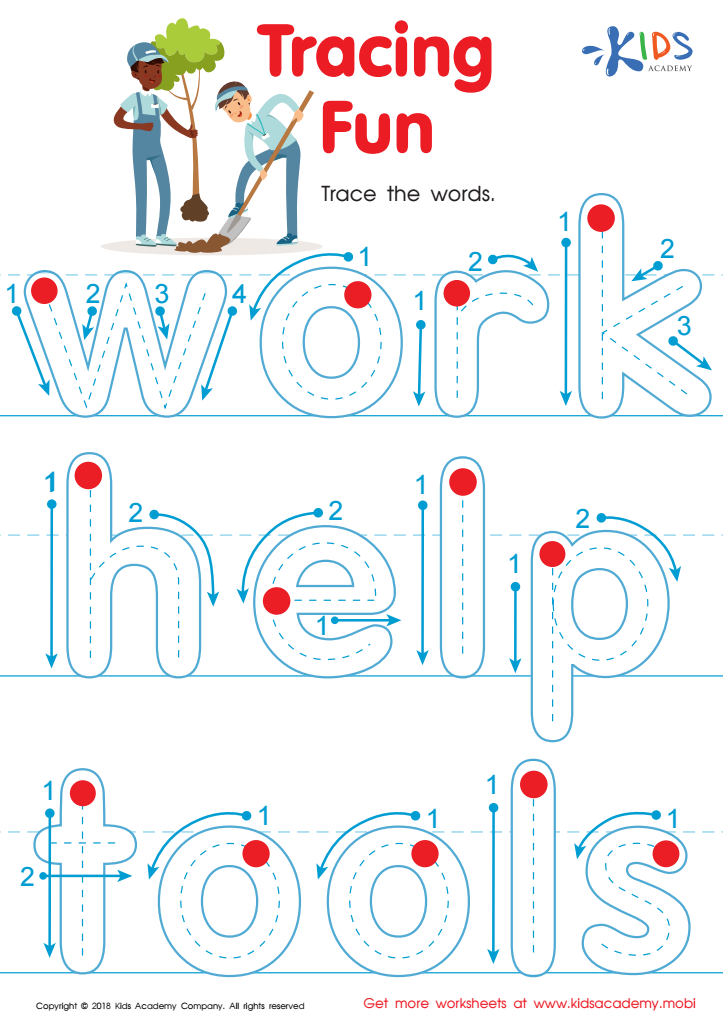
Believe it or not, good handwriting helps with reading! Starting at the top left and writing legibly builds reading skills. This free worksheet helps little learners practice basic sight words. Red dots show them where to start and the words provide reinforcement without them realising. An enjoyable way to boost their reading and writing.
Tracing Fun Worksheet
Worksheet
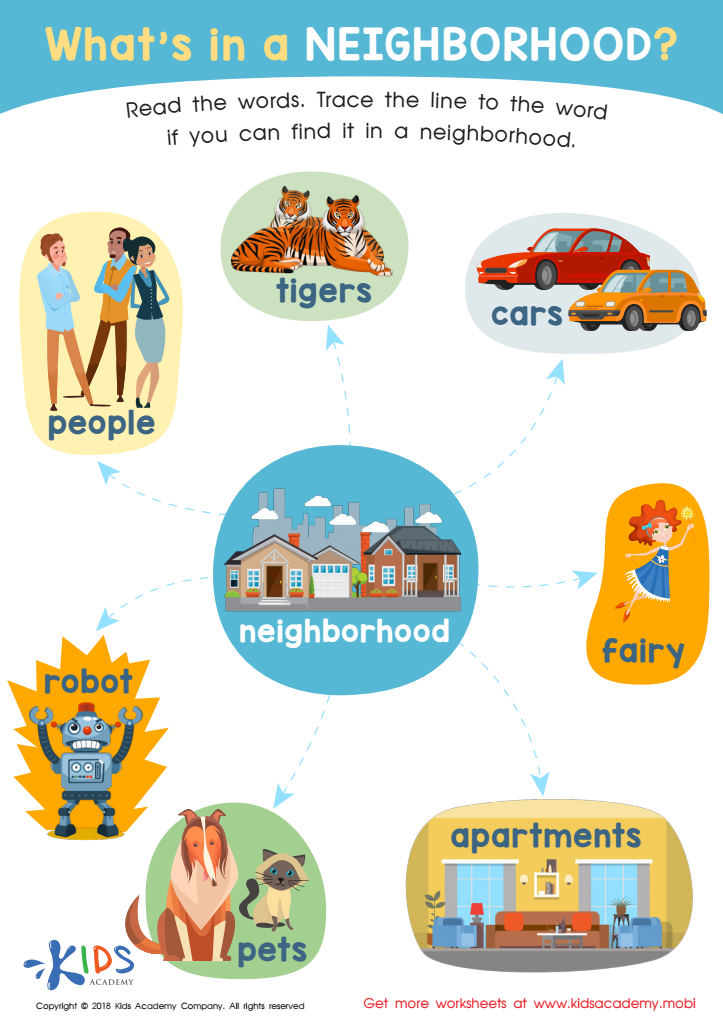
What's in a Neighborhood? Worksheet

What's in a Neighborhood? Worksheet

This fun worksheet uses picture clues and traceable lines to help kids learn neighborhood words. Kids will match the neighborhood pictures to the correct words and practice connecting the two. The bright colors make it a great way for kids to practice understanding the qualities of a neighborhood.
What's in a Neighborhood? Worksheet
Worksheet
Look Carefully Worksheet

Look Carefully Worksheet

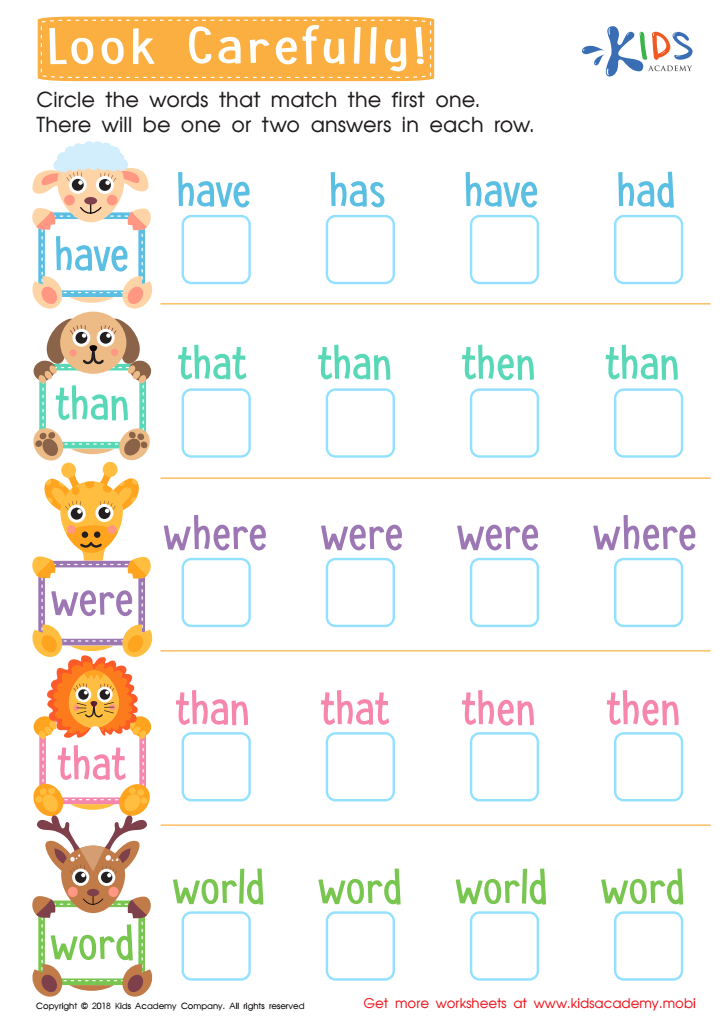
It's crucial to teach kids to identify sight words and become fluent readers. This free worksheet helps make it simpler for kids to learn the similarities and differences between similar words. They'll get practice by looking at the box word and selecting the one that matches from the row.
Look Carefully Worksheet
Worksheet
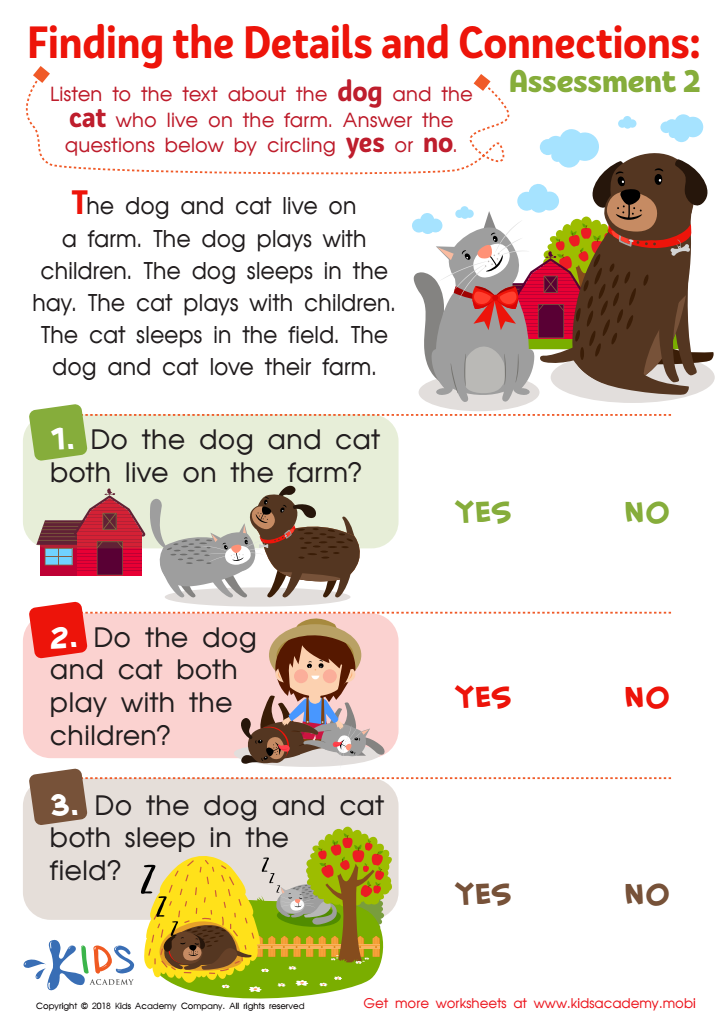
Finding the Details and Connections: Assessment 2 Worksheet

Finding the Details and Connections: Assessment 2 Worksheet

Does your child love animals? If you have pets, they'll relate to the text in this worksheet. Read it aloud to them and help them answer the simple questions by circling yes or no. The story is about a dog and cat living on a farm. Let your child read it aloud to you if they can.
Finding the Details and Connections: Assessment 2 Worksheet
Worksheet
Finding the Details and Connections: Assessment 1 Worksheet

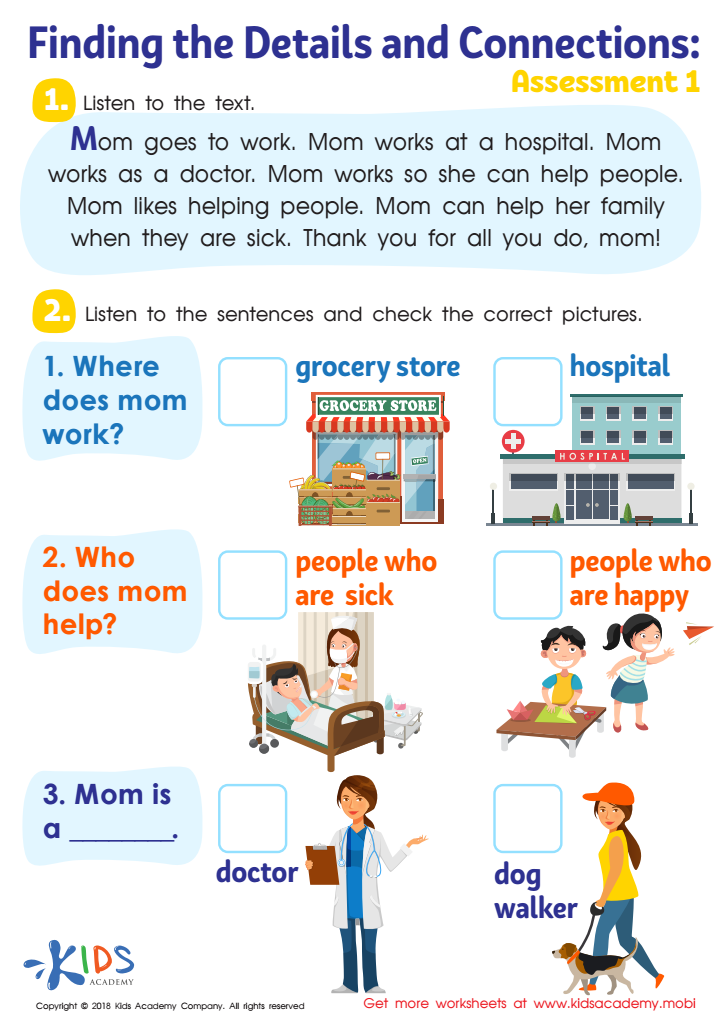
Finding the Details and Connections: Assessment 1 Worksheet

Ask your students what their parents do for a job. Do they know what profession their mom is in and where she works? Professionals have places they go to do their job. In this task, Mom goes to a hospital and is a doctor. Read the text and help them check the right pictures.
Finding the Details and Connections: Assessment 1 Worksheet
Worksheet
Walk In the Woods: Finding Connections Worksheet

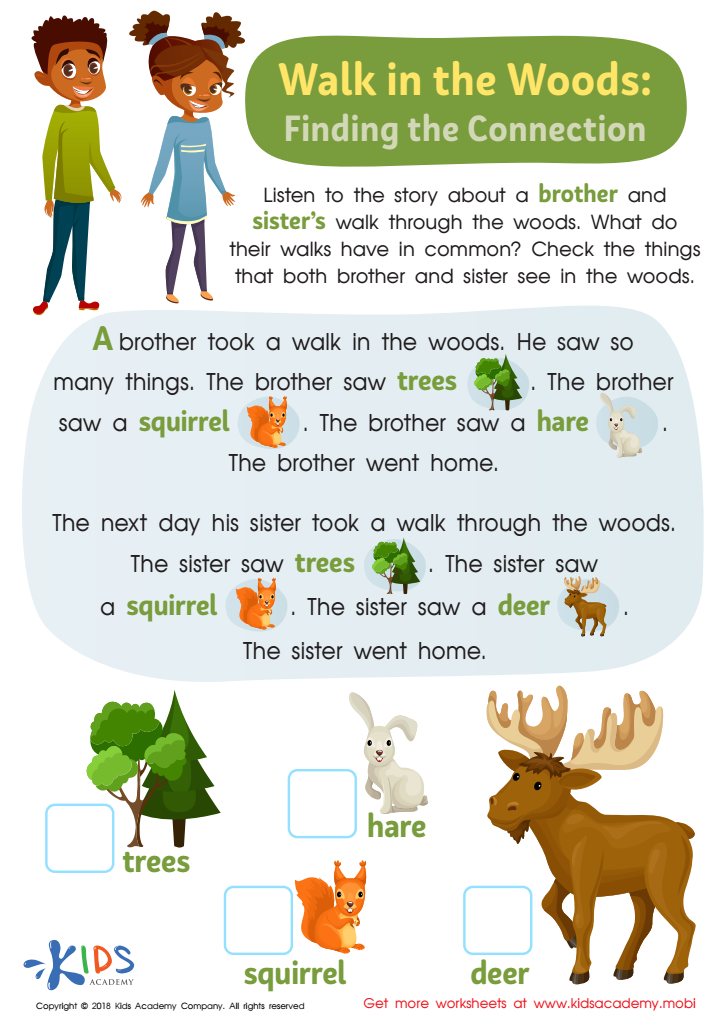
Walk In the Woods: Finding Connections Worksheet

Brother and sister took a walk in the woods to connect with nature and get some exercise. As they went, they noted different things like birds and plants, which they share in this story. Read it to your little ones, and help them check off the items the two saw. It's a great way to learn about nature and enjoy the outdoors.
Walk In the Woods: Finding Connections Worksheet
Worksheet
At a Pizza Party Worksheet

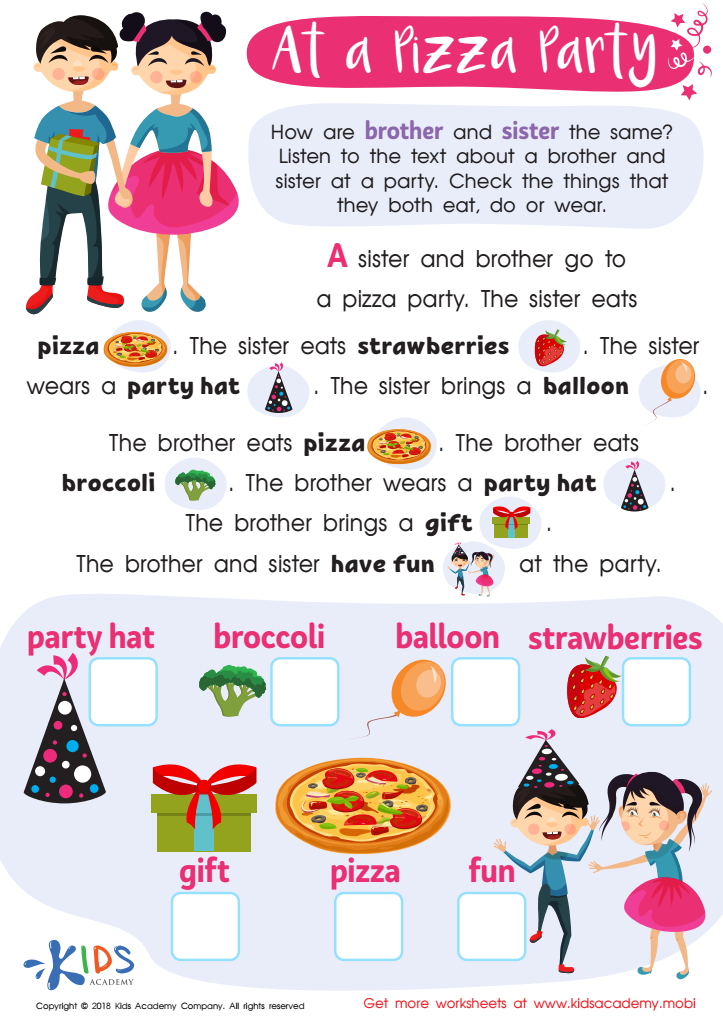
At a Pizza Party Worksheet

Parties are the best! Eating, playing, singing, dancing and gift-exchange - what's your child's fave part? In this worksheet, a brother and sister are eager to enjoy their party. Read the text to them and help them check what they do, eat, and wear. 80 words.
At a Pizza Party Worksheet
Worksheet
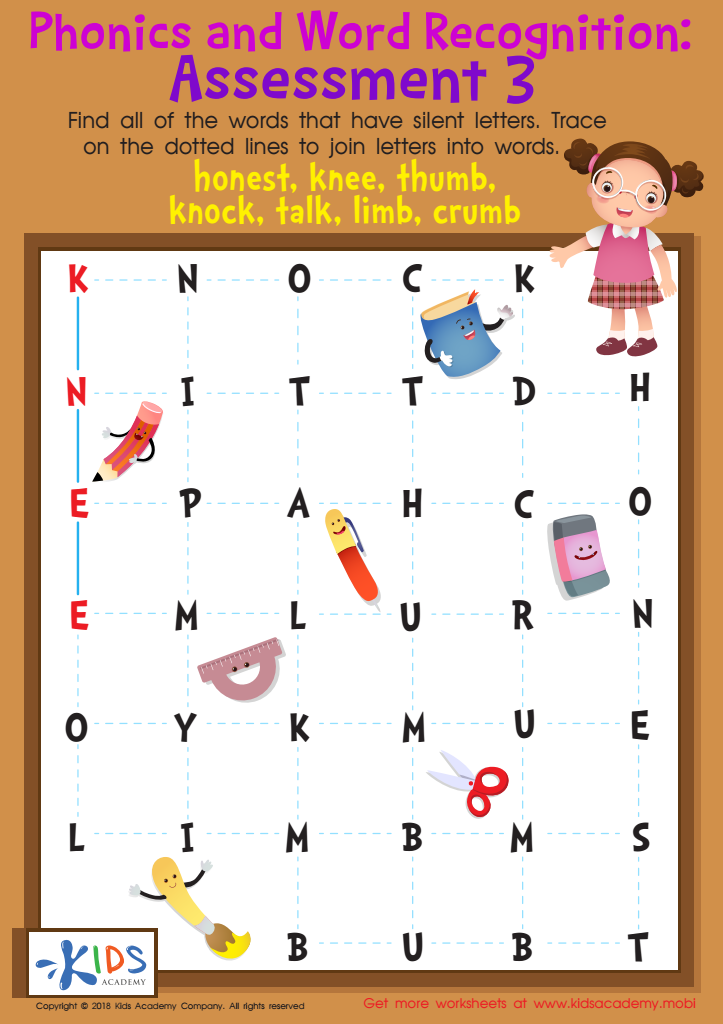
Phonics and Word Recognition: Assessment 3 Worksheet

Phonics and Word Recognition: Assessment 3 Worksheet

Silent letters can be tricky for kids learning to read and write. Show them how they work with words like 'knee' and 'dumb'. Then, challenge them to come up with their own. Give them a worksheet with silent letters and trace the lines to join the letters into words.
Phonics and Word Recognition: Assessment 3 Worksheet
Worksheet
Phonics and Word Recognition: Assessment 2 Worksheet

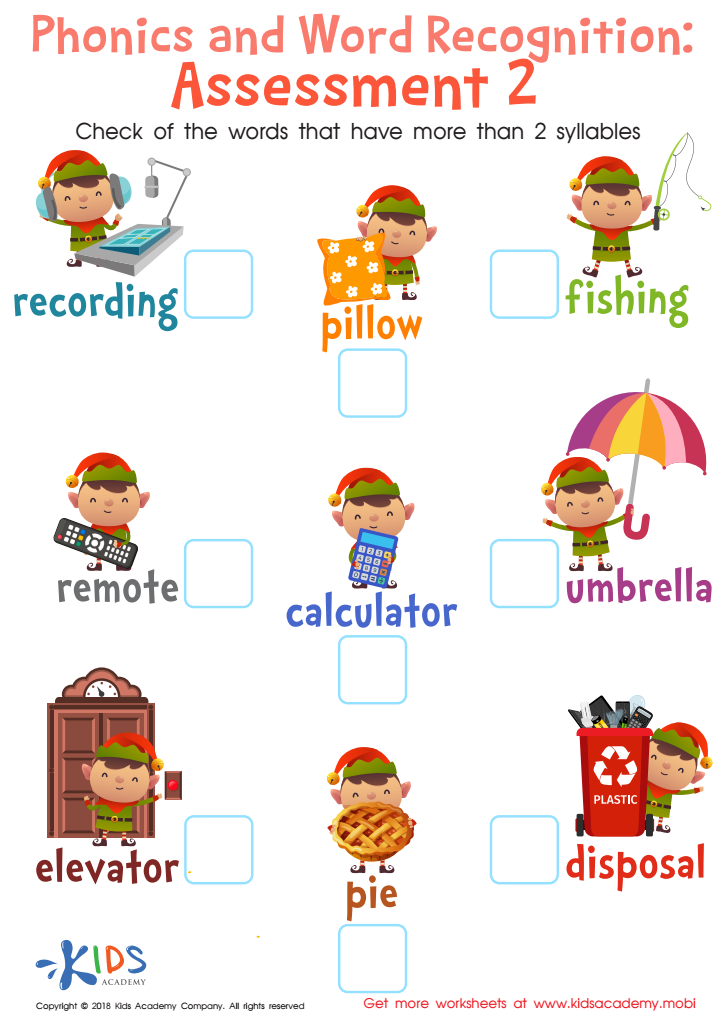
Phonics and Word Recognition: Assessment 2 Worksheet

Help your kids learn proper pronunciation by counting syllables. Most words they'll encounter have 1-3 syllables, making them simple to say. Have them repeat the words in your worksheet after you. Focus on longer words with more than two syllables.
Phonics and Word Recognition: Assessment 2 Worksheet
Worksheet
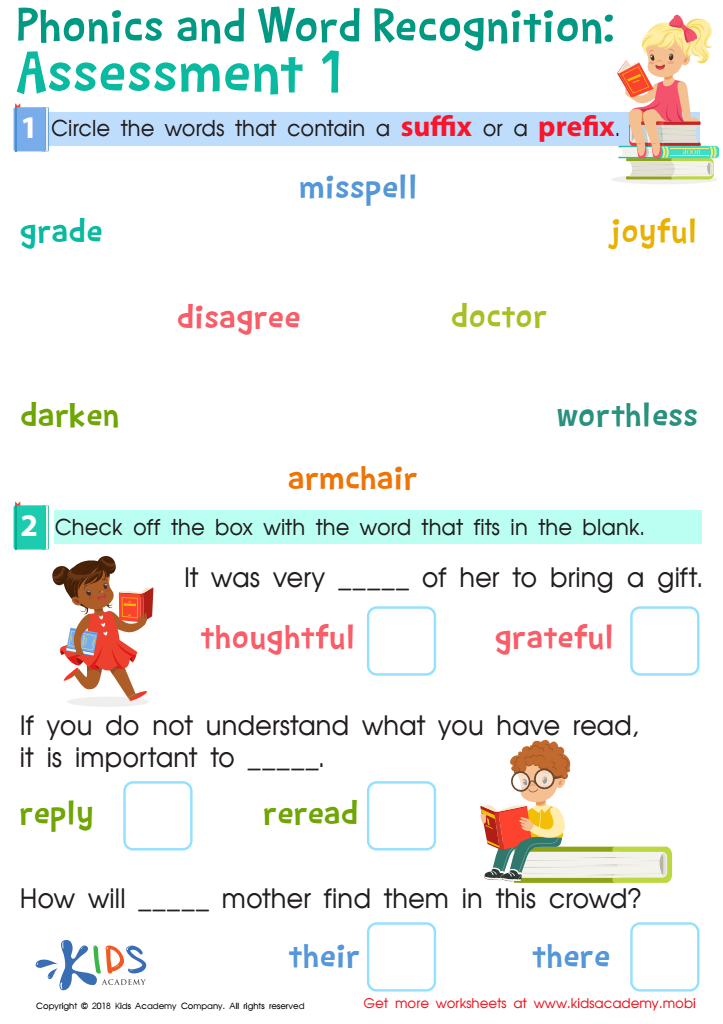
Phonics and Word Recognition: Assessment 1 Worksheet

Phonics and Word Recognition: Assessment 1 Worksheet

Explain prefixes (words added to start of another word to give it a new meaning) and suffixes (added to end of word to change its meaning) to your kids with examples like 'unhappy' (prefix) and 'forgetful' (suffix). Now, help your child complete this worksheet, including circling words and checking boxes.
Phonics and Word Recognition: Assessment 1 Worksheet
Worksheet
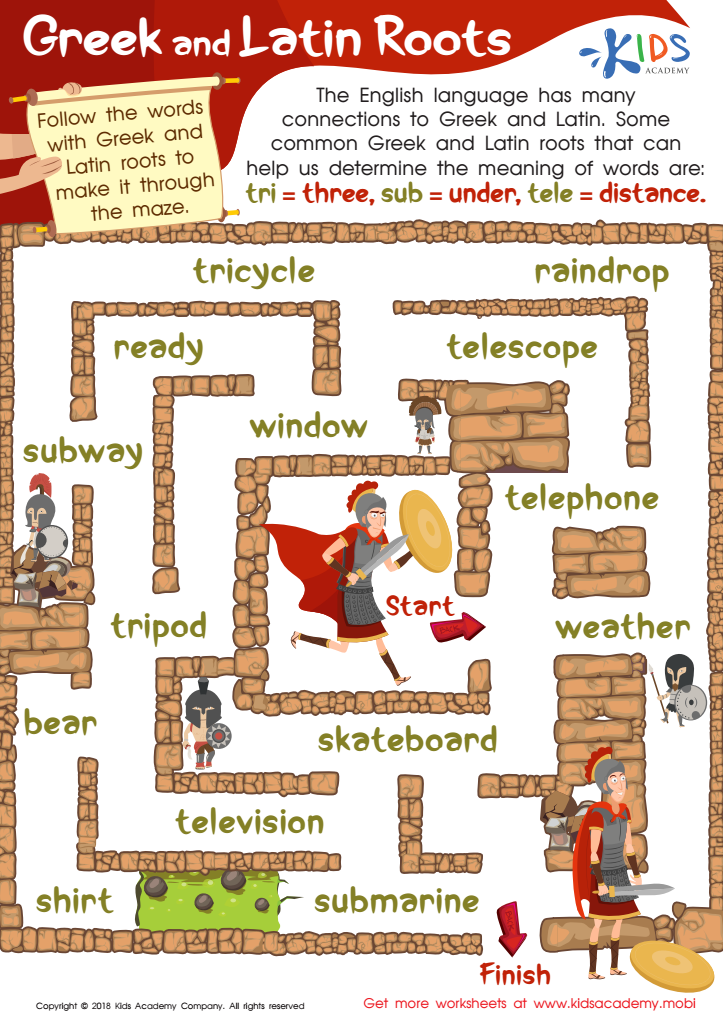
Greek and Latin Roots Worksheet

Greek and Latin Roots Worksheet

English borrows lots of words from other languages, and it has many ties to Greek and Latin. For example, 'tri', 'sub' and 'tele' (all from Greek and Latin) mean 'three', 'under' and 'distance' respectively. Help your child understand the meanings of words by having them work through a maze with words from these languages.
Greek and Latin Roots Worksheet
Worksheet
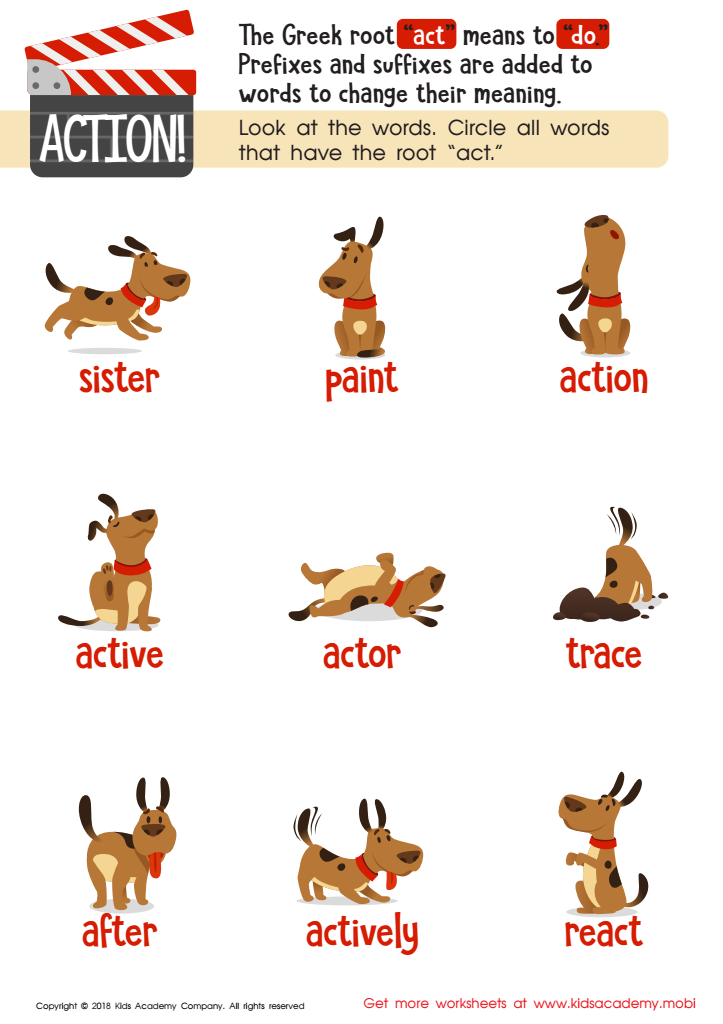
Action! Worksheet
Action! Worksheet

Action! Worksheet

Most English words are borrowed, and prefixes and suffixes are added to change the meaning. A popular prefix is 'act', from the Greek root meaning 'to do'. With your kids, look at the words in this worksheet and circle those with the root 'act'.
Action! Worksheet
Worksheet
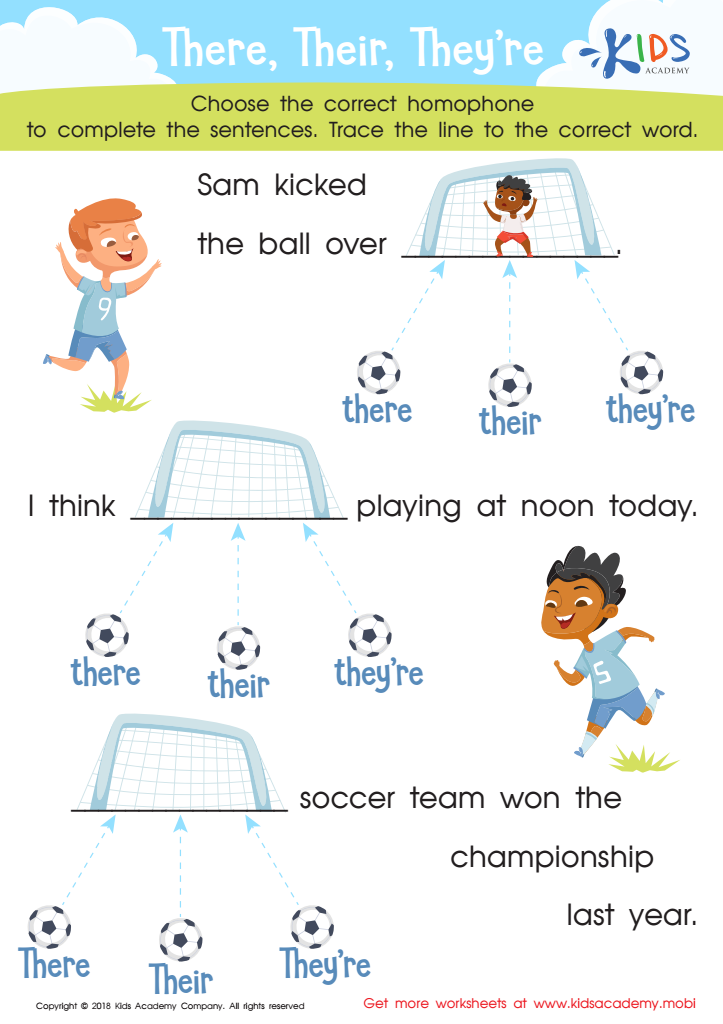
There, Their, They're Worksheet

There, Their, They're Worksheet

Explain to your kids the difference between 'there', 'their' and 'they're'. These three words are homophones - spelt similarly but with different meanings. Help them choose the correct homophones when completing sentences, and trace the line to the right word.
There, Their, They're Worksheet
Worksheet
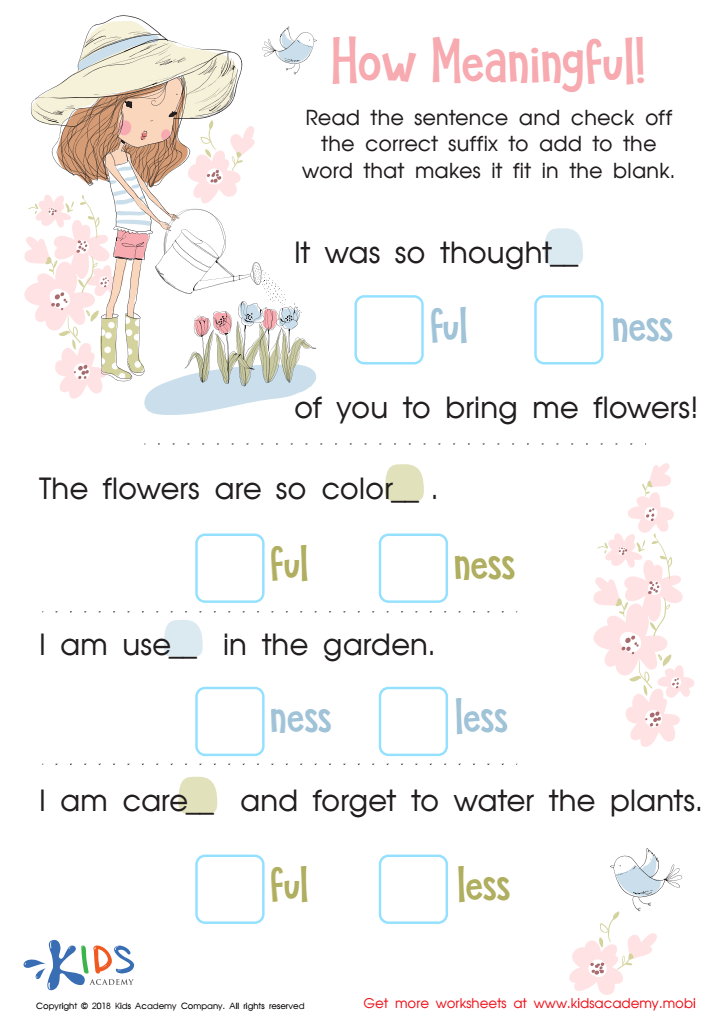
How Meaningful! Worksheet

How Meaningful! Worksheet

'Meaningful' is used to describe something that carries importance to someone else. For example, calling friends on their birthdays. The suffix -ful can also be added to other words to create new meanings; try this with your kids and help them check the correct suffix to complete the sentence.
How Meaningful! Worksheet
Worksheet
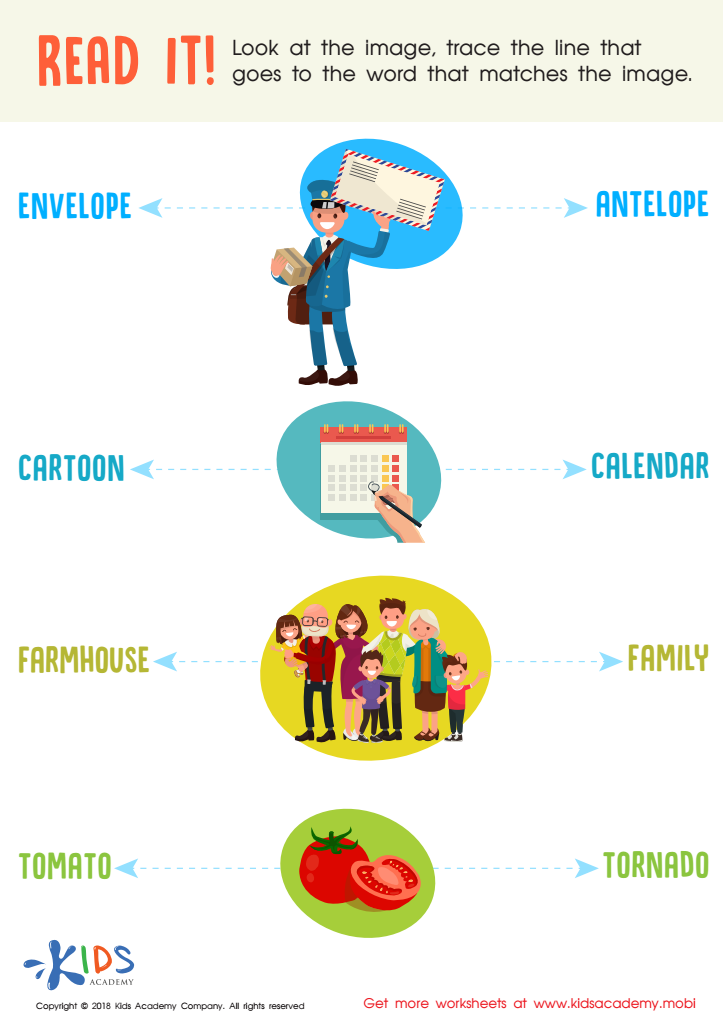
Read It! Worksheet
Read It! Worksheet

Read It! Worksheet

Point to each image on this worksheet, asking your child what it is. Read the 2 options then help your child trace the line to the correct word. It'll keep them engaged and provide visual stimulation.
Read It! Worksheet
Worksheet
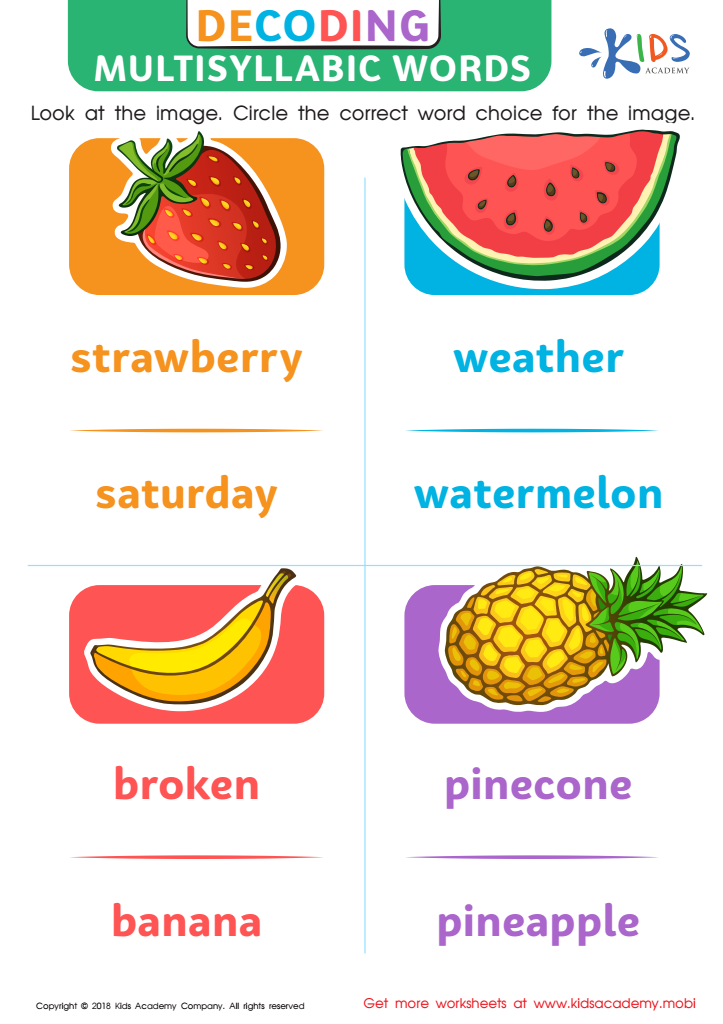
Decoding Multisyllabic Words Worksheet

Decoding Multisyllabic Words Worksheet

Ask your kids what their favorite fruits are. Show them the 4 images and point to each one, asking them what it's called. Help them circle the correct word choice for each one. Fruits are a healthy and delicious way to eat; get your kids to identify them!
Decoding Multisyllabic Words Worksheet
Worksheet
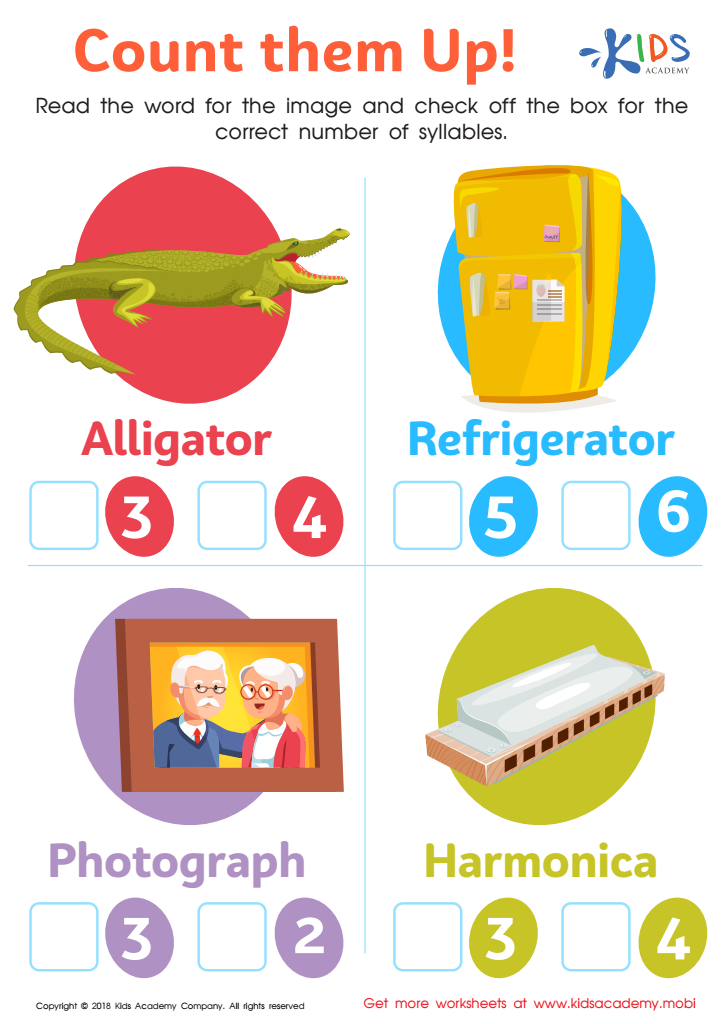
Count Them Up Worksheet

Count Them Up Worksheet

This worksheet has four colorful pictures. Ask your students to identify and name each image, then count the syllables in the word. Make them repeat the word after you, and check off the box with the correct number of syllables. Mastering the art of counting goes beyond numbers. Get your students counting syllables with this activity!
Count Them Up Worksheet
Worksheet
Synonyms or Antonyms: Assessment Worksheet

Synonyms or Antonyms: Assessment Worksheet

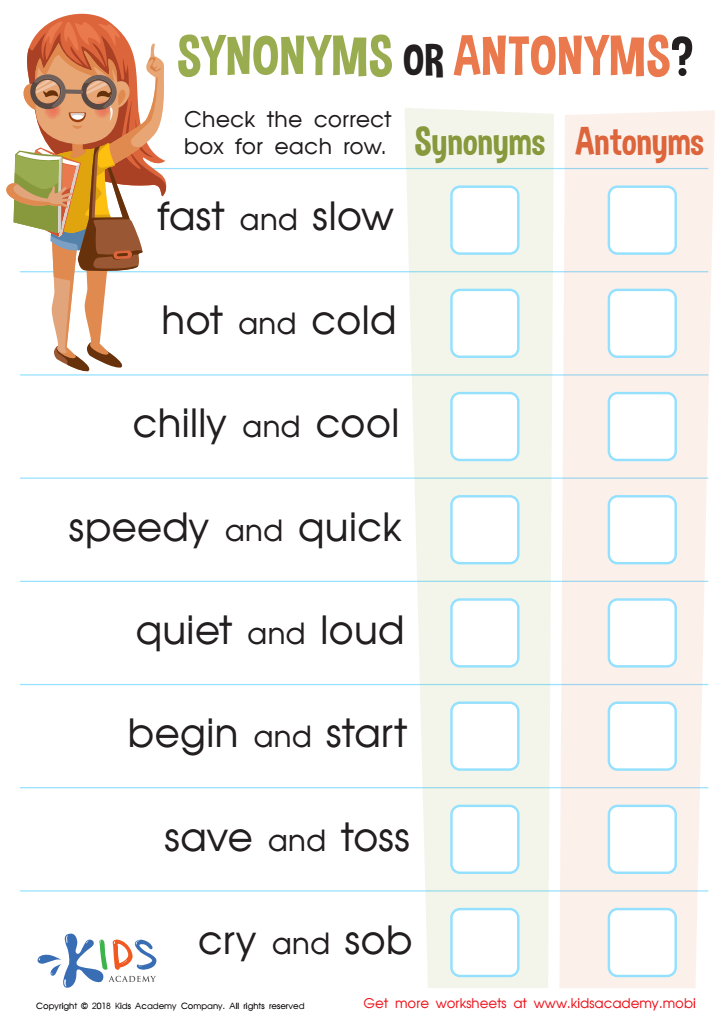
Test your child's knowledge with this fun worksheet! Ask them to read the words and select if they are synonyms or antonyms - e.g. 'happy' is a synonym and 'bad' is an antonym. For an extra challenge, ask them to provide two synonyms and two antonyms for each word.
Synonyms or Antonyms: Assessment Worksheet
Worksheet
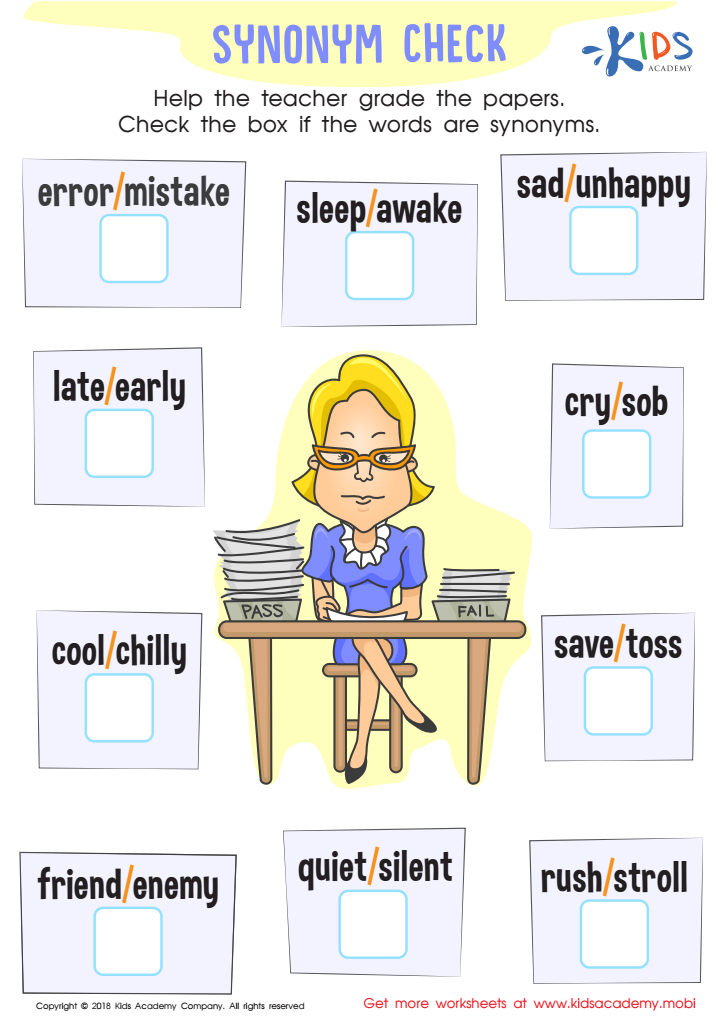
Synonym Check Worksheet

Synonym Check Worksheet

Ask your kids what a synonym is, and listen to their definitions. If needed, explain it's a word that has a similar meaning to another. Give examples, then ask them to do the same. For this worksheet, get them to help grade the papers. Have them check the boxes if the words are synonyms.
Synonym Check Worksheet
Worksheet
Antonyms: Prometheus Worksheet

Antonyms: Prometheus Worksheet

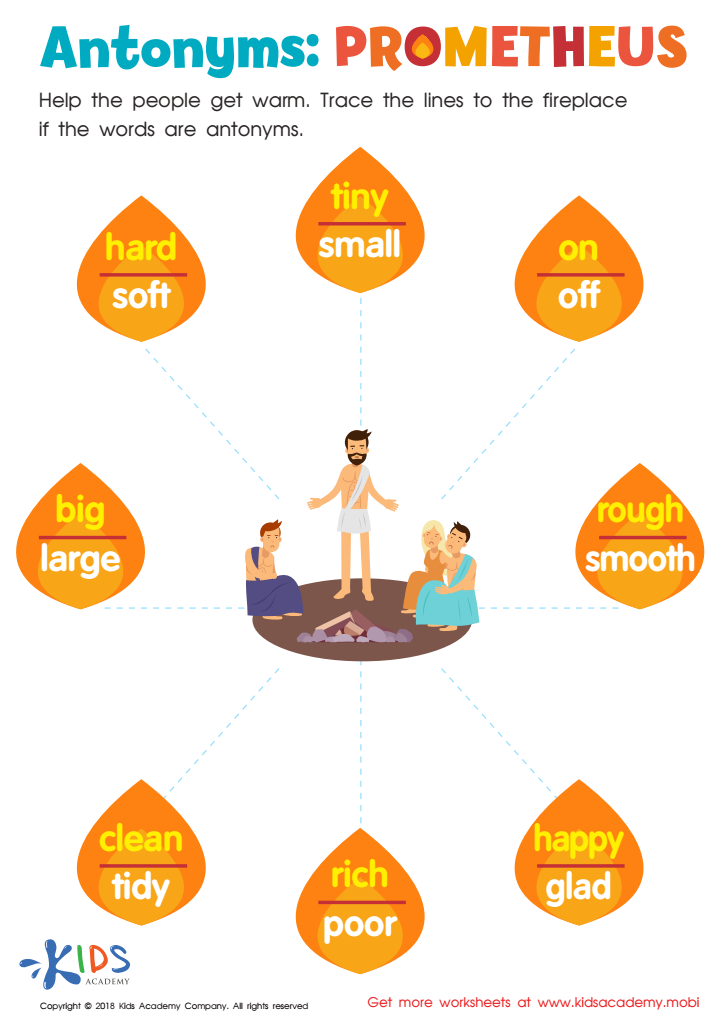
Antonyms are words with opposite meanings to another. For example, the antonyms of 'good' are 'bad', 'poor' and 'wicked'. Ask your child to give you antonyms for 'Prometheus', which relates to fire. Invite your kids to trace the lines to the fireplace if the words are antonyms, helping the people in the tracing sheet get warm.
Antonyms: Prometheus Worksheet
Worksheet
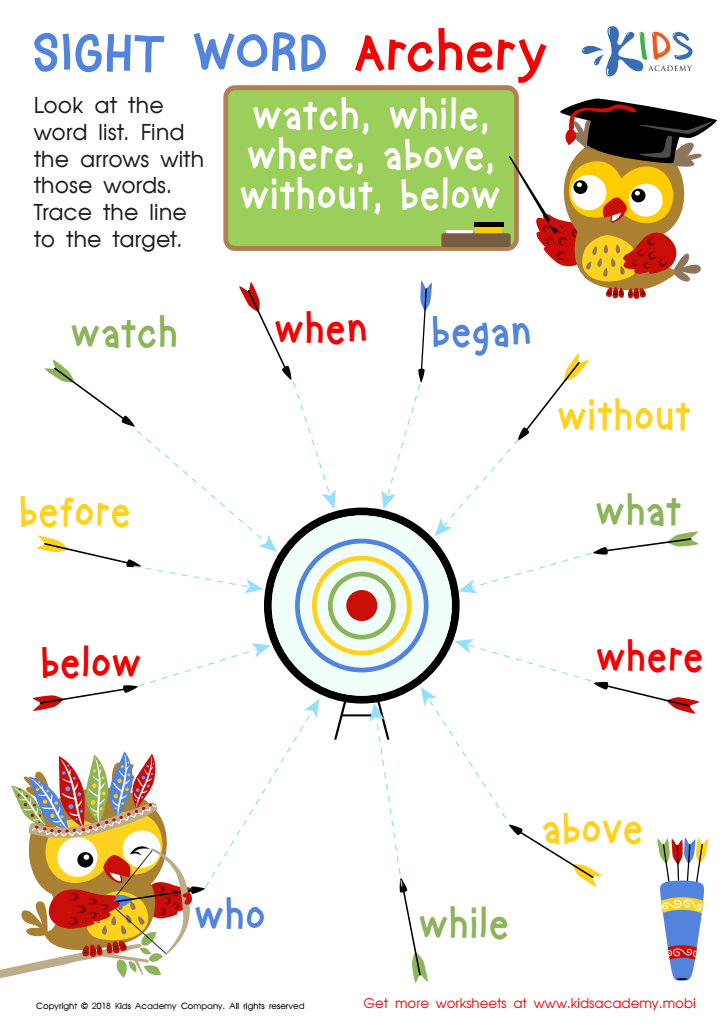
Sight Word Archery Worksheet

Sight Word Archery Worksheet

Read the words list with your kids, pointing at each one. Ask them to do the same. Help them find the arrows with those words and trace the line to the target in the centre.
Sight Word Archery Worksheet
Worksheet
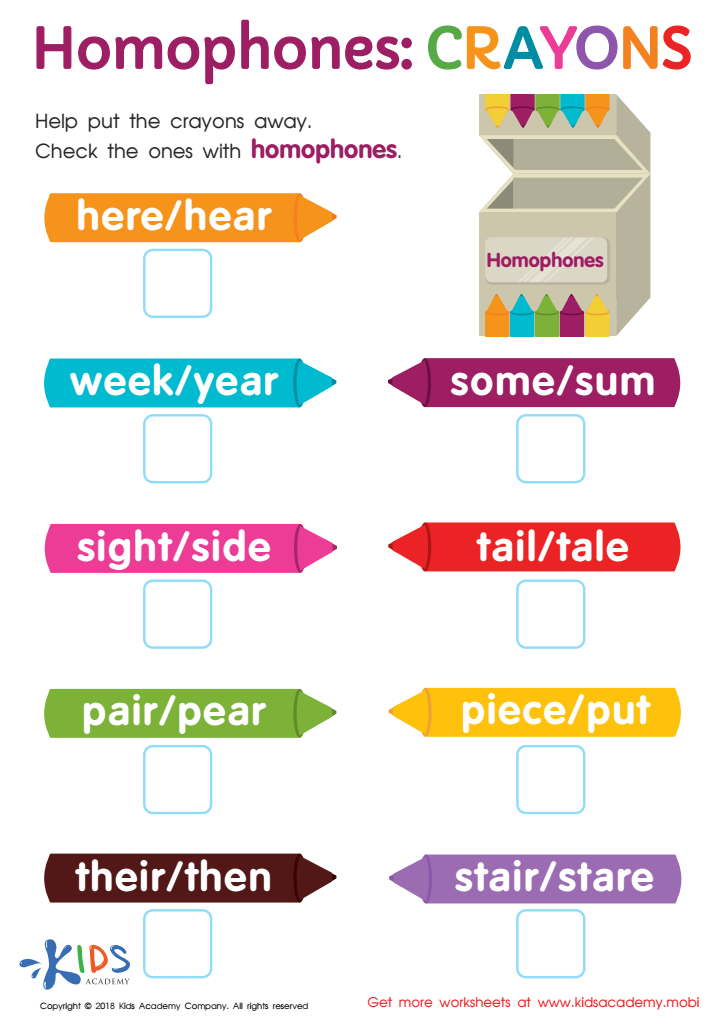
Homophones: Crayons Worksheet


Homophones: Crayons Worksheet

Ask your kids: "What are homophones?" Explain that homophones are words that sound alike but have different meanings, like 'dare' and 'deer'. Ask them to identify homophones by putting the crayons in this printout away according to the words.
Homophones: Crayons Worksheet
Worksheet


Building vocabulary is crucial for children aged 4-8, as it lays the foundation for their overall language development and academic success. During these formative years, children's brains are exceptionally receptive to learning new words, enabling them to express themselves effectively, comprehend complex ideas, and engage with the world around them. A robust vocabulary enhances reading skills, which directly correlates with better literacy outcomes.

Additionally, vocabulary development supports critical thinking and communication skills, fostering social interactions and relationships. When children have the words to articulate their thoughts and feelings, they are better equipped to navigate social situations, resolve conflicts, and build friendships.

For parents and teachers, investing time in vocabulary-building activities—such as reading aloud, engaging in conversations, and introducing new words through play—creates an enriched learning environment. This effort encourages curiosity and a love for language, essential components for lifelong learning. In a broader sense, when children develop strong vocabulary skills, they become more confident learners, paving the way for future academic achievement and personal growth. Therefore, it is vital for parents and educators to prioritize vocabulary development to ensure children have the tools they need to succeed in school and beyond.