Normal Geometry Worksheets for Ages 4-9 - Page 4
75 filtered results
-
From - To
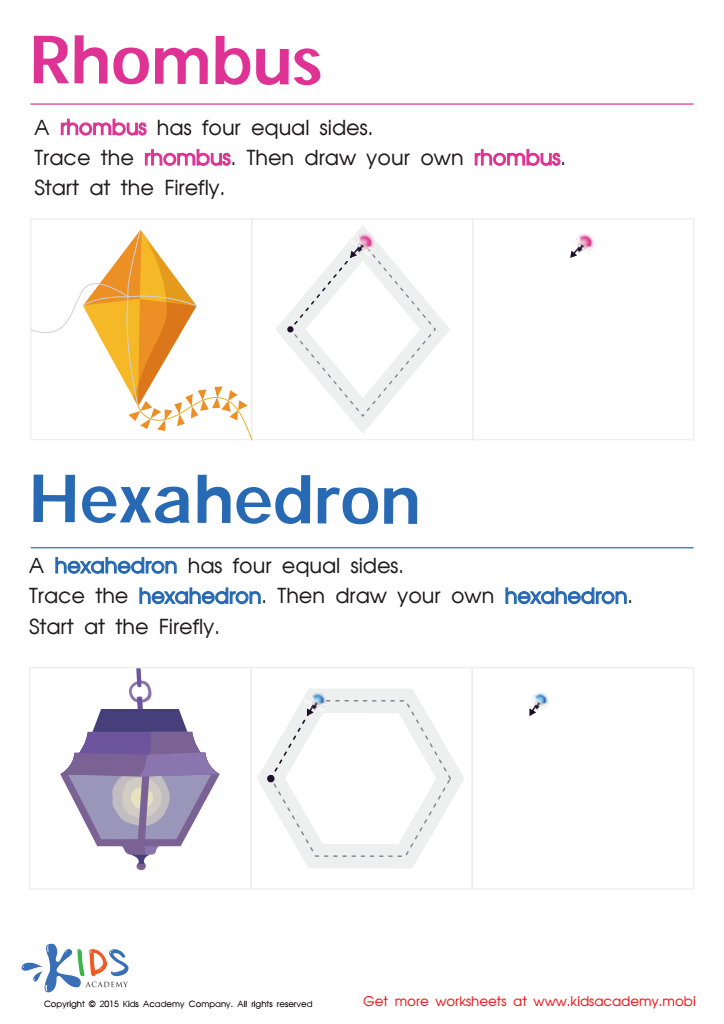
Draw a Rhombus And a Hexahedron Printable
 Assign to My Students











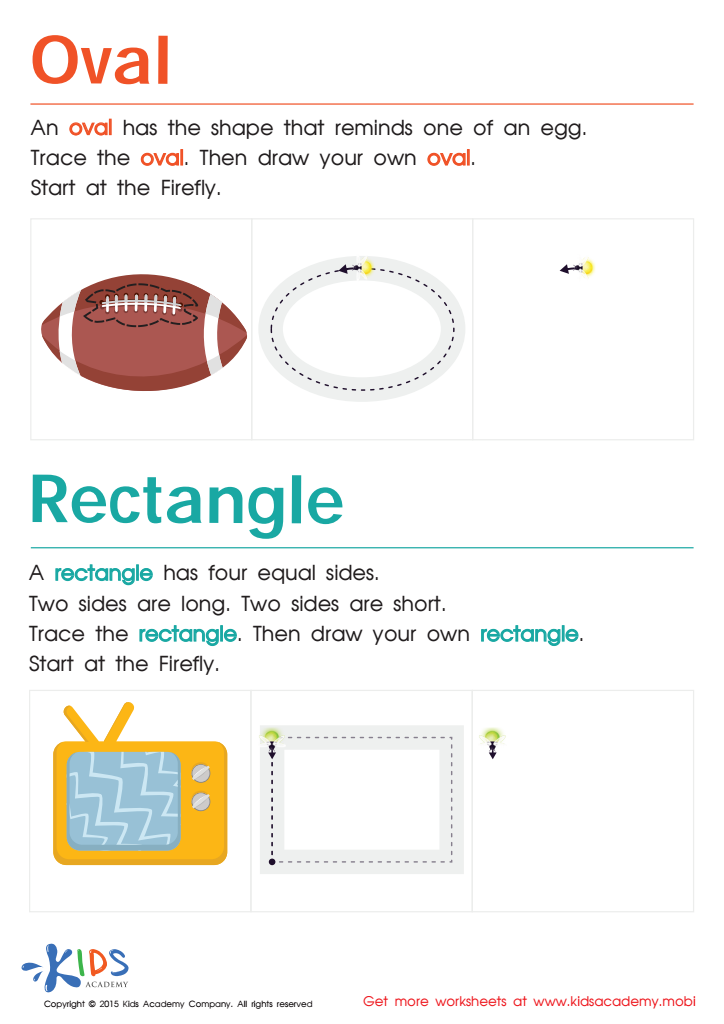
Easy Drawing of Ovals And Rectangles Worksheet
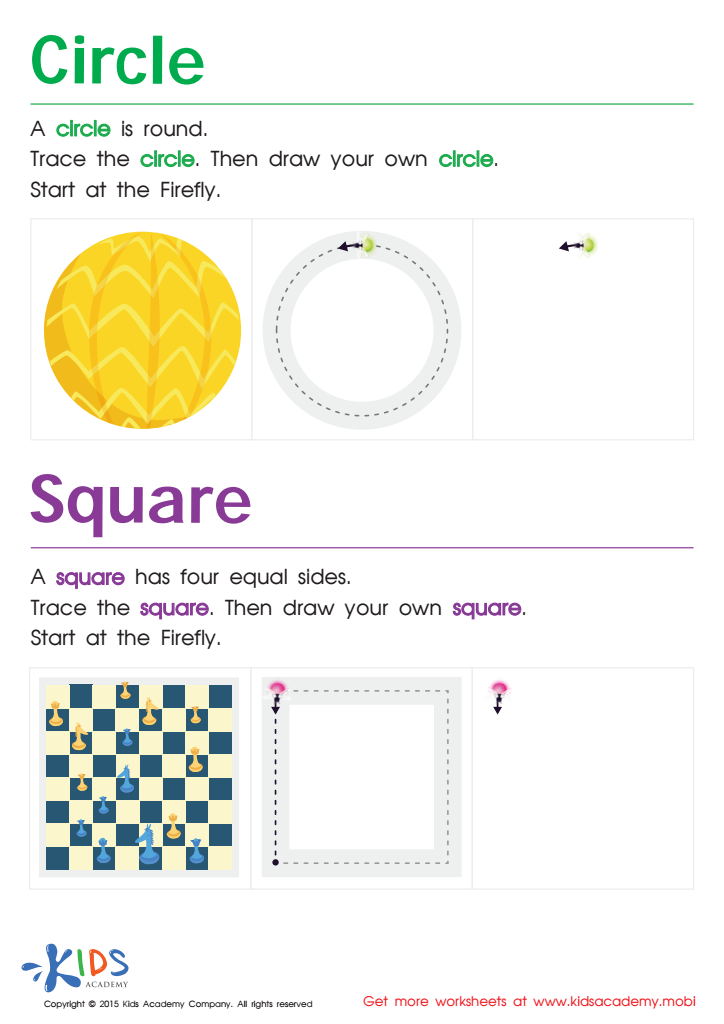
Trace And Draw a Circle And a Square Worksheet








Normal Geometry engages children between the ages of 4 and 9 in understanding fundamental spatial concepts, which are critical for cognitive development. For this age group, geometry is not about complex shapes or theorems; it's about recognizing and understanding the space around them. This early exposure aids in developing critical thinking and problem-solving skills, which are essential building blocks for later academic success.
Parents and teachers should prioritize geometric learning because it cultivates a child’s ability to observe, compare, and classify objects in their environment. Simple activities such as identifying shapes, understanding the concepts of size and symmetry, or playing with building blocks help enhance motor skills and spatial awareness. These foundational skills are not only vital for math but also for subjects like science, art, and even daily life activities such as navigating spaces.
Moreover, engaging children with geometry nurtures creativity and encourages them to think abstractly. It allows children to visualize problems and develop solutions, thereby boosting their confidence in tackling new challenges. Normal Geometry is more than an academic pursuit—it’s about shaping well-rounded individuals who are equipped with the skills they need to interact with the world intelligently and creatively. Therefore, integration of geometric concepts in early education is fundamental for nurturing versatile, competent young learners.








