Normal Missing Letters Worksheets for Ages 6-9
5 filtered results
-
From - To
Discover engaging "Normal Missing Letters Worksheets for Ages 6-9" designed to help young learners enhance their alphabet recognition and spelling skills. These fun and educational worksheets provide children with a unique challenge to fill in the missing letters, promoting critical thinking and reinforcing their understanding of letter sequences. Suitable for kids aged 6 to 9, these exercises are perfect for both classroom and home use, making learning enjoyable and interactive. Encourage your child’s development in a supportive setting with our expertly crafted resources to build their confidence around the alphabet and lay a strong educational foundation.
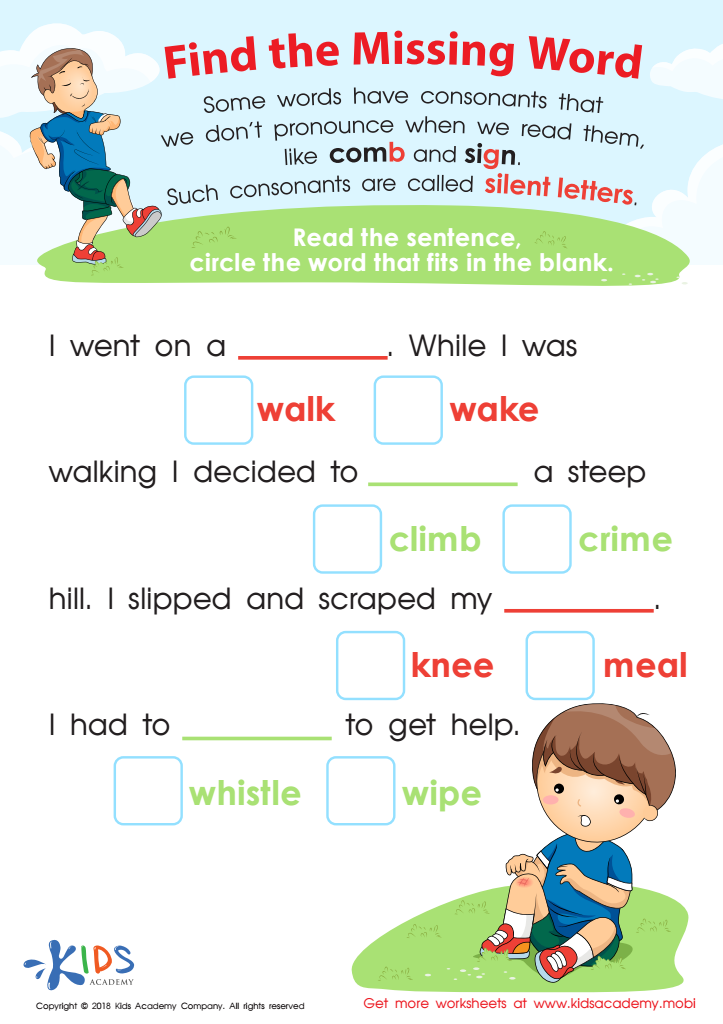
Find The Missing Word Worksheet
 Assign to My Students
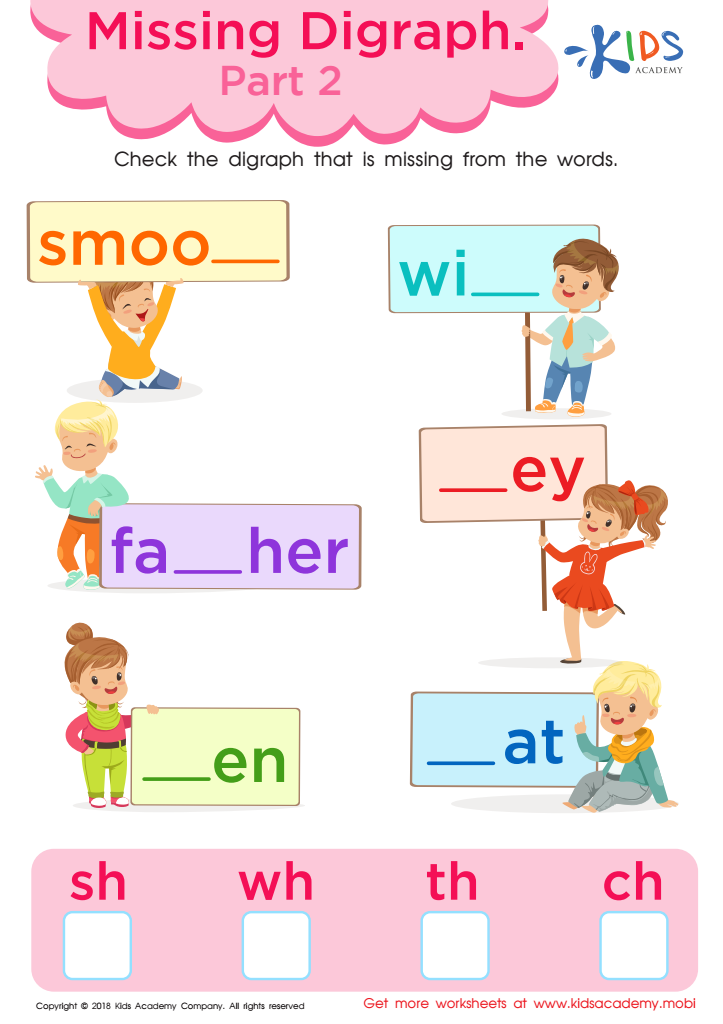
Missing Digraph: Part 2 Worksheet
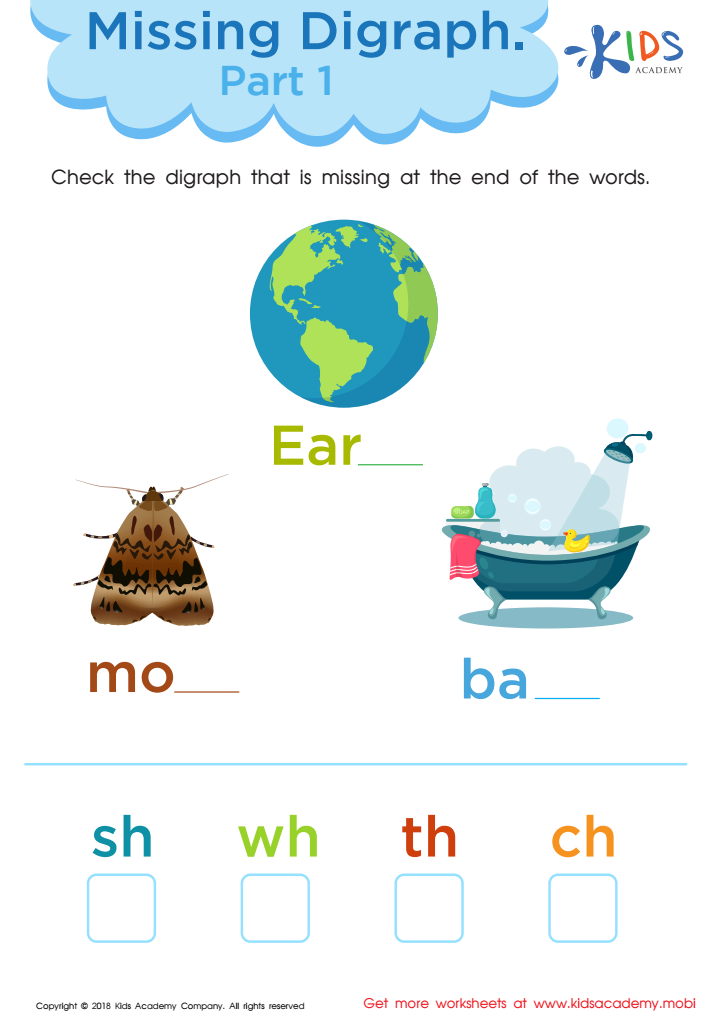
Missing Digraph: Part 1 Worksheet
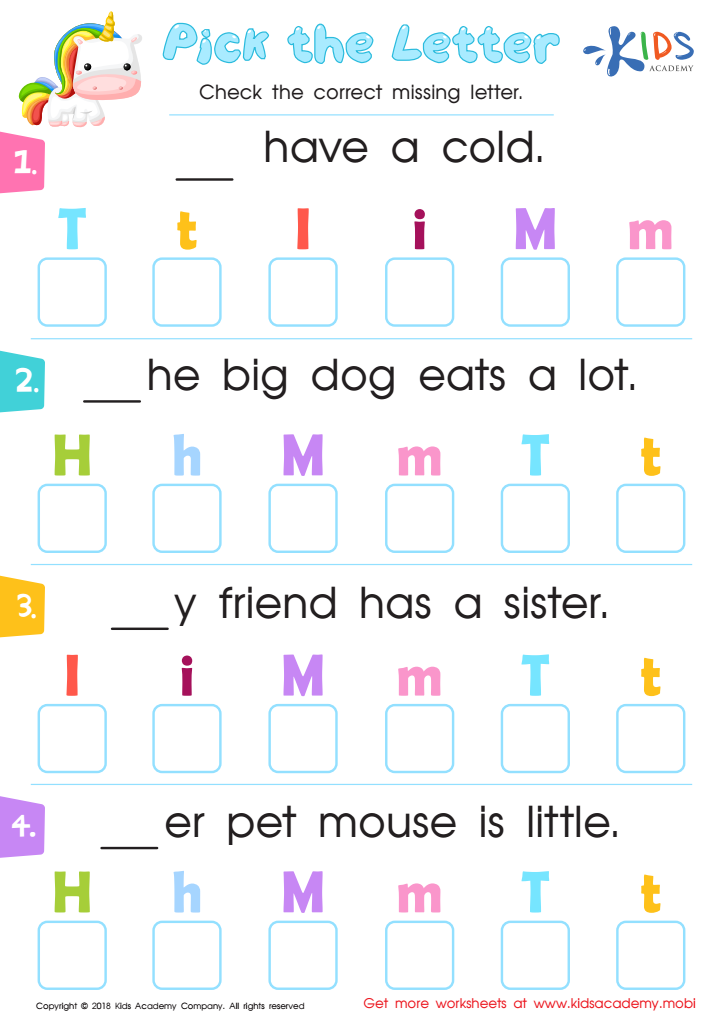
Pick the Letter Worksheet
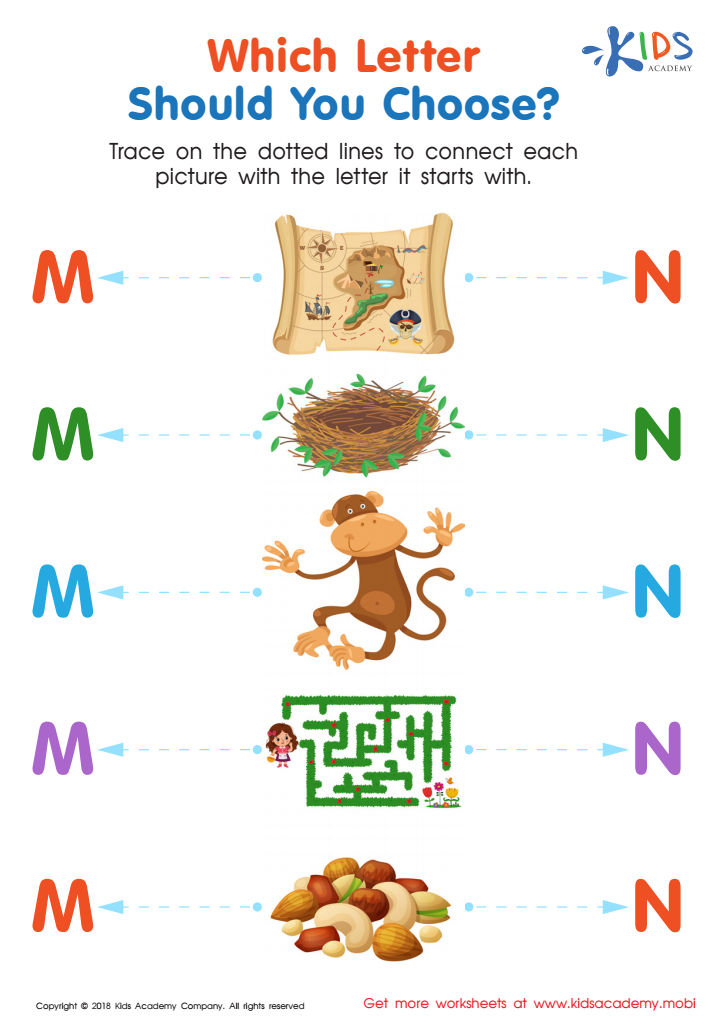
Which Letter Should you Choose? Worksheet



Normal Missing Letters activities are valuable educational tools for children aged 6-9, as they play a crucial role in the development of foundational literacy skills. At this formative stage, children transition from recognizing simple words to enhancing their reading and spelling abilities. Engaging in missing letter exercises encourages them to sharpen their phonemic awareness—the understanding of how sounds combine to form words—which is fundamental for reading fluency.
When children identify and fill in missing letters, they practice decoding words, a skill paramount for independent reading. This process strengthens their familiarity with common spelling patterns and word structures, facilitating better writing and reading comprehension.
Furthermore, these activities enhance cognitive functions like pattern recognition and problem-solving, which are essential for academic success across subjects. They foster attention to detail and improve children's ability to focus, attributes beneficial in both educational settings and everyday life.
For teachers and parents, incorporating Normal Missing Letters activities can make learning interactive and fun, fostering a positive attitude towards literacy. These tasks can be seamlessly integrated into classroom lessons or home learning routines, providing consistent practice and reinforcement of key language concepts. Therefore, they should be a staple in early childhood education to build a strong literacy foundation.







