Normal 2D Shapes Worksheets for Ages 6-9 - Page 2
26 filtered results
-
From - To
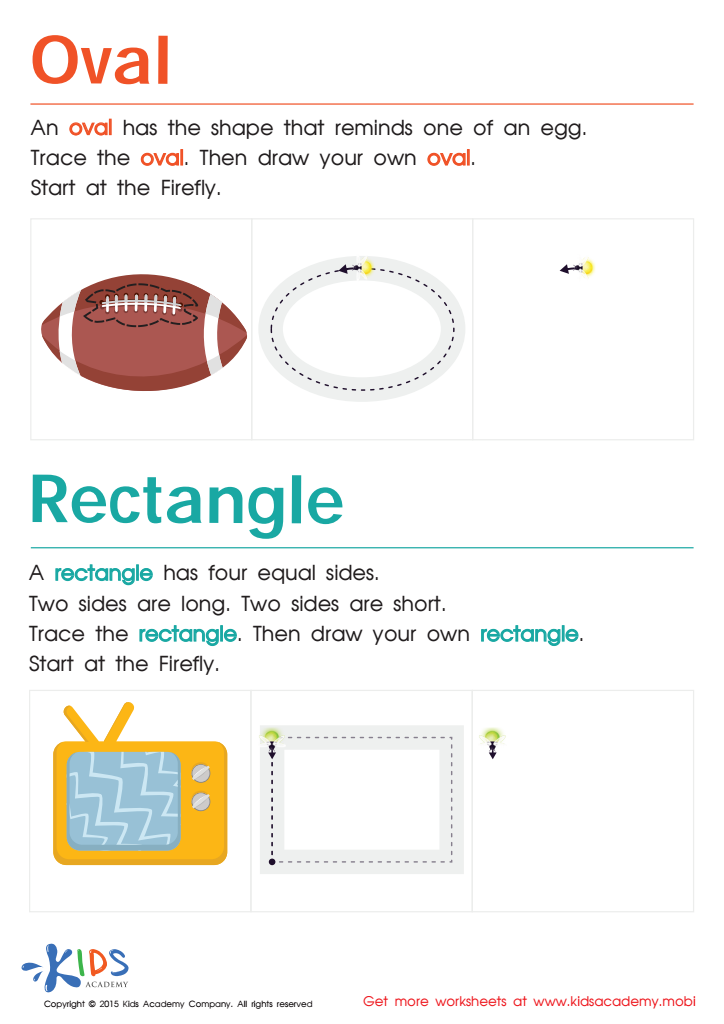
Easy Drawing of Ovals And Rectangles Worksheet
 Assign to My Students

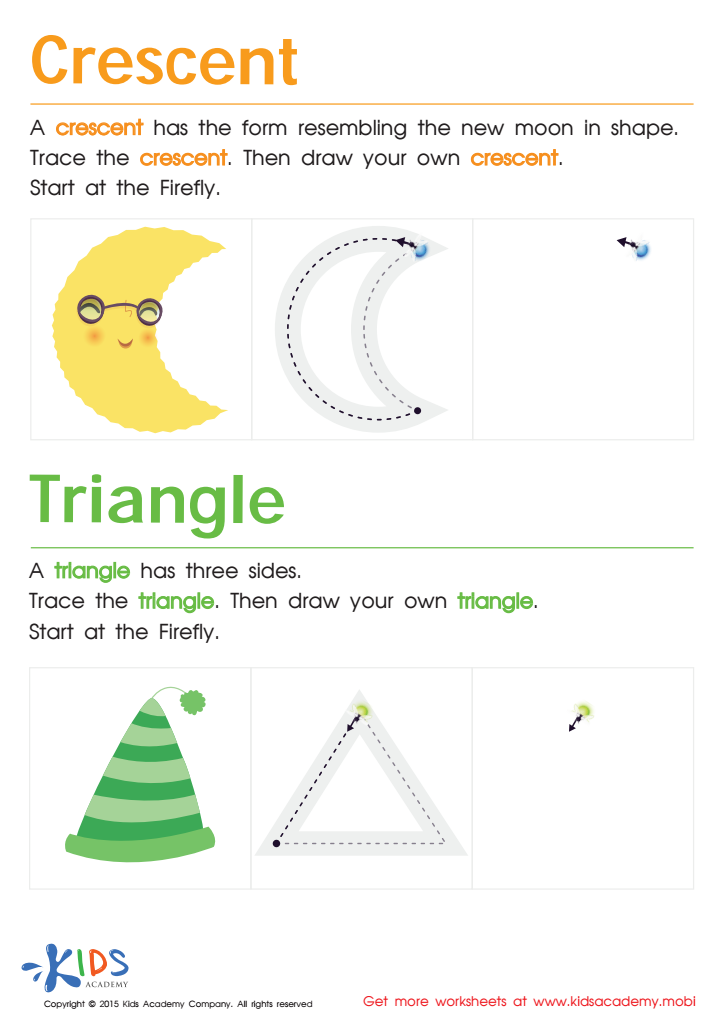
Learning to Draw Crescents And Triangles Worksheet








Parents and teachers should care about normal 2D shapes for ages 6-9 because understanding these shapes is foundational for early mathematics and spatial reasoning. At this crucial developmental stage, children are rapidly developing cognitive abilities, and learning about 2D shapes can significantly enhance their problem-solving and critical-thinking skills. Familiarizing children with shapes like squares, triangles, and circles can help in recognizing and categorizing visual information, which is essential for reading and writing.
Engaging with 2D shapes also promotes geometry skills. For instance, students who can distinguish between different shapes will find it easier to grasp more complex geometric concepts in later grades. Moreover, this knowledge not only benefits math but also ties into numerous real-world applications, like identifying traffic signs, understanding architecture, and even in art through drawing and design.
Teaching shapes supports fine motor skills as children manipulate objects in various shapes, fostering hand-eye coordination. Socially and emotionally, success in recognizing and constructing shapes can boost self-confidence and encourage a love for learning. When parents and teachers prioritize learning 2D shapes, they contribute positively to well-rounded cognitive and skill development, setting a solid groundwork for future educational accomplishments.