Filters

1201 filtered results

Clear all filters
Favorites
With answer key
Interactive

1201 filtered results

Difficulty Level

Grade


Check out this FREE Trial Lesson for age 7-9!

Use Capital Letters at the Beginning of a Sentence

Favorites
With answer key
Interactive
  • 7-9
  • Interactive
  • Normal
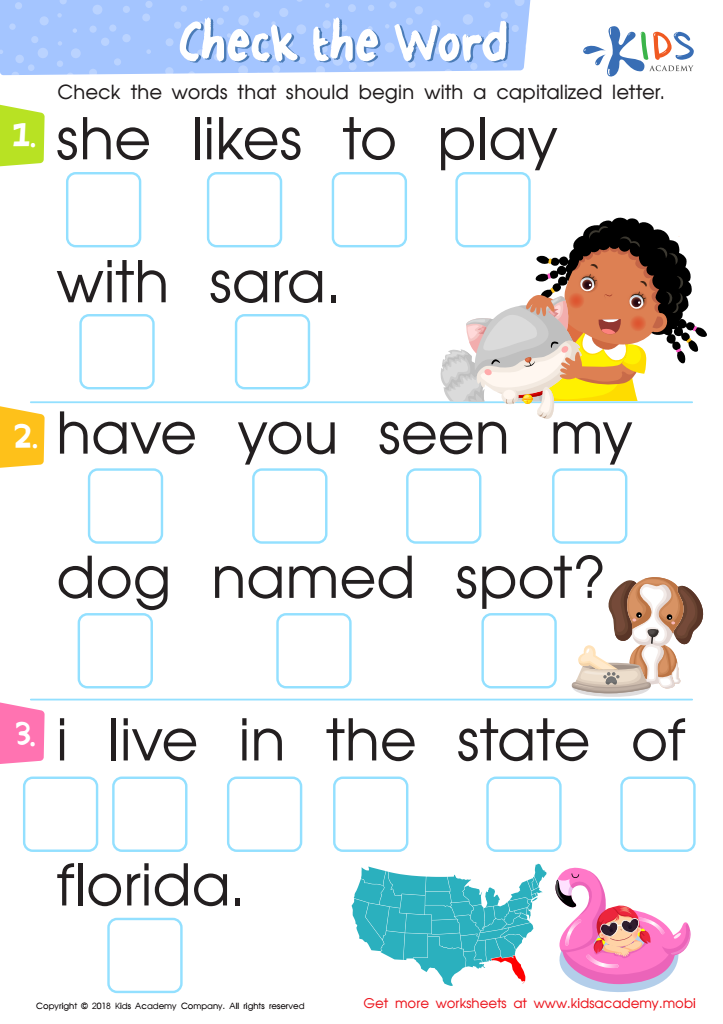
Check the Word Worksheet

Check the Word Worksheet

Help your kids learn the rules of capitalisation - that the first word of each sentence and nouns must start with a capital letter. Use this worksheet to test their understanding: ask them to identify which words should begin with a capital.
Check the Word Worksheet
Worksheet
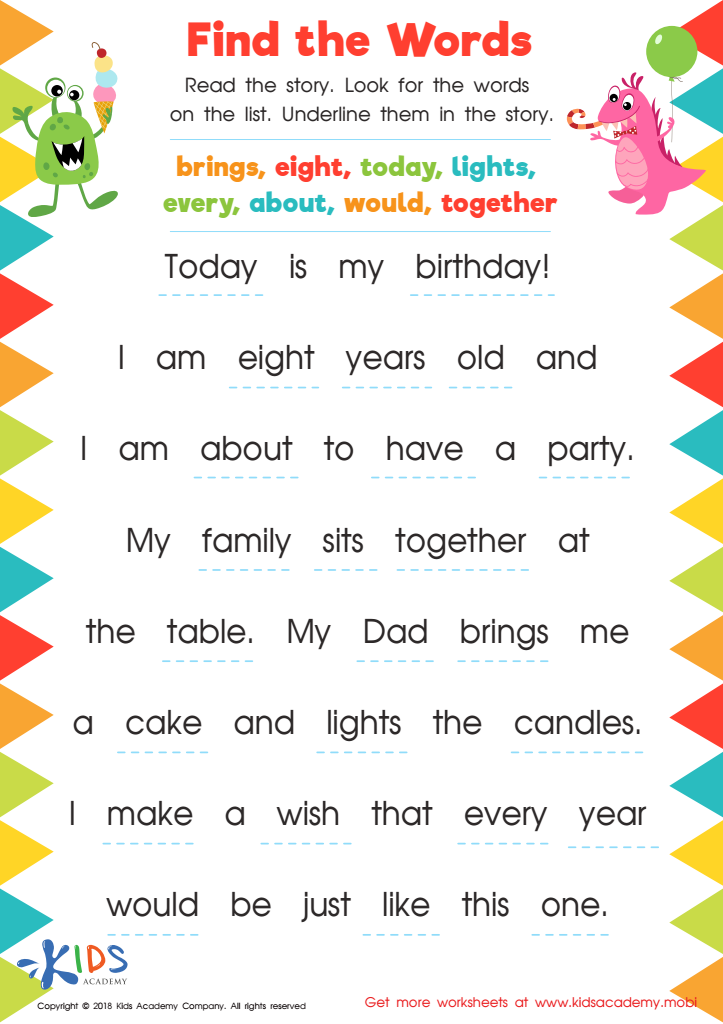
Find the words printable worksheet

Find The Words Printable Worksheet
Hunt for words while reading this birthday story! This printable worksheet will help your child practice early reading skills as they search for words in the text. Enjoy the story and find the words!
Find The Words Printable Worksheet
Worksheet
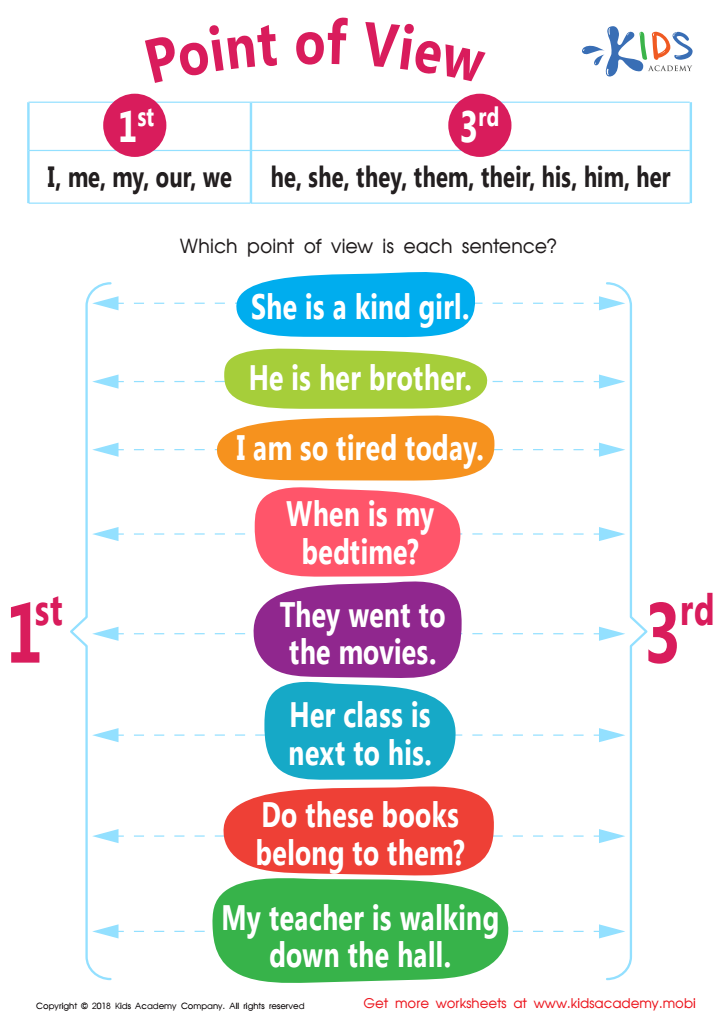
Point of View Worksheet

Point of View Worksheet

This printable worksheet helps kids understand Point of View by providing 1st and 3rd person choices. It's a fun way to practice differentiating between the two viewpoints and improve their reading comprehension. Match the sentences to 1st or 3rd person to strengthen understanding and enjoy the task!
Point of View Worksheet
Worksheet
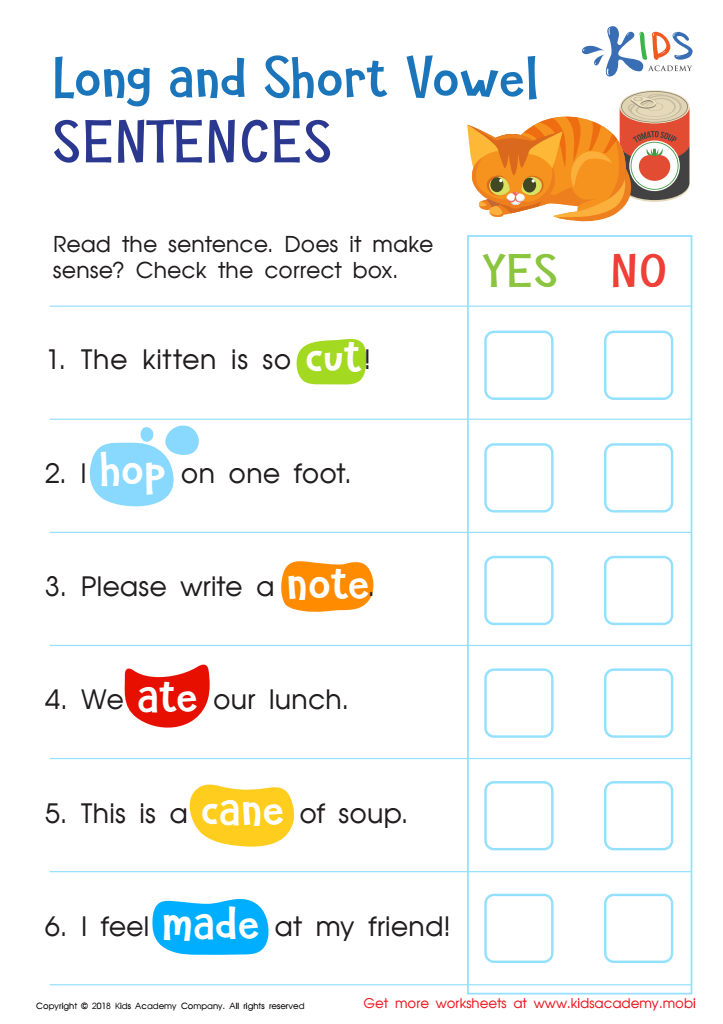
Long and Short Vowel Sentences: Assessment Worksheet

Long and Short Vowel Sentences: Assessment Worksheet

This printable worksheet helps kids practice differentiating between short and long vowel sounds. They'll use context clues to figure out which words make sense in simple sentences. A great way to build reading and writing skills!
Long and Short Vowel Sentences: Assessment Worksheet
Worksheet
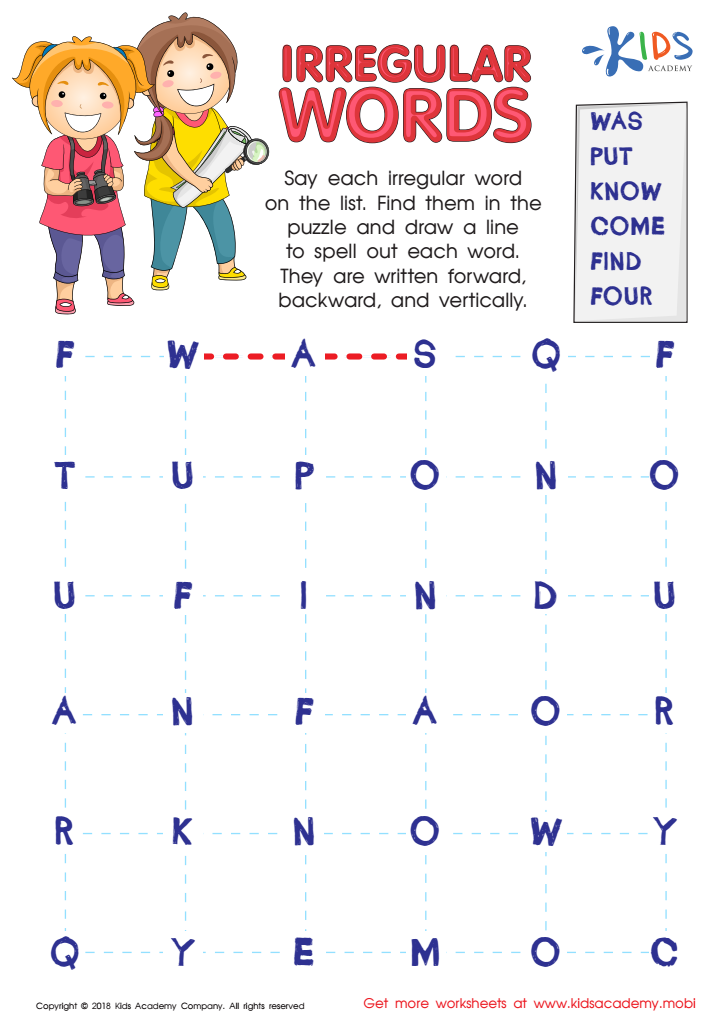
Irregular Words Worksheet

Irregular Words Worksheet

This fun word search worksheet helps kids practice reading irregular words and build their sight word banks. They'll also get practice with visual discrimination and fine motor skills as they hunt down the words.
Irregular Words Worksheet
Worksheet
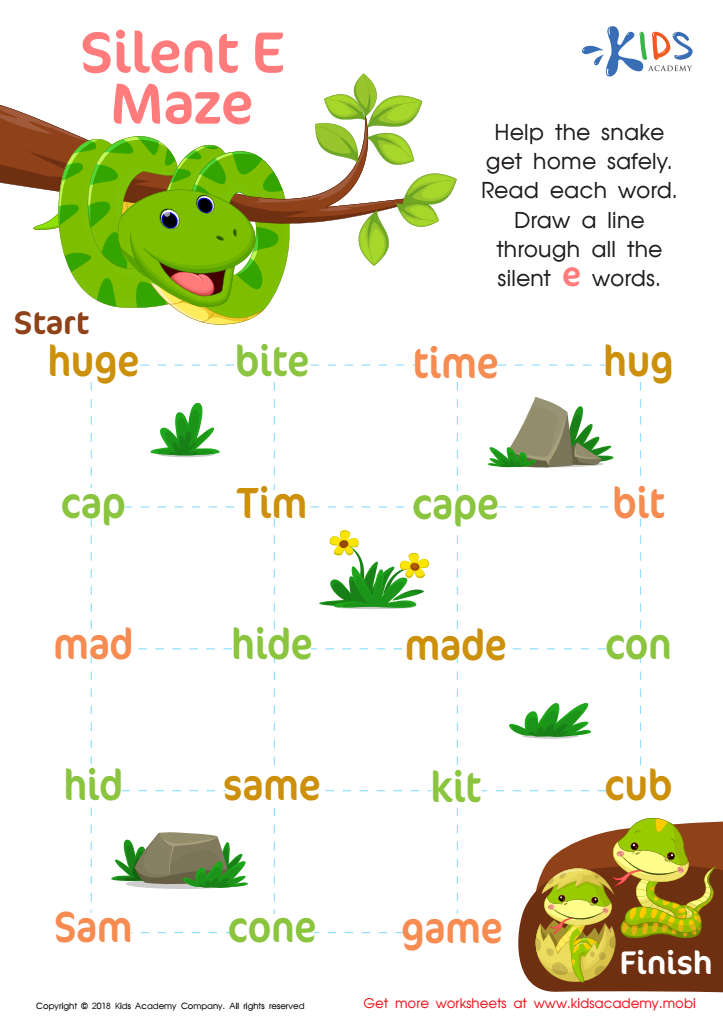
Silent E Maze Worksheet

Silent E Maze Worksheet

Kids love mazes! This fun printable worksheet lets them help a mama snake get home to her babies, using Silent E words. They'll practice fine motor skills, while they draw lines through words that have Silent E and words with closed syllables that don't. It's a great way to help them recognize Silent E words!
Silent E Maze Worksheet
Worksheet
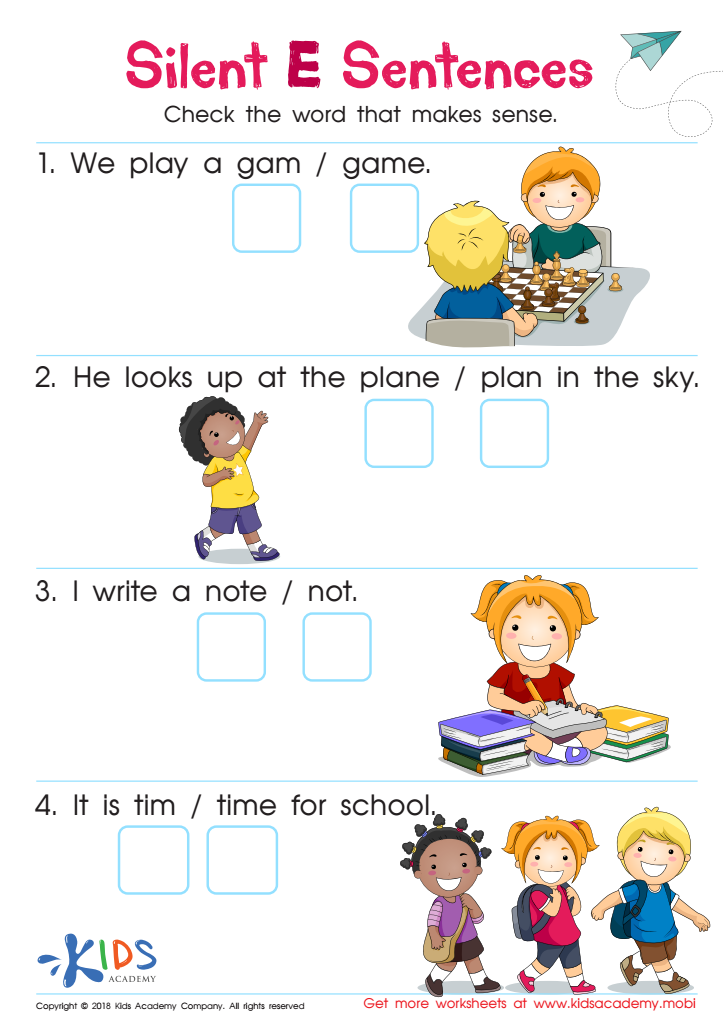
Silent E Sentences Worksheet

Silent E Sentences Worksheet

Young readers can find learning Silent E tricky, so this helpful worksheet can help! It teaches them to distinguish words that look the same but for the Silent E and choose the right word for sentence blanks. Kids can mark the correct answer and become familiar with closed syllables and words that require the E.
Silent E Sentences Worksheet
Worksheet
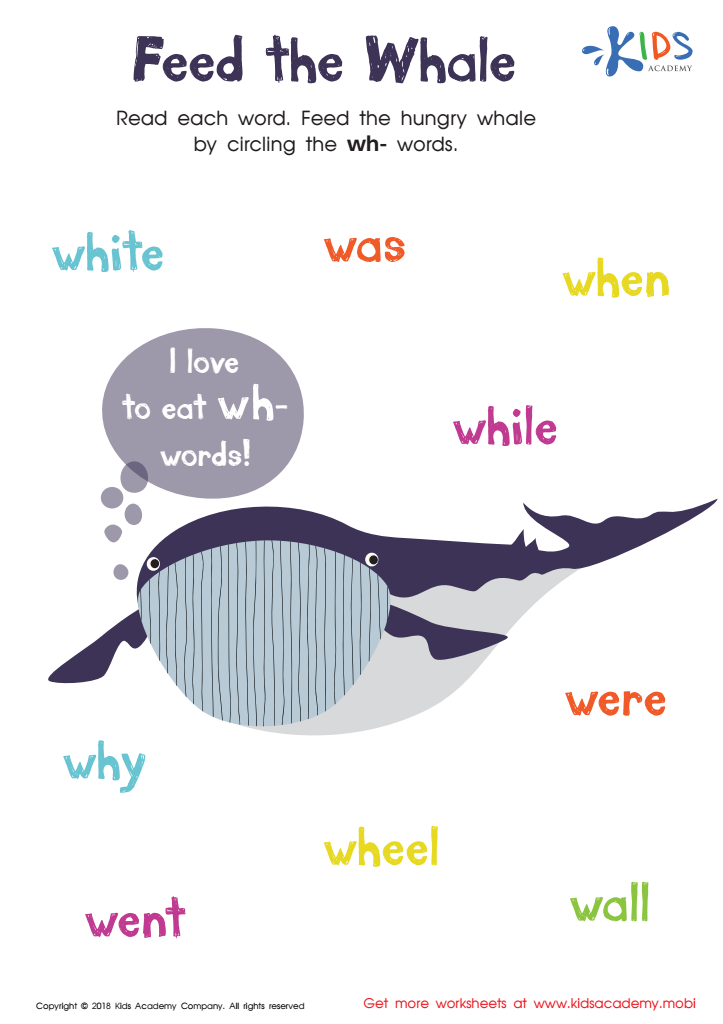
Feed the Whale Worksheet

Feed the Whale Worksheet

Help your early reader build beginning consonant and blend recognition with this fun whale worksheet! They'll feed the whale wh- words, circle sight words, and build fine motor skills—all while discriminating between differently colored words.
Feed the Whale Worksheet
Worksheet
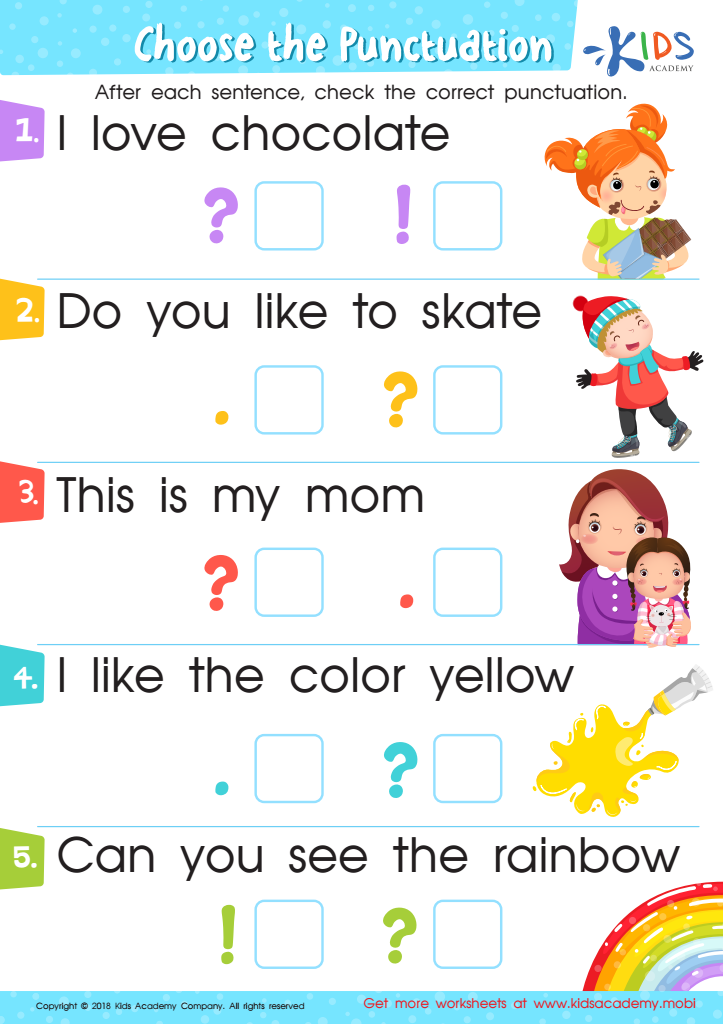
Choose the Punctuation: Assessment Worksheet

Choose the Punctuation: Assessment Worksheet

Does your child know punctuations? Found at the end of words, they signify the tone of the sentence. Ask them which punctuations they use daily. With your little one, look at a worksheet. Read each sentence aloud and ask them to identify the two punctuations given. Instruct them to choose the correct one. 80 words.
Choose the Punctuation: Assessment Worksheet
Worksheet
Forces and interactions worksheet for 3rd grade

Forces and Interactions Worksheet For 3rd Grade
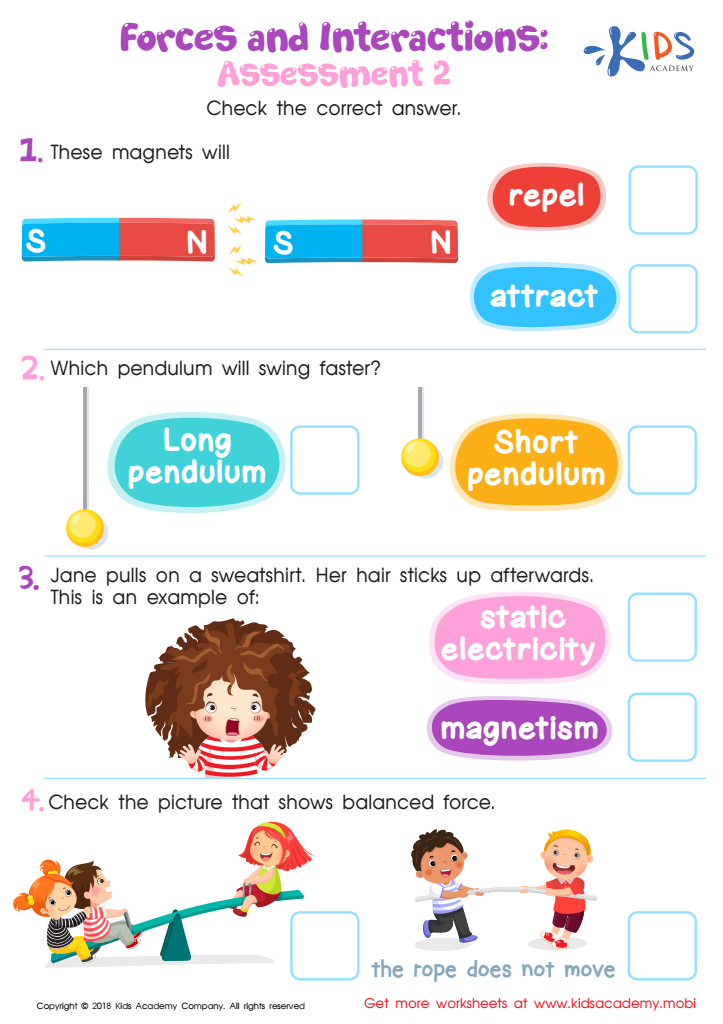
Review forces and interactions with your 3rd grader! This worksheet helps them recall key concepts like static, magnetic attraction, and pull. Repetition through similar illustrations from previous worksheets aids comprehension of the topic before moving on to other fun physics topics.
Forces and Interactions Worksheet For 3rd Grade
Worksheet
Forces and interactions printable worksheet

Forces and Interactions Printable

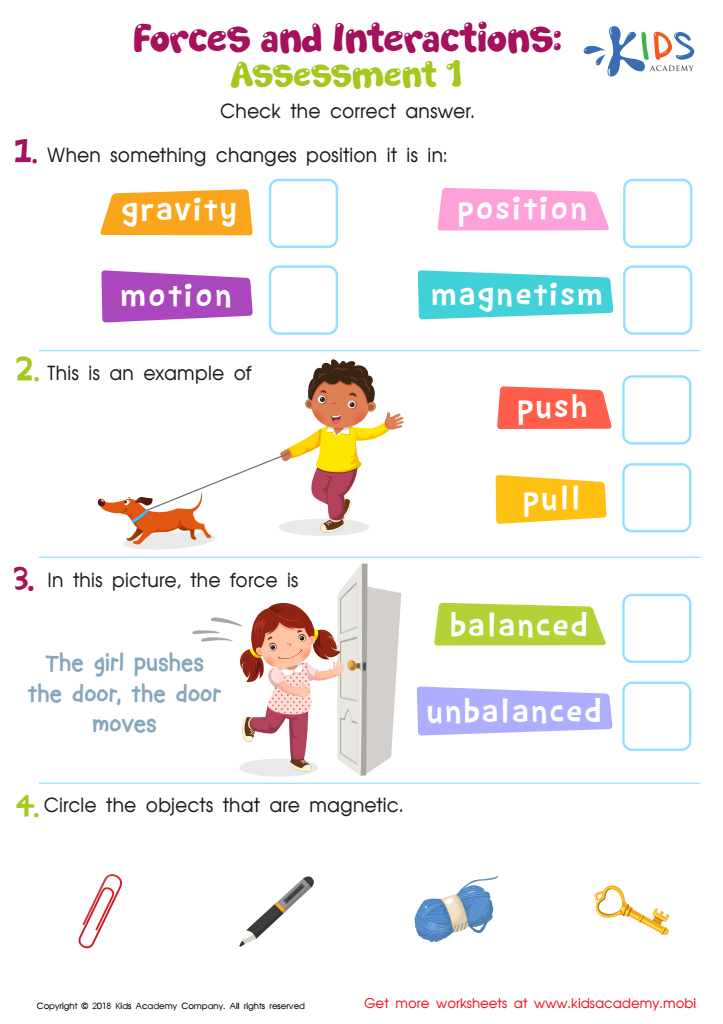
Test your child's physics know-how with this vibrant forces and interactions printable worksheet! Kids can assess their understanding of the different types of forces while they complete it. Read each example and check the boxes to show what they know!
Forces and Interactions Printable
Worksheet
Balanced or unbalanced science worksheet

Balanced or Unbalanced Science Worksheet
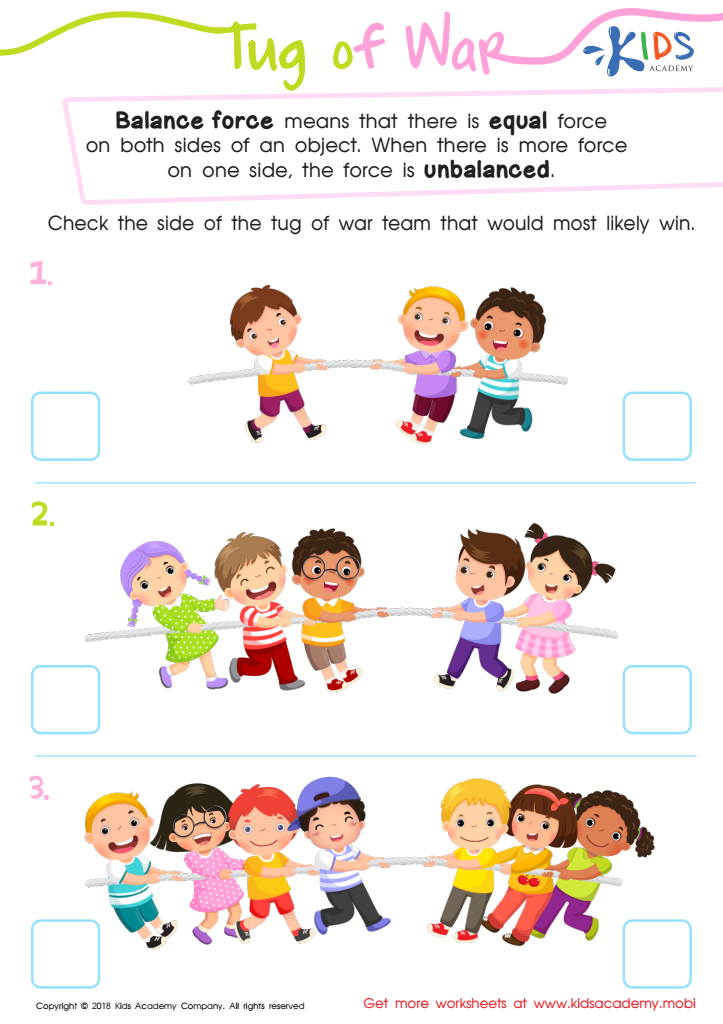
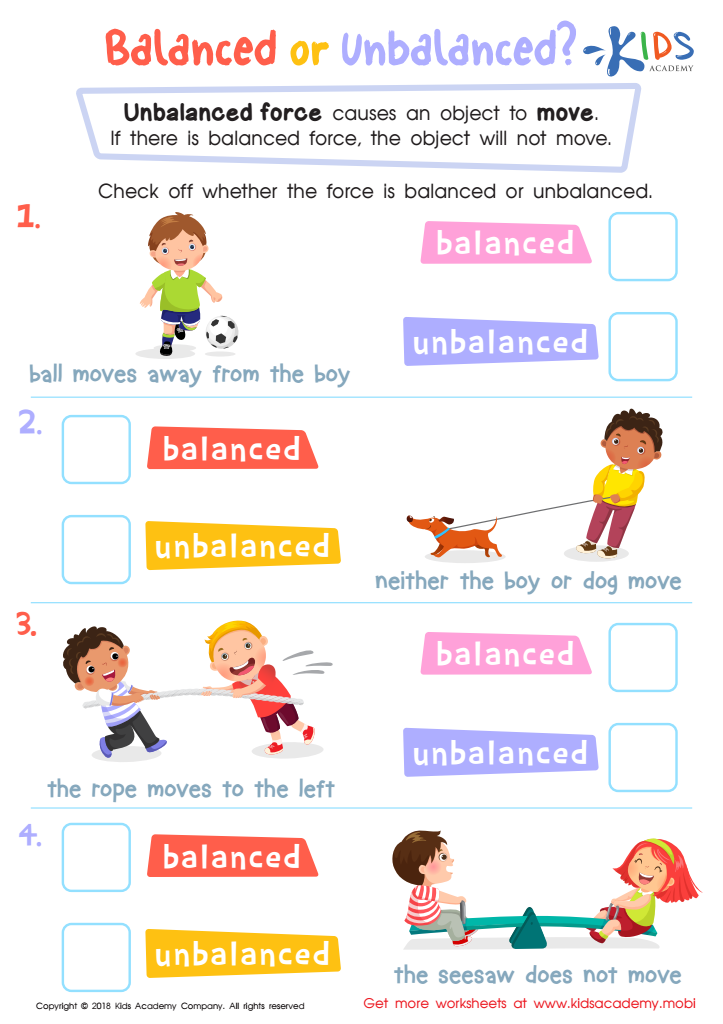
Check out the kids on the worksheet. Is the force equal or unbalanced? This science worksheet helps little learners evaluate forces and understand physics - in a fun way! Have them explore the forces behind movement and see the results!
Balanced or Unbalanced Science Worksheet
Worksheet
Balanced forces worksheet

Balanced Forces Worksheet

Ready for a fun game? This worksheet will balance the forces so your kids can decide who will win their tug of war! With the right number of kids on each side of the rope, the forces will be equal. Help your little ones decide who will prevail in the game. Ready, set, go!
Balanced Forces Worksheet
Worksheet
Repel and attract magnet worksheet

Repel and Attract Magnet Worksheet
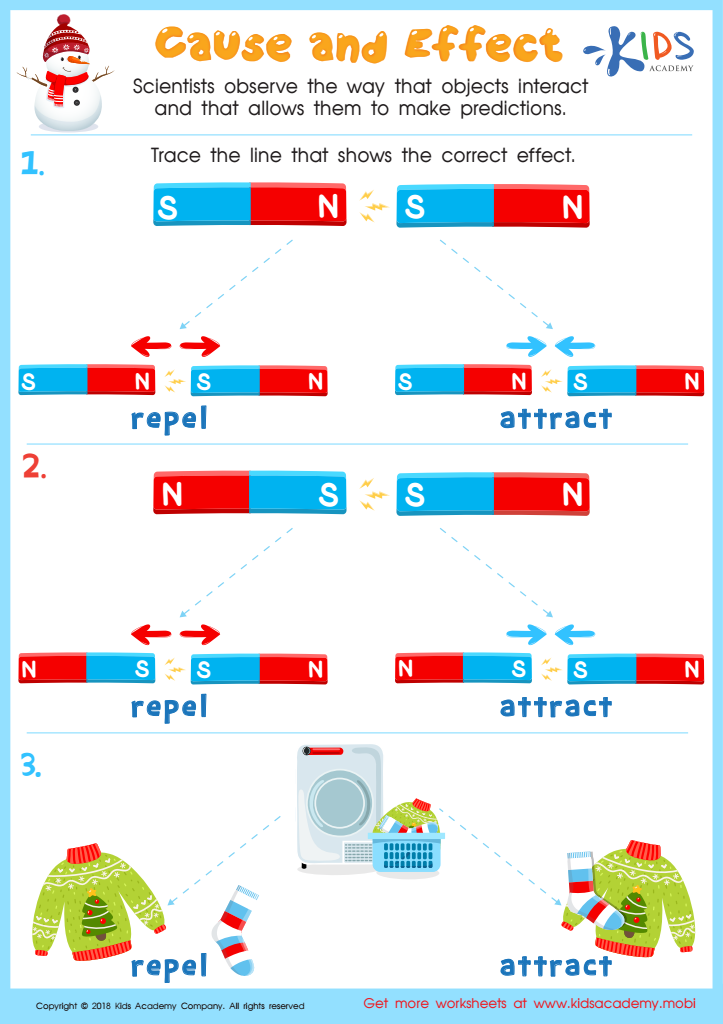
Opposites attract in magnetism! Try this magnet worksheet to review the laws. Draw a line to show the effect when poles align. Then explore static electricity, and how it affects clothes at home.
Repel and Attract Magnet Worksheet
Worksheet
Static or magnetic printable worksheet

Static or Magnetic Printable Worksheet
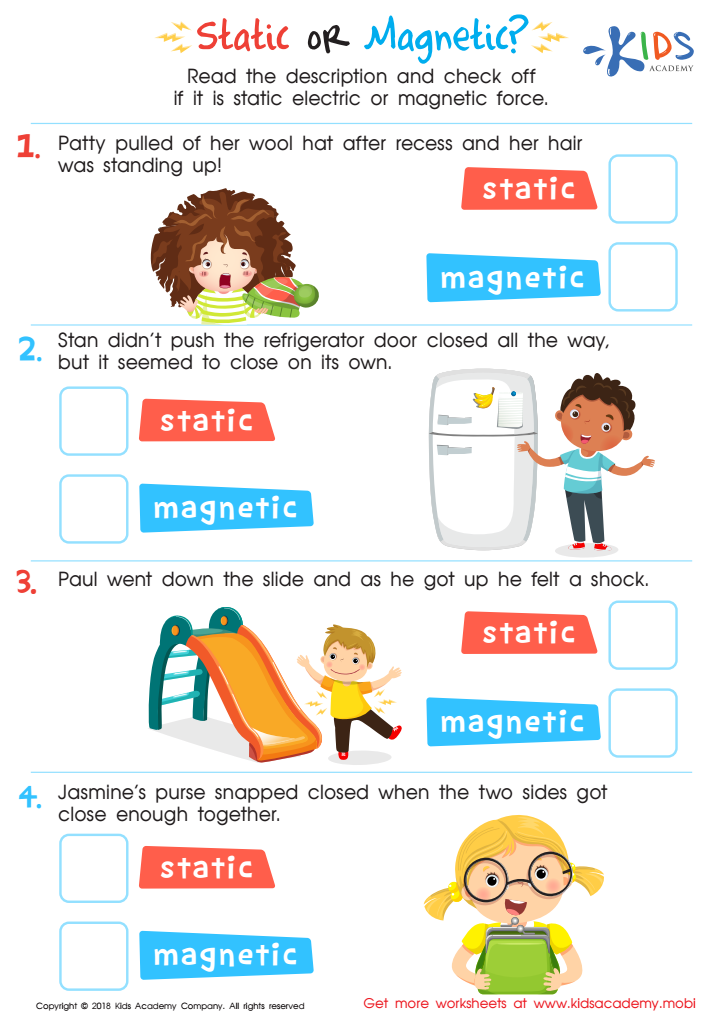
Ever wondered if a situation involved static or magnetic force? This printable worksheet has the answer! Read the scenarios and check out the illustrations to decide which force is in play for each. Learn about these two amazing forces with this fun activity!
Static or Magnetic Printable Worksheet
Worksheet
Pendulum experiment worksheet for 3rd grade

Pendulum Experiment Worksheet For 3rd Grade
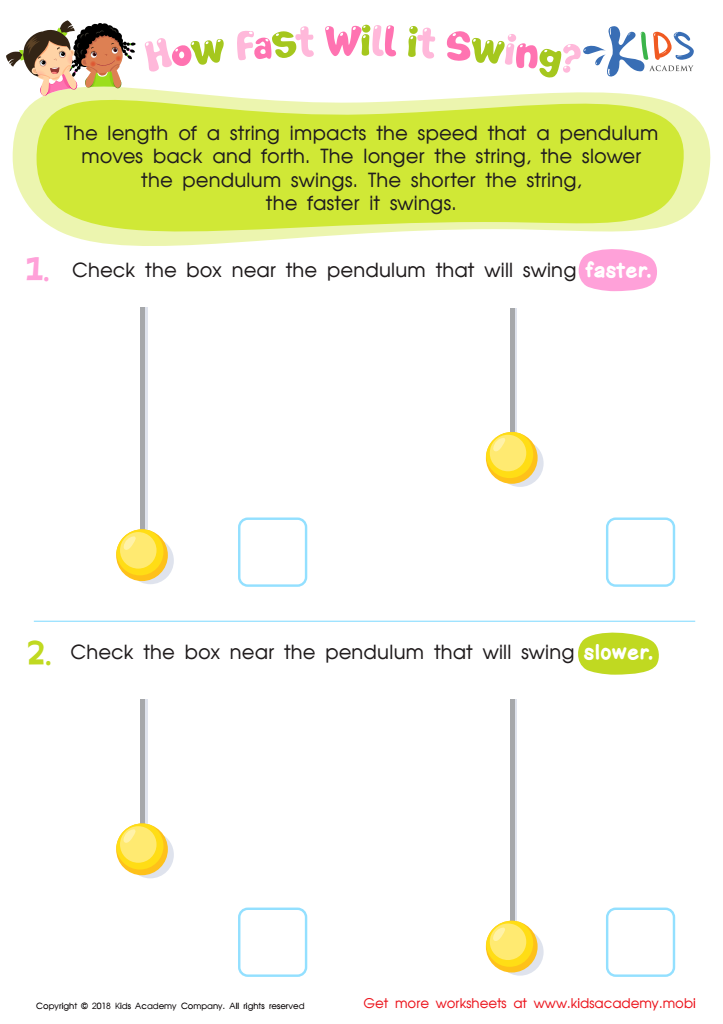
Time to flex those science muscles! A pendulum's speed depends on its string length. Complete this 3rd grade pendulum experiment worksheet and experiment with a yo-yo at home! Read the description to answer the questions correctly.
Pendulum Experiment Worksheet For 3rd Grade
Worksheet
Light and Sound: Assessment 2 Worksheet

Light and Sound: Assessment 2 Worksheet

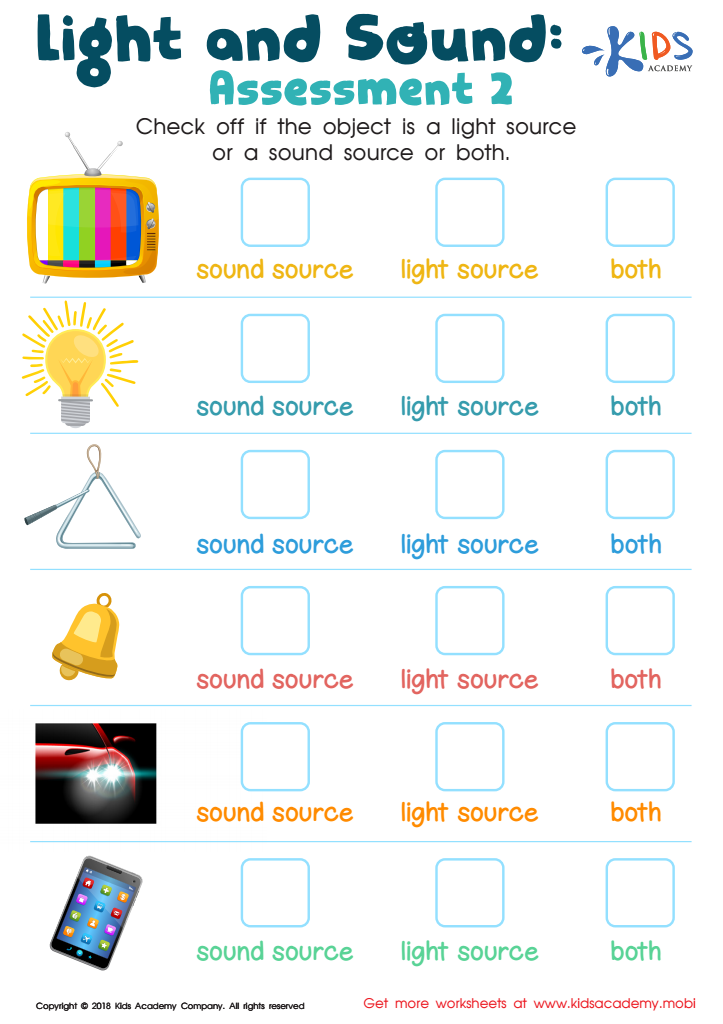
This worksheet introduces your kids to light and sound, with common sources of each. Identify the objects and help them check if it's a light source, a sound source, or both. Colourful and simple, it's a great way to teach your little ones! (80 words)
Light and Sound: Assessment 2 Worksheet
Worksheet
Noisy Maze Worksheet

Noisy Maze Worksheet

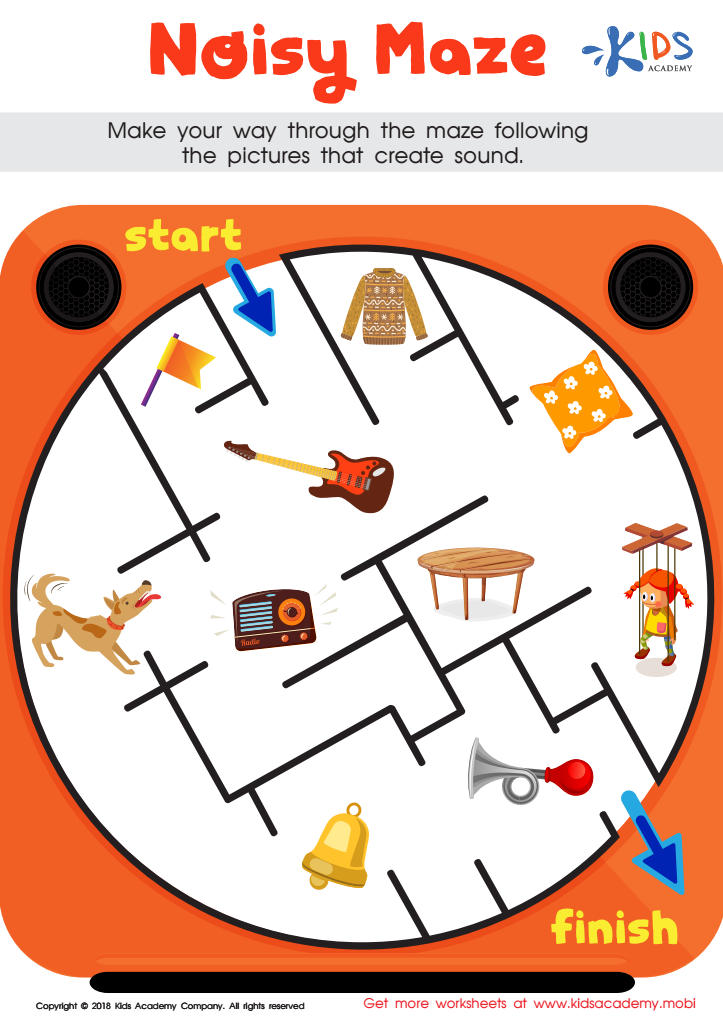
Have your kids name some objects that make noise? Then, look at the worksheet with them and help them identify each object. Guide them through the maze, following the sound-producing pictures.
Noisy Maze Worksheet
Worksheet
Light Sources and Shadows Worksheet

Light Sources and Shadows Worksheet

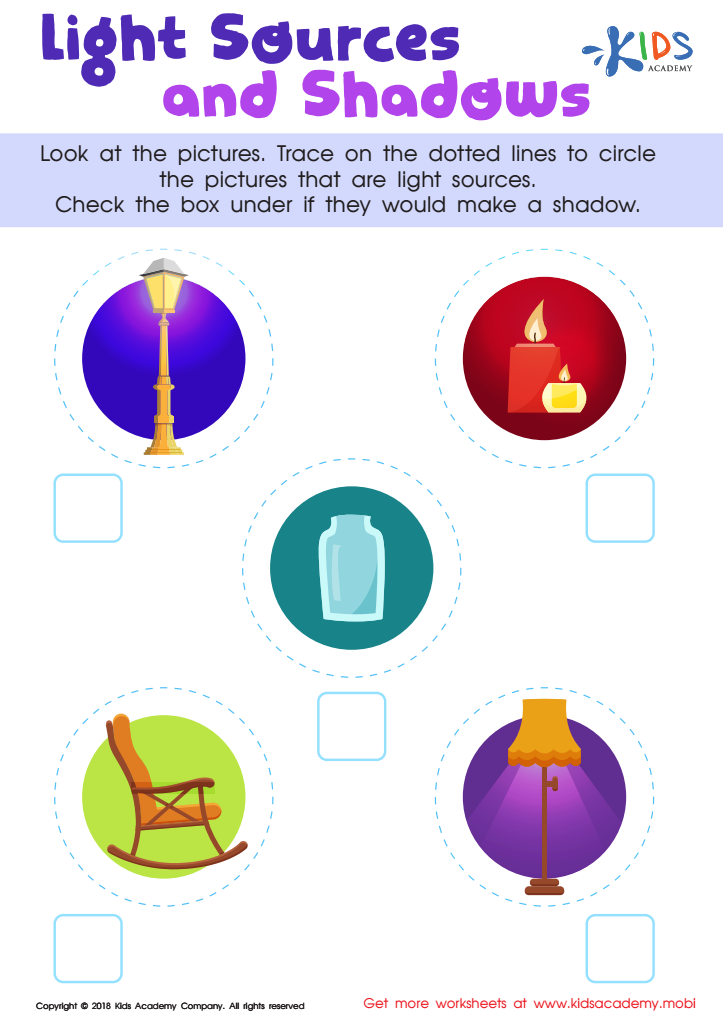
During the day, the sun radiates bright light. At night, when it's time for bed, the sun sets and darkness takes over. To light our way, we use other sources of light. With your students, trace the dotted lines around the pictures of light sources and check the boxes under the objects that will cast shadows.
Light Sources and Shadows Worksheet
Worksheet
Light to Communicate Worksheet

Light to Communicate Worksheet

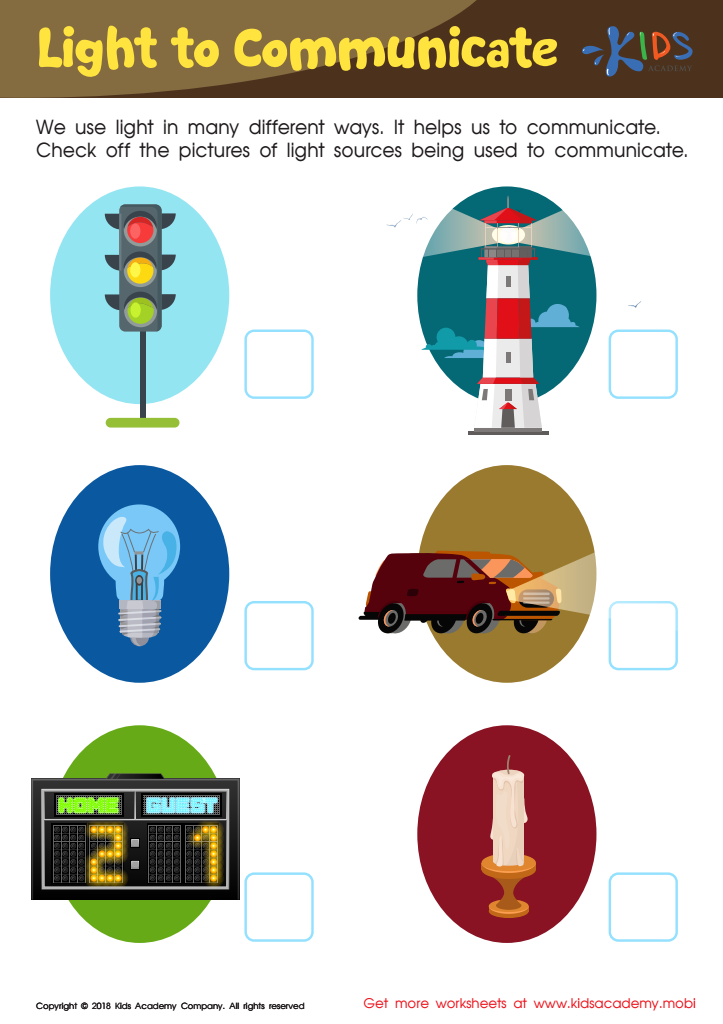
We can use lights to communicate effectively, like we use sounds. Ask your kids for examples and then help them tick off the pictures of light sources in the worksheet. This exercise will help them understand how light can be used to communicate.
Light to Communicate Worksheet
Worksheet
Sounds to Communicate Worksheet

Sounds to Communicate Worksheet

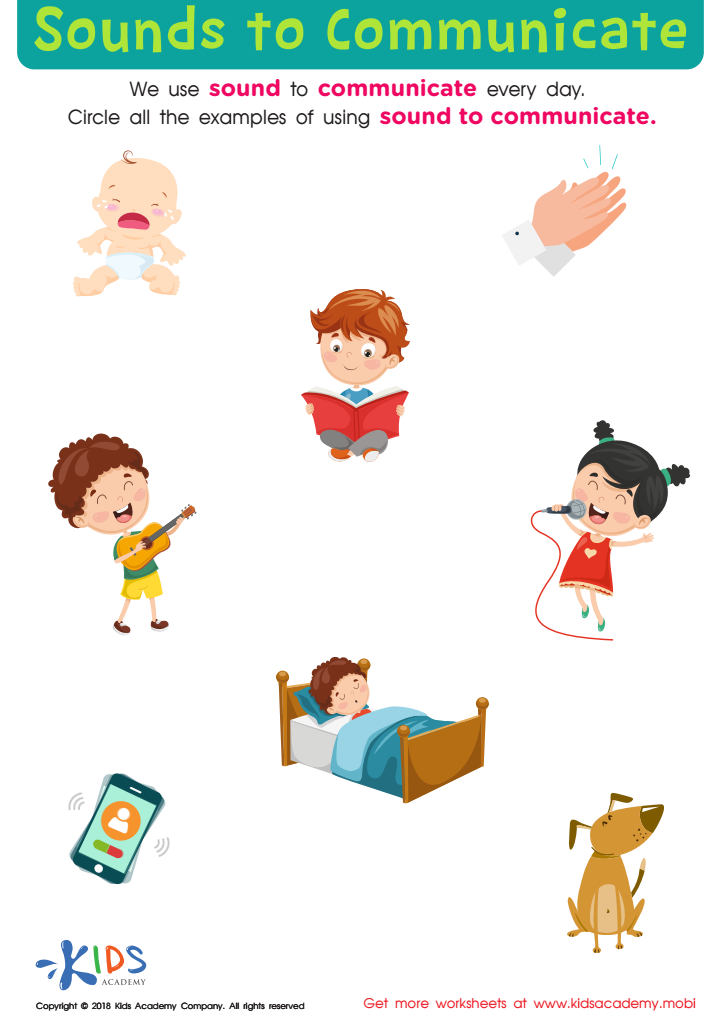
Sounds are important for communication. Ask your students to name sounds people, animals and things make. Then, review this worksheet with them and see if they can identify the activities. Ask them to circle examples of sounds used to communicate.
Sounds to Communicate Worksheet
Worksheet
Will It Make a Shadow? Worksheet


Will It Make a Shadow? Worksheet

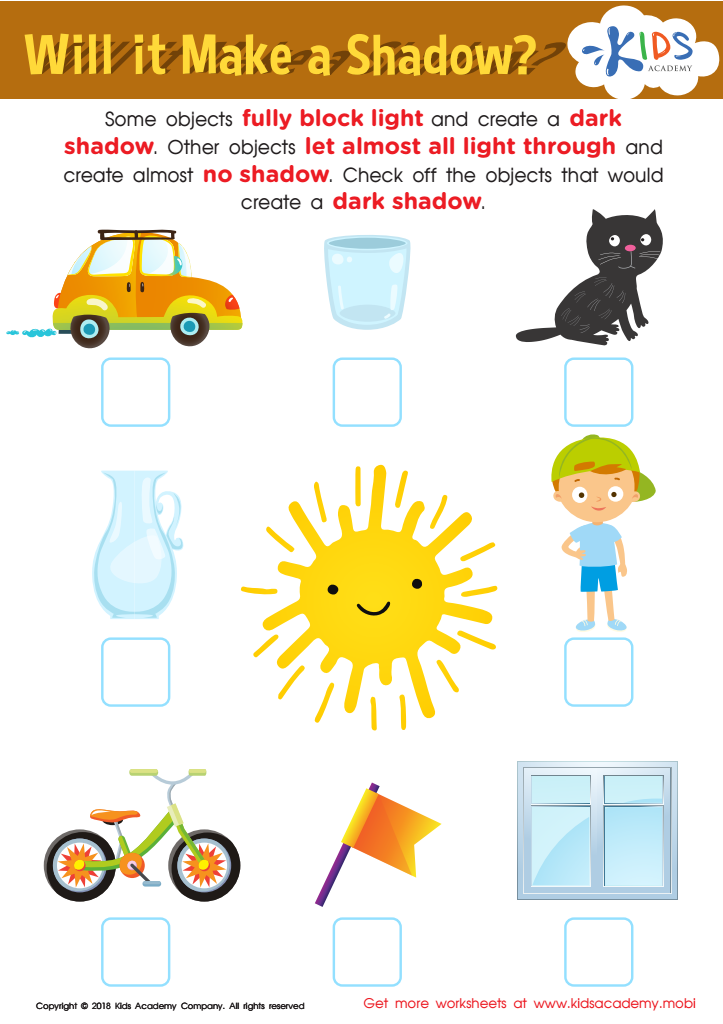
Teach your students about shadows with this printout. Ask them to check off the boxes next to the pictures that create a shadow. Explain that some objects block light, forming a shadow, while others don't and thus don't create a shadow. Your students are likely already familiar with their own shadow.
Will It Make a Shadow? Worksheet

Worksheet
Sources of Light Worksheet

Sources of Light Worksheet

Help your child explore sources of light with this printout exercise. Ask them if they know the sun is the reason for day and night. Then point out other common light sources, then work together to guide them through the maze from start to finish.
Sources of Light Worksheet
Worksheet
Is It a Light Source? Worksheet

Is It a Light Source? Worksheet

This worksheet is a fun way to teach kids about light sources. Children must identify natural sources like the sun and lightning, and man-made sources such as candles and lamps. Ask them to look at each object and check the box to indicate if it's a light source or not.
Is It a Light Source? Worksheet
Worksheet


Understanding the concept of "Normal" for children ages 7-9 is crucial for both parents and teachers. At this stage, children are developing a stronger sense of self and beginning to navigate social dynamics more independently. It is important for adults to recognize that what is considered "normal" behavior can vary widely among children, influenced by individual personalities, cultural backgrounds, and developmental stages.

Teachers and parents should care because recognizing and respecting this diversity helps promote a positive and inclusive environment. When adults understand that their expectations might not apply universally, they can create tailored educational and emotional support that meets each child's unique needs. This awareness helps in identifying children who might be struggling or thriving, allowing for early interventions and enriched learning experiences.

Moreover, fostering a sense of normalcy among peers helps children feel accepted and valued, which boosts their confidence and social skills. By openly discussing and embracing the concept of "normal," parents and teachers can effectively model acceptance and empathy, teaching children to be more understanding of their own differences and those of their peers. Ultimately, this leads to nurturing well-rounded individuals who can contribute positively to society.