Filters

1537 filtered results

Clear all filters
Favorites
With answer key
Interactive

1537 filtered results

Difficulty Level

Grade


Subject

    Check out this FREE Trial Lesson on Addition & Subtraction for age 3-9!

    1 Step Addition Word Problems - Using Drawings to Write Equations

    Favorites
    With answer key
    Interactive
    • 3-9
    • Addition & Subtraction
    Adding 2-digit Numbers: Page 38
    Adding 2-digit Numbers: Page 38

    Adding 2-digit Numbers: Page 38

    Adding 2-digit Numbers: Page 38
    Worksheet
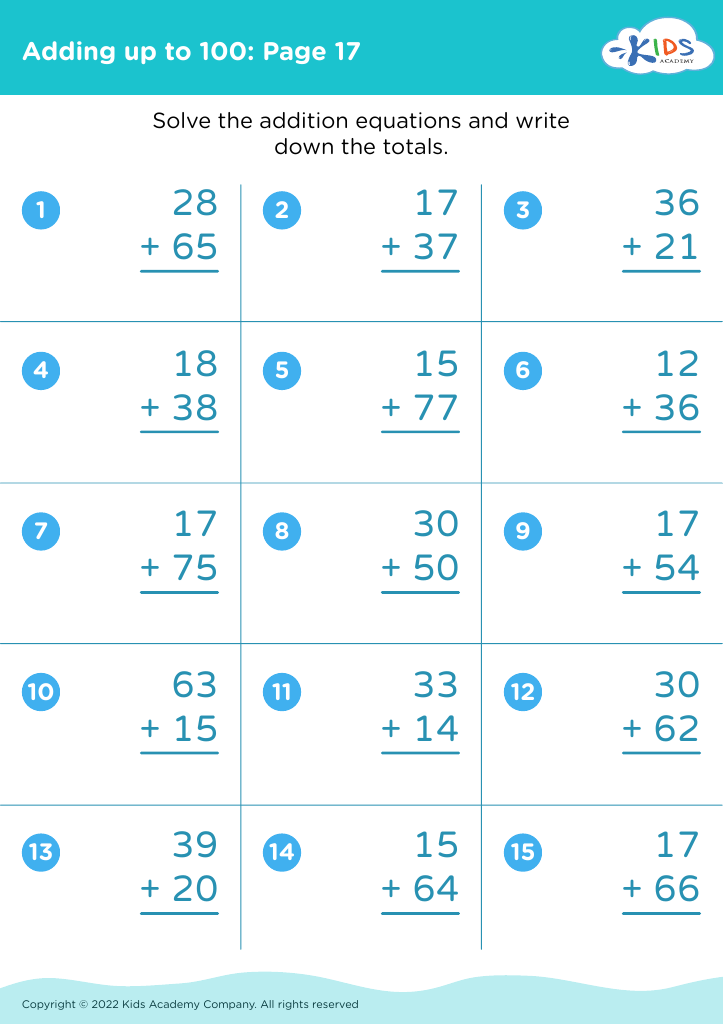
    Adding up to 100: Page 17
    Adding up to 100: Page 17

    Adding up to 100: Page 17

    Adding up to 100: Page 17
    Worksheet
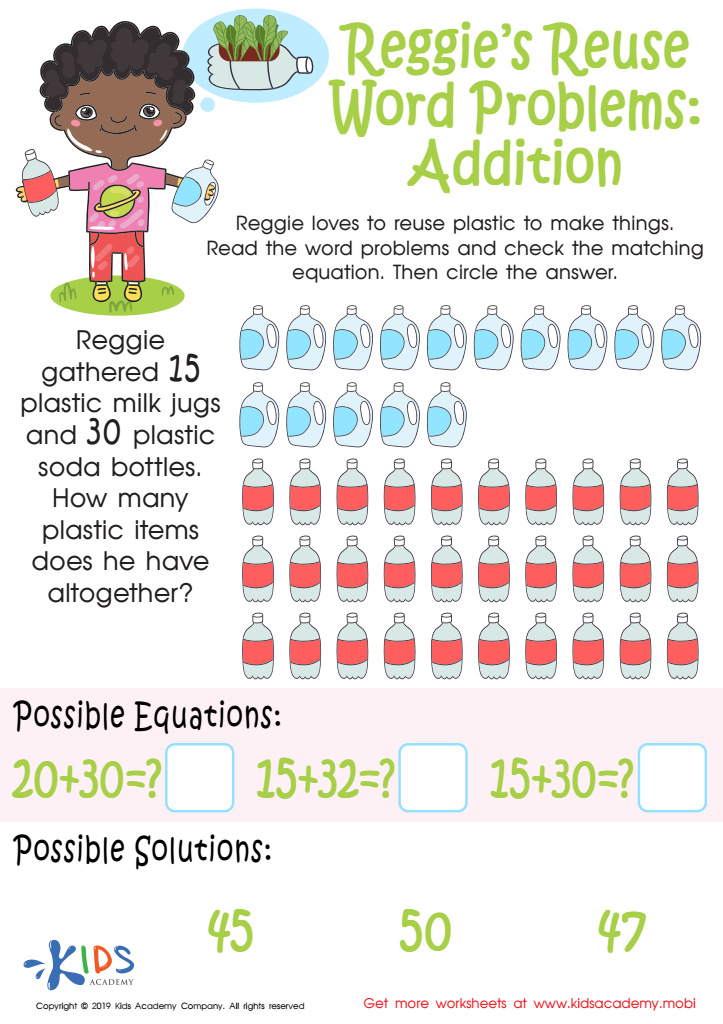
    Reggie's Reuse Word Problems: Addition Worksheet
    Reggie's Reuse Word Problems: Addition Worksheet

    Reggie's Reuse Word Problems: Addition Worksheet

    Help Reggie and your child save the planet by using this free worksheet! It reinforces addition word problems using one-to-one picture representation, and helps them pick out the correct number sentence and possible solutions. It's an easy way to help the planet and practice math!
    Reggie's Reuse Word Problems: Addition Worksheet
    Worksheet
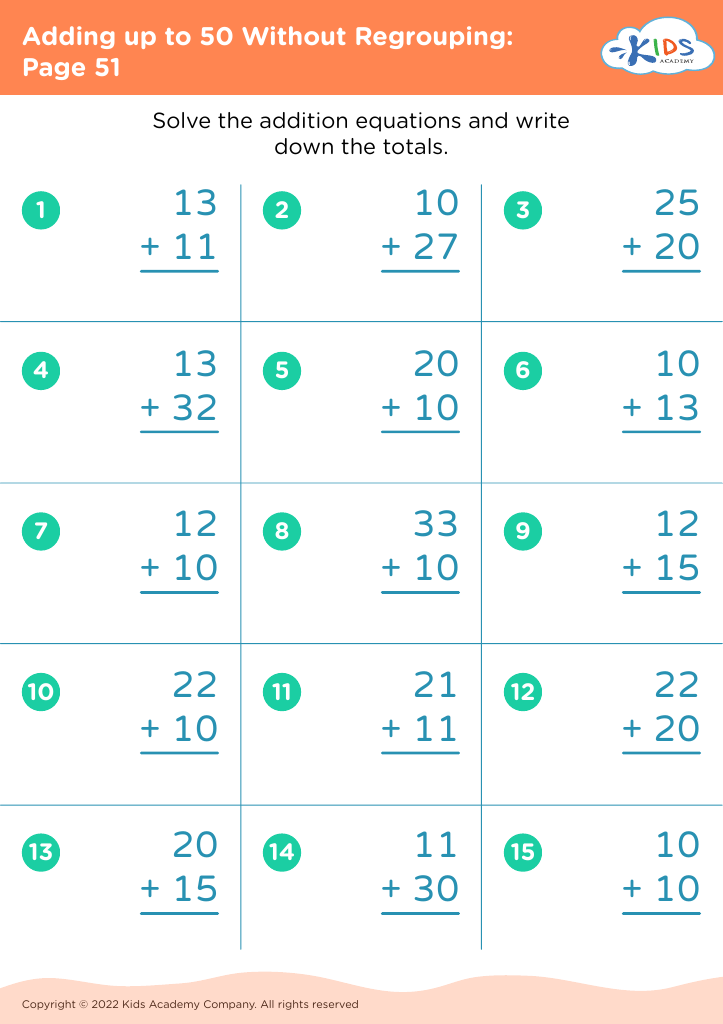
    Adding up to 50 Without Regrouping: Page 51
    Adding up to 50 Without Regrouping: Page 51
    Adding up to 50 Without Regrouping: Page 51
    Worksheet
    Adding up to 1000: Page 34
    Adding up to 1000: Page 34

    Adding up to 1000: Page 34

    Adding up to 1000: Page 34
    Worksheet
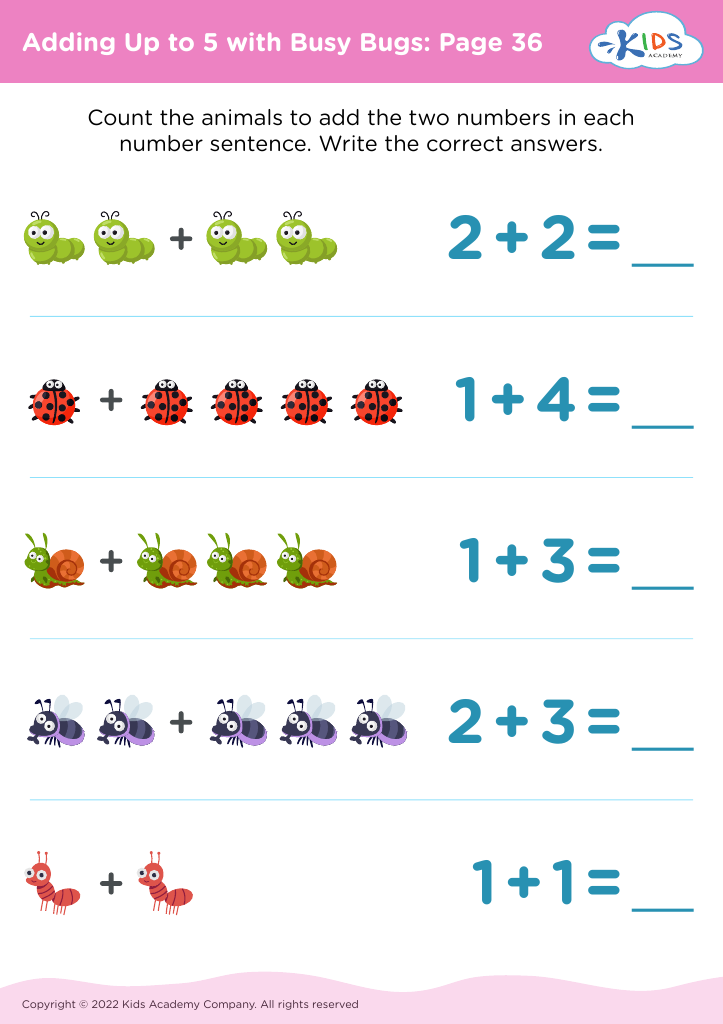
    Adding Up to 5 with Busy Bugs: Page 36
    Adding Up to 5 with Busy Bugs: Page 36
    Adding Up to 5 with Busy Bugs: Page 36
    Worksheet
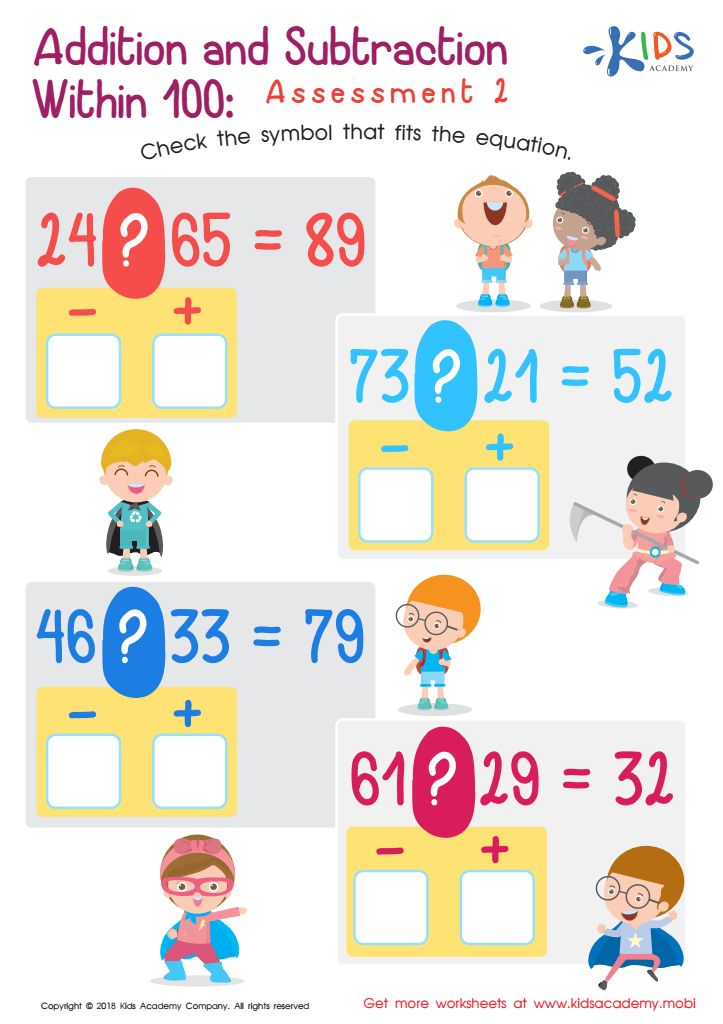
    Addition and Subtraction Within 1: Assessment 2 Worksheet
    Addition and Subtraction Within 1: Assessment 2 Worksheet

    Addition and Subtraction Within 1: Assessment 2 Worksheet

    This worksheet is a great tool to help your students learn addition and subtraction. It contains four equations in a printable pdf. Ask your students to review the equation and determine if the symbol between them is a '+' or '-'. Guide them in selecting the correct symbols for each equation.
    Addition and Subtraction Within 1: Assessment 2 Worksheet
    Worksheet
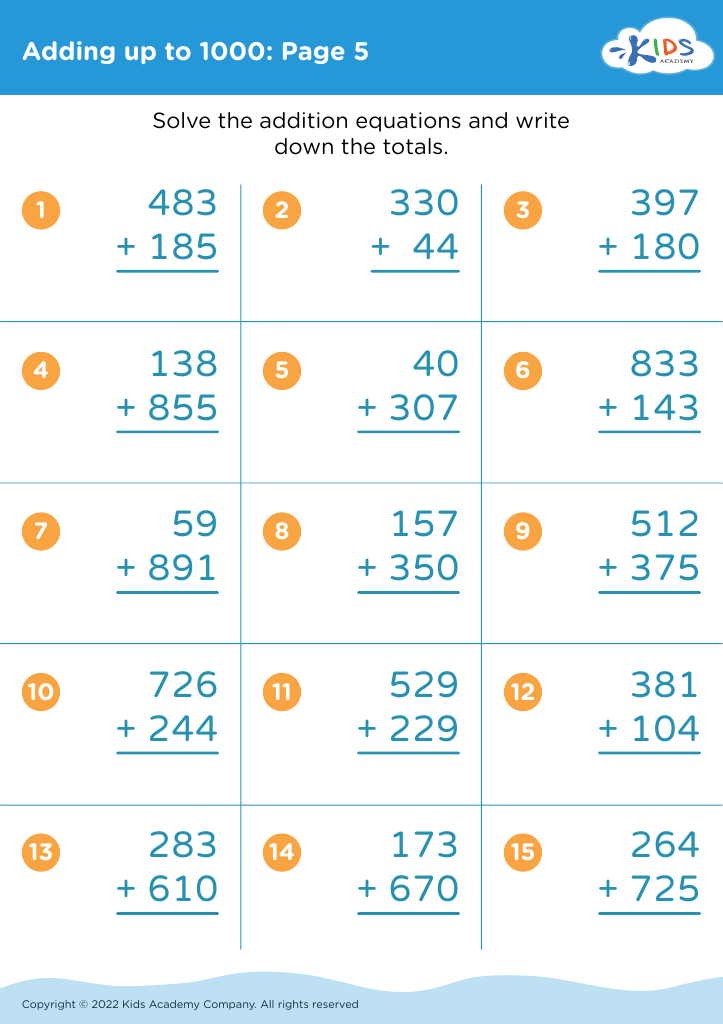
    Adding up to 1000: Page 5
    Adding up to 1000: Page 5

    Adding up to 1000: Page 5

    Adding up to 1000: Page 5
    Worksheet
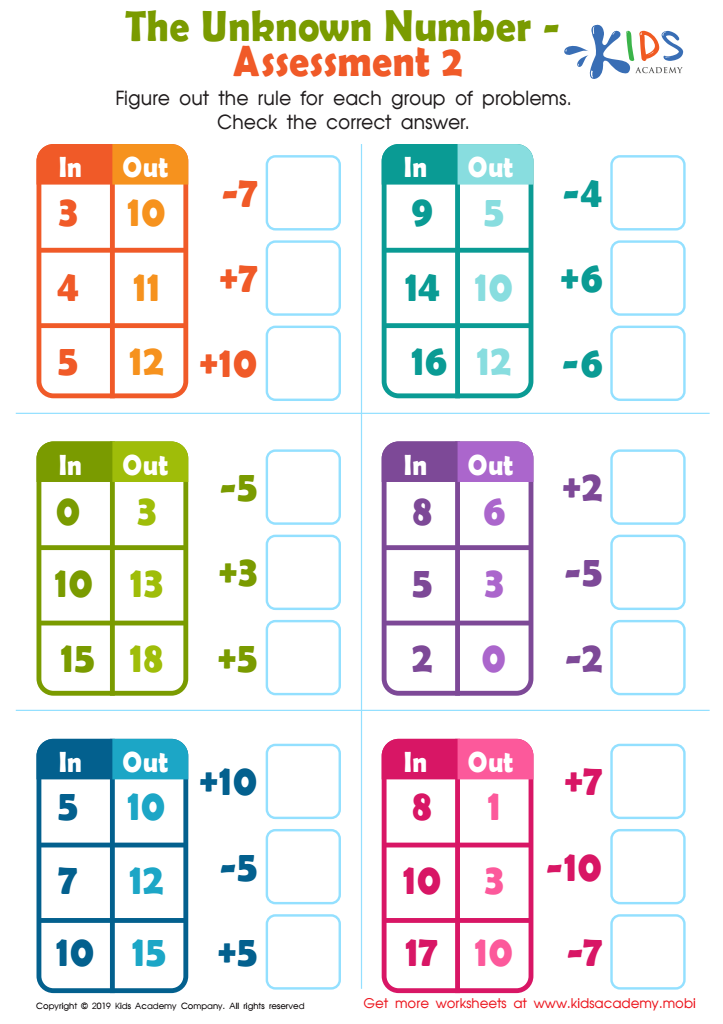
    The Unknown Number - Assessment 2 Worksheet
    The Unknown Number - Assessment 2 Worksheet
    The Unknown Number - Assessment 2 Worksheet
    Help your kids to figure out the rule for each group of math problems. Check the right answer and show that there's nothing to be nervous about. Encourage them and use creative learning for better understanding of math. Constant practice is key.
    The Unknown Number - Assessment 2 Worksheet
    Worksheet
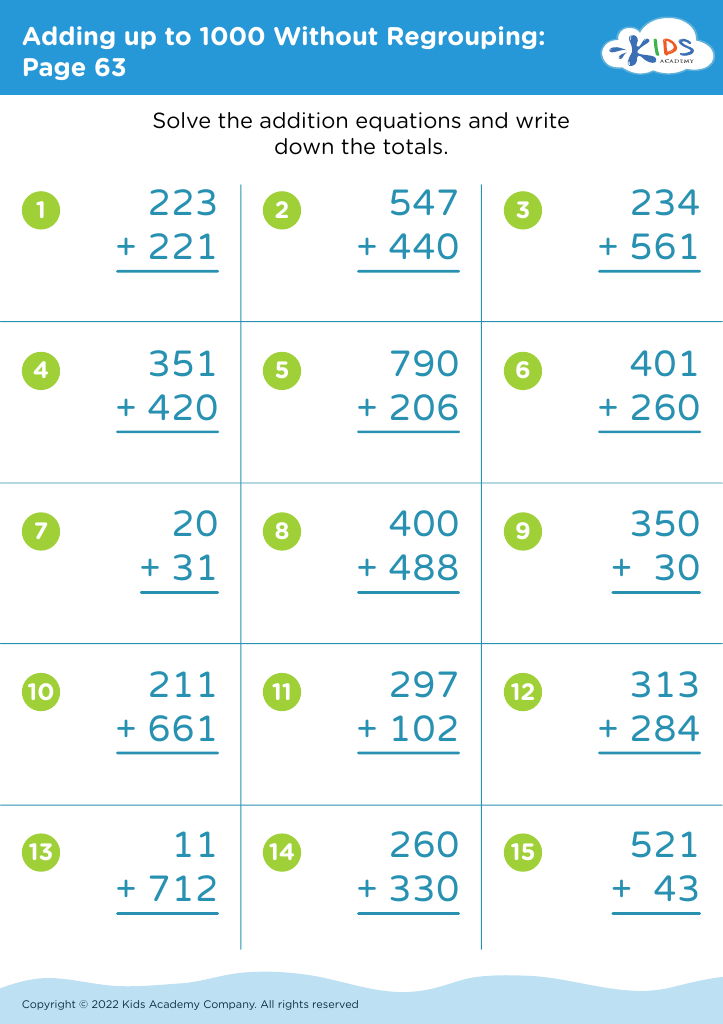
    Adding up to 1000 Without Regrouping: Page 63
    Adding up to 1000 Without Regrouping: Page 63
    Adding up to 1000 Without Regrouping: Page 63
    Worksheet
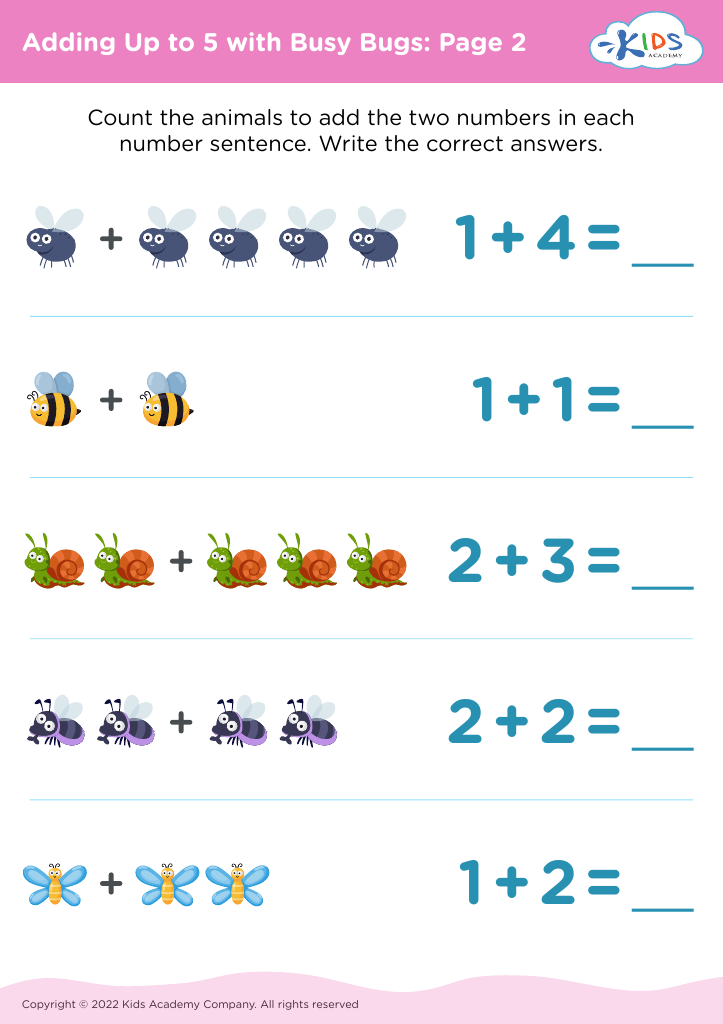
    Adding Up to 5 with Busy Bugs: Page 2
    Adding Up to 5 with Busy Bugs: Page 2
    Adding Up to 5 with Busy Bugs: Page 2
    Worksheet
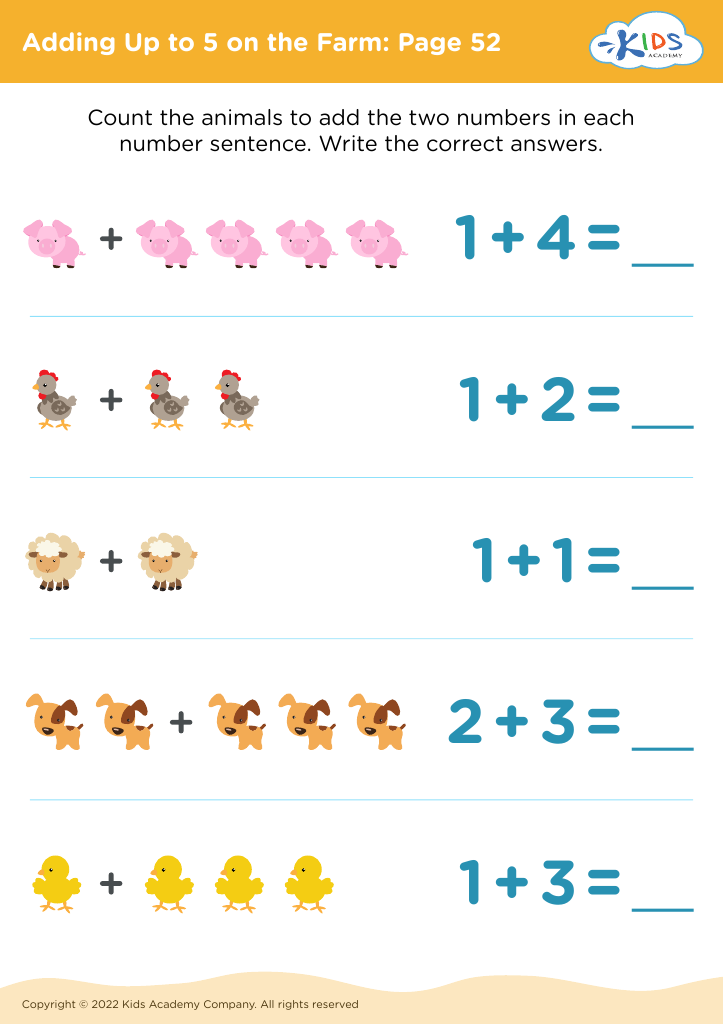
    Adding Up to 5 on the Farm: Page 52
    Adding Up to 5 on the Farm: Page 52
    Adding Up to 5 on the Farm: Page 52
    Worksheet
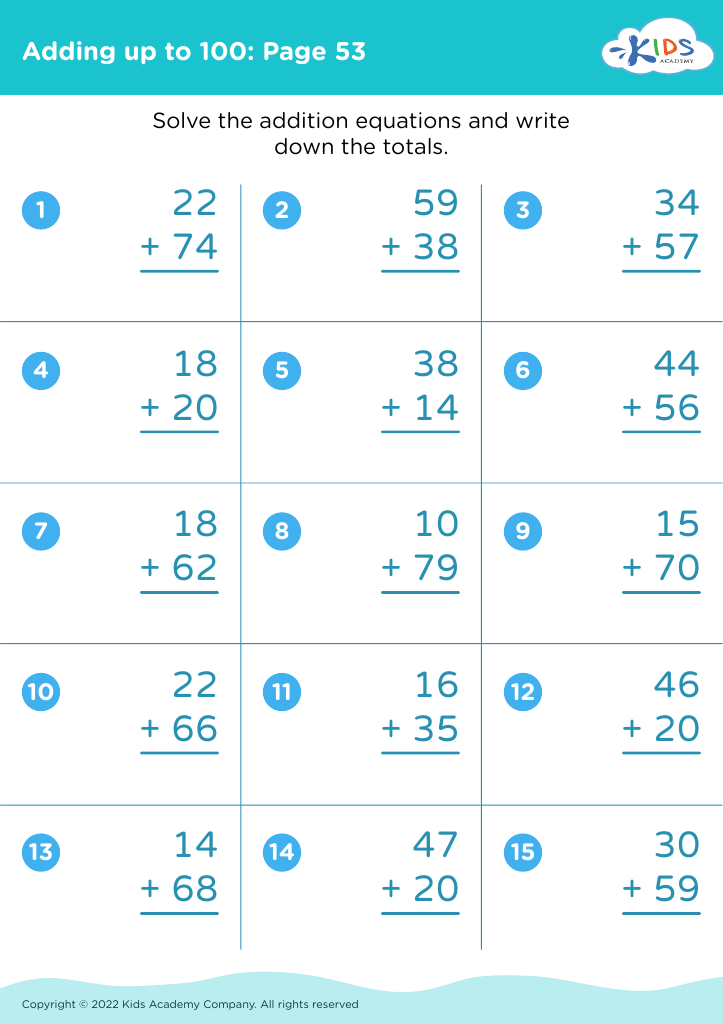
    Adding up to 100: Page 53
    Adding up to 100: Page 53

    Adding up to 100: Page 53

    Adding up to 100: Page 53
    Worksheet
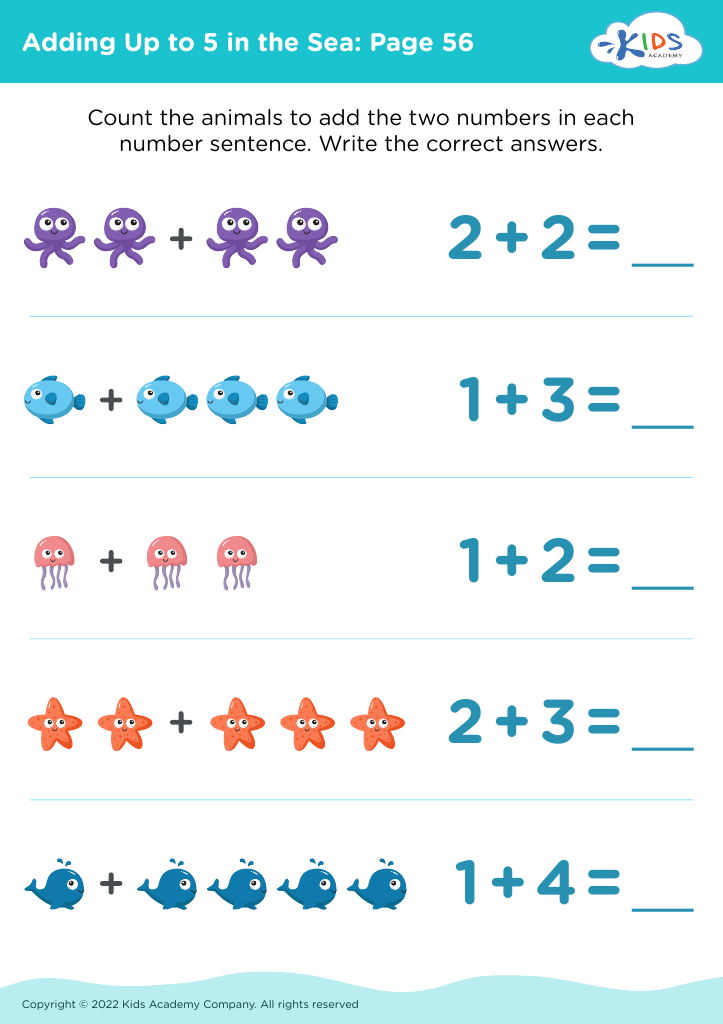
    Adding Up to 5 in the Sea: Page 56
    Adding Up to 5 in the Sea: Page 56
    Adding Up to 5 in the Sea: Page 56
    Worksheet
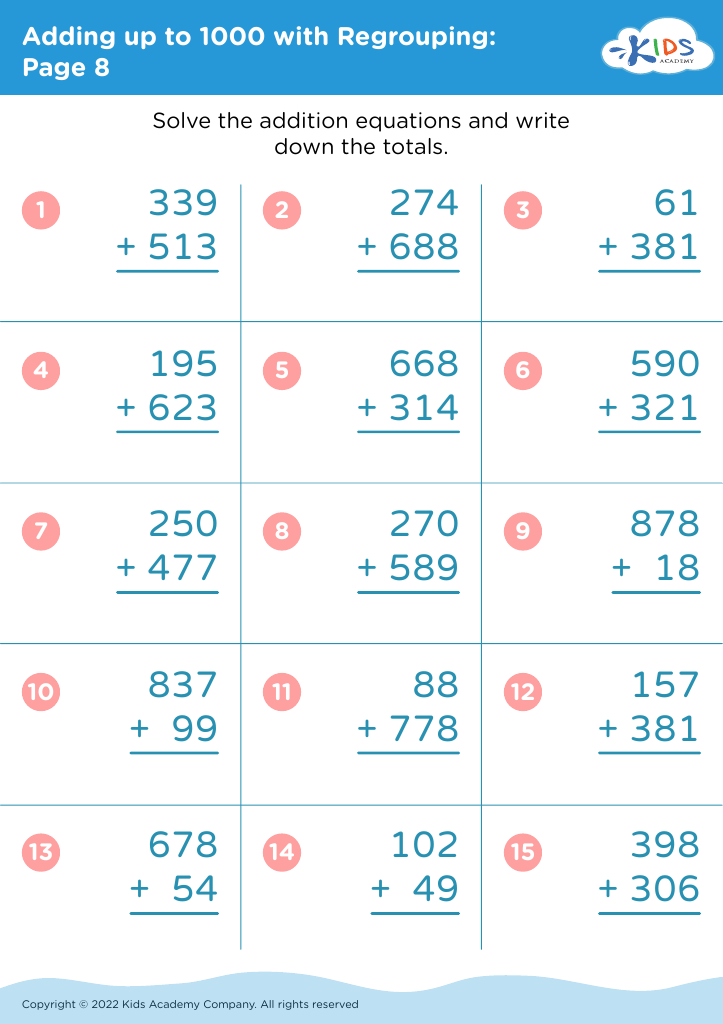
    Adding up to 1000 with Regrouping: Page 8
    Adding up to 1000 with Regrouping: Page 8
    Adding up to 1000 with Regrouping: Page 8
    Worksheet
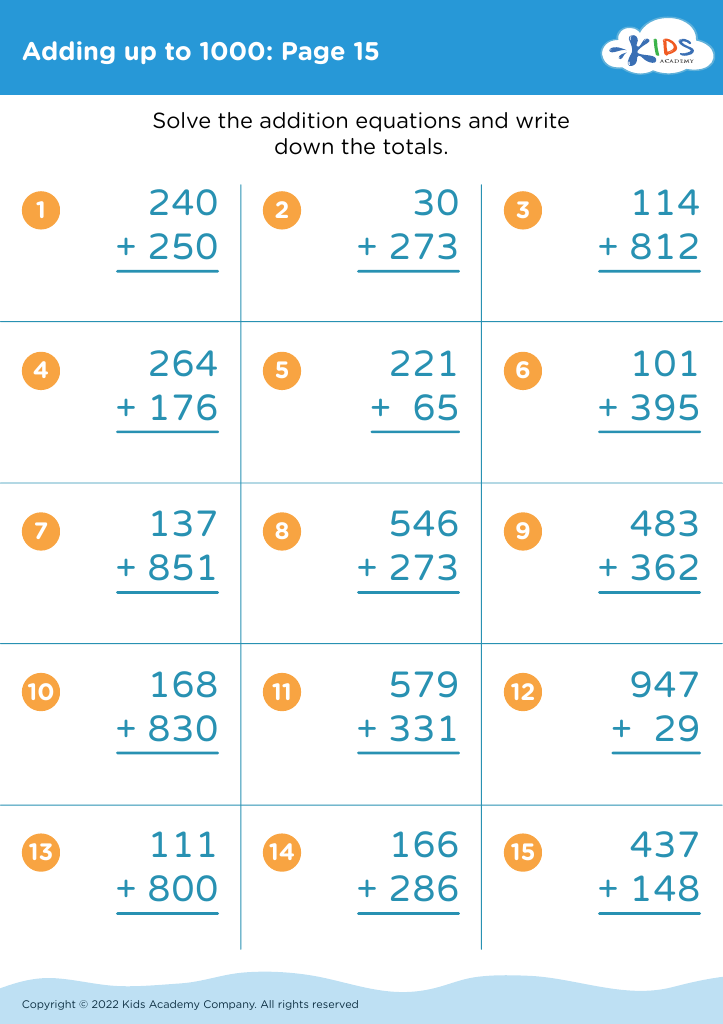
    Adding up to 1000: Page 15
    Adding up to 1000: Page 15

    Adding up to 1000: Page 15

    Adding up to 1000: Page 15
    Worksheet
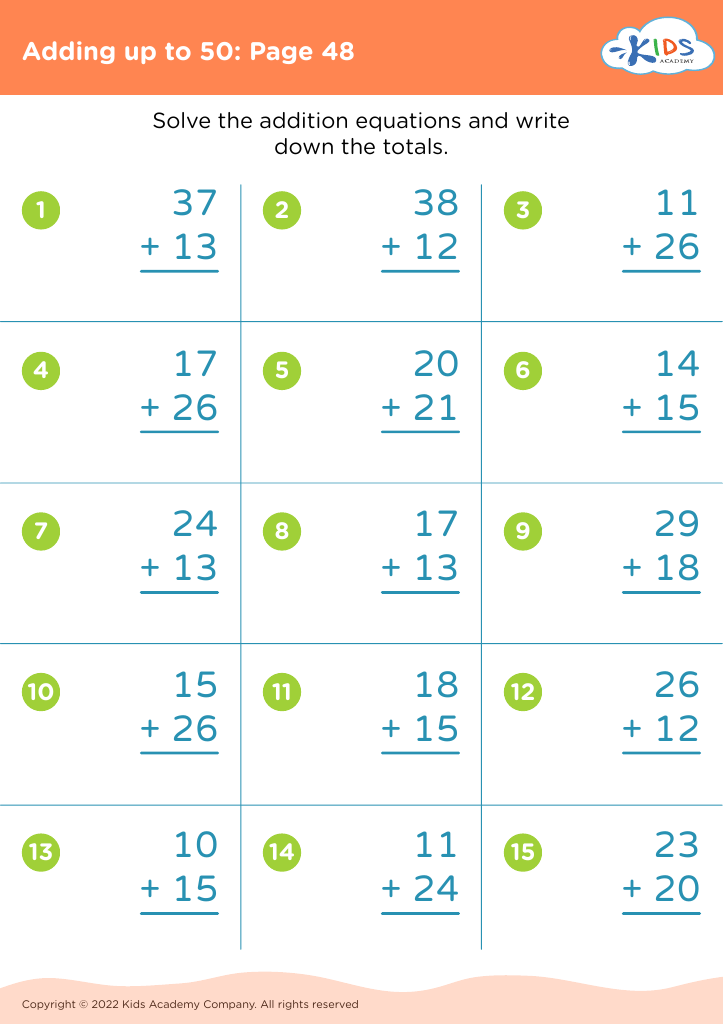
    Adding up to 50: Page 48
    Adding up to 50: Page 48

    Adding up to 50: Page 48

    Adding up to 50: Page 48
    Worksheet
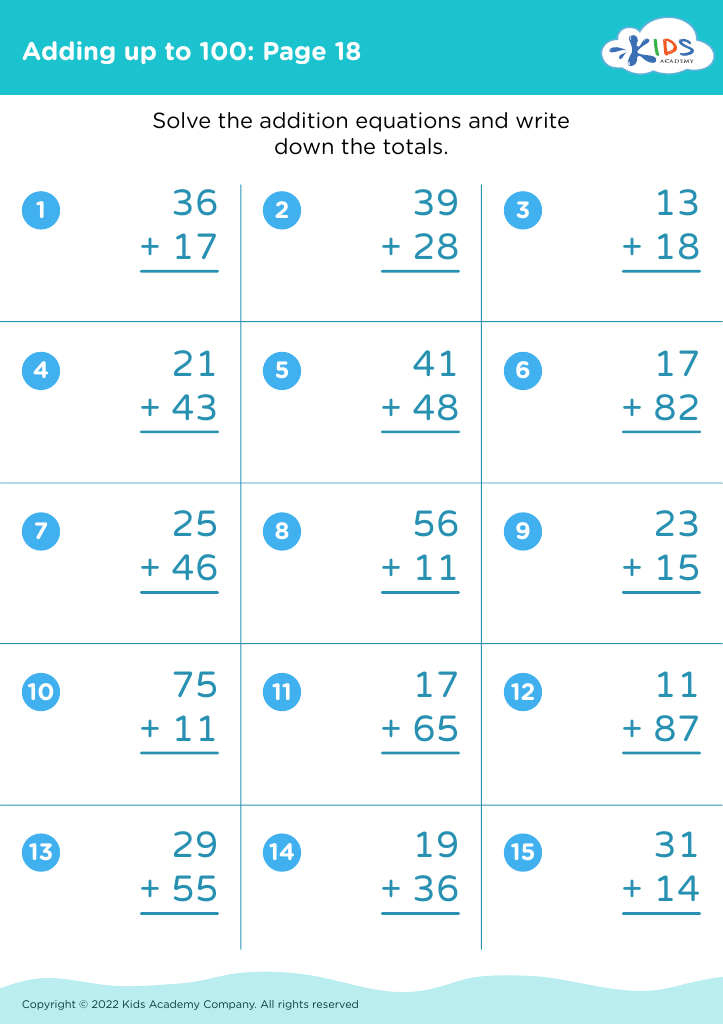
    Adding up to 100: Page 18
    Adding up to 100: Page 18

    Adding up to 100: Page 18

    Adding up to 100: Page 18
    Worksheet
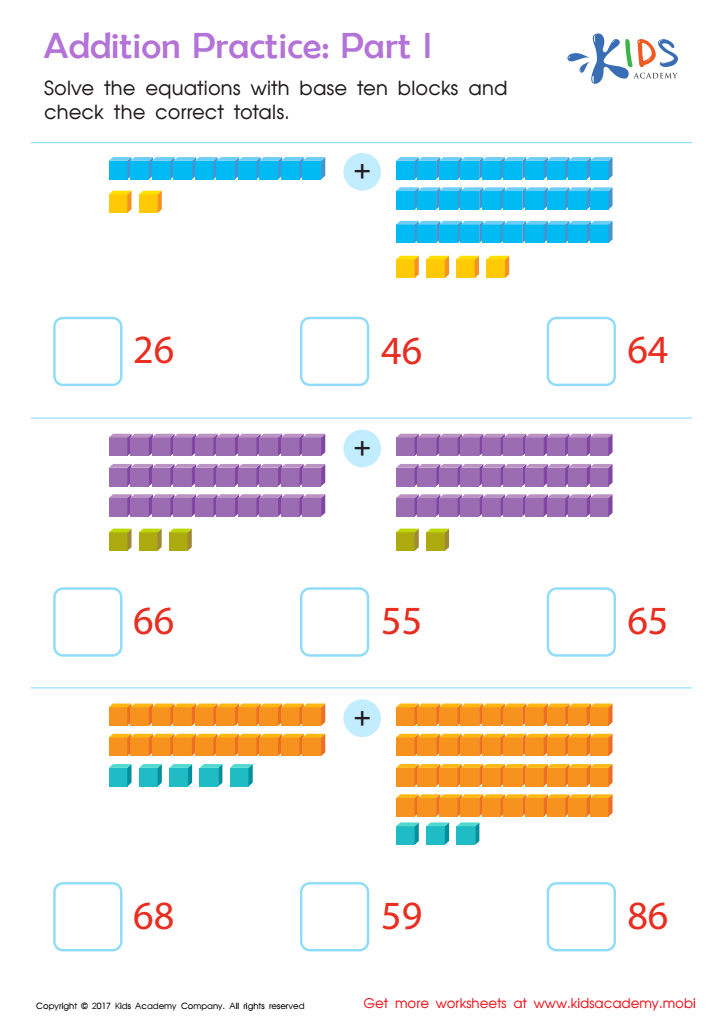
    Addition Practice Sheet: Part 1
    Addition Practice Sheet: Part 1
    Addition Practice Sheet: Part 1
    Kids Academy offers a free worksheet to help kids learn addition with base ten blocks, with or without actual manipulatives. Help your Kindergarten or First Grader flex and increase their knowledge of place value and understand math more deeply. Download this useful page for images that will promote success.
    Addition Practice Sheet: Part 1
    Worksheet
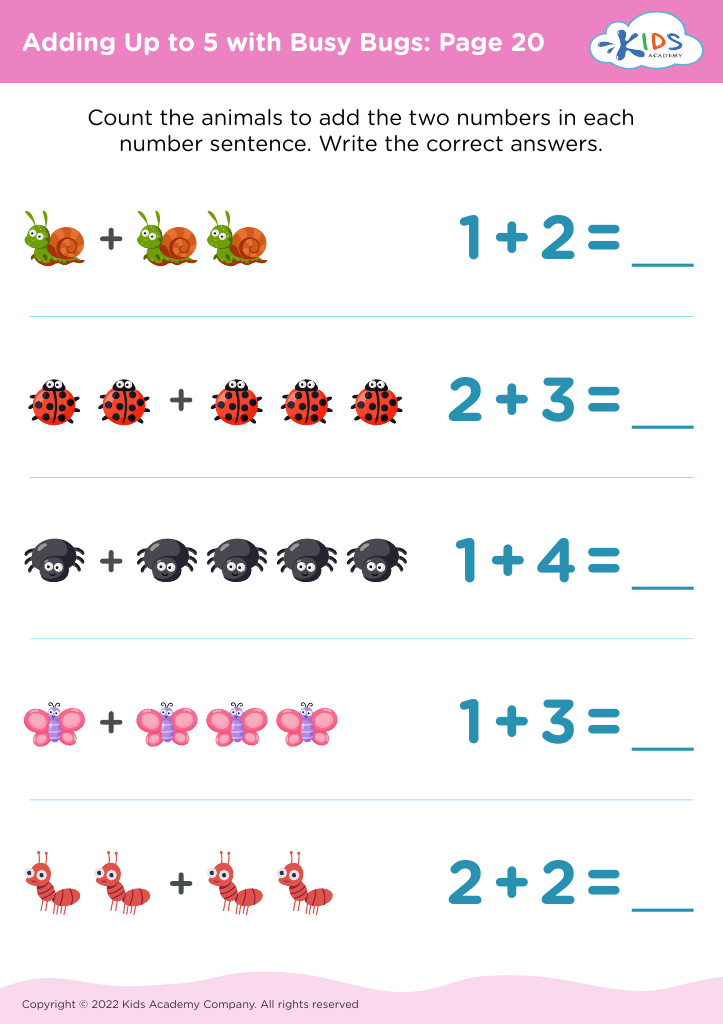
    Adding Up to 5 with Busy Bugs: Page 20
    Adding Up to 5 with Busy Bugs: Page 20
    Adding Up to 5 with Busy Bugs: Page 20
    Worksheet
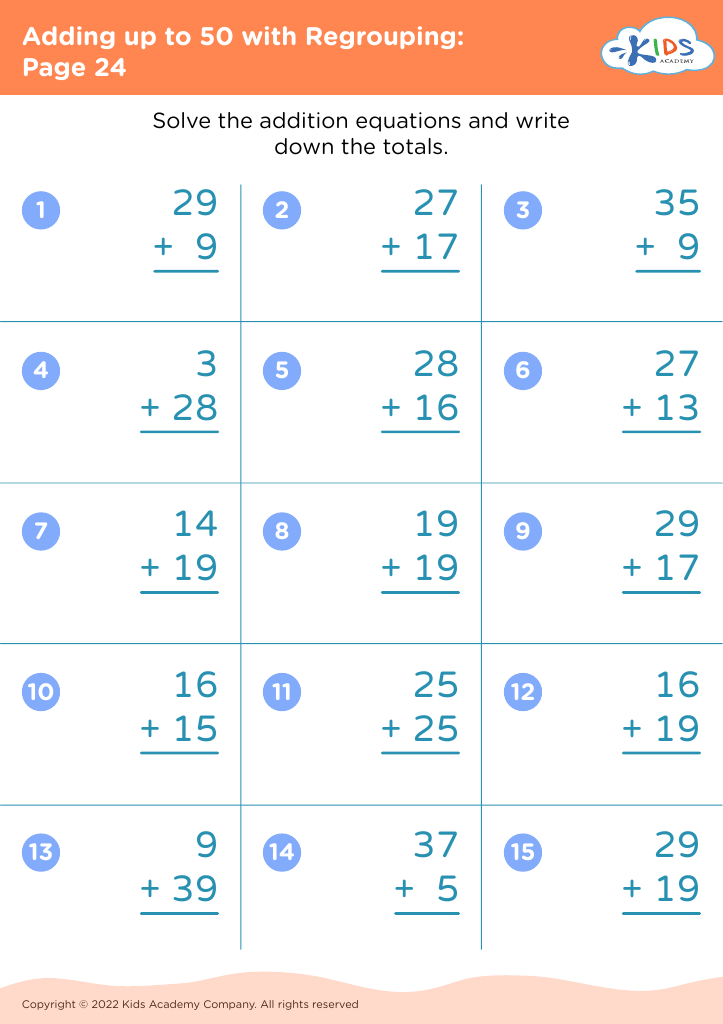
    Adding up to 50 with Regrouping: Page 24
    Adding up to 50 with Regrouping: Page 24
    Adding up to 50 with Regrouping: Page 24
    Worksheet
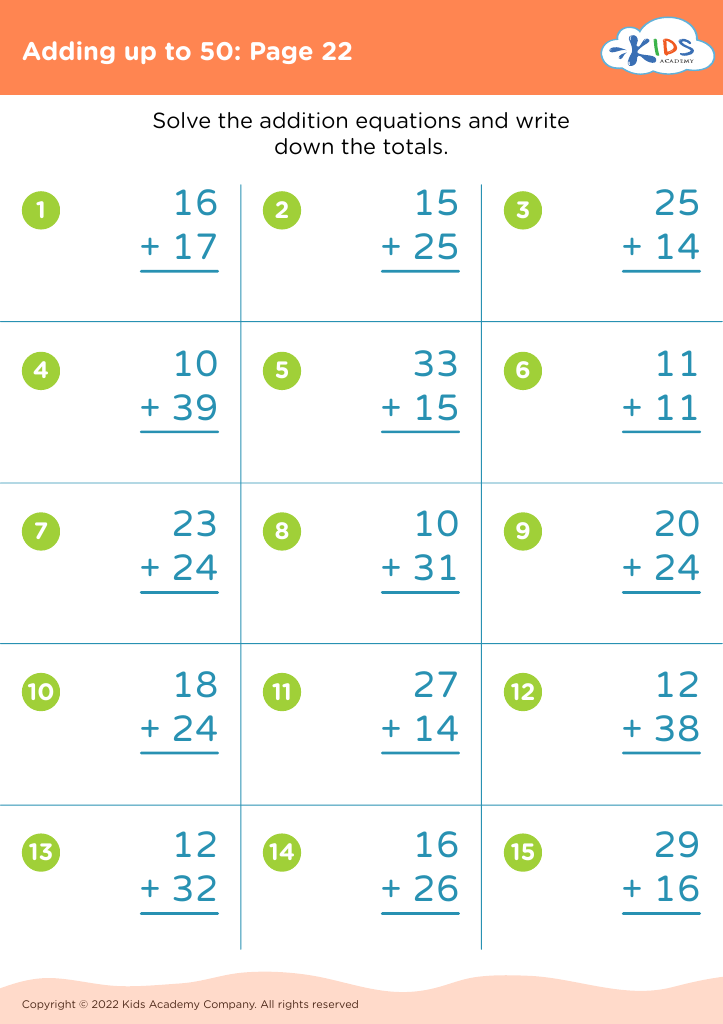
    Adding up to 50: Page 22
    Adding up to 50: Page 22

    Adding up to 50: Page 22

    Adding up to 50: Page 22
    Worksheet
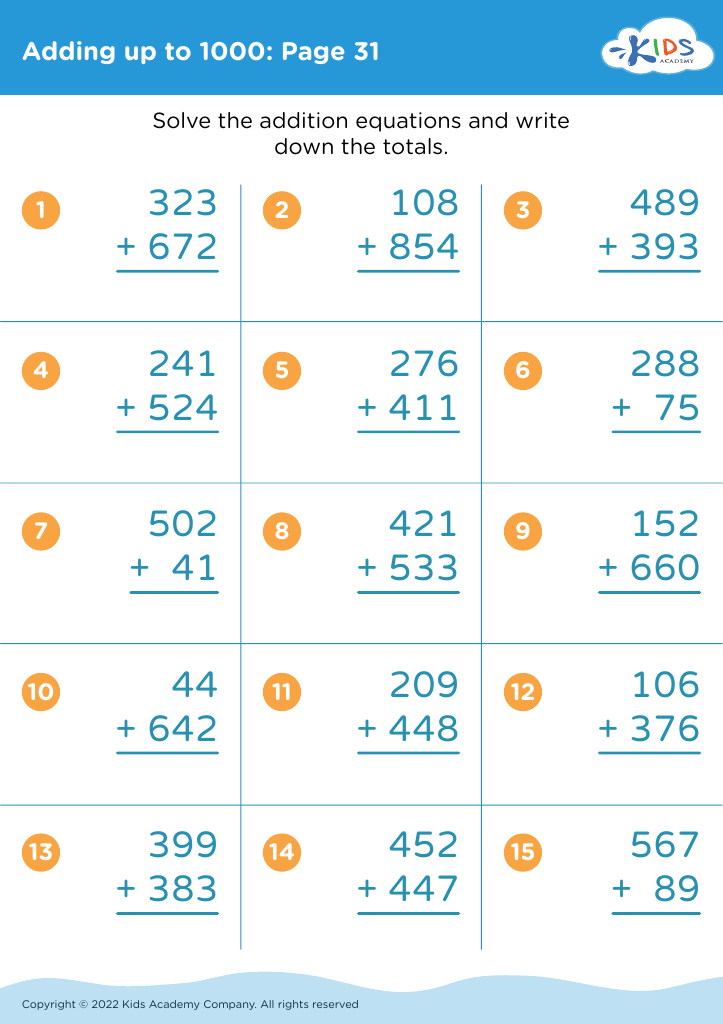
    Adding up to 1000: Page 31
    Adding up to 1000: Page 31

    Adding up to 1000: Page 31

    Adding up to 1000: Page 31
    Worksheet
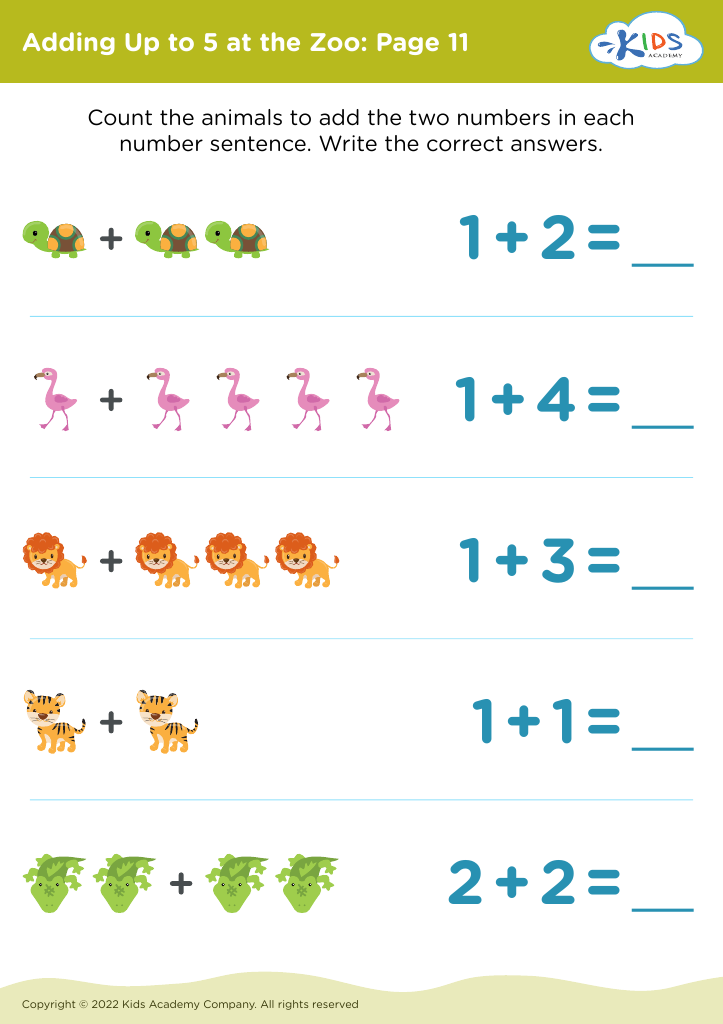
    Adding Up to 5 at the Zoo: Page 11
    Adding Up to 5 at the Zoo: Page 11
    Adding Up to 5 at the Zoo: Page 11
    Worksheet


    Parents and teachers should care deeply about teaching addition and subtraction to children aged 3-9 because these foundational skills are crucial for their overall mathematical development and daily problem-solving capabilities. At this early age, children’s brains are highly receptive, making it an ideal time to introduce fundamental math concepts. Mastering addition and subtraction helps build a solid mathematical foundation, which is essential for understanding more complex math topics later in life, such as multiplication, division, fractions, and algebra.

    Moreover, these early arithmetic skills promote critical thinking and logical reasoning. When children learn to add and subtract, they engage in problem-solving, learn to make decisions, and recognize patterns, all of which are important cognitive skills.

    Basic adding and subtracting also demonstrate immediate practical value, enabling children to handle real-life situations, such as sharing toys, understanding time, and managing simple financial transactions like counting money.

    Finally, early success in mastering these skills can instill a sense of confidence and a positive attitude towards learning mathematics. Positive early math experiences lay the foundation for academic success and a lifelong appreciation for numbers. This, in turn, can foster improved performance in various subjects, emphasizing the importance of early math education for young learners.